
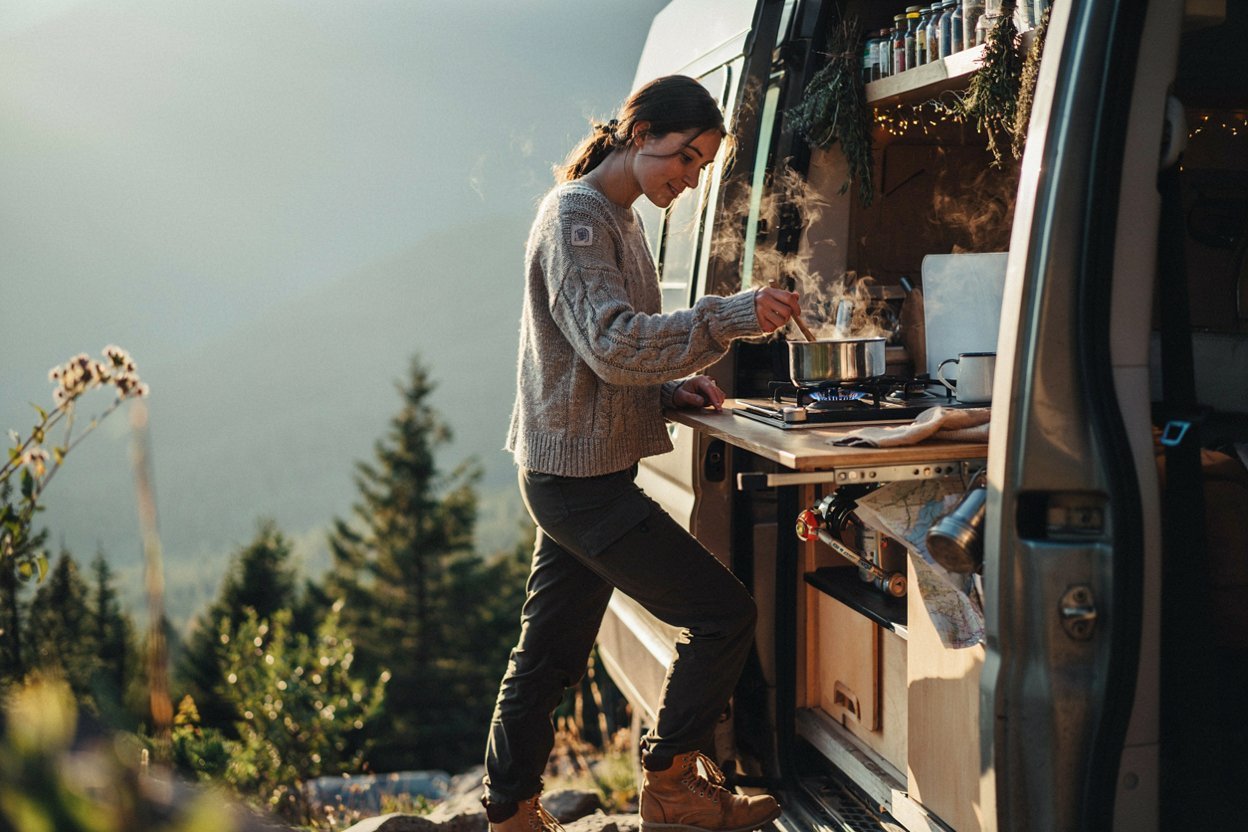

My first month on the road, I tried to cook pasta with a single burner balanced on a cooler lid, no cutting board, and a fork I’d stolen from a gas station.
It was a disaster, and also the moment I realized my kitchen setup needed way more thought than “figure it out as I go”.
Since then, I’ve rebuilt my van kitchen three times, tested more gadgets than I’d like to admit, and finally landed on a system that actually works. This is everything I wish someone had handed me on day one.
Why Your Van Kitchen Deserves Real Planning
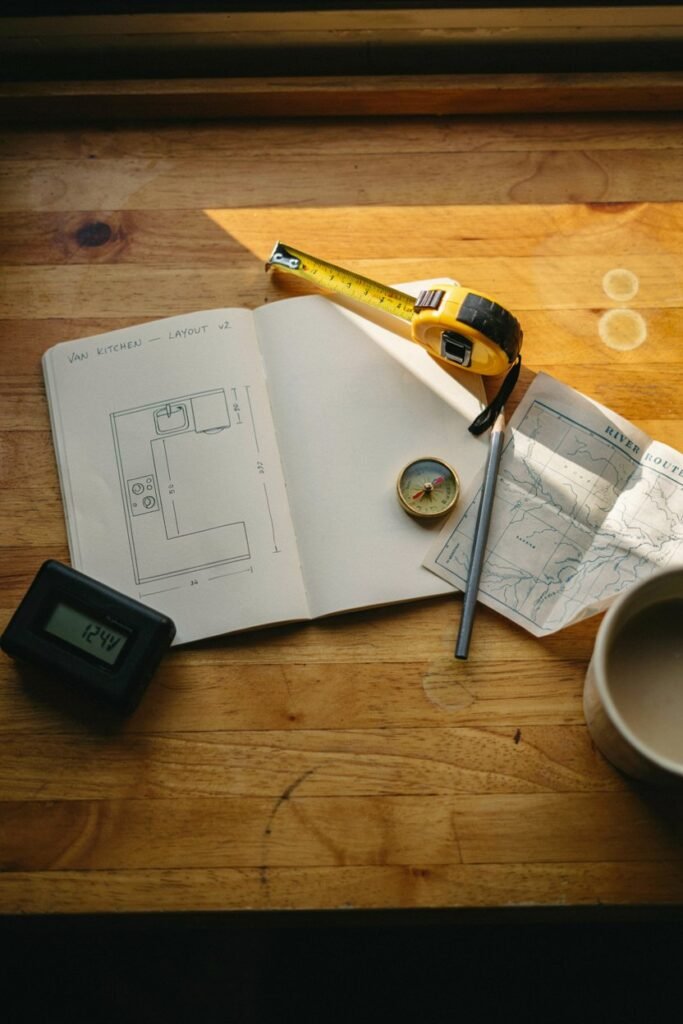
Before we get into the gear itself, let’s talk about the stuff nobody warns you about, because this is where most van kitchens fall apart. It isn’t the pans or the plates. It’s the systems around them.
Power matters more than you think. Whether you’re running a 12V fridge, a portable induction stove, or just charging your immersion blender, you need to know your battery capacity before you buy anything electric.
A fridge that draws too much power will drain your house battery overnight, and there’s nothing worse than waking up to warm milk.
If you’re still figuring out your setup, this is worth pairing with a look at how solar and battery banks work for full-time van living.
Water is a whole project on its own. You’ll need a plan for fresh water storage, a way to filter it if you’re filling up from questionable sources, and a separate system for greywater so you’re not just dumping dishwater onto the ground (please don’t most places have rules against this, and it’s just not kind to the land you’re parked on).
Ventilation and fire safety are non-negotiable. Propane stoves need airflow, and enclosed van spaces trap fumes fast.
A carbon monoxide detector and a small fire extinguisher are cheap, unglamorous, and could genuinely save your life. I keep both mounted near my cooking area, always within arm’s reach.
Budget in tiers, not all at once. You don’t need to buy everything on this list in one trip to REI. Start with the essentials, live with your setup for a few weeks, and let your actual cooking habits tell you what to upgrade next.
Okay. Now let’s get into the good stuff.
The Essential Van Kitchen Gear List
Cooking Appliances
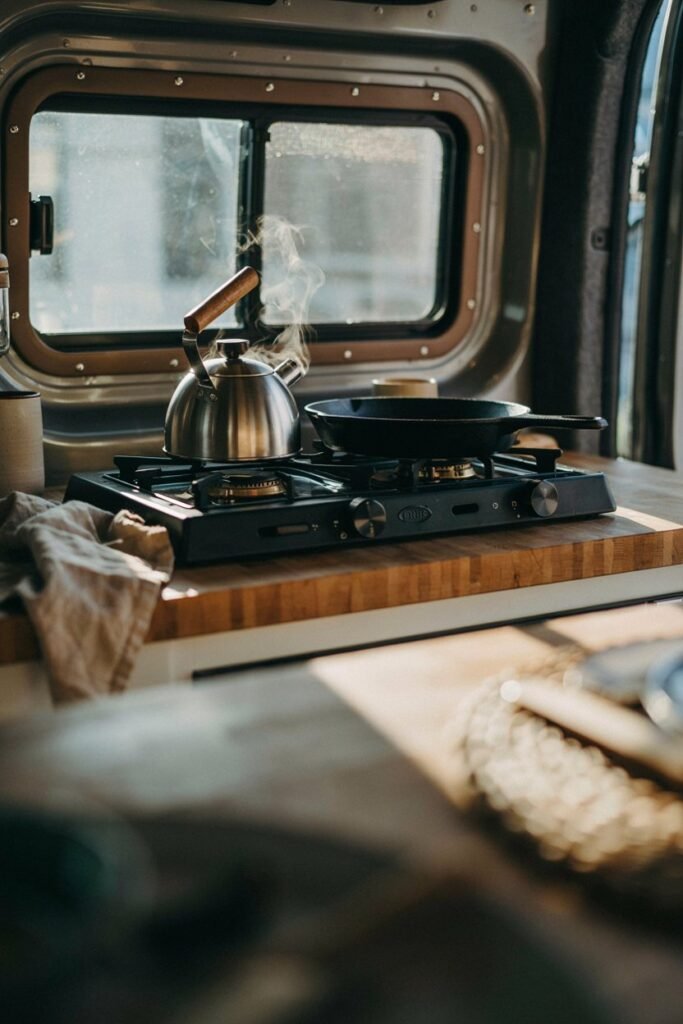
This is the heart of your kitchen, and the piece most people overthink or underthink.
- A reliable stove. Most van lifers land on either a two-burner propane stove (like a Camp Chef or Coleman) or a single-burner induction cooktop if you’ve got the electrical setup for it. Propane is more universal and works even when your batteries are low, but induction is cleaner, doesn’t require refilling gas canisters, and heats up shockingly fast. If you’re torn, think about your climate and travel style: full-timers who spend a lot of time boondocking off-grid usually lean propane, while those who stay closer to campgrounds with hookups or run a solid solar setup often prefer induction for the cleaner air and lower fire risk.
- An electric kettle or a stovetop kettle. Non-negotiable for coffee people. If you’re running off propane, a small stainless kettle boils water in minutes. If you’ve got the power to spare, an electric kettle is one of those small luxuries that makes mornings feel civilized. I actually keep both — a stovetop kettle as backup for cloudy days when my battery bank is running low.
- A compact instant pot or multi-cooker. This one surprised me. A mini instant pot lets you make rice, stews, oatmeal, and even yogurt with almost no supervision, which is a gift when you’re also trying to set up camp before dark. It also doubles as extra counter space when it’s not plugged in, which matters more than you’d think in a rig with limited square footage.
- A cast iron skillet. Heavy, yes, but it does everything — searing, baking, even acting as a lid for other pans. One good cast iron pan can replace three flimsy nonstick ones, and it’ll outlast your van itself if you take care of it. A quick wipe and a little oil after each use keeps it seasoned and rust-free.
- A small toaster or a stovetop toast rack. Optional, but if you love toast (I do), don’t sleep on this. A stovetop rack is the lighter, more compact option and works over any burner without draining your battery.
- A portable outdoor grill or single burner. Something you can set up outside on nice evenings. It keeps heat, smoke, and cooking smells out of your living space, and honestly, cooking under the stars never gets old.
Cookware and Prep Tools
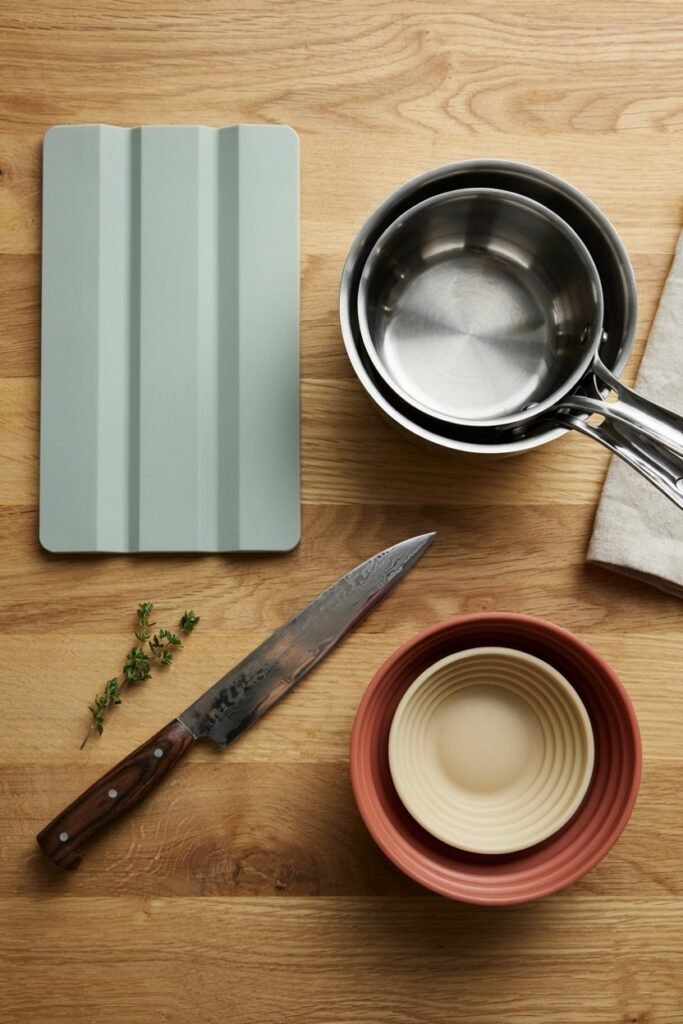
Keep this section lean. Multi-use items are your best friend in a small kitchen, and every item you bring should be earning its keep in more than one way.
- A collapsible cutting board. Silicone boards fold flat and store in a drawer or hang on a hook, saving precious counter space. Bonus points if you get one with a lip on the edge, so you can scoop chopped veggies straight into a pan.
- A sharp chef’s knife and a paring knife. Two knives, both good quality, will outperform a whole cheap knife block. A dull knife is actually more dangerous than a sharp one, since you end up applying more pressure and increasing the chance of slipping, so don’t skimp here.
- Nesting pots and pans. Look for cookware sets designed to stack inside each other. It sounds like a small thing until you realize how much cabinet space it saves — a full three-piece set can take up the same footprint as a single standalone pot.
- A collapsible colander and mixing bowl. Silicone versions squash flat when not in use, which makes them ideal for a kitchen where every inch counts.
- Reusable food storage bags or stackable containers. Skip anything bulky or oddly shaped; square containers use space far more efficiently than round ones and stack much more cleanly in a cabinet that’s constantly in motion.
- A compact cutting/prep set: vegetable peeler, can opener, kitchen scissors, and a garlic press. Small tools, but you’ll reach for them constantly, and it’s worth buying quality versions instead of the flimsy ones that snap after a few uses.
- Silicone spatula, tongs, and a wooden spoon. One of each is genuinely enough. Resist the urge to bring a full utensil crock from your old kitchen you will not miss the extras.
- A collapsible dish rack or drying mat. Lets your dishes air dry without hogging counter space, and folds flat for storage when it’s not in use.
- Measuring cups and spoons, nested. Look for a set specifically designed to nest inside one another rather than a set that comes on a bulky ring.
Food Storage and Refrigeration
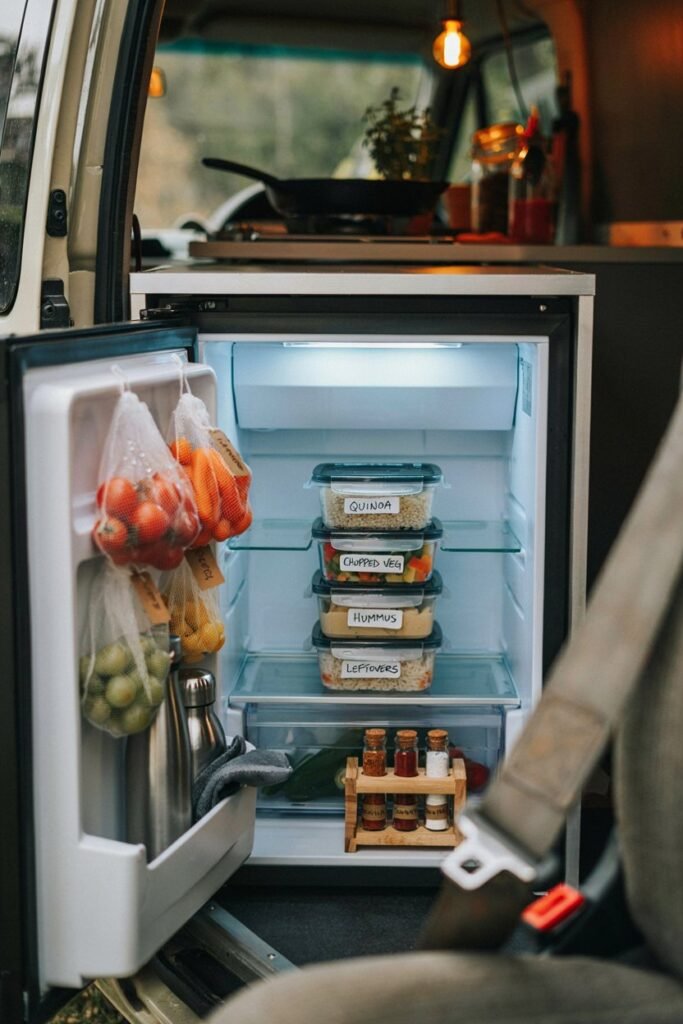
- A 12V compressor fridge or a high-quality cooler. If your budget and power setup allow it, a proper 12V fridge (like a Dometic or ARB) is worth every penny no more soggy ice-melt sandwiches, no more emergency ice runs, and no more mushy produce sitting in cold water. If you’re not there yet, a good cooler with a drain plug and thick insulation will get you through, just budget extra time (and money on ice) into your route planning.
- Airtight dry storage containers. Protects pantry staples from moisture, pests, and the chaos of driving down a bumpy forest road. Nothing ruins a bag of flour faster than a pothole and a loose lid.
- A spice organizer. A small magnetic tin set or a stackable spice rack keeps your seasoning game strong without taking over a whole shelf. Decant your spices into small matching containers rather than hauling the bulky grocery-store bottles.
- Mesh produce bags. Keep fruit and veggies breathable and bump-protected, and they’re reusable, which cuts down on plastic waste at the farmers market or grocery store.
- A hanging fruit basket or net. Frees up counter and fridge space for produce that doesn’t need refrigeration, like onions, potatoes, and citrus.
Water and Hydration
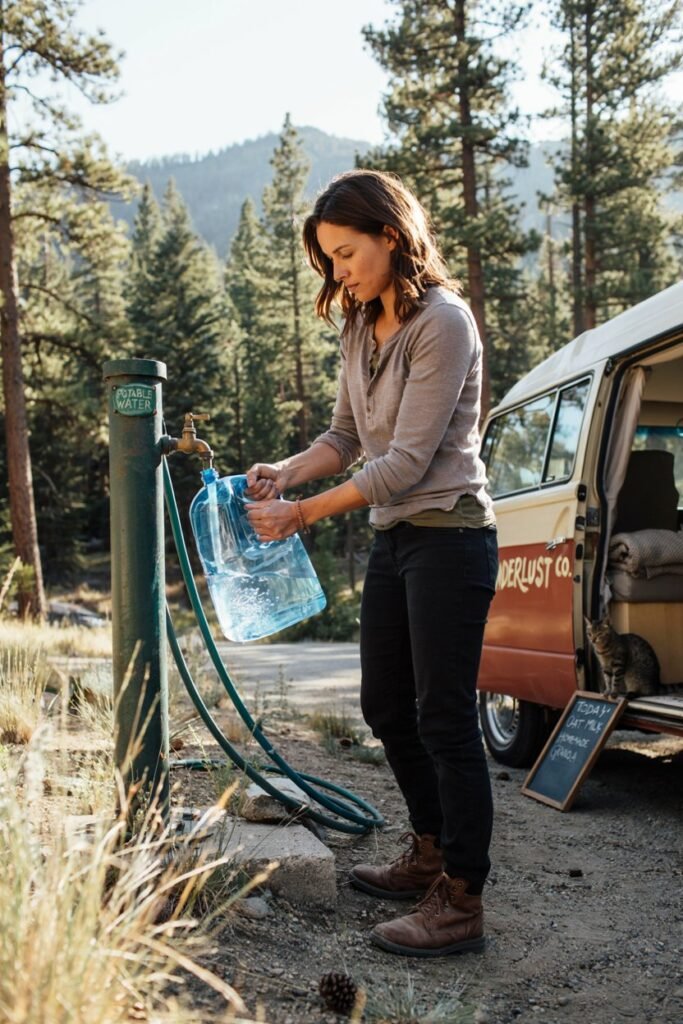
- A water filtration system or filtered water bottle. Whether it’s a built-in filter tank or a portable option like a Berkey or LifeStraw bottle, don’t skip this. Water quality varies wildly depending on where you’re filling up, and a filter gives you peace of mind whether you’re at a trusted campground spigot or a questionable rural tap.
- A collapsible water jug. Great for topping up at fill stations without hauling your whole tank around, and it folds flat for storage when empty.
- Reusable water bottles for everyone in the van. Obvious, but easy to forget until you’re thirsty and out of options. Insulated bottles are worth the extra cost if you spend time in hot climates.
- A water level gauge or simple dipstick. Knowing exactly how much water you have left changes how you plan your cooking and cleaning for the day, especially if you’re several days from the next refill.
Cleanup and Dishwashing
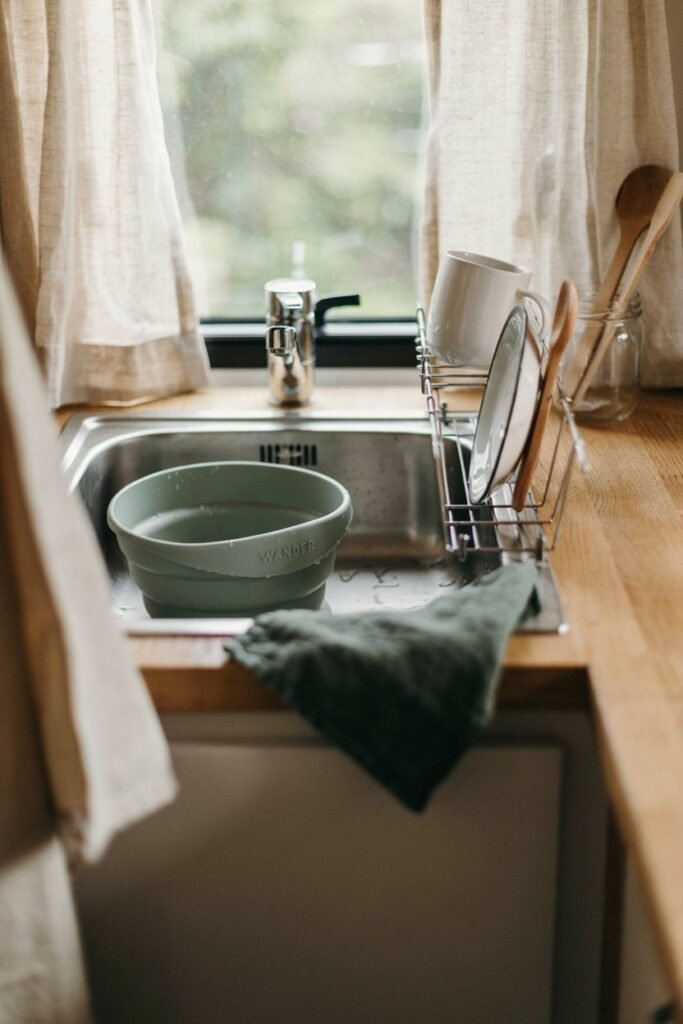
- A small dish basin. Lets you wash dishes with minimal water and control exactly where the greywater goes, which matters a lot when you’re trying to conserve your tank.
- Biodegradable dish soap. Better for the environment and for any water source nearby, especially if you’re washing dishes outside near a creek, lake, or forest floor.
- A greywater container. Store your dishwater until you can dispose of it properly at a dump station, not on the ground. Many public lands have strict rules about this, and it only takes one bad habit to damage a beautiful spot for everyone after you.
- Quick-dry dish towels. Microfiber towels dry faster than cotton and take up way less space, plus they resist that damp, musty smell that regular towels get in humid conditions.
- Trash and recycling bags with a designated bin or hanging bag. Keeping trash contained (and smell-sealed) matters more than you’d expect in a small space, especially in warmer months.
- A small squeegee or sponge with a holder. Keeps your sink area from turning into a soggy mess and helps everything dry faster in a humid van interior.
Safety and Odds & Ends
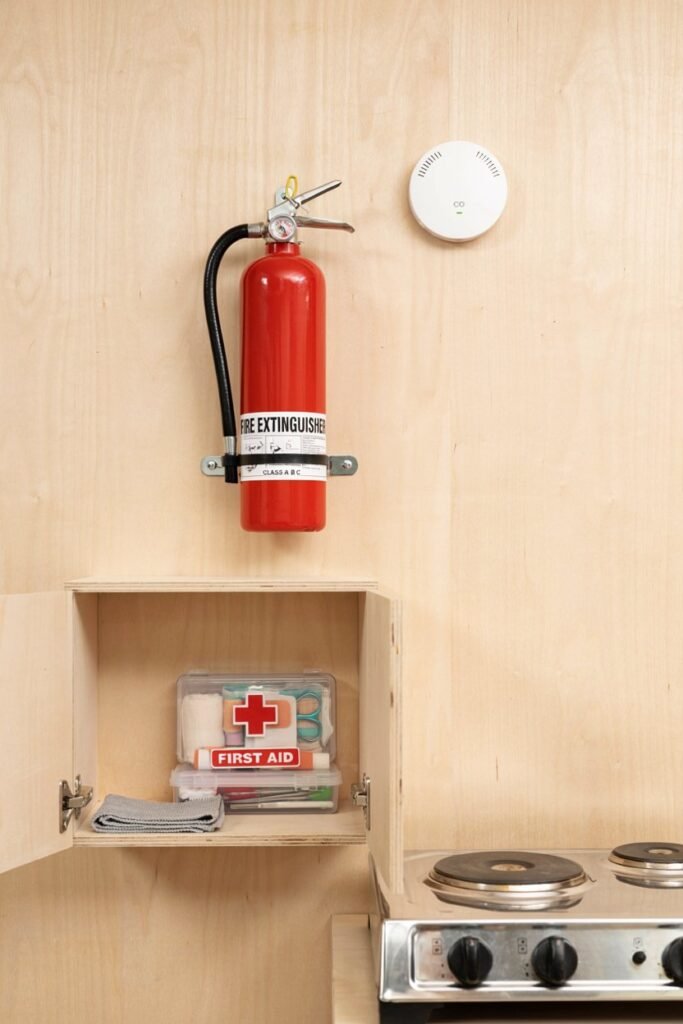
- A carbon monoxide and propane detector. This is the one item on this whole list I’d call truly essential, no exceptions. It’s inexpensive, it’s small, and it genuinely could save your life if you’re cooking with propane in an enclosed space overnight.
- A small fire extinguisher. Mounted somewhere accessible, not buried under gear, so you or anyone else in the van can grab it in seconds.
- Fire-resistant heat mats. Protect your counters and cabinetry from hot pots and pans, especially if your countertops are wood or laminate.
- Reusable straws and utensils. Small, but they cut down on waste dramatically over months on the road, and they’re handy for picnic-style meals outside the van.
- A first aid kit stored near your kitchen area, since that’s usually where cuts and burns happen. Include burn gel specifically, since minor stove burns are one of the most common van kitchen injuries.
- A fire blanket. Compact, cheap, and specifically designed to smother small grease or stove fires quickly, something a standard extinguisher isn’t always ideal for.
Building Your Kitchen in Budget Tiers
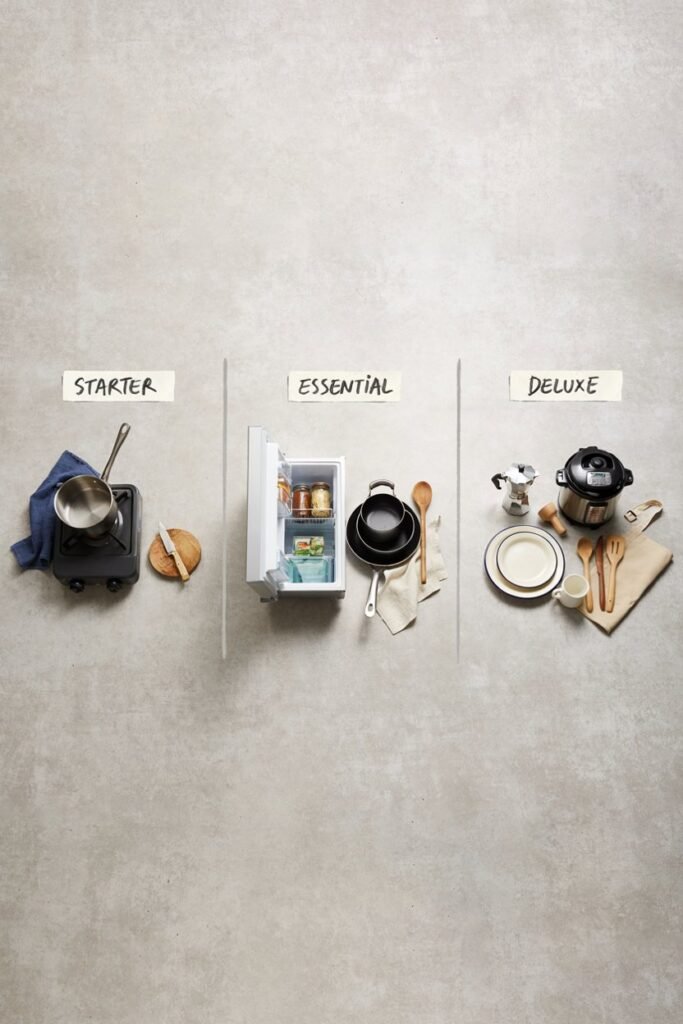
One thing I really wish I’d understood earlier: you don’t have to buy everything at once, and honestly, you shouldn’t. Here’s how I’d break it down if I were starting fresh today.
Tier one — the essentials you need before your first trip. A single-burner stove, one pot, one pan, a knife, a cutting board, basic utensils, a cooler, and your safety items (carbon monoxide detector, fire extinguisher). This gets you cooking safely and simply, and it costs a fraction of a full setup.
Tier two — the upgrades that make daily life easier. This is where a proper fridge, a second burner, nesting cookware, and better storage containers come in.
Most people add these once they’ve lived with tier one for a month or two and know exactly what they’re missing.
Tier three — the comfort additions. Instant pots, espresso makers, dedicated outdoor grills, and the little luxuries that turn a functional kitchen into one you actually love spending time in.
There’s no rush to get here, and honestly, half the fun of van life is slowly building out your space as you learn what you truly use.
Buying in tiers also means less waste. I bought a full set of cookware in my first week and ended up donating half of it three months later because it simply didn’t fit how I actually cook on the road.
A Simple Day of Van Kitchen Meals
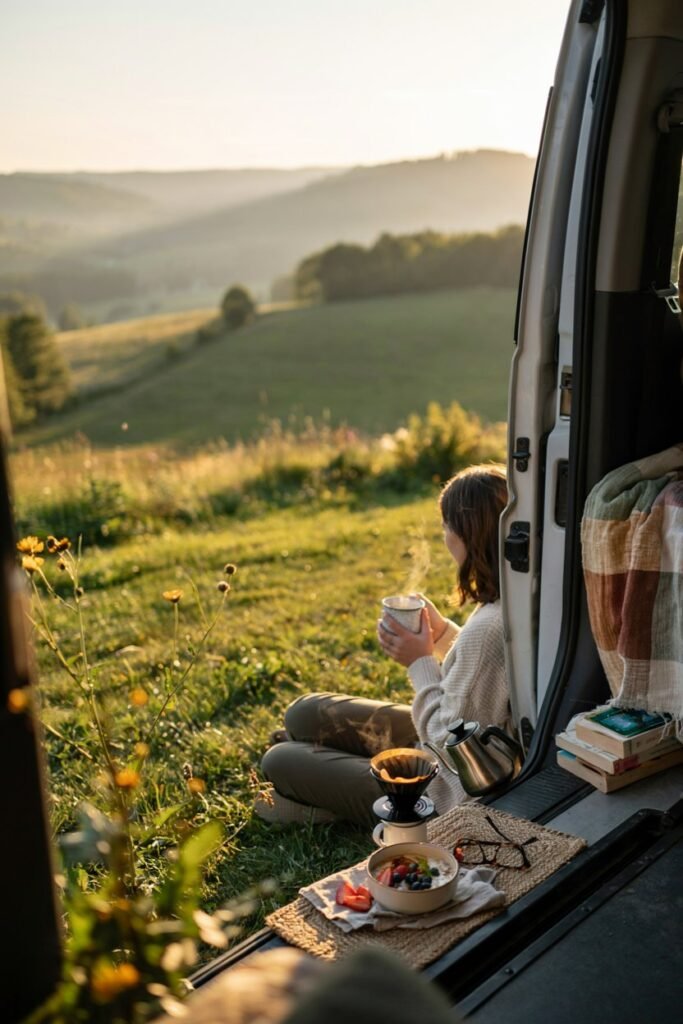
To give you a real sense of how this all comes together, here’s what a typical day of eating looks like in my van, start to finish.
Morning starts with the kettle going while I pack up camp. Oatmeal with dried fruit and a spoonful of peanut butter, or eggs and greens in the cast iron if I’m feeling fancier and have time before driving.
Coffee, always, made with a small pour-over cone that lives in the same drawer as my mugs.
Midday tends to be simple and cold, especially if I’m driving or hiking think wraps, hummus and crackers, or a big salad built from whatever produce is holding up well in the fridge.
This is where having a well-organized fridge really pays off, since you’re not digging through everything to find what you need.
Evening is when the instant pot or two-burner stove earns its keep. One-pot meals are the golden rule here: stews, curries, pasta with everything tossed in one pan, grain bowls.
Less cleanup, less water used, and honestly, some of the best meals I’ve made have come from throwing whatever’s left in the fridge into one pot with good spices.
Planning meals this way simple mornings, cold midday options, one-pot evenings keeps both your cooking and cleanup manageable no matter how small your kitchen is.
Frequently Asked Questions
Do I really need a full fridge, or is a cooler enough? It depends on how long you’re on the road and how remote you plan to go.
A cooler works fine for weekend trips or short stints, but if you’re living in your van full-time, a 12V fridge quickly pays for itself in saved ice costs and reduced food waste.
How much storage space do I actually need for a functional kitchen? Less than you’d think. Most van kitchens run well with two to three cabinets or drawers for food and cookware, plus a dedicated spot for your fridge or cooler.
The key is choosing multi-use items over specialty gadgets.
What’s the biggest mistake new van lifers make with their kitchen? Overbuying before you understand your own habits. Start minimal, live with it, and upgrade based on what you genuinely use, not what looked good in someone else’s van tour video.
Is propane or electric better for van cooking? Neither is universally better it depends on your power setup, climate, and how remote you plan to travel.
Propane is more reliable off-grid, while electric setups are cleaner and safer in enclosed spaces if you have the battery capacity to support them.
Organizing Tips for a Small Van Kitchen
This is the part that took me the longest to figure out, so let me save you some trial and error.
Zone your kitchen by task. Group your cooking tools together, your food storage together, and your cleaning supplies together. When everything has a designated zone, you stop digging through three drawers to find a can opener.
Use vertical space aggressively. Hanging rails, magnetic strips for knives, and over-the-sink shelves give you storage without eating into counter space.
Command hooks are a van lifer’s best friend for hanging towels, oven mitts, and utensils.
Store heavy items low and centered. Cast iron pans, canned goods, and water containers should live low in your cabinets, close to the van’s center of gravity.
This keeps your rig more stable on winding roads and prevents cabinets from becoming top-heavy.
Use drawer dividers or tension rods. A simple tension rod across a cabinet keeps pans from sliding around while driving. Small drawer dividers do the same for utensils and spices.
Label your containers. When everything’s transferred into matching containers for space efficiency, it’s easy to forget what’s what.
A label maker or even masking tape and a marker saves you from cooking with baking soda instead of flour (ask me how I know).
Keep a “grab bag” for outdoor cooking. A separate tote with a portable stove, folding table, and basic utensils makes it easy to cook outside on nice days without unpacking your whole kitchen.
Do a weekly reset. Every few days, empty expired food, wipe down surfaces, and reassess what you actually used versus what’s been sitting untouched. Van life has a way of making clutter accumulate fast if you don’t stay on top of it.
Plan meals around your storage limits, not the other way around. Rather than buying groceries and hoping they fit, think in terms of your fridge and pantry space first. Simple, one-pot meals tend to work best for both cooking and cleanup.
A Few Things People Often Forget to Mention
A couple of things I wish had been on someone else’s list when I started out:
- Non-slip shelf liner for every cabinet and drawer. Without it, jars and containers rattle and shift constantly on rough roads, and breakage is common.
- A small fan or extra ventilation near your cooking area, especially if you’re using propane in cooler weather with windows closed.
- Weather-appropriate cooking plans. In extreme heat, your van interior can become unbearable if you’re running a stove indoors, so having an outdoor setup matters more in summer. In cold weather, you’ll want a stove that performs well even when temperatures drop, since some propane systems struggle below freezing.
- A backup manual can opener even if you have an electric one. Power fails, batteries die, and a $3 manual opener has saved more than one dinner of mine.
Related Reading From the Blog
If you’re building out your kitchen as part of a bigger van setup, a few posts from the blog pair really well with this one.
My full breakdown on how to live in a van and travel full-time covers everything from choosing a rig to setting up your systems, including a deeper look at compact kitchen layouts.
If you’re leaning more into the aesthetic and comfort side of your build, my guide to cozy van setup ideas for summer has plenty of inspiration for making your whole space feel like home, kitchen included.
Once your kitchen’s dialed in, you’ll want somewhere gorgeous to actually use it.
Check out my favorite summer van routes for road trip inspiration, or if you’re chasing cooler temperatures, these van life destinations for August are perfect for escaping the heat while your fridge does the heavy lifting.
And if organization is your love language like it is mine, my tips on staying organized during multi-city travel apply beautifully to van life too, especially when it comes to systems that keep chaos at bay in a small space.
Final Thoughts
Your van kitchen doesn’t need to be Pinterest-perfect to work well. It needs to be functional, safe, and built around how you actually cook and live, not how you imagine you will on your best day.
Start with the essentials, pay attention to what you reach for again and again, and let your setup evolve with you.
A few months in, you’ll have a kitchen that feels less like a compromise and more like the best part of your rolling home.
Happy cooking, and safe travels out there.