
Norway is one of those destinations that makes you dream about your next adventure before you have even finished planning the first one.
From beautiful fjords and colorful fishing villages to peaceful islands, scenic train rides, and magical northern lights, this Scandinavian country has something special for every traveler.
Whether you love exploring charming cities, spending time in nature, or discovering places that look like they belong in a fairytale, Norway deserves a place on your travel bucket list.
In this guide, I’m sharing 20 of the best things to do in Norway, along with helpful tips to plan your trip.
1. Explore the Beautiful Geirangerfjord
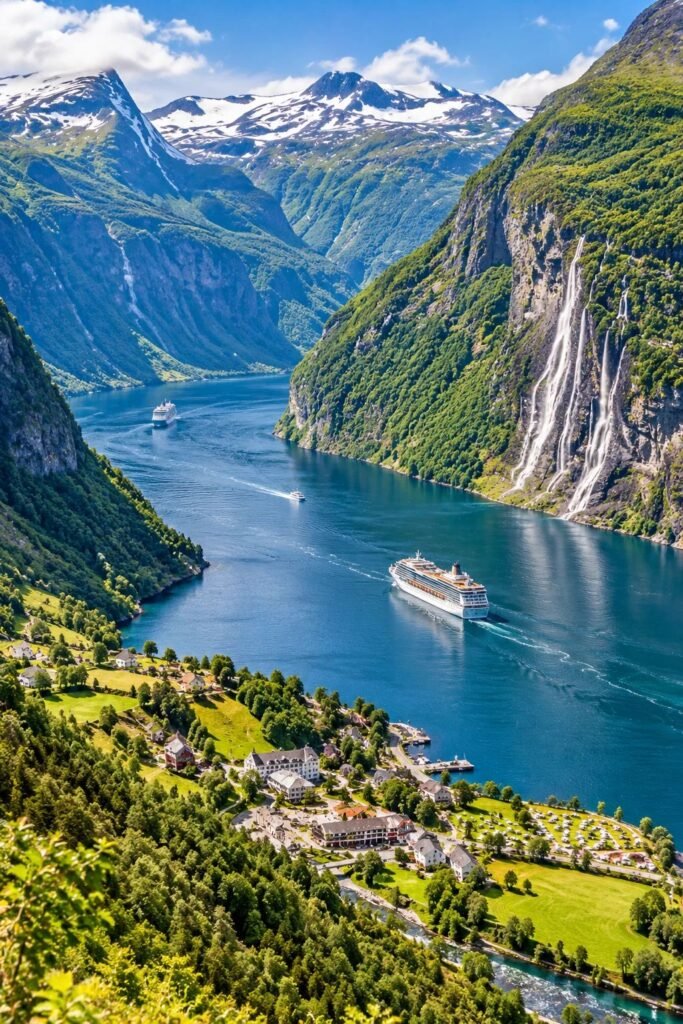
Geirangerfjord is one of the most beautiful places to visit in Norway.
Surrounded by steep green mountains, dramatic cliffs, and beautiful waterfalls, this famous fjord offers the kind of scenery that makes you stop and admire everything around you.
One of the best ways to experience Geirangerfjord is by taking a sightseeing cruise.
From the water, you can see waterfalls pouring down the mountainsides and small farms sitting high above the fjord. The Seven Sisters Waterfall is one of the most famous sights to look out for during your visit.
If you prefer exploring on land, visit the viewpoints around Geiranger for breathtaking views of the water and surrounding mountains.
Things to do in Geirangerfjord:
- Take a fjord cruise to admire the waterfalls.
- Visit the Flydalsjuvet viewpoint.
- Explore the village of Geiranger.
- Enjoy scenic drives through the surrounding mountains.
- Take photographs of the fjord from different viewpoints.
Travel tip: Summer is a popular time to visit because many sightseeing activities and seasonal roads are available. Book accommodation early if you plan to travel during the busiest months.
Read 15 Breathtaking Winter Travel Destinations You Must Visit This Year
2. Discover the Colorful City of Bergen
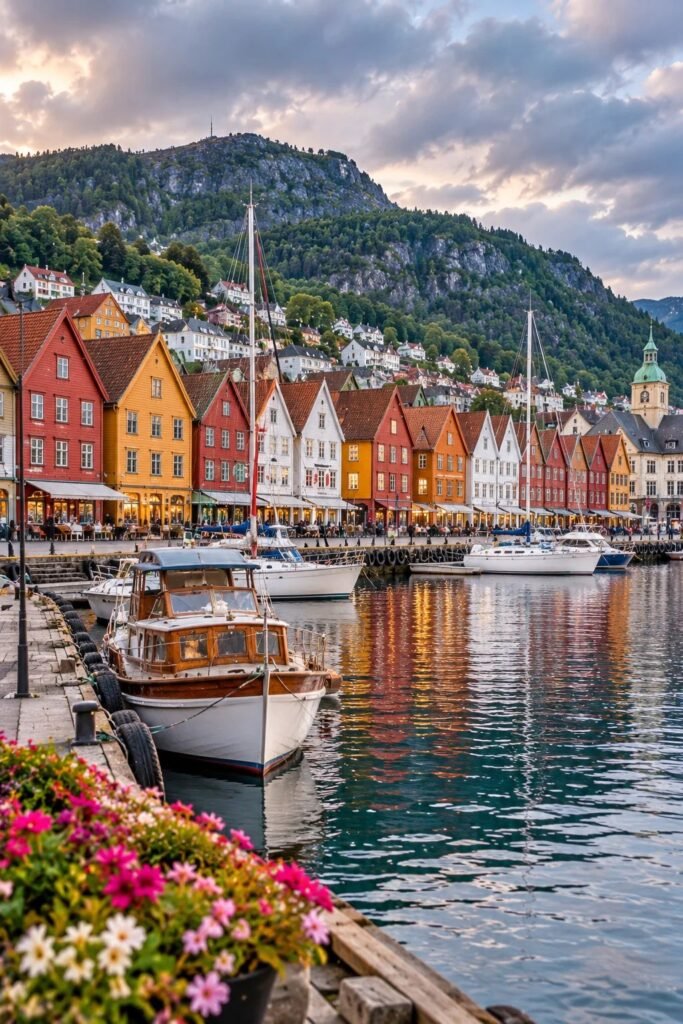
Bergen is one of the best cities to include in your Norway itinerary. It combines colorful historic buildings, a lively harbor, cozy cafés, and easy access to some of the country’s most beautiful fjords.
Start your visit at Bryggen, the famous waterfront area lined with colorful wooden buildings. This historic district is recognized as a UNESCO World Heritage Site and is one of Bergen’s most recognizable attractions.
I would recommend taking your time as you explore the narrow passageways behind the waterfront. You will find small shops, galleries, and charming corners that are perfect for photographs.
Afterward, head to the Fish Market to discover local seafood and Norwegian food. If you want a beautiful view of the city, ride the Fløibanen funicular to Mount Fløyen.
Best things to do in Bergen:
- Explore the historic Bryggen waterfront.
- Ride the Fløibanen funicular.
- Visit the Bergen Fish Market.
- Enjoy coffee and pastries at a local café.
- Take a guided fjord excursion.
- Explore Bergen’s museums and historic streets.
Travel tip: Bergen is known for rainy weather, so bring a waterproof jacket and comfortable walking shoes. Even when the weather is cloudy, the city has a lovely atmosphere.
Read Europe by Train: 20 Itinerary Ideas for 10 Days of Travel
3. See the Northern Lights in Tromsø
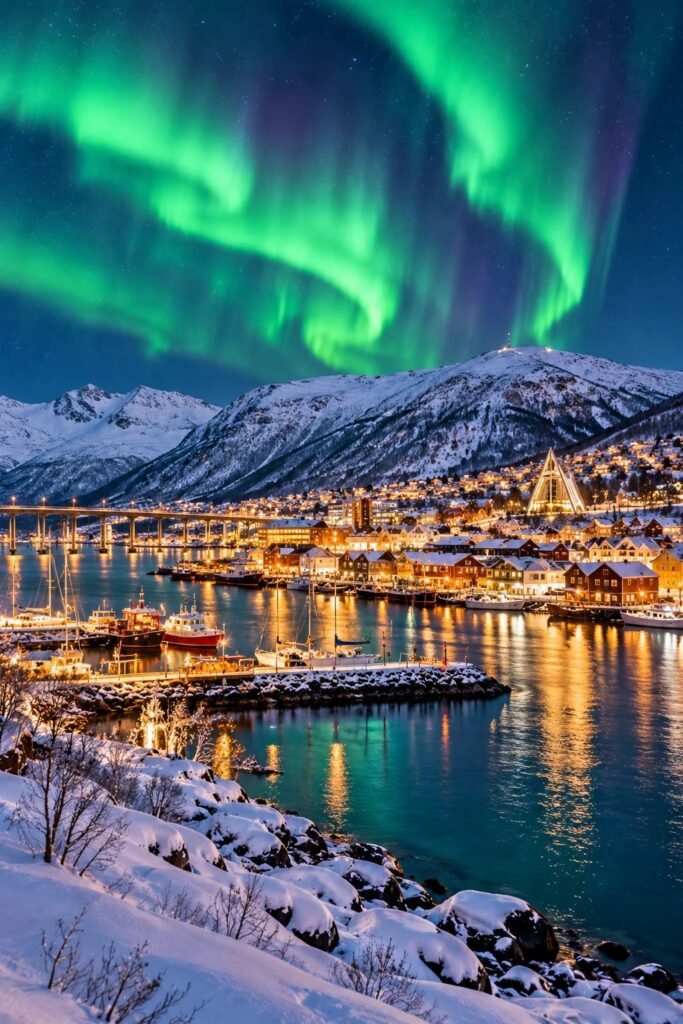
Seeing the northern lights is a dream for many travelers, and Tromsø is one of Norway’s best-known destinations for trying to see them.
Located in northern Norway, Tromsø offers access to Arctic landscapes, winter activities, and guided northern lights excursions. When conditions are right, green and sometimes purple lights can appear across the night sky, creating an unforgettable experience.
The northern lights are a natural phenomenon, so sightings can never be guaranteed. Clear skies, darkness, and solar activity all influence your chances.
During the day, you can explore the city, visit museums, or take in the surrounding mountain scenery. In winter, some visitors also enjoy guided dog-sledding experiences and other seasonal Arctic activities.
Things to do in Tromsø:
- Join a guided northern lights excursion.
- Visit the Arctic Cathedral.
- Explore the Polar Museum.
- Take the Fjellheisen cable car for panoramic views when operating.
- Enjoy local cafés and restaurants.
- Learn about Arctic wildlife and culture.
Best time to visit: Northern lights trips are generally planned from autumn through early spring, when the nights are dark enough.
Travel tip: Spend several nights in Tromsø rather than planning only one evening for the aurora. This gives you more opportunities if clouds or weather affect your first attempt.
Read How to Travel for Free When You Have No Money or Budget
4. Visit the Stunning Lofoten Islands
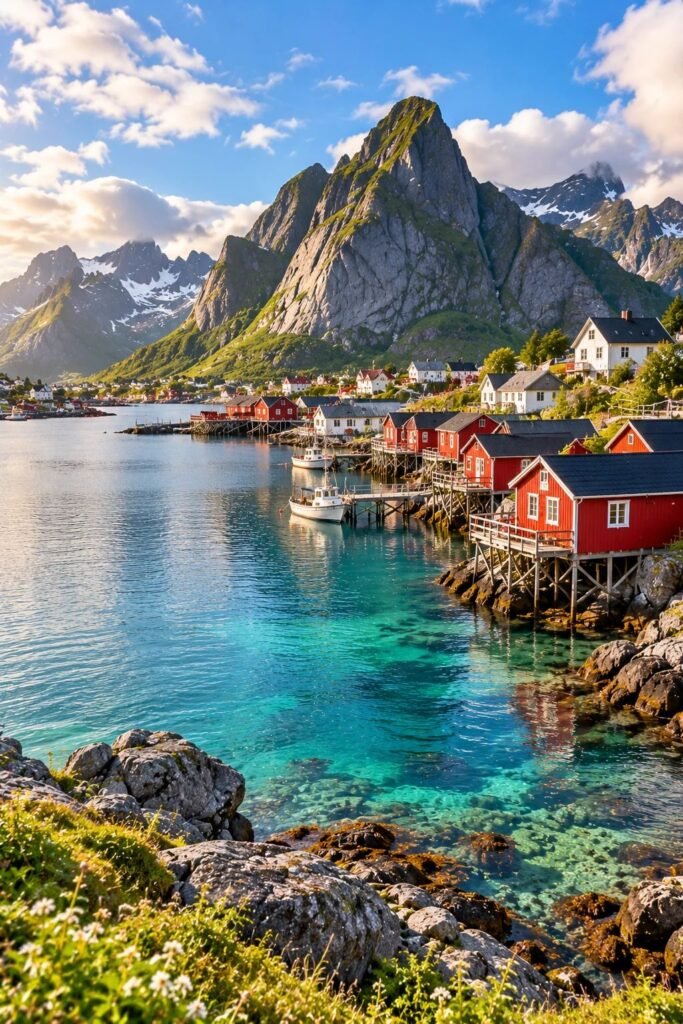
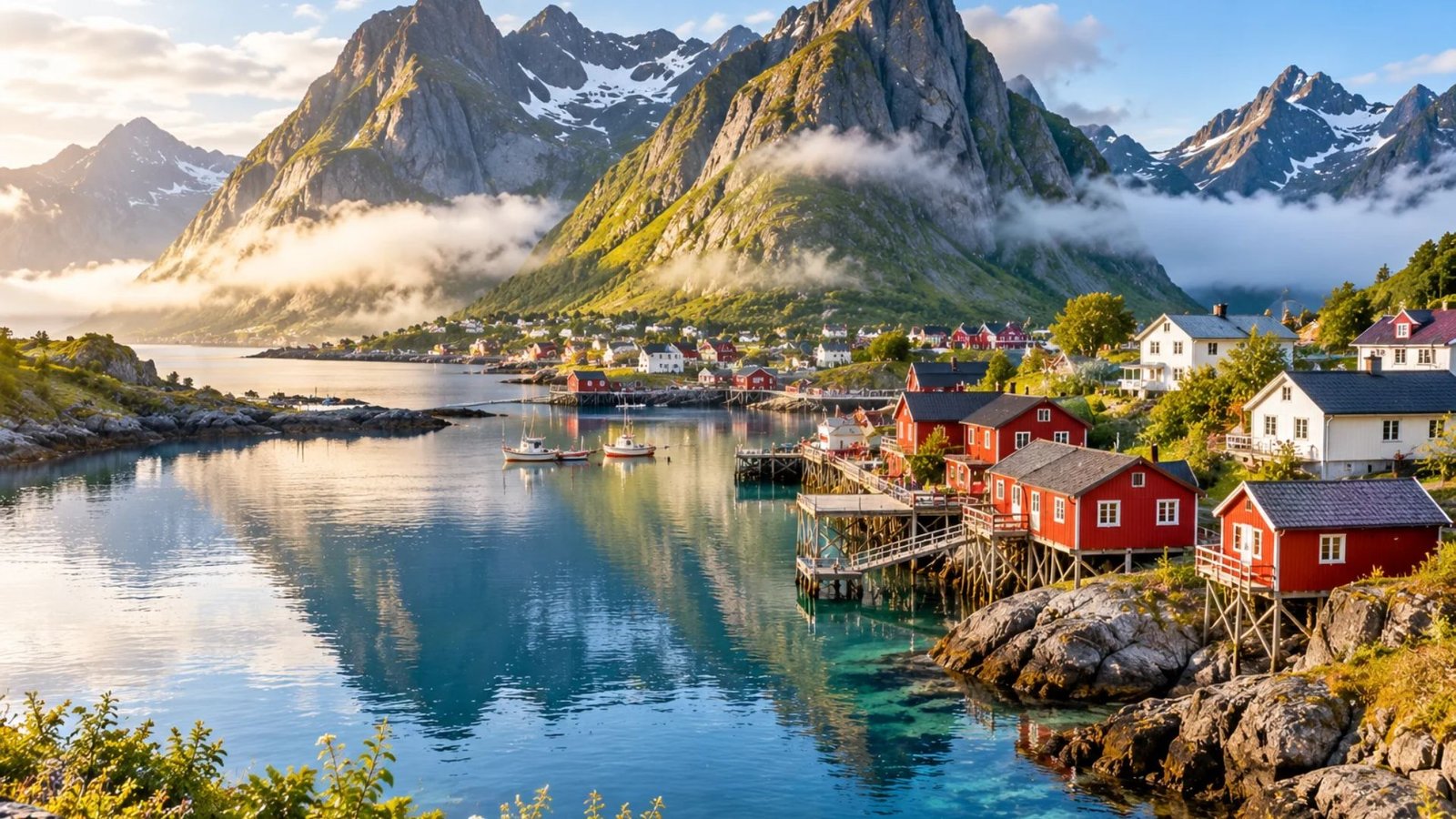
The Lofoten Islands are famous for their dramatic mountains, peaceful fishing villages, sandy beaches, and clear blue-green water.
They are a wonderful destination for travelers who enjoy photography, scenic drives, and quiet moments surrounded by nature.
One of the most memorable things about Lofoten is the contrast between the towering mountains and the traditional red fishing cabins scattered along the coastline.
Visit Reine, a small fishing village known for its spectacular surroundings. You can also explore Henningsvær, a charming village with art galleries, cafés, and a beautiful harbor.
If you enjoy walking, the islands have trails with incredible views. Choose a route that matches your experience and check the local weather before setting out.
Best things to do in Lofoten:
- Explore Reine and its surrounding viewpoints.
- Visit the fishing village of Henningsvær.
- Relax on beaches such as Haukland Beach.
- Photograph traditional Norwegian fishing cabins.
- Take a scenic road trip between villages.
- Enjoy kayaking or other guided outdoor activities when conditions allow.
Travel tip: Renting a car can make it easier to explore the islands, especially if you want to visit several villages and beaches. During summer, book your accommodation well ahead of time.
5. Ride the Famous Flåm Railway
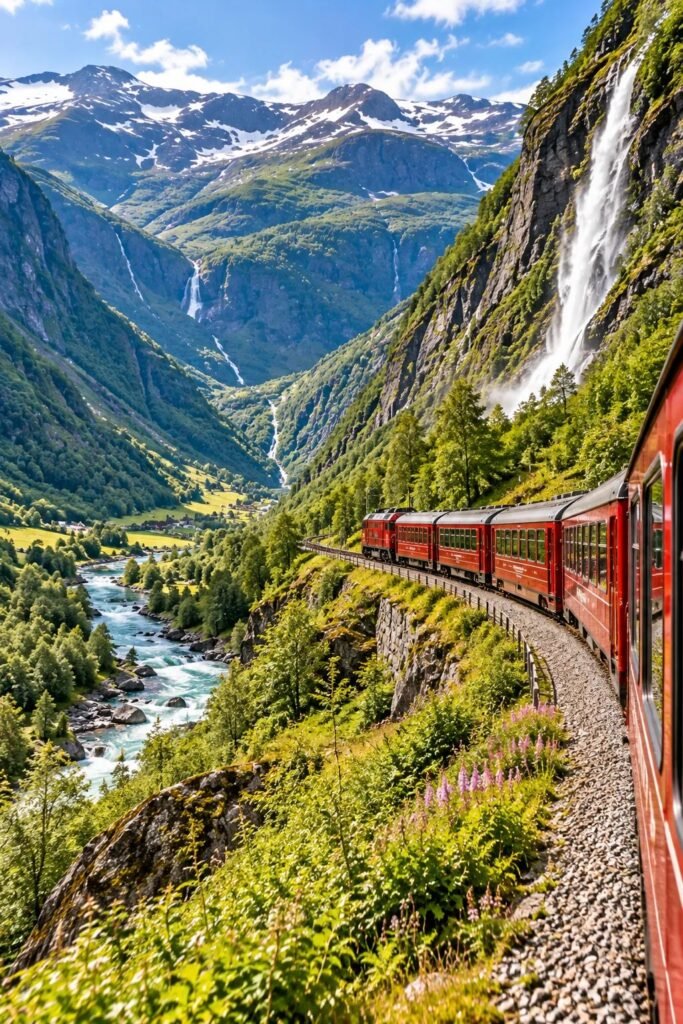
If you love scenic train journeys, the Flåm Railway deserves a place on your Norway bucket list.
This railway connects Flåm with Myrdal and travels through a dramatic landscape of mountains, waterfalls, valleys, and steep slopes. The journey is relatively short, but the scenery makes it feel like a full sightseeing experience.
Along the way, you can admire traditional farms and beautiful natural landscapes. The train also makes a photo stop at the impressive Kjosfossen waterfall when conditions and operations allow.
Flåm itself is a lovely village beside the Aurlandsfjord. It is a convenient starting point for fjord cruises and other outdoor activities.
Things to do in Flåm:
- Take a ride on the Flåm Railway.
- Enjoy a cruise on the Aurlandsfjord or nearby Nærøyfjord.
- Visit the Flåm Railway Museum.
- Explore the village and waterfront.
- Enjoy the surrounding mountain scenery.
Travel tip: Reserve train tickets in advance during peak travel periods. If you have enough time, consider staying overnight instead of treating Flåm as a quick stop.
Read
6. Hike to Pulpit Rock
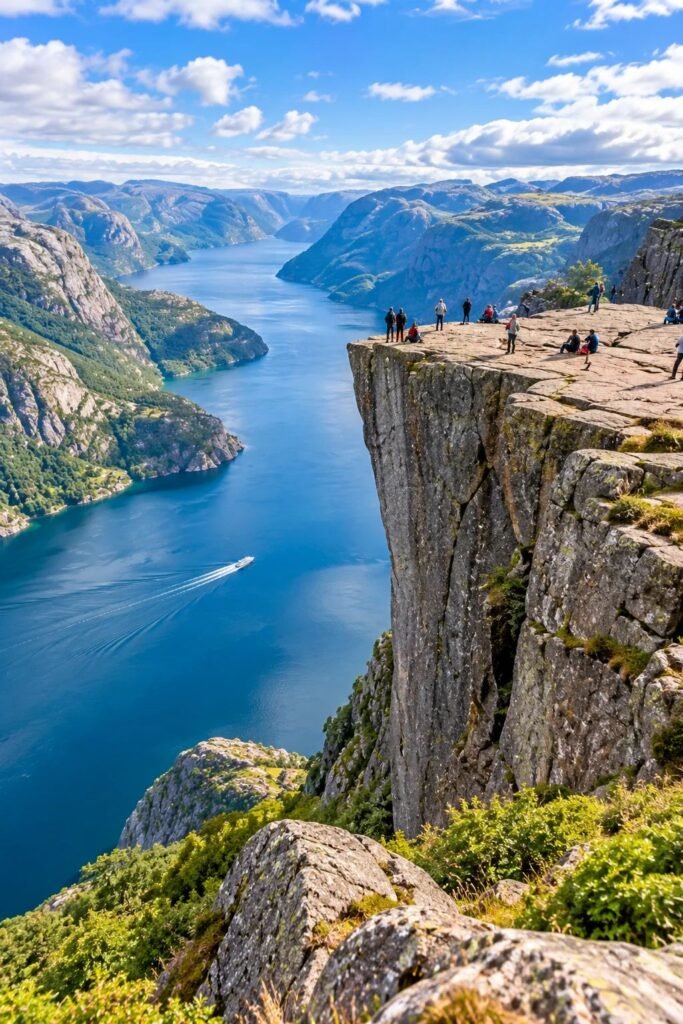
Pulpit Rock, also known as Preikestolen, is one of Norway’s most famous natural attractions. This impressive rocky plateau rises high above Lysefjord and offers incredible views of the surrounding landscape.
The hike is popular with visitors who want to experience Norway’s mountains without committing to a multi-day trek. However, it is still a demanding outdoor walk, with uneven ground, rocky sections, and changes in elevation.
Give yourself enough time to complete the route comfortably, and do not rush just to reach the viewpoint.
What to know before visiting:
- Start early to avoid the busiest periods.
- Wear sturdy hiking shoes.
- Carry water, snacks, and weather-appropriate clothing.
- Check trail conditions before leaving.
- Allow time for both the ascent and descent.
Travel tip: The hiking season and conditions vary. Wet rocks, strong winds, and poor visibility can make the route more difficult, so consider postponing your hike if the weather is unsafe.
7. Explore Oslo, Norway’s Capital
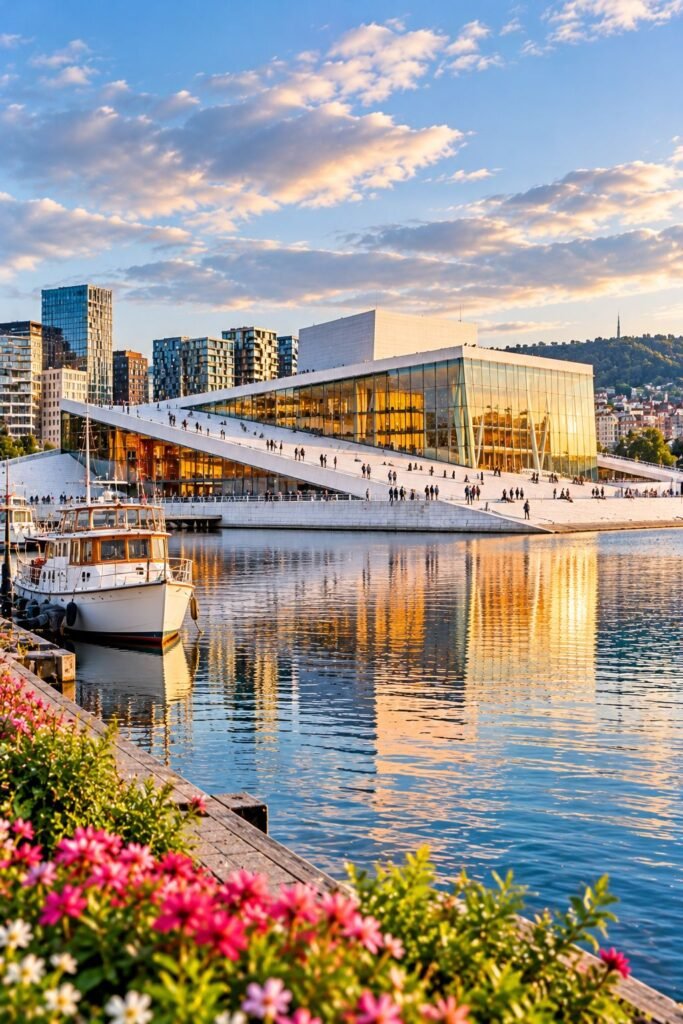
Oslo offers a different experience from Norway’s fjords and mountain villages. It is a modern capital with interesting museums, waterfront neighborhoods, green spaces, and a thriving food scene.
Start with the Oslo Opera House, where you can walk up the sloping roof when access and conditions permit. The building offers lovely views over the harbor and is a favorite spot for photographs.
Continue to the waterfront at Aker Brygge, where you can enjoy a walk beside the water or stop for a meal. Art lovers should consider visiting the MUNCH museum, dedicated to the work of Norwegian artist Edvard Munch.
You can also explore Vigeland Sculpture Park, which features an extensive collection of sculptures in a beautiful park setting.
Best things to do in Oslo:
- Visit the Oslo Opera House.
- Explore the MUNCH museum.
- Walk through Vigeland Sculpture Park.
- Discover the city’s waterfront.
- Visit the National Museum.
- Enjoy Norwegian food at local cafés and restaurants.
Travel tip: Oslo is a great place to spend two or three days if you enjoy culture, museums, shopping, and city walks. Public transportation makes getting around easier without renting a car.
8. Discover the Beauty of Nærøyfjord
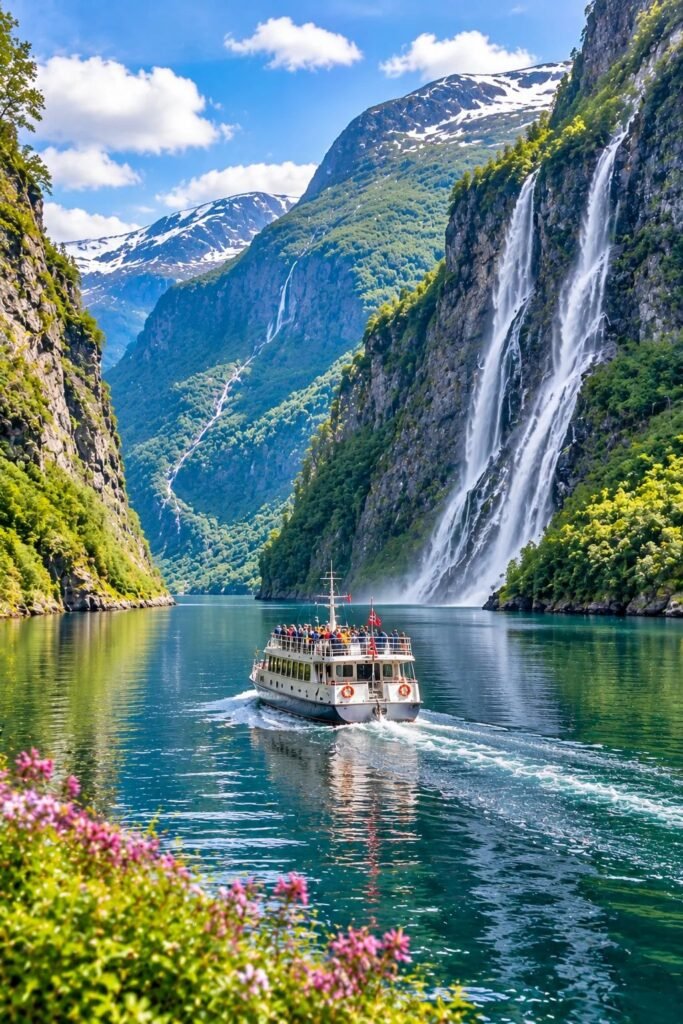
Nærøyfjord is one of Norway’s most spectacular fjords and forms part of the UNESCO-listed West Norwegian Fjords landscape.
The fjord is known for its narrow waterways, steep mountainsides, waterfalls, and small settlements tucked along the shore. A boat trip is one of the best ways to appreciate how dramatic the landscape really is.
You can visit Nærøyfjord as part of a trip to Flåm or Gudvangen. Depending on your plans, you can combine a fjord cruise with a scenic train journey or a visit to the surrounding villages.
Things to do around Nærøyfjord:
- Take a sightseeing cruise.
- Explore Gudvangen.
- Visit Flåm and the surrounding area.
- Enjoy scenic photography stops.
- Learn about the history of settlements along the fjord.
Travel tip: Check cruise schedules before arranging your day. If you are traveling by public transportation, leave enough time between your boat, bus, and train connections.
9. Experience the Midnight Sun in Northern Norway
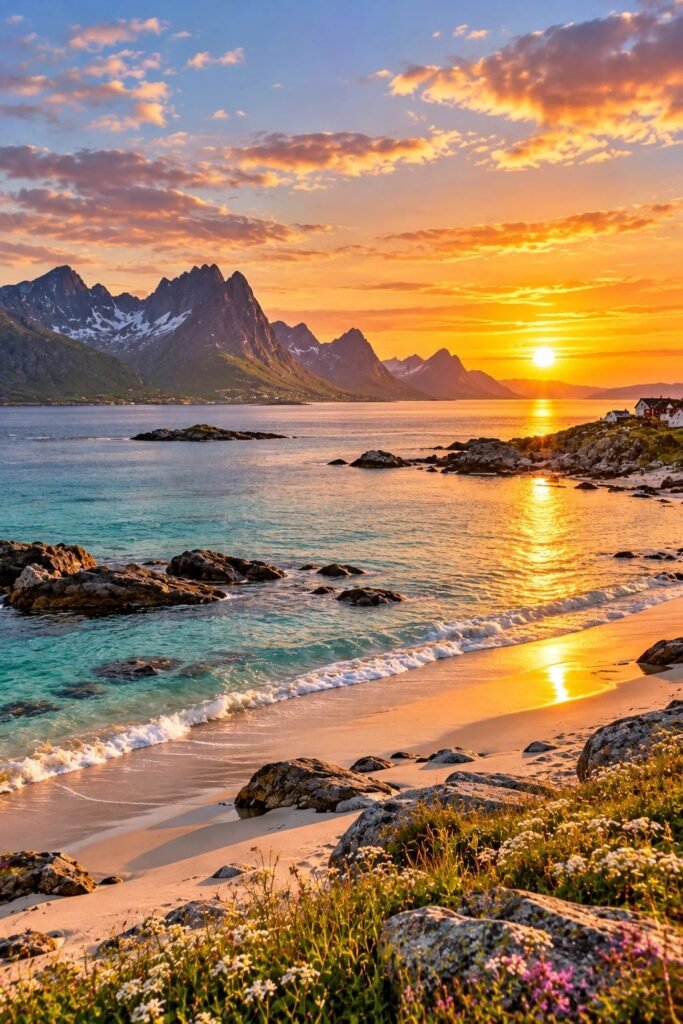
One of the most fascinating natural experiences in Norway is the midnight sun.
During part of the summer, areas north of the Arctic Circle experience days when the sun stays above the horizon at midnight. The result is a landscape filled with unusual evening light, making it possible to enjoy outdoor scenery long after a typical sunset.
The Lofoten Islands, Tromsø region, and North Cape are popular places to experience this phenomenon.
You can spend the evening walking along the coast, photographing mountains, or enjoying a relaxed outdoor meal while the sky remains bright.
Best ways to enjoy the midnight sun:
- Take an evening walk along a northern beach.
- Photograph the landscape in the soft golden light.
- Explore coastal villages.
- Join a guided sightseeing trip.
- Enjoy an outdoor activity offered by a local operator.
Best time to visit: The exact period depends on how far north you travel, but the midnight sun generally occurs during the summer months.
Travel tip: Bring an eye mask if you are sensitive to light while sleeping. The bright nights can make it harder to maintain your usual sleep routine.
10. Explore the Historic Streets of Ålesund
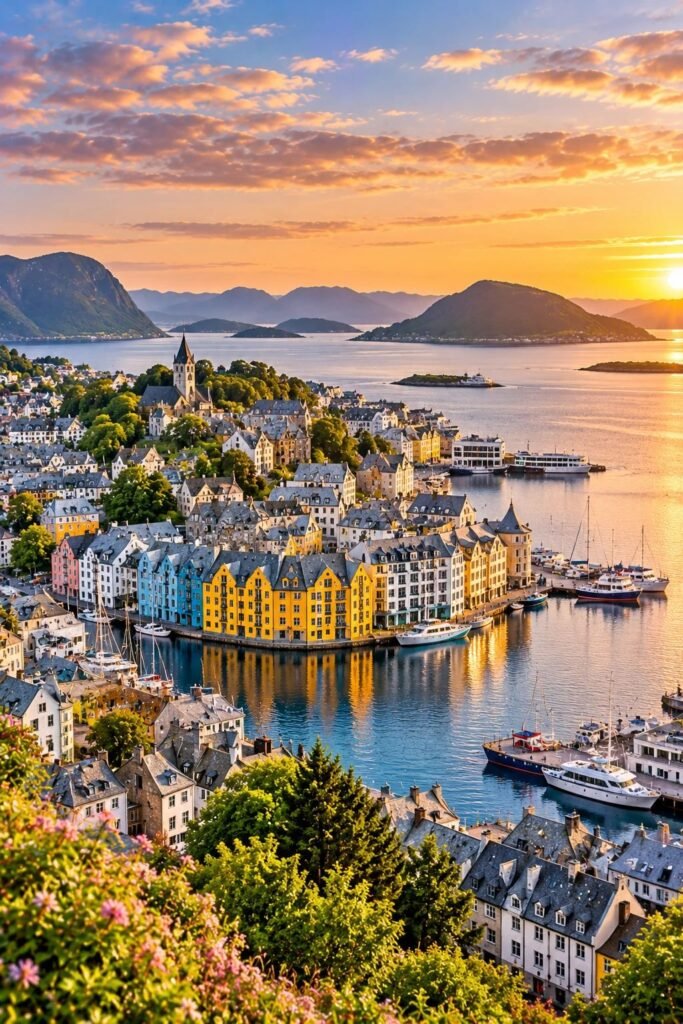
Ålesund is a beautiful coastal city known for its Art Nouveau architecture and spectacular setting across several islands.
Much of the city center was rebuilt in the Art Nouveau style after a major fire in 1904. Today, its decorative buildings, waterfront streets, and nearby mountains make it one of the most photogenic cities in Norway.
Begin with a relaxed walk through the center, paying attention to the colorful facades and architectural details. Then make your way to the Aksla viewpoint for a panoramic look over the city and surrounding islands.
If you have extra time, Ålesund is also a useful base for exploring nearby coastal landscapes and fjord destinations.
Things to do in Ålesund:
- Walk through the Art Nouveau city center.
- Visit the Jugendstilsenteret museum.
- Enjoy the views from Mount Aksla.
- Explore the waterfront.
- Try local seafood.
- Take a day trip into the surrounding fjord region.
Travel tip: Comfortable shoes are helpful if you plan to climb the steps to the Aksla viewpoint. Alternatively, look into transport options if you prefer not to walk uphill.
11. Visit the Picturesque Village of Reine
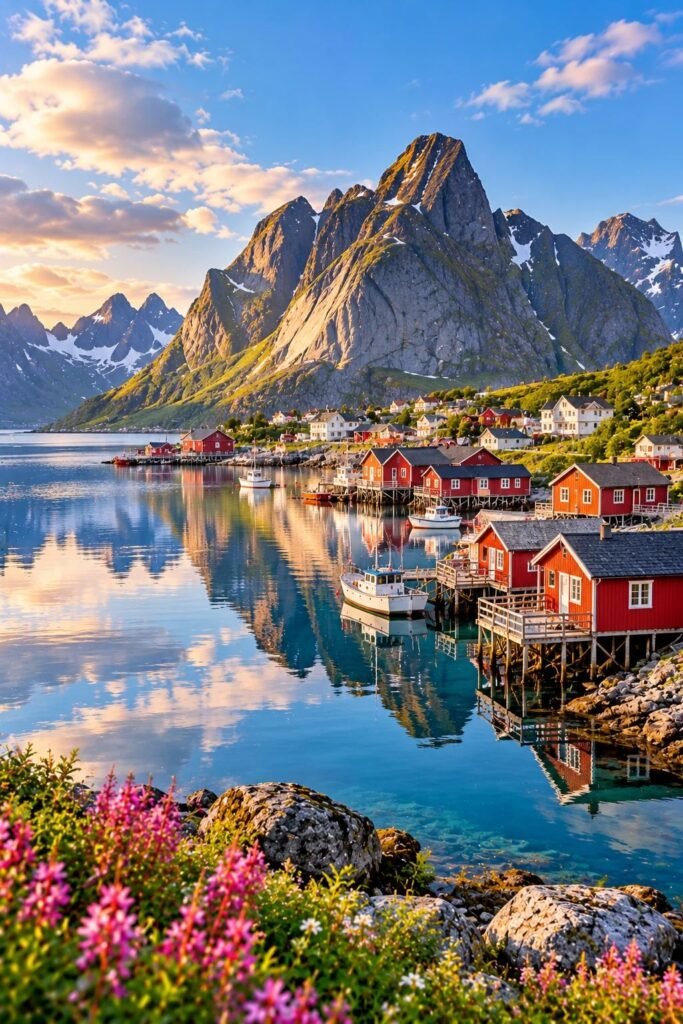
Reine is one of the most recognizable villages in the Lofoten Islands, and it is easy to understand why travelers are drawn to it.
Traditional fishing cabins sit beside the water, while dramatic mountains rise in the background. The scenery changes throughout the day as the light moves across the peaks and reflects on the sea.
Rather than rushing through Reine for a few photographs, give yourself time to explore the village and enjoy the surrounding scenery.
You can walk around the harbor, visit nearby beaches, or use the village as a base for exploring other parts of Lofoten.
What to do in Reine:
- Walk around the harbor.
- Photograph the traditional fishing cabins.
- Explore nearby villages.
- Enjoy a scenic drive through the islands.
- Take a guided kayaking trip when conditions are suitable.
Travel tip: Reine is a small village, so accommodation can be limited during busy periods. Reserve your stay early, especially if you want to sleep in a traditional rorbu, a type of Norwegian fisherman’s cabin.
12. Take a Scenic Road Trip Along Norway’s Coast
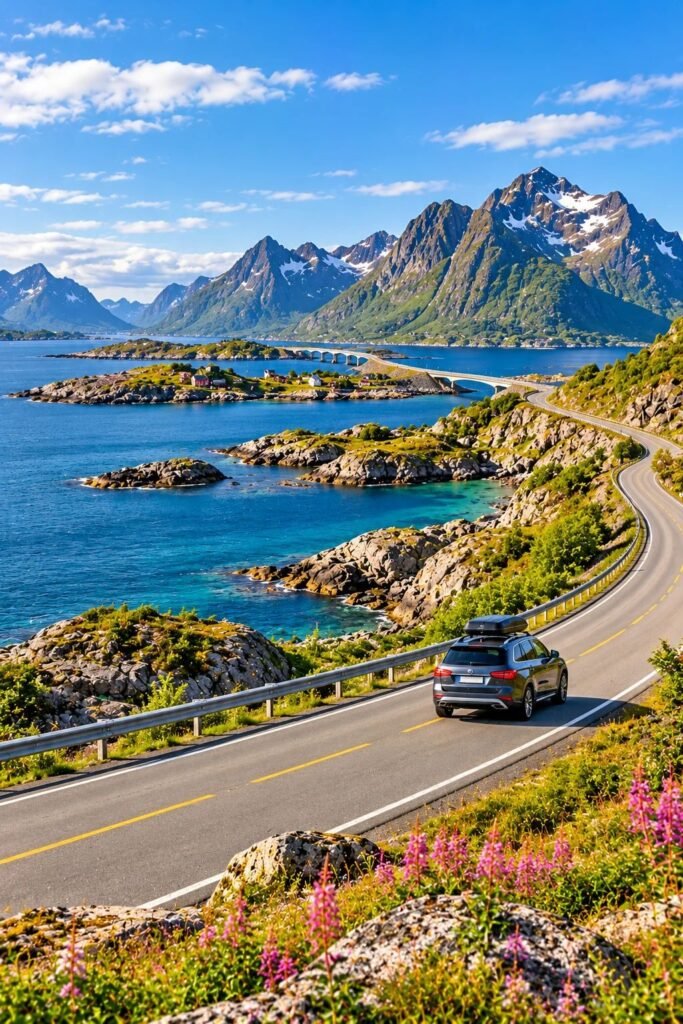
Norway is an excellent country for a road trip because the journey itself can be one of the best parts of the experience.
You can drive past fjords, mountain passes, coastal villages, waterfalls, and beautiful stretches of countryside. Some routes include scenic viewpoints, rest areas, and architectural attractions designed to help visitors enjoy the landscape.
The Atlantic Ocean Road is one of the country’s best-known scenic drives. Its bridges connect small islands along the coast and create a memorable journey beside the sea.
Other routes worth considering include the roads around the Lofoten Islands and sections of the Hardanger region.
Road trip tips:
- Plan your route before setting off.
- Check seasonal road closures.
- Allow extra time for photographs and sightseeing.
- Check ferry schedules if your route includes ferry crossings.
- Keep snacks and water in the car.
- Follow local parking and road-safety rules.
Travel tip: Do not plan too many destinations in one day. Norway is a large country, and mountain roads, ferries, and weather can make journeys take longer than expected.
13. Discover the Charming Village of Flåm
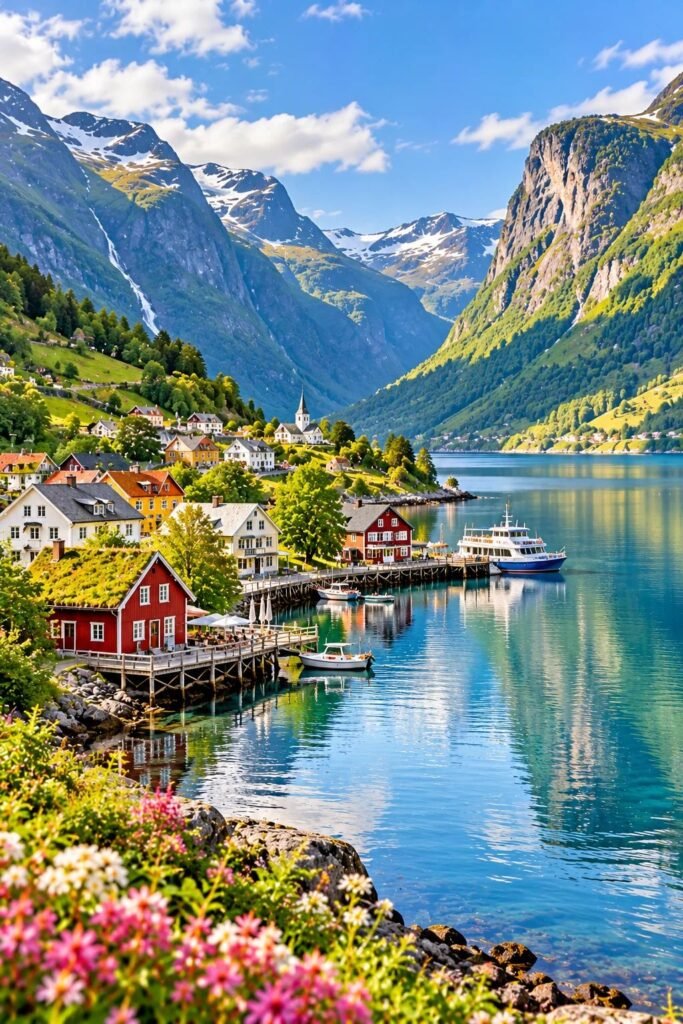
Flåm is a small village surrounded by mountains and fjords, making it an excellent stop for anyone exploring western Norway.
Although many visitors come for the famous railway, there is plenty more to enjoy. You can stroll along the waterfront, take in the scenery, visit local shops, or join a boat trip into the surrounding fjords.
Flåm is also a convenient base for exploring the Aurlandsfjord and nearby Nærøyfjord.
If you prefer a slower pace of travel, spending a night here can be a lovely way to enjoy the scenery after the day-trip crowds have left.
Best things to do in Flåm:
- Ride the Flåm Railway.
- Take a fjord cruise.
- Explore the waterfront.
- Visit the railway museum.
- Enjoy a meal with views of the surrounding landscape.
Travel tip: Flåm is popular with cruise and tour groups. If you want a quieter experience, consider an early start or an overnight stay.
14. Visit the Dramatic Trolltunga Rock Formation
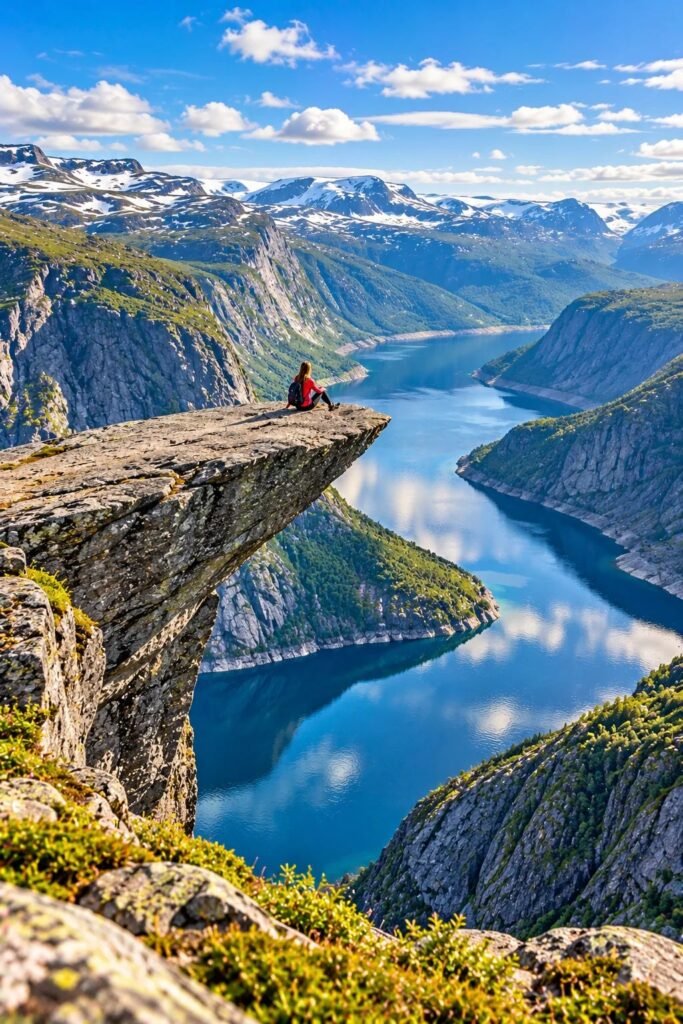
Trolltunga, which means “Troll’s Tongue,” is one of Norway’s most famous natural landmarks.
The rock formation extends horizontally over a dramatic mountain landscape and offers views across the surrounding valleys and lake. It is particularly popular among experienced hikers and travelers who enjoy challenging outdoor adventures.
However, this is not a casual walk. The hike is long, physically demanding, and highly dependent on weather and seasonal conditions. It requires careful preparation and enough daylight.
If Trolltunga is on your bucket list, research the official trail guidance before deciding whether the route is suitable for you.
Before planning your visit:
- Check current trail conditions and seasonal guidance.
- Review the expected hiking time and distance.
- Carry suitable clothing, food, and water.
- Start only when conditions and your preparation are appropriate.
- Consider an authorized guide if you need support.
Travel tip: Never feel pressured to complete a hike because it is popular on social media. Norway has many beautiful viewpoints and easier walking routes that can offer a wonderful experience too.
15. Explore the Beautiful Hardangerfjord Region
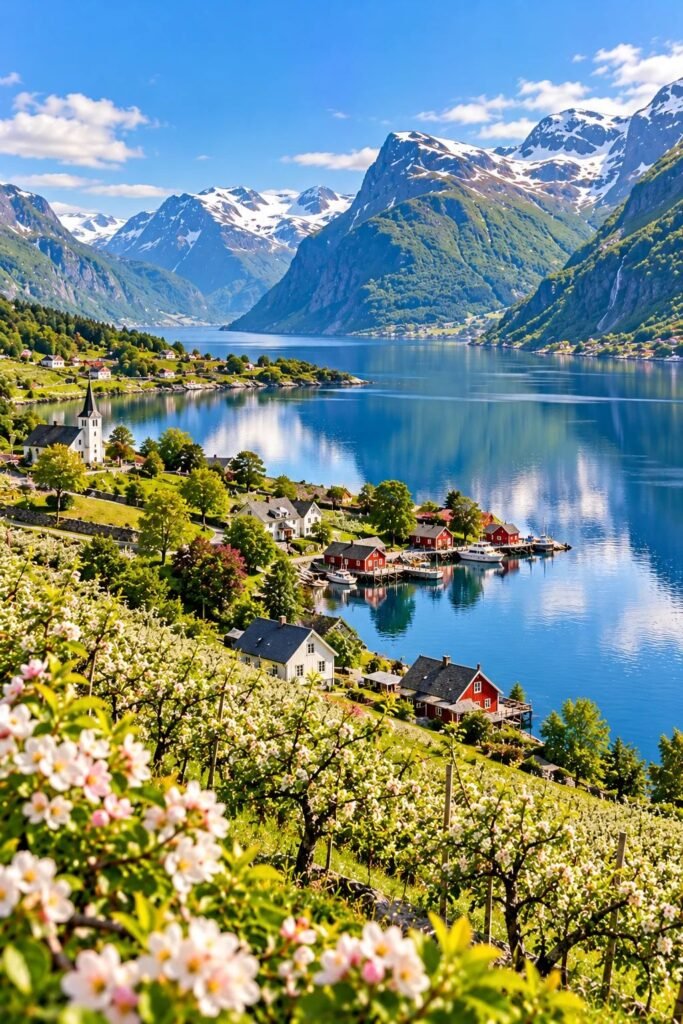
Hardangerfjord is famous for its mountains, waterfalls, fruit orchards, and charming villages. It is a wonderful destination if you want to experience the countryside and explore Norway at a relaxed pace.
During spring, parts of the region are especially lovely when fruit trees blossom. Summer brings green landscapes, longer days, and opportunities for sightseeing along the fjord.
You can drive between small villages, stop at viewpoints, and explore waterfalls in the surrounding area.
Vøringsfossen is one of the region’s best-known waterfalls and is worth considering if you are planning a road trip nearby.
Things to do in Hardangerfjord:
- Visit scenic villages along the fjord.
- Explore Vøringsfossen.
- Enjoy views of orchards and mountains.
- Take a boat trip when available.
- Visit local farms and seasonal food producers.
- Plan a scenic drive through the region.
Travel tip: Spring blossom periods vary with the weather and location. If seeing the fruit trees in bloom is important to you, check local updates before booking your trip.
16. Experience Norwegian Culture and Viking History
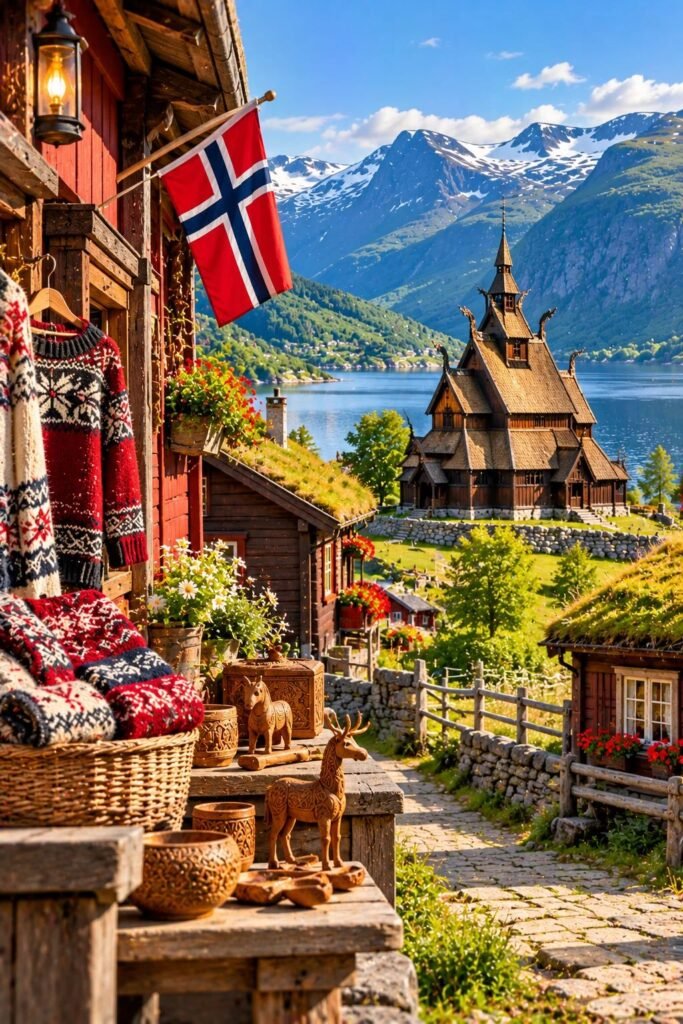
Norway’s landscapes are spectacular, but the country’s culture and history deserve attention too.
Viking history is an important part of Norway’s past, and museums and heritage attractions help visitors understand how people lived, traveled, traded, and built communities in earlier centuries.
In Oslo, you can explore the Museum of the Viking Age’s official updates when planning your visit, as museum access and exhibitions may change. You can also look for other historical museums, archaeological collections, and Viking-themed experiences around the country.
Beyond Viking history, Norway has strong regional traditions involving folk music, traditional clothing, handicrafts, and local food.
Ways to explore Norwegian culture:
- Visit historical museums.
- Learn about Viking-era life and seafaring.
- Explore historic wooden buildings.
- Attend local cultural events.
- Try traditional Norwegian dishes.
- Learn about Sámi culture and history through respectful, locally informed experiences.
Travel tip: Check official museum websites before visiting because opening hours, exhibitions, and access arrangements can change.
17. Visit the North Cape
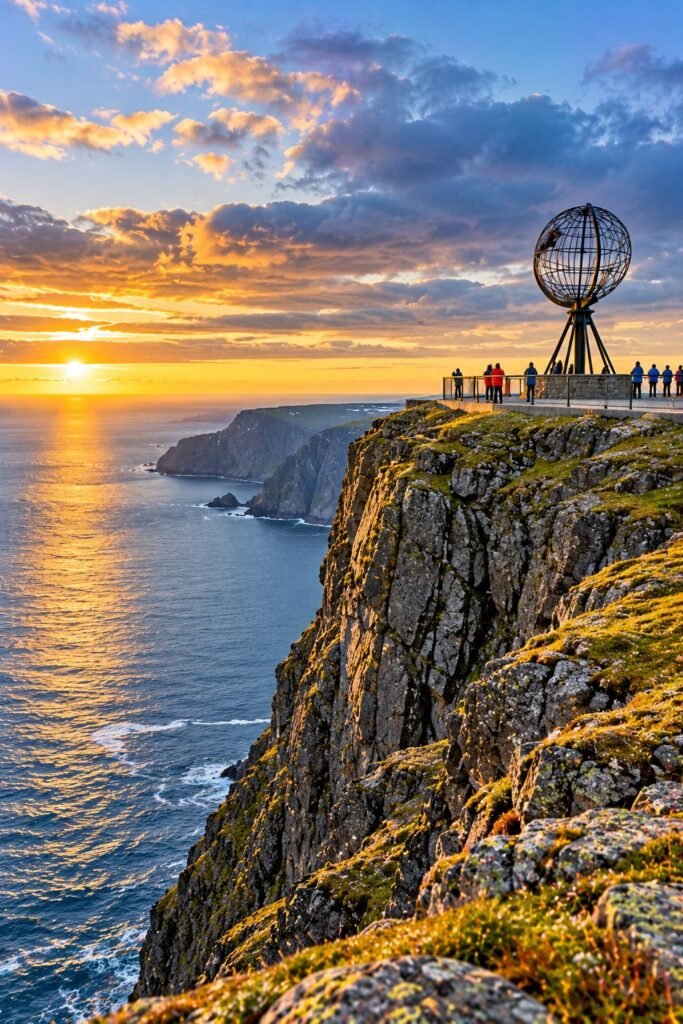
North Cape, known as Nordkapp in Norwegian, is a famous destination in the far north of the country.
The dramatic cliffs rise above the Arctic Ocean, creating a spectacular setting for visitors interested in Norway’s remote northern landscapes.
Many travelers come for the views, the sense of being far from busy cities, and the experience of traveling through the Arctic region.
In summer, the midnight sun is one of the major attractions. In colder months, weather conditions can be challenging, so the journey requires additional planning.
Things to do at North Cape:
- Admire views over the Arctic Ocean.
- Visit the North Cape visitor center when open.
- Learn about the area’s history.
- Explore the surrounding northern landscapes.
- Enjoy photography when visibility is good.
Travel tip: Check road conditions and local travel advice before setting off. Strong winds, fog, snow, and seasonal driving conditions can affect access.
18. Go Kayaking on a Norwegian Fjord
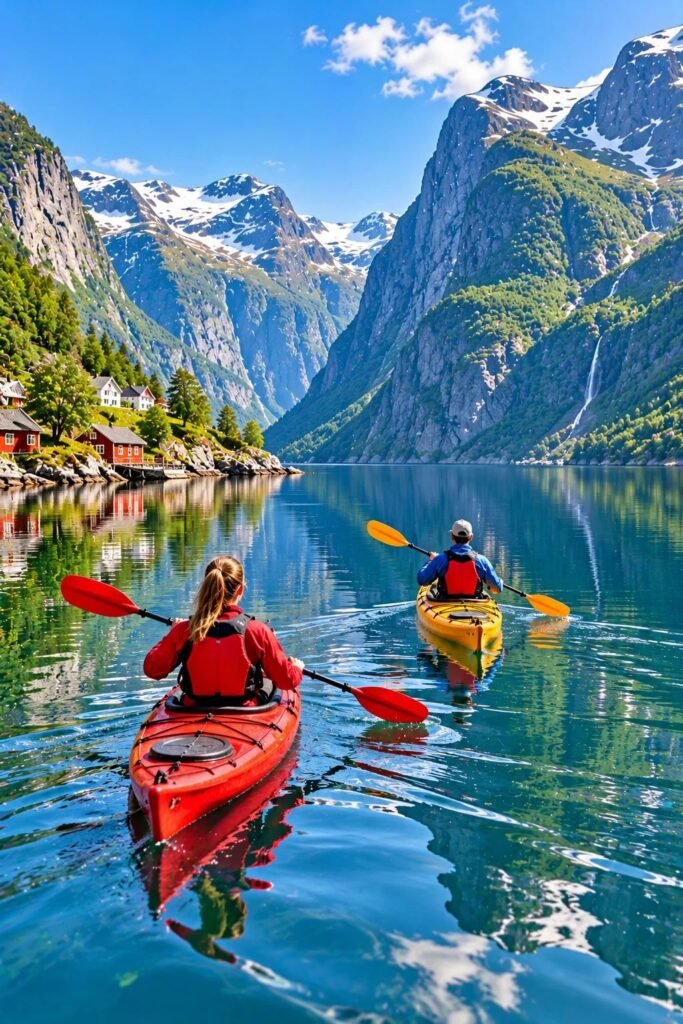
Kayaking is a wonderful way to experience Norway’s scenery from a different perspective.
Instead of viewing the fjords from a road or a large boat, you can glide across the water and appreciate the mountains, cliffs, and small settlements from closer to the shoreline.
Guided kayaking trips are available in several popular destinations, including parts of the western fjord region and the Lofoten Islands.
You do not necessarily need to be an experienced paddler to join a suitable beginner excursion. However, you should choose an activity that matches your abilities and follow your guide’s instructions.
Why try kayaking in Norway?
- Enjoy a quieter way to explore the scenery.
- See the fjords from water level.
- Learn about local landscapes from a guide.
- Take photographs from a unique viewpoint.
- Spend time outdoors in beautiful surroundings.
Travel tip: Water temperatures can remain cold even in summer. Choose a reputable operator that provides appropriate safety equipment and checks weather and water conditions before departure.
19. Discover Norway’s Beautiful Waterfalls
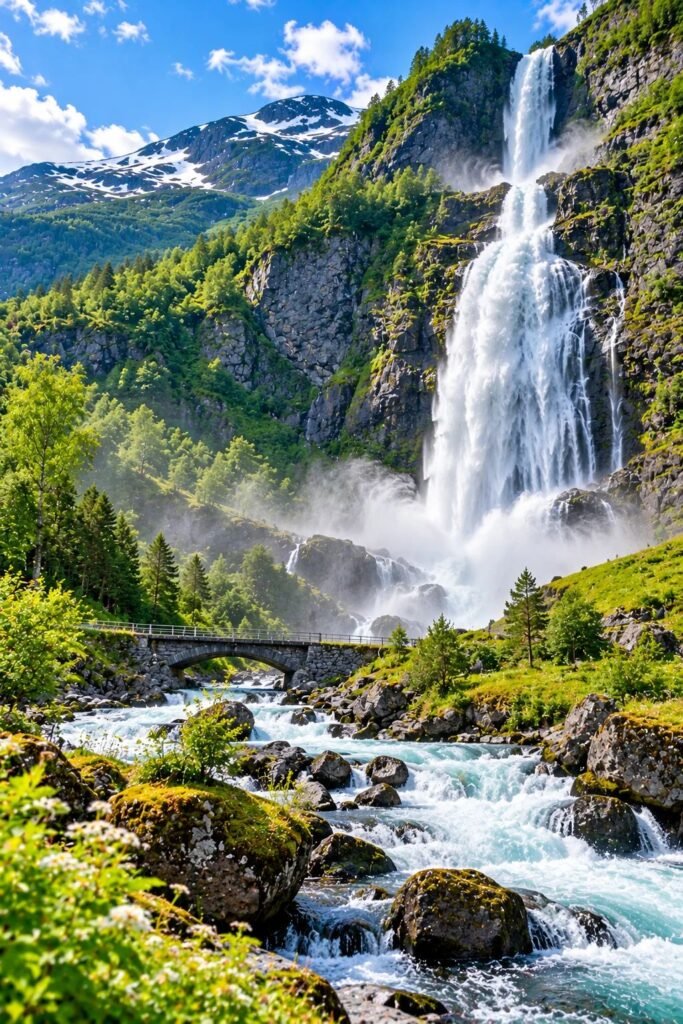
Norway has countless waterfalls, from powerful cascades beside major roads to smaller falls tucked into green valleys.
They are especially impressive in areas with steep mountains and abundant water. Depending on the season, you may see dramatic flows from melting snow or waterfalls surrounded by lush summer scenery.
Vøringsfossen is among the best-known waterfalls in the country. You can also look for waterfalls in the Geirangerfjord and Hardangerfjord regions.
One of the best things about waterfall sightseeing is that you can often include it in a road trip without planning an entire day around a single attraction.
Tips for visiting waterfalls:
- Use marked paths and designated viewing areas.
- Keep away from slippery edges.
- Wear shoes with good grip.
- Check whether viewpoints are open in your travel season.
- Allow time to enjoy the scenery instead of rushing between stops.
Travel tip: Spring and early summer can offer impressive water flow, but the best timing depends on local weather, snowmelt, and the particular waterfall.
20. Try Traditional Norwegian Food
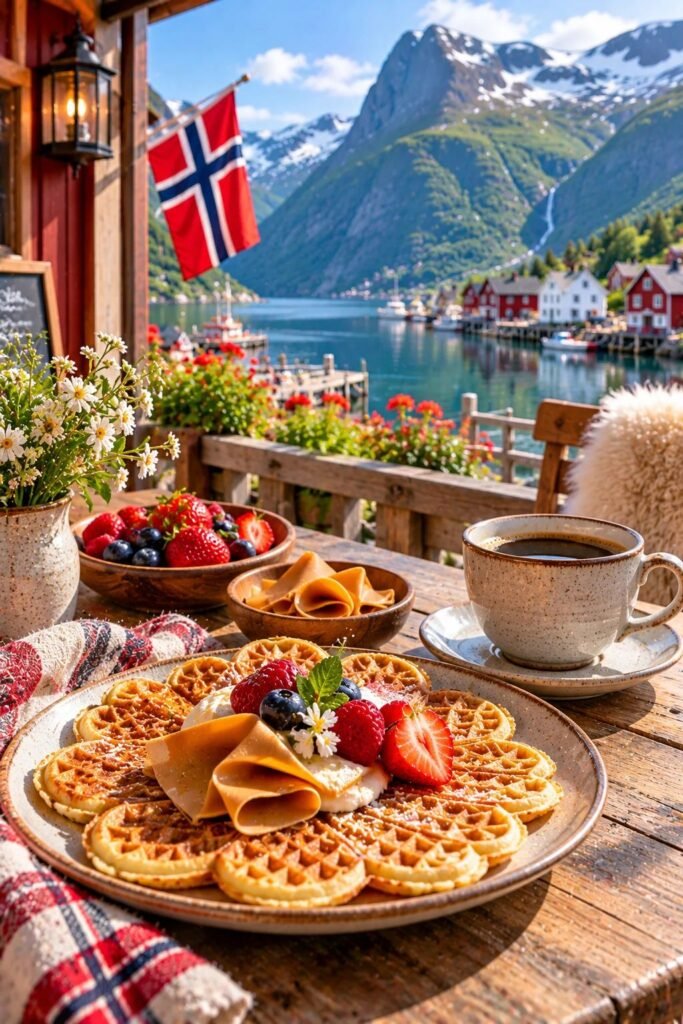
Food is another lovely way to experience Norway. From fresh seafood to comforting baked goods, Norwegian cuisine reflects the country’s coastal traditions, cool climate, and regional ingredients.
In coastal towns, you will often find fish and seafood on restaurant menus. Salmon is widely enjoyed, while other traditional dishes include fish soup and various preparations of cod.
For something sweet, look for Norwegian waffles, often served with brown cheese, jam, or sour cream. Bakeries are also a good place to try cinnamon buns and other pastries.
Food markets and local cafés can be useful places to discover regional specialties without committing to an expensive restaurant meal.
Norwegian foods to try:
- Norwegian waffles.
- Fresh salmon.
- Traditional fish soup.
- Brown cheese, known as brunost.
- Cinnamon buns and local pastries.
- Regional seafood dishes.
Travel tip: Norway can be expensive for dining out, so plan your food budget ahead of time. Supermarkets, bakery lunches, and simple self-catered meals can help you manage costs while still leaving room for a few memorable restaurant experiences.
When Is the Best Time to Visit Norway?
The best time to visit Norway depends on what you want to experience. Summer is ideal for many scenic drives, fjord cruises, and hiking trips, while winter is popular for northern lights excursions and snow-based activities.
Summer: June to August
Summer is a great choice for first-time visitors who want to explore the fjords, coastal villages, and mountain scenery. Days are long, and many seasonal attractions operate during this period.
However, summer is also a busy travel season, so accommodation and popular excursions should be booked early.
Autumn: September to November
Autumn brings colorful landscapes, cooler weather, and fewer visitors in some destinations. It can also be a good time to travel north in search of the northern lights as darkness returns.
Weather can change quickly, and some seasonal services may reduce their schedules.
Winter: December to February
Winter is a good option if you dream of snowy landscapes, northern lights trips, and Arctic experiences. Tromsø and other northern destinations are popular choices.
Expect cold temperatures, limited daylight in some regions, and the possibility of weather-related travel changes.
Spring: March to May
Spring brings longer days and changing landscapes. Depending on the region and elevation, you may find snow in the mountains alongside blossoming trees and greener coastal areas.
It is important to check seasonal road access and hiking conditions before planning outdoor adventures.
How Many Days Do You Need in Norway?
Norway is a large country, so the amount of time you need depends on which regions you want to visit.
Here is a simple guide to help you plan.
- 3–4 days: Focus on one city, such as Oslo or Bergen, and add a nearby day trip.
- 5–7 days: Explore a city and one main region, such as Bergen and the western fjords.
- 8–10 days: Combine several destinations, such as Oslo, Flåm, Bergen, and selected fjord villages.
- 10–14 days: Consider a longer road trip through several regions, or concentrate on northern Norway and the Lofoten Islands.
I recommend choosing a few destinations rather than trying to see the entire country in one visit. Distances can be long, and ferries, scenic stops, and mountain roads can add travel time.
Practical Tips for Planning a Trip to Norway
A little preparation can make your Norwegian adventure easier and more enjoyable.
1. Pack for changing weather
Even in summer, temperatures can be cool, especially near mountains and fjords. Bring layers, a waterproof jacket, comfortable walking shoes, and clothing suited to your planned activities.
2. Book popular activities early
The Flåm Railway, accommodation in Lofoten, and popular summer excursions can be busy. Reserve ahead when your dates are fixed.
3. Plan transportation carefully
Trains, buses, ferries, and domestic flights connect many parts of Norway. A rental car can offer flexibility in rural areas, but it is not essential for every itinerary.
4. Budget for higher travel costs
Accommodation, restaurant meals, and organized excursions can be expensive. Compare transportation options and decide which paid experiences matter most to you.
5. Check local conditions before hiking
Mountain weather can change quickly. Research the route, check official safety information, and choose hikes that suit your experience.
6. Leave room for spontaneous stops
Some of Norway’s most memorable moments may come from an unexpected viewpoint, a peaceful village, or a quiet walk beside the water. Avoid filling every hour of your itinerary.
Final Thoughts: Which of These Things to Do in Norway Will You Choose?
Norway is a destination that offers something for almost every kind of traveler. You can explore the colorful streets of Bergen, cruise through dramatic fjords, discover the fishing villages of Lofoten, or spend a winter evening searching for the northern lights.
My biggest planning tip is to choose the experiences that excite you most and build your itinerary around them. You do not have to visit all 20 places in one trip to have an incredible adventure.
Whether you have a few days or two full weeks, Norway offers plenty of opportunities to discover beautiful landscapes, learn about local culture, and create memories that stay with you long after you return home.
Which of these 20 things to do in Norway would you add to your bucket list first? Save this guide for your next trip and use it to start planning your Norwegian adventure!