
Have you ever been on a road trip, watched the sun begin to set, and wondered where you could safely park for the night without spending money on a campground?
I love the idea of making road trips more affordable while still leaving room for beautiful destinations and unexpected adventures.
Free overnight parking can help travelers stretch their budgets, especially when planning a long RV trip or exploring the country in a campervan.
However, finding a free spot is about more than pulling into an empty parking lot. In this guide, I’ll share practical ways to find legal places to stay overnight, plan ahead, and travel more confidently.
Can You Really Park Overnight for Free Anywhere in the USA?
The short answer is no, but you can find free overnight parking in many parts of the United States if you know where to look.
Free overnight parking is popular with RV owners, van lifers, road-trippers, and travelers who want to reduce accommodation expenses. Depending on the location, you may find a place to rest for a few hours or an approved spot where overnight camping is permitted.
The important difference is that free parking does not automatically mean free camping.
A parking area might allow you to leave your vehicle overnight but prohibit sleeping inside it. Another location might permit overnight stays but restrict RVs, prohibit cooking outside, or limit how long you can remain.
Before settling in for the night, check the rules for the specific property, town, state, or public land area. Regulations can change, and permission at one location does not guarantee permission at another.
My biggest tip is to plan your overnight stop before you become tired. Having two or three possible places in mind makes a long drive much less stressful.
1. Look for Free Overnight Parking on Bureau of Land Management Land
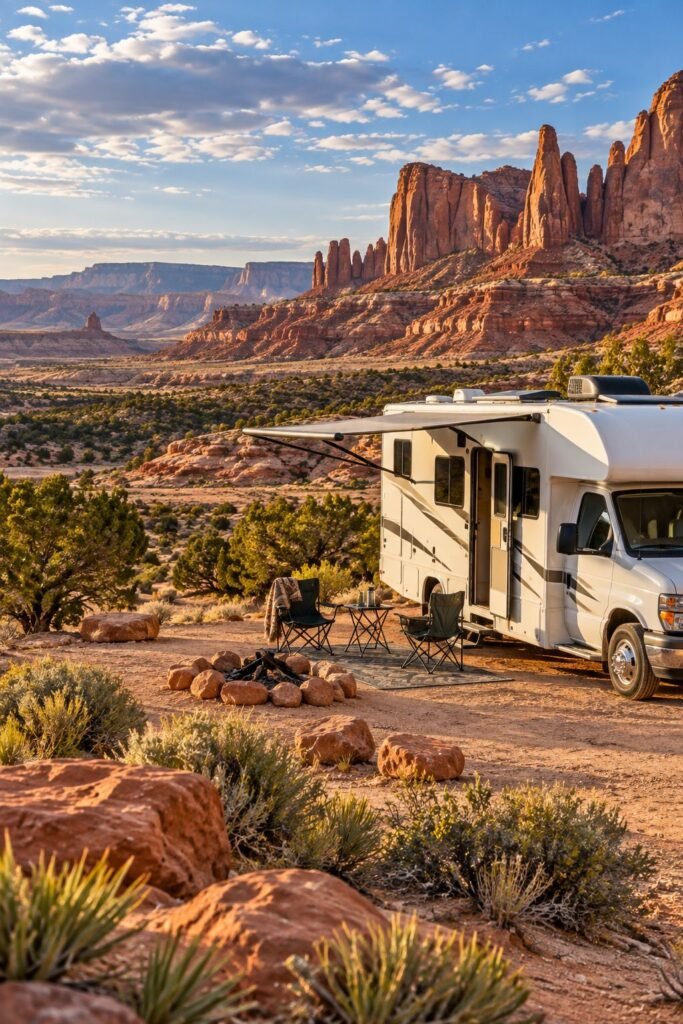
<escape>One of the</escape> most useful options for road-trippers exploring the American West is public land managed by the Bureau of Land Management, commonly known as the BLM.
These lands cover large areas of states such as Arizona, Utah, Nevada, New Mexico, and parts of California, Colorado, and Oregon.
Some areas allow dispersed camping, which means staying outside a developed campground rather than using a designated campsite with facilities.
For travelers who enjoy open landscapes, desert scenery, and quiet surroundings, permitted dispersed camping can be a wonderful way to experience the outdoors without paying for a traditional campground.
How to find a suitable BLM location
Start by visiting the official Bureau of Land Management website. Look for recreation information and local field office pages covering the region you plan to visit.
Before choosing a location, confirm:
- Whether overnight camping is permitted in that particular area.
- Whether your vehicle can legally access the road.
- Whether a permit, reservation, or fee applies.
- How long you may remain.
- Whether seasonal closures, fire restrictions, or weather conditions affect access.
- Where waste and rubbish must be disposed of.
Not all BLM land is open to overnight camping, and some developed recreation areas charge fees. Rules and stay limits vary by location.
What should you expect?
Dispersed camping often means fewer amenities. You may not have drinking water, toilets, rubbish bins, electricity, or mobile phone reception.
I recommend arriving during daylight whenever possible. This gives you time to inspect the ground, check the surroundings, and make sure the road is suitable for your vehicle.
Always use an established, permitted area, avoid damaging vegetation, and take your rubbish with you. Never assume that a scenic pullout or empty patch of land is available for camping.
Read Fall Van Life Destinations: 6 Routes That Will Make You Fall in Love With Autumn on the Road
2. Check National Forests and Grasslands
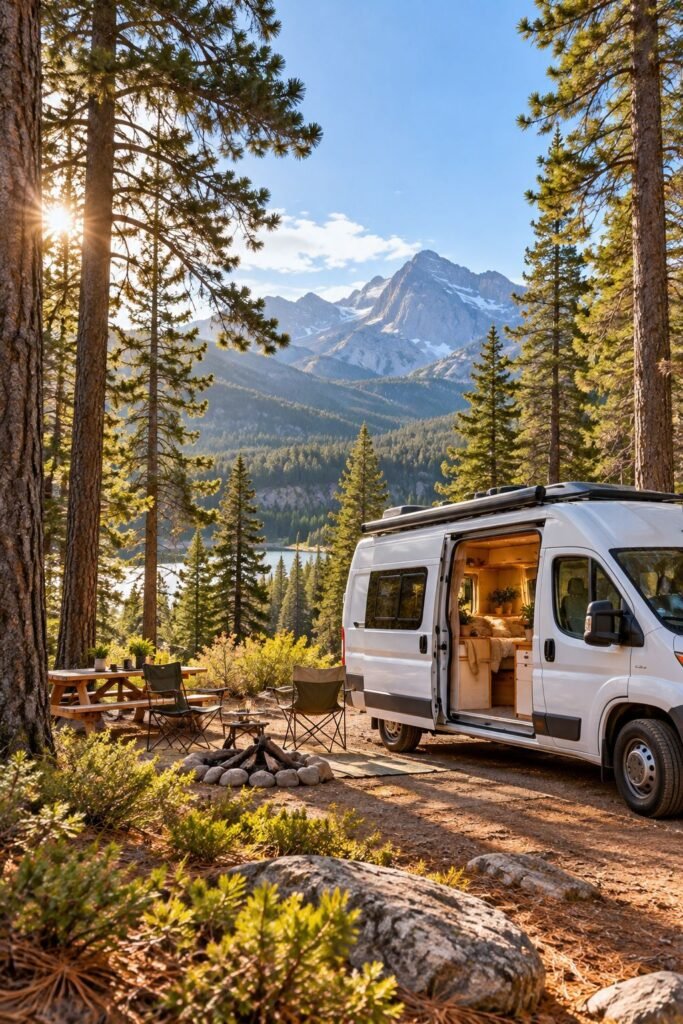
National forests and grasslands can provide additional opportunities for travelers who enjoy spending time in nature.
In some areas, dispersed camping is permitted outside developed campgrounds. This can be particularly appealing if your road trip includes mountain scenery, forest roads, hiking destinations, or quiet outdoor escapes.
However, National Forest land is not one large, unrestricted campground. Each forest may have its own rules, designated camping areas, road restrictions, seasonal closures, and stay limits.
How to find overnight options
Visit the USDA Forest Service website and search for the specific national forest or grassland along your route.
Look for information about dispersed camping, motor vehicle access, recreation restrictions, and local alerts. If the rules are unclear, contact the relevant ranger district before arriving.
Tips for a comfortable stay
- Choose an established, permitted location rather than creating a new campsite.
- Check the weather and road conditions before leaving paved roads.
- Keep food stored appropriately, especially in areas with bears or other wildlife.
- Follow local fire restrictions, including any prohibitions on campfires or portable stoves.
- Avoid blocking forest roads, gates, trails, and access for emergency vehicles.
Remember that some national forests have designated overnight camping areas while others restrict camping in particular zones. National parks and national forests also have different rules, so never assume that permission in one type of public land applies to another.
3. Understand Overnight Parking at Rest Areas
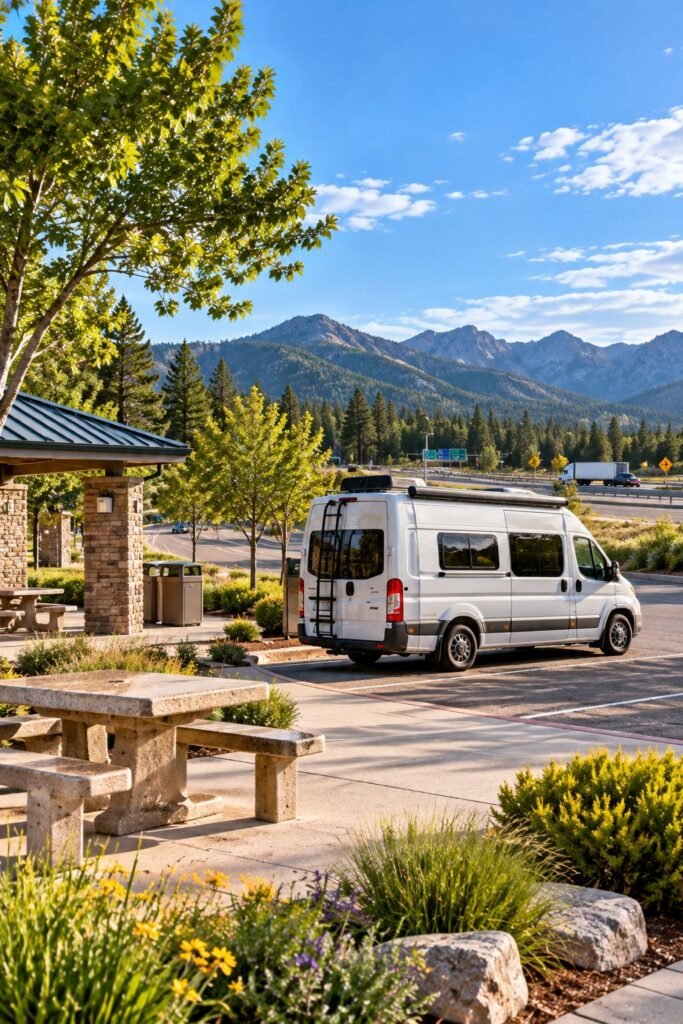
Highway rest areas are convenient places to take a break during a long drive. Many offer toilets, picnic tables, parking spaces, and designated areas for larger vehicles.
However, a rest area that allows parking does not necessarily allow overnight camping or sleeping in your vehicle.
Rules vary by state and sometimes by individual rest area. Some locations permit drivers to rest for a limited period, while others prohibit overnight parking or enforce specific time limits.
How to check rest area rules
Before planning to spend the night at a rest area, visit the official transportation department website for the state you are traveling through.
Search for rest area policies, parking restrictions, and information about commercial vehicle spaces. Pay attention to posted signs when you arrive.
A few things to remember:
- Do not occupy spaces reserved for trucks or emergency vehicles unless you are permitted to use them.
- Follow posted time limits.
- Do not set up chairs, grills, awnings, or other camping equipment where prohibited.
- Keep valuables out of sight and lock your vehicle.
- Leave if the area is closed or an official asks you to move.
Rest areas can be useful for planned breaks, but they should not be your only overnight option. Keep a legal alternative in mind in case you arrive and discover that overnight stays are not permitted.
Read Best Summer Van Routes: My Favorite Roads for Sun-Soaked Freedom
4. Ask About Overnight Parking at Walmart
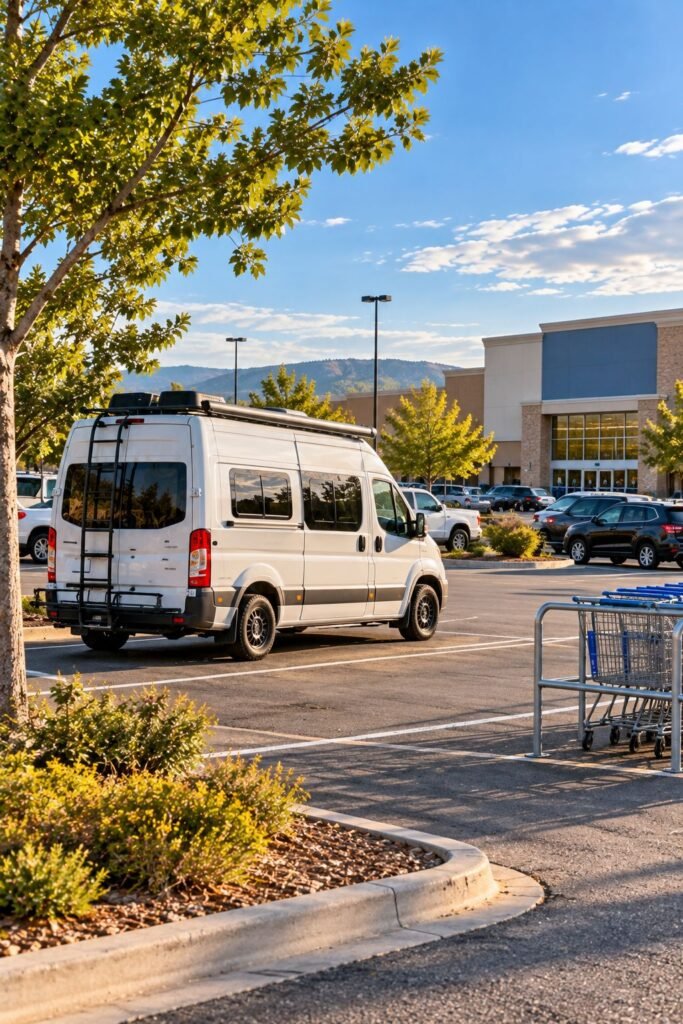
Walmart parking lots are often mentioned in road-trip discussions because some stores have historically allowed travelers to park overnight.
However, this is not a company-wide guarantee. Individual store policies, local ordinances, property restrictions, and management decisions can affect whether overnight parking is allowed.
Some stores prohibit overnight parking entirely, while others may permit it under specific conditions.
How to ask for permission
If you are considering a particular Walmart, contact the store directly before arriving. Ask whether overnight parking is currently permitted for your vehicle type and whether any conditions apply.
If permission is granted:
- Park only in the area designated by management.
- Keep entrances, loading zones, fire lanes, and accessible spaces clear.
- Do not extend slides, deploy awnings, or set up outdoor equipment without permission.
- Keep noise and lights to a minimum.
- Avoid leaving rubbish behind.
- Respect any time limits and instructions from store staff.
Also remember that permission to park is not necessarily permission to camp. Confirm whether sleeping inside your vehicle is allowed.
A quick phone call can save you from arriving late at night and discovering that the lot is unavailable.
5. Check Cracker Barrel and Other Businesses
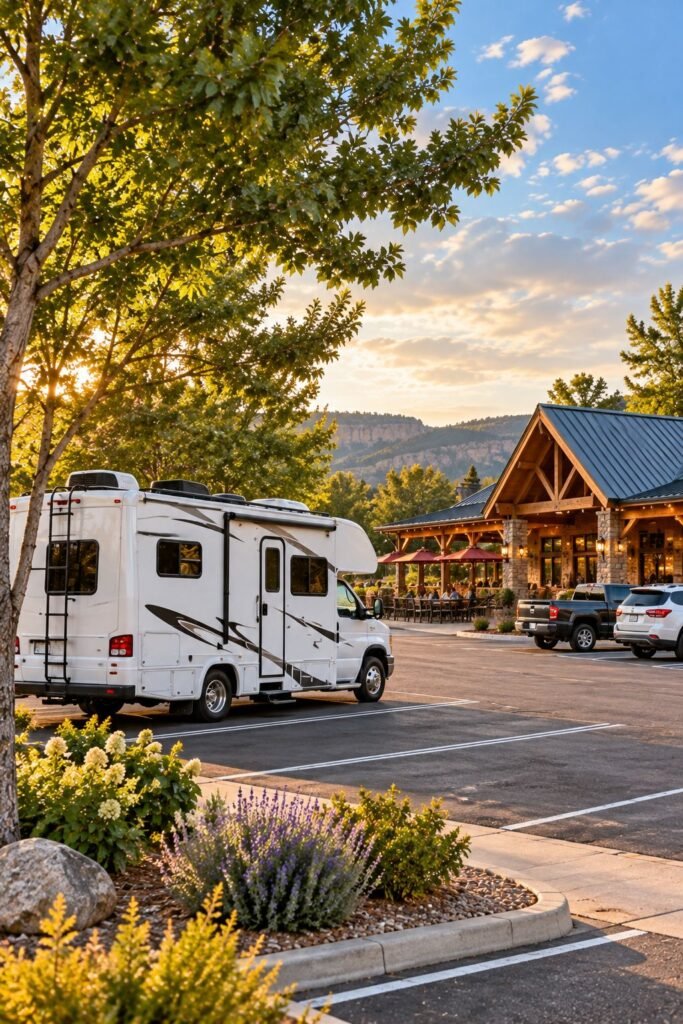
Some Cracker Barrel locations have accommodated overnight RV parking in the past, making them another name frequently mentioned by road-trippers.
The same principle applies here: policies vary, and overnight parking should never be assumed.
Other businesses, including casinos, travel centers, and certain large retail properties, may have designated overnight parking arrangements. Each property decides whether it will allow such use.
How to find out if overnight parking is allowed
Call the specific location and explain what you are driving. Ask whether overnight parking is allowed, where you should park, and whether there are any restrictions.
If you receive permission, follow the instructions carefully. A business may ask you to use a particular section of the lot or limit the length of your stay.
It is also courteous to support a business when appropriate, but making a purchase does not automatically grant permission to stay overnight.
My advice: Treat business parking as an option that must be confirmed for every stop, not a guaranteed place to sleep.
6. Look for Truck Stops and Travel Centers
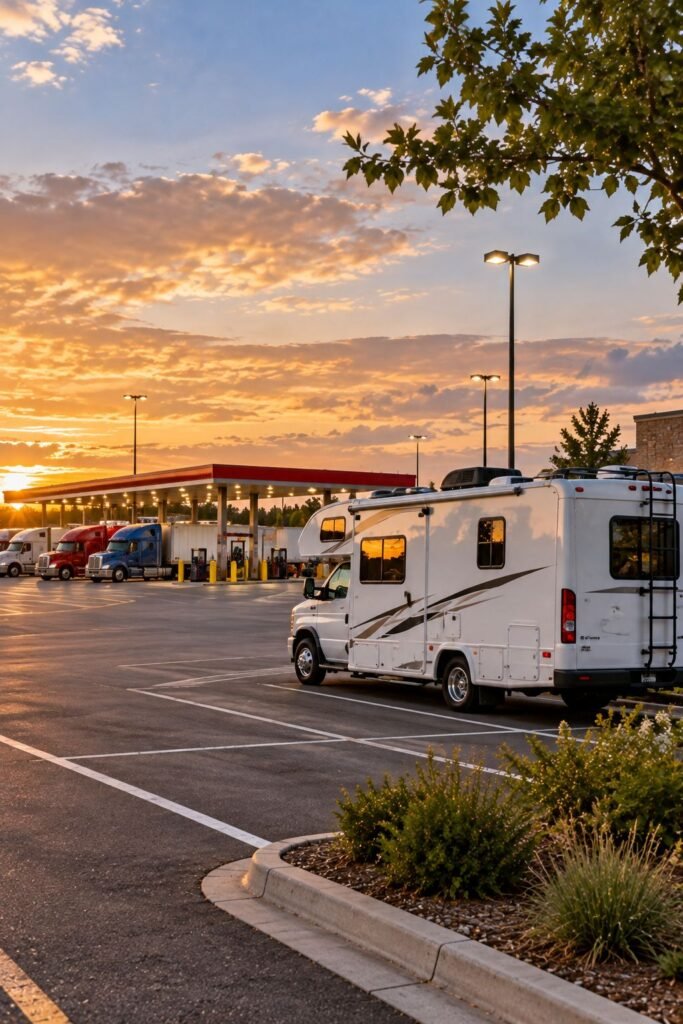
Truck stops and travel centers can be useful places to take a break on long interstate journeys. Depending on the location, they may offer fuel, food, toilets, showers, convenience stores, and parking for different types of vehicles.
Some allow overnight parking for certain vehicles, while others have restrictions or charge for particular spaces.
Before pulling in, check the signs and ask staff whether your vehicle can remain overnight.
Choosing the right parking area
Large truck stops can be noisy and busy, especially during overnight hours. If you are traveling in a car or campervan, look for a permitted area that does not interfere with commercial truck operations.
Keep these considerations in mind:
- Follow all designated parking instructions.
- Avoid blocking fueling lanes and service areas.
- Be mindful of reversing trucks and large vehicles.
- Secure your belongings and lock your doors.
- Keep the engine and generator off when required by local rules.
- Leave promptly if your permitted parking period ends.
Travel centers can be convenient for a short rest, but they are not always quiet or suitable for every vehicle. Check the individual location’s policy before relying on it.
7. Search for Free Municipal and County Campgrounds
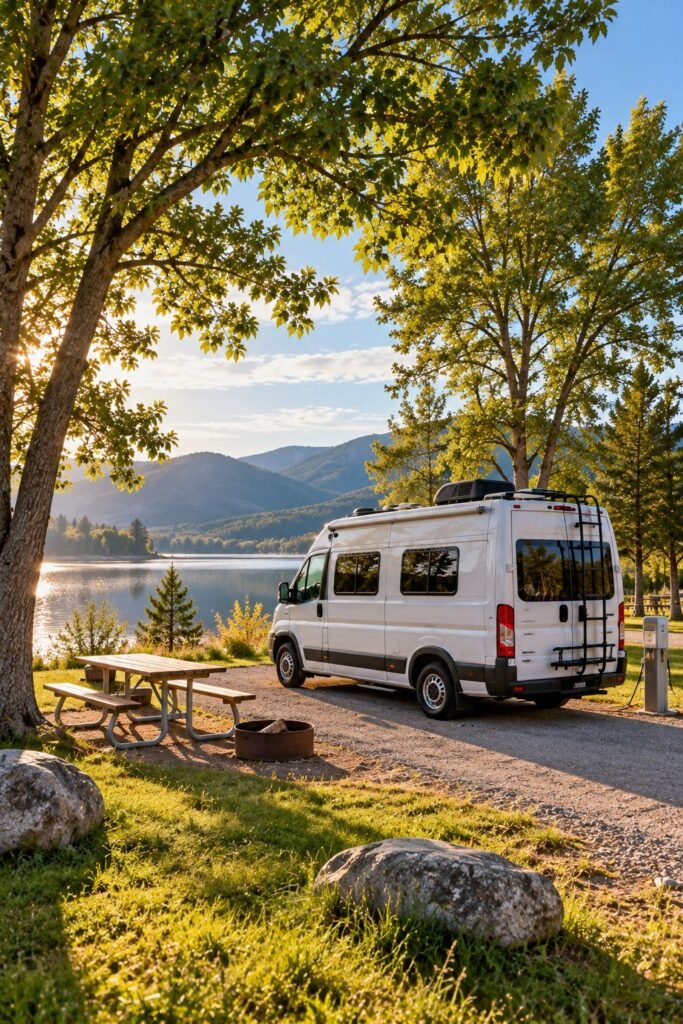
One of my favorite road-trip planning ideas is to look beyond the most obvious places.
Some towns, counties, and local recreation departments maintain inexpensive or free camping areas. These may include basic campsites near lakes, public recreation facilities, community parks, or rural destinations.
Availability varies considerably, and some locations require advance registration or charge a small fee. Others may be intended only for day use.
Where to search
Try the official websites for:
- County parks and recreation departments.
- Small-town tourism offices.
- State recreation areas.
- Public lands managed by local authorities.
- Community-run campgrounds and visitor centers.
Search using the destination name and phrases such as “free camping,” “overnight RV parking,” or “county campground rules.”
Read the full description rather than relying on a search result or an old review. Confirm whether overnight stays are permitted, whether reservations are required, and whether your vehicle will fit.
Why this option is worth considering
A basic municipal campground may offer a more comfortable overnight stop than a busy parking lot. Depending on the location, you might have toilets, picnic tables, a defined parking area, or access to nearby attractions.
Even when a campsite is not completely free, a low-cost site with facilities can be a better value than driving around searching for an uncertain alternative.
8. Explore State Parks and State Recreation Areas
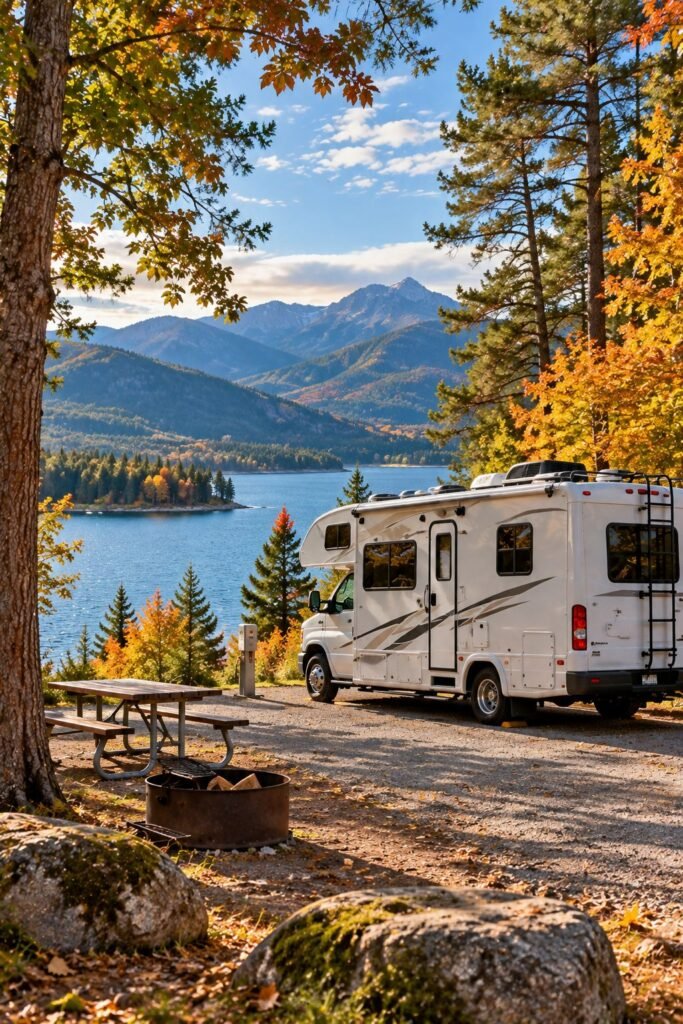
State parks are another useful place to investigate when planning an affordable road trip. Although many state parks charge for camping, some offer free or low-cost overnight options in certain areas or during specific circumstances.
The key is to research the individual park rather than assume that all state parks have the same rules.
How to find affordable options
Visit the official state parks website for the state you are exploring. Look for camping information, campground fees, park alerts, and overnight parking policies.
Some parks have primitive campsites with fewer amenities, while others have developed campgrounds with restrooms, showers, and electrical hookups.
If you are looking for a completely free stay, check whether the park offers any designated free overnight areas. Do not confuse a free day-use parking lot with an overnight campsite.
You can also compare the cost of a basic campground with the cost of driving farther to find a free location. Sometimes paying a modest fee is the more practical choice, especially when you need access to toilets, water, or electricity.
9. Be Careful With Overnight Parking at National Parks
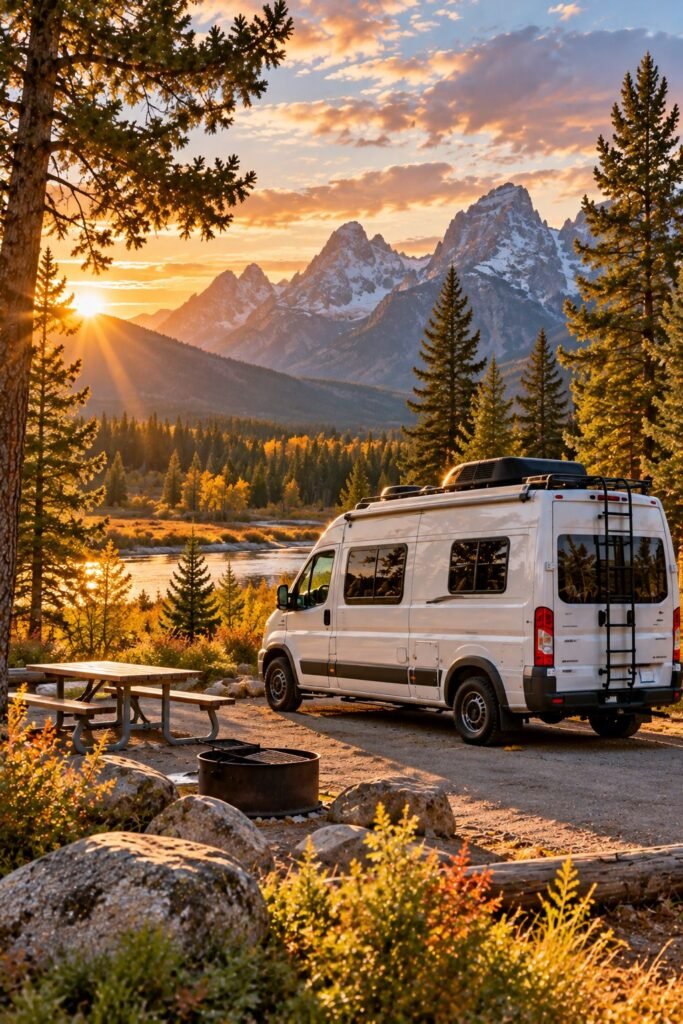
National parks are among the most beautiful places to visit on a US road trip, but they are not automatically free places to sleep overnight.
Many national parks have strict camping regulations. Overnight stays may be permitted only in designated campgrounds or approved backcountry areas, sometimes with a reservation or permit.
For example, the National Park Service explains how to select campsites, understand campground requirements, and check individual park rules before visiting.
What should you do before arriving?
Check the official website for the exact park you plan to visit. Confirm whether overnight vehicle parking is permitted, where camping is allowed, and whether permits or reservations are required.
Never assume that a trailhead, scenic overlook, visitor center parking lot, or roadside pullout is available for overnight stays.
If the park does not permit overnight parking in the location you had in mind, search for an authorized campground or public-land option outside the park boundary.
Planning this ahead of time is especially helpful during busy travel seasons, when nearby campgrounds can fill quickly.
10. Use Apps and Websites to Discover Potential Overnight Spots
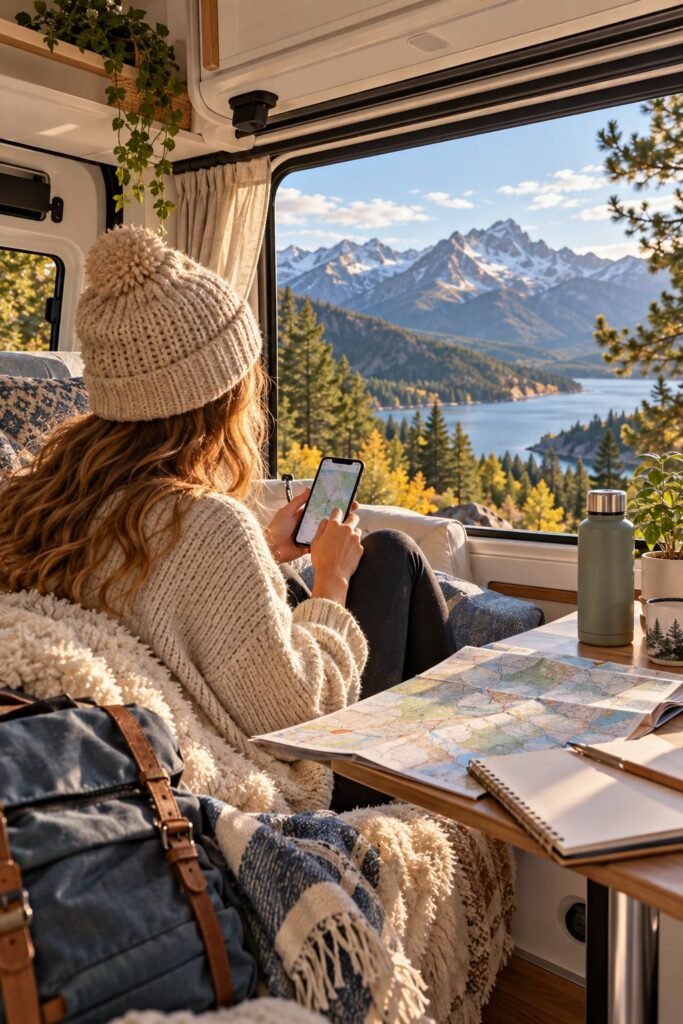
Finding free overnight parking becomes much easier when you combine official information with travel-planning tools.
Several websites and apps help travelers discover campgrounds, public land, RV parking areas, and possible overnight stops. However, listings are not a substitute for checking current regulations.
Here are some useful starting points.
- FreeRoam: A resource for RV travelers looking to explore camping locations and public lands.
- Campendium: Browse campground listings, RV parks, and reviews to compare possible overnight stops.
- iOverlander: Explore traveler-submitted information about places to stay and useful travel stops.
- Recreation.gov: Find information about participating federal recreation sites, campsites, and reservations.
- Bureau of Land Management: Check official information about public lands, recreation opportunities, and restrictions.
- USDA Forest Service: Research national forests, recreation areas, and local camping rules.
Some tools include user-submitted reviews that may be outdated. A spot described as free last year might now be closed, restricted, or subject to a fee.
My simple research routine
When I find a promising location, I check three things:
- The listing: Does it appear suitable for my vehicle and travel plans?
- The official rules: Does the landowner or responsible agency permit overnight stays?
- The recent conditions: Are there current closures, access problems, or restrictions?
I also save a backup location nearby. That extra step can make a real difference if my first choice is full or unavailable.
11. How to Find Free Overnight Parking Safely
Saving money matters, but feeling comfortable and secure matters just as much.
When choosing a place to stop, pay attention to the surroundings rather than focusing only on whether the parking is free.
Here are some practical safety considerations for road-trippers.
Arrive before dark
Arriving during daylight makes it easier to read signs, inspect the parking area, and identify potential hazards.
You can also confirm that the location is open and permitted before settling in.
Check your surroundings
Look for well-maintained access roads, adequate lighting where appropriate, and a parking area that is suitable for your vehicle.
Avoid places that are isolated in ways that make you uncomfortable, flood-prone, or difficult to leave quickly.
Keep your vehicle secure
Lock your doors, keep valuables out of sight, and keep your phone charged. If you are traveling with other people, agree on what you will do if the location feels unsuitable.
Share your general travel plans with someone you trust, especially when traveling through areas with limited mobile reception.
Trust your judgment
If something feels wrong, you do not have to stay simply because you have already arrived.
Move to another authorized location or a staffed facility where you feel more comfortable. This is another reason to research backup options before your trip.
Respect parking restrictions
Never block an entrance, fire lane, emergency access road, or another vehicle. If a property owner or authorized official tells you to leave, follow the instructions.
Being considerate helps keep overnight parking opportunities available for other travelers.
12. What to Bring When Planning a Free Overnight Stop
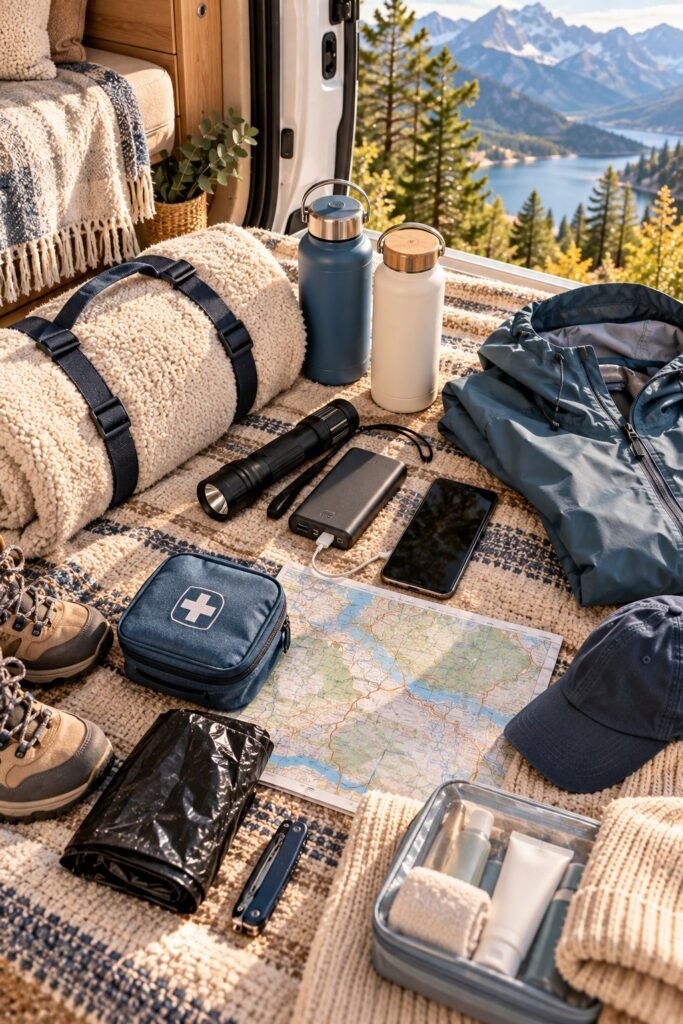
Free overnight parking areas often have fewer amenities than established campgrounds. Packing a few essentials will help you prepare for different situations.
Consider bringing:
- A charged phone and charging cable.
- An offline map or downloaded directions.
- Drinking water and simple snacks.
- A flashlight or headlamp.
- Weather-appropriate clothing and bedding.
- A first-aid kit.
- A rubbish bag for carrying out your waste.
- A power bank for your phone.
- A paper or digital copy of relevant reservations and permits.
- Any supplies required for your vehicle or RV.
If you are traveling in an RV or campervan, remember that a free parking area may not offer electricity, water hookups, toilets, showers, or a dump station.
Plan how you will manage your water supply, wastewater, rubbish, and battery use. Dispose of waste only at appropriate facilities, and never release wastewater onto the ground or into storm drains.
For a longer road trip, I would also plan occasional stays at established campgrounds or other facilities to refill supplies, clean up, and take care of routine vehicle needs.
13. Common Mistakes to Avoid When Looking for Free Overnight Parking
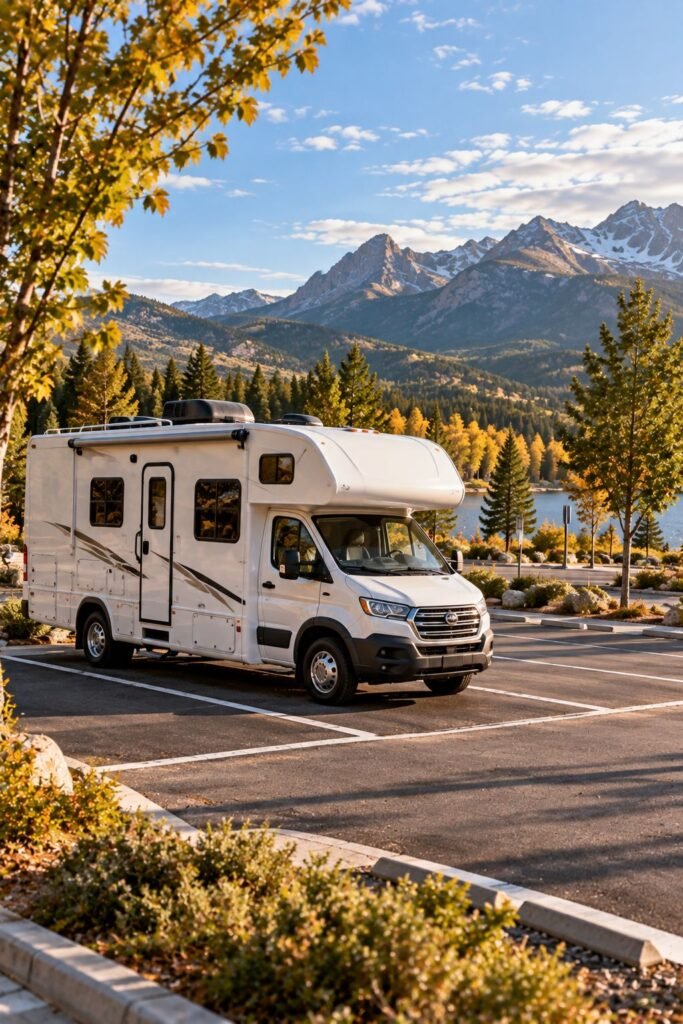
Even experienced road-trippers can make mistakes when trying to find a free place to stay. A little preparation can help you avoid unnecessary stress.
Assuming every large parking lot allows overnight stays
A spacious parking lot may look like the perfect stop, but that does not mean overnight parking is permitted. Always check with the property owner or manager.
Relying on outdated online reviews
A location that welcomed overnight visitors in the past may have changed its policy. Verify the current rules instead of relying on an old comment.
Confusing parking with camping
Parking permission may not include permission to sleep inside a vehicle, cook outdoors, set up chairs, or extend an awning. Ask what is permitted.
Arriving without a backup plan
Free locations can be busy, closed, or unsuitable for larger vehicles. Keep at least one alternative in mind so you do not have to make a rushed decision late at night.
Ignoring vehicle restrictions
Narrow roads, low clearances, steep grades, and rough surfaces can make some locations unsuitable for large RVs or vehicles towing trailers. Check access conditions before setting out.
Staying longer than permitted
Some places impose time limits or require visitors to move after a specified period. Follow local rules and never assume you can remain indefinitely.
A Simple Step-by-Step Plan for Finding Free Overnight Parking
If you are new to road-tripping or planning your first RV adventure, this process can help you organize your search.
Step 1: Choose your overnight area.
Estimate how far you can comfortably travel that day and identify the towns, public lands, or recreation areas near your route.
Step 2: Search for potential locations.
Use camping directories, official public-land websites, and local recreation resources to create a shortlist.
Step 3: Confirm the rules.
Check whether overnight stays are permitted, whether your vehicle is allowed, and whether any permits, fees, or time limits apply.
Step 4: Check the weather and access.
Look at forecasts, road conditions, seasonal closures, and any relevant safety alerts.
Step 5: Save a backup.
Choose another authorized place within reasonable driving distance in case your preferred stop is unavailable.
Step 6: Arrive and inspect the location.
Read posted signs, park only where permitted, and make sure the area feels suitable for your needs.
Step 7: Leave the spot as you found it.
Take your rubbish with you, avoid unnecessary noise, and respect other visitors and nearby residents.
Following these steps can make free overnight parking a more predictable part of your travel plans.
Frequently Asked Questions About Free Overnight Parking in the USA
Is it legal to sleep in your car overnight in the USA?
There is no single nationwide rule that makes sleeping in a parked car legal everywhere. Laws and restrictions vary by state, city, property owner, and parking location. Always verify whether overnight parking and sleeping in your vehicle are allowed at your intended stop.
Can you park an RV overnight for free?
Yes, in some locations. Certain public lands permit dispersed camping, and some businesses or public facilities may allow overnight parking under specific conditions. You must verify the current rules for each location and your type of vehicle.
Can you park overnight at Walmart for free?
Some Walmart locations may allow overnight parking, while others prohibit it. Contact the individual store and obtain permission before planning your stop.
Are highway rest areas free for overnight stays?
Rest areas are often free to use for permitted rest stops, but overnight parking and sleeping rules vary by state and location. Check the official state transportation department guidance and posted signs.
Is dispersed camping always free?
No. Some dispersed camping areas are free, while certain recreation areas require fees, permits, or reservations. Restrictions and length-of-stay limits also vary.
How can I find free overnight parking when traveling across several states?
Plan your route in advance, research each state’s rest area rules, check official public-land information, and use camping directories to discover potential stops. Confirm current permission for each location rather than relying on a single nationwide list.
What should I do if my planned overnight location is closed?
Use your backup plan. Find another location where overnight parking is explicitly permitted, or book an available campground. Avoid trespassing or assuming that an empty parking area is open to overnight visitors.
Final Thoughts: Enjoy the Freedom of an Affordable Road Trip
One of the best things about exploring the United States by road is having the freedom to discover places you might otherwise miss.
Free overnight parking can help you make your travel budget go further, whether you are exploring the desert Southwest, driving through mountain country, or making your way between exciting destinations.
The secret is to approach every overnight stop with a little research and flexibility. Check the rules, respect the property, prepare for limited facilities, and keep a backup option ready.
Most importantly, remember that free parking should never come at the expense of safety or legal access. Sometimes a designated campground is the better choice, especially when you need reliable facilities or a more comfortable night’s rest.
With thoughtful planning, you can enjoy more of the journey, spend less on accommodation when suitable free options are available, and make your next American road trip a memorable adventure.