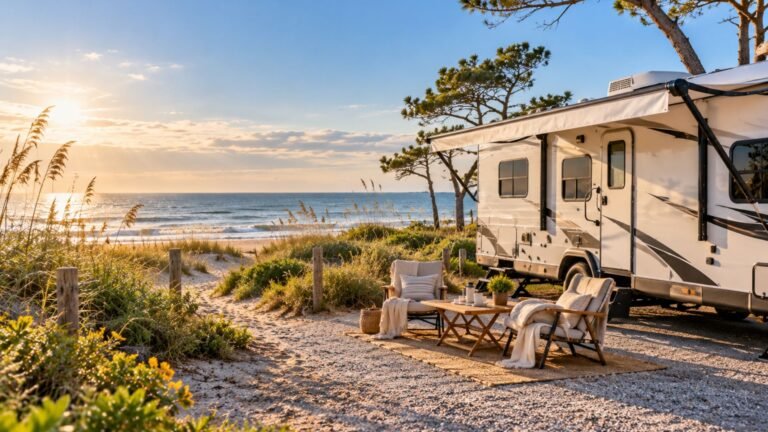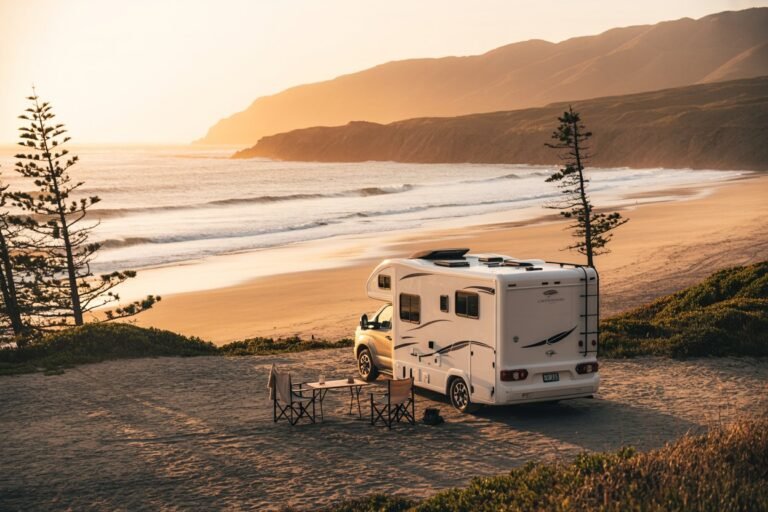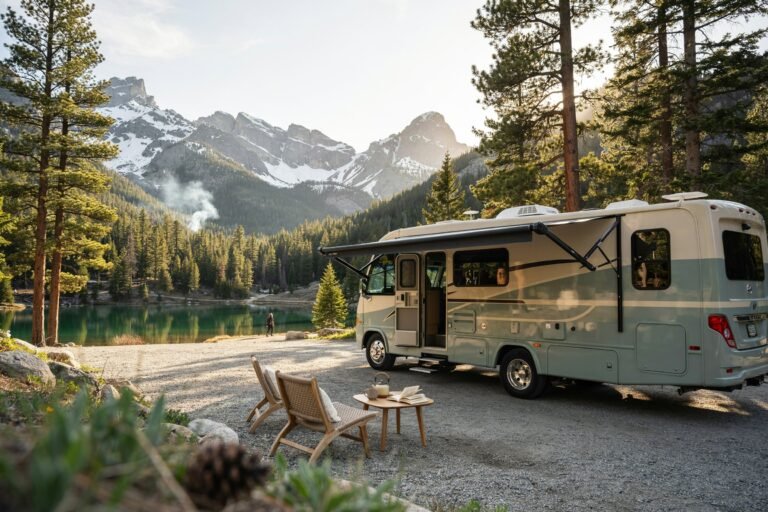
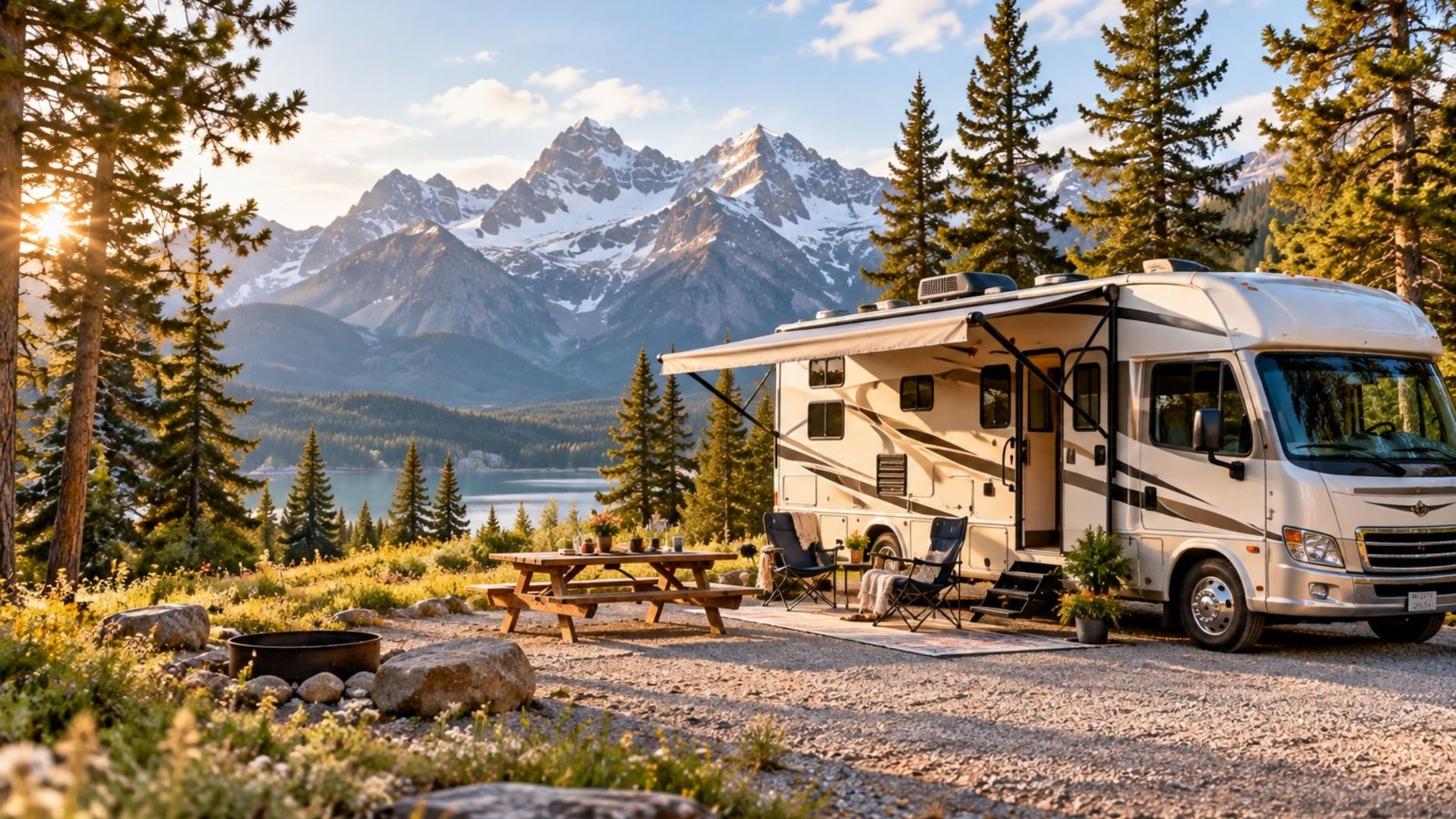

Finding a place to park your RV can be one of the most exciting parts of planning a road trip, especially when you want to explore somewhere new without spending every night at a traditional campground.
I love the idea of discovering quiet overnight stops, scenic public lands, and unexpected places that make an RV adventure feel a little more special.
However, not every parking area allows overnight stays, and knowing where to look can make all the difference.
In this guide, I’ll share eight places worth exploring, along with practical tips to help you plan a comfortable, responsible, and memorable RV trip.
1. Public Lands Managed by the Bureau of Land Management
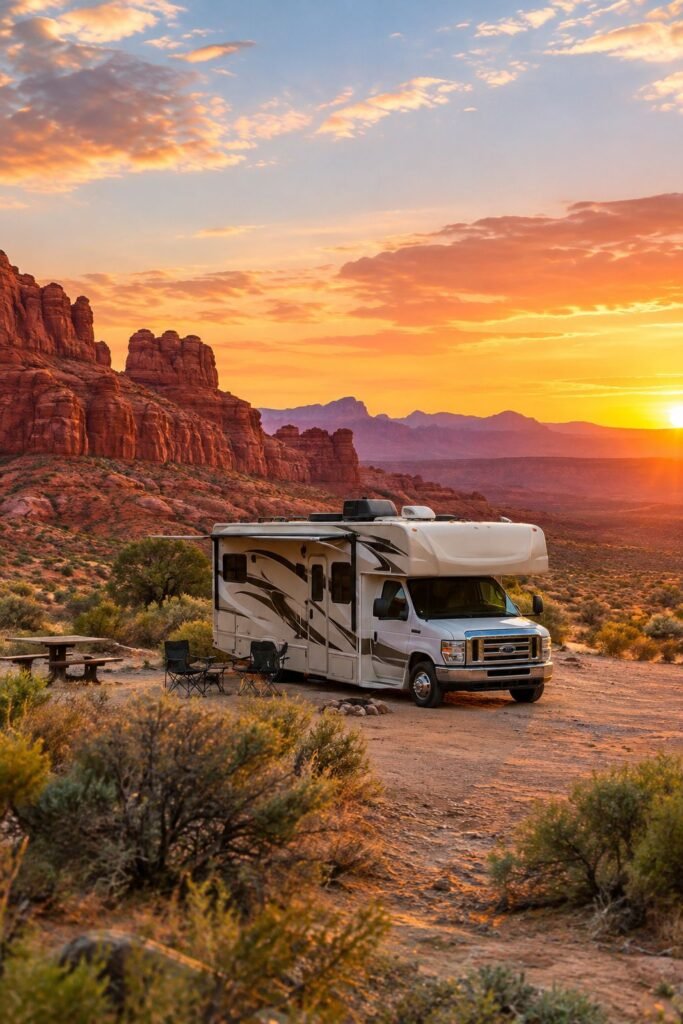
If you love wide-open landscapes, beautiful sunsets, and the feeling of being far away from busy tourist areas, Bureau of Land Management (BLM) land is one of the first places worth learning about.
The BLM manages extensive areas of public land across the United States, particularly in western states such as Arizona, Utah, Nevada, California, and New Mexico.
Some locations allow dispersed camping, which means staying outside a developed campground in an area where camping is permitted.
Why consider BLM land for your RV?
- Beautiful scenery: Depending on the location, you may find desert landscapes, mountain views, rocky formations, and expansive open spaces.
- A quieter experience: Dispersed camping areas can offer more space and fewer campground-style amenities.
- Potential savings: Many permitted dispersed camping locations are free, although some areas require fees or permits.
- Outdoor adventures: You may be close to hiking trails, scenic drives, wildlife-viewing areas, and other recreational opportunities.
What should you know before arriving?
BLM land is not one enormous, unrestricted camping area. Some sections are closed to camping, while others have designated sites, seasonal restrictions, road limitations, or specific occupancy rules.
Start by visiting the official Bureau of Land Management website and checking the rules for the particular field office responsible for your destination. The agency explains that dispersed camping is generally allowed on many of its lands unless restrictions apply, but the rules vary by location.
Before setting out, check whether your RV can safely reach the proposed location. An attractive spot on a map may be unsuitable for a large motorhome or travel trailer because of narrow roads, steep grades, low branches, or soft ground.
My planning tip: Arrive with enough daylight to inspect the parking area, check the ground, and position your RV safely. Bring sufficient water, manage your waste responsibly, and never assume that hookups or rubbish facilities will be available.
2. National Forests With Permitted Dispersed Camping
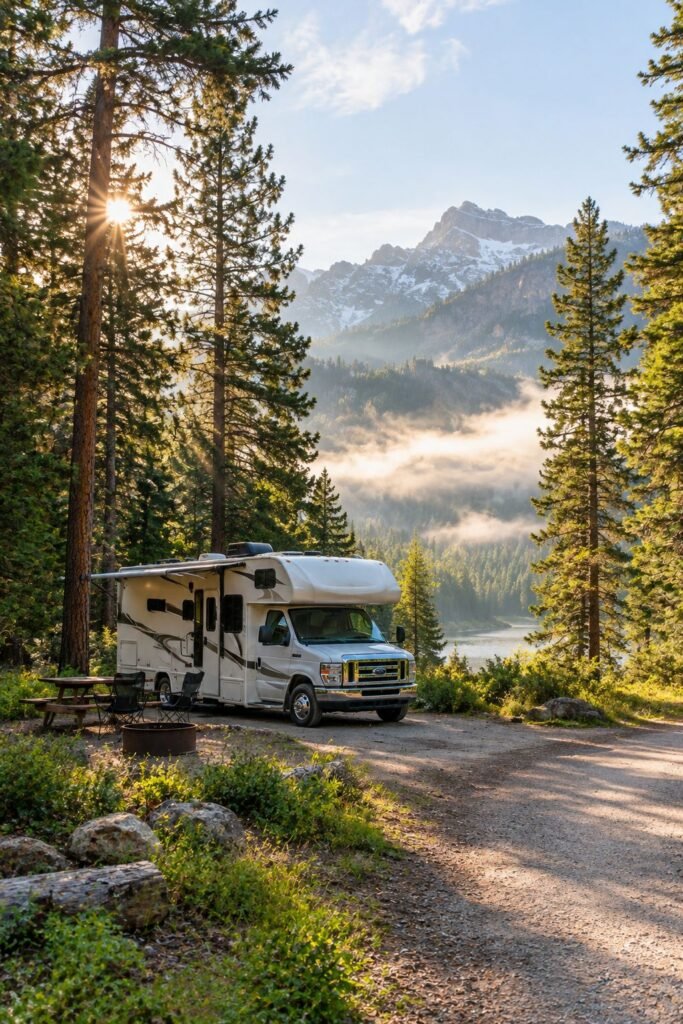
National forests are another option for RV travelers who want to spend more time surrounded by nature.
Imagine waking up to the sound of birds, stepping outside to breathe in the fresh forest air, and enjoying breakfast with trees and mountains in the background.
Across parts of the United States, national forests contain developed campgrounds as well as areas where dispersed camping is allowed.
These can be appealing alternatives when established campgrounds are full or when you want a simpler outdoor experience.
What makes national forests special?
National forests can offer a variety of landscapes, from pine-covered mountains and peaceful woodland roads to lakes, rivers, and open meadows. Your experience will depend on the forest, elevation, season, and available access roads.
Some areas are also conveniently located near hiking trails, fishing locations, and scenic drives, allowing you to combine your overnight stay with a full day of outdoor activities.
How to find a suitable RV parking area
Begin with the official U.S. Forest Service website. Look for your chosen national forest, then review its camping information, motor-vehicle access rules, current closures, and maps.
Pay particular attention to:
- Road conditions and restrictions for larger vehicles.
- Seasonal closures, snow, and weather forecasts.
- Whether camping is permitted at the exact location.
- Fire restrictions and local safety requirements.
- The availability of drinking water, toilets, and waste-disposal facilities.
Do not assume every forest road is suitable for an RV. Some are narrow, unpaved, or difficult to navigate with a long vehicle.
Is this a good choice for beginners?
It can be, provided you choose a location with reliable access and understand the rules. If you’re new to camping without hookups, consider starting with an established forest campground before trying a remote dispersed site.
Remember that a national forest is not the same as a national park. Their management rules and camping opportunities can differ, so always confirm the specific area’s regulations.
Read 15 Rookie Camper Van Conversion Mistakes To Avoid (And What To Do Instead)
3. Fairgrounds and Event Grounds
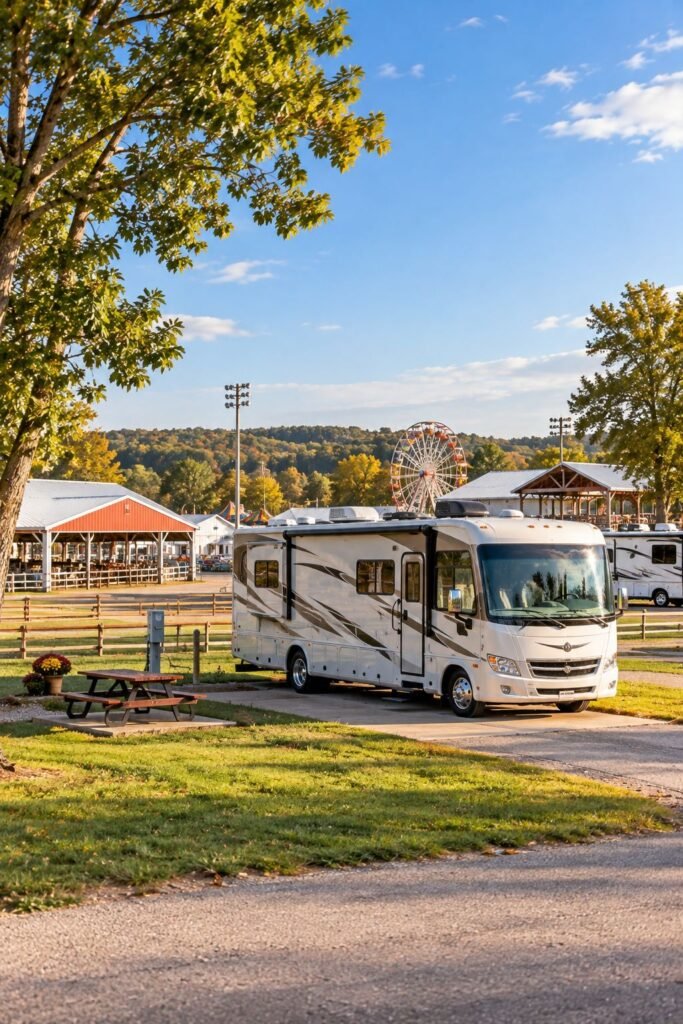
Fairgrounds might not be the first places you think of when planning an RV road trip, but they can be practical overnight options in some towns and rural communities.
County fairgrounds, agricultural exhibition grounds, and event centers sometimes provide RV parking or camping areas. Some offer these spaces throughout the year, while others open them only during particular events or seasons.
Why fairgrounds are worth checking
Fairgrounds can be especially useful when you need a place to stop near a small town without driving far outside your route.
Depending on the property, facilities may include:
- Large parking areas that can accommodate different RV sizes.
- Electrical hookups or water connections at designated sites.
- Restrooms and showers during operating periods.
- Dump stations or nearby RV services.
- Convenient access to town attractions and local businesses.
These amenities are not guaranteed, so check directly with the property before making plans.
How to arrange an overnight stay
Search for county fairgrounds or agricultural event centers along your route. Visit their official websites or contact their offices to ask whether RV overnight stays are permitted.
Ask about the nightly rate, reservation requirements, maximum vehicle length, hookup availability, and whether an event will affect access.
Fairgrounds may be busy during livestock shows, festivals, concerts, or seasonal fairs. During these periods, camping spaces may be limited, and prices or restrictions may change.
A useful tip: If you’re planning a multi-day road trip, identify fairgrounds near your planned stopping points before leaving home. Keep them as backup options rather than relying on an unconfirmed space at the end of a long driving day.
Read Check Out 15 Amazing Scenic Drives for Your Next Camper Van Trip in the UK
4. Casinos That Permit RV Overnight Parking
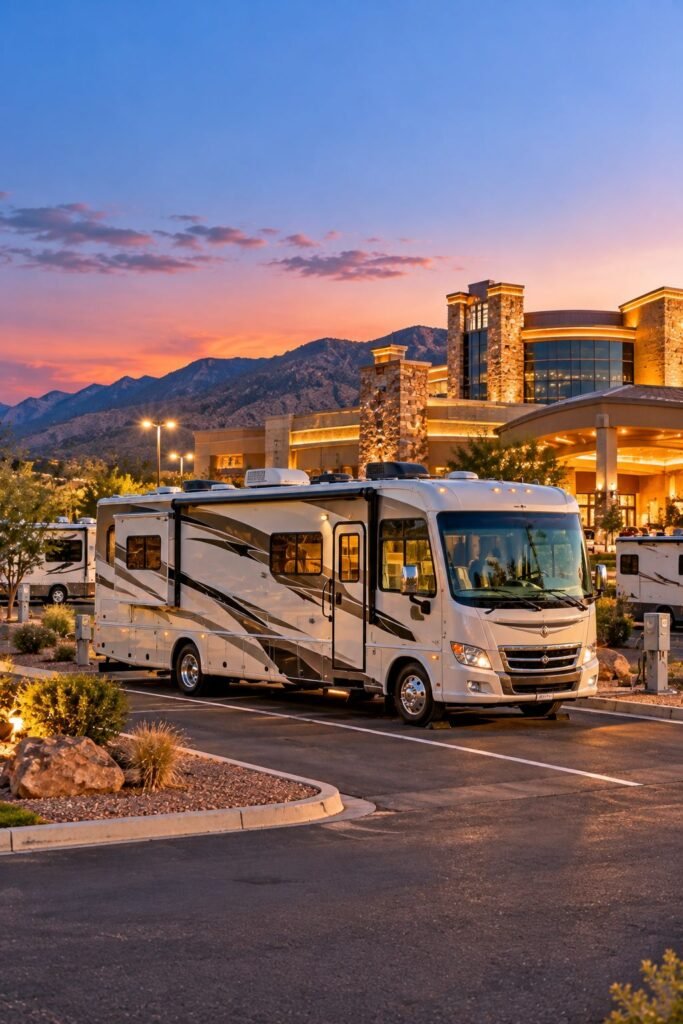
Some casinos allow RV travelers to park overnight in designated areas, making them another possibility to investigate when traveling through places with limited campground availability.
This option is usually more practical for travelers who need a convenient stopping point than for those looking for a peaceful nature retreat. Casino properties can be located near major highways, towns, and entertainment districts.
What are the advantages?
Depending on the property, RV parking may provide:
- A convenient location close to your driving route.
- A large paved parking area.
- Nearby restaurants and other services.
- A straightforward overnight stop without the need for a traditional campsite.
Some properties offer dedicated RV spaces, while others restrict RVs to ordinary parking areas. Hookups, water, and dump stations should never be assumed.
How to check the rules
Contact the casino directly and ask whether overnight RV parking is currently allowed. Confirm where RVs may park, whether reservations are needed, whether there is a fee, and how long you may remain.
Local ordinances, property policies, special events, and security requirements can all affect availability. Permission at one property does not mean another casino will allow the same arrangement.
Keep your stay low-impact. Avoid extending awnings, setting up outdoor furniture, or using generators unless the property expressly permits those activities.
Best for: A short overnight stop when the property has confirmed that RV parking is allowed.
Read Best Chic Boho Camper Interior Designs for the Ultimate Glamping Experience
5. Wineries, Farms, and Rural Hosts
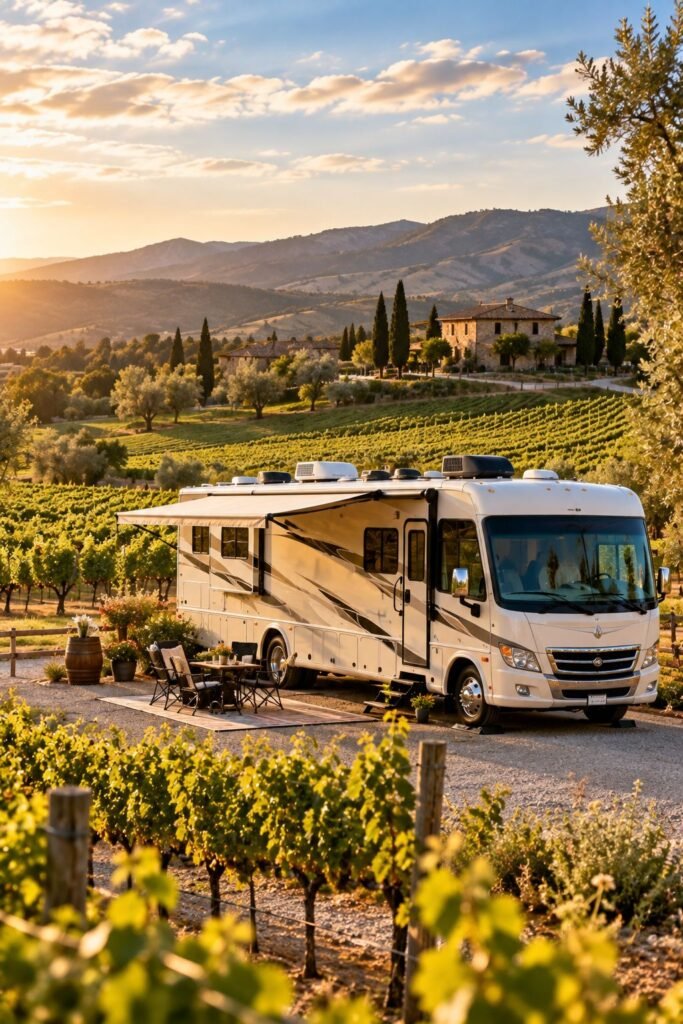
One of the loveliest ways to make an RV road trip memorable is to stay somewhere that feels connected to the local community.
In some regions, wineries, farms, and rural businesses welcome RV travelers through organized host programs or by direct arrangement.
Instead of spending the night in a busy parking lot, you might find yourself surrounded by vineyard rows, rolling farmland, orchards, or peaceful countryside.
What makes rural host stays different?
These stays can offer a more personal travel experience. You may discover a family-run farm, learn about local produce, explore a wine-growing region, or find a beautiful country setting you would otherwise have driven past.
Some hosts provide simple parking on their property, while others offer designated RV spaces or additional amenities. The exact experience depends on the host.
A program such as Harvest Hosts connects eligible RV travelers with participating businesses and attractions. Membership requirements, fees, and host rules apply, so review the current terms before planning a visit.
What should you ask before booking?
Not every winery or farm accepts overnight guests, and a business that welcomes visitors during the day may not allow overnight parking.
Before arriving, confirm:
- Whether your specific RV size can be accommodated.
- Whether an overnight stay is permitted on your chosen date.
- Whether you need a reservation or membership.
- Whether the parking area is level and accessible.
- Whether toilets, water, electricity, or waste facilities are available.
- Whether the host expects guests to purchase products or follow other conditions.
Some rural properties have gravel tracks, low tree branches, or soft ground after rain. Check access details before setting off, especially if you tow a large travel trailer.
How to be a considerate guest
Follow the host’s instructions, keep noise to a minimum, and leave the area clean.
If the host sells local products and you want to support the business, consider making a purchase, but check the program’s requirements rather than assuming every stay has identical conditions.
My favorite thing about this type of travel is the opportunity to discover places beyond the usual tourist route. Even a simple overnight stop can introduce you to a new region, a local business, or a beautiful countryside view.
6. Highway Rest Areas That Allow Overnight RV Stops
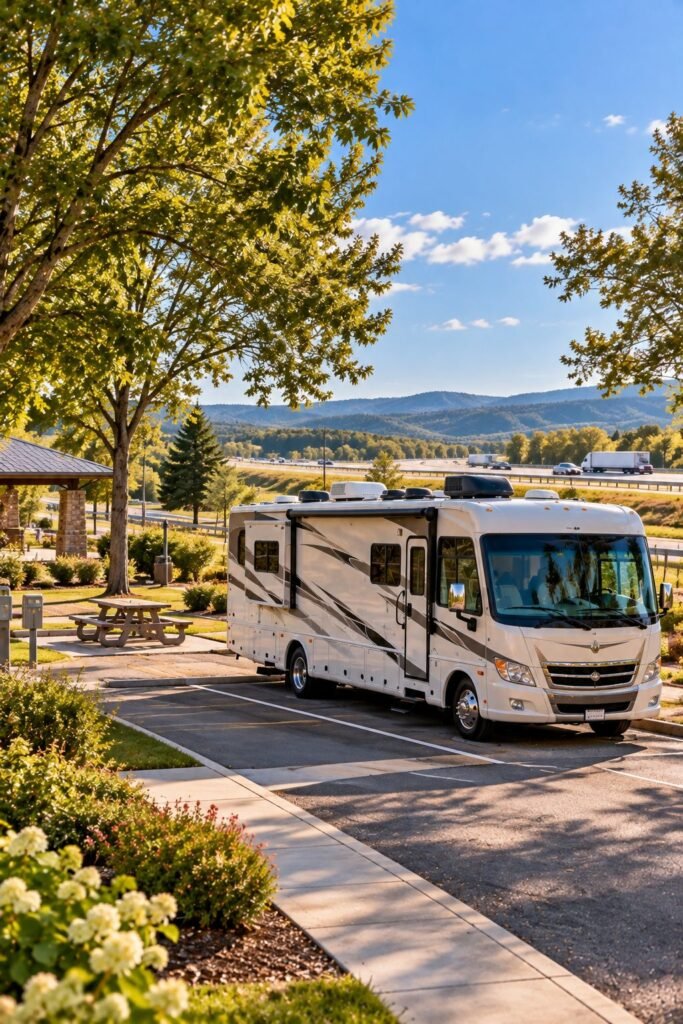
Sometimes, the best overnight stop is simply a convenient place to rest while traveling between destinations. Highway rest areas can serve this purpose, but their rules vary considerably.
Some allow vehicles to stop for a limited period, while others prohibit overnight parking or camping. A rest area that permits a driver to take a break does not necessarily allow an RV to remain there overnight.
When are rest areas useful?
Rest areas can be helpful when you’re traveling long distances and need to break up your journey. Depending on the facility, you may find restrooms, picnic areas, drinking water, vending machines, or designated spaces for larger vehicles.
However, services differ, and some facilities may have limited amenities or temporary closures.
How to check whether overnight parking is allowed
Before relying on a rest area, check the official transportation department website for the state you’re visiting. Read the signs when you arrive, including any maximum-stay limits and restrictions on overnight parking or camping.
Do not assume the same rules apply across an entire state. Individual facilities may have additional posted restrictions.
Also remember that resting inside your RV and setting up a campsite are not necessarily treated the same way. Extending slide-outs, placing chairs outside, or using an awning may be prohibited even where vehicle stops are permitted.
Tips for a more comfortable stop
- Choose a clearly designated space suitable for your RV.
- Park without blocking traffic, emergency access, or truck spaces.
- Lock your doors and keep valuables out of sight.
- Check your fuel, food, water, and battery levels before continuing.
- Leave promptly when your permitted stay ends.
Rest areas are best treated as convenient travel breaks rather than guaranteed campsites. If you need a full night’s sleep, verify the rules and choose an authorized overnight location before you arrive.
7. Truck Stops and Travel Centers
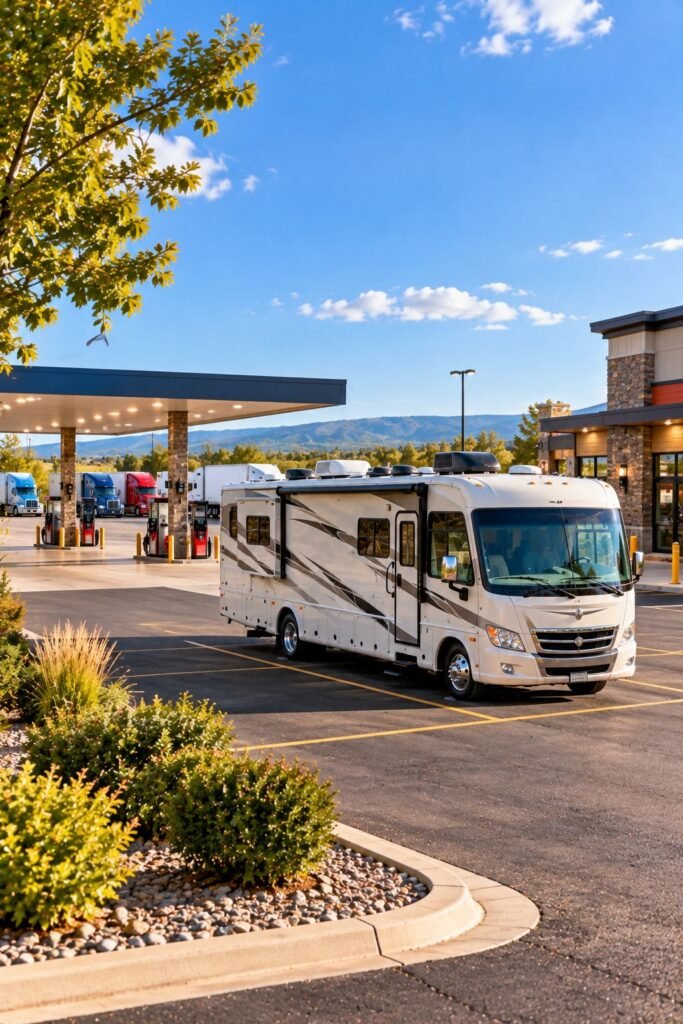
Truck stops and travel centers are another option worth investigating, especially when your RV trip involves long stretches of interstate driving.
These businesses are designed to serve road travelers and may have fuel stations, convenience stores, restaurants, restrooms, showers, and other services.
Some have designated overnight parking for RVs, while others restrict where or whether recreational vehicles can stay.
Why consider a travel center?
A travel center can be a practical place to stop when you need fuel, food, and a break without making a significant detour from your route.
Depending on the facility, you may benefit from:
- Convenient access to major highways.
- Fuel and basic travel supplies.
- Food and restroom facilities.
- Large parking areas with designated vehicle spaces.
- Nearby services for travelers continuing the next morning.
Remember that facilities vary. Not every travel center has RV-friendly spaces, and a lot designed for heavy trucks may not be suitable for every motorhome or trailer.
Is overnight parking permitted?
Always ask the property before settling in. Some locations allow overnight RV parking, some charge a fee, and others prohibit it entirely.
Ask where to park, how long you may stay, and whether the property has any restrictions on generators or outdoor equipment. Be especially careful not to occupy a trucker’s designated space.
If the business is busy or staff ask you to relocate, follow their instructions.
How to make the stop easier
Plan your arrival before you become tired. Look at the parking layout, consider the noise from idling engines, and choose an authorized space away from traffic where possible.
A travel center may not offer the peaceful atmosphere of a woodland campsite, but it can be a useful backup when you’re covering long distances.
A practical planning idea: Save two or three confirmed overnight alternatives along longer driving routes. That way, you won’t have to make a rushed decision when you’re ready to stop.
8. Sporting Goods Stores and Other RV-Friendly Retail Lots
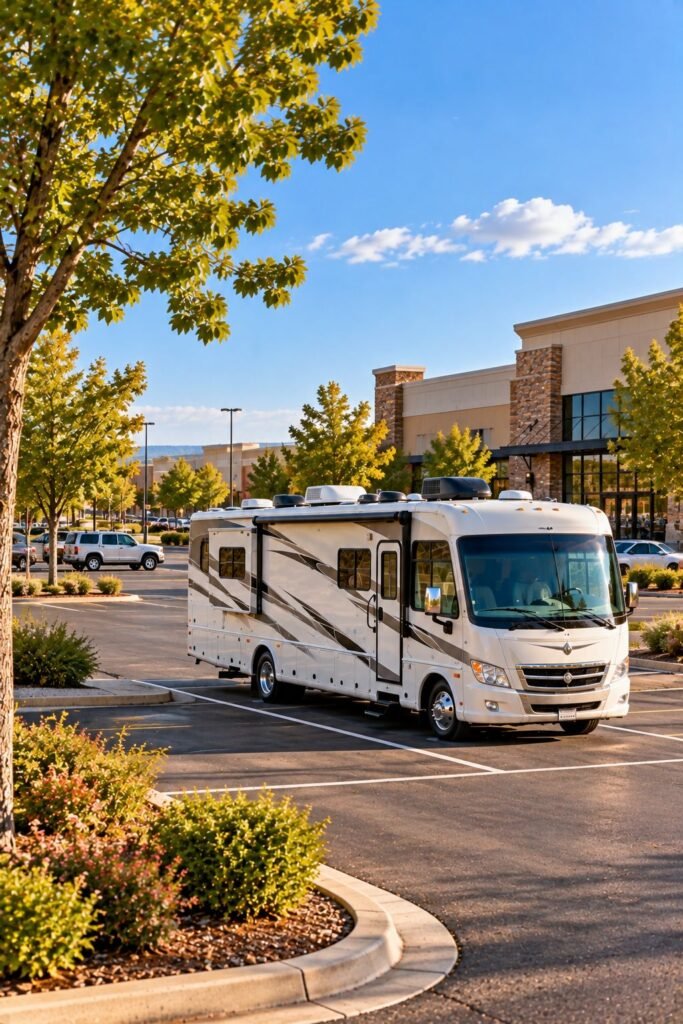
Large retail parking lots are sometimes mentioned in RV travel discussions, but they are among the places where it is particularly important to confirm permission rather than assume overnight stays are welcome.
Certain stores, including some outdoor recreation retailers, may allow RV parking at selected locations. Other stores prohibit overnight stays because of local regulations, property policies, security concerns, or limited parking.
Why are these locations worth checking?
When permission is available, a retail parking lot can provide a convenient one-night stop near shops, restaurants, fuel stations, or other road-trip essentials.
For travelers passing through an unfamiliar town, that convenience can be helpful. However, retail parking is usually less suitable for a relaxing camping experience than a designated campground or rural host stay.
How to find a location that permits RVs
Start by checking the store’s official parking policy and contacting the individual location. Ask specifically about overnight RV parking, since a general policy may not apply to every property.
Before arriving, confirm:
- Whether overnight stays are permitted on your intended date.
- Whether the lot can accommodate your RV’s length and height.
- Which parking area you should use.
- Whether a maximum stay or other conditions apply.
- Whether local rules permit overnight vehicle stays.
Never assume that a large, empty parking lot is available for camping. Permission from the property owner or manager and compliance with local rules are essential.
How to park respectfully
Use only the authorized area, avoid blocking entrances or delivery routes, and keep your vehicle within the designated spaces. Do not set up a campsite unless explicitly allowed.
If you need to leave your RV while shopping or exploring, make sure your parking arrangement allows it.
Retail lots are best viewed as a possible convenience stop, not a replacement for a campsite. If permission is unavailable or unclear, choose another location.
How to Find More Places to Park Your RV
You don’t have to rely on random internet lists to find useful overnight stops. A little preparation can help you discover options that suit your route, RV size, and travel style.
Here are some useful places to begin your search.
1. Official public land websites
Start with the Bureau of Land Management and U.S. Forest Service websites when researching dispersed camping. Their local pages provide information about access, restrictions, and closures.
2. RV travel apps and mapping tools
Use RV-focused planning tools to identify potential stopping points, campsite facilities, road restrictions, and traveler reviews. Confirm important details with the official property or managing agency.
3. Local visitor centers and tourism offices
These can be useful sources of information about regional campgrounds, fairgrounds, public recreation areas, and other authorized RV parking options.
4. Direct contact with property owners
If you’re considering a farm, winery, casino, retail lot, or travel center, contact the property directly. Confirmed permission is much more useful than an old online review.
Essential Tips for Parking Your RV Outside a Traditional Campground
Finding an interesting place to park is only half the job. Before heading out, take a few minutes to make sure your overnight stop will be safe, legal, and comfortable.
1. Always confirm overnight parking rules
This is the most important rule to remember. A place that allows daytime parking may not allow overnight stays. Check current local regulations, posted signs, and property policies before settling in.
For public land, confirm that camping is permitted at the exact location and check for seasonal closures or stay limits. The BLM’s official camping guidance explains that restrictions differ by area.
2. Check your RV’s size and road access
Not every parking area is suitable for every RV. Before leaving, check your vehicle’s height, width, and length against road restrictions and the space available at your destination.
If you’re towing a trailer, consider whether there is enough room to maneuver, turn around, and leave safely.
3. Prepare for a night without hookups
Some of these locations may not provide electricity, drinking water, sewer connections, or rubbish facilities.
Before arriving, make sure you have enough water, adequate battery power, and a plan for managing your waste. If you depend on electrical hookups or need accessible restroom facilities, choose a location that offers the services you require.
4. Arrive before dark when possible
Daylight makes it easier to inspect the ground, identify obstacles, and position your RV. This is particularly important at remote public-land locations, where roads may be unpaved or poorly maintained.
If a location looks unsafe or unsuitable when you arrive, don’t feel obligated to stay. Have another option ready.
5. Keep your overnight setup simple
Some places allow vehicle parking but prohibit camping activities outside the RV. Don’t extend awnings, place furniture outside, or run a generator unless the property’s rules specifically permit it.
At dispersed camping sites, use established areas where possible and avoid damaging vegetation or disturbing nearby wildlife.
6. Leave the location clean
Pack out your rubbish, dispose of wastewater at authorized facilities, and follow local fire restrictions. Never empty your RV’s waste tanks onto the ground or into storm drains.
Respecting the environment helps protect these locations for future travelers.
7. Keep a backup location in your travel plan
Even a carefully researched stop can become unavailable because of weather, special events, closures, or changing parking policies.
Identify another authorized option along your route, especially if you’re traveling through remote areas. Having a backup makes the journey less stressful and gives you more flexibility.
Which of These RV Parking Options Is Best for You?
The best choice depends on whether you’re looking for natural scenery, convenient road-trip stops, or an opportunity to discover something different.
| Location | Best for | What to check |
|---|---|---|
| BLM public lands | Remote scenery and permitted dispersed camping | Camping restrictions, road access, water and waste |
| National forests | Nature lovers and outdoor adventures | Forest-specific rules, closures and vehicle access |
| Fairgrounds | Practical stops near towns | Fees, event schedules and facilities |
| Casinos | Convenient overnight stops | Direct permission and designated parking |
| Wineries and farms | Rural experiences and local discoveries | Host requirements, reservations and access |
| Highway rest areas | Breaking up a long drive | State rules, posted limits and overnight restrictions |
| Truck stops | Road-trip convenience and travel services | RV parking areas, noise and overnight policies |
| Retail parking lots | Potential short stops near shops | Store permission and local regulations |
These are possibilities to investigate, not guaranteed overnight parking locations. Always verify the rules for the individual property before traveling.
Final Thoughts: Discover New Possibilities on Your Next RV Adventure
One of the best things about RV travel is having the freedom to discover places you might otherwise pass by. Although traditional campgrounds are useful, they aren’t your only option.
From permitted dispersed camping on public lands to rural host stays and authorized overnight parking at selected businesses, there are several alternatives worth exploring.
The key is to plan ahead, confirm permission, and understand what each location offers. Some places provide beautiful scenery but no facilities, while others offer convenience without the peaceful atmosphere of a campground.
My advice is to keep an open mind, research your options carefully, and always have a backup plan. With a little preparation, you can make your next road trip more flexible, discover new destinations, and enjoy the journey as much as the places you visit.
Happy travels, and enjoy your next RV adventure!
Frequently Asked Questions About Unusual RV Parking Places
Can you park an RV overnight for free?
Sometimes. Certain dispersed camping areas on public land allow free overnight stays, and some businesses permit RV parking without a fee. However, fees, restrictions, and availability vary. Always confirm that overnight parking is permitted before arriving.
Can you park an RV overnight at a Walmart?
Policies vary by location. Some stores may allow overnight RV parking, while others prohibit it because of local laws or store policies. Contact the specific store and confirm permission before relying on it.
Is boondocking the same as RV camping?
Boondocking generally refers to RV camping without standard campground hookups. It often takes place on permitted public land or at other authorized locations. Boondocking doesn’t automatically mean camping for free or parking wherever you choose.
What should I bring when parking my RV without hookups?
Consider bringing sufficient drinking water, charged batteries or an appropriate power source, food, lighting, weather-appropriate clothing, and supplies for managing waste. Your needs will depend on your RV, the length of your stay, and the facilities available.
How long can you stay on public land?
There is no single time limit that applies everywhere. Many BLM dispersed camping areas have a 14-day limit within a 28-day period, but local rules may differ. Check the official information for your intended destination before planning a longer stay.
Are unusual RV parking locations suitable for beginners?
Some are, particularly authorized parking areas with good road access and clear instructions. If you’re new to RV travel, start with a location that offers the facilities and support you need before attempting remote camping without hookups.