
RV travel has given me some of my favorite ways to experience the United States.
I love waking up surrounded by mountains, forests, lakes, or desert landscapes and knowing that the next adventure is just outside the door.
Over time, I’ve learned that choosing the right campground can make a huge difference in an RV trip.
Some places are perfect for families, while others are better for incredible views, hiking, wildlife, or simply slowing down. If you’re planning your next road trip, these 10 RV campgrounds are worth putting on your list.
1. Watchman Campground — Zion National Park, Utah
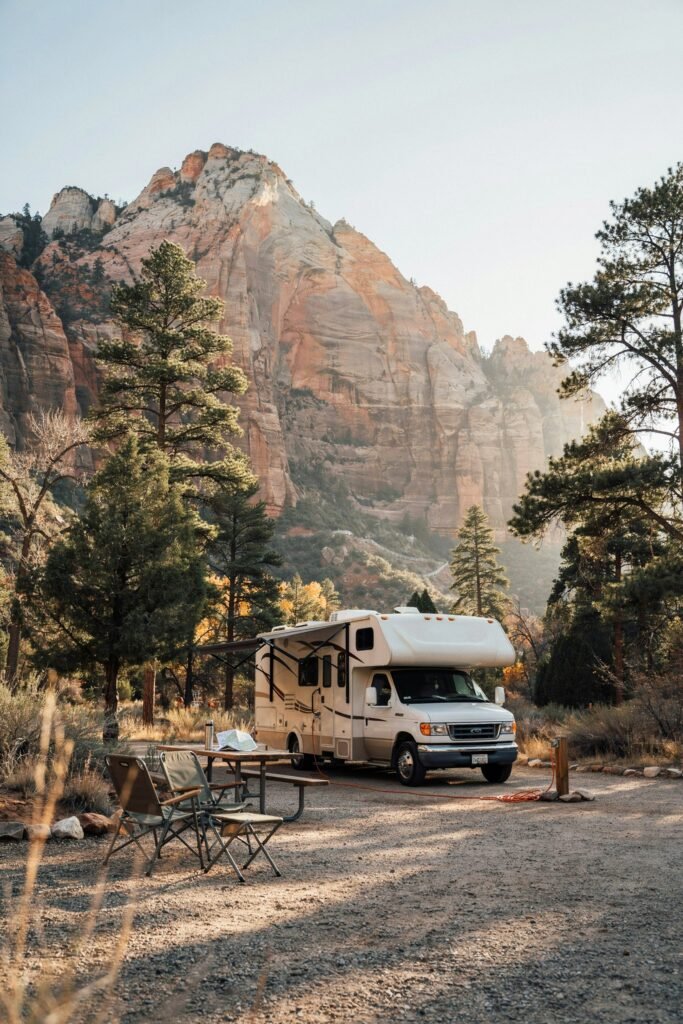
Few places make an RV traveler feel like they have arrived somewhere truly special quite like Zion National Park.
Watchman Campground sits near the park’s dramatic red-rock cliffs and is an excellent base for exploring one of Utah’s most spectacular landscapes.
The campground is close to the Zion Canyon Visitor Center and the park shuttle system, making it convenient for travelers who want to explore the canyon without constantly moving their RV.
One of the biggest advantages of staying here is the scenery. Towering sandstone cliffs surround the area, and the changing light throughout the day makes the landscape look completely different from morning to evening.
Things to do nearby
Spend time exploring Zion Canyon, take the shuttle farther into the park, hike one of the many trails, or simply enjoy a picnic surrounded by the cliffs.
For a quieter experience, get up early. Morning is one of my favorite times in national parks because the trails are generally calmer and the landscape feels incredibly peaceful.
RV tip
Always check the maximum vehicle length before reserving a site. National park campgrounds can have surprisingly specific RV restrictions, and a site that looks suitable online may not accommodate a larger motorhome or trailer.
Read 15 Rookie Camper Van Conversion Mistakes To Avoid (And What To Do Instead)
2. Upper Pines Campground — Yosemite National Park, California
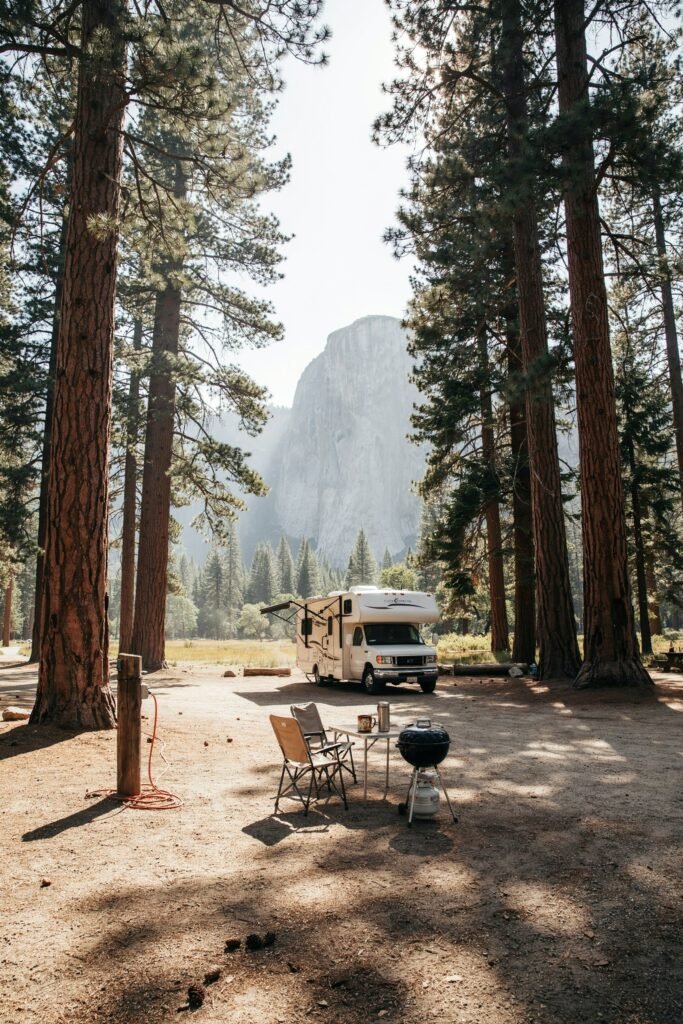
If Yosemite is on your RV bucket list, staying inside the national park can make the experience much easier.
Upper Pines Campground is located in Yosemite Valley, putting you close to some of the park’s most famous scenery.
Instead of spending valuable vacation time driving into the valley each morning, you can wake up already surrounded by Yosemite’s enormous granite walls and forests.
Yosemite’s campgrounds have specific RV and trailer length limits.
For example, the National Park Service currently lists maximum RV and trailer lengths for individual campgrounds, so checking the official campground information before booking is essential.
What to see
While staying here, make time for:
- Yosemite Falls
- El Capitan
- Half Dome viewpoints
- Mirror Lake
- Yosemite Valley
- Tunnel View
- Glacier Point, when accessible
I recommend allowing several days rather than trying to see everything in one afternoon.
Why RV travelers should consider it
The location is the biggest attraction. You’re sleeping inside one of America’s most iconic national parks instead of treating Yosemite as a quick day trip.
Just remember that demand is high. Popular national park campgrounds can fill quickly, and Recreation.gov recommends preparing ahead of the reservation opening date.
Read 32 Coastal Chic Designs for Camper Vans (That Feel Like Waking Up by the Sea)
3. Trailer Village RV Park — Grand Canyon National Park, Arizona
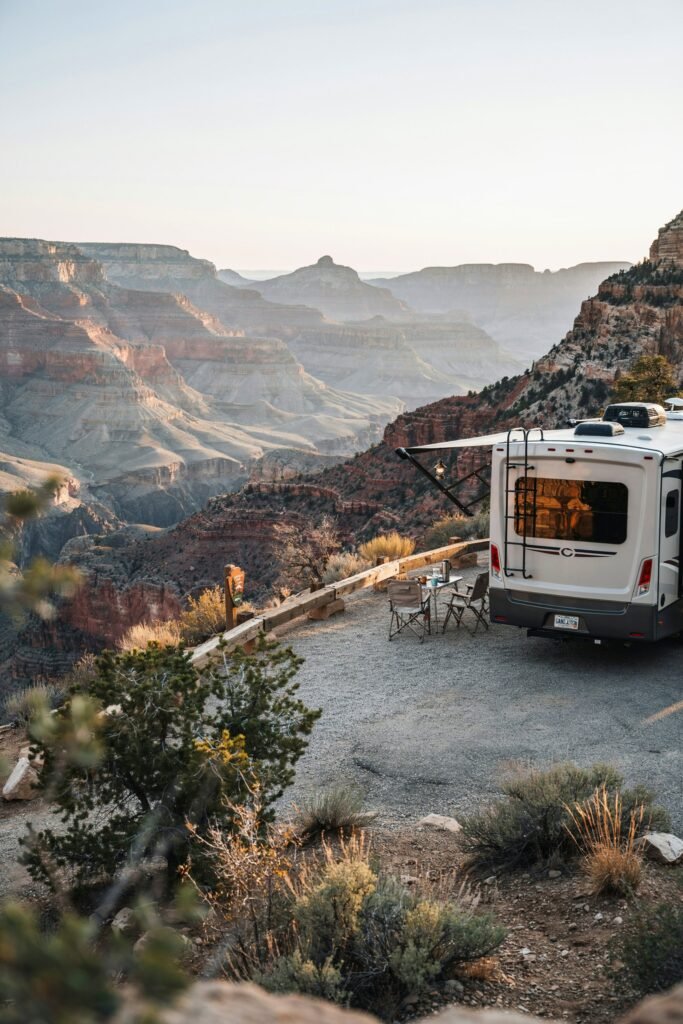
Waking up near the Grand Canyon is an experience that belongs on almost every RV road-trip itinerary.
Trailer Village is particularly useful for RV travelers because it offers sites designed specifically for RV camping, making it different from many national park campgrounds that primarily provide more basic camping facilities.
The Grand Canyon is also an excellent stop for travelers who want a combination of scenic drives, hiking, viewpoints, and unforgettable sunsets.
Things to do
During your stay, explore several viewpoints along the South Rim rather than stopping at just one.
Some great experiences include:
- Watching sunrise over the canyon
- Walking along the Rim Trail
- Visiting Mather Point
- Exploring Grand Canyon Village
- Taking a scenic drive
- Watching the sunset
- Joining a ranger program
If you’re traveling with family, give yourself plenty of time. The Grand Canyon is much larger than many first-time visitors expect.
RV planning tip
Don’t assume every Grand Canyon campground can accommodate a large RV. For example, Desert View Campground has a total vehicle/trailer length consideration of around 30 feet, with larger vehicles potentially having difficulty navigating turns.
Always check the exact campground and site requirements before booking.
Read Carry-On Packing List for Fall Travel: The Complete Guide to Packing Light
4. Fishing Bridge RV Park — Yellowstone National Park, Wyoming
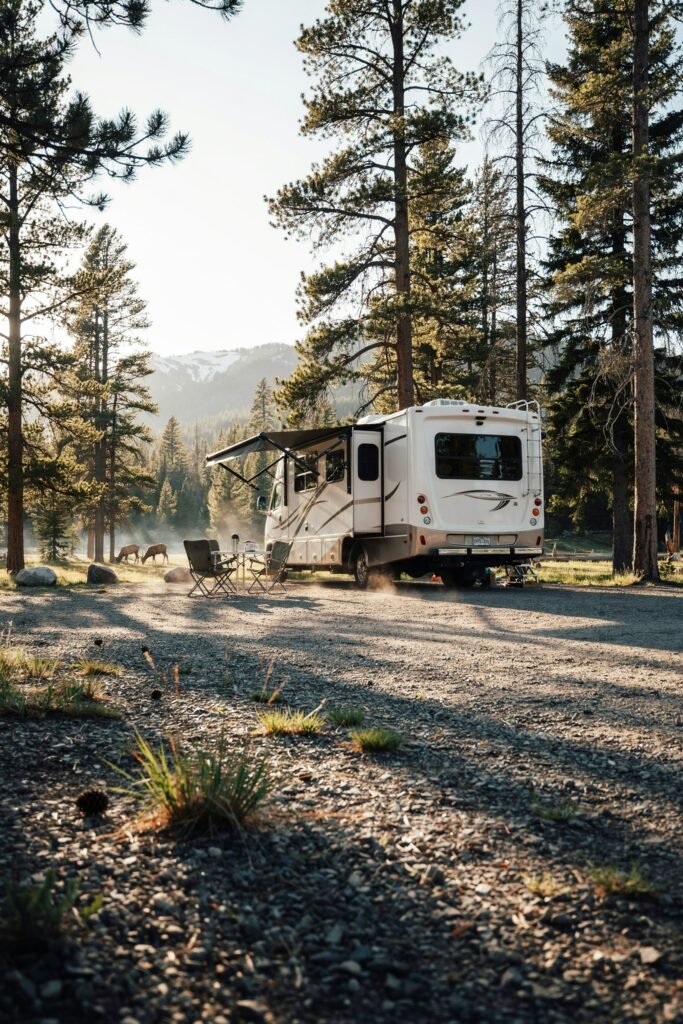
Yellowstone is one of those destinations where an RV trip feels almost made for the landscape.
Fishing Bridge is particularly appealing to RV travelers looking for a base from which to explore Yellowstone’s enormous collection of geysers, wildlife areas, lakes, waterfalls, and geothermal features.
The park itself is huge, so don’t make the mistake of thinking you can explore everything in a single day.
What to experience
Put these on your Yellowstone itinerary:
- Old Faithful
- Grand Prismatic Spring
- Yellowstone Lake
- Hayden Valley
- Mammoth Hot Springs
- Lamar Valley
- Yellowstone’s waterfalls
Wildlife viewing can also be fantastic, particularly in the early morning and evening.
My RV advice
Plan your route before leaving the campground each day. Yellowstone’s distances can be deceptive, and road construction, wildlife stops, traffic, and weather can add significant time.
Keep your itinerary flexible. Some of my favorite travel moments happen when I don’t rush from one attraction to the next.
5. Moraine Park Campground — Rocky Mountain National Park, Colorado
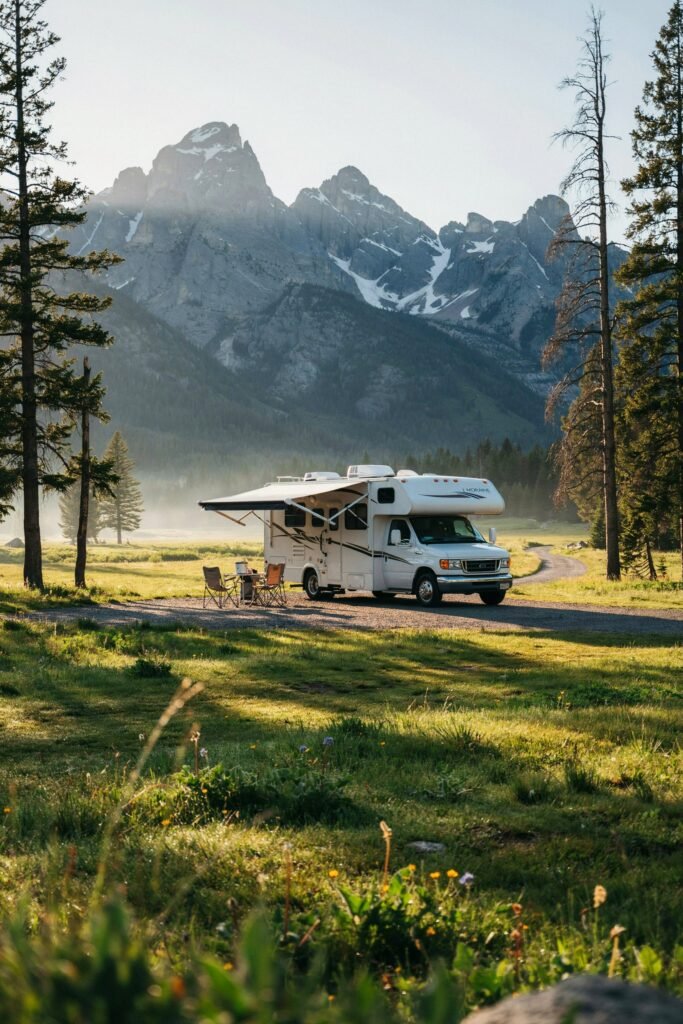
If mountains are what you dream about when you think of an RV vacation, Rocky Mountain National Park should be high on your list.
Moraine Park Campground gives travelers access to the spectacular mountain scenery of Colorado, with opportunities for hiking, wildlife viewing, scenic drives, and photography.
Rocky Mountain National Park currently lists seasonal operating dates for its campgrounds, so travelers should check the current park schedule rather than assuming a campground is open year-round.
Things to do
Spend your days exploring:
- Bear Lake
- Sprague Lake
- Moraine Park
- Trail Ridge Road when open
- Alberta Falls
- Scenic mountain viewpoints
The elevation is important here. Don’t plan an exhausting first day if you’re not accustomed to higher elevations.
RV tip
Mountain roads and campgrounds can have strict vehicle-size limitations. For example, Timber Creek Campground, another campground within Rocky Mountain National Park, has a 30-foot total vehicle length limit.
Check your RV dimensions before choosing a campground.
6. St. Mary Campground — Glacier National Park, Montana
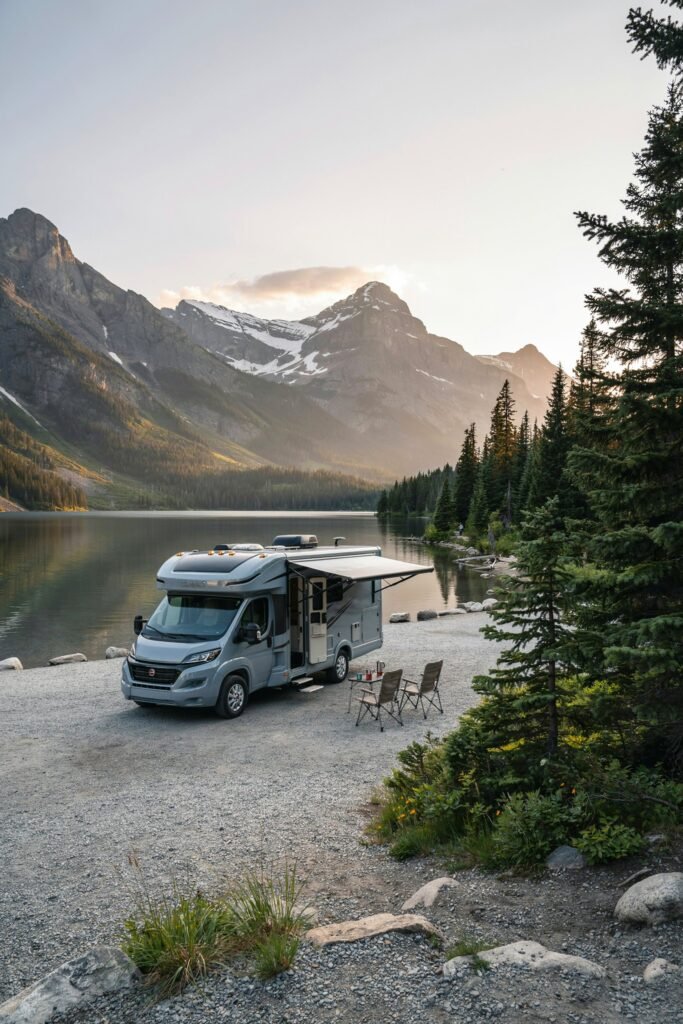
Glacier National Park is one of the best places in the country for travelers who want dramatic mountain scenery without giving up the classic road-trip experience.
St. Mary sits on the eastern side of Glacier National Park and provides access to some of the park’s most beautiful scenery.
The area around St. Mary Lake is particularly impressive, with mountains rising dramatically around the water.
What to do
During your stay, consider:
- Driving Going-to-the-Sun Road
- Visiting St. Mary Lake
- Hiking one of the area’s trails
- Photographing mountain landscapes
- Looking for wildlife
- Exploring nearby park viewpoints
A helpful planning tip
Check road and campground conditions before your trip. Mountain parks can have short operating seasons, and conditions can change quickly.
Also check your RV dimensions carefully. Individual campsites can have specific maximum vehicle lengths, and combined vehicle length can matter when you’re traveling with a trailer.
7. Sol Duc Hot Springs Resort Campground — Olympic National Park, Washington
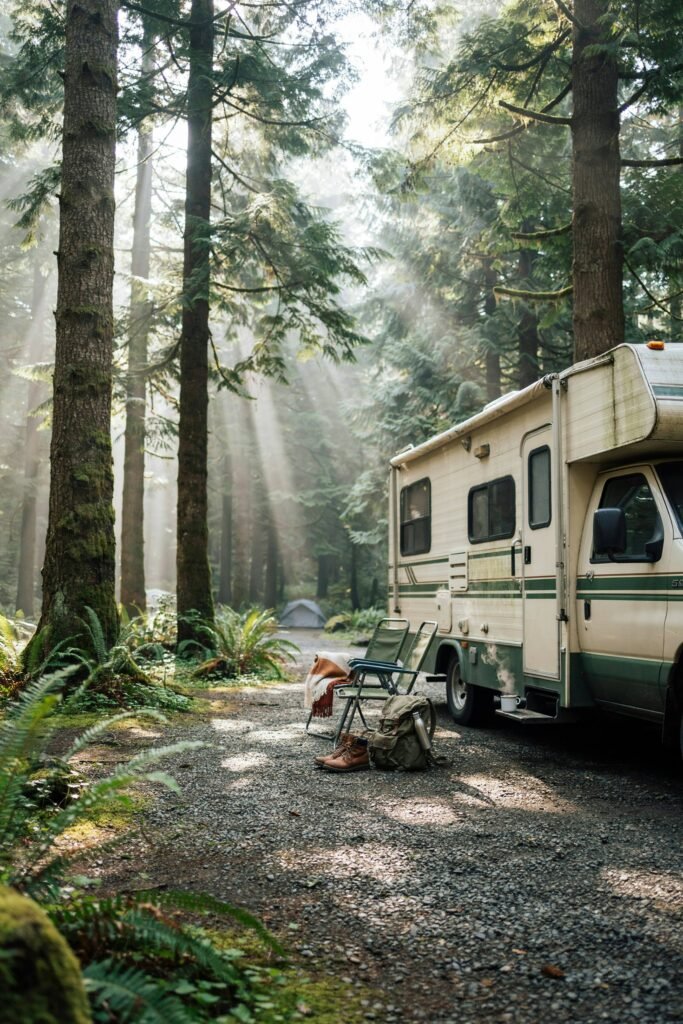
For something a little different, head to Washington’s Olympic Peninsula.
Sol Duc Hot Springs Resort Campground combines RV camping with access to one of the region’s most interesting natural attractions: hot springs.
The campground sits beneath a lush forest canopy, and several hiking trails are accessible from the property. Recreation.gov currently lists 17 RV campsites at the campground, along with tent sites.
Why I love this idea for an RV trip
You can spend the morning hiking through the forest, return to camp for lunch, and then enjoy the hot springs.
It creates a wonderfully relaxed rhythm that feels very different from a fast-paced national park road trip.
Nearby experiences
Don’t miss:
- Sol Duc Falls
- Lake Crescent
- Olympic National Park’s rainforests
- Hurricane Ridge
- Forest hiking trails
This is an especially nice choice if you want your RV vacation to include both adventure and relaxation.
8. Fairholme Campground — Olympic National Park, Washington
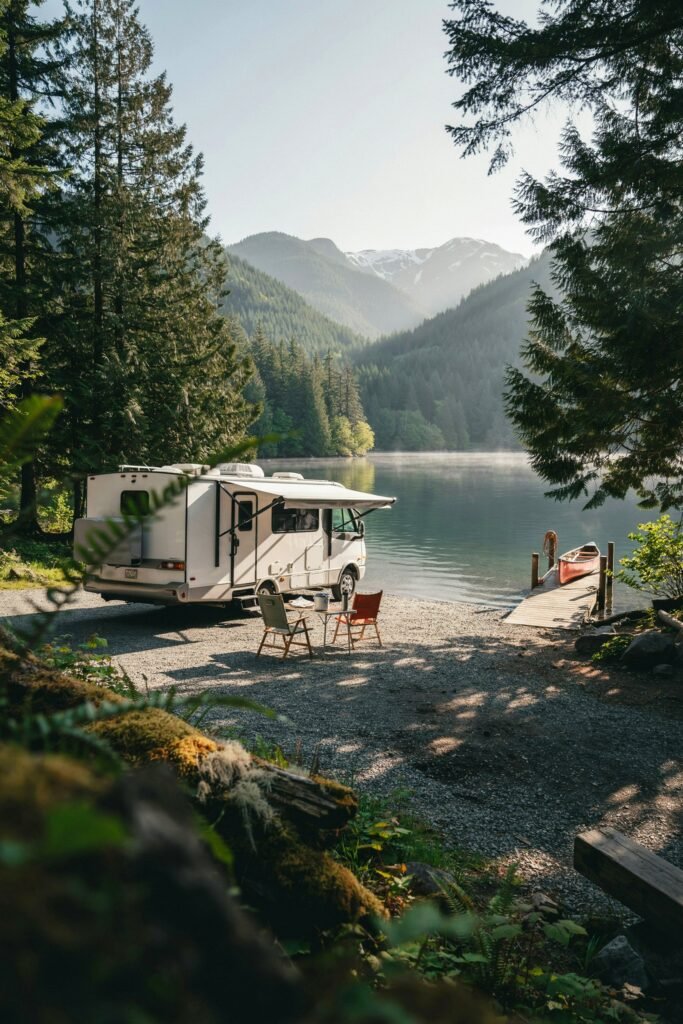
Another beautiful Olympic Peninsula option is Fairholme Campground, located beside Lake Crescent.
Imagine stepping outside your RV and having a beautiful mountain lake nearby. That’s the kind of scenery that makes an RV trip memorable.
Fairholme is also useful as a base for exploring the northern part of Olympic National Park.
What to do
Spend time at Lake Crescent, explore nearby trails, take photographs along the shoreline, and plan day trips farther into Olympic National Park.
The campground’s 2026 reservation system uses staggered reservation releases, with some campsites becoming available six months ahead and others released closer to the camping date.
RV tip
Don’t wait until the last minute if your travel dates are fixed. Popular national park campgrounds can have complicated reservation windows, so knowing when your preferred sites become available can make a huge difference.
9. Blackwoods Campground — Acadia National Park, Maine
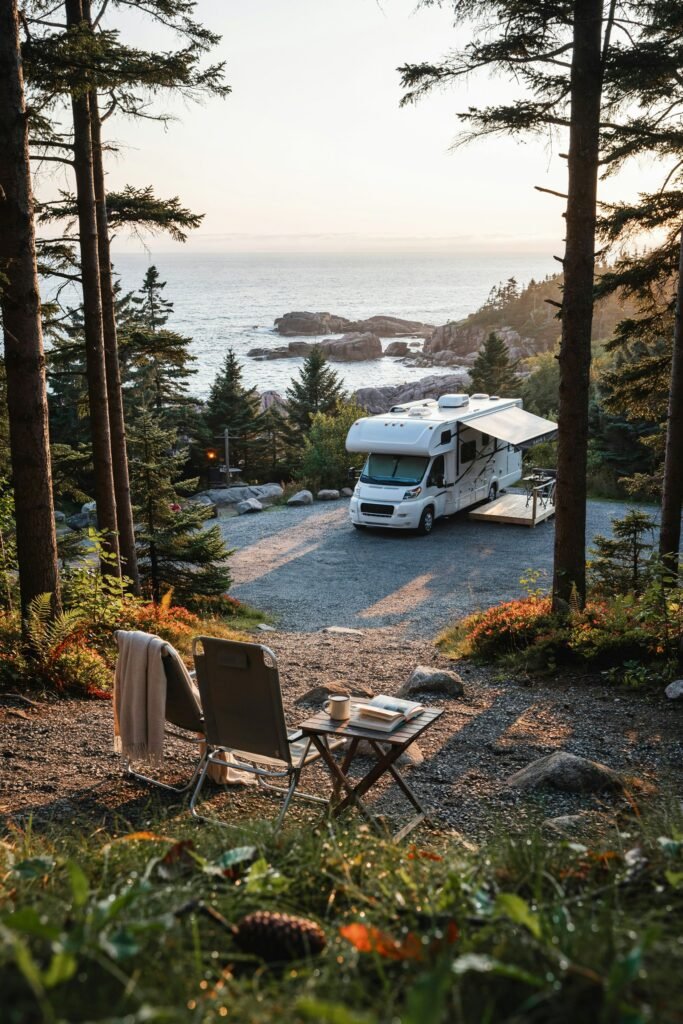
If you want an RV adventure on the East Coast, Acadia National Park is an excellent choice.
Blackwoods Campground gives travelers a chance to experience Maine’s rocky coastline, forests, mountains, and famous sunrises.
Acadia feels completely different from western national parks. Instead of massive desert cliffs or towering mountain ranges, you’ll find rugged coastline, pine forests, ocean views, and charming New England surroundings.
Things to do
Make time for:
- Cadillac Mountain
- Ocean Path
- Sand Beach
- Jordan Pond
- Thunder Hole
- Bar Harbor
- Scenic coastal drives
One of my favorite things about an Acadia RV trip is how easy it is to combine outdoor adventure with small-town exploring.
Spend the morning hiking, enjoy lunch in town, and return to the campground for a peaceful evening.
RV tip
Plan your sightseeing around your RV. Some park roads and areas may have vehicle restrictions, so don’t assume your motorhome can follow every route your passenger car could.
10. Colter Bay RV Park — Grand Teton National Park, Wyoming
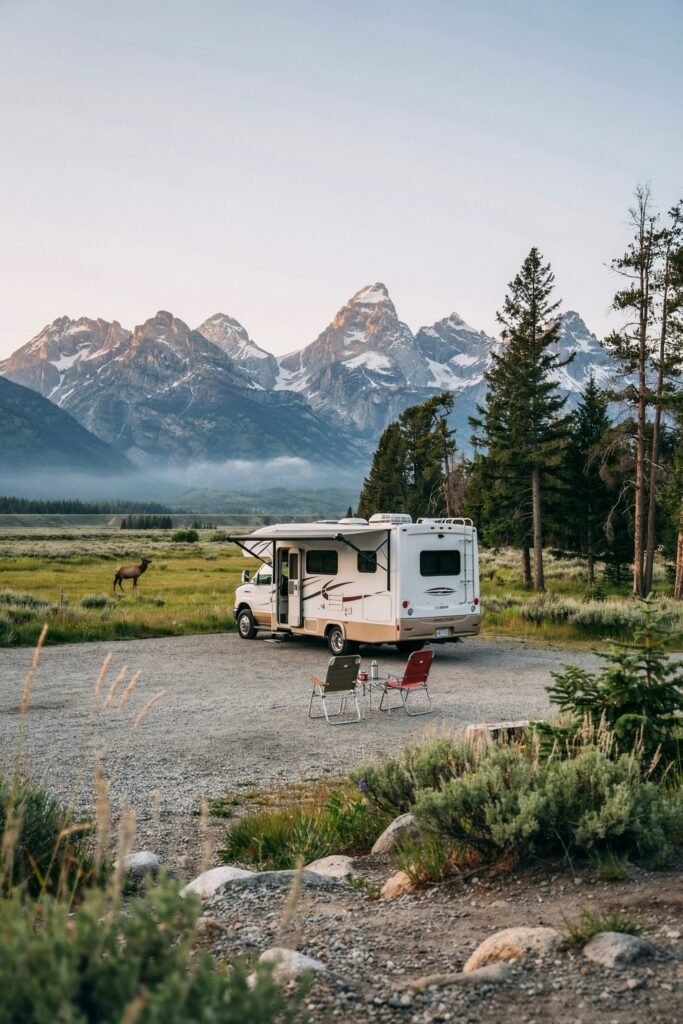
Grand Teton National Park is one of the most beautiful destinations for an RV road trip.
The dramatic Teton Range rises above the landscape, creating incredible views almost everywhere you look.
Colter Bay is a convenient base for exploring the northern portion of Grand Teton National Park and nearby Jackson Lake.
What to do
Add these experiences to your itinerary:
- Watch sunrise over the Tetons
- Visit Jackson Lake
- Explore Jenny Lake
- Take scenic drives
- Look for wildlife
- Hike around the park
- Visit nearby Jackson
If you’re planning a longer western road trip, Grand Teton also pairs beautifully with Yellowstone.
You can create an itinerary that includes both parks without needing to completely change your travel style.
How to Choose the Right RV Campground
Not every campground will be right for every RV traveler. Before making a reservation, I recommend checking these five things.
1. Check the RV length limit
This is one of the most important details.
Your RV length, trailer length, and combined vehicle length may all matter depending on the campground.
Never book based solely on photographs.
2. Check hookups
Do you need:
- Electricity?
- Water?
- Sewer?
- Dump station access?
- A generator?
Some beautiful national park campgrounds are designed for a more traditional camping experience and may not offer full hookups.
3. Check the reservation system
Many popular campgrounds use Recreation.gov. The platform currently provides access to thousands of campgrounds and individual sites across the country.
Reservation windows vary, so check the individual campground rather than assuming every location follows the same rules.
4. Think about the season
A campground that looks perfect in July may be completely different in October.
Mountain destinations can experience snow and road closures, while desert destinations can become extremely hot during summer.
Always check current park conditions before leaving.
5. Don’t plan every minute
This is something I learned to appreciate with RV travel.
Give yourself time to enjoy the campground itself.
Have breakfast outside. Take a short walk. Watch the sunset. Sit around the campfire. Enjoy the view.
An RV trip doesn’t have to be a race between attractions.
RV Reservation Tips You Should Know
Popular campgrounds can be difficult to reserve, especially during summer and holiday periods.
Recreation.gov recommends creating an account ahead of time, knowing the campground’s booking window, and being ready when reservations open. Some popular locations can fill extremely quickly.
I recommend doing the following before your reservation date:
- Create your Recreation.gov account.
- Confirm your dates.
- Measure your RV and trailer.
- Decide whether you need hookups.
- Research alternative campgrounds.
- Know exactly when reservations open.
- Have a backup date ready.
- Read the campground’s “Need to Know” information.
Don’t forget to look at cancellation policies and fees before booking. Recreation.gov notes that individual facility policies can differ from its general reservation policies.
What to Pack for an RV Campground Trip
A comfortable RV trip is much easier when you have the basics organized.
RV essentials
- Freshwater hose
- Sewer hose
- Electrical adapters
- Leveling blocks
- Wheel chocks
- Basic tool kit
- Tire pressure gauge
- Flashlights
- Outdoor extension cord
- Folding chairs
- Outdoor table
- First-aid kit
- Reusable water bottles
Camping and outdoor essentials
- Hiking shoes
- Weather-appropriate layers
- Rain jacket
- Sunscreen
- Insect repellent
- Daypack
- Headlamp
- Reusable food containers
- Picnic blanket
- Binoculars
- Camera
Always adapt your packing list to the destination and season.
Final Thoughts
The best part of an RV trip isn’t always the destination itself. Sometimes it’s waking up to mountains outside your window, drinking coffee beside a quiet lake, spotting wildlife along the road, or watching the sunset without needing to rush back to a hotel.
From the red cliffs of Zion to the rugged coast of Maine and the spectacular mountains of Glacier and Grand Teton, these campgrounds offer very different ways to experience the American outdoors.
Before you book, check the campground’s current operating dates, RV size restrictions, hookups, reservation requirements, and road conditions. Conditions and reservation systems can change, so official park and Recreation.gov information should always be your final source for trip details.
Then load up the RV, choose your route, and leave room for a few unexpected stops along the way. Those are often the moments that become your favorite memories.