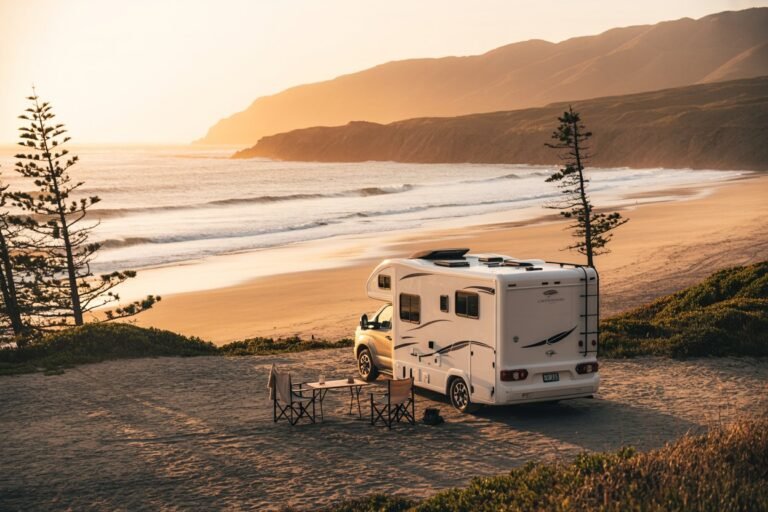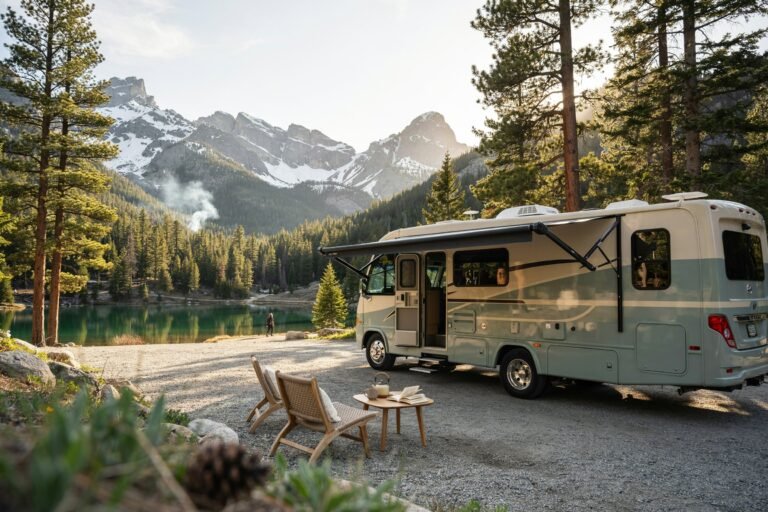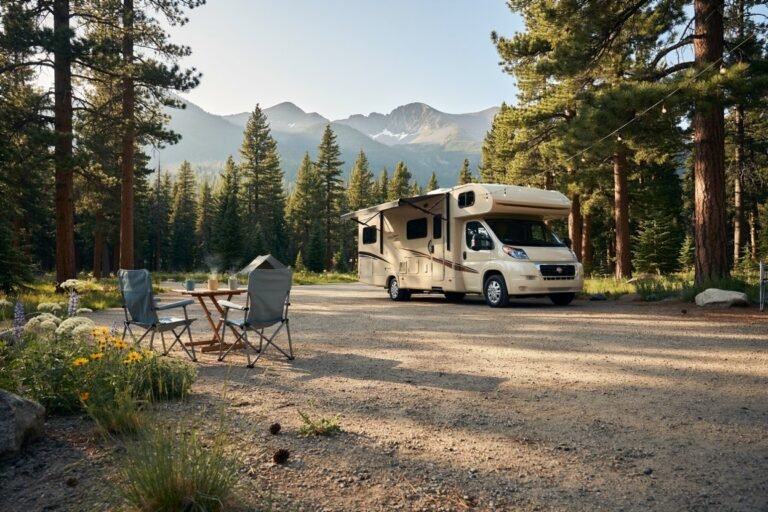
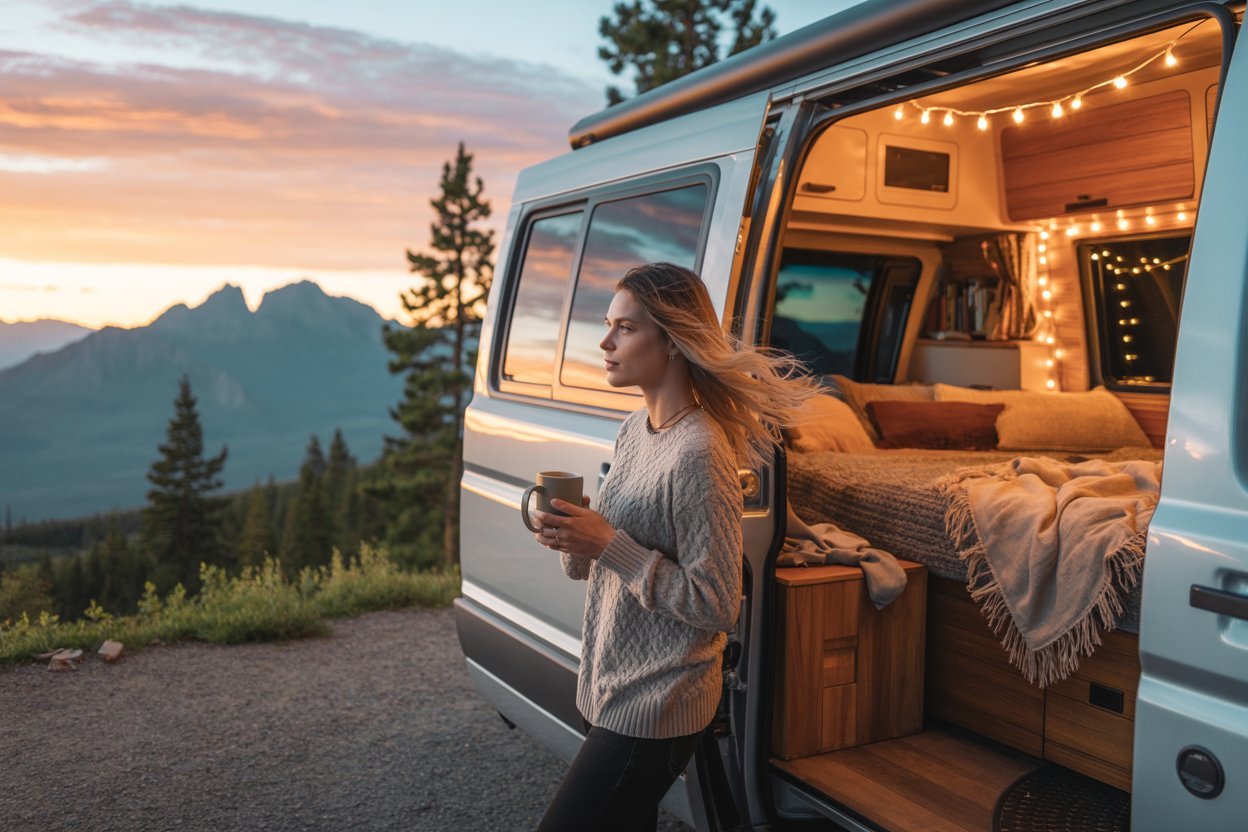

The idea of waking up beside a mountain lake, brewing coffee as the sun rises, and choosing a new destination whenever you feel like it sounds incredibly freeing.
But full-time van life is about much more than beautiful views and Instagram-worthy moments. It’s learning how to live with less, becoming adaptable, and creating a lifestyle built around experiences rather than routines.
Living in a van full-time can be one of the most rewarding adventures you’ll ever have, but it also requires planning, preparation, and realistic expectations.
From choosing the right van and budgeting wisely to staying safe on the road and finding places to sleep legally, this guide will walk you through everything you need to know before trading your traditional home for life on four wheels.
Whether you’re dreaming about weekend escapes turning into something bigger or you’re ready to hand in your apartment keys and hit the open road, this guide will help you build a van life lifestyle that is practical, comfortable, and sustainable.
Amazon Affordable Van Life Product Recommendations
| Product | Why It Helps |
|---|---|
| Compression Packing Cubes | Keep clothing organized in small spaces. |
| Portable Tire Inflator | Helps maintain safe tire pressure anywhere. |
| Rechargeable Headlamp | Essential for nighttime tasks and emergencies. |
| Collapsible Water Container | Saves space while increasing water capacity. |
| Compact First Aid Kit | Handles minor injuries on the road. |
| Portable Power Bank | Keeps devices charged during travel days. |
| Reflective Emergency Triangles | Improves roadside safety during breakdowns. |
What Is Full-Time Van Life?

Full-time van life means making your van your primary residence while traveling continuously or semi-continuously throughout the United States.
People choose this lifestyle for many reasons:
- Freedom to travel.
- Lower living expenses.
- Remote work flexibility.
- Minimalism.
- Outdoor adventures.
- Escaping traditional routines.
- Early retirement opportunities.
Van life isn’t a permanent vacation. You’ll still do laundry, grocery shop, pay bills, work, clean, and solve problems. The difference is that your backyard changes regularly.
Is Van Life Right for You?
Before making the leap, ask yourself:
- Do you enjoy frequent travel?
- Can you adapt to unexpected situations?
- Are you comfortable with limited personal space?
- Can you handle periods of solitude?
- Are you financially prepared?
- Do you enjoy simple living?
Van life can be incredible, but it’s not always glamorous.
You may face:
- Mechanical breakdowns.
- Difficult weather.
- Crowded campgrounds.
- Loneliness.
- Limited privacy.
Being realistic about these challenges helps create a more successful experience.
How Much Does Full-Time Van Life Cost?

Costs vary significantly depending on your travel style.
Initial Costs
Van Purchase
Used cargo van:
- $15,000–$35,000
New cargo van:
- $45,000–$70,000+
Converted camper van:
- $60,000–$150,000+
Luxury custom conversions:
- $150,000+
Van Build Costs
DIY build:
- $5,000–$20,000
Professional build:
- $20,000–$80,000+
Monthly Costs
Fuel:
- $300–$900
Food:
- $300–$700
Insurance:
- $80–$250
Cell phone/internet:
- $80–$200
Campgrounds:
- $0–$800
Maintenance:
- $100–$300
Entertainment:
- $50–$200
Laundry:
- $20–$40
Emergency savings:
- $100–$300
Estimated monthly budget:
$1,200–$3,500+
Choosing the Right Van

Your van becomes your home. Choosing wisely matters.
Mercedes Sprinter
Pros:
- Excellent fuel efficiency.
- Tall roof options.
- Large interior.
- Strong resale value.
Cons:
- Higher maintenance costs.
- Expensive repairs.
Best for:
Those wanting maximum comfort.
Ford Transit
Pros:
- Widely available.
- Easier maintenance.
- Multiple roof heights.
Cons:
- Slightly lower clearance.
Best for:
First-time van lifers.
Ram ProMaster
Pros:
- Wide interior.
- Front-wheel drive.
- Affordable.
Cons:
- Lower ground clearance.
Best for:
Budget-conscious travelers.
Minivans
Pros:
- Affordable.
- Stealthy.
- Better fuel economy.
Cons:
- Limited living space.
Best for:
Solo travelers.
Building Your Van
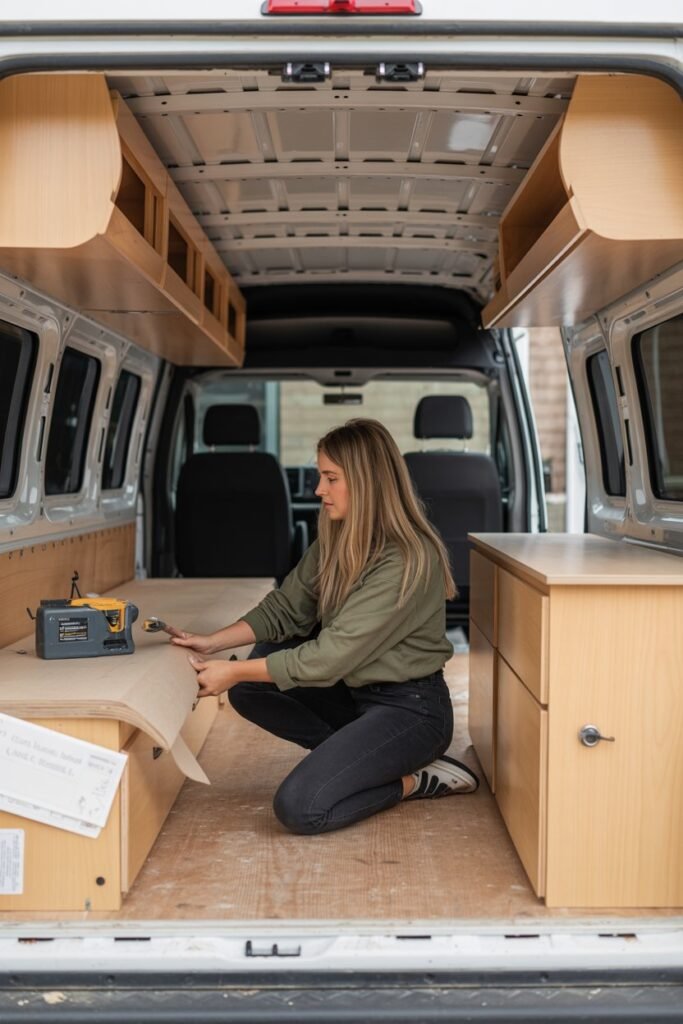
A functional layout matters more than aesthetics.
Include:
Sleeping Area
Choose:
- Fixed bed.
- Convertible bed.
- Murphy bed.
Prioritize comfort.
Kitchen Setup
Consider:
- Portable stove.
- Sink.
- Water storage.
- Refrigerator.
- Food pantry.
Electrical System
Essentials include:
- Solar panels.
- Lithium batteries.
- Inverter.
- Charge controller.
- Shore power hookup.
Ventilation
Install:
- Roof fan.
- Window vents.
- Bug screens.
Proper airflow prevents mold and improves comfort.
Storage
Use:
- Overhead cabinets.
- Under-bed storage.
- Magnetic organizers.
- Stackable containers.
Every inch counts.
How to Transition Into Full-Time Van Life

1. Test It First
Take weekend trips.
Then:
- One-week trips.
- Two-week trips.
- Month-long trips.
This helps identify problems before committing.
2. Downsize
Sort belongings into:
Keep.
Donate.
Sell.
Store.
Only keep what truly adds value.
3. Create an Emergency Fund
Aim for:
Three to six months of expenses.
Unexpected repairs happen.
4. Establish Income
Remote jobs include:
- Freelance writing.
- Virtual assistance.
- Graphic design.
- Blogging.
- Social media management.
- Customer support.
- Online teaching.
Stable income reduces stress.
Complete Packing Guide for Van Life
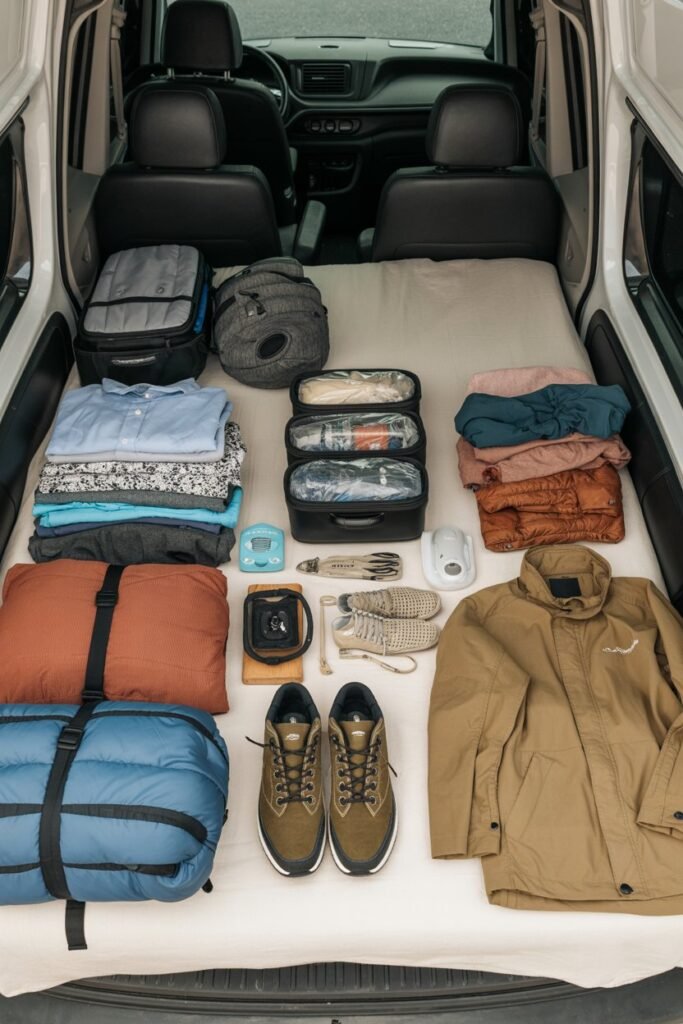
Packing too much creates clutter.
Pack intentionally.
Clothing
Tops
- 5–7 casual shirts
- 2 nicer tops
- 2 workout shirts
- 1 sweater
- 1 hoodie
Bottoms
- 2 jeans
- 2 leggings
- 2 shorts
- 1 hiking pant
- 1 nicer option
Outerwear
- Waterproof rain jacket
- Lightweight jacket
- Winter coat (seasonal)
Footwear
- Hiking boots
- Walking shoes
- Sandals
- Flip-flops
Undergarments
- 10 pairs underwear
- 5–7 bras
- 10 pairs socks
Accessories
- Hat
- Sunglasses
- Gloves
- Beanie
- Swimsuit
Kitchen Packing Checklist
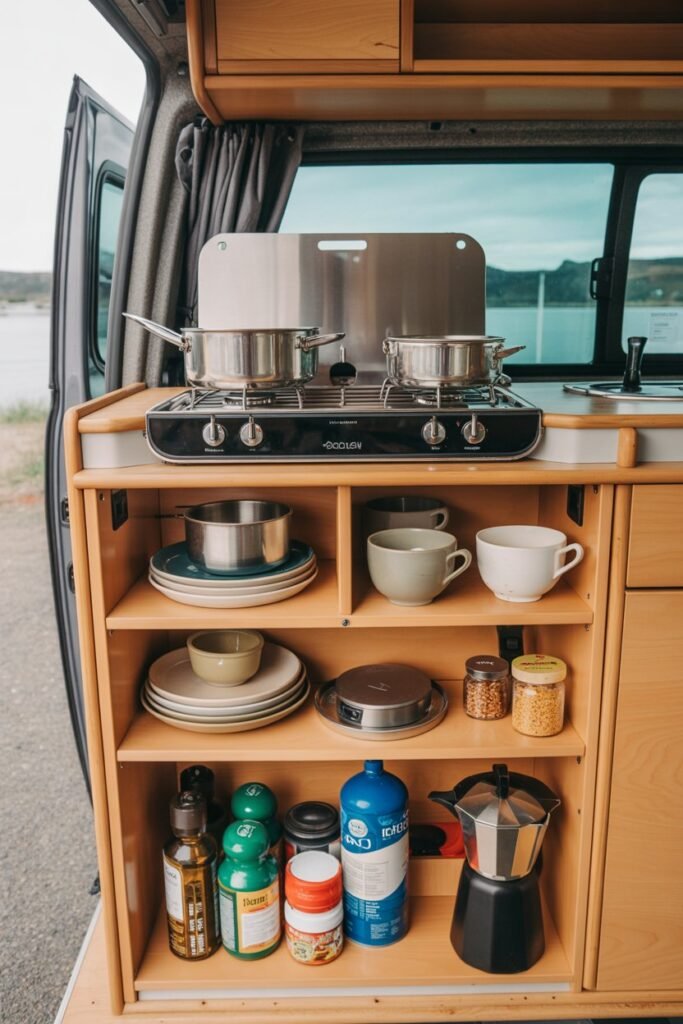
Must-haves include:
- Portable stove
- Fuel canisters
- Frying pan
- Saucepan
- Kettle
- Sharp knife
- Cutting board
- Mixing bowl
- Measuring cups
- Can opener
- Reusable utensils
- Plates
- Bowls
- Mugs
- Dish soap
- Sponge
- Food containers
- Water bottles
- Coffee maker
Avoid duplicates.
Food Planning for Van Life
Stock foods with longer shelf lives.
Great staples include:
- Rice
- Pasta
- Oatmeal
- Peanut butter
- Canned beans
- Tuna
- Soup
- Tortillas
- Nuts
- Trail mix
- Protein bars
- Dried fruit
Fresh foods:
- Apples
- Oranges
- Carrots
- Bell peppers
- Eggs
- Cheese
Meal prep reduces waste and saves money.
Bathroom and Hygiene Setup

Most vans don’t have bathrooms.
Solutions include:
Public Facilities
Use:
- Campgrounds
- Gyms
- Truck stops
- Visitor centers
Portable Toilets
Useful for emergencies.
Keep supplies organized.
Shower Options
- Planet Fitness memberships
- Campgrounds
- Truck stop showers
- Solar showers
Hygiene Essentials
Pack:
- Toothbrush
- Toothpaste
- Shampoo
- Conditioner
- Soap
- Face wash
- Deodorant
- Razor
- Nail clippers
- Feminine products
- Towels
- Wet wipes
- Hand sanitizer
Safety Checks Before Every Drive

Develop a routine.
Check:
Tires
Inspect for:
- Damage
- Cracks
- Proper inflation
Fluids
Verify levels of:
- Oil
- Coolant
- Brake fluid
- Windshield fluid
Lights
Ensure:
- Headlights work
- Brake lights function
- Turn signals operate
Battery
Watch for:
- Corrosion
- Weak starts
Brakes
Pay attention to:
- Unusual noises
- Reduced responsiveness
Mirrors
Adjust before moving.
Doors
Ensure all doors are secure.
Personal Safety Tips

Safety should always come first.
Trust Your Instincts
If a location feels wrong:
Leave.
No explanation needed.
Avoid Oversharing
Do not publicly share your exact location in real time.
Post after leaving.
Lock Everything
Always lock:
- Doors
- Windows
- Storage compartments
Even during short stops.
Carry Emergency Contacts
Keep them:
- On paper
- In your phone
Know Basic Self-Defense
Confidence and awareness matter.
Have Multiple Exit Plans
Know where you can relocate quickly.
Finding Legal Places to Sleep
One of the biggest van life questions.
Free Options
Bureau of Land Management (BLM) Land
Often allows dispersed camping.
Stay limits usually apply.
National Forests
Many permit free camping.
Research local regulations.
Rest Stops
Rules vary by state.
Check posted signs.
Some Retail Parking Lots
Always ask permission.
Policies change frequently.
Paid Options
- Campgrounds
- RV parks
- State parks
- National park campgrounds
Reservations are often necessary during summer.
Internet on the Road
Reliable internet is essential.
Options include:
Mobile Hotspots
Fast and convenient.
Unlimited Phone Plans
Good for moderate users.
Starlink Roam
Excellent for remote workers.
Higher monthly cost.
Public Wi-Fi
Use cautiously.
Avoid sensitive transactions.
Mail and Address Solutions
Full-time travelers still need mail.
Popular options:
- Mail forwarding services.
- Family member addresses.
- Digital mailbox services.
These services can:
- Scan mail.
- Forward packages.
- Deposit checks.
Health Insurance and Healthcare
Do not overlook healthcare.
Consider:
- PPO plans.
- Travel-friendly coverage.
- Telehealth services.
Carry:
- Insurance cards.
- Prescription information.
- Medical history summaries.
Emergency Preparedness
Every van should have:
First Aid Kit
Include:
- Bandages
- Gauze
- Antiseptic wipes
- Pain relievers
- Tweezers
- Allergy medication
- Prescription medications
Roadside Supplies
Carry:
- Jumper cables
- Tire pressure gauge
- Flashlight
- Reflective triangles
- Tire inflator
- Spare tire
- Basic tools
Weather Supplies
Prepare for:
- Heat waves
- Snowstorms
- Heavy rain
Pack accordingly.
Backup Water
Keep extra drinking water.
Aim for several days’ supply.
Laundry on the Road
Simple systems work best.
Use:
- Laundromats.
- Campground facilities.
- Portable wash bags.
Quick-dry clothing simplifies the process.
Do laundry every one to two weeks.
Staying Healthy
Van life should support wellness.
Focus on:
Movement
Walk daily.
Stretch regularly.
Hike often.
Sleep
Maintain consistent routines.
Use blackout curtains.
Nutrition
Balance convenience foods with fresh produce.
Hydration
Drink enough water daily.
Mental Health
Journaling helps.
Stay connected with loved ones.
Take breaks when needed.
Van Life and Relationships
Travel can strengthen or challenge relationships.
Success requires:
- Communication.
- Personal space.
- Patience.
- Flexibility.
Solo travelers should intentionally maintain friendships through calls and visits.
Traveling With Pets
Pets can thrive on the road.
Prepare by bringing:
- Vaccination records
- Food
- Bowls
- Leashes
- Pet first aid kit
- Toys
- Waste bags
- Crates
Never leave pets unattended in unsafe temperatures.
Common Beginner Mistakes
Avoid these common pitfalls:
- Buying the wrong van.
- Overpacking.
- Skipping emergency savings.
- Ignoring maintenance.
- Driving too far too often.
- Overspending on campgrounds.
- Failing to test van systems.
- Not researching overnight parking laws.
- Underestimating weather.
- Romanticizing van life.
Learning gradually makes the transition smoother.
Pros and Cons of Full-Time Van Life
Pros
- Freedom and flexibility.
- Lower housing expenses.
- Incredible scenery.
- More outdoor experiences.
- Simplified living.
- Opportunity to travel extensively.
Cons
- Limited space.
- Mechanical issues.
- Lack of routine.
- Weather challenges.
- Occasional loneliness.
- Limited privacy.
Understanding both sides helps you make informed decisions.
Frequently Asked Questions
Is van life legal in the USA?
Yes, but overnight parking laws vary by city, county, and state.
How much money should I save before starting?
Aim for at least three to six months of expenses.
Can I work while living in a van?
Absolutely. Many van lifers work remotely.
Is van life safe?
It can be very safe when you choose locations carefully and practice good safety habits.
Can families live in vans?
Yes, although larger setups often work best.
Do I need solar power?
Not always, but solar provides greater independence.
Can I bring my pet?
Yes. Many people travel successfully with pets.
Conclusion
Living in a van and traveling full-time across the United States isn’t about escaping responsibility it’s about intentionally designing a life that prioritizes freedom, experiences, and flexibility.
Some days will bring breathtaking views and unforgettable memories. Other days will test your patience with flat tires, changing weather, or unexpected detours.
The key to thriving in van life isn’t having the most expensive build or visiting every destination on your bucket list. It’s learning to adapt, planning ahead, staying prepared, and appreciating the small moments that make life on the road meaningful.
If van life has been calling your name, start small, prepare thoroughly, and give yourself permission to learn as you go.
The road won’t always be perfect, but it may lead you to a version of life that feels more adventurous, intentional, and deeply fulfilling than you ever imagined.