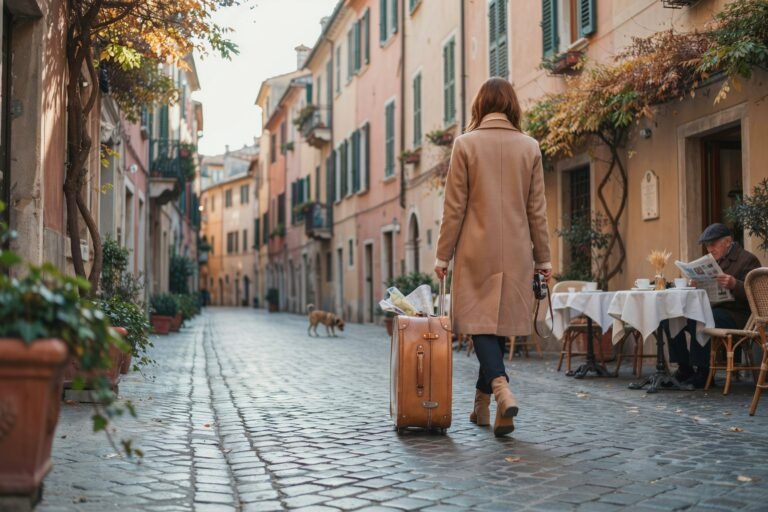


My first real lesson in fall packing happened in a tiny Vermont inn, standing in front of a suitcase that simply would not close.
I’d shoved in three sweaters, a raincoat, two pairs of boots, and a scarf collection I definitely didn’t need, and by the second morning I was sitting on my luggage like it owed me money.
That trip taught me something I now repeat to every girlfriend who asks for packing advice: fall travel isn’t about packing more, it’s about packing smarter, and it starts with the bag itself.
Why Fall Travel Is Different (and Why Your Carry-On Has to Work Harder)
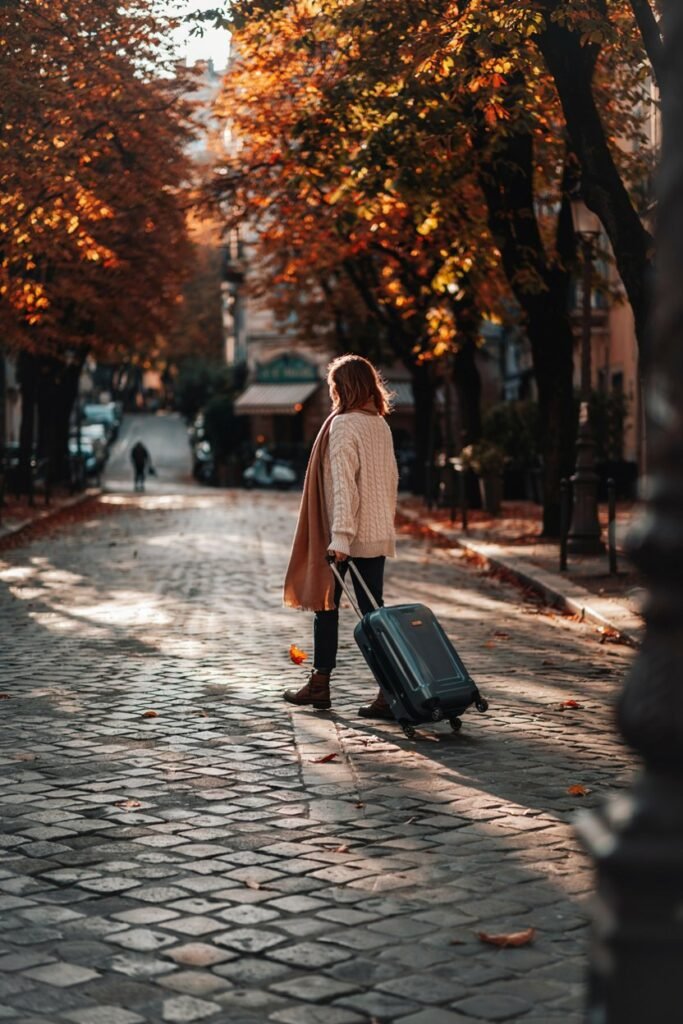
Autumn is a strange, wonderful in-between season. Mornings can be crisp enough for a coat, afternoons warm enough for a t-shirt, and evenings cold enough for a scarf and gloves.
If you’re chasing leaf peeping season through New England, wandering cozy small towns during fall foliage, or road-tripping through the best national parks for fall colors, your bag needs to hold bulkier layers without turning into a shapeless, overstuffed lump you have to sit on to zip.
This is exactly where the right carry-on earns its keep.
A great fall travel bag isn’t just about size, it’s about structure, expandability, and smart compartments that let sweaters, boots, and rain jackets coexist without a wrestling match.
I’ve tested more suitcases than I care to admit over the years (my closet is basically a small luggage store at this point), and I’ve landed on a short list of favorites that consistently make fall trips easier, whether I’m off for a quiet weekend or a longer multi-stop adventure.
What to Look For in a Fall Carry-On
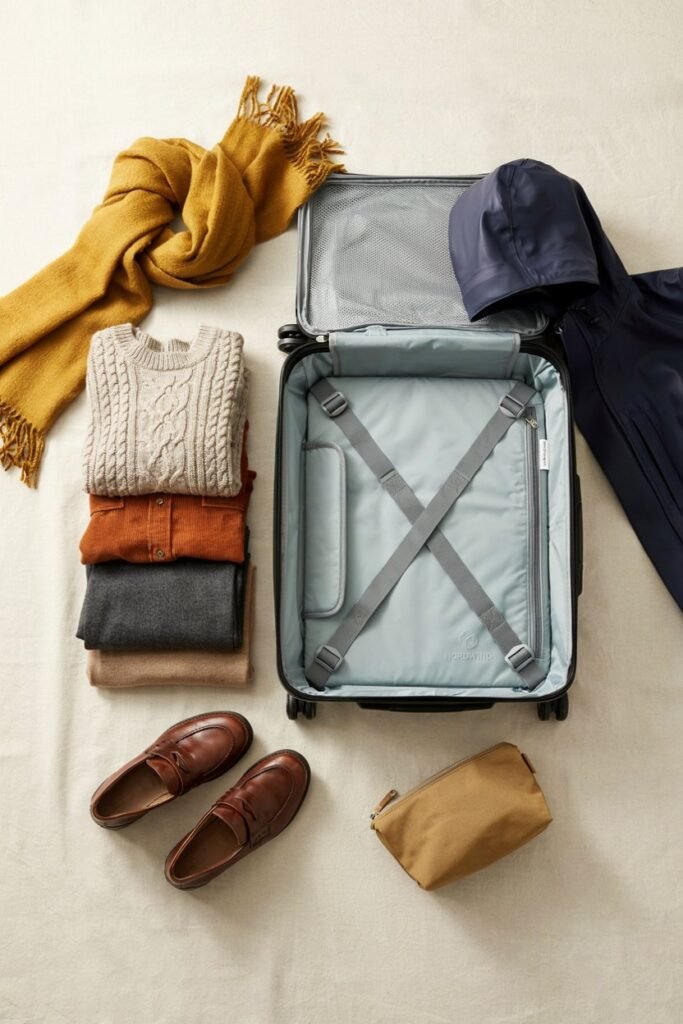
Before we get into specific picks, let’s talk features, because the “best” bag really depends on what checks your personal boxes. Here’s what I always look for when I’m shopping for a fall-ready carry-on:
- Expandable capacity — a zip-out gusset that adds an extra inch or two of depth is a lifesaver once bulky sweaters and a jacket enter the picture.
- A sturdy, quiet spinner or smooth-rolling wheels — you’ll be dragging this thing across cobblestones, train platforms, and the occasional patch of fallen leaves, so wheels matter more than people think.
- A compression system or built-in straps — this keeps clothes from shifting and helps you fit more without the bag ballooning out.
- Water-resistant exterior fabric — fall means rain, and a shell that beads water instead of soaking it in will save your belongings during a surprise downpour.
- A dedicated laptop or tech sleeve — especially useful if you’re working remotely between destinations.
- A hard-shell or reinforced corner design — protects delicate items like sunglasses or a travel candle you definitely don’t need but bought anyway.
- Realistic weight when empty — a heavy shell eats into your airline weight allowance before you’ve packed a single sock.
- A trusted warranty — fall trips often mean more travel days per year, so a bag that’s built to be repaired, not replaced, is worth the extra dollars.
Keep this list in your back pocket as we go through my top picks, because the “right” bag is really just the one that checks the boxes that matter most to your travel style.
The Best Carry-On Luggage for Fall Trips
1. The Hardside Expandable Spinner — Best All-Around Pick
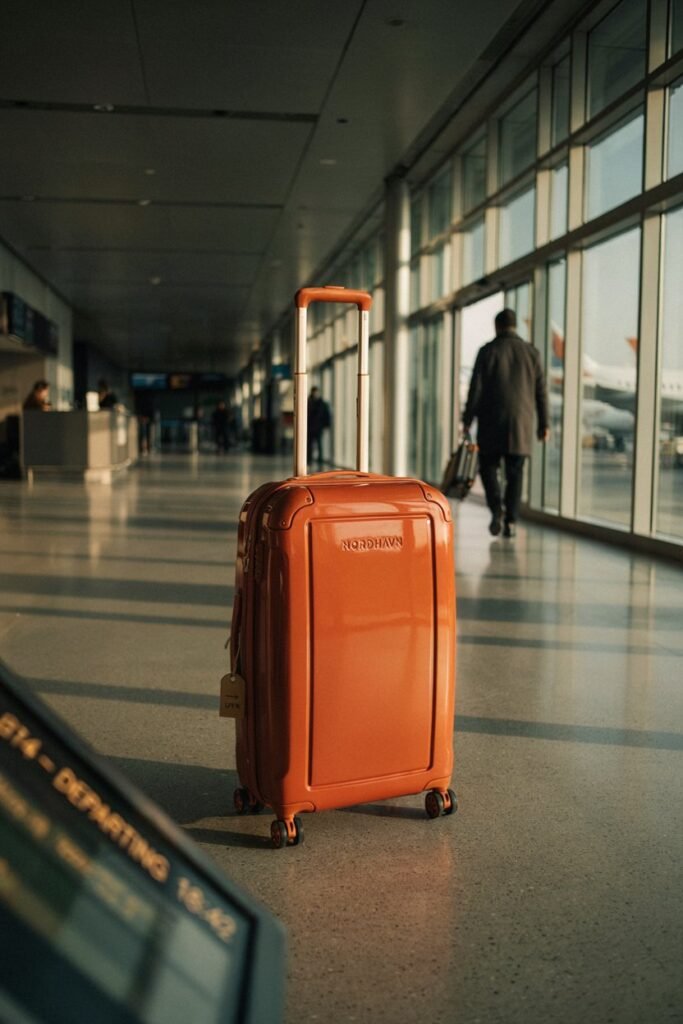
If I had to recommend just one style of bag for fall travel, it would be a hardside spinner with an expandable zipper.
This is the workhorse of my closet, and it’s the bag I reach for most often between September and November.
The rigid shell protects against the general chaos of overhead bins and gate-checking, while the expansion zipper gives you that extra bit of breathing room once a puffer jacket or a pair of hiking boots needs to squeeze in.
Why it works for fall: The expandable feature is the real hero here.
You can travel lean on the way out and expand the bag on the way home once you’ve picked up a chunky knit sweater from a boutique in some adorable town square.
I actually wrote an entire guide on this kind of situational packing if you want to see how I use expansion strategically; check out my carry-on packing list for fall travel for the full breakdown.
Best for: Travelers who want one bag that handles everything from city breaks to scenic drives, and who like the peace of mind of a hard shell.
2. The Soft-Sided Compression Carry-On — Best for Maximum Flexibility
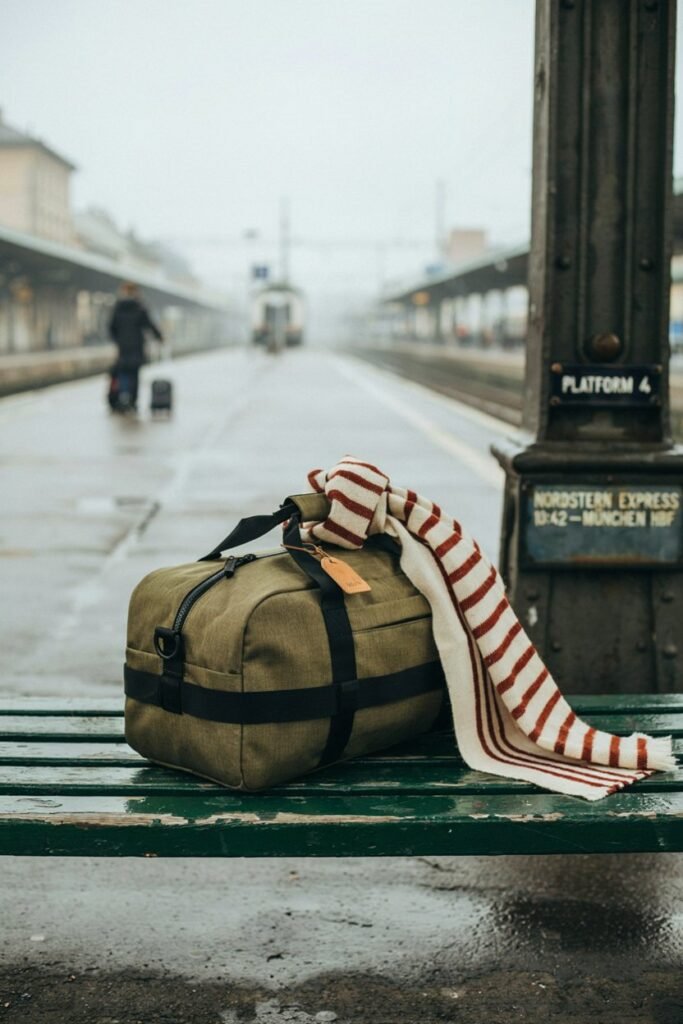
Soft-sided bags get a bad reputation for looking a little less polished, but don’t sleep on them.
\A well-made soft-sided carry-on with a compression strap system can genuinely out-pack a hardside bag of the same size, because the fabric flexes to fit odd-shaped items like rolled sweaters, scarves, or a pair of boots tucked into a side pocket.
Why it works for fall: Fall wardrobes are lumpy. Between knitwear, an extra pair of shoes, and a light rain jacket, you need a bag that can flex rather than fight you.
Soft-sided luggage also tends to weigh less empty, which gives you more room to work with once you’re loading it up for a trip like 10 days in Europe or a longer stretch abroad.
Best for: The traveler who packs a little instinctively rather than with a spreadsheet, and who wants a bag that adapts rather than restricts.
3. The Structured Weekender Duffel — Best for Short Fall Getaways
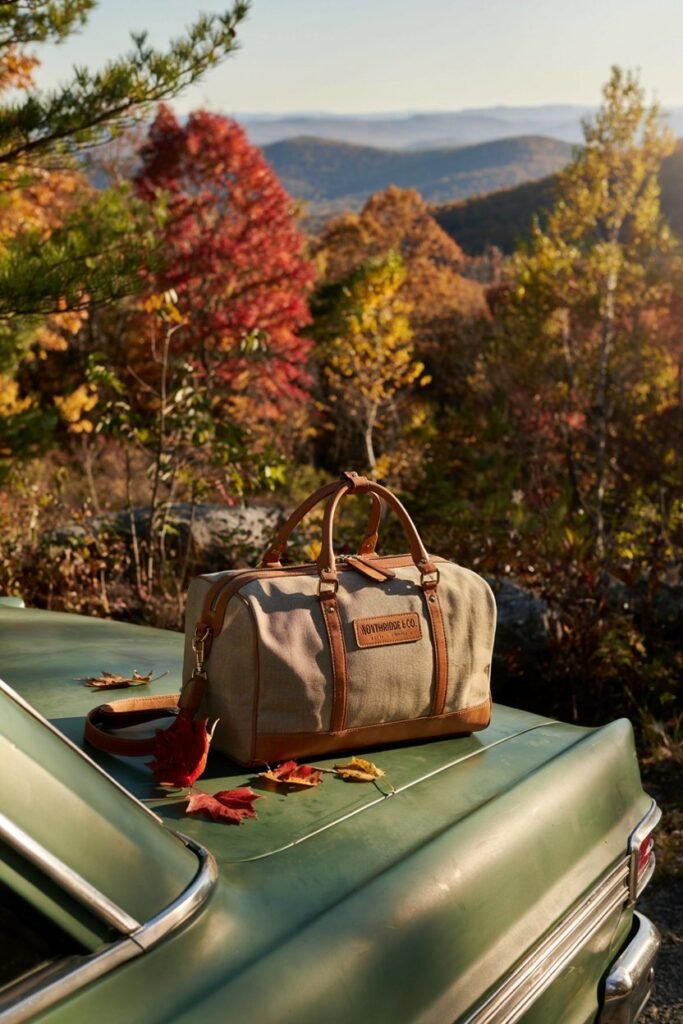
For quick fall weekend trips, a structured duffel with a rigid base and a detachable shoulder strap is honestly one of my favorite categories of bag.
It slides easily under a car seat, tucks into a train’s overhead rack, and doesn’t have the bulky footprint of a full wheeled suitcase.
Why it works for fall: Weekend trips this time of year tend to be shorter but layer-heavy, think a cozy cabin escape or a quick jaunt to see the leaves change.
A duffel forces a bit of packing discipline while still giving you enough room for a sweater, a flannel, comfortable boots, and a scarf.
If you’re planning something along these lines, my roundup of best fall weekend getaways pairs really nicely with this style of bag.
Best for: Two to three night trips, road trips, or anyone who prefers carrying their bag over rolling it.
4. The Backpack-Style Carry-On — Best for Multi-Stop and Active Fall Trips
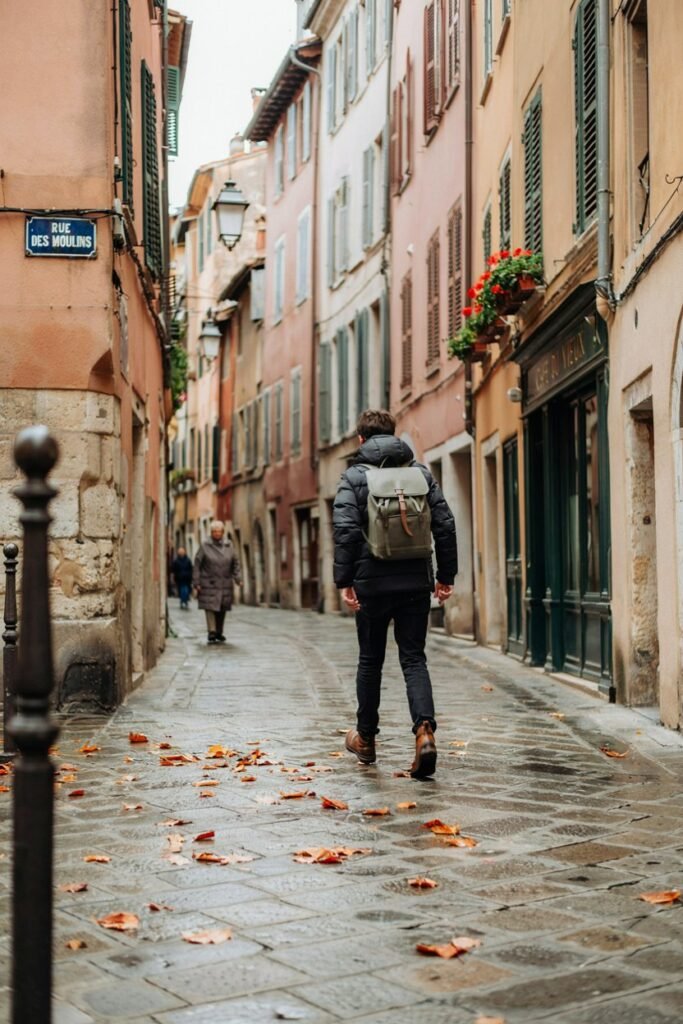
If your fall itinerary involves cobblestones, hiking trails, or hopping between train stations without much notice, a backpack-style carry-on might be your best friend.
These bags open like a suitcase (usually with a clamshell design) but wear like a backpack, freeing up your hands and your patience.
Why it works for fall: Fall trips often involve more walking, whether it’s leaf-peeping trails, farmer’s markets, or wandering charming downtowns.
A backpack carry-on means you’re not white-knuckling a suitcase handle over uneven ground. It’s also brilliant for multi-city travel, since you can move quickly between trains or gates without wheels catching on every crack in the pavement.
Best for: Active travelers, solo trips, or itineraries with multiple short stops rather than one home base.
5. The Budget-Friendly Hardshell — Best for Occasional Travelers
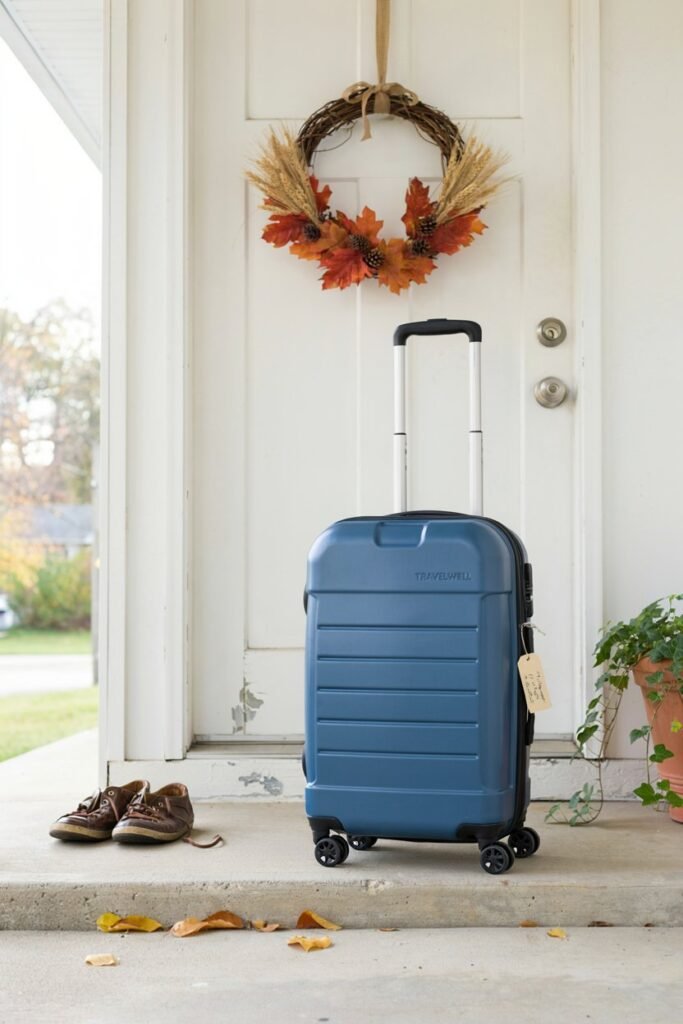
Not everyone needs (or wants) to spend a small fortune on luggage, and that’s completely fair.
There are wonderfully reliable budget hardshell carry-ons on the market that still check most of the boxes: a reasonably durable shell, smooth spinner wheels, and a simple expansion zipper.
You just may sacrifice a bit on warranty length or interior organization.
Why it works for fall: If you only take one or two trips a year, there’s no need to over-invest. A budget bag with the essential features will still protect your fall wardrobe and get you where you’re going without drama.
Best for: New travelers, occasional flyers, or anyone building out their travel gear collection slowly.
How to Actually Pack a Carry-On for Fall (Without Losing Your Mind)
Owning the right bag is only half the battle. The other half is packing it well, and this is where most people (myself included, in my Vermont-suitcase-sitting era) go wrong. Here’s my go-to method:
- Start with a plan, not a pile. Lay out your outfits for each day before anything touches the suitcase. Fall wardrobes tend to repeat neutrals, so this step usually reveals you need fewer pieces than you think.
- Use packing cubes to separate bulk from delicate items. I’m a devoted convert to packing cubes for exactly this reason, they compress knitwear down significantly and keep your bag from turning into a jumbled mess. I go deep on my favorites in best packing cubes for organized travel.
- Wear your bulkiest items while traveling. Boots and your heaviest jacket should be worn, not packed, on travel days. It sounds obvious, but it’s the single biggest space-saver there is.
- Roll, don’t fold, for anything under a mid-weight sweater. Rolling saves noticeable space and helps prevent deep creases.
- Reserve the expansion zipper for the return trip. Pack lean on the way there so you have wiggle room for souvenirs, an extra layer, or that boutique sweater you didn’t plan on buying (we’ve all been there).
- Keep a small day bag inside your carry-on. A packable tote or crossbody makes exploring easier once you’ve checked into your hotel and freed yourself from the big suitcase.
If you want an even deeper walkthrough of this exact process, my guide to avoiding overpacking for travel covers the mindset shift that makes packing lighter feel effortless rather than restrictive, and it applies just as well once the weather turns cooler.
Carry-On Size Rules: What You Actually Need to Know
Before you fall in love with a bag online, double-check its dimensions against your airline.
Most U.S. carriers allow a carry-on around 22 x 14 x 9 inches, but budget airlines and international carriers can be noticeably stricter. A few things I always confirm before buying:
- Wheel and handle allowance. Some airlines measure the bag including wheels and handles, others don’t. This small detail can be the difference between a bag that fits and one that gets gate-checked.
- Expanded size compliance. If your bag has an expansion zipper, check whether it still meets carry-on limits when fully expanded, some bags only comply in their standard, non-expanded state.
- Personal item compatibility. If you’re also bringing a small tote or backpack as your personal item, make sure it tucks under the seat in front of you without a fight.
- International vs. domestic differences. European budget carriers in particular tend to have tighter carry-on limits than U.S. carriers, so if fall means a European getaway, it’s worth reading up before you pack. My guide on packing for 10 days in Europe in a carry-on walks through exactly how I make it work.
Fabric and Material: Hardside vs. Soft-Sided for Autumn Weather
This is a question I get constantly, so let’s settle it. Neither style is universally “better,” they simply serve different priorities.
Hardside bags offer superior protection for fragile items and tend to resist rain and light moisture better, since most are made from polycarbonate or ABS plastic. They’re a great match for fall trips where you might be caught in a sudden shower walking between the car and the hotel lobby.
Soft-sided bags flex to accommodate odd-shaped or bulky items, are usually lighter empty, and often come with more exterior pockets for quick-access items like gloves or a travel umbrella.
If your fall trip involves a lot of layering and last-minute adjustments (colder morning than expected, warmer afternoon than planned), the flexibility of a soft-sided bag can genuinely make your day easier.
My honest take: if you’re doing one big trip a year and want a bag that lasts, go hardside. If you travel frequently and like adapting on the fly, a soft-sided compression bag will serve you better long term.
Color and Style Considerations (Yes, This Actually Matters)
I’ll admit this section is a little indulgent, but hear me out: choosing a carry-on in a warm, muted tone, rust, olive, cognac, or a deep burgundy, does more than look pretty for your airport photos.
Lighter neutral bags show scuffs from cobblestone streets and rain-soaked luggage carousels far more visibly than richer, deeper tones. A fall-toned bag genuinely hides wear better while still looking intentional rather than purely functional.
That said, if you’re the kind of traveler who wants your bag to stand out on a crowded carousel, a bold color or a distinctive luggage tag will always be the more practical choice safety-wise.
There’s no wrong answer here, just a trade-off between aesthetics and low-maintenance practicality.
Matching Your Carry-On to Your Fall Itinerary
The best bag for you really depends on where you’re headed and how you move once you get there. A few quick pairings I’d recommend based on common fall trip types:
- Leaf-peeping road trips or scenic drives: A structured duffel or soft-sided bag that tucks easily into a trunk, paired with a plan built around the most beautiful places to visit in October.
- Multi-city train or flight itineraries: A backpack-style carry-on or lightweight spinner that’s easy to lift onto racks and overhead bins, especially useful if you’re bouncing between enchanting small towns worth visiting this fall.
- A cozy long weekend escape: A weekender duffel is really all you need, and it pairs beautifully with a relaxed, low-key trip like the ones featured in best fall weekend getaways.
- National park adventures with changing foliage: A hardside expandable spinner with sturdy wheels handles gravel lots and lodge check-ins well, ideal if you’re chasing color at the best national parks for fall colors.
Common Fall Packing Mistakes I’ve Learned the Hard Way
Since we’re being honest with each other, let me share a few missteps so you can skip them entirely:
- Packing one heavy coat instead of two light layers. Layers are more versatile and take up surprisingly less combined space than one bulky item.
- Forgetting a packable rain layer. Fall weather turns fast, and a compact rain jacket or umbrella earns its spot every single time.
- Overpacking shoes. Two pairs, one comfortable walking shoe and one slightly dressier option, is almost always enough.
- Skipping compression tools. Whether it’s packing cubes or compression bags, this single habit change is the difference between a suitcase that closes easily and one you have to sit on.
- Not weighing your bag before leaving home. A quick check with a luggage scale saves you from an unpleasant surprise (and an unplanned fee) at check-in.
Caring for Your Carry-On Between Trips
A quality carry-on can easily last a decade if you treat it right, and fall travel tends to be tougher on luggage than summer trips because of rain, mud, and the occasional pile of wet leaves at a trailhead. A few habits that have genuinely extended the life of my bags:
- Wipe down the exterior after every trip. A damp cloth removes grime before it sets into the fabric or scuffs the shell permanently.
- Let it dry completely before storing. Packing away a damp bag, especially a soft-sided one, invites mildew that’s nearly impossible to fully remove later.
- Check the wheels and zippers each season. A quick spin test and a tug on every zipper pull can catch small issues before they become a broken wheel mid-trip.
- Store it upright, not stacked under heavier bags. This keeps the shell from warping and protects the wheels from unnecessary pressure.
- Use a luggage cover for long-term storage. A simple breathable cover keeps dust off between fall and your next trip, whatever season that happens to be.
None of this takes more than a few minutes, but it’s the difference between a carry-on that still looks great three years in and one that starts falling apart right when you need it most.
Accessories Worth Adding to Your Fall Carry-On Setup
Once you’ve settled on the bag itself, a few small accessories make a noticeable difference in how smoothly your trip runs:
- A luggage scale. Small, cheap, and endlessly useful for avoiding overweight fees, especially once you’ve picked up a few things along the way.
- A compact travel umbrella. Fall showers rarely announce themselves in advance, and a slim umbrella tucked into a side pocket earns its space every time.
- A portable steamer or wrinkle-release spray. Sweaters and blouses packed tightly for days will need a little help looking presentable again.
- A sturdy luggage tag with a cover. Cobblestone streets and train platforms are rough on paper tags; a durable leather or silicone tag holds up far better.
- A dedicated shoe bag. Keeps boots or sneakers from touching your clothing, which matters even more once fall mud enters the picture.
These additions are small, but they round out the experience of using your carry-on in a way that makes fall travel feel effortless rather than like a project you have to manage.
Frequently Asked Questions
How do I fit bulky sweaters into a small carry-on? Compression packing cubes are the single best tool here. They squeeze knitwear down significantly without wrinkling it the way a vacuum bag sometimes can.
Is a hardside or soft-sided bag better for rainy fall weather? Hardside bags generally handle sudden rain better since the shell resists moisture, but a soft-sided bag with a water-resistant coating performs nearly as well for short exposure.
Do I need a separate personal item for a fall trip? Yes, I’d recommend it. A packable tote gives you somewhere to stash a scarf, gloves, or an extra layer you shed midway through the day, without digging through your main bag.
What’s the ideal carry-on size for a week-long fall trip? A standard 21 to 22 inch carry-on with an expansion zipper comfortably handles a week of fall layering for most travelers.
Final Thoughts
Choosing the right carry-on for fall really comes down to matching the bag to how you actually move through a trip, not just how it looks sitting in a store display.
Whether you land on a hardside expandable spinner, a flexible soft-sided bag, a duffel for weekend escapes, or a backpack for city hopping, the goal is the same: a bag that holds your sweaters, your boots, and your rain jacket without a fight, so you can spend your energy on the trip itself instead of wrestling with a zipper in a hotel room.
If you’re mapping out your next autumn adventure, take a look at my guides on packing for 15 days in one carry-on and staying organized during multi-city travel for more of my tried-and-tested strategies.
Here’s to a lighter bag, a smoother trip, and a whole lot of beautiful fall color waiting on the other side.