
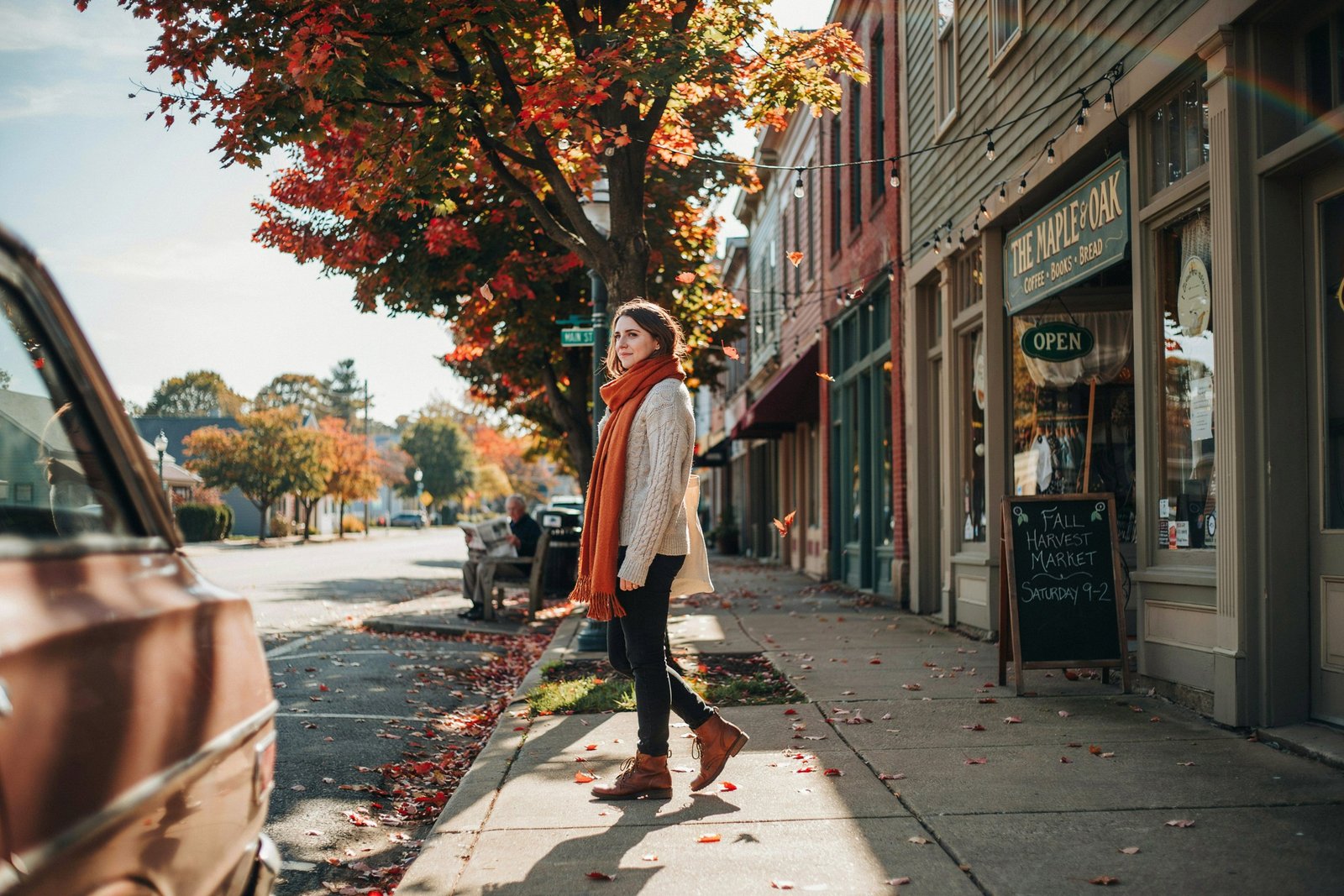

Sweater weather does something to my soul, and I’m guessing it does the same to yours.
The second the air turns crisp, I start daydreaming about winding mountain roads, mugs of cider, and towns that look like they were plucked straight out of a Hallmark movie.
Over the years, I’ve turned that daydreaming into actual trips, and I’ve made every mistake so you don’t have to.
This guide is everything I wish someone had handed me before my first fall weekend trip: real directions, real things to do, real safety tips, and my personal packing list, ready for you to steal.
Why a Fall Weekend Getaway Is Worth the Trip
There’s something about autumn that makes even a short trip feel like a full reset.
The crowds of summer thin out, the light gets softer and goldener, and every small town seems to lean into pumpkins, wood smoke, and string lights.
A weekend is genuinely enough time to soak it all in without needing to use a week of vacation days. You leave on a Friday evening, and by Sunday night you’re home again, camera roll full, heart a little fuller too.
If you’ve never planned a proper leaf-peeping trip before, I go much deeper into timing and routes in my ultimate leaf-peeping guide, which pairs nicely with everything below.
And if you’re planning this as a couple’s trip rather than a solo or girls’ escape, I’ve also put together a separate list of fall getaways for couples that might steal your heart even more.
Now, let’s get into the destinations themselves.
1. Stowe, Vermont
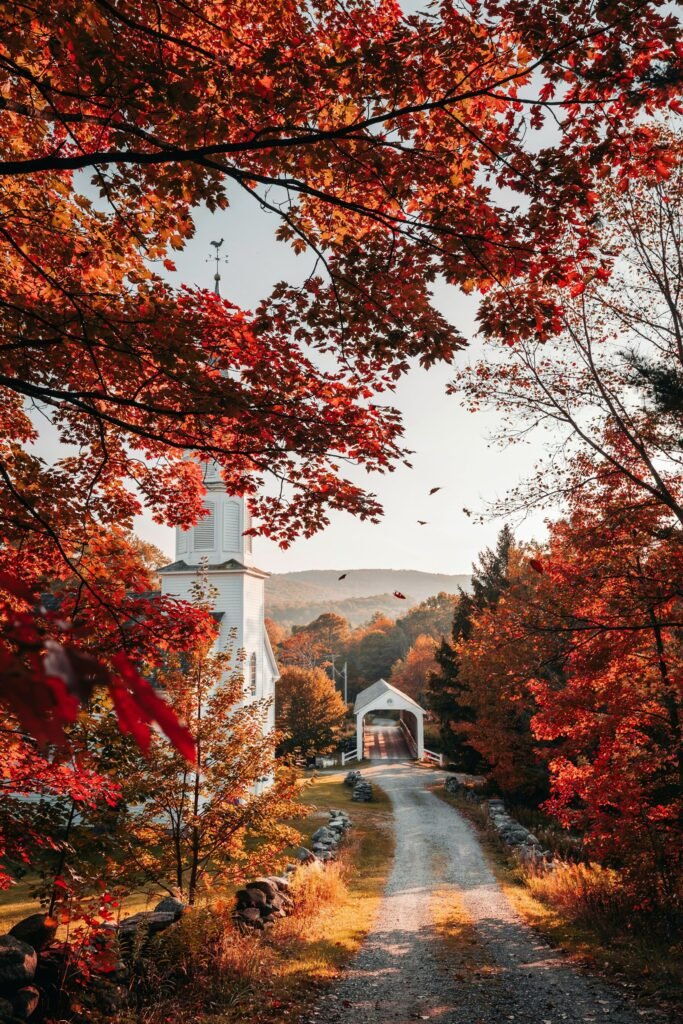
Stowe is the trip that made me fall in love with fall travel in the first place. It’s postcard New England: white church steeples, covered bridges, and mountains that blaze orange and red by early October.
How to get there: The closest airport is Burlington International Airport (BTV), about 40 minutes away by car, and renting a car is genuinely the best way to explore since so much of the magic is in the drive itself.
If you’re coming from Boston or New York, it’s a scenic 3.5 to 5 hour drive up I-89. I wrote a full breakdown of routes, timing, and where the best foliage shows up first in my guide on how to visit Vermont in the fall, so definitely check that out before you book.
Things to do: Ride the Stowe Mountain Resort gondola up Mount Mansfield for a panoramic view of the color change below you. Walk or bike the 5.3-mile Stowe Recreation Path, which winds along the river and through covered bridges.
Stop at Cold Hollow Cider Mill for warm cider donuts, and set aside an afternoon for a scenic drive along Smugglers’ Notch, one of the most dramatic mountain passes in New England.
Staying safe: Mountain roads here get narrow and winding, especially through Smugglers’ Notch, which actually closes in winter, so check road conditions if you’re visiting late in the season.
Temperatures drop fast after sunset, so keep a jacket in the car even if the afternoon feels warm. Cell service gets spotty in the notch, so let someone know your route if you’re driving through alone.
Best time to go: Late September through the first week of October usually delivers peak color, though it shifts slightly year to year, so I always check a foliage tracker before booking.
Budget tip: Weekday stays are noticeably cheaper than weekends here, and even shifting your trip by a single day can save you quite a bit on lodging during peak color.
2. Asheville and the Blue Ridge Parkway, North Carolina
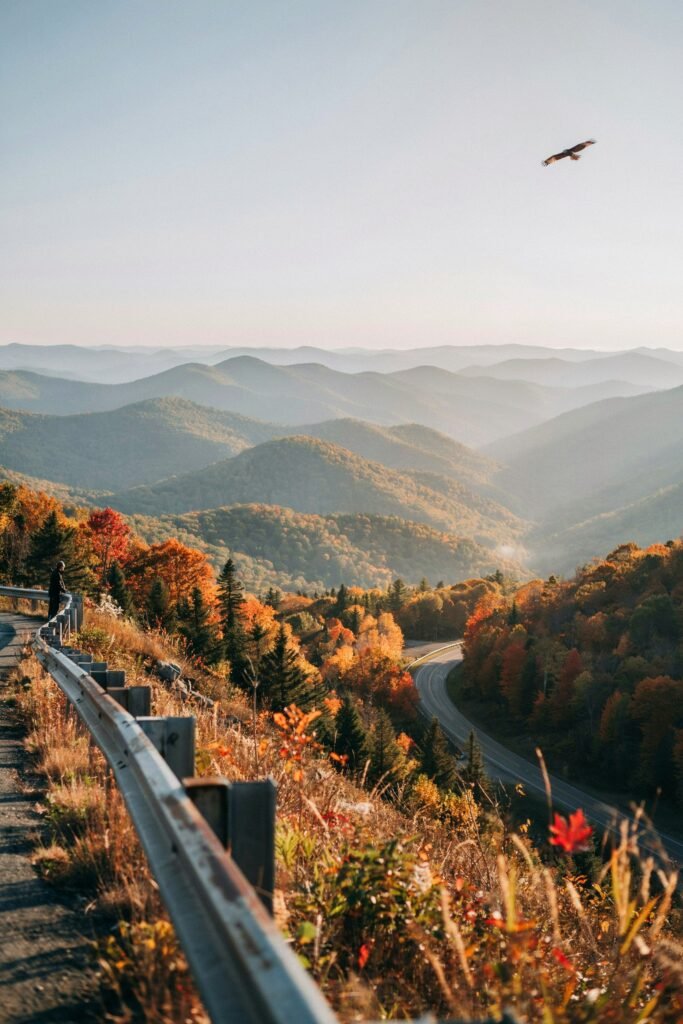
Asheville has this magical combination of mountain views, a genuinely great food scene, and enough hippie-meets-Southern-charm energy to keep you entertained for an entire weekend.
How to get there: Asheville Regional Airport (AVL) has direct flights from most major hubs.
If you’re road-tripping, the Blue Ridge Parkway itself is the destination as much as the drive, so consider flying into Charlotte or Knoxville and driving the parkway in from either end. Give yourself extra time here; this is not a road you want to rush.
Things to do: Drive a stretch of the Blue Ridge Parkway at golden hour, when the light hits the layered ridgelines just right.
Explore the River Arts District for local galleries and coffee shops, and if you love a good hike with a payoff view, I’ve got trail recommendations in my easy hikes with amazing views post that apply beautifully here.
Don’t skip the Biltmore Estate, especially if you can catch it during their fall gardens display.
Staying safe: The Parkway has no gas stations or cell service for long stretches, so fill your tank before you get on and download offline maps in advance.
Fog rolls in quickly at elevation, so if visibility drops, pull off safely rather than pushing through. Overlooks can have short guardrails or none at all, so keep a firm grip on kids, pets, and phones near the edges.
Best time to go: Higher elevations along the Parkway change color in early October, while downtown Asheville itself often peaks a couple weeks later, so you can technically catch two rounds of foliage on one trip.
Budget tip: Staying just outside downtown, in areas like Weaverville or Fletcher, tends to run noticeably cheaper than in-town hotels while still keeping you a short drive from everything.
3. Door County, Wisconsin
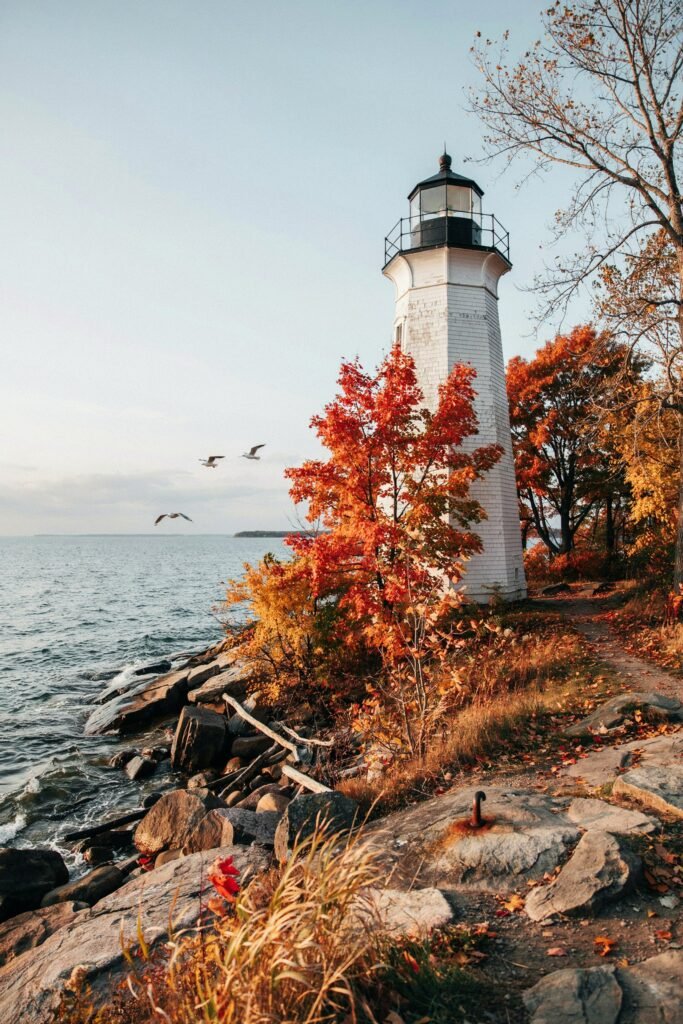
If you want fall foliage without the crowds of New England, Door County is the Midwest’s best-kept secret. Think orchards, lighthouses, and quiet lakeside towns.
How to get there: Fly into Green Bay–Austin Straubel International Airport (GRB), then it’s about an hour’s drive north up the peninsula.
From Milwaukee or Chicago, it’s a manageable 3.5 to 5 hour drive, which makes it an easy weekend road trip if you’re coming from the Midwest.
Things to do: Drive the entire peninsula loop, stopping in Fish Creek, Ephraim, and Sister Bay along the way.
Pick your own apples at one of the county’s many orchards, and catch sunset from Peninsula State Park or one of the five lighthouses scattered across the coastline.
A fish boil dinner is a Door County tradition worth experiencing at least once.
Staying safe: Many of the best lookout points sit right along the water, so be mindful of slick rocks and sudden wind gusts off Lake Michigan.
Small-town shops and restaurants often close early and close entirely on weekdays in the off-season, so check hours ahead so you’re not caught without dinner options.
Cell coverage thins out between towns, so keep a paper map or downloaded offline map as backup.
Best time to go: Mid-October tends to be the sweet spot here, after the summer tourist rush but right as the orchards and maples hit peak color.
Budget tip: Many of the peninsula’s cottages and inns require multi-night minimums during peak season, so book a few months out if you want the best rates on a true weekend-length stay.
4. Hudson Valley, New York
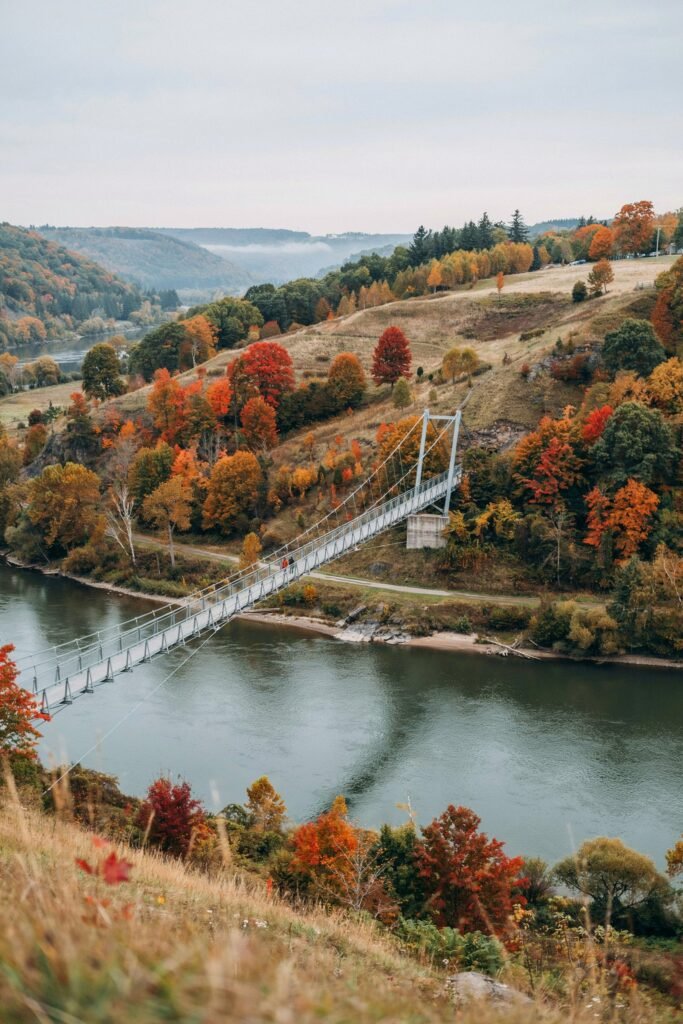
The Hudson Valley gives you fall foliage, historic mansions, and some genuinely excellent farm-to-table food, all within a couple hours of New York City.
How to get there: If you’re flying, JFK or LaGuardia work, then rent a car for the roughly 90-minute drive north.
Amtrak also runs directly from Penn Station to towns like Hudson and Rhinebeck, which is a lovely, low-stress option if you’d rather not drive at all.
Things to do: Walk across the Walkway Over the Hudson, a converted railway bridge turned pedestrian park with sweeping valley views.
Visit Storm King Art Center, an outdoor sculpture park that looks incredible against fall colors. Stop in Hudson for antique shopping and a proper coffee, and don’t skip a pick-your-own apple orchard, this region does them exceptionally well.
Staying safe: Trails around Storm King and the surrounding state parks can get crowded on peak fall weekends, so arrive early to avoid packed parking lots and rushed hiking.
Riverside paths can be slippery with wet fallen leaves, so wear shoes with real grip. If you’re taking the train back late, check the schedule in advance since evening service thins out significantly outside the city.
Best time to go: The Hudson Valley usually peaks in mid to late October, a bit later than New England, which makes it a great backup plan if you missed peak color further north.
Budget tip: Taking the train instead of renting a car saves money and also removes the stress of holiday-weekend traffic on the Taconic State Parkway.
5. Charleston, South Carolina
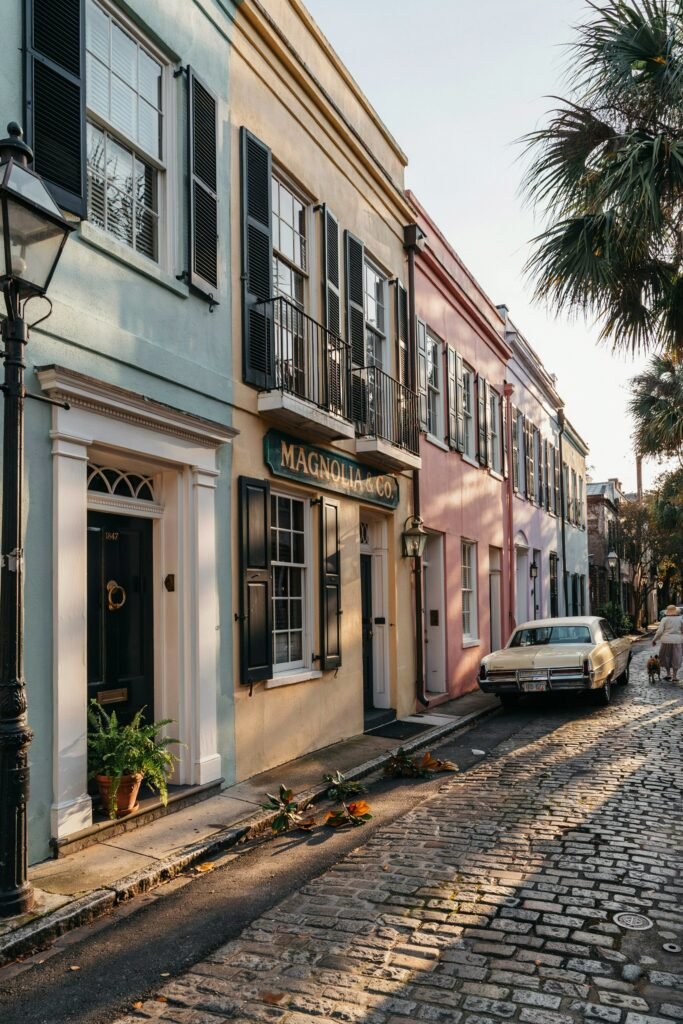
Fall in Charleston means the brutal summer humidity finally breaks, leaving you with warm days, cool evenings, and a city practically built for wandering.
How to get there: Charleston International Airport (CHS) has direct flights from most major U.S. cities, and the historic downtown is only about a 15-minute drive or rideshare from the airport, so you don’t even need a rental car if you’re planning to stay in the city center.
Things to do: Wander the cobblestone streets of the historic district and admire the pastel row houses on Rainbow Row.
Take a harbor cruise out to Fort Sumter, walk along the Battery at sunset, and spend an afternoon at a nearby plantation garden, several of which put on beautiful fall displays.
Charleston’s food scene alone could fill an entire weekend, so book at least one dinner reservation ahead of time.
Staying safe: Cobblestone streets are gorgeous but uneven, so skip the heels and bring comfortable walking shoes.
Fall is still technically hurricane season in the Lowcountry through November, so check the weather forecast in the days leading up to your trip. If you’re out late in the historic district, stick to well-lit main streets rather than quiet side alleys.
Best time to go: October is arguably Charleston’s most pleasant month, with the humidity gone and temperatures sitting in a comfortable range for walking tours. Budget tip: Hotel rates drop noticeably compared to spring wedding season, so fall is genuinely one of the best value windows to visit this particular city.
6. Leavenworth, Washington
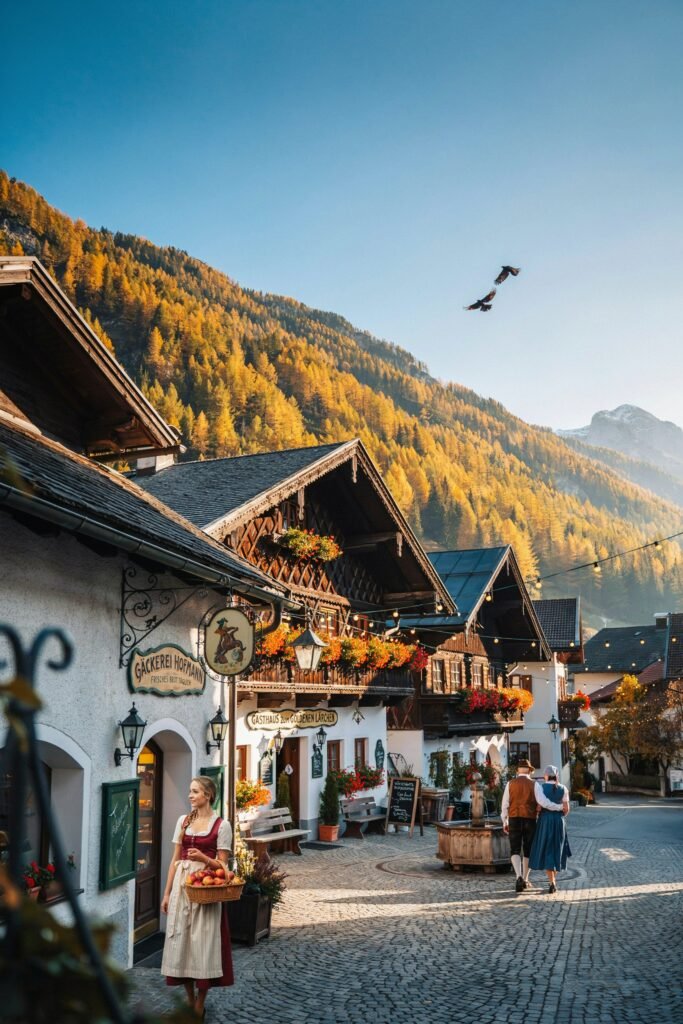
Leavenworth is a Bavarian-style village tucked into the Cascade Mountains, and in fall it looks almost too charming to be real, especially with golden larches lighting up the surrounding peaks.
How to get there: Fly into Seattle-Tacoma International Airport (SEA), then drive about 2.5 hours east over Stevens Pass.
The drive itself is stunning in fall, with the highway cutting straight through changing forest, so plan to leave with daylight to spare so you can actually enjoy the scenery.
Things to do: Wander the Bavarian-themed downtown, complete with alpine architecture and genuinely good German food.
Hike out to see the larches turning gold, a phenomenon unique to this part of the Cascades in late September through mid-October. Ride the gondola or take a scenic float on the Wenatchee River, and stop at a local orchard for fresh-pressed cider on your way out.
Staying safe: Stevens Pass can see early snow by late October, so check mountain pass conditions before you drive and carry tire chains if the forecast looks uncertain.
Larch-viewing trails get extremely crowded during peak color, so start early and have a backup trail in mind. Bears are still active in the fall as they prepare for winter, so store food properly if you’re picnicking or camping nearby.
Best time to go: The larches typically peak in the last week of September through the first week of October, a narrow window that’s worth planning your entire trip around.
Budget tip: Book lodging as early as possible, since larch season is one of the most in-demand weekends of the year in this town and prices climb accordingly.
7. Solvang, California
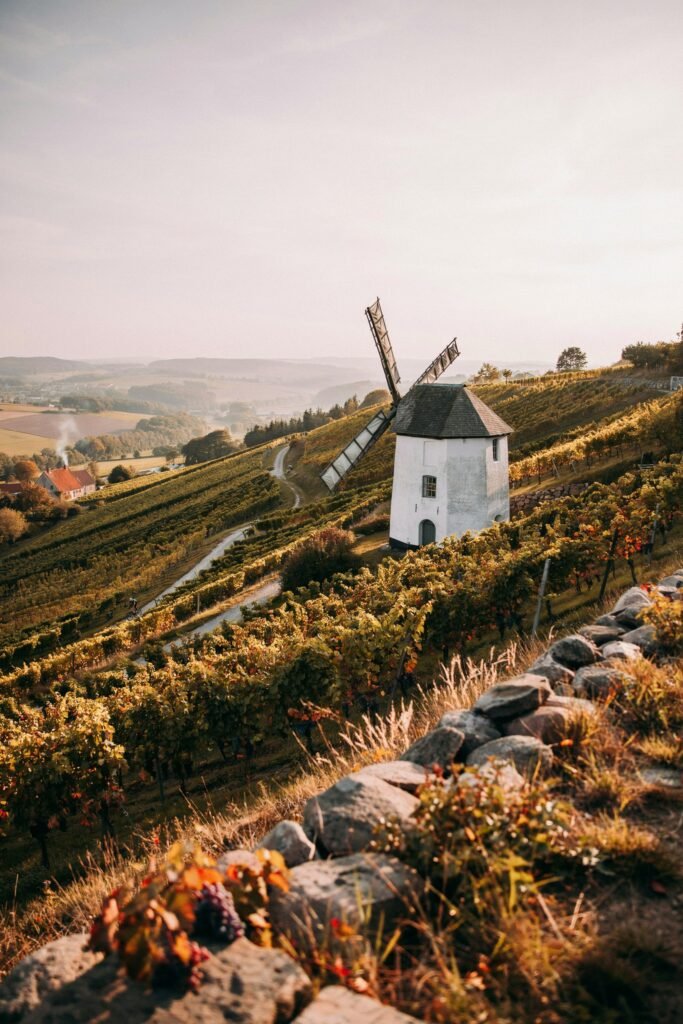
For a completely different kind of fall weekend, Solvang trades mountains for Danish windmills, wine country hills, and warm California sunshine.
How to get there: Fly into Santa Barbara Airport (SBA), about 45 minutes south, or Santa Maria Airport (SMX), around 30 minutes north.
It’s also an easy day-trip-turned-weekend from Los Angeles, roughly a 2.5-hour drive up Highway 101.
I wrote about this area as part of a broader look at spots that feel unexpectedly European in my USA destinations that feel like Europe post, and Solvang is one of my favorites on that list.
Things to do: Walk the town’s Danish-style streets, complete with windmills and bakeries selling fresh aebleskiver.
Spend an afternoon wine tasting in the Santa Ynez Valley, since fall is technically harvest season here and many wineries do special crush events.
Rent bikes to explore the surrounding vineyards, and catch sunset from one of the hillside tasting rooms just outside town.
Staying safe: If you’re wine tasting across multiple stops, arrange a designated driver or a tour service rather than driving yourself between wineries.
Fall is also fire season in this part of California, so check current air quality and any active fire advisories before you go. Roads through the valley are rural and can be dark at night, so keep headlights on and drive cautiously after dinner.
Best time to go: September and October hit that sweet spot of harvest season without summer’s peak heat, and the vineyards themselves look gorgeous mid-harvest.
Budget tip: Many tasting rooms offer discounted flights on weekdays, so a Thursday or Friday visit can stretch your wine budget considerably further than a Saturday one.
8. Aspen, Colorado
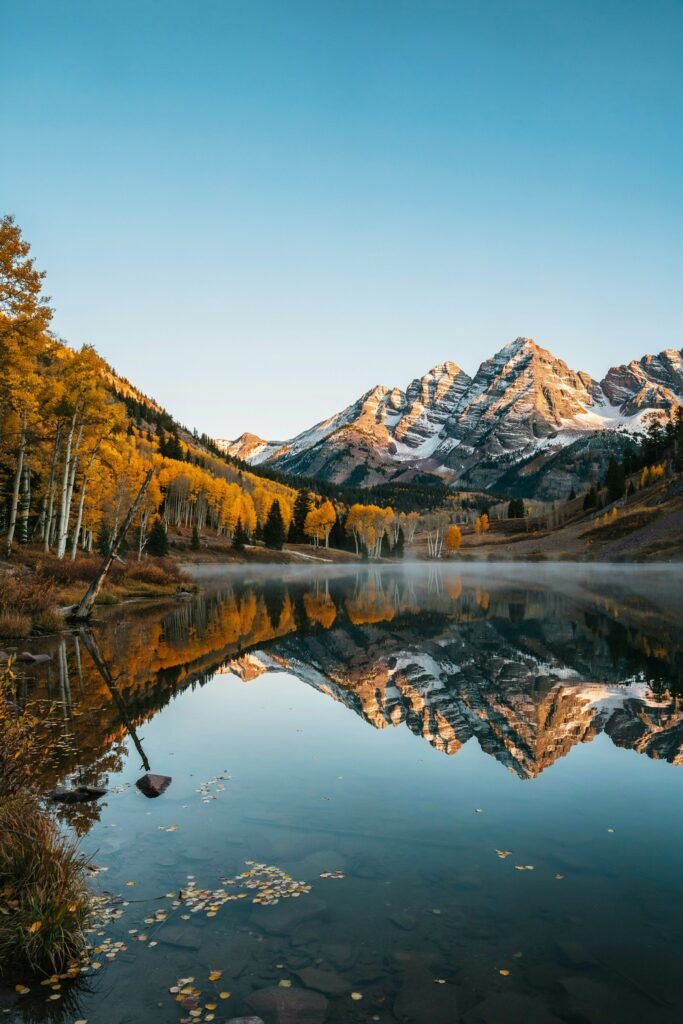
Before the ski crowds arrive, Aspen has a golden window in fall when the aspen trees (yes, that’s where the name comes from) turn a shimmering yellow across the entire valley.
How to get there: Fly into Aspen/Pitkin County Airport (ASE) for the most direct option, though it can be pricier; flying into Denver International Airport and driving the roughly 4-hour route through the mountains is a beautiful, budget-friendly alternative.
Give yourself extra buffer time on the drive since mountain weather can slow things down.
Things to do: Take the Maroon Bells scenic drive, one of the most photographed mountain views in America, especially framed by golden aspens. Ride the Silver Queen Gondola up Aspen Mountain for a bird’s-eye view of the changing valley below.
Walk the historic downtown for boutique shopping, and if you’re up for a hike, the trails around Maroon Lake are stunning but do require timed entry reservations during peak season.
Staying safe: Maroon Bells requires reservations or an early arrival before the shuttle restrictions kick in, so plan this ahead rather than showing up and hoping for the best.
Altitude here sits above 7,900 feet, so drink more water than usual and pace yourself on hikes if you’re not acclimated. Weather can shift quickly at elevation, so pack layers even if the forecast looks mild.
Best time to go: The aspens typically turn between late September and early October, and because the window is so short, it’s worth watching a local foliage report the week before you commit to dates.
Budget tip: This trip is genuinely cheaper than a ski season visit, since lift ticket prices and hotel rates both drop significantly once the snow hasn’t arrived yet.
More Fall-Perfect Ideas Worth Bookmarking
If none of these quite match what you’re picturing, a few more of my favorite resources might help you narrow it down.
For dreamy small towns that feel plucked from a storybook, I rounded up a full list in 12 enchanting U.S. towns straight out of a fairy tale.
If cozy small towns specifically built around foliage season are more your speed, don’t miss cozy small towns for fall foliage.
And if a mountain escape is calling your name but you want something a little further off the beaten path, I’ve also covered cool mountain towns that transition beautifully into fall, along with a list of the best lake destinations in the USA, several of which are just as gorgeous with autumn color reflected on the water.
How to Stay Safe on a Fall Weekend Getaway
Fall trips come with their own set of quirks, so here’s what I’ve learned to keep in mind no matter where I’m headed.
Check the weather twice. Fall weather is genuinely unpredictable. A warm, sunny afternoon can turn into a cold, windy evening within a couple of hours, especially at elevation. Check the forecast the night before you leave, and again the morning of.
Watch the daylight. Days are noticeably shorter in fall, and sunset creeps up faster than you’d expect. If you’re driving through rural or mountain roads, try to finish your route before dark, since wildlife activity also increases around dusk this time of year.
Tell someone your plan. Especially if you’re hiking, driving remote roads, or traveling solo, share your route and expected return time with a friend or family member. Cell service is unreliable in a lot of the prettiest fall destinations, so this small step matters more than it seems.
Dress in layers, always. Mornings can be near freezing while afternoons warm up considerably. Layering isn’t just a comfort thing, it’s a safety thing if you end up outside longer than planned.
Book accommodations early. Fall weekends, especially ones that land during peak foliage, sell out fast. Beyond convenience, having a confirmed place to stay means you’re not left searching for a room after dark in an unfamiliar town.
Keep a physical map as backup. I say this in nearly every guide I write, but it bears repeating here: cell service in rural, mountainous, and coastal fall destinations is genuinely unreliable.
Download offline maps before you leave home, and if you’re the type who likes extra peace of mind, I go into more detail on this kind of trip logistics in how to stay organized during multi-city travel.
Trust your gut in unfamiliar towns. Small towns are generally very safe, but like anywhere, stick to well-lit, populated areas at night, keep your phone charged, and don’t be afraid to ask a local shop owner or hotel front desk for a safety recommendation if something feels off.
Keep an eye on wildlife, especially in mountain destinations. Fall is a busy season for animals preparing for winter, which means more movement near roads and trails at dawn and dusk.
Slow down on rural roads during those hours, store food properly if you’re picnicking outdoors, and give any wildlife you spot plenty of space, no photo is worth getting too close.
Pack a basic emergency kit for the car. If you’re driving through rural or mountainous areas, a flashlight, blanket, extra water, and a portable charger can make a huge difference if you end up stuck waiting for help.
It’s a small addition to your trunk that buys real peace of mind on long, remote stretches of road.
My Personal Fall Weekend Packing List
This is the exact list I run through before every fall trip. I’ve refined it over more autumns than I’d like to admit, and it’s built to keep you warm, comfortable, and never digging through your bag for something you forgot.
Layers and Clothing
- A midweight jacket that can handle both a chilly morning and a warmer afternoon
- One cozy sweater in a neutral color that pairs with everything else you packed
- A flannel or button-down shirt for layering under the jacket or over a t-shirt
- Two long-sleeve tops you can layer or wear alone depending on the day
- A pair of jeans or comfortable trousers that won’t feel restrictive on long walks
- Leggings for travel days and lounging at the hotel
- A lightweight scarf that doubles as an extra layer if temperatures drop unexpectedly
- Wool or thermal socks for cold mornings and hikes
- A packable rain jacket, because fall weather changes its mind constantly
Footwear
- Comfortable walking shoes with real grip, since wet leaves and cobblestones get slippery fast
- Waterproof boots if your destination involves hiking or unpredictable weather
- One nicer pair of shoes for dinner if your trip includes a dressier evening out
Accessories and Extras
- A beanie or knit hat, especially for mountain destinations
- Gloves, even a thin pair, for early mornings and gondola rides
- Sunglasses, because fall sun sits lower in the sky and glares more than you’d expect
- A crossbody bag that keeps your hands free for cider donuts and camera shots
- A reusable water bottle, particularly important at higher elevations
- A portable phone charger for long driving days with spotty outlets
Travel Essentials
- Offline maps downloaded before you lose signal
- A printed or downloaded confirmation of your hotel and any timed reservations, like Maroon Bells or popular trailheads
- A small first-aid kit with basics like blister pads, pain relievers, and any personal medication
- Cash, since small towns and farm stands don’t always take cards
Toiletries and Comfort Items
- Lip balm with SPF, since fall wind and sun both dry out your lips fast
- A travel-size moisturizer, cooler air tends to be drier air
- A cozy pair of socks or slippers for the hotel room at night
If you tend to overpack the way I used to, I promise this list works because every item pulls double duty.
Nothing on here is a “just in case” item you’ll never touch.
If you want to build an even more efficient system for organizing all of this, especially for a trip involving more than one stop, I’ve broken it all down in how to travel light for multi-city trips, and if packing cubes are your love language like they are mine, my favorite packing cubes for organized travel will change how you pack for good.
I also have a companion piece on how to avoid overpacking that applies just as well once you swap the sundresses for sweaters.
Frequently Asked Questions
When should I book a fall weekend getaway? Aim to book lodging at least 6 to 8 weeks ahead if you’re targeting peak foliage weekends, especially for smaller towns with limited hotel inventory.
Popular spots like Stowe and Leavenworth can sell out months in advance for the exact peak-color weekend, so the earlier you commit to dates, the more options you’ll have.
How do I know when peak foliage will hit? Foliage timing shifts every year based on temperature and rainfall, so rather than relying on a fixed calendar date, check a live foliage tracker map about two to three weeks before your trip.
Northern and higher-elevation destinations tend to peak earliest, usually late September into early October, while southern and coastal spots often peak a few weeks later, into late October or even November.
Is it better to drive or fly for a fall weekend trip? It depends on distance, but if your destination is within a 4 to 5 hour drive, I almost always choose to drive.
Fall road trips are half the appeal, since the scenery along the way is often just as beautiful as the destination itself. For anything farther, flying and renting a car once you land tends to save both time and stress.
What should I do if I can’t get a hotel reservation for peak weekend? Consider shifting your trip by even a few days.
Foliage doesn’t disappear overnight, so visiting the weekend just before or after projected peak color often still delivers gorgeous scenery with far more lodging availability and lower prices.
Alternatively, look at a nearby smaller town instead of the most popular hub; you’ll often find the same views with a shorter drive and fewer crowds.
Do I need a car once I arrive? For most of the destinations on this list, yes. Fall scenery tends to be spread across scenic drives, orchards, and overlooks that aren’t walkable from a single hotel base.
The exceptions are compact, walkable towns like Charleston or downtown Stowe, where you can comfortably explore on foot once you’re settled in.
Final Thoughts
Fall weekends have a way of feeling bigger than their two days. Maybe it’s the light, maybe it’s the smell of woodsmoke and cider, or maybe it’s just that autumn asks you to slow down in a way summer never does.
Wherever you decide to go from this list, book it a little earlier than you think you need to, pack smart instead of heavy, and let yourself actually enjoy the season instead of just watching it pass by through a car window.
I hope this guide gets you one step closer to your own perfect fall weekend.