
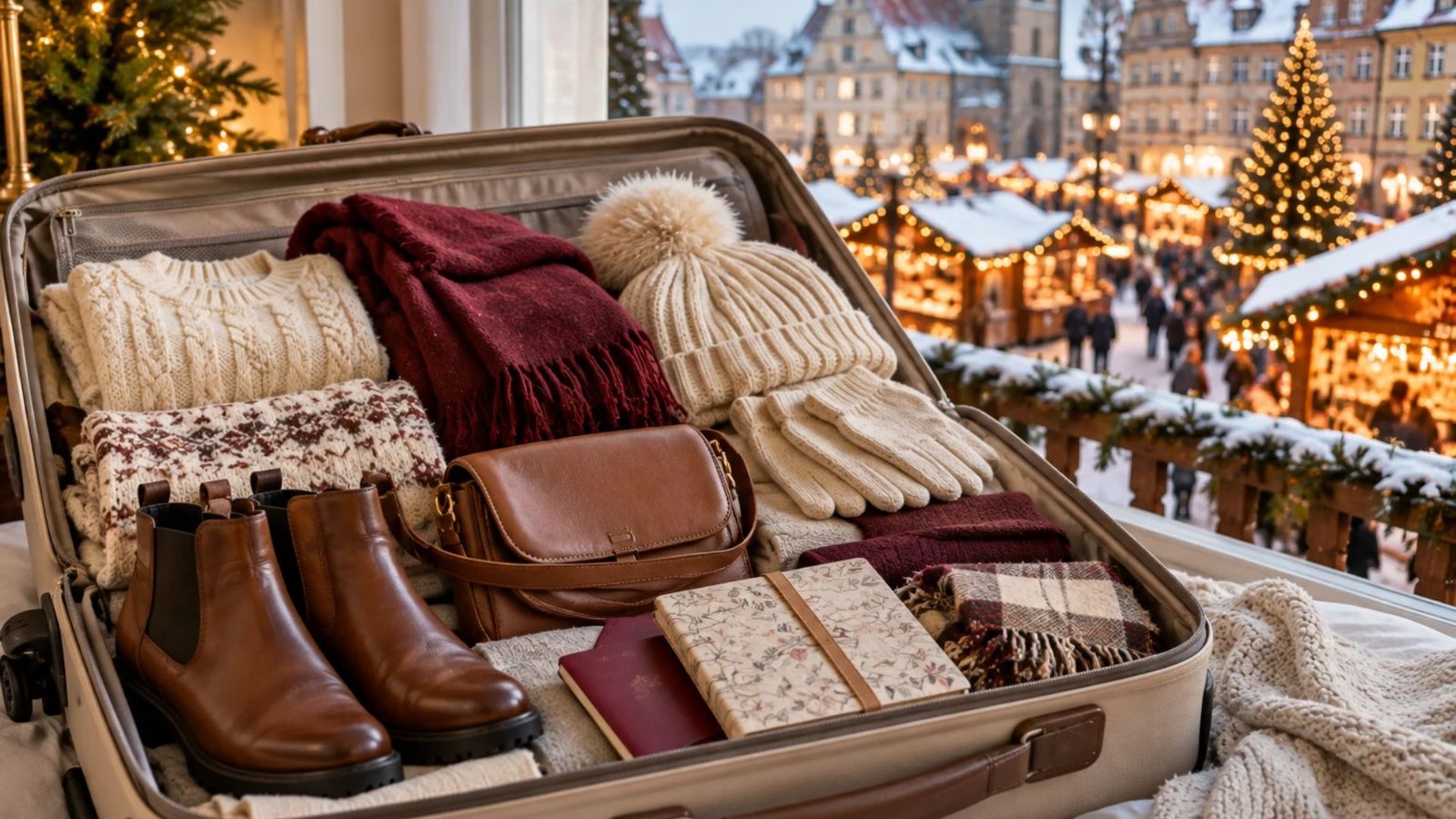

Planning a trip to Europe’s Christmas markets is one of the loveliest ways to enjoy the holiday season.
I love the idea of wandering through charming streets filled with twinkling lights, browsing wooden stalls, sipping hot chocolate, and finding beautiful Christmas gifts.
But packing for this kind of trip can be tricky, especially when temperatures drop and you spend hours walking outdoors.
You need warm clothes, comfortable shoes, and a few practical essentials without filling your suitcase with things you will never use.
In this guide, I’ll help you pack smartly so you can enjoy every magical moment comfortably.
What to Pack for a European Christmas Market Trip
European Christmas markets are beautiful, but winter weather can be unpredictable. Depending on where you visit, you might experience freezing temperatures, rain, snow, or cold winds.
The secret to packing well is choosing warm, comfortable clothing that you can mix and match. You also want to leave a little room in your suitcase for Christmas decorations, souvenirs, and gifts.
Here is everything you should consider packing for your European Christmas market adventure.
1. Warm Winter Coat
Your winter coat is one of the most important items to pack. You will probably spend several hours outside exploring Christmas stalls, taking photographs, and enjoying festive food.
Choose a coat that keeps you warm without making walking uncomfortable.
What I recommend packing:
- One warm, insulated winter coat.
- A water-resistant or waterproof outer layer if rain or snow is expected.
- A coat with pockets for your phone, gloves, and other small essentials.
A padded puffer jacket is a practical option for very cold destinations. A wool coat can also work well for city sightseeing, especially when layered over a warm sweater.
If you are visiting several cities, choose a neutral colour such as black, beige, navy, or camel. It will match most of your outfits and help you create different looks without packing several bulky coats.
Packing tip: Wear your heaviest coat on the plane instead of squeezing it into your suitcase.
2. Thermal Tops and Bottoms
Thermal clothing is a great investment for a winter trip to Europe. These lightweight layers help you stay warm without adding too much bulk to your luggage.
They are especially useful when visiting markets in Germany, Austria, the Czech Republic, Switzerland, or other destinations that can experience very cold winter weather.
Pack:
- Two or three thermal tops.
- One or two pairs of thermal leggings.
- A comfortable base layer for particularly cold days.
You can wear thermal leggings underneath jeans, trousers, or other winter bottoms. Thermal tops fit comfortably beneath sweaters and coats.
You do not necessarily need thick thermal clothing every day. Check the forecast for each destination and adjust your packing list accordingly.
Packing tip: Choose thin, breathable thermal layers rather than very bulky ones. They are easier to pack and allow you to add or remove clothing as needed.
3. Warm Sweaters and Cardigans
Sweaters are essential for a European Christmas market trip because they keep you warm and make winter outfits easy to put together.
Choose sweaters that work with several items in your suitcase. This helps you create different outfits without bringing too many clothes.
Consider packing:
- Two or three warm sweaters.
- One cardigan for layering indoors.
- One festive sweater if you enjoy dressing for the Christmas season.
Cream, grey, brown, black, burgundy, and forest green are lovely colours for winter travel. They also fit the traditional Christmas market atmosphere.
You can wear a sweater with jeans during the day and pair it with a skirt, tights, and boots for dinner.
Remember that Christmas markets often involve a lot of walking. Choose sweaters that feel comfortable for several hours rather than pieces that look good but are difficult to move around in.
4. Comfortable Winter Walking Shoes
Your shoes can make a big difference to your trip.
Christmas markets often take place in historic town centres with cobblestone streets, uneven pavements, and crowded pedestrian areas. You may spend most of the day walking between stalls, restaurants, shops, and nearby attractions.
Pack shoes that are comfortable, supportive, and suitable for the weather.
The best footwear options include:
- Waterproof walking boots.
- Comfortable ankle boots with good grip.
- Insulated boots for snowy or very cold destinations.
- Warm everyday shoes for milder winter days.
Avoid taking brand-new shoes that you have not worn before. A beautiful pair of boots will not be much fun if they cause discomfort after an hour of walking.
If you plan to wear leather boots, consider treating them with a suitable water-resistant product before your trip.
Packing tip: One dependable pair of walking boots and one lighter pair of shoes are usually enough for a short city break, depending on your itinerary.
5. Warm Socks
Warm socks might seem like a small detail, but they are worth packing carefully.
Cold feet can make it difficult to enjoy an evening at an outdoor Christmas market, especially when you are standing still to watch a performance or browse the stalls.
Pack around four to six pairs for a week-long trip, adjusting the number to your laundry plans.
Look for:
- Wool or merino wool socks.
- Comfortable socks that fit properly inside your boots.
- A few thicker pairs for particularly cold days.
Avoid wearing socks that make your boots too tight. Shoes need enough room for your feet and socks to stay comfortable.
If your feet get wet, change into dry socks as soon as possible.
6. Hats, Scarves, and Gloves
Winter accessories are small, easy to pack, and incredibly useful.
A warm hat helps protect your head and ears from cold weather. A scarf adds warmth around your neck, while gloves keep your hands comfortable when you are outside.
For a Christmas market trip, I would pack:
- One warm knitted hat or beanie.
- One thick scarf.
- One pair of insulated gloves.
- One pair of touchscreen-compatible gloves if you want to use your phone without exposing your fingers.
Choose accessories that match your coat so you can wear them with different outfits.
A wool scarf in cream or burgundy can make a simple winter outfit feel festive. A neutral knitted hat is also easy to wear throughout your trip.
Packing tip: Keep your gloves and hat in an accessible pocket of your day bag. You do not want to unpack your entire suitcase just because the temperature suddenly drops.
7. Jeans, Trousers, and Winter Bottoms
You do not need to pack a different pair of trousers for every day.
Choose bottoms that work with several sweaters and tops. Dark jeans, comfortable trousers, and thicker winter leggings are practical choices.
For a week-long trip, you might pack:
- Two pairs of jeans or everyday trousers.
- One pair of comfortable smart-casual trousers.
- One pair of thermal leggings.
- One skirt or dress if you enjoy wearing them in winter.
Dark-coloured trousers are particularly useful because they are easy to style and work well for daytime sightseeing and evening meals.
If you are planning to visit snowy destinations, check that your trousers are comfortable with your base layers and winter boots.
You can also pack one slightly dressier outfit for a special dinner or an evening concert.
8. Winter Dresses and Tights
If you enjoy wearing dresses, you do not need to leave them at home just because you are travelling in winter.
A knitted dress can be warm, comfortable, and easy to style for a festive evening.
Pack one dress if you have plans for a nice restaurant, a Christmas concert, or photographs in a beautiful historic city.
You may also want to bring:
- One or two pairs of warm tights.
- A long-sleeved dress or knitted dress.
- A cardigan or warm layer to wear underneath your coat.
For outdoor markets, make sure your outfit is warm enough for standing and walking in cold weather.
There is no need to sacrifice comfort for photographs. A warm dress, thick tights, a winter coat, and comfortable boots can look lovely while keeping you prepared for the weather.
9. Everyday Tops and Base Layers
Pack a few simple tops that you can wear underneath sweaters or cardigans.
Long-sleeved tops are particularly useful because they add warmth without taking up much suitcase space.
For a seven-day trip, consider packing four or five tops, depending on how often you plan to change clothes and whether you will have access to laundry facilities.
Choose colours that work with your trousers and sweaters.
For example, a white long-sleeved top can be worn with dark jeans and a cardigan one day, then layered beneath a sweater on another day.
This kind of mix-and-match packing helps you create several outfits from a small number of items.
10. A Small Crossbody Bag or Day Bag
A small crossbody bag is useful when exploring busy Christmas markets.
You will need somewhere to keep your phone, wallet, transport tickets, lip balm, and other everyday essentials.
Choose a bag that is comfortable to carry for several hours and has secure closures.
Useful features include:
- A zipped main compartment.
- An adjustable strap.
- Several small pockets.
- Enough space for your everyday essentials without becoming too heavy.
A crossbody bag worn close to your body can also make it easier to keep your belongings secure in crowded areas.
Avoid carrying more than you need. A heavy bag can become uncomfortable when you are walking around a city all day.
If you plan to buy Christmas gifts or food at the markets, bring a foldable shopping bag as well.
11. A Small Backpack for Day Trips
A small backpack is helpful if you plan to explore beyond the Christmas markets.
You can use it for a water bottle, an extra layer, snacks, a portable charger, and anything you buy during the day.
Choose a lightweight backpack with comfortable straps and enough room for your essentials.
If you are deciding between a backpack and a crossbody bag, think about your plans.
A crossbody bag is often convenient for short city walks and quick visits to the stalls. A small backpack can be more practical for longer sightseeing days or day trips by train.
You do not necessarily need both. Choose whichever suits your travel style best.
12. Travel Umbrella and Waterproof Accessories
Winter in Europe does not always mean snow. Some destinations experience cold rain, wind, and damp weather during the Christmas market season.
A compact umbrella can be useful, especially if you are travelling between cities with different forecasts.
Consider packing:
- A small travel umbrella.
- A lightweight waterproof jacket if your coat is not water-resistant.
- Water-resistant footwear.
- A small bag for wet accessories.
If you are visiting a snowy destination, a waterproof outer layer can be particularly helpful.
Check the forecast shortly before leaving home. If heavy rain or snow is expected, prioritise waterproof clothing and footwear over extra outfits.
13. Toiletries and Winter Skincare
Cold air, wind, and indoor heating can leave your skin feeling dry during a winter holiday.
I recommend packing a small toiletry bag with products you already use and know work well for you.
Your winter skincare and toiletries checklist can include:
- Moisturiser.
- Lip balm.
- Hand cream.
- Sunscreen.
- Toothbrush and toothpaste.
- Shampoo and conditioner, if needed.
- Deodorant.
- Makeup and makeup remover, if you use them.
- Personal hygiene products.
- Any prescribed medication you need.
Lip balm and hand cream are particularly convenient to keep in your day bag.
Do not forget sunscreen just because it is winter. You can still be exposed to UV rays during outdoor sightseeing, including on bright days and in snowy locations.
To save space, use travel-sized containers where appropriate and check the liquid restrictions for your flight.
14. Travel Documents and Important Essentials
Before thinking about Christmas outfits, make sure you have all the documents you need for your trip.
Depending on your nationality and itinerary, you may need:
- A valid passport.
- Any required visa or entry documents.
- Flight tickets and accommodation confirmations.
- Travel insurance information.
- Train reservations, where applicable.
- A bank card and a suitable backup payment method.
- Emergency contact details.
- Copies of important travel documents stored securely.
Check the entry requirements for every country you plan to visit. Requirements can differ depending on your passport and the countries on your itinerary.
Keep essential documents secure and accessible. It is also sensible to store digital copies separately from the originals.
If you are visiting several Christmas markets in different cities, keep your train tickets and accommodation details organised so you can find them quickly.
15. Phone Charger and Portable Power Bank
Your phone will probably be one of your most useful travel tools.
You may use it for photographs, maps, restaurant bookings, train tickets, translation, and checking opening hours.
Cold weather can also affect battery performance, so a charged power bank is helpful on long days outdoors.
Pack:
- Your phone charger.
- A suitable power bank.
- Charging cables.
- A plug adapter compatible with your destinations.
- Earphones, if you use them.
Many European countries use Type C or Type F sockets, but plug types and electrical standards can vary. Check the requirements for every country on your itinerary before purchasing an adapter.
Keep your phone in an inside coat pocket when possible during very cold weather, and carry your power bank in accordance with airline rules.
Packing tip: Charge your phone and power bank before leaving your accommodation each morning.
16. Reusable Water Bottle and Small Snacks
Christmas markets are wonderful places to try seasonal food, from roasted nuts and pastries to local specialities.
However, you may spend longer walking around than you expect, and stopping for food is not always convenient when markets are crowded.
A reusable water bottle and a few small snacks can help you stay comfortable between meals.
Consider packing:
- A lightweight reusable water bottle.
- A snack bar or other easy-to-carry snack.
- Tissues.
- Hand sanitiser.
- Wet wipes.
You can refill your bottle where safe drinking water is available.
Remember that tasting local food is part of the fun, so there is no need to pack a full supply of snacks. Just bring enough for the journey and the times when you need something convenient.
17. Cash and a Payment Card
Although card payments are widely accepted in many European cities, some smaller market stalls or local vendors may prefer cash.
It is useful to have a payment card and a small amount of local currency available.
For destinations that use the euro, carrying a few euro notes and coins can be convenient. Remember that not every European country uses the euro.
Before your trip:
- Check the currency used in each destination.
- Tell your bank about your travel plans if required.
- Check foreign transaction fees.
- Carry a backup payment method separately from your main wallet.
- Use secure storage for cash and cards.
You do not need to carry a large amount of cash. Start with a modest amount and withdraw more if needed.
18. A Foldable Shopping Bag for Christmas Gifts
One item that is easy to forget is a reusable shopping bag.
European Christmas markets are full of tempting things to buy, including handmade decorations, ornaments, candles, scarves, wooden toys, and local treats.
A foldable tote takes up very little space in your suitcase but can be extremely useful when you start shopping.
Choose one that folds into a small pouch and has strong handles.
It is also worth leaving some spare room in your luggage for souvenirs. If you know you love buying Christmas decorations, you might want to pack a small protective pouch or use spare clothing to cushion fragile items on the journey home.
My best tip: Decide on a rough souvenir budget before you start shopping. It helps you enjoy browsing without buying more than you can comfortably carry.
19. Small Travel First-Aid Kit
A small first-aid kit can be useful when you are spending long days walking through unfamiliar cities.
You do not need to pack a large medical bag. A few basic supplies can help with minor everyday problems.
Consider including:
- Plasters.
- Blister pads.
- Any personal medication you need.
- Basic first-aid supplies appropriate for your needs.
- Hand sanitiser.
- Tissues.
If you take prescribed medication, keep it in its original packaging when practical and check any destination-specific rules before travelling.
Blister pads are particularly useful if you plan to walk several kilometres each day.
20. Optional Festive Accessories
You may want to pack a few festive accessories to make your outfits feel special.
These are optional, but they can be a lovely addition if you enjoy dressing up for Christmas photographs.
Ideas include:
- A burgundy scarf.
- A knitted headband.
- A beret.
- A simple pair of festive earrings.
- A small hair accessory.
- A cosy cardigan in a Christmas colour.
Choose items you can wear with several outfits instead of packing accessories for just one photograph.
You will be walking and spending time outdoors, so practical clothing should always come first.
European Christmas Market Packing Checklist
Use this checklist when preparing your suitcase. The quantities are a starting point for a seven-day trip, not strict rules. Adjust them for your itinerary, laundry plans, and expected temperatures.
My packing checklist
0 of 34 packed
Clothing
1 warm winter coat2–3 sweaters2–3 thermal tops1–2 pairs of thermal leggings2 pairs of jeans or trousers4–5 everyday tops1 dress or festive outfit (optional)Warm tights (if needed)4–6 pairs of warm socksUnderwear and sleepwear
Shoes and accessories
Waterproof walking bootsSecond pair of comfortable shoes (optional)Warm hat or beanieScarfInsulated glovesSmall crossbody bag or day backpackFoldable shopping tote
Toiletries and health
Moisturiser and lip balmHand cream and sunscreenToothbrush and toothpastePersonal toiletriesPrescribed medicationPlasters and blister padsHand sanitiser and tissues
Travel essentials
Passport and required entry documentsFlight and accommodation detailsTravel insurance informationPayment card and some local cashPhone and chargerPower bank and cablesSuitable plug adapterReusable water bottleCompact umbrella or waterproof layerSmall snacks
Reset checklist
What to Wear to a European Christmas Market
Packing the right items is important, but knowing how to combine them can make your trip even easier.
Here are three simple outfit ideas for different winter conditions.
Outfit 1: A casual day at the market
- Warm puffer coat
- Thermal top and knitted sweater
- Dark jeans
- Comfortable waterproof boots
- Hat, scarf, and gloves
Best for daytime exploring, shopping, and walking between market stalls.
Outfit 2: A festive evening
- Wool coat
- Warm sweater
- Smart trousers
- Ankle boots with good grip
- Burgundy scarf and gloves
Ideal for evening market visits, Christmas lights, and dinner afterward.
Outfit 3: A very cold or snowy day
- Insulated winter coat
- Thermal base layers
- Warm sweater
- Comfortable trousers
- Waterproof insulated boots
- Thick socks, hat, scarf, and gloves
Best when temperatures are low or snow and icy conditions are expected.
The most important thing is to dress in layers. You can add clothing when you are outside and remove a layer when you enter a warm café, restaurant, or shop.
What to Pack for Different European Christmas Market Destinations
Not every European Christmas market has the same weather. Your destination should influence what you put in your suitcase.
Germany
Markets in cities such as Nuremberg and Munich can be cold in December. Pack a warm coat, thermal layers, gloves, and comfortable boots. Check the forecast for snow, rain, and icy pavements.
Austria
Vienna and Salzburg are wonderful winter destinations. Warm layers, a wind-resistant coat, and shoes with good grip are useful for outdoor markets and city sightseeing.
Czech Republic
Prague’s historic streets and cobblestones make comfortable walking shoes particularly important. Add a warm scarf, gloves, and a coat suitable for cold, damp weather.
France
Strasbourg and Alsace are known for their festive atmosphere. Pack versatile layers, comfortable boots, and a waterproof outer layer if rain is forecast.
Switzerland
If you are combining city markets with mountain excursions, you may need warmer insulated clothing and more weather-resistant footwear. Conditions vary significantly between cities and higher elevations.
Always check the weather forecast for your exact destinations a few days before departure. Conditions can vary considerably, even between nearby cities.
How to Pack Light for a European Christmas Market Trip
Winter clothing can quickly fill a suitcase, especially when coats, sweaters, and boots are involved. A few simple tricks can help you save space.
Choose a colour scheme
Pick three or four colours that work together. For example, cream, black, beige, and burgundy make it easy to mix and match your winter wardrobe.
This means you can create several outfits without bringing a separate item for every day.
Wear bulky items while travelling
Wear your heaviest coat and boots during your journey if comfortable. This leaves more room in your suitcase for other essentials.
If you get too warm on the plane or train, remove your coat and store it nearby.
Use packing cubes
Packing cubes can help organise tops, thermal clothing, underwear, and accessories. They are especially useful if you are moving between several hotels.
You can also keep your toiletries and electronics in separate pouches so they are easy to find.
Limit your shoes
Shoes take up a surprising amount of luggage space. Choose a comfortable main pair that works for most of your activities, then add a second pair only if you genuinely need it.
Leave room for souvenirs
Christmas markets are full of lovely things to bring home. Leave a little extra space for ornaments, handmade gifts, and other purchases.
A foldable tote can also help you carry souvenirs without overloading your main day bag.
Common Packing Mistakes to Avoid
Even experienced travellers can overpack for a winter trip. Here are a few mistakes worth avoiding.
- Packing too many bulky sweaters: A smaller collection of warm layers is often more practical than several heavy jumpers.
- Bringing uncomfortable shoes: Prioritise comfort and grip over appearance alone.
- Forgetting waterproof clothing: Winter rain can be just as inconvenient as snow.
- Packing too many accessories: Choose a few versatile pieces that match your outfits.
- Ignoring the weather forecast: A trip to a mild city may require different clothing from a snowy mountain destination.
- Forgetting a power bank: Your phone may be essential for navigation, photographs, and travel tickets.
- Not leaving space for gifts: Souvenirs can take up more room than you expect.
- Packing everything in your checked suitcase: Keep important documents, essential medication, valuables, and a few necessities in your carry-on, following airline rules.
The goal is to pack for the trip you are actually taking, not every possible situation you can imagine.
Frequently Asked Questions
What should I wear to a European Christmas market?
Wear a warm coat, comfortable layers, trousers or jeans, and supportive walking shoes. Add a hat, scarf, and gloves when needed. If temperatures are very low, thermal base layers can make a big difference.
How cold are European Christmas markets in December?
Temperatures vary by location and year. Some cities experience temperatures around freezing or below, while others are milder. Mountain destinations can be considerably colder. Check the forecast for each city before you leave.
How many outfits should I pack for a week?
For a seven-day trip, you can usually start with two pairs of trousers, four or five tops, two or three sweaters, one warm coat, and enough underwear and socks for your plans. Add thermal layers and an optional dressier outfit as needed.
Do I need snow boots for European Christmas markets?
Not always. Waterproof walking boots with good grip are often enough for city markets when conditions are mild or wet. Insulated snow boots are more useful if snow, ice, or very low temperatures are expected.
Should I bring cash to European Christmas markets?
Yes, carrying a small amount of local currency can be useful, although many stalls accept cards. Check the currency used in each country you plan to visit.
Can I visit Christmas markets with just a carry-on suitcase?
Yes, depending on the length of your trip, your airline’s baggage allowance, and how much bulky winter clothing you need. Wearing your coat and boots, choosing versatile clothing, and packing thin thermal layers can help you save space.
What should I carry in my day bag?
Keep your phone, wallet, travel documents as needed, portable charger, tissues, hand sanitiser, lip balm, gloves, and a reusable water bottle in your day bag. A foldable shopping tote is useful for souvenirs.
When should I pack for a European Christmas market trip?
Start preparing your list a few weeks before departure. Check your airline’s baggage rules, confirm your travel documents, and look at the weather forecast a few days before you leave. This gives you time to organise anything you are missing.
Final Thoughts
A European Christmas market trip is a lovely way to experience the festive season, from the glowing lights and traditional wooden stalls to the delicious seasonal treats and beautiful handmade gifts.
The secret to packing well is keeping things simple. Bring a warm coat, comfortable walking shoes, versatile layers, and the small essentials that make travelling easier. You do not need a huge suitcase full of winter outfits to enjoy your trip.
Plan around your destinations, check the weather before you leave, and remember to save some space for souvenirs. With a little preparation, you can spend less time worrying about what you packed and more time enjoying the magic of Europe’s Christmas markets.