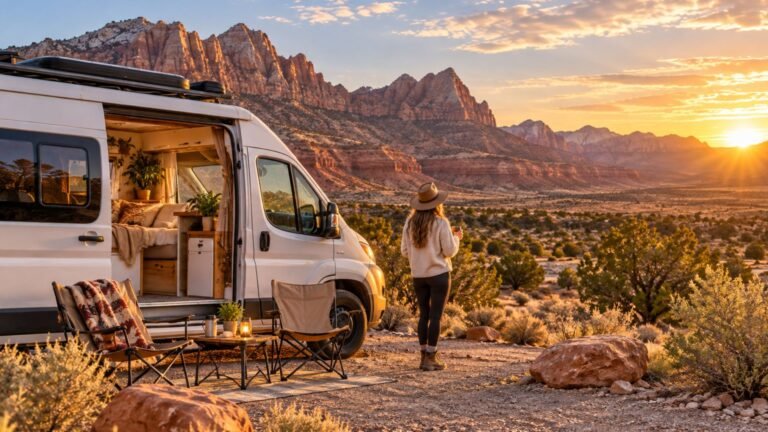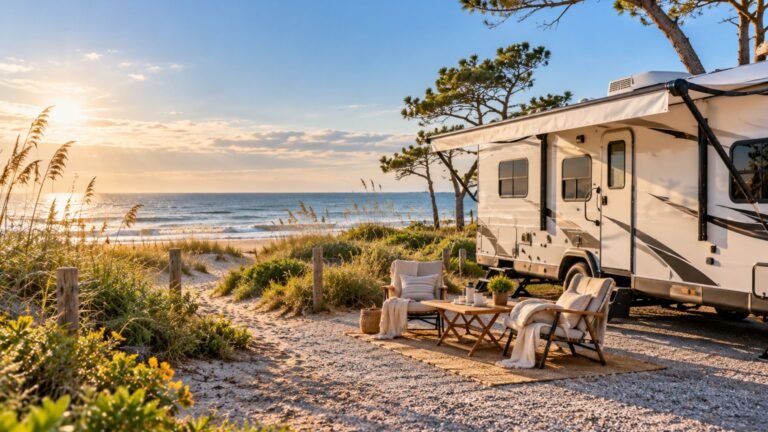

Winter doesn’t have to mean putting your RV adventures on hold.
In fact, I think some of the most enjoyable road trips happen when you trade freezing temperatures for sunny afternoons, beautiful desert landscapes, and peaceful campsites.
If you love the freedom of traveling in an RV but aren’t a fan of icy mornings, there are wonderful destinations across the United States where you can enjoy a milder winter.
From the palm trees of Florida to the red rocks of Arizona, these warm-weather escapes offer opportunities for outdoor adventures, scenic drives, and relaxing days on the road. In this guide, I’ll share five fantastic places to consider for your next winter RV getaway.
Why Go RVing in the Winter?
One of the best things about RV travel is the freedom to follow the weather. Instead of spending the coldest months bundled up inside your RV, you can head south and enjoy destinations where outdoor activities are still comfortable.
Winter RVing can also offer a different experience from summer travel. Some popular destinations are quieter, temperatures can be more pleasant for hiking, and you may find more opportunities to explore without the intense heat of summer.
Of course, not every warm-weather destination stays warm all winter. Desert regions can have chilly nights, coastal areas can experience rain and wind, and mountain passes may receive snow.
The secret is choosing your destination carefully and preparing your RV for the conditions.
Here are five amazing places to put on your winter RV travel list.
1. Southern Arizona: A Sunny Desert Escape
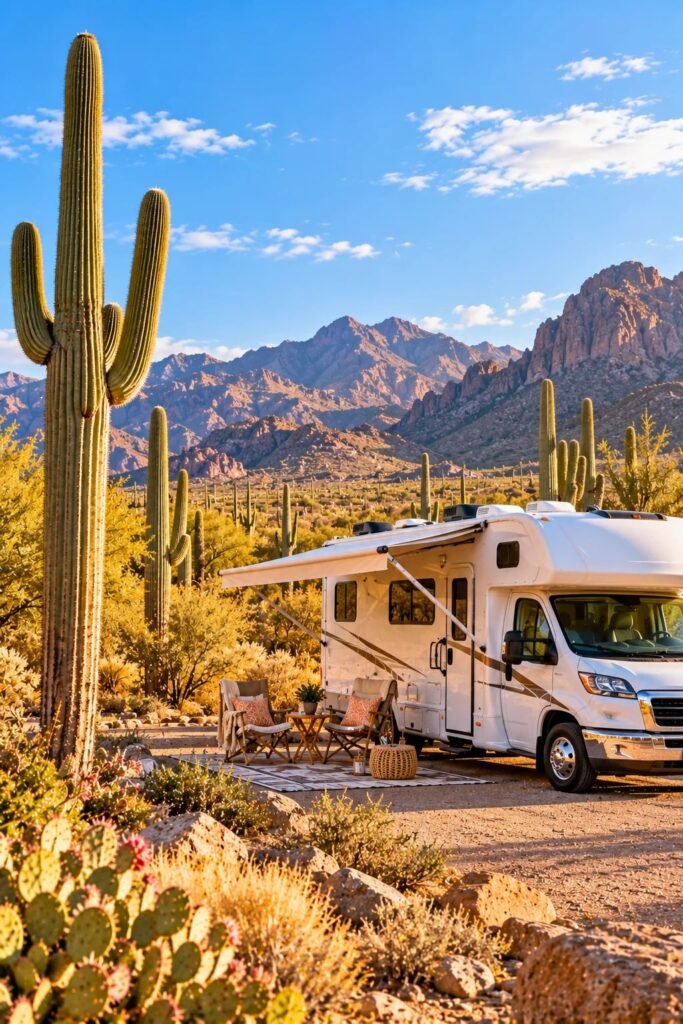
If you love sunshine, dramatic desert scenery, and peaceful mornings outdoors, southern Arizona deserves a place at the top of your winter RV bucket list.
This region is especially appealing to travelers who want to escape snow and enjoy outdoor adventures without the intense summer heat.
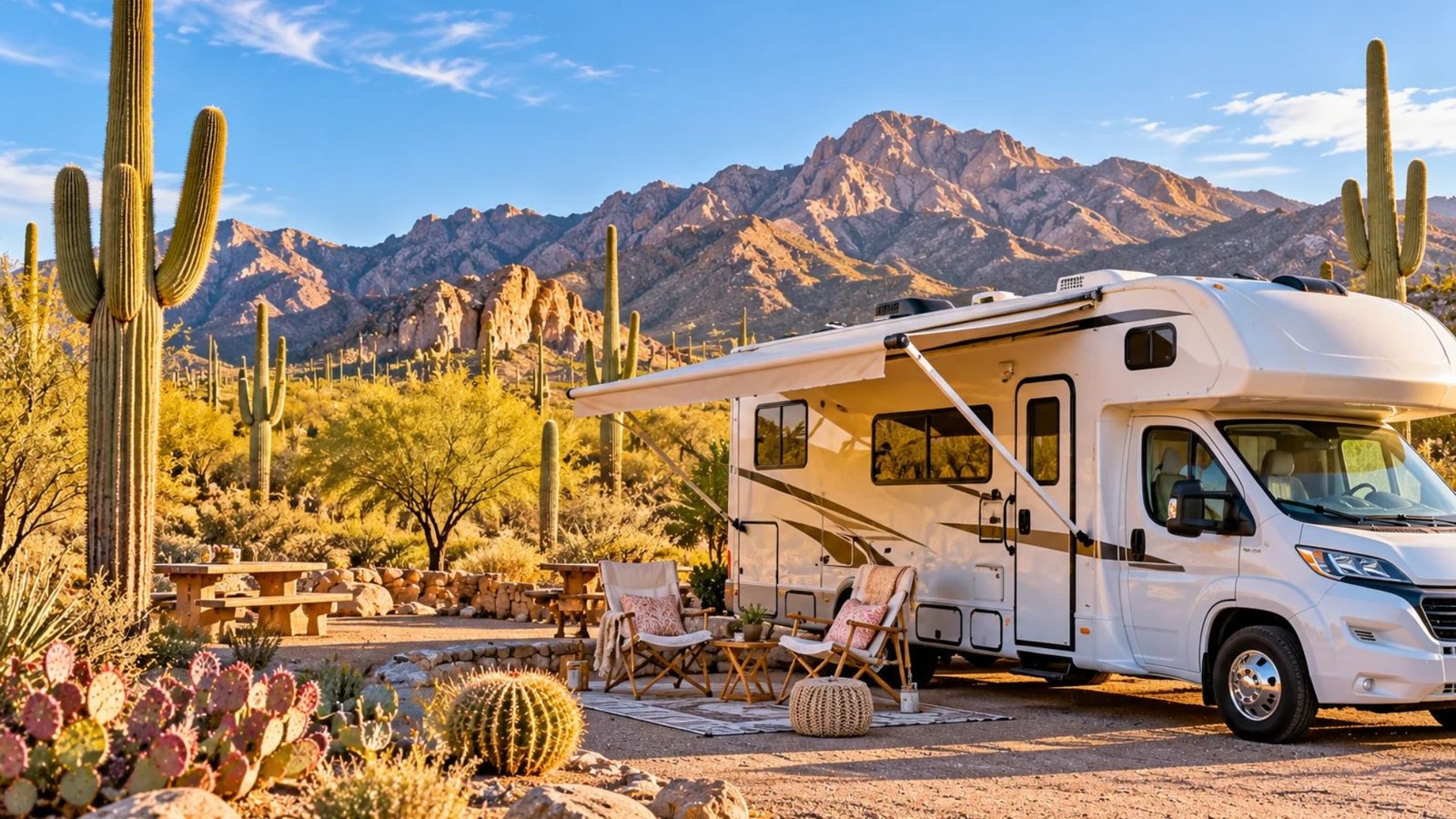
Southern Arizona is known for its towering saguaro cacti, rugged mountain ranges, colorful sunsets, and wide-open landscapes. During winter, daytime temperatures can be pleasant for exploring, although evenings and early mornings may become surprisingly cold.
Best places to explore in southern Arizona
- Tucson: A wonderful base for exploring desert scenery, local restaurants, museums, and hiking areas.
- Saguaro National Park: Famous for its enormous saguaro cacti and beautiful desert landscapes.
- Sabino Canyon Recreation Area: A scenic destination for walking, nature photography, and enjoying the Sonoran Desert.
- Yuma: A popular winter destination for RV travelers who enjoy sunshine, desert views, and a relaxed pace.
What makes Arizona special for winter RVing?
One thing I love about the idea of wintering in Arizona is the variety of experiences you can enjoy in a single trip.
You can spend the morning hiking among desert plants, stop for lunch in Tucson, and return to your campsite in time to watch the sun turn the mountains shades of orange and pink.
Arizona also offers options for different RV travel styles. You can choose a developed RV park with electrical and water hookups, or explore designated public-land camping areas where permitted.
Some public-land locations have seasonal stay limits, permit requirements, or limited facilities, so always check the current rules before settling in.
Where to stay in your RV
Look for RV parks around Tucson, Green Valley, or Yuma, depending on the attractions you want to visit. If you prefer a more adventurous trip, research established campgrounds near the national parks and recreation areas on your itinerary.
Before booking, confirm the site’s maximum RV length, available hookups, restroom facilities, and road access. If you are planning to use solar power or camp without hookups, check water availability and waste-disposal arrangements in advance.
My tip: Pack light clothing for sunny afternoons but bring a warm jacket, comfortable walking shoes, and extra bedding for cold desert nights. Arizona may feel like the perfect winter escape during the day, but the desert cools quickly after sunset.
Read 8 Places You Can Park Your RV at That You Might Not Know About
2. Southern Florida: Tropical Scenery and Outdoor Adventures
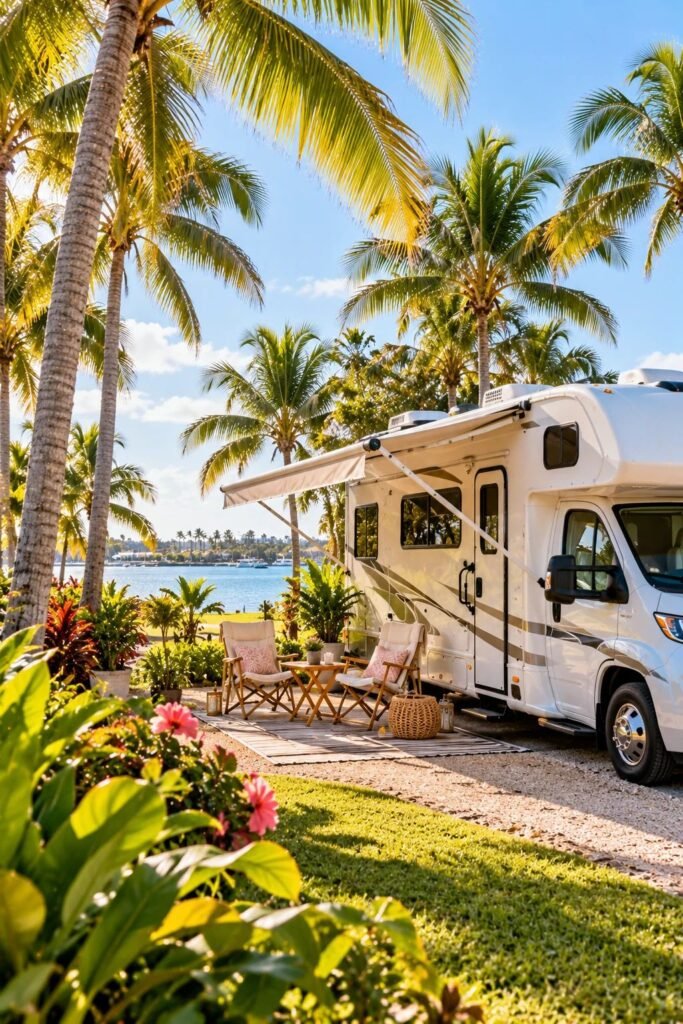
For RV travelers who prefer palm trees, coastal scenery, and a more tropical atmosphere, southern Florida is an excellent winter destination.
Rather than spending the season worrying about snow and icy roads, you can enjoy sunny afternoons, waterfront walks, wildlife watching, and scenic drives.
South Florida generally has some of the warmest winter weather in the continental United States. Temperatures vary from day to day, but the region is a great option if you want to spend more time outdoors during the colder months.
Best places to explore in southern Florida
- Everglades National Park: Discover wetlands, birdlife, and unique subtropical ecosystems.
- Naples: Enjoy beaches, waterfront dining, shopping, and beautiful sunset views.
- Fort Myers: A convenient base for exploring Gulf Coast beaches and nearby nature areas.
- The Florida Keys: A beautiful island chain known for turquoise water, coastal scenery, and relaxed vacation vibes.
What can you do during a winter RV trip?
Winter is a lovely time to explore the Everglades because cooler conditions can make outdoor activities more comfortable than during the hottest months.
Depending on the area you visit, you can take a guided nature tour, enjoy birdwatching, walk designated trails, or learn about the park’s remarkable ecosystem.
If you would rather spend your days near the ocean, consider exploring the beaches around Naples and Fort Myers. You can plan a picnic, stroll along the shore, visit local markets, or simply enjoy a slower travel schedule.
The Florida Keys are another memorable option. The Overseas Highway connects a string of islands, creating opportunities for scenic stops along the way.
However, RV parking and campsite availability can be limited in popular areas, so it is important to plan your overnight stops before driving south.
Where to stay in your RV
Look for established RV parks around Naples, Fort Myers, Homestead, or the Keys. Your best location will depend on whether you want beach access, proximity to the Everglades, or a base for exploring several destinations.
Some Florida campgrounds offer full hookups, swimming pools, laundry facilities, and recreation areas. Others have more basic amenities and a quieter natural setting. Compare prices and site features before booking.
Winter is a popular season for visitors escaping colder states, which means desirable campsites can fill up well in advance. If you are traveling around Christmas, New Year’s, or February, reserve as early as you can.
My tip: Florida is warm, but it can also be humid, rainy, or windy. Bring breathable clothing, insect repellent, sunscreen, and a lightweight rain jacket.
Check local weather alerts and campground policies before traveling, particularly during periods of severe weather.
3. Southern California: Beaches, Desert Landscapes, and Sunshine
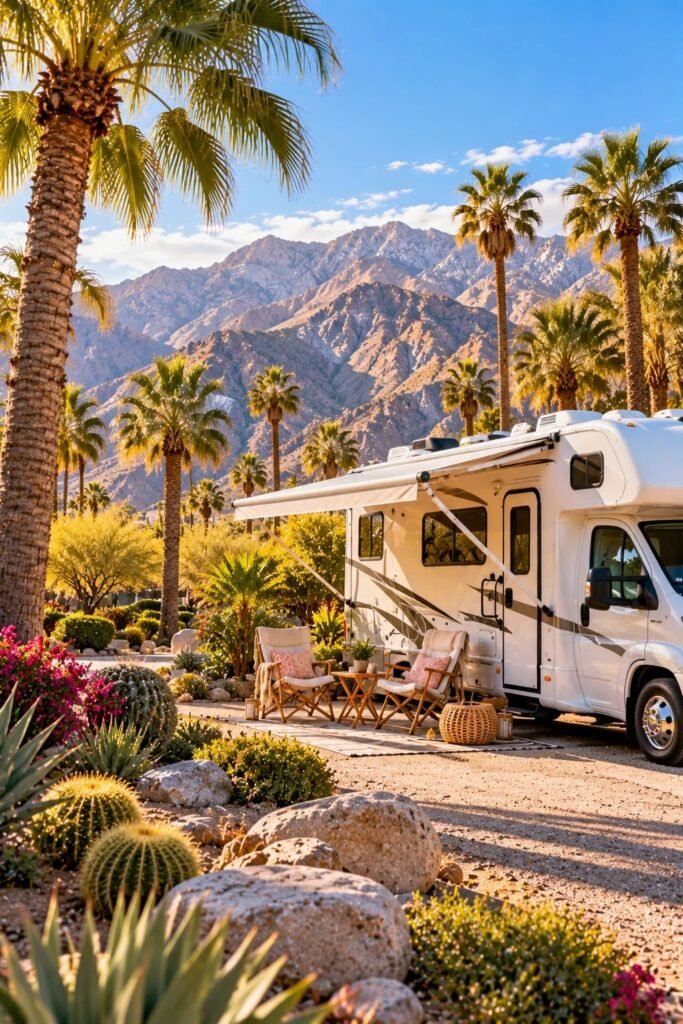
Southern California is another wonderful choice if you want to spend winter exploring beautiful landscapes without traveling too far between completely different environments.
One day, you could be enjoying coastal views; the next, you could be wandering through a desert landscape filled with unusual rock formations.
The region offers a mix of mild coastal weather and sunny inland desert conditions. Winter temperatures differ considerably depending on elevation and proximity to the ocean, so choosing the right area makes a big difference.
Best places to explore in southern California
- Palm Springs: Known for its desert scenery, palm-lined streets, architecture, and mountain views.
- Anza-Borrego Desert State Park: A fantastic option for desert landscapes, hiking, and stargazing.
- San Diego: Perfect for combining coastal scenery, cultural attractions, and city adventures.
- Salton Sea: An interesting destination for birdwatching, photography, and exploring the surrounding desert region.
Why visit southern California in winter?
One of the biggest advantages is the variety. If you enjoy outdoor adventures, Anza-Borrego Desert State Park has expansive desert scenery, trails, and opportunities for wildlife observation.
The cooler season can be more comfortable for walking and exploring than the hot summer months.
Palm Springs is a good choice if you want a combination of nature and convenience. You can enjoy mountain views, visit local attractions, explore shops, and return to a comfortable RV campsite at the end of the day.
San Diego offers a different kind of winter escape. You can spend your mornings walking along the coast, visit museums or historic neighborhoods in the afternoon, and enjoy a beautiful sunset near the Pacific Ocean.
For a longer RV trip, you could combine the desert and the coast, provided you allow enough time for driving and campground changes. This is an excellent way to experience more than one side of Southern California.
Where to stay in your RV
Search for RV parks around Palm Springs, Indio, Borrego Springs, or the San Diego area. Choose a location based on your planned activities rather than trying to stay close to every attraction.
If you prefer a developed campground, check for hookups, dump stations, showers, laundry facilities, and suitable parking for your RV. If you are considering camping on public land, verify which areas allow overnight stays and whether permits or fees apply.
Desert camping can be especially rewarding, but it requires preparation. Some areas have limited services, patchy mobile coverage, and few places to refill water or purchase supplies.
My tip: Bring plenty of drinking water, a hat, sunscreen, and layers for the evening. The sun can feel strong even when the air is cool, and desert temperatures often drop significantly after sunset.
4. South Texas: Relaxed Coastal Towns and Beautiful Beaches
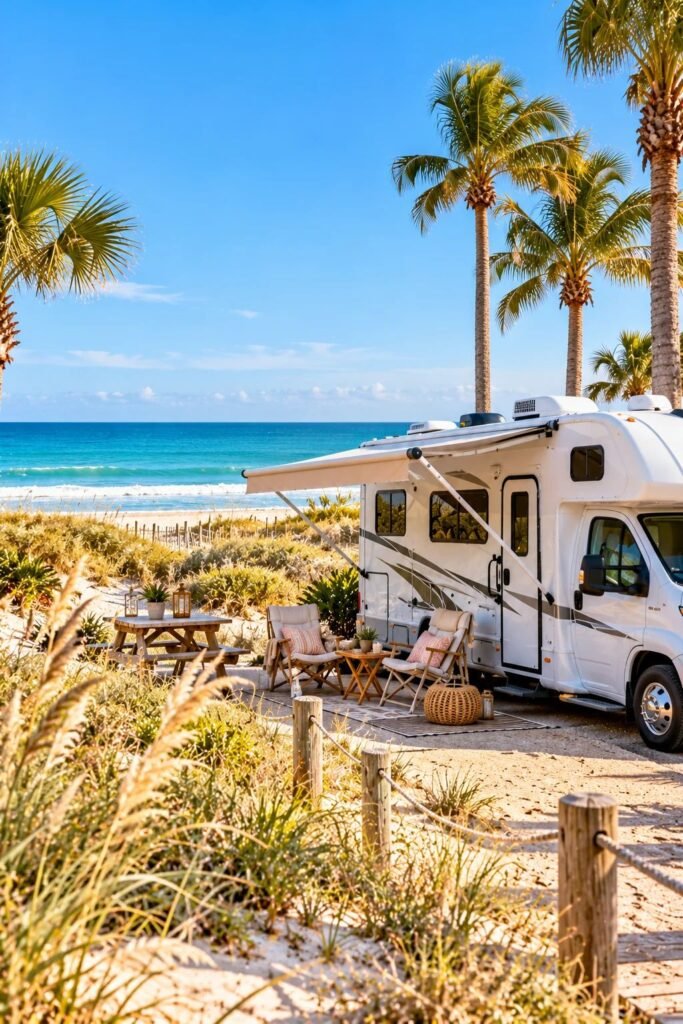
If you want a winter RV getaway that combines beach scenery, wildlife, and a relaxed atmosphere, South Texas is well worth considering.
The Gulf Coast has a different feel from Arizona’s desert landscapes and Florida’s tropical surroundings, making it a lovely choice for travelers who want something a little different.
South Texas can experience mild winter days, particularly along the coast, although cold fronts and strong winds can bring cooler weather.
The region is especially appealing for travelers who enjoy open spaces, birdwatching, fishing, and long walks beside the water.
Best places to explore in South Texas
- South Padre Island: A popular destination for sandy beaches, coastal views, and wildlife watching.
- Padre Island National Seashore: A protected coastal area known for its long stretches of beach, dunes, and wildlife.
- Mustang Island State Park: A great option for coastal scenery, fishing, kayaking, and outdoor recreation.
- Corpus Christi: A convenient base for exploring beaches, waterfront attractions, and nearby parks.
What makes South Texas a great winter RV destination?
One of the nicest things about this part of Texas is that you can enjoy the outdoors without needing a packed itinerary. You might spend one morning walking along the beach, another visiting a wildlife viewing area, and an afternoon exploring a coastal town.
South Padre Island is particularly attractive if you love being near the ocean. You can enjoy sunrise walks, photograph the coastline, explore local restaurants, and spend time watching shorebirds.
The cooler season can also be a good opportunity to enjoy the area’s outdoor attractions without the peak summer heat.
For nature lovers, Padre Island National Seashore offers a chance to experience a protected coastal environment. You can learn about local wildlife, explore designated areas, and appreciate the natural beauty of the Gulf Coast.
If you enjoy fishing or paddling, check local regulations, weather conditions, and seasonal access before planning an activity. Winter winds can make the water less inviting on certain days, so having a flexible itinerary is helpful.
Where to stay in your RV
Consider established RV parks around Corpus Christi, Port Aransas, or South Padre Island. These locations give you access to coastal attractions while allowing you to return to your campsite in the evening.
Before reserving, check whether the park accommodates your RV’s length and whether it offers full hookups, laundry facilities, Wi-Fi, or other amenities you need. Beachfront locations may have different site restrictions and higher seasonal demand.
If you are thinking about driving your RV onto a beach, research the specific area’s access rules and road conditions carefully. Soft sand can be hazardous for large vehicles, and beach driving is not suitable for every RV.
My tip: Bring layers and plan for windy days. Even when the temperature looks comfortable, a strong coastal breeze can make it feel much cooler. I would also keep a few indoor activities on the itinerary so that a change in weather does not spoil the trip.
5. Gulf Islands National Seashore: A Peaceful Winter Coastal Retreat
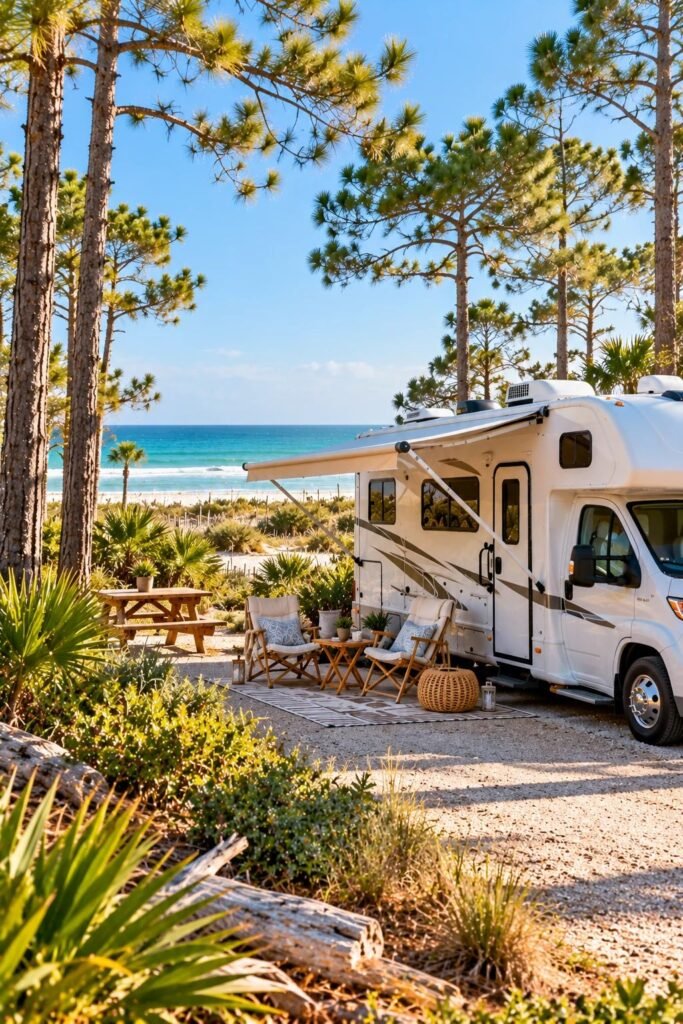
For a winter trip that feels peaceful and close to nature, consider the Gulf Islands National Seashore. Stretching along parts of Florida and Mississippi, this protected coastal area features beautiful beaches, historic sites, wildlife, and scenic surroundings.
It is an appealing choice if you want to slow down, enjoy the sea air, and spend more time outdoors.
Winter weather along this part of the Gulf Coast is often mild compared with much of the country, but temperatures can drop during cold fronts, so warm layers are still important.
Best places to explore around the Gulf Islands
- Fort Pickens: Explore historic military structures and enjoy the surrounding coastal scenery.
- Perdido Key: A lovely area for beach walks, photography, and enjoying the Gulf Coast atmosphere.
- Davis Bayou Area: A natural area with opportunities for wildlife observation and exploring the coastal environment.
- Pensacola: A convenient base for beaches, local restaurants, museums, and historic attractions.
What can you do during your visit?
The Gulf Islands are ideal for travelers who appreciate simple outdoor pleasures. You can walk along the beach, look for birds, photograph the coastline, or enjoy a picnic with ocean views.
History enthusiasts can explore Fort Pickens and learn more about the area’s military past. Nature lovers can spend time around coastal habitats and look for wildlife from designated viewing areas.
If you enjoy photography, consider going out early in the morning or later in the afternoon when the light creates beautiful colors across the sand and water. Even a simple walk can become a memorable part of your trip when the coastline is quiet.
You can also use the region as a base for exploring nearby coastal towns. Spend one day enjoying the national seashore and another visiting local shops, restaurants, or museums.
Where to stay in your RV
Look for RV parks around Pensacola, Gulf Breeze, Navarre, or Ocean Springs, depending on which part of the seashore you want to explore.
Some campgrounds in and around coastal protected areas have limited facilities, while private RV parks may offer more conveniences. Check current operating schedules, campsite availability, RV size restrictions, and whether hookups are available.
Remember that a campground near the beach is not necessarily located directly on the sand. Check the exact location and travel distance before booking so you know what to expect.
My tip: Pack a lightweight windbreaker, comfortable walking shoes, and a reusable water bottle. Coastal weather can change quickly, and having a few extra layers makes it easier to enjoy outdoor activities throughout the day.
Essential Tips for Planning a Warm Winter RV Trip
Choosing a sunny destination is a great start, but a little planning can make your winter RV adventure much more comfortable. These are the practical details I would consider before heading south.
1. Book your campsite early
Winter is a busy season in popular snowbird destinations. Florida, Arizona, and parts of Southern California can attract large numbers of RV travelers, particularly between December and February.
Start researching campgrounds as soon as you know your travel dates. If you plan to stay for several weeks, ask whether the park offers monthly rates and what is included in the price.
Before paying, review cancellation policies, site dimensions, hookup options, and any additional fees. A campground that looks affordable at first may charge extra for electricity, premium sites, or amenities.
2. Prepare your RV for cold nights
Even warm-weather destinations can experience chilly overnight temperatures. This is especially true in desert areas such as southern Arizona and inland Southern California.
Before departure, check your RV’s heating system, batteries, tires, and water system. Make sure you understand how your particular RV handles freezing temperatures, especially if you will be traveling through colder regions on the way south.
If freezing weather is forecast, follow your RV manufacturer’s guidance for protecting water lines, tanks, and plumbing. Keep an eye on local weather alerts rather than assuming your destination will remain warm throughout your stay.
3. Choose the right type of campground
Not every RV traveler needs the same facilities. Think about how you want to spend your winter before choosing where to stay.
- Full-hookup RV parks: Convenient for longer stays and travelers who prefer easy access to water, electricity, and sewer connections.
- State park campgrounds: Often appealing for nature lovers who want trails, scenery, and access to outdoor recreation.
- Public-land camping areas: Can offer a more rustic experience, but amenities, access, and permitted stay lengths vary.
- Resort-style RV parks: May provide swimming pools, recreation rooms, laundry facilities, and organized activities.
Read recent campground reviews, confirm current rules, and check whether your RV can comfortably access the site.
4. Pack for both warm afternoons and cool evenings
One mistake travelers can make is packing only for the daytime forecast. Even in Florida or Texas, winter weather can change, and desert nights can be especially cold.
I would pack:
- Lightweight shirts and comfortable trousers
- A warm jacket or fleece
- Comfortable walking shoes
- A waterproof or wind-resistant outer layer
- Sunscreen, sunglasses, and a hat
- Extra blankets for chilly nights
- Reusable water bottles
- A small first-aid kit and essential medications
Having a few versatile layers means you can enjoy outdoor activities without carrying an unnecessarily large wardrobe.
5. Plan your driving route carefully
Driving an RV requires a little more thought than taking a regular car trip. Before leaving, check road conditions, weather forecasts, fuel stops, and suitable overnight parking options.
Allow extra time for longer journeys, particularly if you are towing a trailer or driving a larger motorhome. Check bridge restrictions, steep grades, road closures, and campground access before committing to a route.
It is also worth avoiding an overly ambitious itinerary. Rather than changing campsites every day, consider staying in one area for several nights and exploring nearby attractions on day trips.
6. Keep your budget realistic
A winter RV trip can be affordable, but the cost depends on where you go and how long you stay.
Your budget should account for campground fees, fuel, groceries, attractions, laundry, propane, and unexpected repairs. Popular coastal destinations may be more expensive than inland locations, especially during peak winter months.
If you want to save money, prepare meals in your RV, visit free natural attractions, and compare weekly or monthly campground rates. Public-land camping may also be an option where it is permitted and suitable for your vehicle.
7. Check the weather before outdoor adventures
Warm-weather travel does not eliminate the need to prepare for changing conditions. Desert winds, heavy rain, coastal storms, and occasional freezing temperatures can affect your plans.
Check forecasts before hiking, kayaking, or driving long distances. Follow campground instructions during severe weather and keep a flexible schedule so you can change plans when conditions are unfavorable.
What Is the Best Place to Go RVing in Winter for Warmth?
The best destination depends on the type of winter experience you want.
| Destination | Best for | What to expect |
|---|---|---|
| Southern Arizona | Desert adventures and sunshine | Sunny days, chilly nights |
| Southern Florida | Tropical scenery and beaches | Mild to warm weather, humidity |
| Southern California | Desert and coastal exploration | Varied temperatures by location |
| South Texas | Beaches and wildlife | Mild days, occasional cold fronts |
| Gulf Islands National Seashore | Coastal nature and history | Mild weather, breezy days |
These are general seasonal expectations, not guarantees. Check the forecast for your exact travel dates before making reservations.
Final Thoughts
Winter can be a wonderful time to explore the country in an RV, especially if you choose a destination that matches your preferred weather, travel style, and budget.
Whether you dream of waking up beneath the desert skies of Arizona, spending sunny afternoons along Florida’s beaches, or exploring the coastal towns of Texas, there are plenty of ways to enjoy an outdoor adventure during the colder months.
My biggest recommendation is to plan ahead, choose a campground that suits your RV, and remember that warm destinations can still experience chilly nights and changing weather. A little preparation makes it easier to relax and enjoy the journey.
If I were planning a winter RV getaway, I would start by deciding whether I wanted desert scenery, tropical beaches, or a peaceful coastal retreat. From there, I would choose a convenient campground and build a flexible itinerary around nearby attractions.
The best winter RV trip isn’t necessarily the one that takes you the farthest south. It’s the one that gives you the freedom to explore, enjoy the sunshine when it arrives, and make wonderful memories along the way.
Pack your favorite travel essentials, prepare your RV, and start planning your next warm-weather escape!