
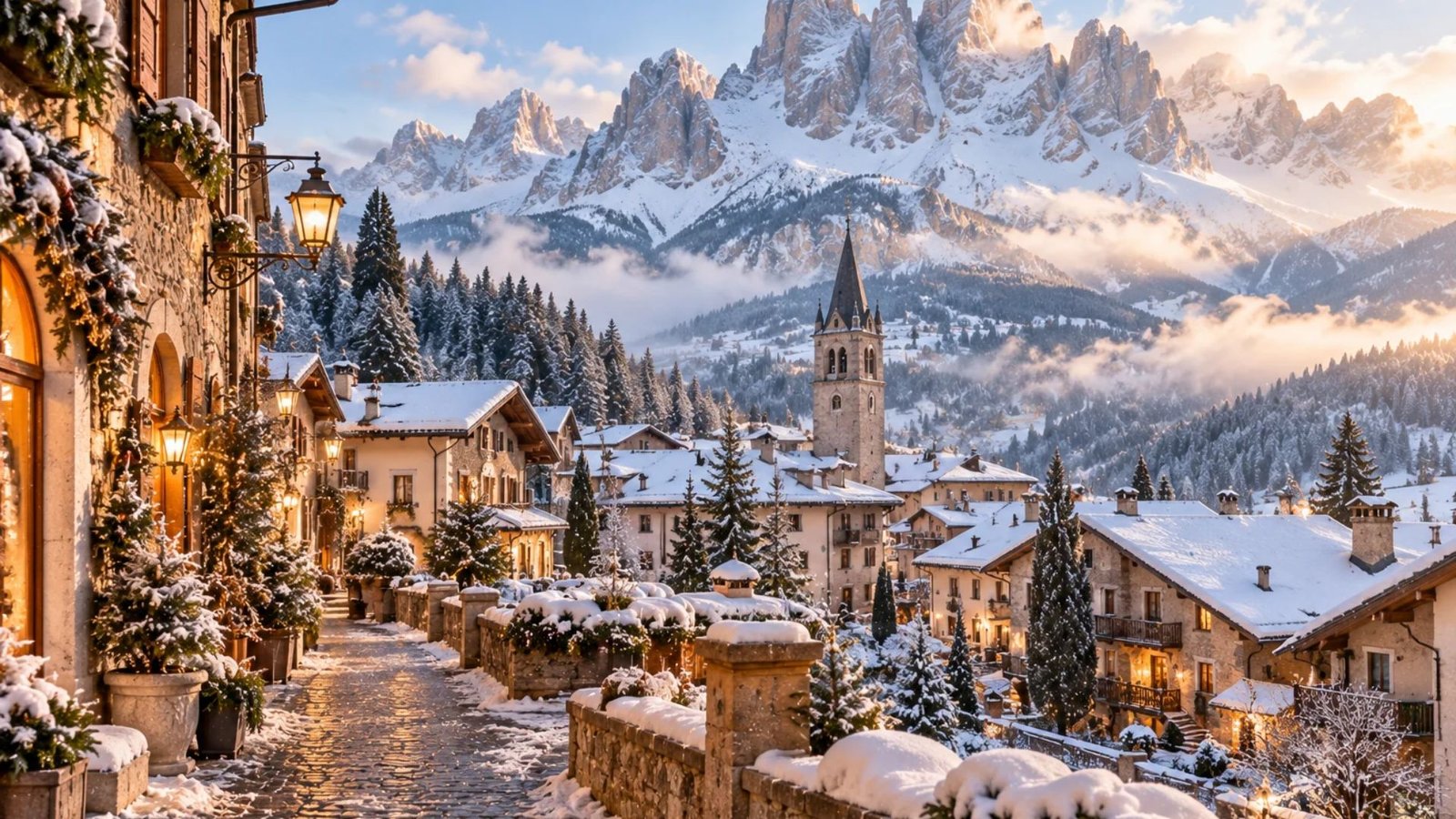

Italy in winter has a special kind of magic.
Picture snow-covered mountains in the Dolomites, charming villages decorated with Christmas lights, quiet canals in Venice, and historic streets where you can enjoy a warm cappuccino between sightseeing stops.
While summer attracts crowds to many Italian destinations, winter offers a different way to experience the country’s beauty, culture, and incredible food.
In this guide, I’m sharing 15 beautiful places to visit in Italy in winter, from snowy alpine escapes to sunny coastal towns, along with helpful tips to plan a memorable trip without missing the experiences that make Italy so wonderful.
1. The Dolomites: A Winter Wonderland in Northern Italy
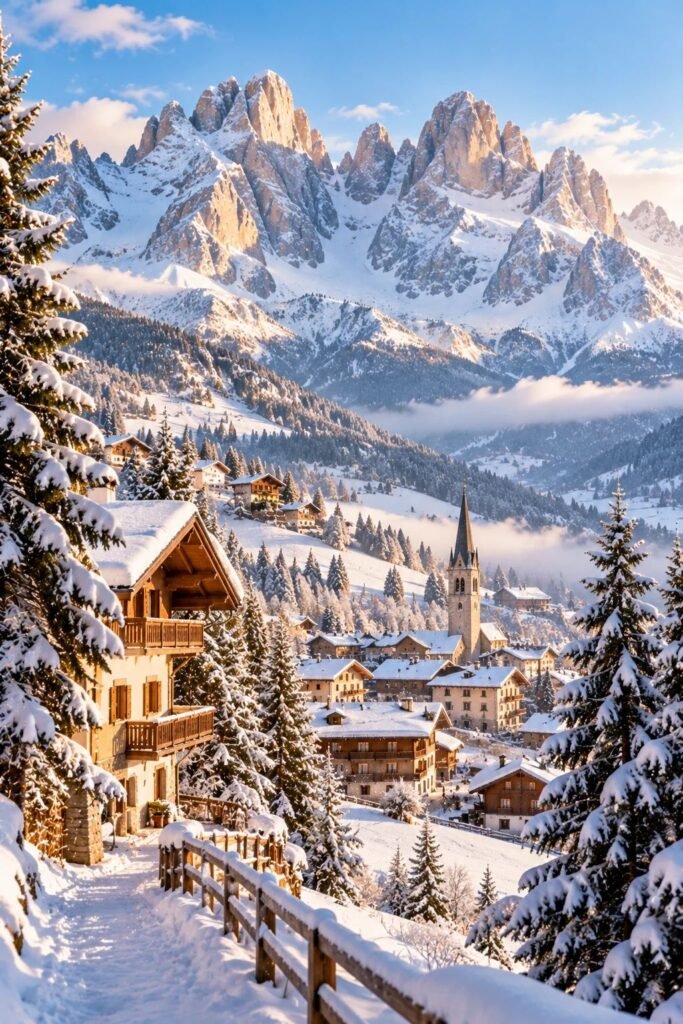
If you dream of visiting Italy in winter and seeing mountains covered in fresh snow, the Dolomites should be at the top of your list.
Located in northeastern Italy, this spectacular mountain region is known for its dramatic limestone peaks, peaceful alpine villages, scenic mountain roads, and cozy wooden chalets.
During winter, the landscape becomes especially beautiful, with snow-covered forests and mountain peaks creating a postcard-worthy setting.
One of the best things about the Dolomites is that you do not have to spend every day skiing to enjoy your visit.
You can take a winter walk through a traditional village, enjoy a warm meal in a mountain restaurant, photograph the snowy scenery, or simply relax in accommodation overlooking the mountains.
Popular bases include Val Gardena, Alta Badia, and Cortina d’Ampezzo. The region also offers winter walking trails, toboggan runs, and opportunities to enjoy the mountains at a slower pace.
Things to do in the Dolomites in winter:
- Explore the charming alpine villages of Ortisei and Selva di Val Gardena.
- Enjoy the mountain scenery around Seceda when access and weather conditions allow.
- Take a scenic cable car ride if the service is operating.
- Try traditional South Tyrolean dishes in a cozy mountain restaurant.
- Photograph the dramatic peaks during sunrise or sunset.
Travel tip: Stay for at least three nights if possible. Winter weather can affect mountain roads, cable cars, and outdoor activities, so give yourself enough time to enjoy the area without rushing.
Read How to Pack for Italy + 10 Outfits You’ll Actually Wear
2. Venice: Romantic Canals and Historic Streets
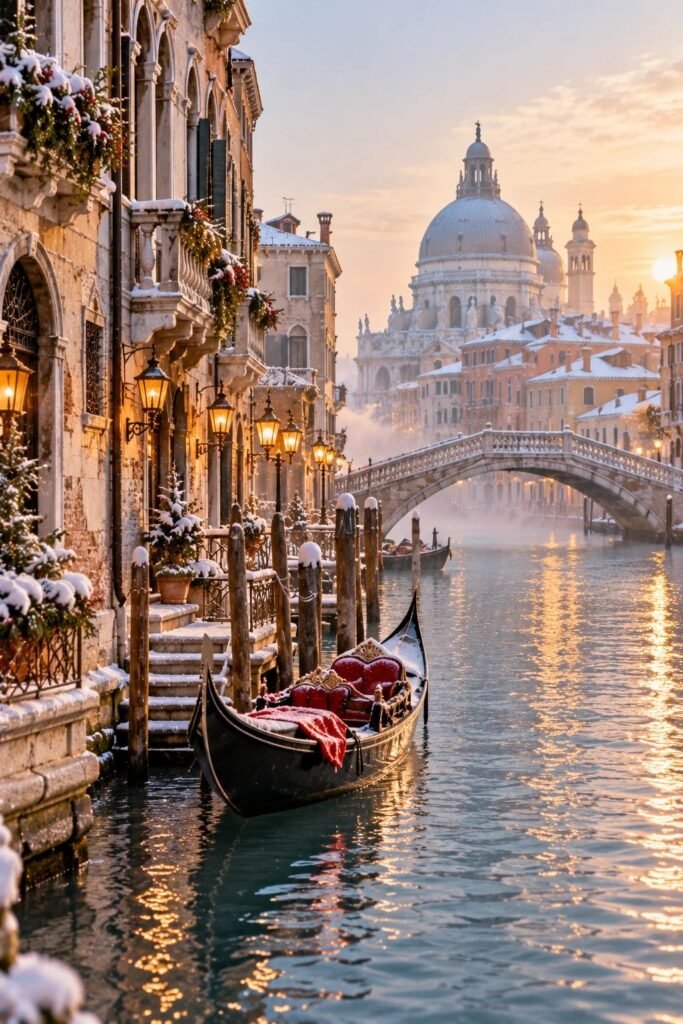
Venice is one of the most beautiful places to visit in Italy in winter, especially if you love historic architecture, romantic scenery, and charming streets.
Built around a network of canals, the city looks enchanting throughout the colder months. Winter brings a different atmosphere to its famous waterways, with soft morning mist, historic palaces, and reflections shimmering across the water.
Start your visit at St. Mark’s Square, where you can admire St. Mark’s Basilica and the impressive Doge’s Palace. From there, wander through the smaller streets and cross the bridges that connect Venice’s different neighborhoods.
Some of the loveliest moments happen when you leave the busiest tourist routes and discover a quiet canal, a tiny bakery, or a traditional restaurant tucked away from the crowds.
A gondola ride can be memorable, but it is worth checking the weather and agreeing on the price before boarding. You can also take a vaporetto, Venice’s public water bus, to see the Grand Canal from the water without booking a private boat.
Things to do in Venice in winter:
- Visit St. Mark’s Square and admire its historic buildings.
- Explore the Rialto Bridge and the surrounding market area.
- Take a vaporetto ride along the Grand Canal.
- Discover the colorful island of Burano if transport conditions permit.
- Warm up with Italian hot chocolate or a traditional Venetian meal.
Travel tip: Venice can experience acqua alta, or unusually high water levels, during certain weather conditions.
Check local forecasts and follow official pedestrian-route guidance. Pack waterproof shoes and a warm coat, particularly if you plan to explore early in the morning.
Read Venice at Night: A Magical Guide to Exploring Venice After Dark
3. Rome: Ancient History Without the Summer Heat
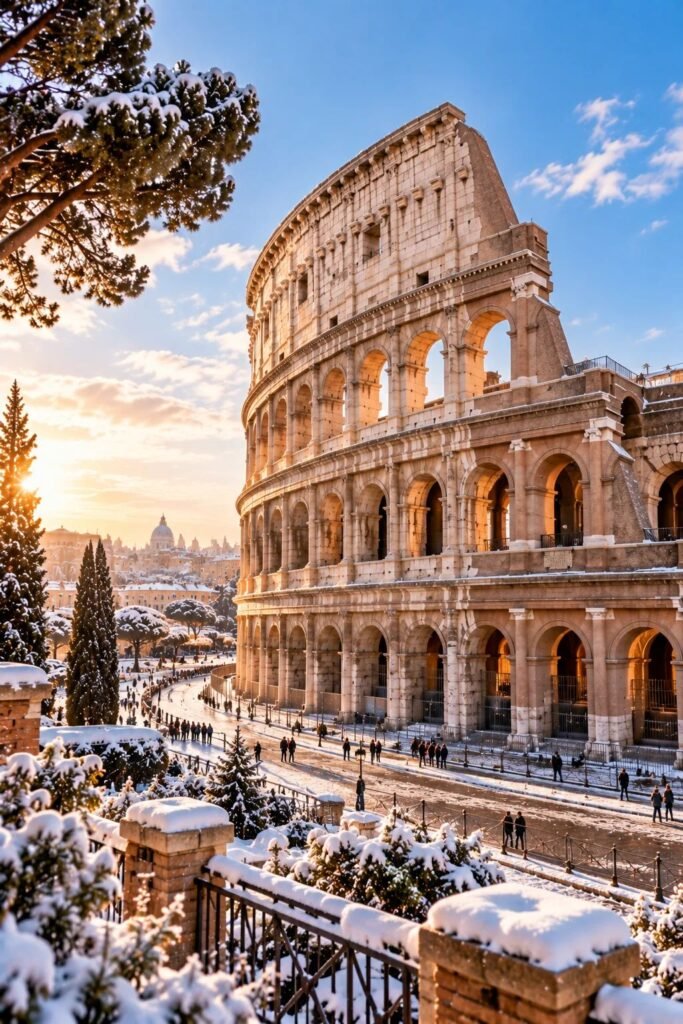
Rome is an excellent choice for travelers who want to combine winter sightseeing with delicious food, fascinating history, and beautiful architecture.
While the city can be hot and crowded during summer, winter generally offers cooler conditions for exploring its ancient streets and archaeological sites.
Begin with the Colosseum, one of Rome’s most recognizable landmarks. Continue to the Roman Forum, where the ruins reveal glimpses of the city’s extraordinary past.
The Pantheon, Trevi Fountain, and Piazza Navona are also worth adding to your itinerary. Each offers a different perspective on Rome’s architecture and cultural heritage.
Winter is also a wonderful time to enjoy Rome’s food scene. Stop at a local café for espresso, try a bowl of freshly prepared pasta, or settle into a restaurant for a leisurely lunch.
During December, the city often takes on a festive atmosphere, with seasonal decorations and celebrations around important squares and religious sites.
Things to do in Rome in winter:
- Tour the Colosseum and Roman Forum.
- Visit the Pantheon and explore the surrounding historic streets.
- Toss a coin into the Trevi Fountain.
- Explore the Vatican Museums and St. Peter’s Basilica, checking booking requirements in advance.
- Enjoy Roman specialties such as cacio e pepe and supplì.
Travel tip: Reserve timed-entry tickets for major attractions, especially around Christmas and New Year’s. Rome is still a busy city in winter, and popular sites can sell out. Carry layers because sunny afternoons may feel comfortable while evenings can be chilly.
4. Florence: Renaissance Beauty and Cozy Cafés
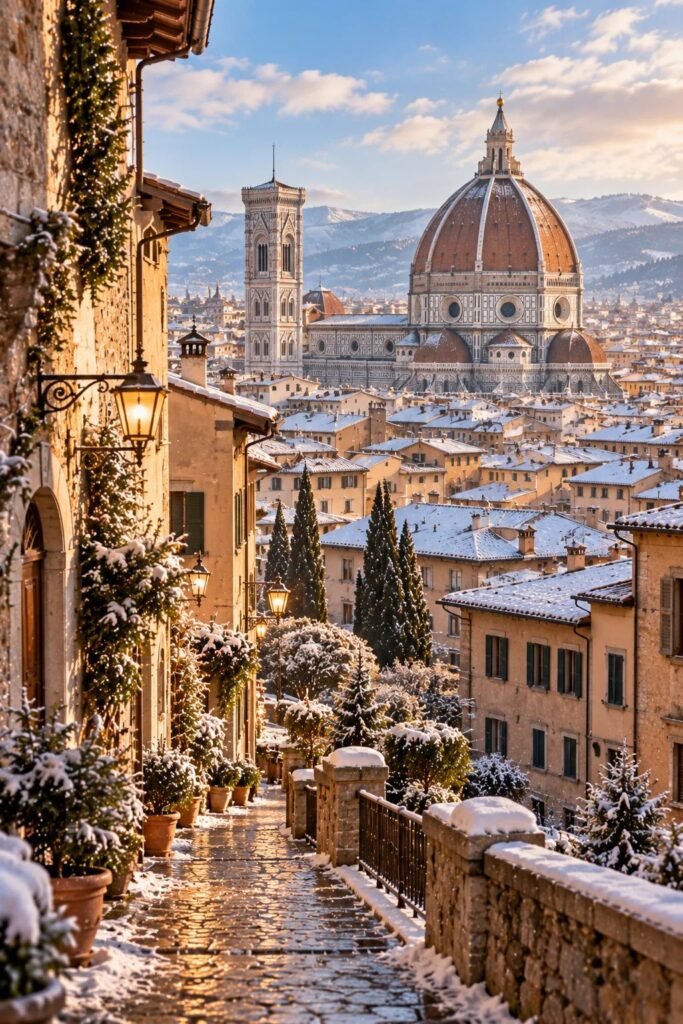
Florence is a wonderful winter destination for anyone who enjoys art, architecture, history, and Italian cuisine. The capital of Tuscany is famous for its Renaissance heritage, elegant squares, and impressive museums.
During winter, you can spend a morning exploring its cultural attractions before taking a relaxed afternoon stroll through the city’s historic center.
The Cathedral of Santa Maria del Fiore, commonly called the Duomo, is one of Florence’s most recognizable sights. Its enormous dome dominates the skyline, while the surrounding streets are filled with historic buildings and inviting cafés.
Walk across Ponte Vecchio to enjoy views of the Arno River, then continue to Piazza della Signoria to admire the outdoor sculptures and surrounding architecture.
Art lovers should make time for the Uffizi Gallery, which houses an outstanding collection of Renaissance works. The Accademia Gallery is another popular stop, especially for visitors hoping to see Michelangelo’s David.
Check official opening schedules and reserve tickets where possible.
Things to do in Florence in winter:
- Admire the Florence Cathedral and its beautiful exterior.
- Visit the Uffizi Gallery or Accademia Gallery.
- Walk across Ponte Vecchio and photograph the Arno River.
- Explore the artisan shops and cafés around the historic center.
- Sample Tuscan dishes such as ribollita, a traditional vegetable and bread soup.
Travel tip: Allow at least two full days for Florence. If you plan to climb the Duomo or visit several museums, book ahead and check which entrances require separate tickets.
5. Cortina d’Ampezzo: A Charming Alpine Escape
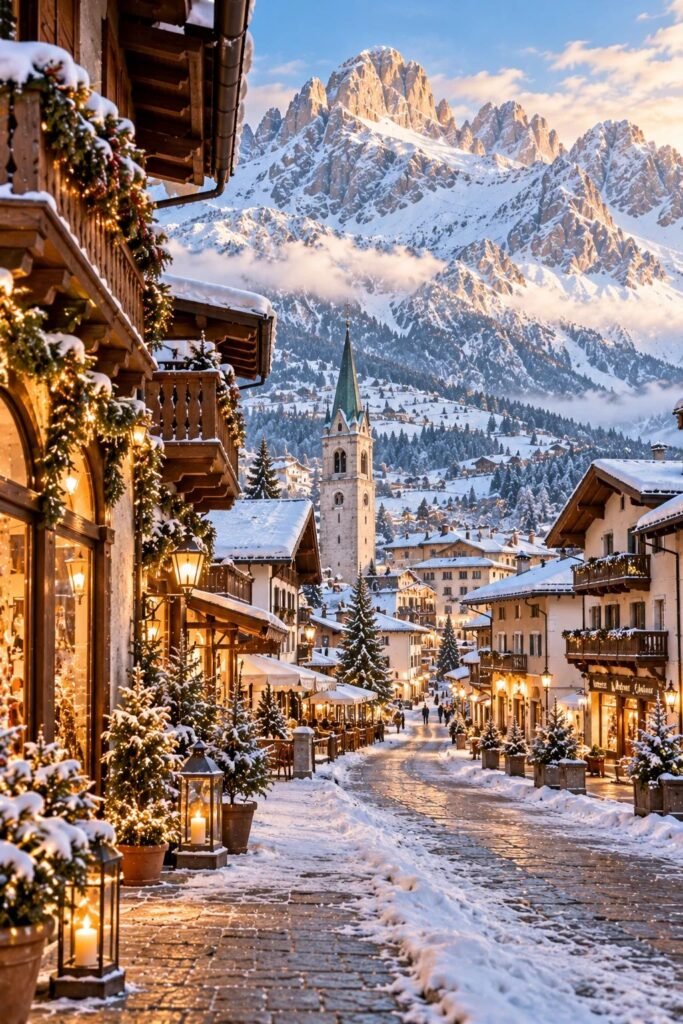
Cortina d’Ampezzo is one of Italy’s best-known mountain resorts, surrounded by the spectacular peaks of the Dolomites.
It is particularly appealing in winter because it combines dramatic scenery with an attractive town center, mountain restaurants, and opportunities for outdoor adventures.
Even if you are not planning a skiing holiday, Cortina offers plenty to enjoy. Spend time wandering through the town, browsing local shops, and enjoying a meal with views of the surrounding mountains.
On clear days, the landscape is especially striking, with snowy peaks rising above the rooftops.
For outdoor enthusiasts, the wider area has winter walking routes and scenic viewpoints. However, not every summer hiking trail is suitable or accessible in winter. Check current trail conditions and choose routes appropriate for the weather and your experience.
Things to do in Cortina d’Ampezzo in winter:
- Explore the town center and its alpine-style architecture.
- Enjoy mountain views from accessible scenic areas.
- Try local specialties in a traditional restaurant.
- Visit nearby winter resorts and outdoor recreation areas.
- Spend an evening enjoying the peaceful atmosphere of a mountain hotel.
Travel tip: Cortina can be expensive during peak winter periods. Book accommodation early, especially for Christmas, New Year’s, and major winter sporting events.
If you are traveling on a budget, compare accommodation in nearby towns and account for transport costs.
6. Bolzano: Christmas Markets and Alpine Culture
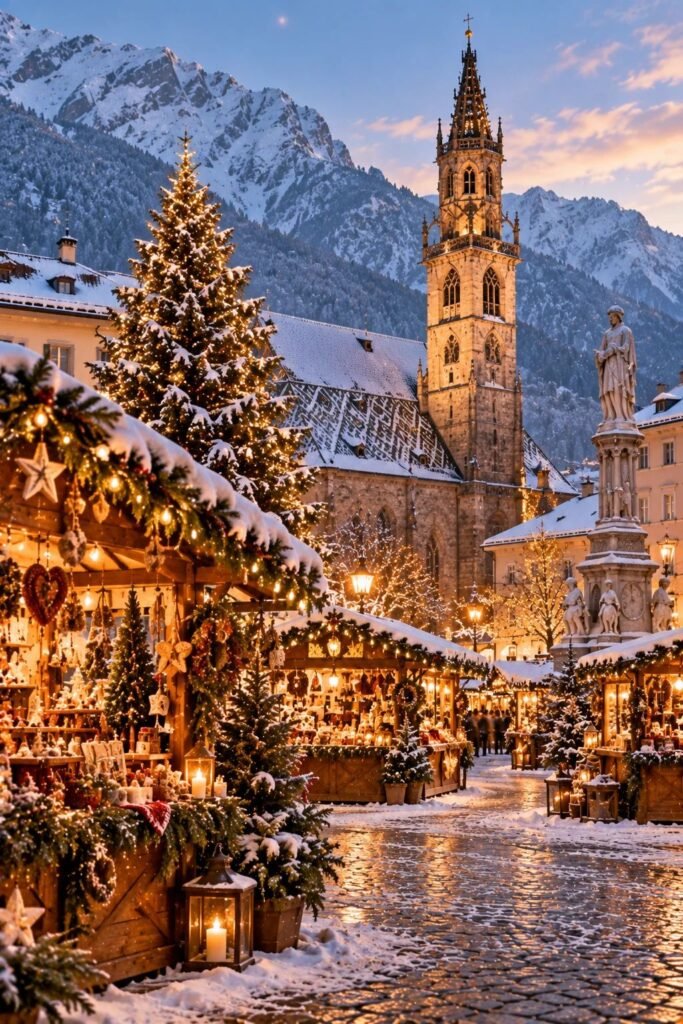
Bolzano, in South Tyrol, is one of the loveliest Italian cities to visit during the Christmas season.
Its location near the Dolomites gives it an alpine atmosphere, while its architecture, food, and traditions reflect a blend of Italian and Central European influences.
The city becomes particularly inviting during the Christmas market season. Piazza Walther, the main square, is traditionally home to festive stalls selling decorations, handcrafted gifts, and seasonal treats.
The exact dates and arrangements vary each year, so check the official event information before planning your visit.
Outside the festive season, Bolzano is still worth visiting for its historic center, museums, cafés, and mountain scenery. Walk through the arcaded streets, browse local shops, and try regional specialties such as dumplings and apple strudel.
Things to do in Bolzano in winter:
- Visit the Christmas market when it is operating.
- Explore Piazza Walther and the historic town center.
- Sample South Tyrolean food and seasonal pastries.
- Visit the South Tyrol Museum of Archaeology.
- Take a suitable cable car or local excursion for panoramic views when services are running.
Travel tip: December weekends can be busy, particularly around the Christmas market. Consider staying overnight during the week if your schedule allows, and bring warm clothing for spending time outdoors after sunset.
7. Verona: A Fairytale City for Winter Strolls
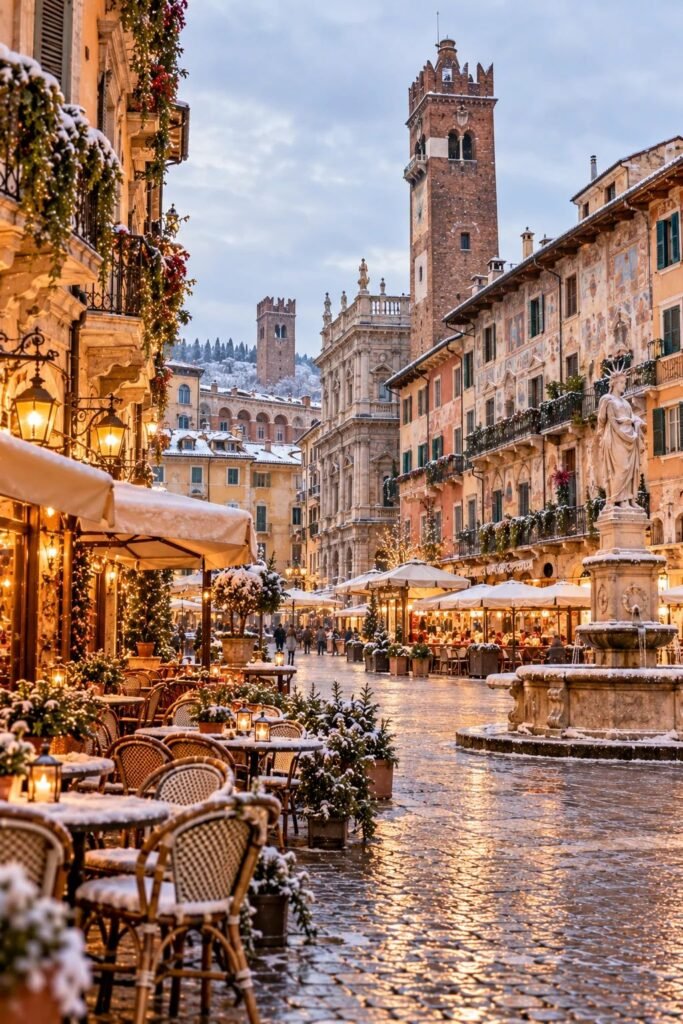
Verona is a beautiful northern Italian city that offers historic architecture, atmospheric squares, and plenty of opportunities for relaxed sightseeing. It is often associated with Shakespeare’s Romeo and Juliet, but the city’s appeal extends well beyond its literary connections.
Start at Piazza delle Erbe, a lively historic square surrounded by elegant buildings and cafés. Continue to the Verona Arena, a remarkably preserved Roman amphitheater that still hosts performances and events.
You can also walk along the Adige River, where bridges and historic buildings create lovely views.
Verona is particularly suitable for travelers who prefer exploring on foot rather than rushing between distant attractions. Its historic center is compact enough to enjoy over a weekend, although you should allow extra time if you want to visit museums or attend a performance.
Things to do in Verona in winter:
- Explore Piazza delle Erbe and its surrounding streets.
- Visit the Verona Arena, checking seasonal opening times.
- Walk across Ponte Pietra for river and city views.
- Discover Verona’s historic churches and small museums.
- Enjoy a leisurely Italian lunch in the old town.
Travel tip: Verona works well as a two-day city break or as a stop between Venice and Milan. If you are visiting around Valentine’s Day, expect greater interest in romantic-themed experiences and book accommodation ahead.
8. Milan: Fashion, Culture, and Festive Streets
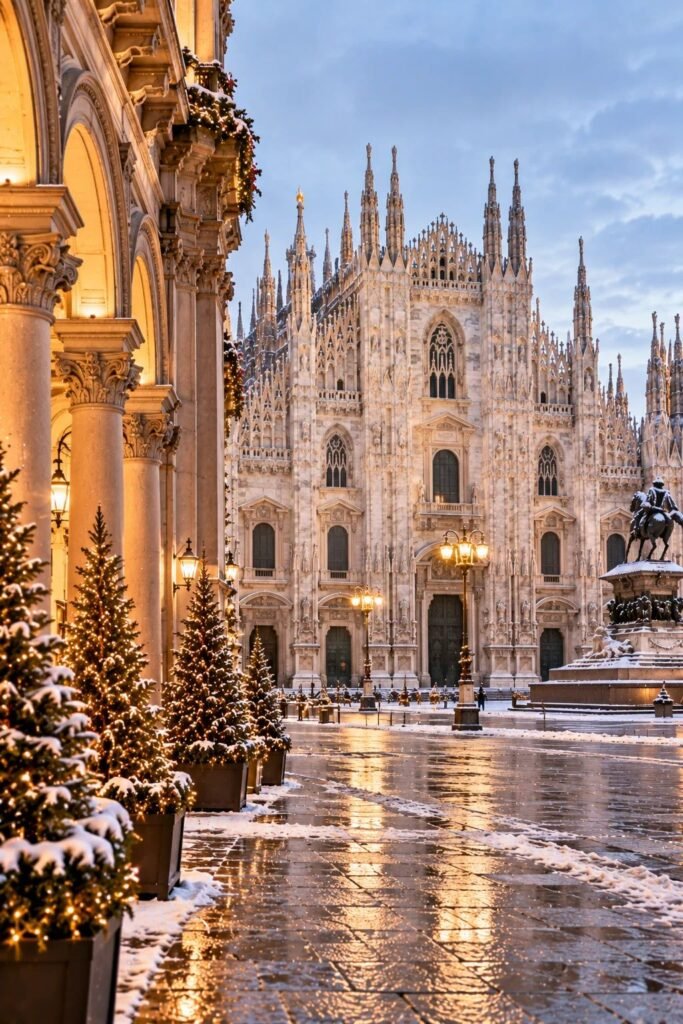
Milan is an excellent choice if your idea of a winter holiday includes elegant shopping streets, world-class art, impressive architecture, and lively restaurants. Although it is often associated with fashion, the city offers far more than designer boutiques.
The Duomo di Milano is the natural starting point.
This magnificent Gothic cathedral dominates the central square and is especially striking when viewed up close. Nearby, the Galleria Vittorio Emanuele II offers beautiful architecture, historic cafés, and stylish shops beneath its impressive glass roof.
Art lovers should consider booking a visit to see Leonardo da Vinci’s The Last Supper.
Access is controlled, and tickets are often booked well in advance. In the evening, explore the Brera district or the Navigli area for restaurants and a different side of Milan’s urban atmosphere.
Things to do in Milan in winter:
- Visit the Duomo and check access to its rooftop terraces.
- Walk through the Galleria Vittorio Emanuele II.
- Reserve tickets for The Last Supper well ahead.
- Explore the Brera neighborhood.
- Browse the Christmas decorations and seasonal markets when available.
Travel tip: Milan is a useful transport hub for northern Italy. You can spend two days exploring the city before taking a train to Lake Como, Verona, or the Dolomites, depending on your itinerary.
9. Lake Como: Peaceful Lakeside Scenery
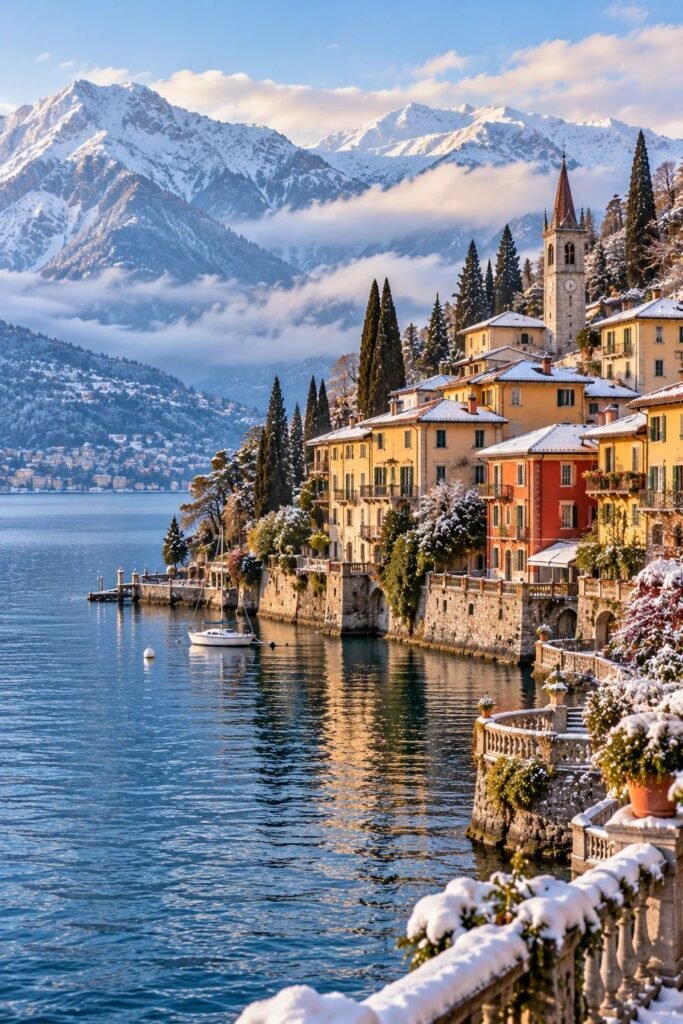
Lake Como is famous for its elegant villas, waterfront villages, and mountain scenery.
In winter, the atmosphere can be quieter than during the summer holiday season, making it a lovely destination for travelers who want a peaceful break surrounded by beautiful landscapes.
Bellagio and Varenna are among the best-known places to explore around the lake. Both offer picturesque streets, waterfront walks, and restaurants where you can pause for a meal while enjoying the views.
The surrounding mountains make a dramatic backdrop, and on colder days, the lake can take on a misty, almost cinematic appearance.
However, winter visits require a little more planning than summer trips. Some gardens, hotels, restaurants, and seasonal boat services operate on reduced schedules or close temporarily.
Check ferry timetables before choosing a village as your base.
Things to do at Lake Como in winter:
- Explore the historic streets of Bellagio.
- Visit Varenna for waterfront views and colorful buildings.
- Enjoy a lakeside lunch when restaurants are open.
- Photograph the mountains reflected in the water.
- Visit villas or gardens that are open during your travel dates.
Travel tip: Consider staying in Como or another well-connected town if you want more transport options in winter. Check the current boat schedule before planning a day trip between villages, and keep a backup plan in case of bad weather.
10. Turin: Historic Cafés and Winter Charm
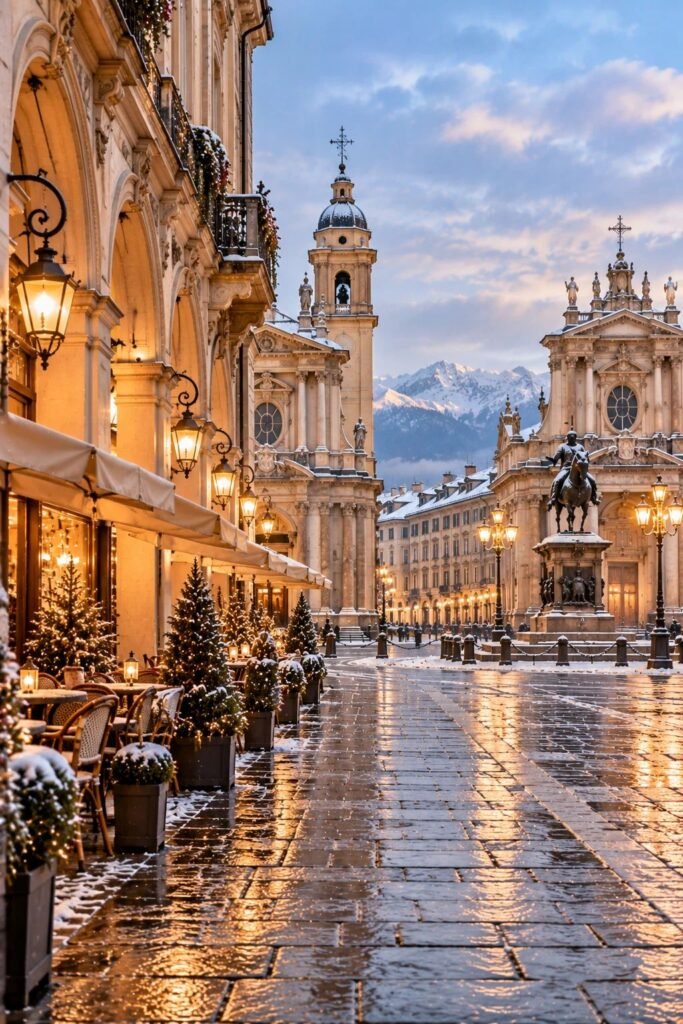
Turin is an underrated winter destination for travelers who appreciate elegant architecture, museums, and comforting food.
Located in northwestern Italy, the city is known for its grand squares, historic arcades, and long tradition of chocolate-making.
Begin your visit in Piazza San Carlo, one of Turin’s most attractive public squares. From there, explore the arcaded streets, which are particularly useful when the weather is cold or rainy.
The Egyptian Museum is another highlight, while the Mole Antonelliana is an unmistakable landmark on the city skyline.
One of Turin’s most enjoyable winter experiences is visiting a historic café. Try a bicerin, a traditional local drink made with layers of coffee, chocolate, and cream. It is a wonderful way to take a break between sightseeing stops.
Things to do in Turin in winter:
- Explore Piazza San Carlo and the historic city center.
- Visit the Egyptian Museum.
- Admire the Mole Antonelliana and explore the National Museum of Cinema if interested.
- Spend time in a traditional café.
- Browse seasonal markets or enjoy winter events when available.
Travel tip: Turin is a good option if you want a city break that feels different from Rome, Florence, and Venice. Plan two or three days if you want to combine museums, architecture, and local food without rushing.
11. Naples: Southern Italian Culture and Comfort Food
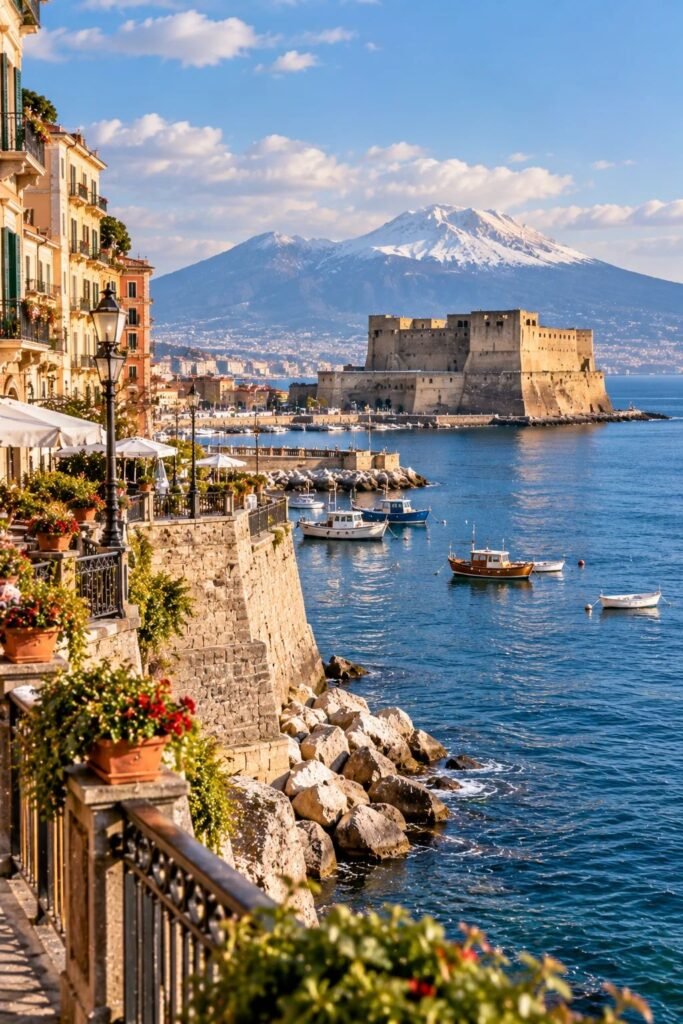
Naples is a lively southern Italian city with a fascinating historic center, a celebrated food culture, and views across the Bay of Naples. Winter can be a rewarding time to explore its streets because you can enjoy the city’s museums, churches, and food scene without the intense heat of summer.
Spend time wandering through the historic center, where narrow streets lead past churches, bakeries, and small shops. Naples is famous for pizza, and enjoying a freshly made Neapolitan pizza is a must for many visitors.
You can also walk along the waterfront near Castel dell’Ovo and enjoy views across the bay when the weather is clear.
Naples makes a convenient base for exploring archaeological sites such as Pompeii, although winter daylight hours and weather should be considered. If you plan to visit Pompeii or Mount Vesuvius, check the official site conditions and transport arrangements before setting out.
Things to do in Naples in winter:
- Explore the historic center and its traditional streets.
- Enjoy authentic Neapolitan pizza.
- Visit the Naples National Archaeological Museum.
- Walk along the waterfront and enjoy views of the bay.
- Plan a day trip to Pompeii if weather and transport conditions allow.
Travel tip: Naples is energetic and busy, so stay aware of your surroundings and keep valuables secure in crowded areas. Allow time for traffic and use reliable transport when traveling to attractions outside the city.
12. Matera: Ancient Cave Dwellings and Stone Streets
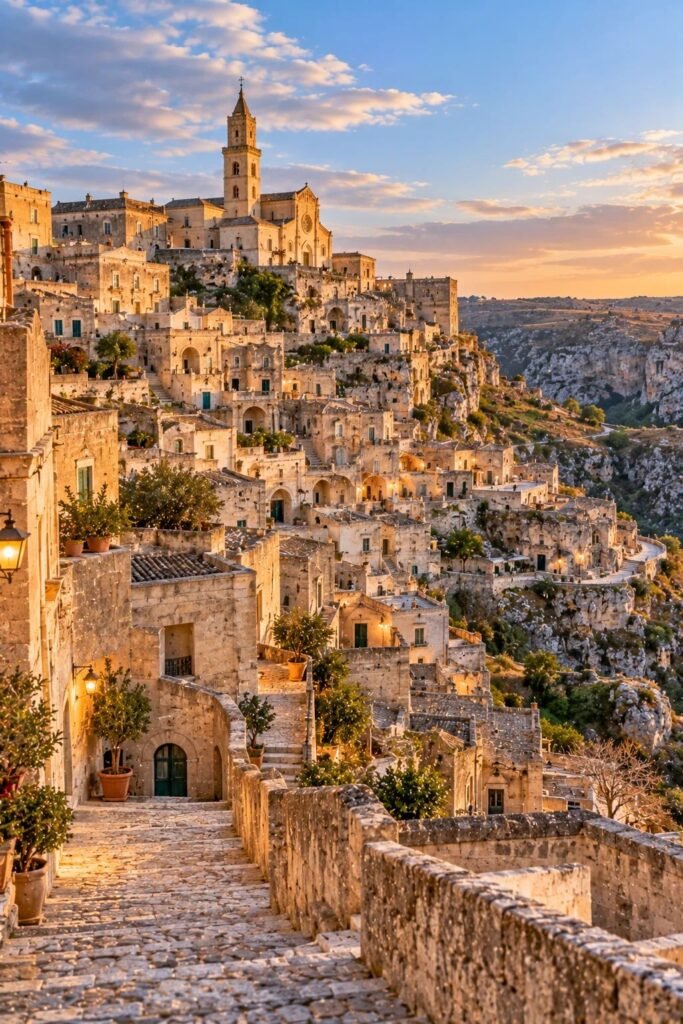
Matera, in the southern region of Basilicata, is one of Italy’s most distinctive destinations. Its historic Sassi districts are famous for dwellings carved into limestone, ancient cave churches, and layers of architecture that seem to rise naturally from the rocky landscape.
Winter is a particularly appealing time to explore Matera because cooler weather can make walking around its steep streets more comfortable than during the hottest summer days.
The city is full of viewpoints, stone stairways, and hidden corners that reward travelers who take their time.
As you wander through the Sassi, look for traditional cave dwellings, historic churches, and museums that explain the city’s long history. Some cave houses have been converted into accommodation, offering visitors the chance to experience the distinctive architecture firsthand.
Things to do in Matera in winter:
- Explore the Sassi di Matera.
- Visit selected rock churches and historical sites.
- Photograph the ancient stone buildings from panoramic viewpoints.
- Try local Basilicata dishes in a traditional restaurant.
- Look for cultural events or seasonal displays during December.
Travel tip: Matera’s streets can be steep, uneven, and slippery in wet weather. Wear comfortable shoes with good grip and choose accommodation carefully if stairs or hills would make getting around difficult.
13. Bologna: Food, Porticoes, and Historic Streets
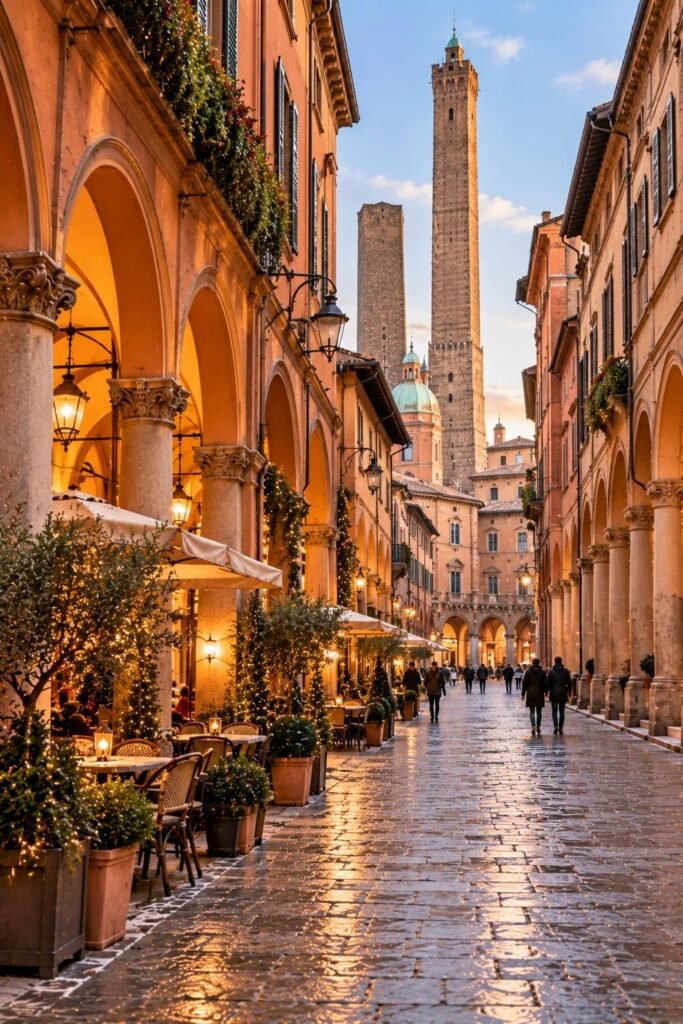
Bologna is a fantastic winter destination for travelers who love food, historic architecture, and cities that feel lived in rather than designed solely for visitors.
Known for its rich culinary traditions and medieval character, Bologna is especially inviting when you want to spend a day wandering through old streets and stopping for long, satisfying meals.
One of Bologna’s most distinctive features is its extensive network of porticoes, covered walkways that make it easier to explore when the weather is rainy or chilly.
Piazza Maggiore is the heart of the historic center, surrounded by impressive buildings and the Basilica of San Petronio.
Food is a major reason to visit. Bologna is associated with fresh pasta, including tagliatelle al ragù and tortellini served in broth. Local markets and traditional restaurants provide plenty of opportunities to sample regional specialties.
Things to do in Bologna in winter:
- Explore Piazza Maggiore and the surrounding historic streets.
- Walk beneath the city’s famous porticoes.
- Sample traditional Bolognese dishes.
- Visit the Archiginnasio and its historic interiors.
- Browse food markets and local shops.
Travel tip: Bologna is a convenient base for exploring other cities in Emilia-Romagna by train. If you have extra time, consider a day trip to Modena or Parma, checking train schedules and attraction opening times.
14. Palermo: A Milder Winter Escape in Sicily
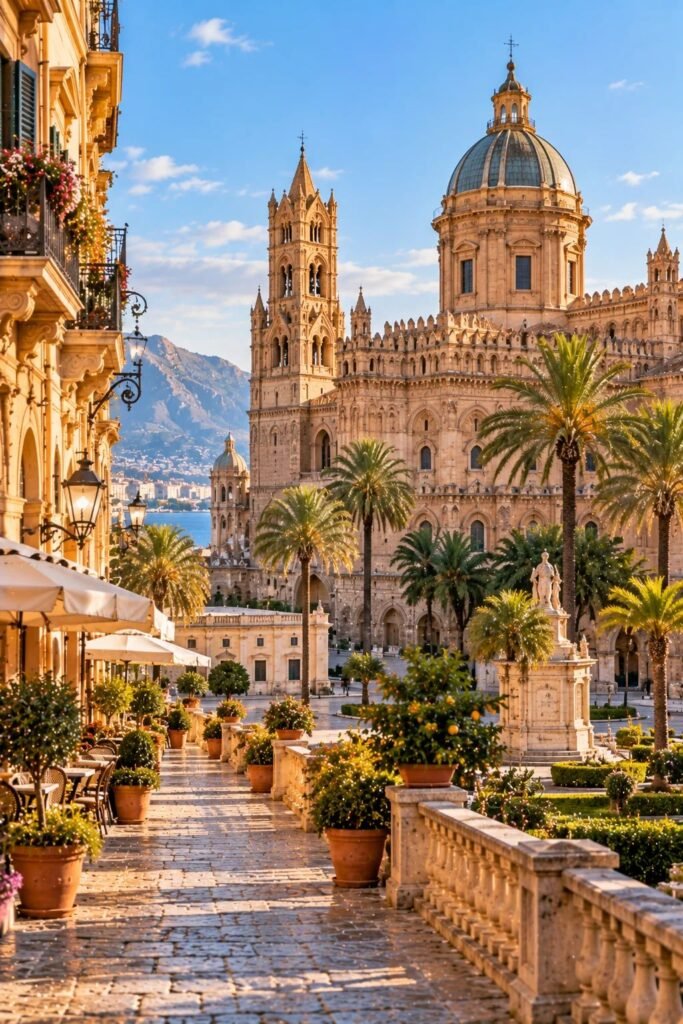
If you prefer milder temperatures over snowy mountains, Palermo is a wonderful place to consider for a winter trip to Italy.
Located in Sicily, this lively city combines Mediterranean scenery with Arab-Norman architecture, bustling markets, historic churches, and an impressive food culture.
Winter weather in Palermo is generally milder than in northern Italy, although rain, wind, and cooler days are still possible. This makes it a good destination for sightseeing, especially if you prefer exploring cities without the heat of midsummer.
Start at Palermo Cathedral, then wander through the historic center to discover elegant squares and centuries-old buildings.
The city’s traditional markets, including Ballarò and Capo, are excellent places to experience everyday Sicilian life and sample local food. Try arancine, panelle, or a traditional pastry from a local bakery.
Things to do in Palermo in winter:
- Visit Palermo Cathedral and admire its varied architectural styles.
- Explore the historic center and Quattro Canti.
- Browse traditional food markets.
- Sample Sicilian street food and pastries.
- Take a coastal walk if the weather is pleasant.
Travel tip: Winter is a good season for cultural sightseeing, but beach weather is not guaranteed. If you plan to visit nearby coastal areas, keep your itinerary flexible and check transport schedules, particularly on public holidays.
15. Aosta: Snowy Mountains and Medieval Castles
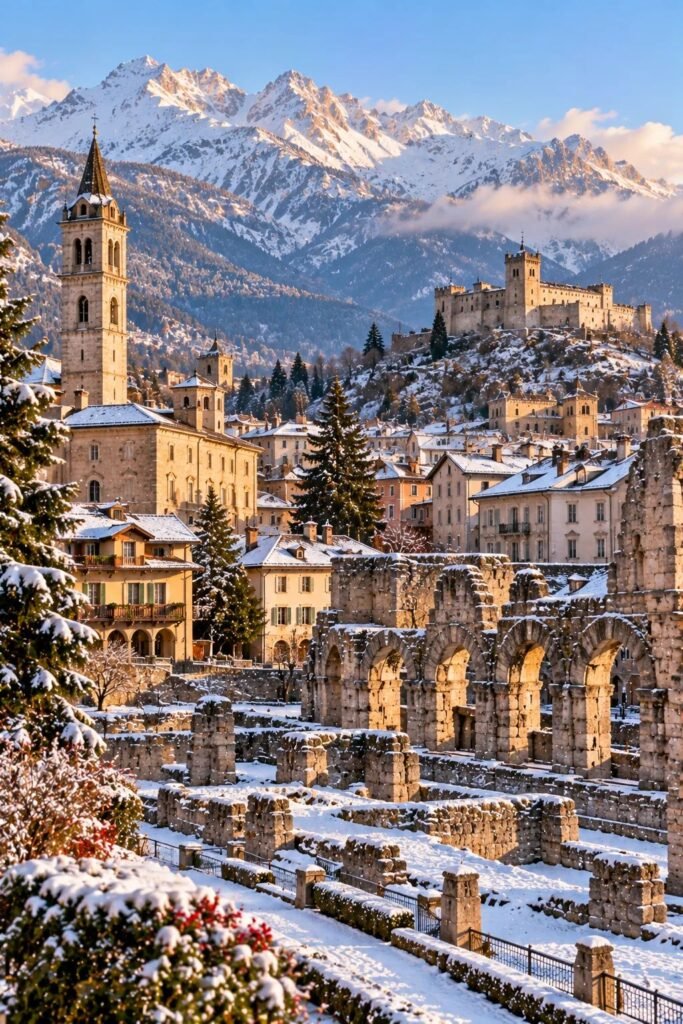
Aosta, in northwestern Italy, is a lovely choice for travelers who want mountain scenery, Roman history, and a quieter winter atmosphere.
Surrounded by the Alps, the town offers access to spectacular valleys and winter sports areas while maintaining a historic center with ancient ruins and traditional buildings.
Aosta’s Roman heritage is one of its most interesting features. You can explore remains from the ancient city, including the Arch of Augustus and other archaeological landmarks, before spending time in the surrounding streets and cafés.
The nearby Aosta Valley is also known for its castles, mountain landscapes, and alpine villages.
For a winter escape, you can combine sightseeing in town with excursions into the surrounding mountains. Depending on conditions, the wider region offers skiing, snowshoeing, and winter walks.
You do not need to be an experienced outdoor adventurer to appreciate the scenery, but it is important to choose activities suited to the weather and your ability.
Things to do in Aosta in winter:
- Visit the Arch of Augustus and explore Roman-era landmarks.
- Wander through the historic center.
- Discover nearby castles that are open to visitors.
- Enjoy traditional dishes from the Aosta Valley.
- Take a day trip to a nearby mountain resort if transport and weather conditions permit.
Travel tip: Aosta is a good option for travelers who want to combine culture with a mountain holiday. Check regional bus and train connections before booking accommodation outside the town, especially if you do not plan to rent a car.
Best Time to Visit Italy in Winter
Winter in Italy generally runs from December through February, although colder conditions can begin earlier in the mountains and continue into March.
The best month for your trip depends on whether you want Christmas markets, snow-covered scenery, cultural sightseeing, or milder weather.
| Month | What to expect | Best for |
|---|---|---|
| December | Festive decorations, Christmas markets, colder northern weather | Christmas atmosphere and romantic city breaks |
| January | Post-holiday calm in many cities, cold conditions in the north | Museums, historic cities, and mountain holidays |
| February | Winter sports, Carnival celebrations in selected cities, variable weather | Snowy escapes and cultural festivals |
The northern mountains are the strongest choice if snow is your priority.
Cities such as Rome, Naples, and Palermo are better suited to travelers who want to explore historic sites and enjoy local food without planning their entire trip around winter sports. Weather varies from year to year, so check forecasts close to your departure date.
What to Pack for Italy in Winter
Packing for Italy in winter depends on where you are going. A week spent exploring Rome and Florence requires different clothing from a trip to Cortina d’Ampezzo or the Dolomites.
Here are the essentials I would include when preparing for a winter trip:
- Warm coat: Choose a coat suitable for the coldest destination on your itinerary.
- Layered clothing: Sweaters, long-sleeved tops, and thermal layers help you adjust to changing temperatures.
- Comfortable walking shoes: Choose supportive footwear with good grip for cobblestones and damp streets.
- Waterproof footwear: Particularly useful for rainy days and snowy mountain destinations.
- Scarf, gloves, and a hat: Important for cold mornings and evenings.
- Compact umbrella: Useful in cities where rain can interrupt outdoor sightseeing.
- Day bag: Carry your water, travel documents, phone, and other daily essentials.
- Power bank: Helpful when using maps, tickets, and travel apps throughout the day.
- Travel adapter: Check the plug type and voltage requirements for your devices.
- Swimwear: Worth packing if your accommodation includes a spa or thermal pool.
If your itinerary includes the Dolomites or Aosta Valley, add suitable winter outdoor clothing and any activity-specific equipment you need. Do not assume ordinary city shoes will be sufficient for icy paths or snowy trails.
Practical Tips for Planning an Italy Winter Trip
A little preparation can make your winter holiday in Italy much easier and more enjoyable.
1. Choose destinations that work well together. Italy is larger than it may look on a map. Combining Venice, Verona, and Milan is relatively straightforward by train, while visiting the Dolomites may require additional regional transport planning.
2. Book major attractions ahead. Popular museums, guided tours, and historic sites may require timed tickets even in winter. Check official websites before traveling.
3. Check seasonal opening hours. Smaller museums, gardens, mountain cable cars, and restaurants may have reduced schedules or seasonal closures. Confirm opening times before making a special journey.
4. Plan for shorter daylight hours. In December and January, outdoor sightseeing time is limited compared with summer. Visit viewpoints and outdoor landmarks earlier in the day, leaving museums and restaurants for later.
5. Use trains where practical. Rail connections can make it easy to travel between major cities. For mountain villages, check local buses and transfers in advance, as services may be less frequent.
6. Allow some flexibility. Snow, rain, fog, or transport disruptions can affect winter plans, especially in mountainous regions. Keep alternative indoor activities in mind.
7. Try regional winter food. From rich pasta dishes to hearty soups, pastries, and hot chocolate, Italian food is a wonderful part of the winter experience. Try local specialties rather than sticking to the same meals everywhere.
Final Thoughts: Is Italy Worth Visiting in Winter?
Absolutely! Italy is a beautiful winter destination because it offers so many different experiences within one country.
You can admire snowy mountain peaks in the Dolomites, wander through Venice’s historic streets, discover Renaissance treasures in Florence, enjoy Rome’s ancient landmarks, or explore the milder Mediterranean atmosphere of Palermo.
The best destination depends on the kind of holiday you want. Choose the Dolomites, Cortina d’Ampezzo, or Aosta for mountain scenery; Venice, Florence, or Verona for romantic city breaks; and Rome, Naples, or Palermo for history, culture, and food.
My biggest planning tip is to avoid squeezing too many destinations into a short trip.
Choose two or three places that suit your interests, allow enough time to explore, and leave room for spontaneous café stops and unexpected discoveries.
With the right itinerary and a few warm layers, winter can be a wonderful time to experience Italy’s beauty, traditions, and unforgettable landscapes.