
The House on Fire Ruins hike in Mule Canyon is the kind of adventure that makes you appreciate just how much beauty and history can be found in the American Southwest.
For Trippandora, I want this guide to help you plan a memorable visit, whether you love easy hikes, fascinating historical places, or discovering hidden gems away from crowded tourist attractions.
I’ll cover everything from the trail and the best time to visit to photography tips, what to pack, and how to explore this remarkable place respectfully.
The goal is to help you enjoy the experience while protecting the ancient history that makes it so special.
Where Is House on Fire Ruins in Utah?
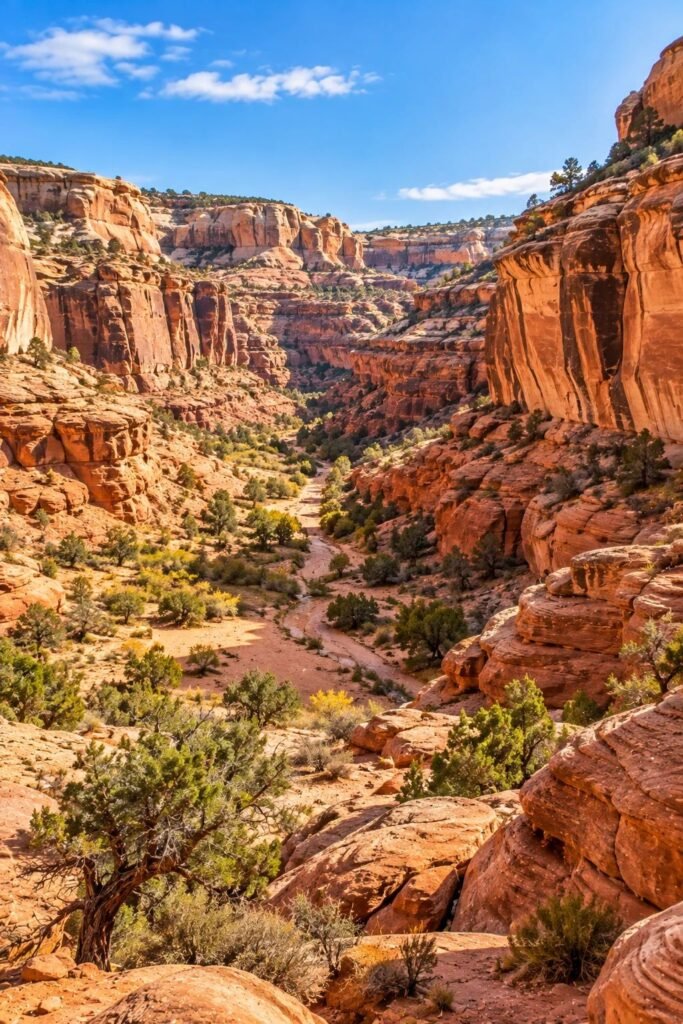
The House on Fire Ruins are located in the South Fork of Mule Canyon in southeastern Utah, within Bears Ears National Monument. This beautiful area is known for its red sandstone formations, desert landscapes, and ancient Ancestral Puebloan archaeological sites.
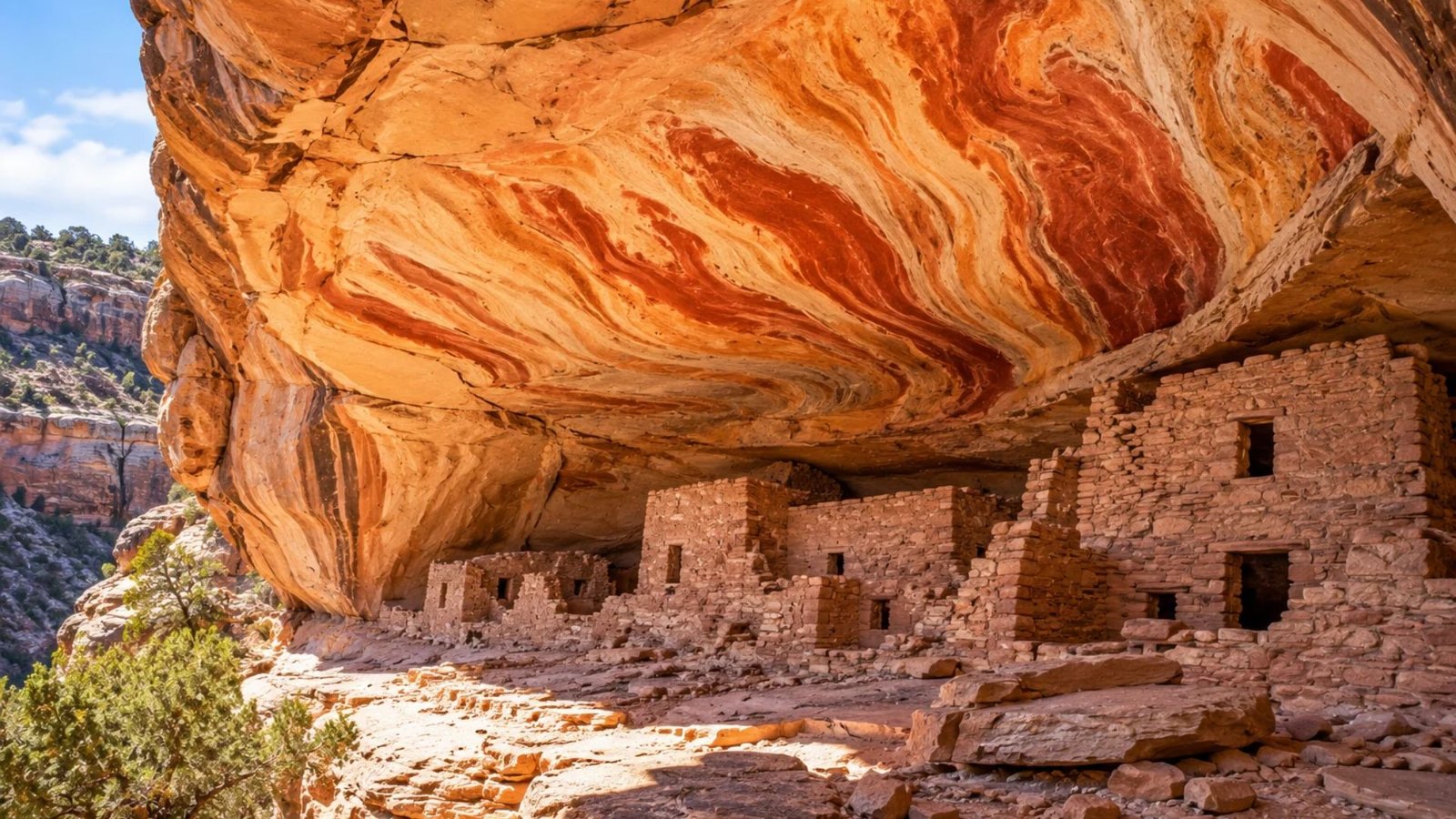
The ruins sit beneath a natural sandstone overhang, where the rock patterns create the appearance of flames rising above the structures when the light is just right.
It is one of the most recognizable archaeological sights in the region, and it makes a wonderful stop for travelers exploring Utah’s canyon country.
The hike is especially appealing if you want to experience a historic place without committing to a long, strenuous mountain trail.
You can walk through a quiet canyon, admire the surrounding rock formations, and learn about the people who lived in this landscape long before modern roads existed.
House on Fire is also a lovely addition to a southeastern Utah road trip. You can combine it with other cultural sites, scenic drives, and hiking destinations around Blanding and Natural Bridges National Monument.
However, remember that this is a protected archaeological site rather than an ordinary sightseeing stop. The ruins and surrounding landscape deserve care, patience, and respect.
What Makes House on Fire Ruins So Special?
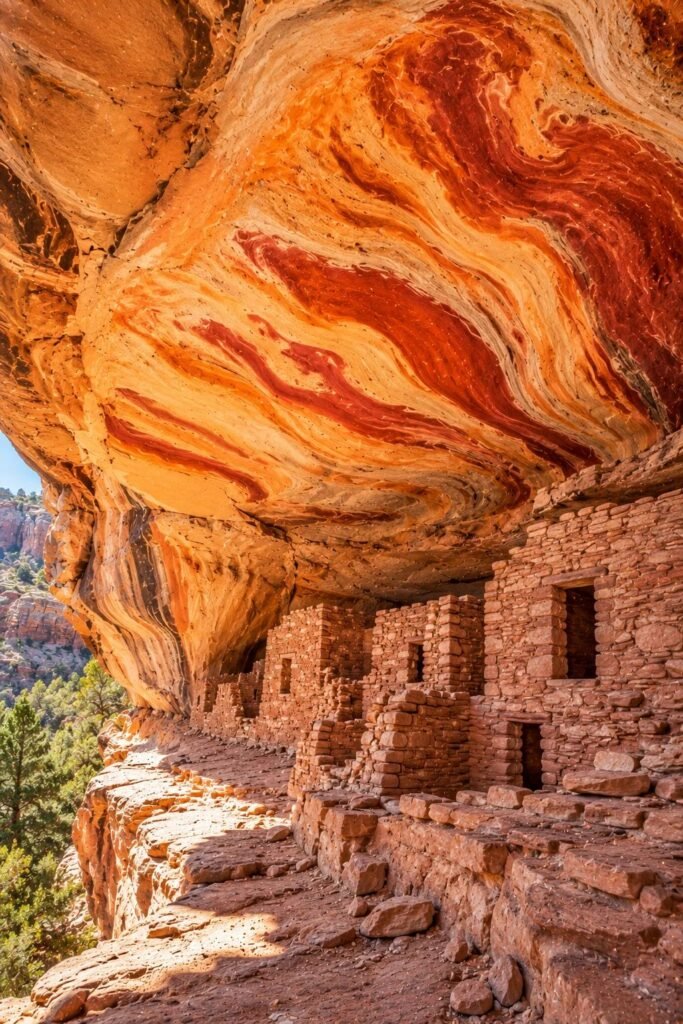
The first thing that makes House on Fire so memorable is its unusual appearance. A group of ancient stone structures rests beneath a curved sandstone ceiling marked with bands and streaks of red, orange, cream, and brown.
When sunlight reflects off the opposite canyon wall and illuminates the overhang, the sandstone can appear to glow like flames. The effect is entirely natural, and it gives the site its memorable name.
I would put this place on a Utah travel bucket list for anyone who enjoys discovering destinations that feel different from the usual tourist attractions.
You do not need towering waterfalls or dramatic mountain peaks to have a memorable adventure. Sometimes, a quiet canyon and an extraordinary natural formation are enough.
What makes the site even more meaningful is its cultural history. The structures are associated with Ancestral Puebloan people, whose communities developed ways to live in the challenging environment of the Four Corners region.
The buildings beneath the overhang are generally understood as granaries, or storage structures. Their sheltered location helped protect stored food from the elements.
Standing nearby and observing the structures from a respectful distance offers a chance to appreciate the knowledge and resourcefulness of the people who built them. These are not simply old walls or interesting rocks.
They are part of a living cultural landscape connected to Indigenous communities today.
That combination of natural beauty, history, and peaceful surroundings is what makes House on Fire worth visiting.
Read 5 Hidden Canyon Hikes That Will Steal Your Heart (And Leave You Breathless)
How Long Is the House on Fire Ruins Hike?
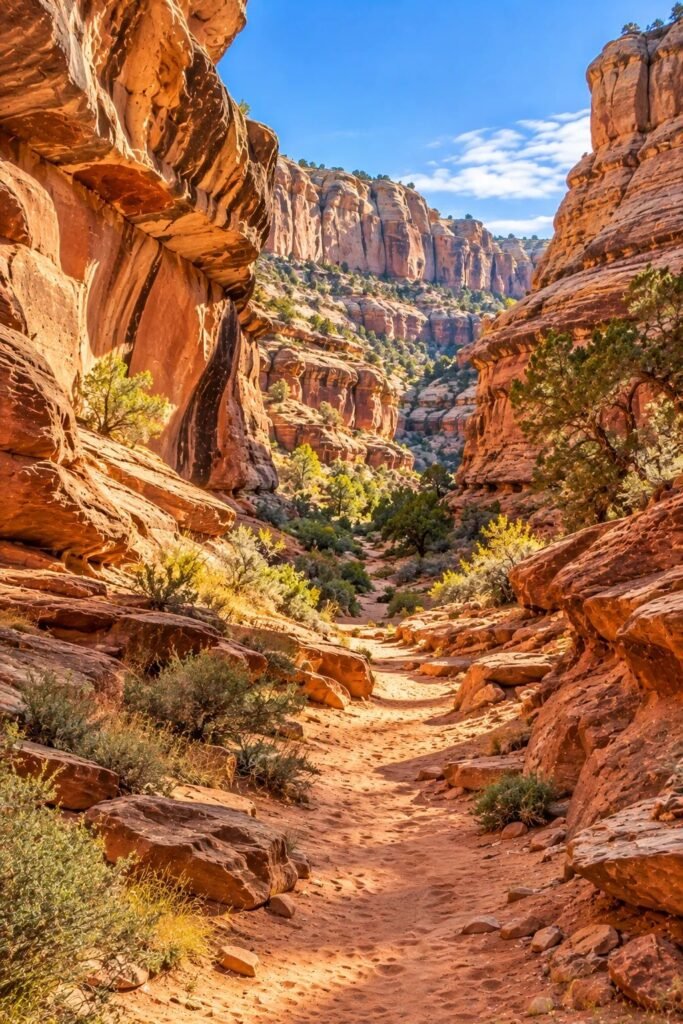
The hike to House on Fire is relatively short compared with many other trails in southern Utah.
Here is a general overview of what to expect.
| Trail detail | What to know |
|---|---|
| Location | South Fork Mule Canyon, Utah |
| Round-trip distance | Approximately 2 miles, depending on the exact route |
| Typical hiking time | Around 1.5–2 hours, including time to enjoy the ruins |
| Difficulty | Easy to moderate |
| Terrain | Sand, uneven ground, canyon wash, and occasional slickrock |
| Elevation gain | Relatively little |
| Best feature | Ancient granaries beneath a flame-like sandstone ceiling |
The Bureau of Land Management’s Cedar Mesa trip planner lists the House on Fire hike at approximately 2 miles round-trip, with minimal elevation change and a typical visit lasting 2–3 hours.
Actual distances can vary depending on where you park and the route you follow.
Although the hike is often described as easy, I would not assume that it is effortless for everyone. Walking on loose sand can tire your legs, and the route is not a fully constructed, maintained path with continuous signs.
Some sections may require you to walk along the canyon wash or negotiate uneven sandstone. The final approach to the ruins can also feel steeper than the rest of the walk.
If you are a beginner, take your time and wear comfortable hiking shoes with good traction. You do not need to rush to reach the destination.
Allow extra time if you enjoy photography, want to appreciate the scenery, or are hiking with children or anyone who prefers frequent breaks.
How to Find the House on Fire Trailhead
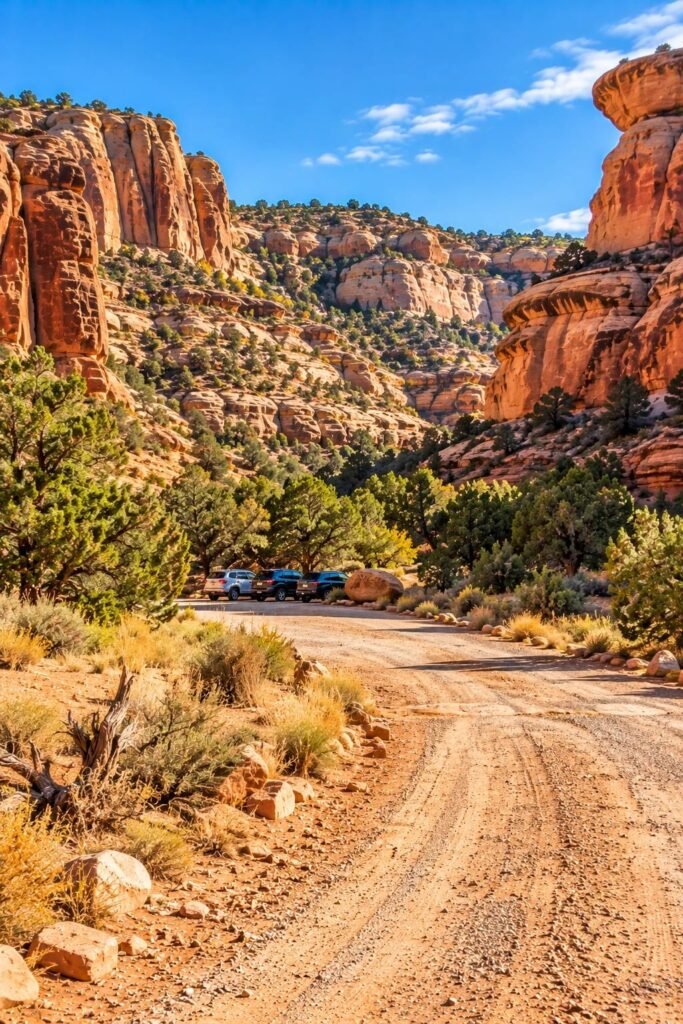
Finding the correct trailhead is one of the most important parts of planning this hike.
The House on Fire trailhead is off Utah State Route 95, near Texas Flat Road, in the Mule Canyon area. The hike begins at the South Fork of Mule Canyon, not at the separate roadside Mule Canyon Interpretive Site.
These are different archaeological attractions, so make sure your navigation directions identify House on Fire specifically.
The trailhead is reached via a short unpaved road, and parking is limited. Signage can be less obvious than at a developed national park trailhead.
Here are a few practical tips to make your arrival easier:
- Download an offline map before leaving town.
- Search for the House on Fire trailhead rather than simply searching for Mule Canyon Ruins.
- Check current road conditions before driving onto unpaved roads.
- Park only in appropriate, established areas without blocking the road or damaging vegetation.
- Bring your hiking essentials with you because you should not expect shops, water stations, or other visitor facilities at the trailhead.
The Bureau of Land Management provides official information about the Mule Canyon area, while local visitor resources can help you identify the correct access road. Check the latest directions and permit requirements before setting out.
I would also recommend allowing a little extra time for navigation. It is much nicer to begin your hike feeling prepared than to spend the morning driving around looking for the right place to park.
What the House on Fire Trail Is Like
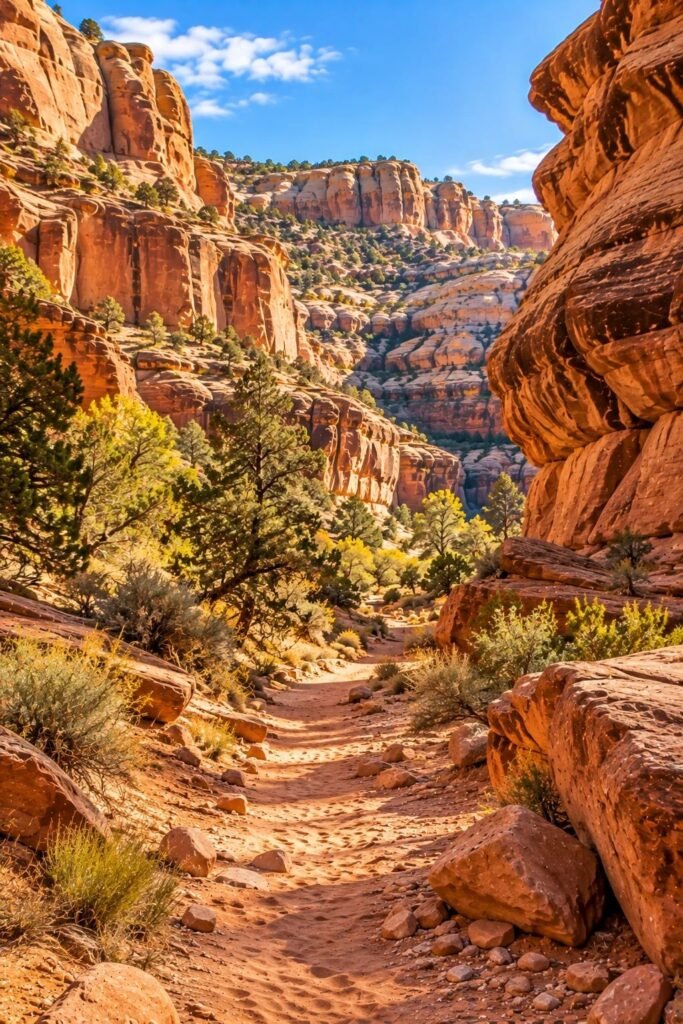
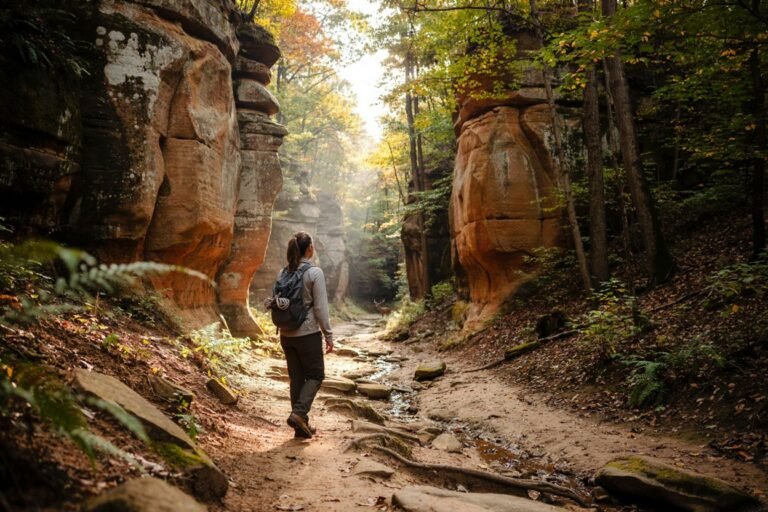
The walk to House on Fire takes you through a beautiful desert canyon where the scenery gradually changes as you move away from the road.
At the beginning, the landscape feels open and relatively spacious. You will notice sandy ground, low desert vegetation, and sandstone formations surrounding the canyon.
Depending on the season and recent weather, you may also encounter damp sections or shallow water in the wash.
As you continue, the canyon walls become more prominent, creating a quieter, more enclosed atmosphere. Juniper trees and other desert plants add texture to the landscape, while the changing rock colors make the walk interesting even before you reach the ruins.
One thing to keep in mind is that the trail does not always resemble a clearly marked hiking path. The route follows the canyon floor and a commonly used footpath, so you may need to pay attention to where you are walking.
I would recommend moving slowly enough to notice the details around you. Look at the different sandstone layers, observe the plants growing in the canyon, and enjoy the peaceful atmosphere.
The hike is not only about reaching the ruins. The walk itself is part of the experience.
At the same time, avoid wandering into fragile areas or climbing the canyon walls in search of a shortcut. Staying on durable surfaces and the established route helps protect the landscape.
Best Time to Visit House on Fire Ruins
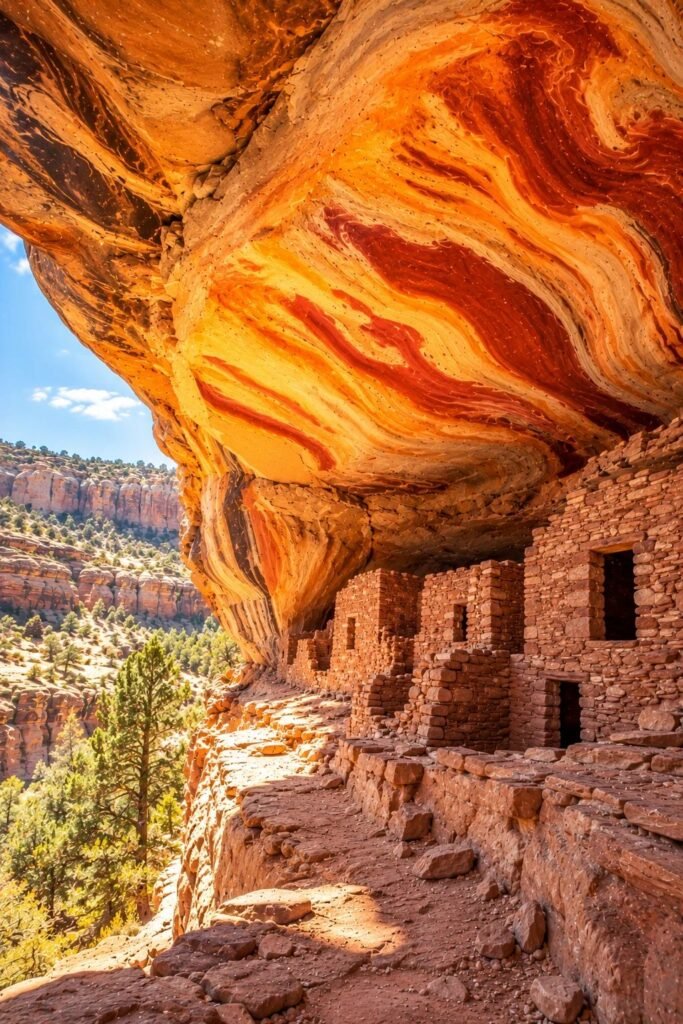
Timing your visit can make a significant difference, especially if you want to see the famous flame-like effect.
Visit in the late morning for the best light
Late morning is generally recommended for seeing the sandstone glow. Many visitors aim to reach the ruins between approximately 9 a.m. and 11 a.m., although the ideal timing can vary with the season, weather, and sun angle.
If photography is important to you, plan your departure around the time you want to arrive at the ruins. Since the hike takes time, you should not wait until the ideal light has already arrived before starting from the trailhead.
Cloud cover can soften the colors, and the flame effect may be less noticeable on overcast days. That does not mean your visit will be disappointing, though. The structures and canyon remain fascinating in different lighting conditions.
Spring is a lovely season for hiking
Spring can offer pleasant hiking conditions before the hottest part of the year arrives. However, weather can change, and wet conditions may affect the canyon wash and unpaved access roads.
Fall is another excellent option
September and October are often attractive months for exploring southeastern Utah because temperatures are generally more comfortable than during the hottest summer period.
Spring and fall are commonly recommended for outdoor activities in the Bears Ears area.
Be careful during summer
Summer temperatures in this region can become extremely high, and shade along the route is limited. If you visit during the warmer months, start early, carry plenty of water, and be prepared to change your plans if conditions become unsafe.
Winter requires additional planning
Cold temperatures, snow, ice, and muddy roads can make the hike more challenging. Check the forecast and road conditions before traveling, and avoid entering the canyon if the conditions are unsuitable.
My recommendation: Choose a comfortable spring or fall morning, check the weather, and plan to arrive at the ruins during the late-morning lighting window if possible.
What to Know About the Ancient Ruins
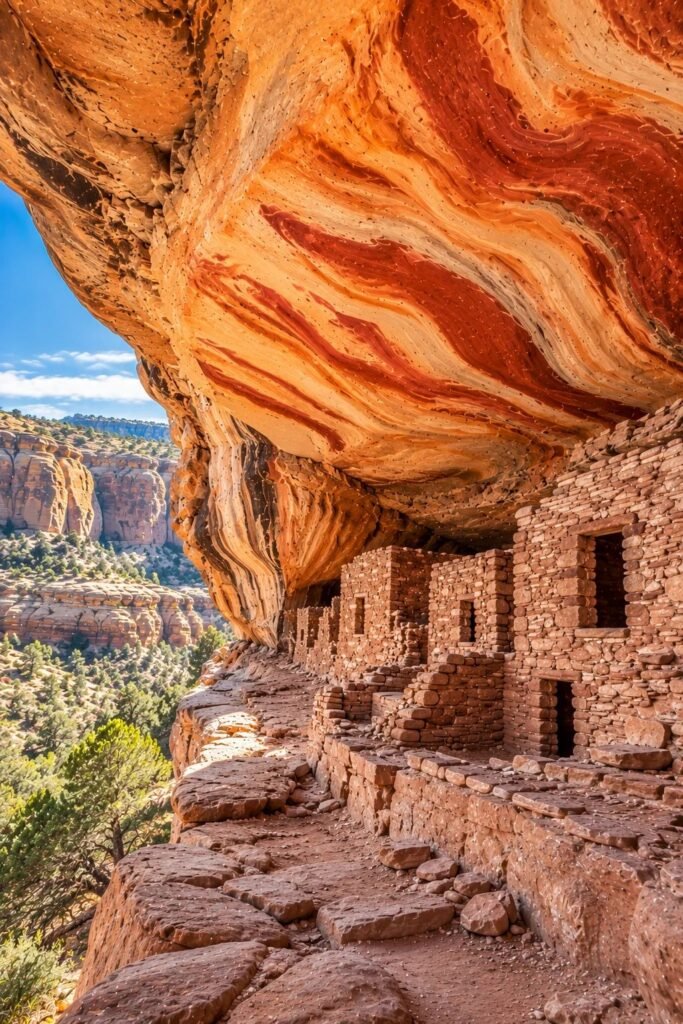
One of the most meaningful parts of visiting House on Fire is understanding that the structures are part of a much older story.
The granaries were built by Ancestral Puebloan people, whose ancestors have deep historical and cultural connections to the Four Corners region. The wider Cedar Mesa landscape contains archaeological evidence of generations of people who adapted to the desert environment.
The sheltered location of the House on Fire structures is especially interesting. The natural overhang provides protection from some weather exposure, while the stone construction demonstrates careful use of locally available materials.
Food storage was important in an environment where rainfall could be unpredictable and growing conditions varied. Secure storage helped communities preserve valuable resources.
Although visitors can see the structures from the hiking route, it is important not to treat them like an abandoned building that can be explored freely. The ruins are fragile, and even seemingly small actions can contribute to damage over time.
When you arrive, take a moment to observe the structures from a respectful distance. Notice how they fit beneath the rock overhang, how the sandstone forms the ceiling, and how the surrounding canyon shapes the setting.
Avoid touching the walls, climbing onto the structures, entering restricted areas, or removing stones and artifacts. These protections help preserve the site for future generations.
It is also worth remembering that the cultural importance of Bears Ears extends beyond the archaeological remains visible to visitors.
The region is part of the ancestral homelands of multiple Indigenous nations, and it continues to hold cultural and spiritual significance.
A thoughtful visit means appreciating both the beauty of the site and the people whose history is connected to it.
Photography Tips for House on Fire Ruins
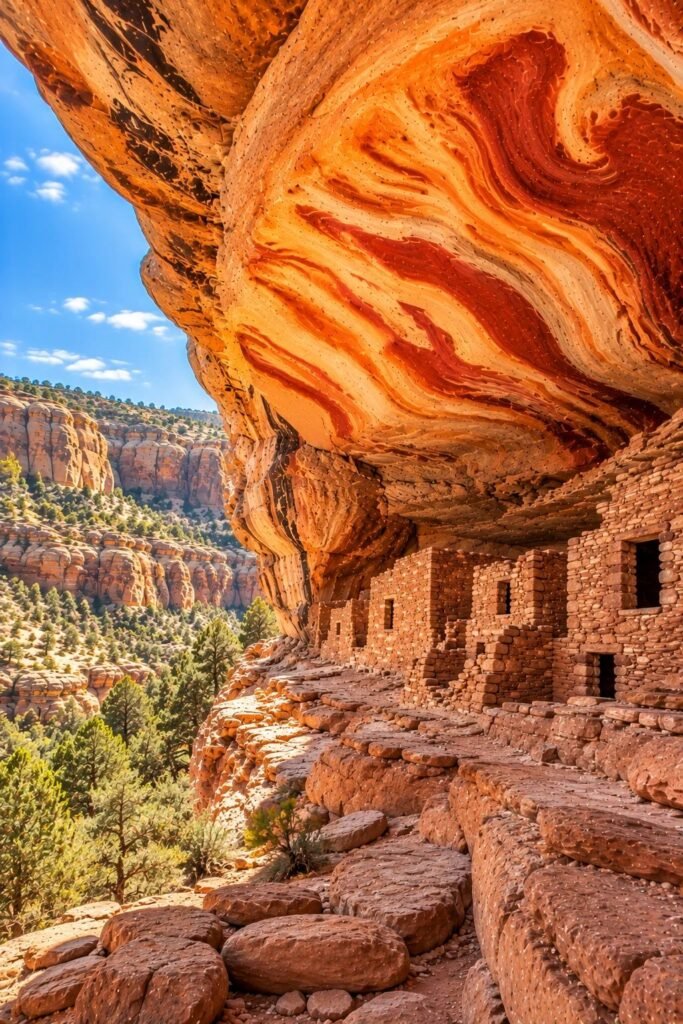
House on Fire is a wonderful destination for photography because the sandstone ceiling creates such an unusual natural pattern. You can capture the wider canyon setting, the stone structures, or the glowing colors that make the site famous.
You do not need an expensive camera to take memorable pictures. A phone with a good camera can work well, especially when the lighting is favorable.
Here are a few tips to help you get better photographs.
1. Arrive at the right time. Late-morning light is often best for capturing the appearance of flames above the ruins. Check local conditions and leave enough time to hike to the site before the light changes.
2. Photograph the surroundings as well as the ruins. Wide shots help show how the structures fit into the sandstone alcove. You can also take pictures of the canyon walls, desert plants, and trail.
3. Avoid over-editing your pictures. The natural orange, red, and cream colors are already beautiful. Slight adjustments to exposure and contrast may be enough.
4. Try different compositions. A wide photograph can capture the entire overhang, while a closer image can highlight the sandstone patterns. Remember to remain on permitted surfaces and never climb onto the ruins for a better angle.
5. Be patient with changing light. Sometimes the most interesting colors appear for only a short period. Give yourself time to observe the scene instead of taking a quick photograph and immediately leaving.
6. Be considerate of other visitors. This is a popular photographic destination, so avoid blocking the path or taking over the viewing area for an extended period.
Most importantly, do not let photography distract you from the experience itself. Take a few pictures, put your camera away for a moment, and appreciate the setting.
What to Pack for the House on Fire Hike

Even though the House on Fire hike is relatively short, you should prepare for desert conditions. The trail has limited shade, and the weather can feel much hotter or colder than expected.
Here is what I would bring for a comfortable visit.
- Water: Carry enough drinking water for the entire outing, with extra for hot weather or unexpected delays. There are no dependable drinking-water facilities at the trailhead.
- Comfortable hiking shoes: Choose shoes with good traction for sand, uneven ground, and slickrock.
- Sun protection: Pack sunscreen, sunglasses, and a wide-brimmed hat.
- Snacks: Bring a small snack if you expect to spend extra time photographing the ruins or exploring the canyon.
- Offline maps: Download navigation information before arriving because mobile service may be unreliable.
- Weather-appropriate clothing: Wear breathable layers in warm weather and bring an extra layer during cooler months.
- A small first-aid kit: This can be useful for minor hiking problems.
- A fully charged phone: It can help with navigation and photography, but do not rely on it as your only safety tool.
- A small bag for rubbish: Carry all your rubbish back out with you.
I would also recommend telling someone your hiking plans, especially if you are visiting the area without a group. Remote desert locations require more preparation than a busy urban walking trail.
Avoid packing too much. A comfortable backpack with the essentials is more useful than a heavy bag filled with things you may never need.
Is the House on Fire Hike Difficult?
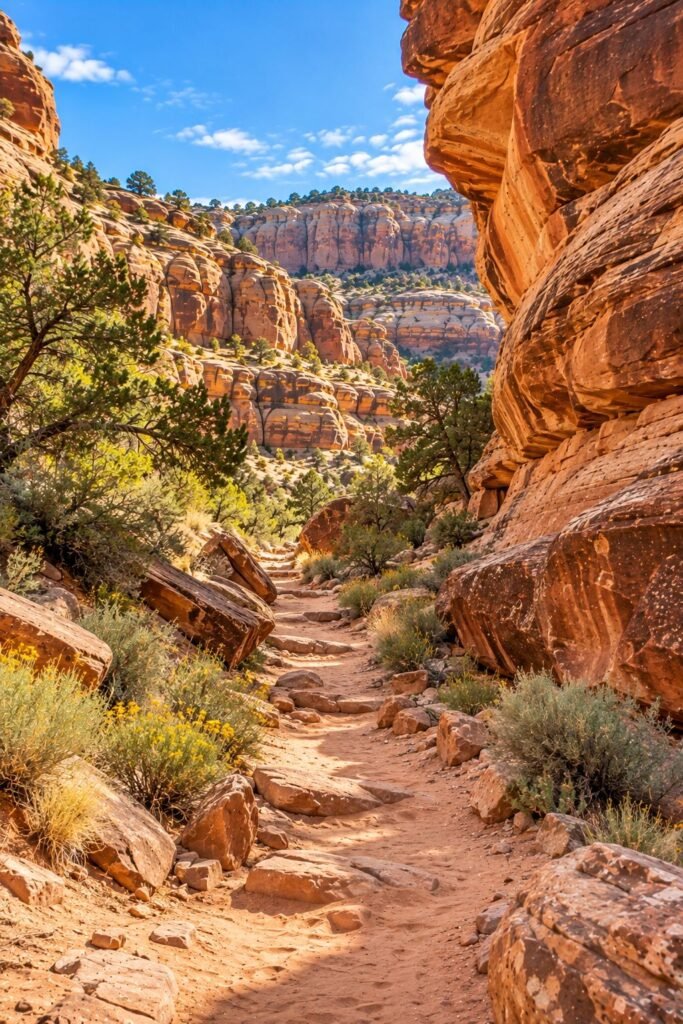
For many visitors, House on Fire is a manageable short hike, but the experience depends on your fitness, the weather, and the trail conditions.
The route has relatively little elevation gain, which makes it less demanding than a steep mountain climb. However, the sandy ground can make walking tiring, and the uneven canyon floor requires attention.
The path may also be less obvious in places than a paved or formally maintained trail. You should be comfortable walking on natural terrain and finding your way using reliable navigation.
Here are a few ways to make the hike more comfortable:
- Start at a time when temperatures are suitable.
- Walk at a pace that allows you to remain comfortable.
- Take breaks whenever you need them.
- Wear shoes that you have already tested on walks.
- Check the forecast and avoid hiking during dangerous weather.
- Turn around if the route or conditions feel beyond your ability.
Families may enjoy this outing, but adults should assess the terrain and conditions before deciding whether it is suitable for younger children. Keep children close, particularly around uneven ground and the archaeological site.
The important thing is not how quickly you reach the destination. It is being able to enjoy the walk safely and return comfortably.
Important Safety Tips Before You Go
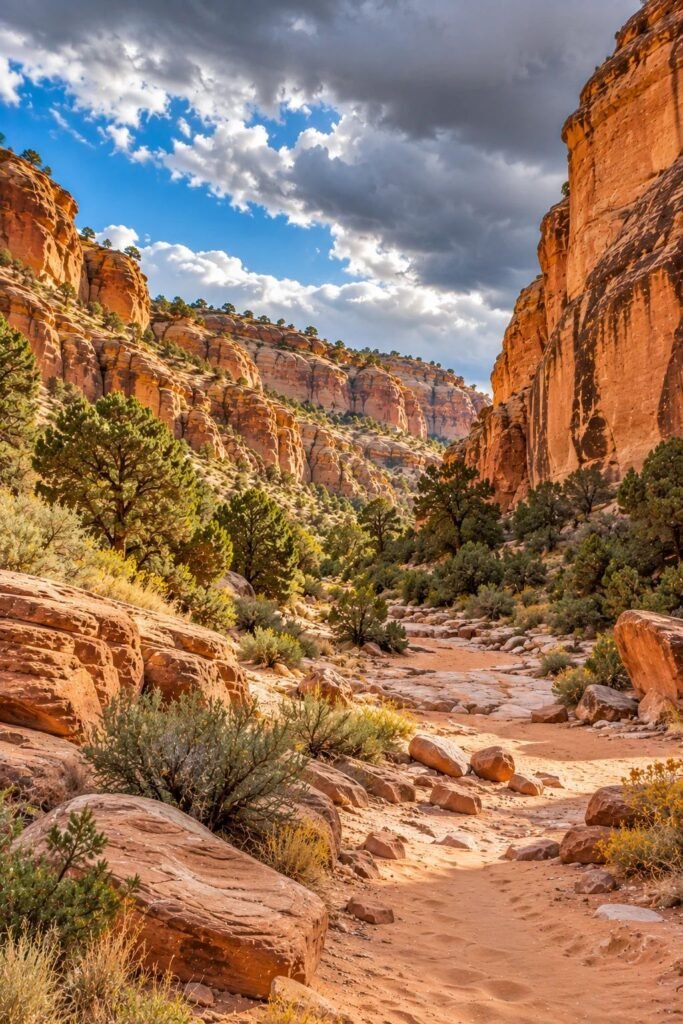
The desert can look peaceful and inviting, but it is still an environment where conditions can change quickly.
Before leaving for House on Fire, check the local forecast, road conditions, and current land-management guidance. The access road and canyon can be affected by rain, mud, snow, and other weather conditions.
Here are the main safety considerations to remember.
Watch for flash-flood conditions. Do not enter a canyon wash when heavy rain is occurring or forecast in the drainage area. Floodwater can travel into a canyon from storms that are some distance away. If conditions appear threatening, postpone your hike.
Carry sufficient water. Do not assume that a short hike means you can travel without enough water. Heat and dry air can increase your fluid needs.
Avoid relying on mobile service. Download an offline map and make sure you understand the route before leaving the highway.
Be careful on sandstone. Rock surfaces can be slippery, particularly when wet. Avoid scrambling onto steep or unstable surfaces.
Respect the environment. Stay on durable surfaces, avoid disturbing plants and wildlife, and carry out everything you bring in.
Check access and permits. House on Fire is in a managed archaeological area where a day-use permit is required. Confirm the current requirements and how to obtain one through the Bureau of Land Management before your visit.
A little preparation can make your adventure more enjoyable and help you avoid preventable problems.
Is House on Fire Ruins Worth Visiting?
Yes, I think House on Fire deserves a place on your southeastern Utah itinerary if you enjoy hiking, history, photography, and quieter outdoor destinations.
What makes this hike special is the combination of a manageable walk and a destination that feels genuinely different from the usual scenic viewpoints.
You do not have to spend an entire day hiking to experience the remarkable sandstone formations and ancient structures.
The landscape also gives you plenty of opportunities to slow down and enjoy your surroundings.
Instead of rushing between attractions, you can spend time noticing the rock patterns, taking photographs, and learning about the history of the region.
However, I would not recommend visiting simply to get a photograph. The archaeological significance of the ruins is just as important as their unusual appearance.
If you appreciate places where nature and history come together, House on Fire can be a memorable stop on your Utah road trip.
Other Places to Visit Near House on Fire Ruins
If you have extra time, consider adding a few nearby destinations to your itinerary. Southeastern Utah has plenty of opportunities to explore ancient history, natural rock formations, and scenic desert landscapes.
1. Mule Canyon Interpretive Site
This developed archaeological site features ancient Puebloan structures, including a tower, rooms, and a kiva. Interpretive panels help visitors understand the site, making it a good complement to the House on Fire hike.
2. Butler Wash
Butler Wash is another place to appreciate ancestral Puebloan history. Its archaeological overlook provides views toward cliff dwellings across the canyon, offering a different perspective on how communities used the landscape. Check the current access information before visiting.
3. Natural Bridges National Monument
Visit this monument to see impressive natural sandstone bridges and explore additional hiking opportunities. It is a great choice if you want to combine cultural history with Utah’s remarkable geology.
4. Blanding
Blanding makes a useful base for exploring this part of Utah. You can use the town to plan your meals, accommodation, and supplies before heading into the more remote desert areas.
These destinations offer different experiences, so you can choose the ones that best fit your available time and interests. Always check opening information, road conditions, and any site-specific restrictions before setting out.
Frequently Asked Questions About House on Fire Ruins
1. How long does it take to hike to House on Fire Ruins?
The hike is approximately 2 miles round-trip and typically takes around 1.5–2 hours, depending on your pace and how long you spend at the ruins. The BLM’s trip planner allows 2–3 hours for the outing.
2. What is the best time of day to visit?
Late morning is usually the best time to see the sandstone ceiling glow with its famous flame-like appearance. Aim to reach the ruins between approximately 9 a.m. and 11 a.m., allowing enough time to hike from the trailhead. The exact lighting depends on the season and weather.
3. Do I need a permit to hike House on Fire?
Yes. A day-use hiking permit is required for the Mule Canyon area. Check the current rules and payment options through the Bureau of Land Management or the official recreation information before visiting.
4. Is House on Fire suitable for beginner hikers?
It can be suitable for beginners who are comfortable walking on sandy, uneven natural terrain. Although the elevation gain is limited, the trail is not fully maintained, and loose sand can make the walk tiring. Assess the weather and your abilities before setting out.
5. Can I touch or enter the ruins?
You should not touch, climb on, or enter the ancient structures. Follow posted restrictions, stay on permitted surfaces, and admire the ruins from a respectful distance. Never remove artifacts or disturb archaeological materials.
6. Is there shade along the hike?
There may be some shade from the canyon walls and vegetation, but you should not rely on it for protection throughout the walk. Carry enough water and sun protection, especially during warmer months.
7. Can I visit House on Fire in winter?
Winter visits may be possible, but snow, ice, cold temperatures, and muddy access roads can make the hike more challenging. Check the weather and road conditions before leaving, and postpone your trip if conditions are unsafe.
8. Can I bring my dog?
Pet rules can vary by land-management area and current restrictions. Check the latest BLM guidance before bringing your dog, and keep your pet under control while protecting the archaeological site and surrounding wildlife.
9. Is House on Fire the same as Mule Canyon Interpretive Site?
No. House on Fire is an archaeological site reached by hiking into the South Fork of Mule Canyon. Mule Canyon Interpretive Site is a separate, developed archaeological location beside Highway 95. Make sure you navigate to the correct trailhead.
Final Thoughts: Planning Your House on Fire Ruins Hike
The hike to House on Fire Ruins is a wonderful way to experience a different side of Utah. Instead of focusing only on famous national parks and dramatic viewpoints, this short canyon walk introduces you to an extraordinary sandstone formation and a meaningful piece of the region’s cultural history.
I love the idea of including destinations like this in a road trip because they encourage you to explore beyond the obvious stops.
You can enjoy a peaceful walk, admire the natural colors of the canyon, and discover how the landscape has been connected to human life for generations.
For the best experience, plan your visit for a comfortable spring or fall morning, allow enough time to reach the ruins during the late-morning light, and pack plenty of water.
Confirm the current permit requirements, download an offline map, and check the weather before you leave.
Most importantly, remember that House on Fire is a protected archaeological place. Leave the structures and artifacts undisturbed so that other visitors and future generations can appreciate them, too.
If you are planning a southeastern Utah adventure, add House on Fire to your itinerary. It is a short hike with a remarkable destination, and it offers a memorable combination of natural beauty, photography, and history.