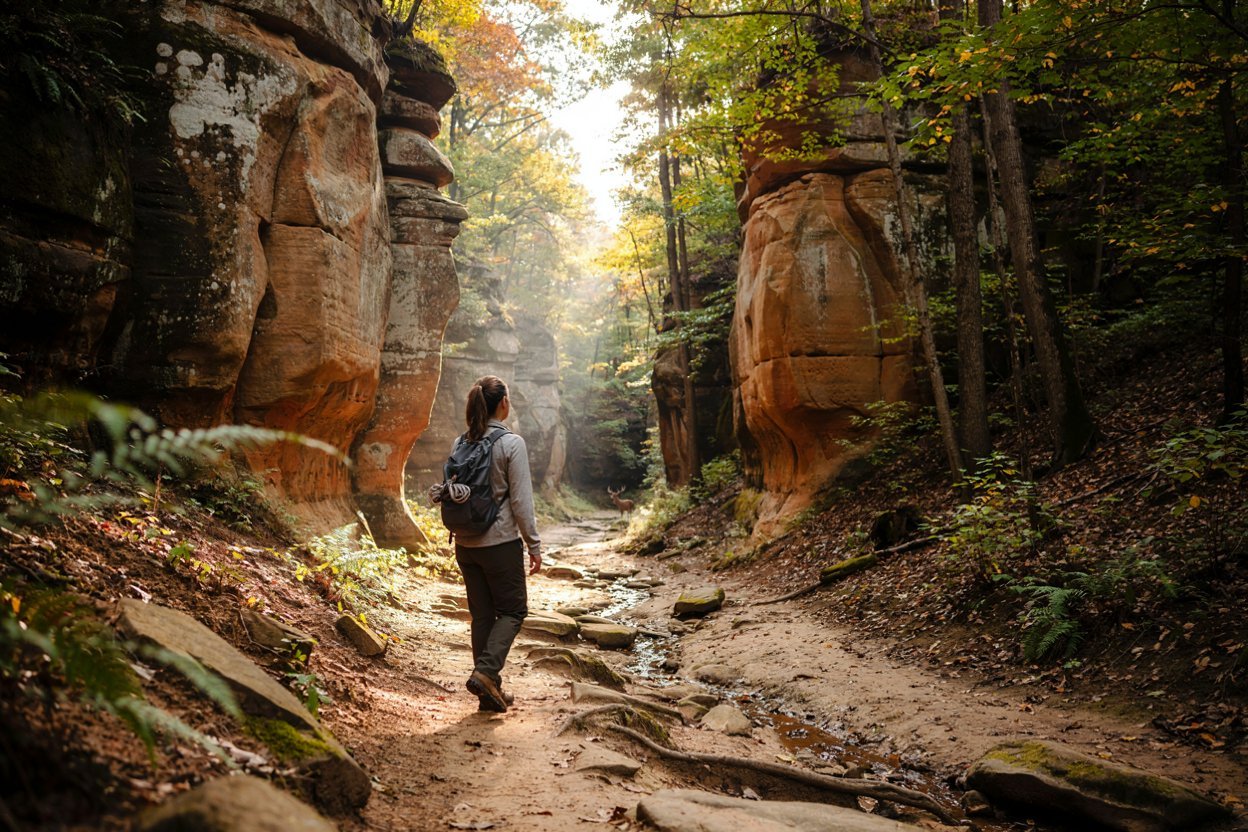

I still remember the first time I saw photos of the Great Channels of Virginia. The towering sandstone walls looked almost unreal, like something you would expect to find in a remote desert canyon rather than in the mountains of Virginia.
I immediately added it to my hiking list, and after learning more about the trail, I understood why so many hikers consider it one of Virginia’s hidden gems.
The Great Channels is not your typical forest hike. The trail takes you through peaceful Appalachian woodland before eventually leading to a spectacular maze of massive sandstone formations.
Once you step between the walls of the channels, the scenery feels completely different from anything you experienced on the way up.
If you love hiking, photography, unusual landscapes, and discovering places that feel a little off the beaten path, this hike deserves a spot on your Virginia travel itinerary.
In this guide, I’ll walk you through everything you need to know about hiking the Great Channels of Virginia, including how to get there, the trail difficulty, what to expect along the way, the best time to visit, what to pack, safety tips, and how to make the most of your adventure.
What Are the Great Channels of Virginia?
The Great Channels of Virginia are a fascinating collection of sandstone channels and rock formations located in the Jefferson National Forest in southwest Virginia.
The formations were created over a very long period of time through natural weathering and erosion. Water, ice, temperature changes, and other natural forces gradually shaped the sandstone into the dramatic walls and narrow passages hikers can explore today.
What makes the Great Channels so special is the contrast.
The hike itself takes you through a beautiful Appalachian forest, but once you reach the rock formations, the landscape suddenly changes. Huge sandstone walls rise around you, creating narrow corridors that almost feel like a natural maze.
Some sections are surprisingly tall, while others create small passageways where you can carefully walk between the rocks.
It is one of those hiking destinations where the journey is beautiful, but the final destination is what makes you stop and say, “Wow.”
Where Are the Great Channels Located?
The Great Channels are located in Washington County, Virginia, in the southwestern part of the state.
The area is relatively remote compared with some of Virginia’s better-known hiking destinations, which is part of its appeal.
You won’t find the same crowds that you might encounter at popular Shenandoah Valley attractions, especially if you visit early in the morning or outside the busiest fall weekends.
The trailhead is located near Hayters Gap, and most hikers access the Great Channels through the Channels Natural Area Preserve.
Because the area is remote, I recommend planning your route before leaving. Cell service can be unreliable in mountain areas, so don’t depend entirely on your phone for navigation.
Downloading an offline map before your trip is a very smart idea.
How Difficult Is the Great Channels Hike?
The Great Channels hike is generally considered a moderate-to-strenuous hike.
The exact difficulty will depend on your fitness level, hiking experience, weather conditions, and which route you take.
One of the biggest things to remember is that reaching the channels requires climbing uphill first. The hike isn’t simply a short walk from the parking area to the rock formations.
You’ll gain elevation along the way, and some parts of the trail can feel tiring, particularly if you’re hiking during warmer weather.
Once you reach the Great Channels, however, the experience becomes much more rewarding.
I would recommend allowing yourself plenty of time rather than rushing through the trail. This isn’t a hike I would want to complete as quickly as possible. The forest, views, rock formations, and quiet atmosphere are all part of the experience.
How Long Is the Hike?
The distance depends on the route you choose, but the hike to the Great Channels and back is several miles.
Most visitors should plan on spending a few hours in the area, especially if they want enough time to explore the sandstone formations.
Your hiking time can vary considerably depending on:
- Your walking pace
- How often you stop
- Weather conditions
- Trail conditions
- How much time you spend exploring the channels
- How many photos you take
- Whether you add another nearby trail to your trip
Personally, I think it’s better to plan for extra time.
The Great Channels aren’t somewhere I would visit just to reach the destination, take one photograph, and immediately leave. The rock formations are worth slowing down for.
What the Great Channels Trail Is Like
The hike begins in a wooded mountain environment, so don’t expect the dramatic sandstone scenery immediately.
The early portion of the trail is peaceful and heavily influenced by the surrounding Appalachian landscape.
You’ll walk beneath trees, hear birds, and gradually climb through the forest.
As you continue upward, you’ll begin to notice changes in the landscape.
The anticipation is actually part of what makes the hike enjoyable.
Eventually, you reach the Great Channels themselves.
This is where the hike becomes completely different.
Entering the Rock Channels
Walking into the channels feels almost like entering another world.
The sandstone walls surround you on both sides, creating narrow corridors that twist and turn through the formation.
Some sections are wide enough to walk comfortably, while others are much narrower.
The walls have fascinating textures and patterns created by years of erosion and weathering.
Take your time here.
Walk slowly, look up, and pay attention to the details in the rock. The formations can look completely different depending on where you’re standing.
This is also the best part of the hike for photography.
Why the Great Channels Are So Special
Virginia has no shortage of beautiful hiking destinations, but the Great Channels have something that many trails don’t.
The landscape is unusual.
You can hike through a green Appalachian forest and then suddenly find yourself surrounded by towering sandstone walls.
It almost feels like you’ve left Virginia for a completely different part of the country.
The formations also have a sense of mystery.
Because the channels twist and turn, you can explore different sections and discover new perspectives around every corner.
That’s what makes this place so memorable.
It’s not just a viewpoint.
It’s an environment you actually walk through.
Best Time to Hike the Great Channels
You can potentially visit the Great Channels throughout much of the year, but the experience changes dramatically depending on the season.
Spring
Spring is a lovely time to visit if you enjoy fresh greenery and cooler hiking temperatures.
The forest begins coming alive with new leaves and wildflowers, creating a beautiful contrast with the gray and tan sandstone.
Spring can also bring wet trail conditions, so waterproof hiking shoes are helpful.
Summer
Summer gives you lush green forests and long daylight hours.
However, temperatures can become uncomfortable during the uphill sections.
If you’re hiking during summer, start early.
An early morning start can make a huge difference.
You’ll also have a better chance of enjoying the area before other hikers arrive.
Fall
Fall is one of the most beautiful times to visit.
The surrounding forest can become filled with autumn colors, creating an incredible contrast against the sandstone formations.
If you’re planning a fall hiking trip in Virginia, I would absolutely consider adding the Great Channels to your itinerary.
Just remember that fall is also a popular hiking season, so weekends can be busier.
Winter
Winter can create a completely different atmosphere.
Bare trees allow more visibility through the forest, and snow or frost can make the sandstone formations look especially dramatic.
However, winter hiking requires additional preparation.
Ice, snow, cold temperatures, and shorter daylight hours can make the trail more challenging.
If you’re not comfortable hiking in winter conditions, choose another season.
What to Pack for the Great Channels
Packing properly can make your hike much more enjoyable.
You don’t need to bring your entire house with you, but there are a few things I wouldn’t leave behind.
Hiking Shoes
A pair of comfortable hiking shoes with good traction should be at the top of your list.
Mountain trails can become slippery after rain, and sturdy footwear will help you feel more secure.
Water
Bring plenty of water.
Even if the weather feels cool, uphill hiking can make you sweat more than expected.
A reusable water bottle or hydration bladder works well.
Snacks
Bring easy-to-carry snacks such as:
- Trail mix
- Granola bars
- Fruit
- Peanut butter crackers
- Energy bars
- Sandwiches
I always think food tastes better after a hike anyway.
Small Backpack
A comfortable daypack is ideal for carrying your water, snacks, extra layers, phone, camera, and other essentials.
Weather Layer
Mountain weather can change quickly.
Even on a warm day, temperatures can feel cooler in shaded areas.
A lightweight jacket or rain shell is worth bringing.
Navigation
Download your trail map before you leave.
I also recommend carrying a physical map if you have one available.
Never assume that your phone will have reliable service throughout the hike.
First-Aid Kit
A small hiking first-aid kit is another good addition.
It doesn’t need to be huge.
Basic supplies for minor cuts, blisters, and other small problems are usually enough for a day hike.
Sun Protection
Even though much of the hike is surrounded by trees, sunscreen, sunglasses, and a hat can still be useful.
Great Channels Hiking Tips for Beginners
If this is your first time hiking the Great Channels, don’t let the moderate-to-strenuous rating scare you.
You simply need to prepare properly.
Start by checking the weather before your trip.
Rain can change trail conditions, and storms are particularly important to watch for when hiking in mountainous areas.
Give yourself enough time.
I would rather start early and have plenty of time to enjoy the hike than begin late and feel rushed.
Take breaks when you need them.
You don’t get extra points for reaching the top without stopping.
Bring enough water and food.
And most importantly, stay on established trails whenever possible.
Hiking With Kids
Families with older children who are comfortable with longer hikes may enjoy visiting the Great Channels, but parents should consider the trail’s length, elevation gain, terrain, and weather before deciding.
The rock formations can be exciting for children because they feel like a natural adventure playground.
However, the sandstone channels contain uneven surfaces, narrow areas, and steep sections.
Children should be supervised closely around the rock formations.
This isn’t a place where I would encourage running or climbing on unstable areas.
The goal should be exploring the formations safely rather than trying to climb everything you see.
Photography Tips for the Great Channels
If you’re bringing a camera, you’ll have plenty of opportunities for beautiful photographs.
The sandstone walls create natural lines and interesting shadows, especially when the sun is lower in the sky.
Try photographing the channels from different angles rather than taking every photo from eye level.
Look upward.
The tall rock walls can create dramatic compositions when photographed from below.
You can also photograph the contrast between the forest and sandstone.
And don’t forget the little details.
Textures in the rock, leaves against the sandstone, and small openings between the walls can all make beautiful photographs.
If you’re using a phone, take both vertical and horizontal photos.
The vertical images are especially useful if you’re creating Pinterest content or travel inspiration posts later.
What to Expect Inside the Channels
The Great Channels aren’t a traditional canyon with one large path running through it.
Instead, you’ll find a network of sandstone corridors and formations.
Some areas are open.
Others are narrow.
Some sections require careful footing.
This is why proper shoes are so important.
You should also avoid climbing on the rock formations simply for a better photograph.
Sandstone can be fragile, and protecting the area helps ensure future hikers can enjoy it too.
Is the Great Channels Hike Worth It?
Absolutely.
If you enjoy unique landscapes and don’t mind putting in some effort to reach them, the Great Channels are well worth visiting.
The hike isn’t simply about checking another destination off your list.
The experience begins in the forest, continues through the climb, and reaches its highlight when you enter the sandstone formations.
The scenery feels completely different from many other Virginia hikes.
And because the destination is less famous than some of Virginia’s major hiking attractions, it can also feel like you’ve discovered a secret.
Great Channels vs. Other Virginia Hikes
If you’ve already explored some of Virginia’s more popular trails, the Great Channels make a wonderful addition to your hiking list.
Shenandoah National Park is famous for its waterfalls, overlooks, and Blue Ridge Mountain scenery.
McAfee Knob is famous for its incredible Appalachian Trail views.
Old Rag is known for its challenging rock scramble.
The Great Channels offer something different.
Instead of one iconic overlook, you get a fascinating geological landscape that you can physically explore.
That’s what makes it stand out.
Important Safety Tips
Before heading out, keep these simple safety tips in mind.
Check the weather. Mountain conditions can change quickly.
Start early. This gives you more daylight and can help you avoid the hottest part of the day.
Stay on established trails. Don’t create shortcuts through sensitive areas.
Watch your footing. Rocks and roots can become slippery.
Bring enough water. Don’t assume you’ll find a reliable water source.
Tell someone your plans. Let a friend or family member know where you’re hiking and when you expect to return.
Keep your phone charged. Your phone can be useful for navigation and emergencies, even if service is limited.
Respect the rock formations. Don’t damage, carve, or climb on fragile sections.
Pack out your trash. Leave the area just as beautiful as you found it.
Leave No Trace at the Great Channels
One of the most important things we can do as hikers is protect the places we love.
The Great Channels are a beautiful natural area, and responsible visitors help preserve that beauty.
Avoid leaving trash behind.
Don’t carve your name into rocks.
Don’t remove pieces of sandstone.
Stay on designated routes where possible.
If you bring food, pack out every wrapper.
And if you see litter left by someone else and can safely carry it out, consider picking it up.
Small actions make a big difference when thousands of people visit natural areas over time.
My Tips for Making the Most of Your Visit
If I were planning my own Great Channels adventure, I’d keep the day simple.
I’d start early, bring a good breakfast or snacks, and give myself several hours rather than trying to rush through the hike.
I’d also check the weather the night before and again in the morning.
Most importantly, I’d leave room for spontaneity.
Stop when you find a beautiful viewpoint.
Spend a little longer exploring the sandstone.
Take photographs.
Listen to the forest.
Sometimes the best memories from a hiking trip aren’t the moments you planned.
They’re the little moments that happen when you slow down.
Final Thoughts on Hiking the Great Channels of Virginia
Hiking the Great Channels of Virginia is one of those adventures that reminds me why I love exploring lesser-known places.
The trail requires some effort, but the reward is something genuinely special.
You begin among the trees, gradually make your way uphill, and eventually arrive at a remarkable sandstone landscape that feels completely unexpected.
For anyone planning a Virginia hiking trip, I would put the Great Channels high on the list.
Go prepared, wear proper hiking shoes, bring enough water, check the weather, and give yourself enough time to enjoy the experience.
And when you finally step between those towering sandstone walls, don’t rush.
Take a moment to look around.
You’ve made the climb.
Now enjoy the view.