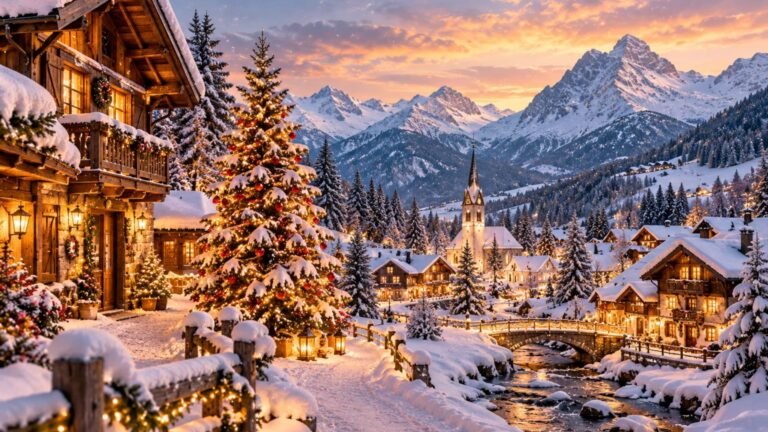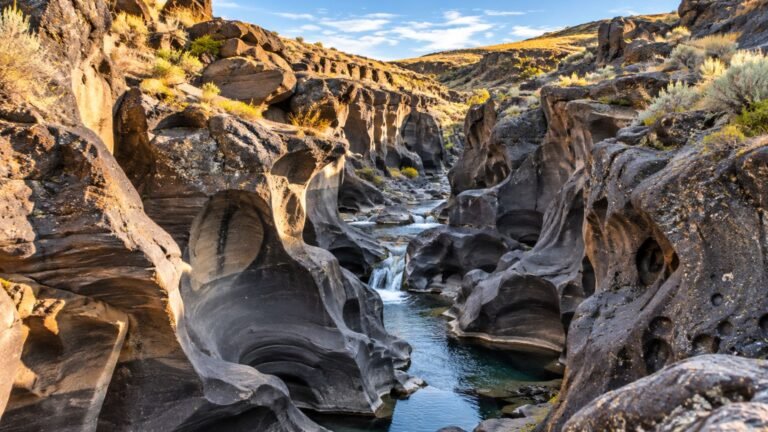
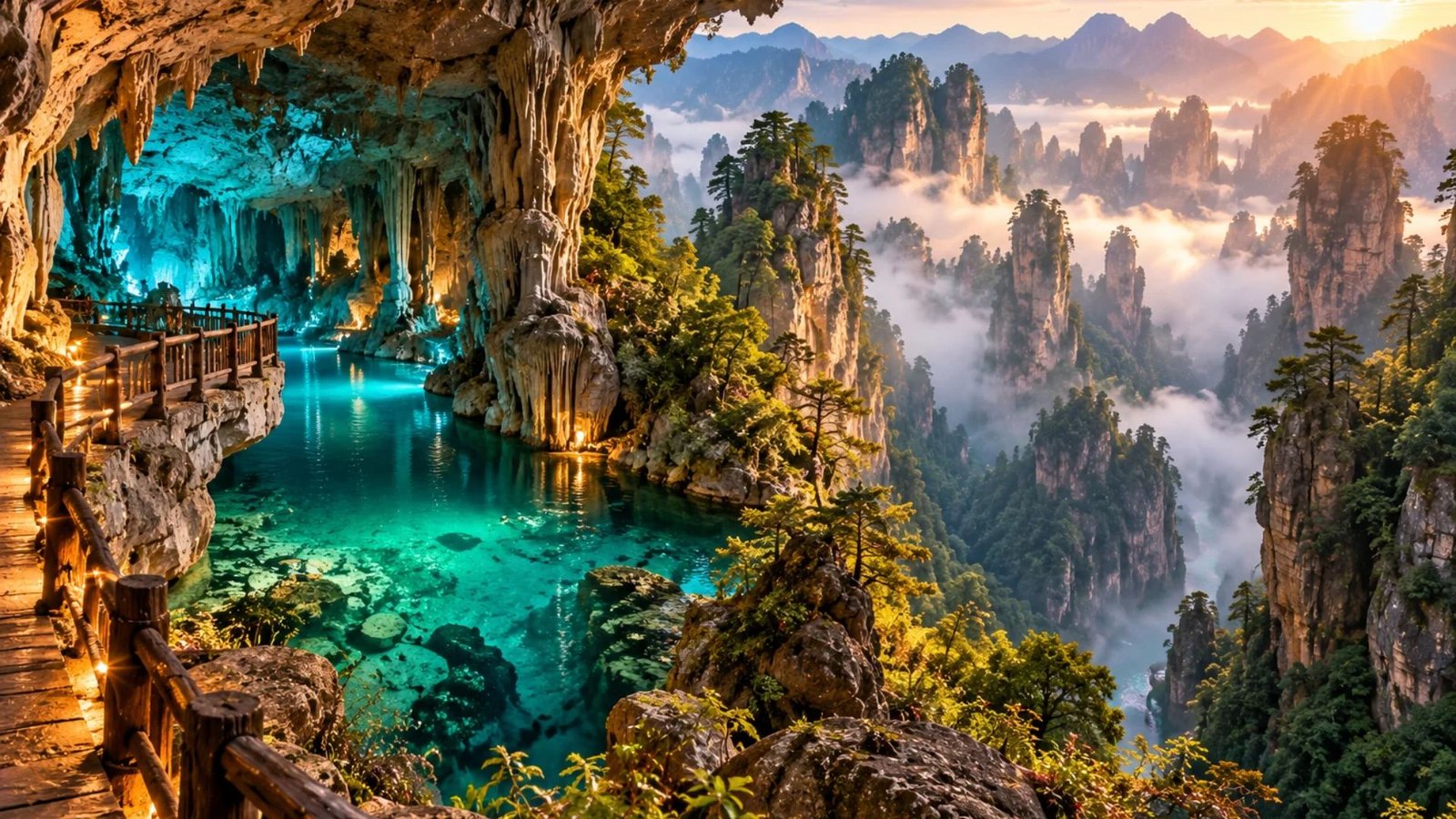

Some places look so unusual that they seem to belong in a fantasy novel rather than on a map.
From glowing caves and colorful mountains to ancient ruins swallowed by nature, our world is full of destinations that leave travelers wondering how they can possibly be real.
I love the idea of discovering places that feel a little different from the usual sightseeing stops, especially when they offer beautiful scenery and a story worth remembering.
In this guide, we’ll explore 12 mysterious places around the world, plus practical tips to help you plan a visit and experience their magic responsibly.
1. Waitomo Glowworm Caves, New Zealand
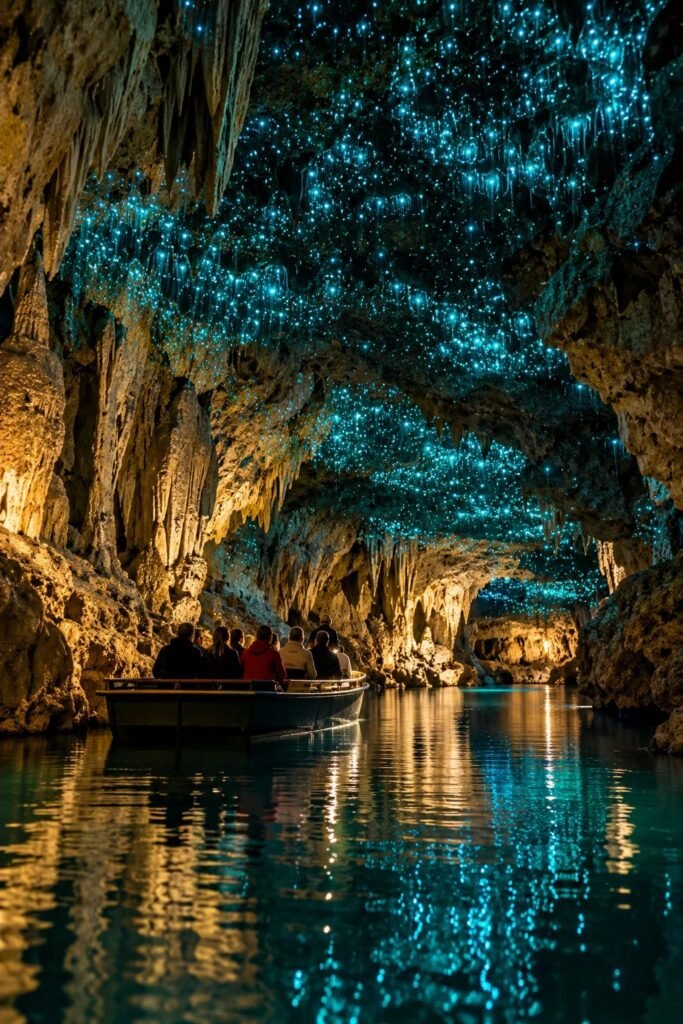
Imagine stepping into a dark underground cave and looking up to see thousands of tiny blue lights shining above you like a starry night sky. That is the extraordinary experience waiting for you at the Waitomo Glowworm Caves in New Zealand.
The lights come from glowworms, tiny creatures that produce a natural glow to attract prey.
Inside the caves, their glowing threads create a beautiful display across the ceiling. Visitors can explore parts of the cave system with guided tours, including a peaceful boat ride beneath the glowing lights.
What makes this destination special is the contrast between the dark limestone caves and the delicate glow overhead. It feels almost unreal, yet it is entirely natural.
Travel tips: Waitomo is located on New Zealand’s North Island.
Book a guided tour in advance, particularly during busy travel periods. Photography may be restricted in some areas to protect the glowworms and preserve the experience, so check the rules before visiting.
Read Discover 12 Enchanting U.S. Towns Straight Out of a Fairy Tale
2. Pamukkale, Turkey
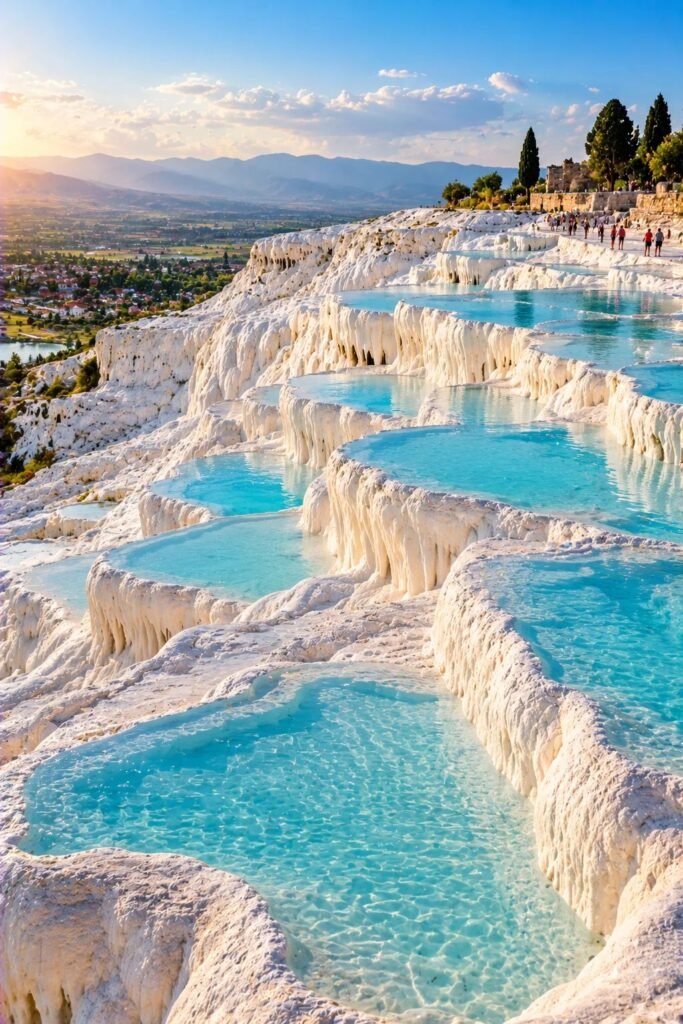
Pamukkale is one of those destinations that makes you stop scrolling and look twice. Located in southwestern Turkey, this natural wonder features brilliant white terraces filled with mineral-rich thermal water flowing down a hillside.
The terraces have formed over time as calcium carbonate deposits accumulated from the area’s hot springs. From a distance, the landscape can resemble a frozen waterfall, even though the area enjoys a relatively warm climate.
Nearby, you can explore Hierapolis, an ancient Greco-Roman city with impressive ruins, including a theater and historic remains that reveal the area’s long history.
I would recommend allowing enough time to enjoy both the natural terraces and the archaeological site rather than rushing through for photographs.
The combination of geology and ancient history makes this place particularly memorable.
Travel tips: Pamukkale is accessible from Denizli, which has transport connections to other parts of Turkey.
Wear comfortable footwear and follow local rules about where you can walk. Some terrace areas are protected, and visitors may need to remove their shoes in designated sections.
3. Socotra Island, Yemen
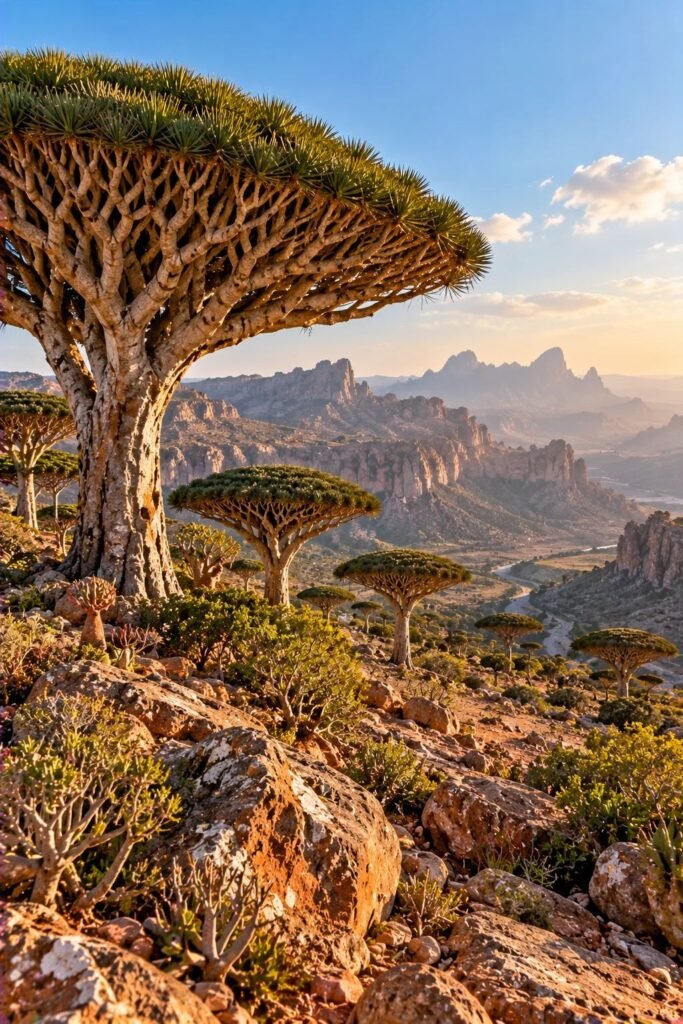
Socotra Island is often described as one of the strangest-looking places on Earth. Its unusual landscape includes rugged mountains, white-sand beaches, clear turquoise water, and the famous dragon’s blood trees, which have distinctive umbrella-shaped canopies.
Many of Socotra’s plant species are found nowhere else in the world. This exceptional biodiversity developed partly because the island remained geographically isolated for millions of years.
Walking among these unusual trees can feel like entering a science-fiction landscape. Yet Socotra is a real place with communities, traditions, and fragile ecosystems that deserve respect.
Although the scenery is spectacular, this destination requires careful planning. Travel conditions and access can be affected by the wider security situation in Yemen.
Travel tips: Check current official travel advisories before considering a visit. Do not assume that flights, permits, accommodation, or guided trips are operating normally.
If travel is not safe or practical, you can still learn about Socotra’s remarkable biodiversity through reputable nature documentaries and conservation resources.
Read Places in Switzerland That Look Like a Fairy Tale — A Deep, Practical Guide
4. Salar de Uyuni, Bolivia
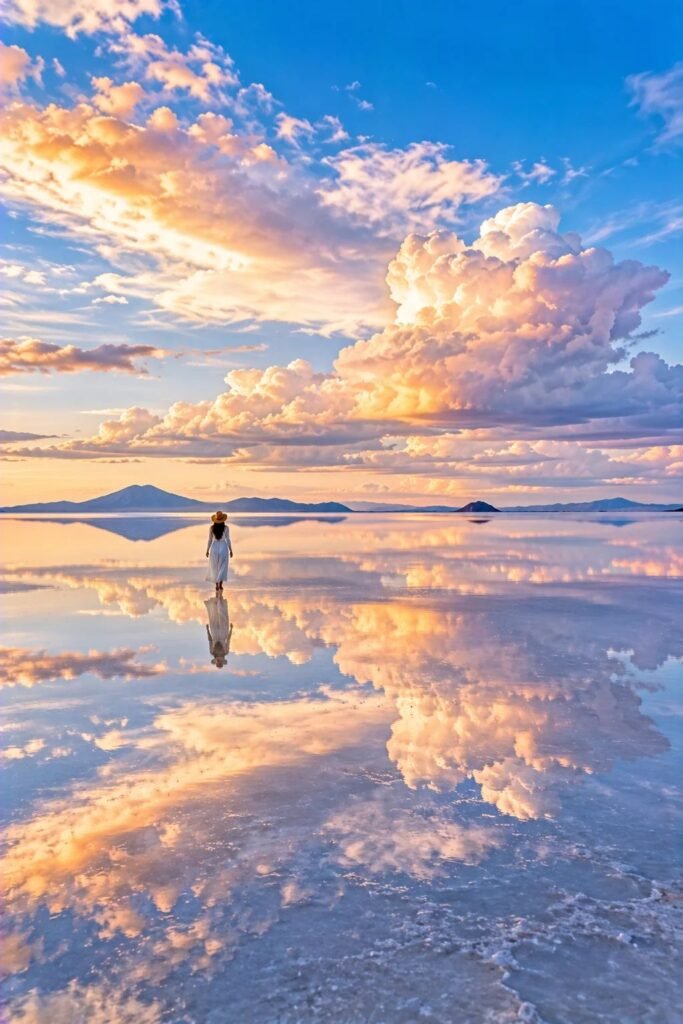
Have you ever wondered what it would feel like to walk across a giant mirror? During the wet season, parts of Salar de Uyuni in Bolivia can create exactly that illusion.
Salar de Uyuni is the world’s largest salt flat, covering thousands of square kilometers in southwestern Bolivia.
During drier months, the landscape is an enormous expanse of white salt crust. After a shallow layer of water forms across the surface, the sky can be reflected so clearly that the horizon seems to disappear.
The result is a surreal landscape that attracts photographers and adventurous travelers from around the world.
The experience changes with the seasons, which is why it is worth deciding whether you prefer the reflective effect or the endless white salt landscape before booking your trip.
Travel tips: Uyuni is the usual starting point for guided excursions. The reflective effect depends on rainfall and weather conditions, so it cannot be guaranteed.
Bring sun protection, warm layers, and a camera with spare batteries. Temperatures can drop considerably at night, and the region’s high altitude means you should allow time to acclimatize.
5. The Door to Hell, Turkmenistan
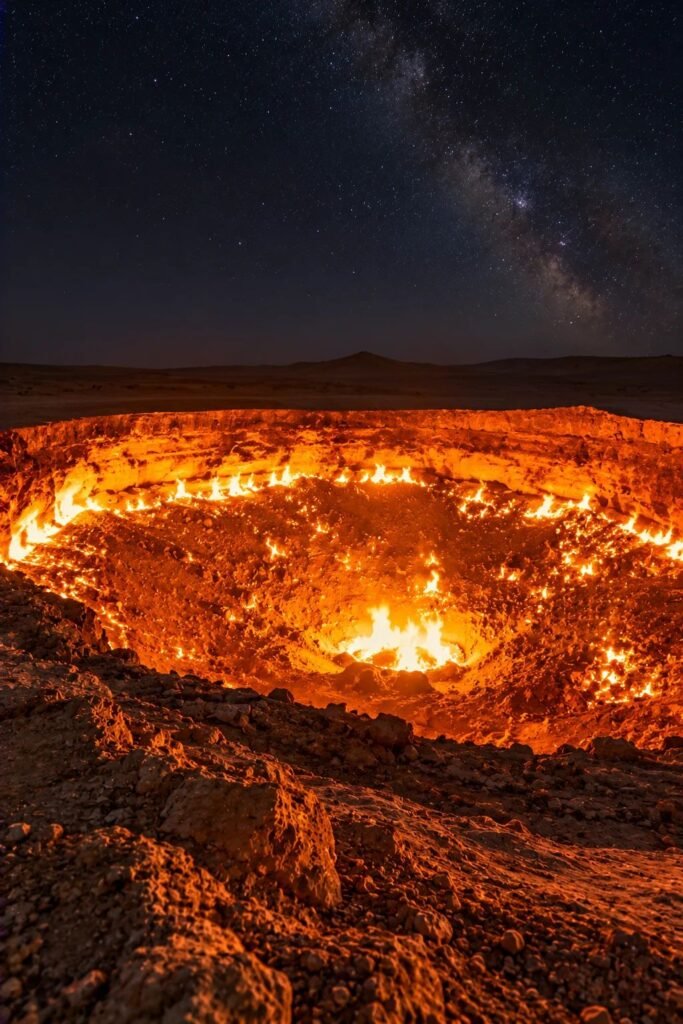
In the Karakum Desert of Turkmenistan lies the Darvaza gas crater, popularly known as the Door to Hell. This large crater has become famous for its persistent flames, which illuminate the surrounding desert after dark.
The crater is associated with a natural gas field and is widely believed to have been ignited following a Soviet-era drilling incident in the 1970s. However, details of its origins and the exact circumstances remain uncertain.
At night, the glowing crater creates a dramatic scene against the dark desert landscape. It is an unusual destination, but the setting is also a reminder of the environmental consequences of burning fossil fuels.
Travel tips: Access and travel arrangements in Turkmenistan can be complicated, so research visa requirements and current entry rules well ahead of time.
Visit only with appropriate local guidance, keep a safe distance from the crater’s edge, and never attempt to climb down into it. Extreme heat and unstable ground make this a dangerous area.
6. The Catacombs of Paris, France
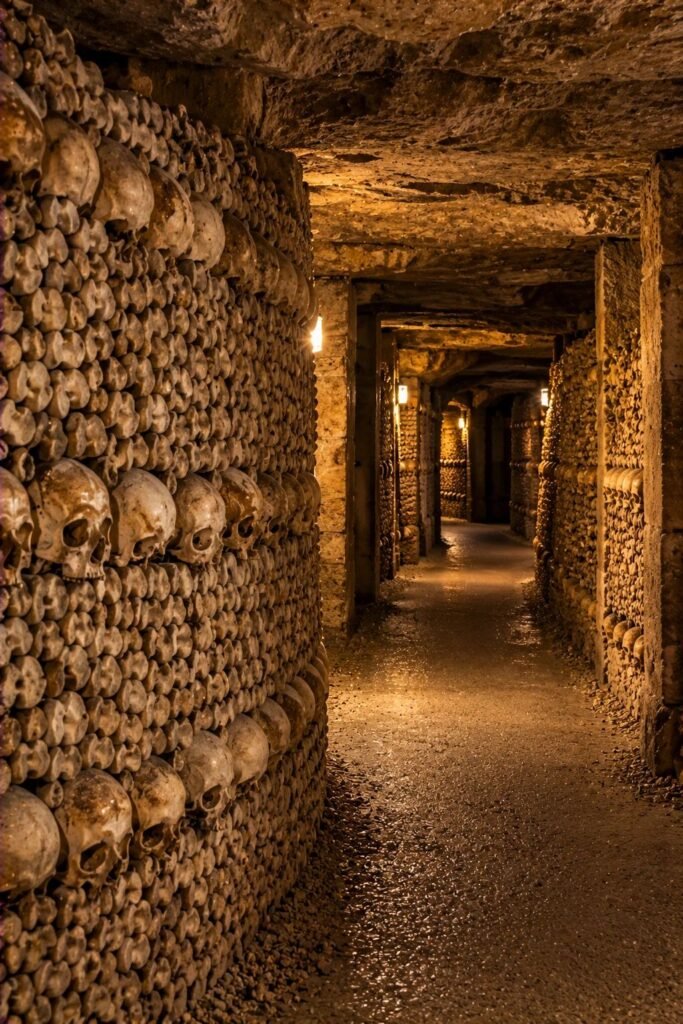
Beneath the busy streets of Paris lies a hidden network of underground passages containing the remains of millions of people. The Paris Catacombs are among the city’s most unusual historical attractions.
The underground ossuary was established in the late eighteenth century when overcrowded cemeteries created serious public health concerns. Human remains were transferred into former limestone quarries, eventually creating carefully arranged walls of bones and skulls.
Although the setting can feel unsettling, the catacombs offer a fascinating perspective on Parisian history, burial practices, and the city’s development.
For travelers who enjoy history beyond grand palaces and famous museums, this underground attraction provides a very different experience.
Travel tips: Visit the official Paris Catacombs website for opening information, ticket availability, and visitor requirements.
Reserve ahead when possible, wear comfortable shoes, and be prepared for cool, damp conditions. Only enter the authorized visitor route; unauthorized underground exploration is dangerous and prohibited.
7. Antelope Canyon, United States
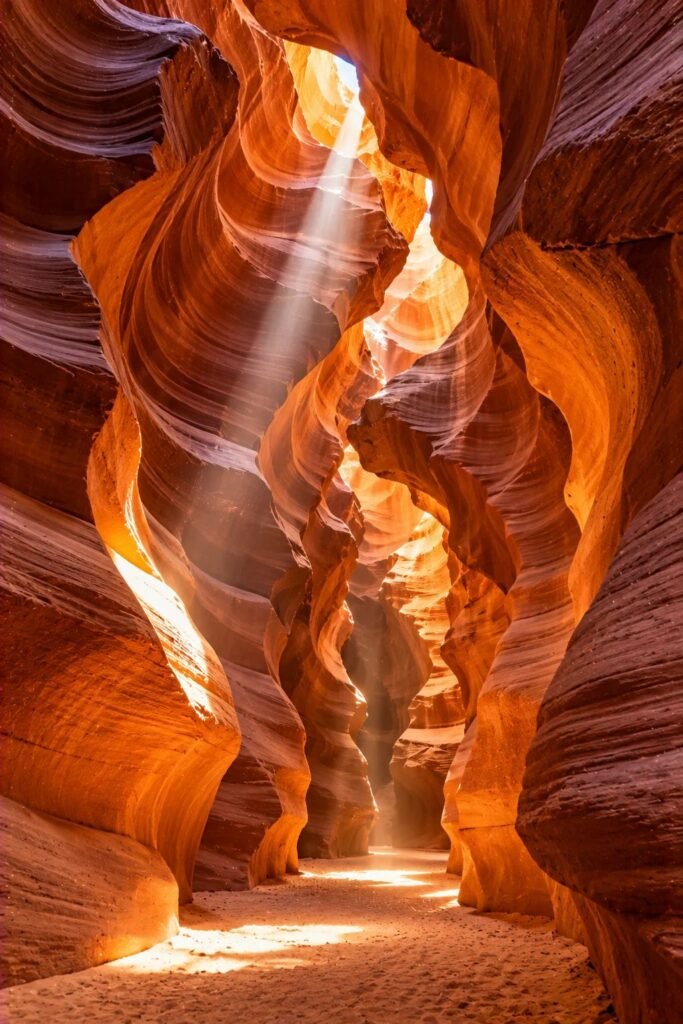
Antelope Canyon in Arizona is famous for its flowing sandstone walls, narrow passageways, and beautiful patterns of light. Wind and water have shaped the sandstone over long periods, creating smooth curves and wave-like formations.
When sunlight enters certain sections of the canyon, the rock can glow in shades of orange, red, and gold. The effect changes throughout the day, making the canyon especially popular with photographers.
The landscape is striking, but the canyon is also part of the homeland of the Navajo people. Visiting responsibly means recognizing its cultural significance as well as appreciating its natural beauty.
Travel tips: Antelope Canyon is near Page, Arizona, and visits generally require a guided tour with an authorized operator. Compare tour options and confirm accessibility before booking.
Flash-flood risk is a serious concern in slot canyons, so never enter during unsafe weather conditions or ignore a guide’s instructions.
8. Zhangjiajie National Forest Park, China
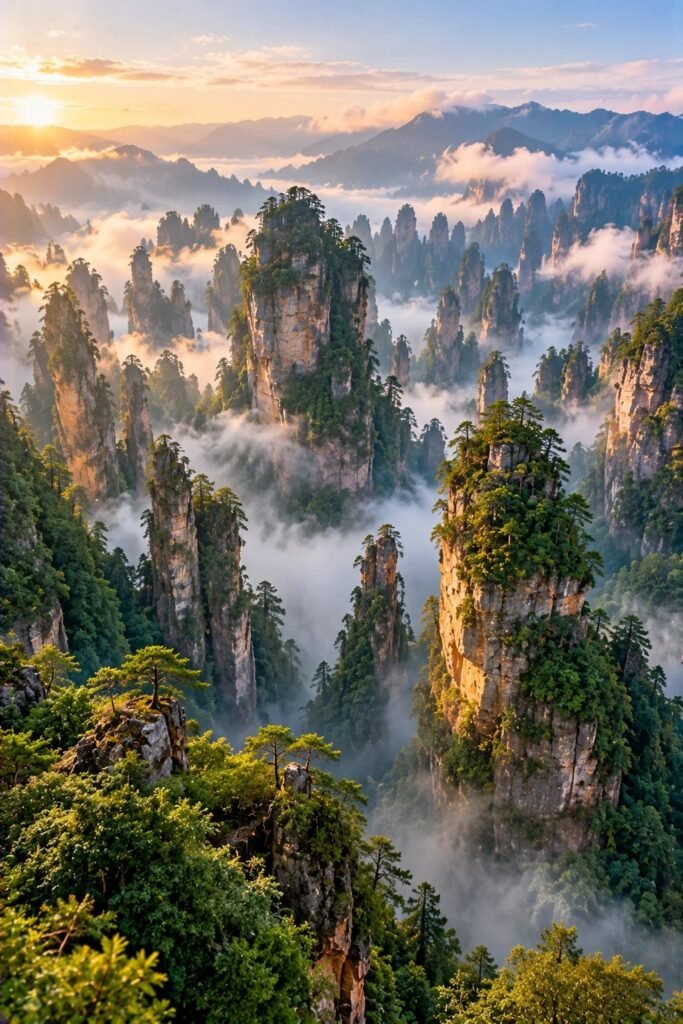
If you have ever seen photographs of towering stone pillars rising through mist, you may have already encountered the landscapes of Zhangjiajie National Forest Park.
Located in Hunan Province, China, the park is known for its dramatic sandstone formations, forested cliffs, and winding mountain trails. Clouds and mist sometimes surround the pillars, making them appear to float above the valleys.
The scenery is so unusual that it can look digitally created, but these formations developed through natural geological processes over a long period.
There are several ways to experience the park, including scenic walking routes and designated viewing platforms. If you enjoy nature photography, the changing weather can create beautiful opportunities throughout the day.
Travel tips: Plan at least a full day, and consider spending longer if you want to explore several areas. Wear sturdy walking shoes and check which trails and transport services are operating.
Fog can reduce visibility, so remain on marked paths and use designated viewpoints rather than approaching cliff edges.
9. Lake Hillier, Australia
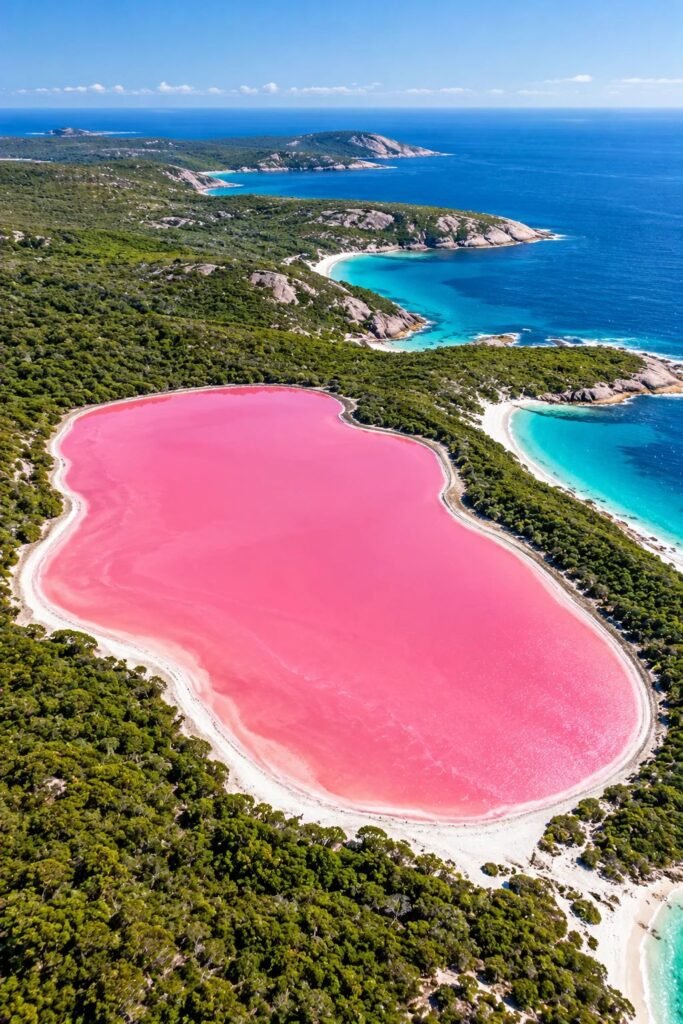
Lake Hillier on Middle Island, off the coast of Western Australia, is famous for its striking pink color. Surrounded by green vegetation and the deep blue of the ocean, the lake creates a remarkable contrast that seems almost impossible.
Its color is associated with microorganisms and algae that thrive in its salty environment. The precise appearance can vary with environmental conditions, so photographs taken at different times may show slightly different shades.
Unlike a painted pool, Lake Hillier is a natural feature within a sensitive ecosystem. Its unusual appearance has made it an iconic example of how varied Earth’s landscapes can be.
Travel tips: Middle Island is remote, and access to Lake Hillier may be restricted or dependent on approved tour arrangements. Check current permissions and conservation rules before making plans.
Do not assume you can land on the island or enter the water. If direct access is unavailable, look for reputable scenic flight options that operate lawfully.
10. The Giant’s Causeway, Northern Ireland
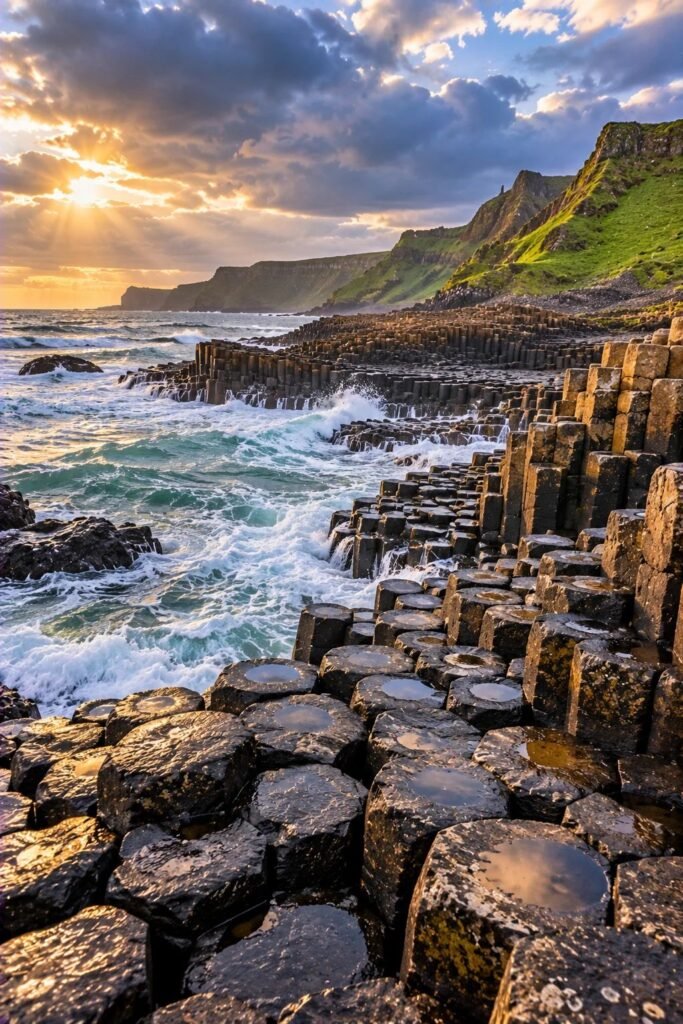
Northern Ireland’s Giant’s Causeway looks like a staircase built by giants walking into the sea. Thousands of tightly packed basalt columns create geometric patterns along the rugged coastline.
The formations developed when ancient lava cooled and contracted, producing the distinctive polygonal columns. Their unusual shapes inspired a local legend about the giant Finn McCool, who supposedly built a causeway across the sea.
I love destinations that combine natural beauty with folklore, and this is a wonderful example. You can enjoy the geological formations while learning about the stories generations have shared about the coastline.
Travel tips: The Giant’s Causeway is on the north coast of Northern Ireland, and the visitor center provides information about the landscape and its geology.
Wear waterproof layers and shoes with good grip, as coastal weather can change quickly. Stay away from dangerous waves and slippery rocks, even when the scenery makes them tempting to explore.
11. Derinkuyu Underground City, Turkey
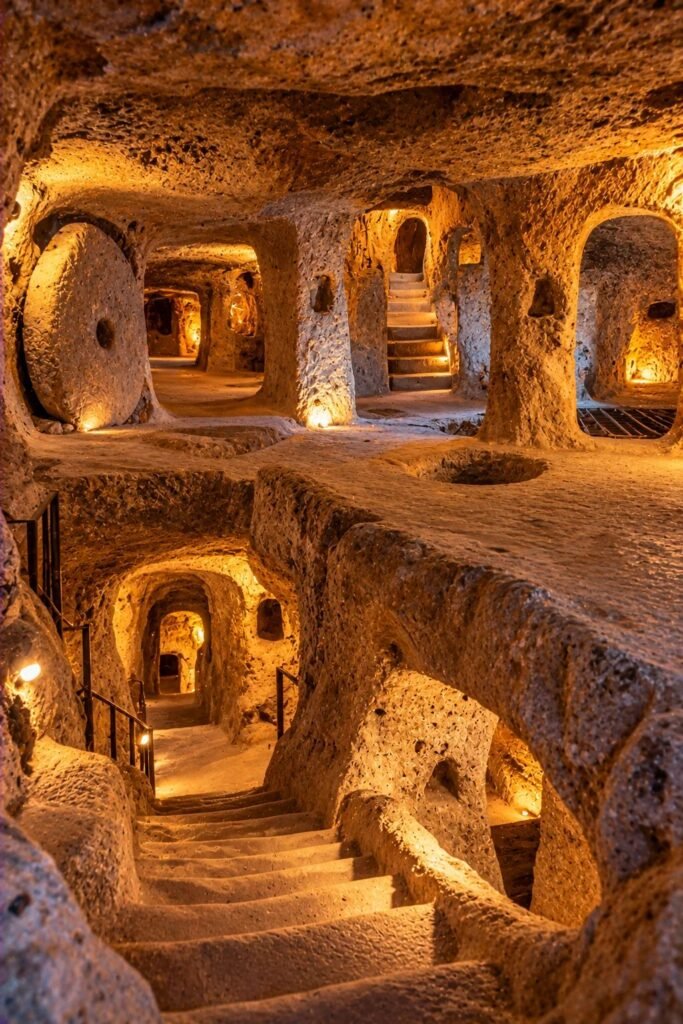
Imagine discovering an entire underground settlement beneath an ordinary landscape. That is the astonishing story of Derinkuyu, an ancient underground city in Turkey’s Cappadocia region.
The complex contains multiple levels of rooms and passageways, along with features associated with daily life, including storage areas, ventilation shafts, and spaces for communal activities.
It was expanded and used over different periods, including times when local communities needed protection from threats above ground.
Exploring its narrow corridors offers a glimpse into how people adapted to their surroundings and developed ingenious ways to use the landscape.
The most fascinating part is that the underground spaces were not simply hiding places; they formed part of a larger settlement system in Cappadocia.
Travel tips: Derinkuyu can be visited as part of a Cappadocia itinerary, often alongside other underground cities and rock-cut sites.
Some passageways are narrow and steep, so consider your comfort with confined spaces before visiting. Follow visitor routes and local safety instructions, and allow time to explore the region above ground too.
12. Fly Geyser, United States
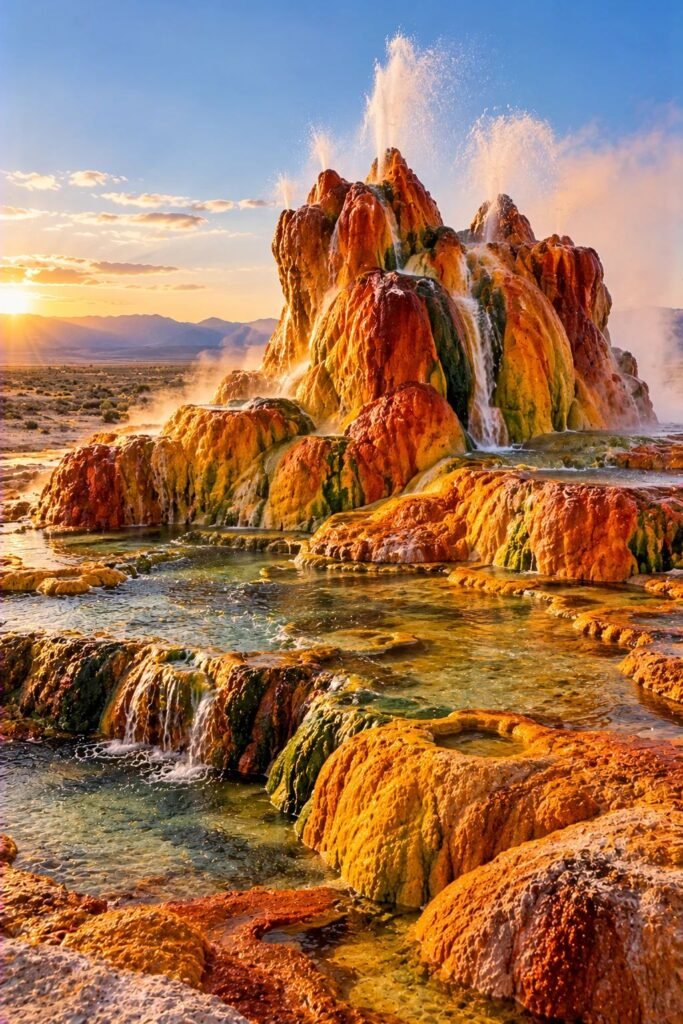
In Nevada’s Black Rock Desert, Fly Geyser looks like something from another planet. Its colorful mineral formations rise above the desert floor, with water flowing from the mound and vivid shades of green, orange, and red appearing across its surface.
The feature developed following human drilling activity in the early twentieth century, with geothermal water and mineral deposits gradually building the unusual formations. Heat-loving microorganisms contribute to some of its striking colors.
Unlike many famous geysers, Fly Geyser is on private land, and access is controlled. This makes it a destination that requires more planning than simply driving up to a public roadside attraction.
Travel tips: Check the current access arrangements with the landowner or an authorized tour provider before traveling. Do not trespass or attempt to reach the site through restricted areas.
If a visit is possible, bring water, sun protection, and suitable footwear for the desert environment.
How to Plan a Trip to These Mysterious Places
Visiting unusual destinations can be incredibly rewarding, but a little preparation makes the experience safer and more enjoyable.
- Research the best season: Some places are most impressive during particular weather conditions. Salar de Uyuni, for example, looks very different during the wet and dry seasons.
- Check entry requirements: International destinations may require visas, permits, guided tours, or special transport arrangements.
- Respect local communities: Learn about cultural traditions and follow the rules established by local authorities and Indigenous communities.
- Protect natural environments: Stay on marked trails, avoid disturbing wildlife, and never remove rocks, plants, or other natural features.
- Pack for the destination: Bring suitable footwear, weather-appropriate clothing, sun protection, and any necessary personal supplies.
- Allow extra time: Remote locations often involve long journeys, limited transport, or changing weather. Avoid planning an itinerary that depends on everything going perfectly.
Most importantly, check current safety advice before booking remote or politically sensitive destinations. A beautiful photograph is never worth taking unnecessary risks.
Final Thoughts
The world is full of places that challenge our imagination, from glowing underground caves and mirror-like salt flats to ancient settlements hidden beneath the earth.
Each destination on this list offers something different, whether it is a remarkable natural formation, a fascinating historical story, or a landscape that looks almost unreal.
If I were planning a trip around one of these mysterious places, I would choose a destination that matches my interests, research the best time to visit, and leave enough room in the itinerary to enjoy the experience without rushing.
You do not have to visit all twelve to have an unforgettable adventure. Start with the place that fascinates you most, travel responsibly, and keep an open mind. Sometimes, the most extraordinary discoveries are waiting in the real world.