
I still remember how exciting it felt to plan a Switzerland trip and realize I had no idea what to put in my suitcase.
Switzerland can take you from beautiful city streets to chilly mountain peaks in the same day, so packing only for the forecast at your starting destination can leave you uncomfortable later.
For a 10-day trip, I’ve found that the smartest approach is to pack light, build outfits around layers, and choose pieces that work for sightseeing, trains, restaurants, and outdoor adventures.
In this guide, I’ll walk you through exactly what to pack, what to leave behind, and how to organize your suitcase.
1. Consider the Season Before You Pack
Switzerland doesn’t have a one-size-fits-all packing list.
Your wardrobe should change depending on whether you’re visiting during spring, summer, fall, or winter.
Spring: March to May
Spring can be unpredictable. Lower elevations may feel pleasantly mild while mountain destinations remain cold.
Pack:
- Lightweight sweaters
- Long-sleeve tops
- T-shirts
- Comfortable pants
- Light waterproof jacket
- Scarf
- Comfortable sneakers
- Weather-resistant shoes
- Compact umbrella
If you’re visiting mountain areas, bring a warm fleece or insulated layer even if the weather looks mild in Zurich or Geneva.
Summer: June to August
Summer is generally the easiest season to pack for, but don’t assume Switzerland will be hot everywhere.
For summer, I would pack:
- Breathable T-shirts
- Lightweight pants
- Comfortable jeans
- Shorts
- Lightweight sweater
- Cardigan or fleece
- Waterproof rain jacket
- Comfortable walking shoes
- Sunglasses
- Sun hat
- Sunscreen
If hiking in the Alps, you’ll still want a warm layer because temperatures can be significantly cooler at higher elevations.
Fall: September to November
Fall is one of my favorite seasons for Switzerland because the scenery can be incredible, but temperatures can change quickly.
Bring:
- Long-sleeve shirts
- T-shirts for layering
- Sweaters
- Jeans or trousers
- Lightweight thermal layer
- Waterproof jacket
- Scarf
- Comfortable walking shoes
- Warm socks
- Small umbrella
For late fall, consider adding a warmer coat.
Winter: December to February
Winter requires the most substantial packing, especially if you’re visiting mountain destinations.
Bring:
- Thermal base layers
- Warm sweaters
- Insulated winter coat
- Waterproof boots
- Warm socks
- Gloves
- Beanie
- Scarf
- Moisture-resistant clothing
- Warm sleepwear
If you’re skiing or participating in snow activities, you’ll need additional specialized clothing.
2. The Best Clothing Strategy for 10 Days
Instead of packing 10 completely different outfits, create a small travel capsule wardrobe.
This makes your suitcase easier to carry, especially if you’ll be changing hotels and using trains.
For a 10-day trip, I recommend approximately:
Tops
Pack:
- 4–5 T-shirts or lightweight tops
- 2–3 long-sleeve tops
- 2 sweaters or cardigans
- 1 nicer top for evenings
You can repeat tops throughout the trip by combining them with different bottoms and layers.
Bottoms
Pack around:
- 2 pairs of jeans or trousers
- 1 pair of comfortable travel pants
- 1 pair of leggings
- 1 pair of shorts during warmer months
You don’t need a different pair of pants for every day.
Dresses or Skirts
If you enjoy wearing dresses, bring one versatile dress that can work for restaurants, sightseeing, or photos.
For cooler weather, wear it with tights, boots, and a sweater.
Outerwear
A waterproof outer layer is one of the most useful things you can pack.
Switzerland’s weather can change quickly, particularly around mountainous areas.
Instead of bringing several coats, consider:
Base layer + sweater/fleece + waterproof outer layer
This combination gives you much more flexibility.
3. Pack Layers Instead of Bulky Clothes
This is probably my number-one Switzerland packing tip.
A heavy coat can take up a huge amount of suitcase space. Layers give you more control over your temperature.
A good layering system looks like this:
Base Layer
This sits closest to your skin.
Examples:
- T-shirt
- Long-sleeve shirt
- Thermal shirt in colder weather
Middle Layer
This provides warmth.
Examples:
- Fleece
- Sweater
- Cardigan
- Lightweight down jacket
Outer Layer
This protects you from the weather.
Examples:
- Waterproof rain jacket
- Windbreaker
- Insulated jacket
The beauty of layering is that you can remove pieces when you’re warm and put them back on when temperatures drop.
4. Choose Comfortable Shoes Carefully
Switzerland is absolutely not the place where I would sacrifice comfort for fashion.
You may walk through cobblestone streets, train stations, waterfront promenades, steep streets, mountain villages, and hiking trails all in the same trip.
For 10 days, I recommend bringing two pairs of shoes, with an optional third pair depending on your plans.
Pair One: Comfortable Walking Shoes
Your primary shoes should be comfortable enough for long sightseeing days.
Look for:
- Good cushioning
- Supportive soles
- Comfortable fit
- Breathable materials
- Good grip
Wear these while traveling so you don’t waste suitcase space.
Pair Two: Weather-Resistant Shoes
If you’re visiting Switzerland during rainy, cold, or shoulder seasons, bring a weather-resistant pair.
These are especially useful for:
- Wet streets
- Mountain villages
- Light hiking
- Rainy days
- Cooler temperatures
Optional Pair Three
Only bring a third pair if you genuinely need it.
A simple pair of flats, loafers, or lightweight sandals can work for warmer-weather evenings.
Avoid packing several pairs of shoes “just in case.” They are usually one of the biggest suitcase space stealers.
5. Don’t Forget a Waterproof Jacket
If I could choose just one outerwear item for a Switzerland trip, it would be a lightweight waterproof jacket.
You don’t necessarily need a huge raincoat.
A packable waterproof shell can protect you from:
- Rain
- Wind
- Sudden weather changes
- Light snow
- Cooler mountain conditions
It can also be folded into your day bag when the weather looks good.
For summer trips, this is particularly useful because you can carry it without taking up much room.
6. Pack the Right Bags for Switzerland
A suitcase is only part of your luggage setup.
I recommend traveling with:
Main Suitcase
A small or medium suitcase works well for a 10-day trip.
If you’re using trains frequently, avoid bringing an enormous suitcase. Smaller luggage is much easier to manage through stations and accommodation.
Personal Bag
A tote, crossbody, or backpack can hold:
- Passport
- Phone
- Wallet
- Travel documents
- Power bank
- Headphones
- Snacks
- Water bottle
Day Backpack
If you plan to hike or spend entire days exploring, a small backpack is extremely useful.
Look for one that is:
- Lightweight
- Comfortable
- Water-resistant
- Secure
- Large enough for a jacket and water bottle
7. Switzerland Packing List for Toiletries
You don’t need to bring your entire bathroom with you.
For a 10-day trip, use travel-size containers whenever possible.
Toiletry essentials
Pack:
- Toothbrush
- Toothpaste
- Facial cleanser
- Moisturizer
- Sunscreen
- Deodorant
- Shampoo
- Conditioner
- Body wash
- Hairbrush or comb
- Hair ties
- Lip balm
- Razor if needed
- Basic makeup
- Makeup remover
- Personal hygiene products
- Small perfume or fragrance
If you’re staying in hotels, some basic toiletries may already be provided, so check your accommodation before packing full-size products.
8. Sunscreen Is Important Even in the Mountains
One thing I wouldn’t skip is sunscreen.
You might associate Switzerland with cool weather and snowy mountains, but UV exposure can still be significant, particularly at higher elevations.
Pack:
- SPF sunscreen
- Lip balm with SPF
- Sunglasses
- Sun hat
This is especially important if your itinerary includes hiking, scenic mountain viewpoints, skiing, or spending long periods outdoors.
9. Electronics to Pack
You don’t need to bring every electronic device you own.
For most travelers, these are enough:
- Smartphone
- Phone charger
- Universal travel adapter
- Power bank
- Camera, if needed
- Camera charger
- Headphones
- Smartwatch charger, if applicable
- E-reader or tablet, optional
Don’t Forget a Travel Adapter
Switzerland uses electrical outlets that differ from many other countries, so check that your adapter is compatible with Swiss outlets.
A universal adapter is usually the simplest option because it can work across multiple countries.
10. Bring a Power Bank
A power bank can save you from a stressful situation when you’re out sightseeing all day.
Think about a typical Switzerland day:
You might leave your hotel in the morning, take a train to another town, ride a cable car, hike, take photos, use maps, and return in the evening.
Your phone battery can disappear quickly.
A portable power bank allows you to recharge while you’re away from your accommodation.
Keep it in your day bag rather than your checked luggage if you’re flying, and always follow your airline’s current battery rules.
11. Documents and Travel Essentials
Before leaving home, create a small travel document pouch.
I recommend keeping:
- Passport
- Travel insurance information
- Accommodation confirmations
- Transportation information
- Important reservation details
- Emergency contact information
- Copies of important documents
- Bank cards
- Some backup payment method
It’s also smart to keep digital copies of important documents in a secure location.
Don’t rely entirely on your phone. If your phone battery dies, you’ll want access to important information another way.
12. What to Pack for Switzerland’s Trains
Switzerland is famous for its beautiful rail journeys, and you’ll likely spend quite a bit of time on trains if you’re exploring multiple destinations.
For train days, keep these items accessible:
- Small backpack
- Water bottle
- Snacks
- Phone
- Charger
- Power bank
- Headphones
- Travel documents
- Light sweater
- Sunglasses
- Small umbrella
Avoid putting everything you need for the day inside your main suitcase.
If your suitcase is stored away or you’re moving between accommodations, you’ll appreciate having your essentials within reach.
13. Hiking Gear for Switzerland
If your itinerary includes hiking, your packing list needs to change slightly.
You don’t necessarily need professional mountaineering equipment for regular trails, but you should be prepared.
Pack:
- Comfortable hiking shoes
- Moisture-wicking socks
- Lightweight hiking pants
- Breathable top
- Fleece or warm layer
- Waterproof jacket
- Small backpack
- Reusable water bottle
- Sunglasses
- Sunscreen
- Hat
- Basic first-aid supplies
- Offline map or navigation app
For more challenging hikes, research the specific trail conditions before leaving and bring equipment appropriate for that route and season.
14. What to Wear in Swiss Cities
Switzerland is generally easy to dress for because you can combine practical clothing with a polished appearance.
For a day in cities such as Zurich, Geneva, or Lucerne, you can wear:
Option 1: Casual
- Jeans
- Comfortable top
- Cardigan
- Sneakers
- Crossbody bag
Option 2: Polished
- Trousers
- Blouse
- Lightweight sweater
- Comfortable flats or loafers
Option 3: Summer
- Midi dress
- Comfortable sandals
- Light jacket
- Crossbody bag
The key is choosing clothing that looks nice while still allowing you to walk comfortably for several hours.
15. What to Wear in Swiss Mountain Destinations
Mountain destinations require more practical clothing.
Even during warmer months, temperatures can feel much cooler at elevation.
A typical mountain outfit might include:
- Comfortable pants
- Moisture-wicking shirt
- Fleece or sweater
- Waterproof jacket
- Hiking shoes
- Sunglasses
- Hat
If you’re visiting snowy areas, add:
- Thermal base layers
- Insulated jacket
- Gloves
- Warm socks
- Waterproof boots
Always check the weather and conditions for the specific mountain you’re visiting rather than relying only on the weather forecast for the nearby city.
16. Underwear, Socks, and Sleepwear
These are easy to forget when you’re focused on jackets and hiking shoes.
For 10 days, pack:
- 7–10 pairs of underwear
- 7–10 pairs of socks
- 1–2 bras or other everyday undergarments as needed
- 1 comfortable sleepwear set
- Extra warm socks for cold-weather trips
You can reduce the quantity if you’re comfortable doing laundry during your trip.
A lightweight laundry bag is also useful for keeping clean and worn clothing separate.
17. Pack a Small Laundry Kit
A 10-day trip doesn’t necessarily require 10 days’ worth of clothing.
A simple laundry kit can help you pack less.
Bring:
- Small laundry bag
- Travel detergent sheets or small detergent
- A few reusable bags for damp items
Even washing a few lightweight tops and underwear during your trip can dramatically reduce how much clothing you need.
18. Don’t Forget a Reusable Water Bottle
A reusable water bottle is useful throughout Switzerland.
Keep it with you while sightseeing and hiking.
Choose one that:
- Doesn’t leak
- Fits in your backpack
- Is lightweight
- Is easy to clean
A collapsible bottle is another good choice if you’re trying to save space.
19. Bring a Small First-Aid and Medicine Kit
You don’t need a giant medical kit.
A compact pouch is enough for basic travel needs.
Consider packing:
- Personal medications
- Basic pain relief medicine
- Bandages
- Blister protection
- Antiseptic wipes
- Motion-sickness medication if needed
- Any medication you regularly use
If you take prescription medication, keep it in its original packaging and follow the requirements relevant to your medications and travel route.
For hiking, blister protection is especially useful because even comfortable shoes can cause problems when you’re walking more than usual.
20. Travel Accessories That Are Actually Worth Packing
Some accessories can make your trip significantly easier.
My favorites include:
Packing Cubes
Use separate cubes for:
- Tops
- Bottoms
- Underwear
- Layers
- Accessories
This makes it much easier to find things without unpacking your entire suitcase.
Small Crossbody Bag
Useful for city sightseeing and keeping your everyday essentials close.
Foldable Tote
Perfect for groceries, souvenirs, or carrying extra items during the day.
Laundry Bag
Keeps worn clothes away from clean clothes.
Compact Umbrella
Switzerland’s weather can change quickly, so a small umbrella can be useful.
Travel Lock
A small luggage lock can provide an extra layer of security for your suitcase.
21. What NOT to Pack for Switzerland
Packing well is partly about knowing what to leave at home.
Don’t Pack Too Many Shoes
Three or four pairs usually aren’t necessary for a 10-day trip.
Don’t Pack Ten Complete Outfits
You’re likely to repeat clothing combinations, and that’s completely fine.
Don’t Bring Huge Toiletry Bottles
Travel sizes save considerable space.
Don’t Pack Only Heavy Clothes
Even cold-weather trips benefit from layering.
Don’t Pack Uncomfortable “Photo-Only” Shoes
If you’re walking around Switzerland all day, comfort matters.
Don’t Overpack Accessories
Choose a few versatile pieces rather than bringing your entire collection.
22. A Simple 10-Day Switzerland Capsule Wardrobe
Here’s an example of how I would build a versatile 10-day wardrobe.
Tops
- 3 T-shirts
- 2 long-sleeve tops
- 1 blouse
- 2 sweaters
Bottoms
- 2 pairs of jeans
- 1 pair of comfortable trousers
- 1 pair of leggings
- 1 pair of shorts for summer
Outer Layers
- 1 fleece or cardigan
- 1 waterproof jacket
- 1 warmer jacket depending on season
Shoes
- Comfortable walking sneakers
- Weather-resistant walking or hiking shoes
- Optional lightweight evening shoes
Extras
- 1 casual dress
- Sleepwear
- Underwear
- Socks
- Scarf
- Sunglasses
- Hat
This gives you enough variety without turning your suitcase into a closet.
23. How to Pack Your Suitcase Efficiently
Once you’ve decided what to bring, how you organize it matters.
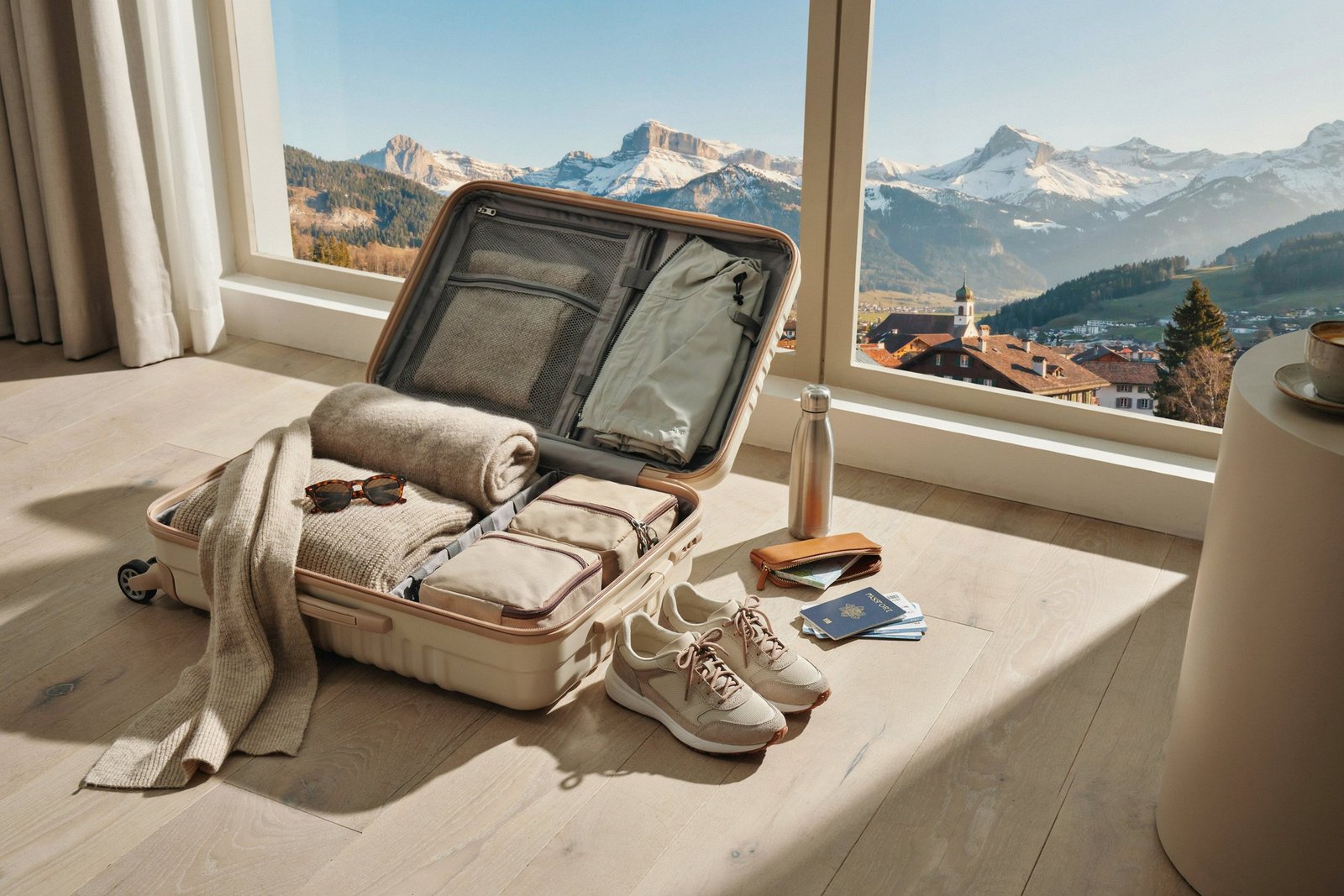
I prefer using packing cubes because they allow me to separate clothing by category.
A simple arrangement could be:
Cube 1: Tops
Cube 2: Pants and bottoms
Cube 3: Underwear and socks
Cube 4: Sweaters and layers
Small pouch: Toiletries
Small pouch: Electronics
Keep your waterproof jacket near the top of your suitcase because you may need it unexpectedly.
Wear your bulkiest shoes and jacket while traveling whenever practical.
24. Your Switzerland Personal-Item Bag
Your personal bag should contain everything you might need during transit.
I would pack:
- Passport
- Wallet
- Phone
- Power bank
- Charger
- Headphones
- Water bottle
- Small snack
- Sunglasses
- Light sweater
- Travel documents
- Medication
- Lip balm
- Hand sanitizer
- Tissues
This is especially useful on long travel days when you don’t want to open your main suitcase.
25. A Sample Outfit Plan for 10 Days
If you’re worried about repeating clothes, here’s an easy way to think about your outfits.
Day 1: Comfortable pants + T-shirt + cardigan
Day 2: Jeans + blouse + sneakers
Day 3: Travel pants + long-sleeve top + fleece
Day 4: Dress + cardigan + comfortable shoes
Day 5: Jeans + T-shirt + sweater
Day 6: Hiking pants + breathable top + waterproof jacket
Day 7: Trousers + blouse + cardigan
Day 8: Jeans + long-sleeve top + jacket
Day 9: Leggings + sweater + weather-resistant shoes
Day 10: Comfortable travel outfit + layers
The trick isn’t creating a completely new look every day. It’s creating a wardrobe where almost everything works together.
26. Switzerland Packing Checklist
Before closing your suitcase, run through this list.
Clothing
- 4–5 T-shirts or tops
- 2–3 long-sleeve tops
- 2 sweaters
- 2 pairs of jeans or trousers
- 1 pair of comfortable travel pants
- 1 pair of leggings
- 1 dress or nicer outfit
- 7–10 pairs of underwear
- 7–10 pairs of socks
- Sleepwear
- Waterproof jacket
- Seasonal warm layer
Shoes
- Comfortable walking shoes
- Weather-resistant or hiking shoes
- Optional lightweight evening shoes
Toiletries
- Toothbrush
- Toothpaste
- Shampoo
- Conditioner
- Body wash
- Face cleanser
- Moisturizer
- Sunscreen
- Deodorant
- Lip balm
- Hairbrush
- Personal hygiene products
Electronics
- Phone
- Phone charger
- Universal travel adapter
- Power bank
- Camera and charger
- Headphones
Travel Essentials
- Passport
- Travel documents
- Payment cards
- Travel insurance information
- Reusable water bottle
- Day backpack
- Sunglasses
- Small umbrella
- Laundry bag
- Small first-aid kit
Final Switzerland Packing Tips
Before you zip up your suitcase, remember that less can actually be more.
A 10-day trip doesn’t mean you need 10 days of completely different clothes. Switzerland is one of those destinations where versatile layers, comfortable shoes, and weather-ready clothing are far more valuable than an overflowing suitcase.
Check the weather for each destination on your itinerary before leaving. If you’re traveling between cities and mountain regions, pack for both environments.
Think about what you’ll actually be doing rather than what you might possibly do.
If you’re hiking, prioritize hiking gear. If you’re mostly exploring cities, prioritize comfortable walking clothes. If you’re traveling in winter, prioritize warmth and weather protection.
And most importantly, leave a little space in your suitcase.
Between Swiss chocolate, souvenirs, beautiful little gifts, and everything you’ll inevitably want to bring home, you’ll be happy you didn’t pack your suitcase to the absolute limit.
Final Takeaway
The perfect Switzerland packing list isn’t about bringing everything you own. It’s about choosing versatile clothing, comfortable shoes, smart layers, and practical travel accessories that can handle changing weather and different types of adventures.
For a 10-day trip, focus on a capsule wardrobe that allows you to mix and match your outfits. Bring a waterproof layer, comfortable walking shoes, a warm layer appropriate for the season, and a small day bag for exploring.
With the right pieces, you can travel from elegant Swiss cities to breathtaking mountain landscapes without dragging an oversized suitcase everywhere you go.
Pack thoughtfully, leave a little room for souvenirs, and you’ll be ready to enjoy Switzerland without spending your vacation worrying about what to wear.