
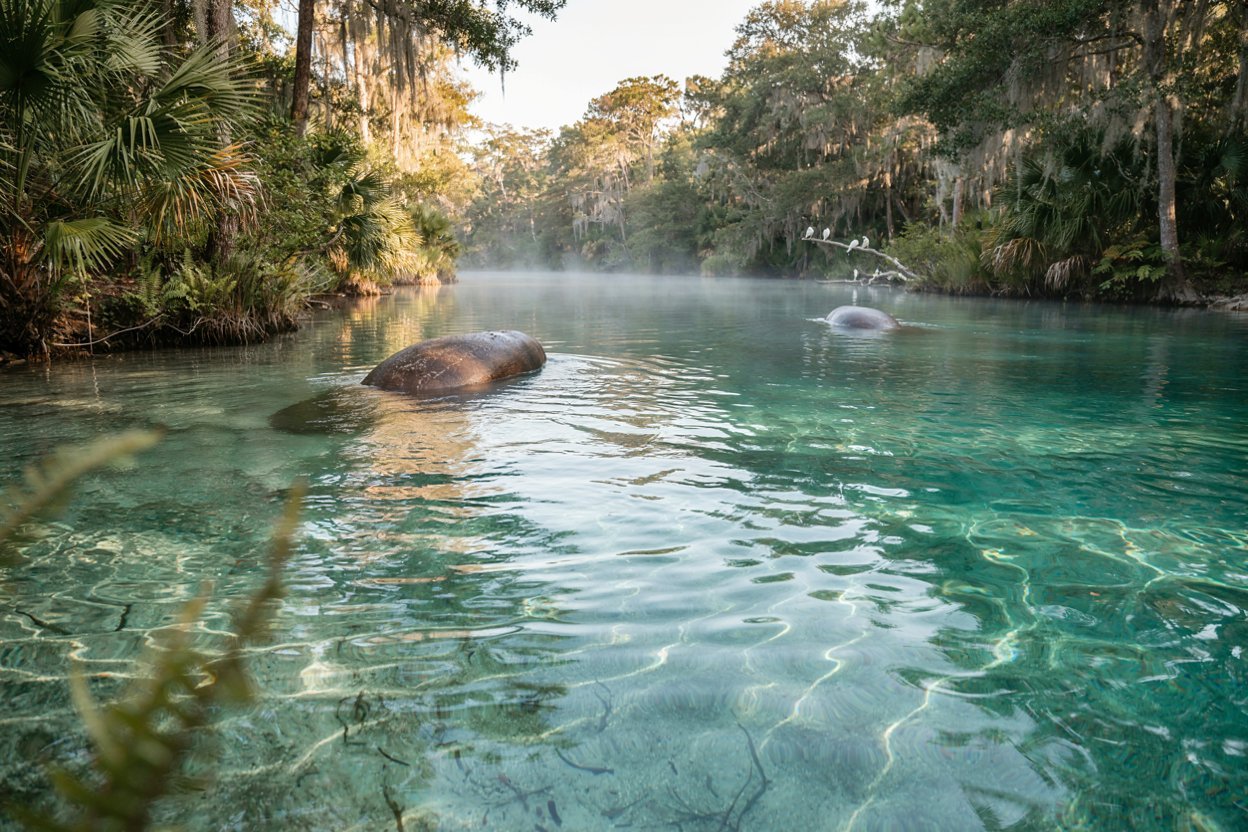

I still remember the first time I realized how incredible it would feel to slip quietly into Florida’s clear spring water and see a manatee gliding nearby.
These gentle animals have such a calm presence that even watching one from the surface feels completely different from an ordinary wildlife experience.
If swimming with manatees has been on your Florida bucket list, I want to help you plan it thoughtfully, because not every place that has manatees allows people to swim with them.
From the famous waters of Crystal River to beautiful springs where you can watch hundreds gather in winter, this guide covers where to go, when to visit, what to expect, what to bring, and how to enjoy the experience responsibly.
Best Places to Swim With Manatees in Florida at a Glance
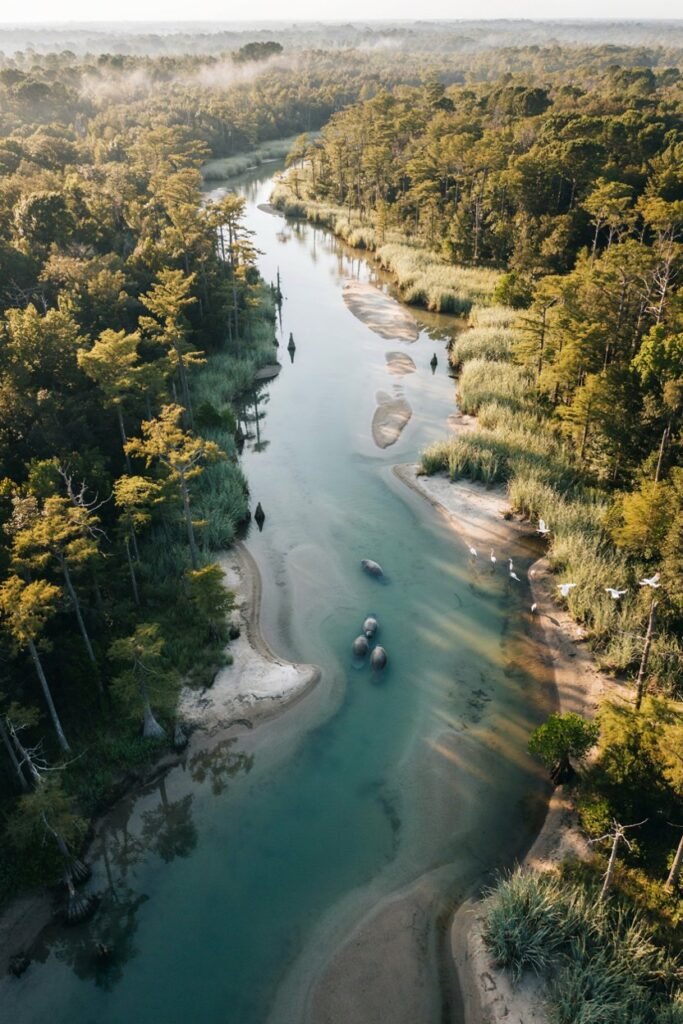
Florida has some of the most remarkable manatee-viewing opportunities in the United States, but there is an important distinction between swimming with manatees and visiting a place where manatees live.
If your dream is to actually get into the water and potentially have a wild manatee swim nearby, Crystal River and Kings Bay should be at the top of your planning list.
Other destinations, including Blue Spring State Park, Manatee Springs State Park, and Ellie Schiller Homosassa Springs Wildlife State Park, can provide wonderful opportunities to see manatees, but they are not interchangeable with Crystal River’s regulated in-water experience.
Here are the main places worth knowing about:
- Crystal River and Kings Bay – the primary destination for a regulated in-water manatee experience.
- Three Sisters Springs – one of the most beautiful and famous areas within the Crystal River National Wildlife Refuge.
- Homosassa – excellent for manatee viewing and learning about Florida wildlife, although it should not be presented as another unrestricted swim-with-manatees destination.
- Blue Spring State Park – spectacular winter manatee viewing, but swimming with the manatees is prohibited.
- Manatee Springs State Park – beautiful spring swimming and occasional manatee sightings, but swimming with the animals is not the same experience as Crystal River.
- Other Florida warm-water areas – useful for manatee watching depending on season and conditions, but rules and access vary.
The biggest mistake I see in articles about this subject is treating every Florida spring with manatees as though visitors can simply jump into the water and swim beside them.
That is not how responsible manatee tourism works.
Florida’s manatees are protected, and visitors are expected to observe them without chasing, touching, feeding, grabbing, riding, or otherwise disturbing them.
The Florida Fish and Wildlife Conservation Commission specifically recommends passive observation and says visitors should move away if their presence changes a manatee’s natural behavior.
So, if you’re planning this trip, think of it as sharing the water with a wild animal on its terms, rather than booking a guaranteed interaction.
That little change in mindset can make the entire experience more meaningful.
Crystal River, Florida
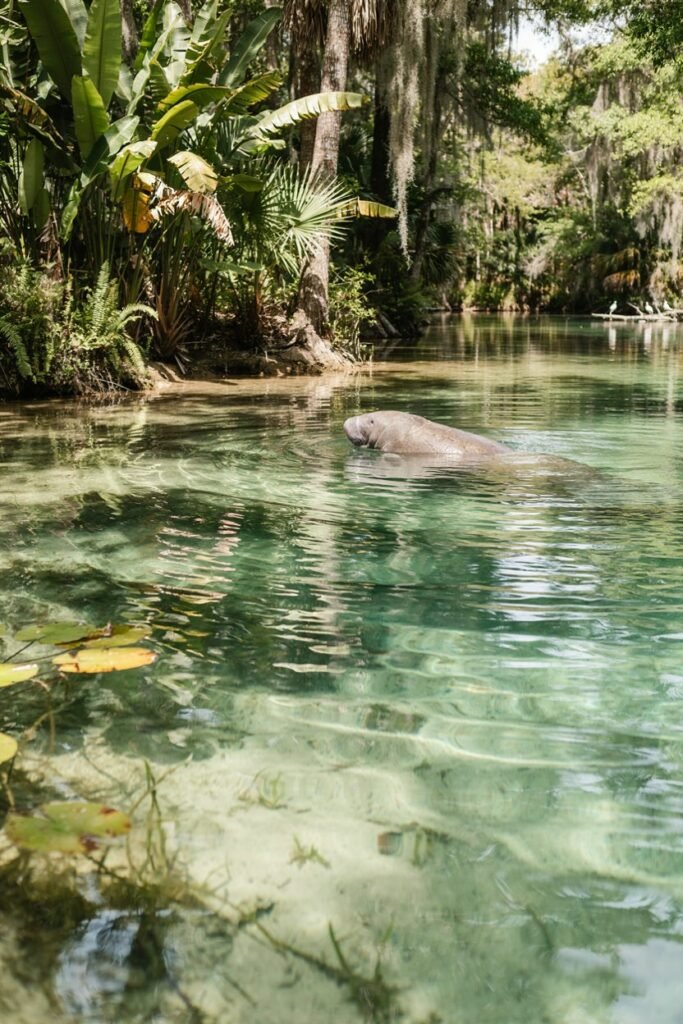
The Best-Known Place to Swim With Wild Manatees
If you have been searching Pinterest or travel blogs for the best places to swim with manatees in Florida, you have probably seen Crystal River mentioned again and again.
And for good reason.
Crystal River, on Florida’s Gulf Coast, is famous for its clear spring-fed waters, warm winter refuge habitat, and large seasonal manatee population.
The area is part of the Crystal River National Wildlife Refuge, which was established specifically to protect habitat for the Florida manatee. The refuge includes Kings Bay and the famous Three Sisters Springs area.
What makes Crystal River especially interesting is that visitors can participate in regulated in-water recreation where manatees may be present.
That does not mean you are guaranteed a close encounter.
It also does not mean you are allowed to touch the animals.
Instead, the experience is based on passive observation.
You enter the water, remain calm, float or snorkel, and allow the manatees to decide how close they want to come.
For me, that is actually what makes the experience special.
You aren’t watching a trained animal perform.
You aren’t visiting an aquarium.
You are entering a natural environment and quietly sharing space with a wild creature.
Why Crystal River Is So Special
Crystal River’s appeal comes from its combination of:
- Clear spring water
- Warm-water habitat
- Large winter manatee gatherings
- Protected wildlife areas
- Guided manatee experiences
- Beautiful springs
- Kayaking and paddleboarding opportunities
- Easy access from Central Florida
- Excellent wildlife photography opportunities
During the cooler months, manatees move toward warm-water refuges because prolonged exposure to colder water can be dangerous for them.
At Crystal River National Wildlife Refuge, the winter manatee season runs from November 15 through March 31, when warm-water sanctuaries are in effect.
That makes winter an especially interesting time for manatee watching.
But there’s an important catch.
Some of the areas where manatees gather most heavily during the coldest periods are protected sanctuaries where people cannot enter.
That’s why planning your trip around current regulations matters so much.
Read Kelly Park Rock Springs: Tubing Tips for Florida’s Lazy River
Three Sisters Springs
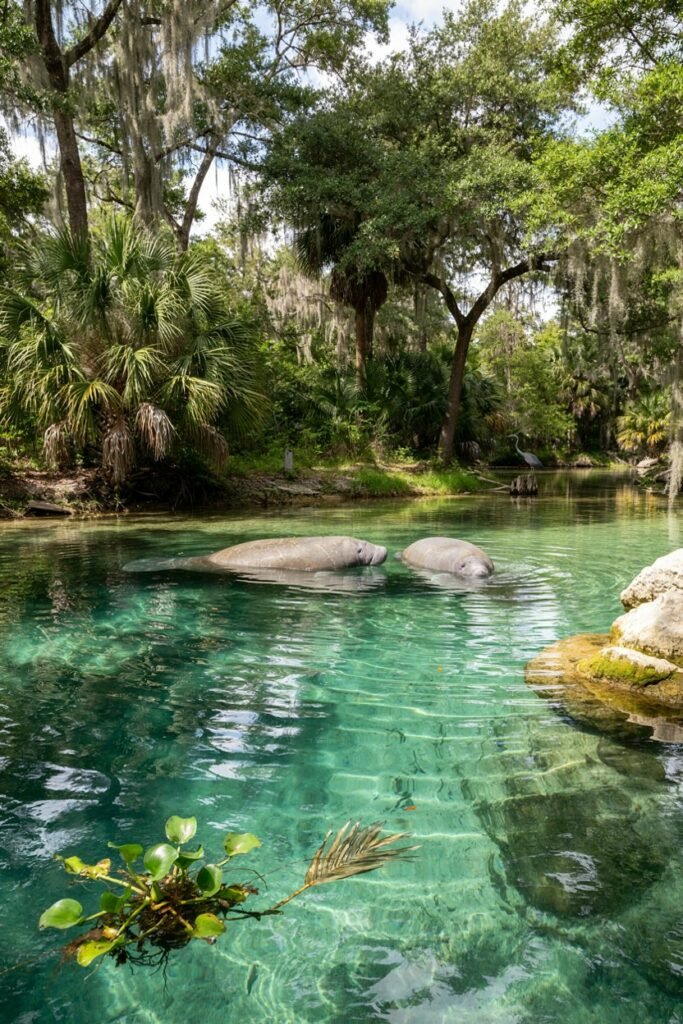
The Crystal-Clear Manatee Hotspot
If you only have time to visit one famous spring in the Crystal River area, Three Sisters Springs is likely to be the name you encounter first.
The springs are part of the Crystal River National Wildlife Refuge and are known for exceptionally clear water and beautiful natural scenery.
I love the way Three Sisters Springs looks in photographs, but seeing it in person is a completely different experience.
The water can have that almost unreal blue-green appearance that makes you want to stop and stare.
And then you notice a rounded gray shape moving beneath the surface.
A manatee.
Then another.
Suddenly, the landscape feels alive.
Can You Swim at Three Sisters Springs?
Yes, in-water recreation can be permitted, but access and seasonal rules are extremely important.
Visitors cannot simply walk from the land into the spring.
Water access is through the waterways, generally by arriving from Kings Bay using a vessel or paddle craft. The City of Crystal River notes that there is no water access from the refuge property itself because of erosion concerns.
The rules also change seasonally.
The U.S. Fish and Wildlife Service states that paddle craft are permitted inside Three Sisters Springs from April 1 through November 14, while paddle craft are not permitted inside during the winter manatee season.
This is one of the reasons you should check the current rules before your trip rather than relying on an old Pinterest pin or travel article.
Temporary closures can also happen.
For example, water access may be restricted when conditions indicate that additional protection for manatees is needed. The City of Crystal River advises visitors to check current updates before entering the water.
Three Sisters Springs Boardwalk
Even if you aren’t swimming, you can still enjoy Three Sisters Springs.
The boardwalk offers opportunities to see the springs and wildlife from land.
During winter, this can be particularly rewarding because manatees often gather around warm-water areas when temperatures drop.
The U.S. Fish and Wildlife Service describes the boardwalk as an excellent location for winter manatee viewing.
This is a wonderful option if you’re traveling with someone who doesn’t want to get into the water.
You can split the experience:
One person can enjoy the water when permitted, while another explores the boardwalk.
Or simply spend the day enjoying both.
Read 15 Epic Hikes in Florida You’ll Want to Add to Your Bucket List
Kings Bay
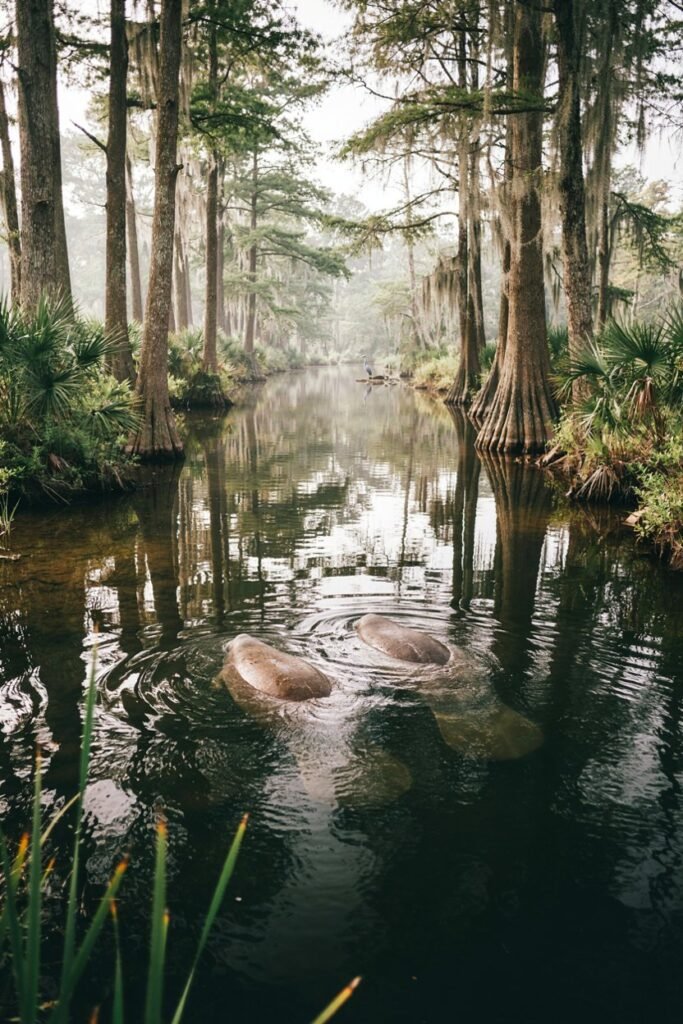
Where the Crystal River Manatee Experience Really Happens
Kings Bay is the larger aquatic system surrounding many of the famous springs in Crystal River.
When you book a manatee experience in Crystal River, you are generally exploring this interconnected water environment rather than visiting a single isolated swimming hole.
The bay contains numerous springs and waterways that provide important habitat for manatees.
The area has also been designated as the Kings Bay Manatee Refuge, adding another layer of protection for these animals.
One thing I would keep in mind when planning a Kings Bay trip is that conditions can change.
Manatees are wild animals.
They are not going to follow an itinerary.
You might see one immediately.
You might spend time floating quietly before one appears.
You might see several.
Or you may spend more time enjoying the springs, birds, fish, and scenery than watching manatees.
That’s part of wildlife travel.
Why a Guided Experience Can Be Helpful
For a first visit, I would strongly consider a permitted guided experience rather than trying to figure everything out yourself.
The refuge itself does not operate commercial manatee tours, but it provides Special Use Permits to businesses operating in Kings Bay.
A knowledgeable guide can help with:
- Understanding the local rules
- Finding appropriate areas
- Learning about manatee behavior
- Navigating the waterways
- Choosing equipment
- Understanding seasonal restrictions
- Knowing when to give an animal more space
Perhaps most importantly, a good guide can help you understand that getting closer isn’t always better.
If a manatee swims away, the correct response is to let it go.
If one approaches you, stay calm.
If one rests nearby, don’t disturb it.
That is what responsible wildlife tourism looks like.
Read 16 Secret Places to Visit in Florida Even Locals Don’t Know
Homosassa, Florida
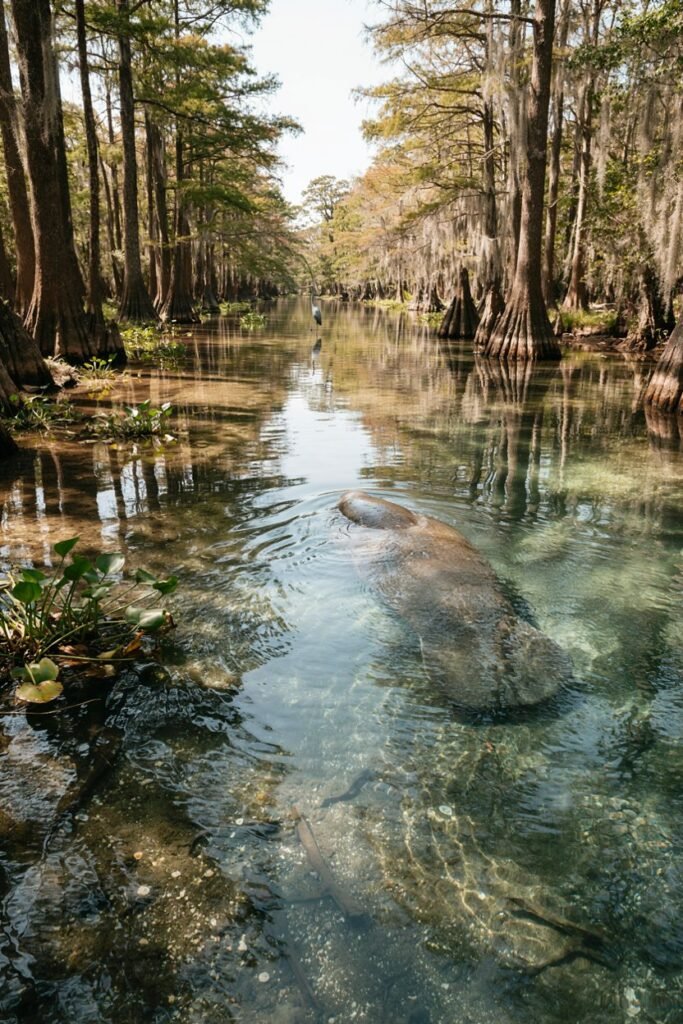
A Beautiful Alternative for Manatee Watching
Homosassa is another name that appears frequently when people search for manatees in Florida.
The area is famous for its springs, rivers, wildlife, and natural scenery.
However, I want to make an important distinction here.
Homosassa is an excellent place for manatee viewing, but you should not assume that you can simply swim with wild manatees there in the same way you can participate in a regulated Crystal River experience.
That distinction is important for both safety and conservation.
One of the best-known attractions in the area is Ellie Schiller Homosassa Springs Wildlife State Park.
The park offers opportunities to observe manatees from an educational setting, including underwater viewing through the Fish Bowl observatory.
This can be especially helpful for families who want to see manatees without getting into the water.
Why Visit Homosassa?
Homosassa offers much more than manatees.
You can explore:
- Wildlife trails
- Spring scenery
- Bird habitats
- Educational exhibits
- Underwater viewing
- Nature trails
- The surrounding river environment
The park’s Wildlife Walk includes elevated trails where visitors can observe animals and natural habitats.
The Fish Bowl underwater observatory provides another perspective, allowing visitors to see fish and manatees below the surface.
As of 2026, the Florida State Parks site notes that shuttle boat service at Ellie Schiller Homosassa Springs Wildlife State Park is unavailable because of low water levels, so checking the latest operating information before visiting is particularly important.
That is a perfect example of why I recommend checking official park information shortly before your trip.
Blue Spring State Park
One of Florida’s Best Places to See Manatees
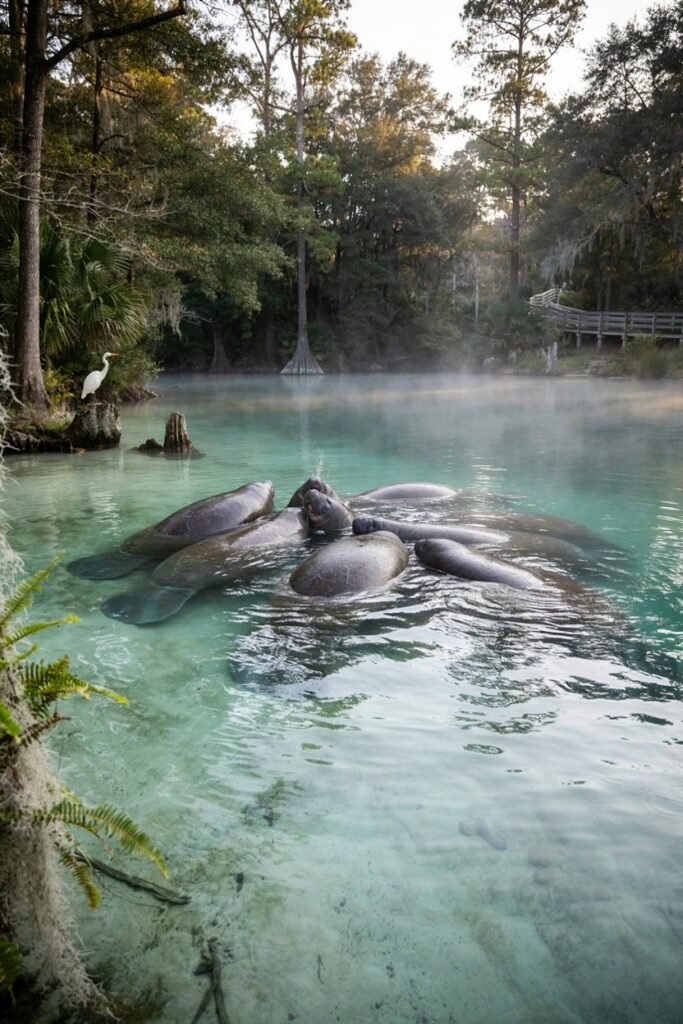
Blue Spring State Park near Orange City is one of the most impressive places in Florida for observing large numbers of manatees.
But there is an important difference:
You cannot swim with the manatees at Blue Spring State Park.
The park specifically prohibits swimming or diving with manatees.
Instead, you can enjoy one of the state’s best winter manatee viewing experiences from the boardwalk.
And honestly, this can still be incredible.
Blue Spring has a constant water temperature of about 72°F, making it an important warm-water refuge for manatees during colder weather.
During winter, hundreds of manatees can gather in the spring run.
The park reported a record winter count of 729 manatees in 2023, illustrating just how impressive the seasonal aggregation can become.
The Boardwalk Experience
One of my favorite things about destinations like Blue Spring is that you don’t have to get into the water to have a memorable wildlife experience.
The boardwalk follows the spring run and gives visitors elevated views of the clear water.
You might see:
- Manatees surfacing
- Mothers with calves
- Fish
- Birds
- Turtles
- Spring vegetation
- Wildlife moving through the water
The Florida State Parks system describes the boardwalk as an excellent place to observe manatees without influencing their natural behavior.
Can You Swim at Blue Spring?
Yes, swimming in the spring run is allowed during the designated swimming season, but not with the manatees.
The swimming season is currently listed as April 1 through November 14.
During manatee season, November 15 through March 31, swimming and other water activities in the spring run are prohibited to protect the animals.
This is an important detail if you’re creating a Florida itinerary.
You could swim at Blue Spring during the warmer-season swimming period.
But if your goal is specifically to see large numbers of manatees, winter is generally the time when the famous gatherings occur.
You simply can’t combine the two activities there.
Manatee Springs State Park
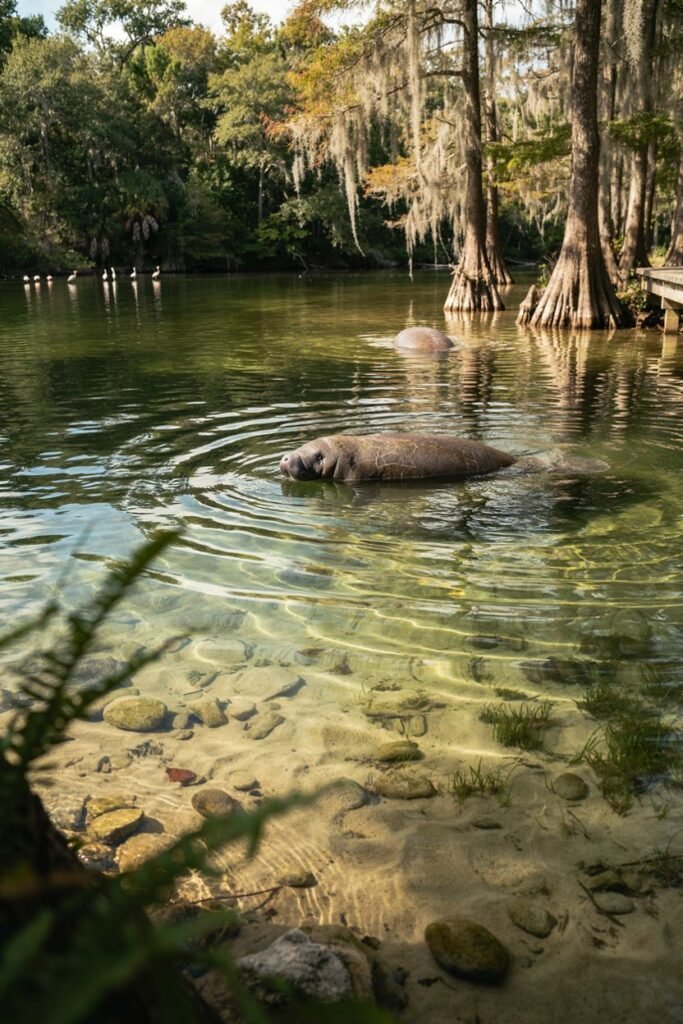
A Beautiful Spring With a Fitting Name
Manatee Springs State Park is another fascinating stop for anyone interested in Florida’s springs and manatees.
Located in north-central Florida, the park is centered around a first-magnitude spring that produces a tremendous amount of water.
The spring flows through a spring run toward the Suwannee River.
The park’s name is certainly appropriate because manatees can sometimes be seen in the spring system.
Florida State Parks notes that the spring run can be crystal clear, making it easier to spot the park’s namesake animals. Staff and volunteers record manatee sightings daily, and the number present can sometimes reach around 20.
That is obviously a very different experience from the much larger winter gatherings you can encounter at places such as Blue Spring.
But that’s part of the charm.
Can You Swim at Manatee Springs?
Swimming is allowed in the main spring under appropriate conditions.
However, swimming with manatees should not be treated as the attraction here.
The park has specific swimming restrictions for different parts of the spring system, and water conditions can change.
Florida State Parks advises that the current can be swift and prohibits swimming in the spring run and certain other areas.
So if you visit Manatee Springs, think of it as:
a beautiful Florida spring where you may see manatees, rather than a guaranteed manatee-swimming destination.
That distinction will save you from arriving with the wrong expectations.
When Is the Best Time to Swim With Manatees in Florida?
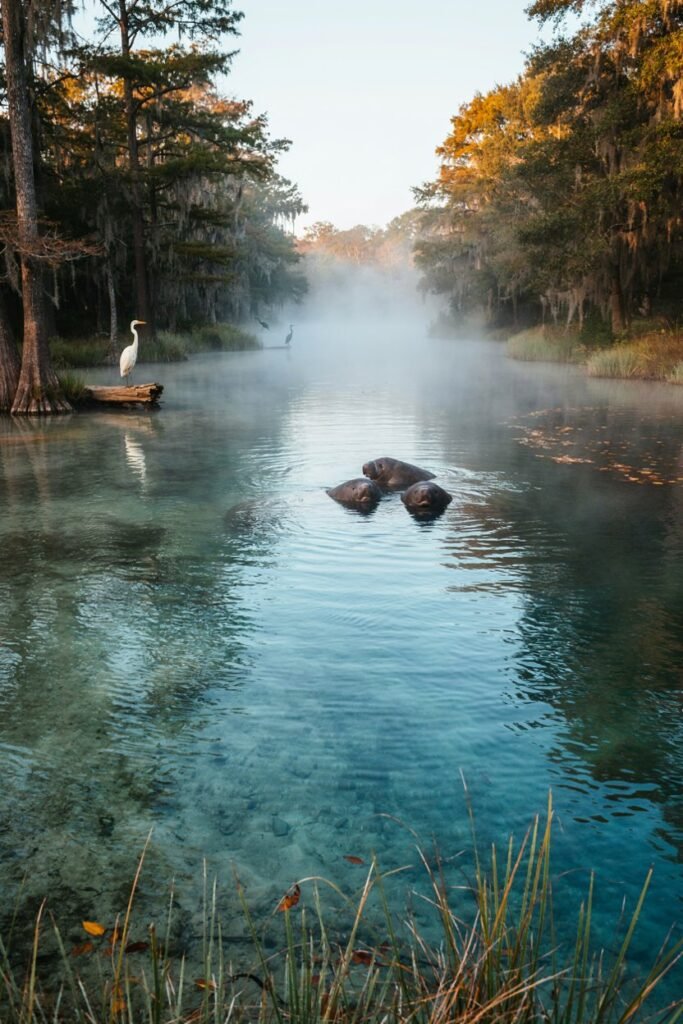
If you’re planning a manatee trip, timing matters enormously.
The most famous manatee season in many Florida springs occurs during the cooler months.
Generally, November through March is when manatees become especially concentrated around warm-water refuges.
Why?
Because manatees are sensitive to cold water.
When temperatures fall, they seek out springs, warm-water discharges, and other areas where they can conserve energy.
At Crystal River National Wildlife Refuge, the official manatee season runs from November 15 through March 31.
But here’s where planning gets a little complicated.
The best season for seeing lots of manatees isn’t necessarily the same as the season when all water activities are allowed.
That’s a very important distinction.
November
November can be an exciting month because temperatures begin to fall and manatees start moving toward warm-water areas.
However, official winter protections begin November 15 at Crystal River National Wildlife Refuge.
If you’re planning an in-water experience, you need to check exactly which areas are open and what restrictions apply on your travel dates.
December
December can bring excellent manatee viewing because colder Gulf temperatures encourage animals to seek warm spring waters.
This is also a popular travel period because of the holidays.
That means crowds can increase.
If you want a quieter experience, consider building flexibility into your schedule.
January
January is often one of the most exciting months for winter manatee viewing.
Cold fronts can encourage larger numbers of animals to gather around warm-water refuges.
Three Sisters Springs is particularly famous for winter manatee viewing.
The City of Crystal River notes that your best chances of seeing manatees inside Three Sisters Springs are during cold winter days when Gulf temperatures are below about 68°F.
February
February can also be excellent for manatee viewing.
You still have winter conditions, and manatees remain closely associated with warm-water areas.
For photographers and wildlife lovers, this can be a beautiful time to visit.
March
March is a transition month.
As Florida warms up, manatees gradually begin dispersing from their winter refuges.
The Florida Fish and Wildlife Conservation Commission notes that manatees naturally begin moving away from winter refuges as water temperatures rise.
You can still have a wonderful experience, but you shouldn’t assume that winter concentrations will remain unchanged.
April Through November
The warmer months can offer more opportunities for general water recreation in some Florida springs.
However, manatees become more dispersed.
You may still encounter them in rivers, springs, canals, and coastal waters, but the dramatic winter gatherings become less predictable.
That is why your trip goal matters.
If your priority is:
Seeing lots of manatees: consider winter.
If your priority is:
Swimming in Florida springs: warmer months can provide more opportunities, depending on the specific location.
If your priority is:
A regulated in-water manatee encounter: focus your research on current Crystal River rules and permitted access rather than assuming every spring operates the same way.
What Is It Actually Like to Swim Near a Manatee?
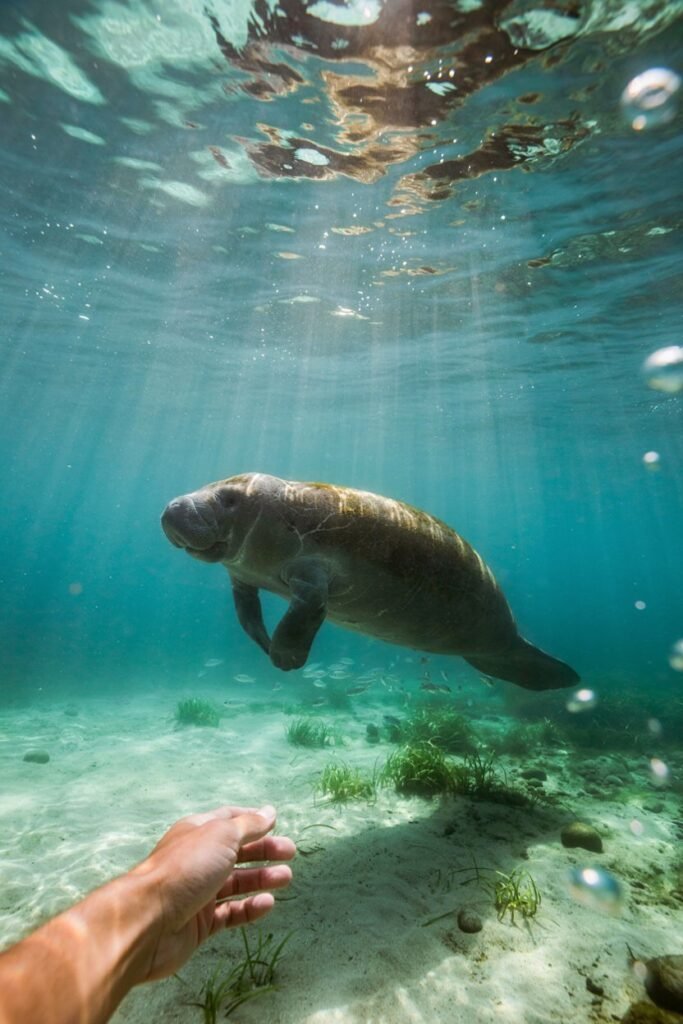
Before booking your trip, I think it helps to know what the experience actually feels like.
It isn’t an amusement-park attraction.
It isn’t a guaranteed photo opportunity.
And it definitely isn’t a situation where you should chase an animal until it comes close.
Instead, the experience can be surprisingly quiet.
You enter the water.
You float.
You look around.
The spring water may be clear enough to see several feet below you.
You hear people quietly talking.
Then you notice movement.
A large gray shape slowly approaches.
The manatee may glide past.
It may surface.
It may disappear beneath you.
It may ignore you completely.
And that last possibility is perfectly okay.
Wildlife encounters are special precisely because they aren’t scripted.
The Florida Fish and Wildlife Conservation Commission recommends passive observation and specifically tells visitors not to chase or pursue manatees if they move away.
That means your goal shouldn’t be:
“How close can I get?”
Instead, think:
“How peacefully can I share this space?”
That mindset will help you have a much better experience.
Manatee Manners: The Rules You Need to Know
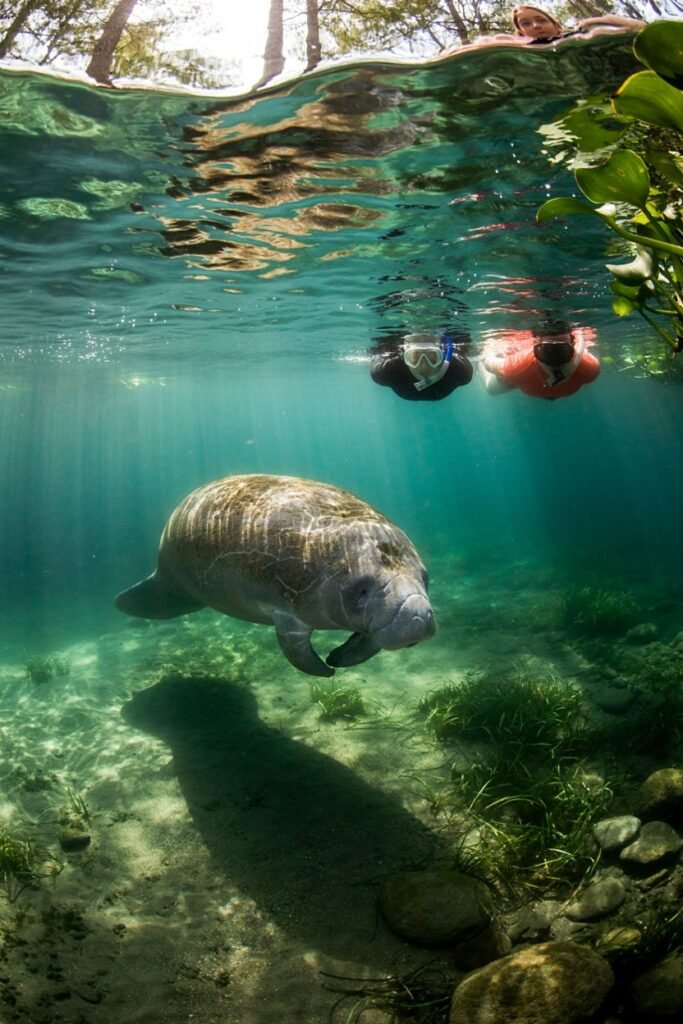
This is probably the most important section of the entire article.
Manatees are protected wildlife.
When you visit them, you have a responsibility to avoid disturbing their natural behavior.
The basic rules are simple.
Look, Don’t Touch
This is the golden rule.
If a manatee swims close enough that you could touch it, resist the temptation.
Do not reach out.
Do not stroke its back.
Do not touch its face.
Do not grab its flipper.
Do not hold onto it.
The FWC explicitly advises visitors to look but not touch.
Never Chase a Manatee
If a manatee moves away from you, let it go.
Do not swim after it.
Do not position yourself ahead of it to force another encounter.
Do not repeatedly approach it.
If the animal changes its behavior because of you, you’re too close.
Don’t Feed Them
Never feed a wild manatee.
Don’t give it food.
Don’t give it water.
Don’t attempt to lure it closer for a photograph.
These behaviors can alter wildlife behavior and make animals more vulnerable around humans and boats.
Don’t Separate Mothers and Calves
If you see a mother and calf together, give them plenty of room.
Never swim between them.
Never attempt to position yourself between a mother and her calf for a photograph.
The refuge specifically prohibits separating a mother and calf or separating a group of manatees.
Don’t Surround a Manatee
Several swimmers shouldn’t form a circle around an animal.
The manatee needs room to move.
If it has nowhere to go, you’ve changed its environment.
Keep Noise Down
A peaceful encounter is better for everyone.
Avoid unnecessary splashing.
Don’t yell.
Don’t create a commotion around a resting animal.
FWC advises visitors to avoid excessive noise and splashing if a manatee appears nearby.
Don’t Dive Onto a Resting Manatee
Never dive down onto an animal.
This is especially important because manatees may be resting below the surface.
The Crystal River refuge specifically prohibits diving from the surface onto resting or feeding manatees.
What Should You Wear for a Florida Manatee Swim?
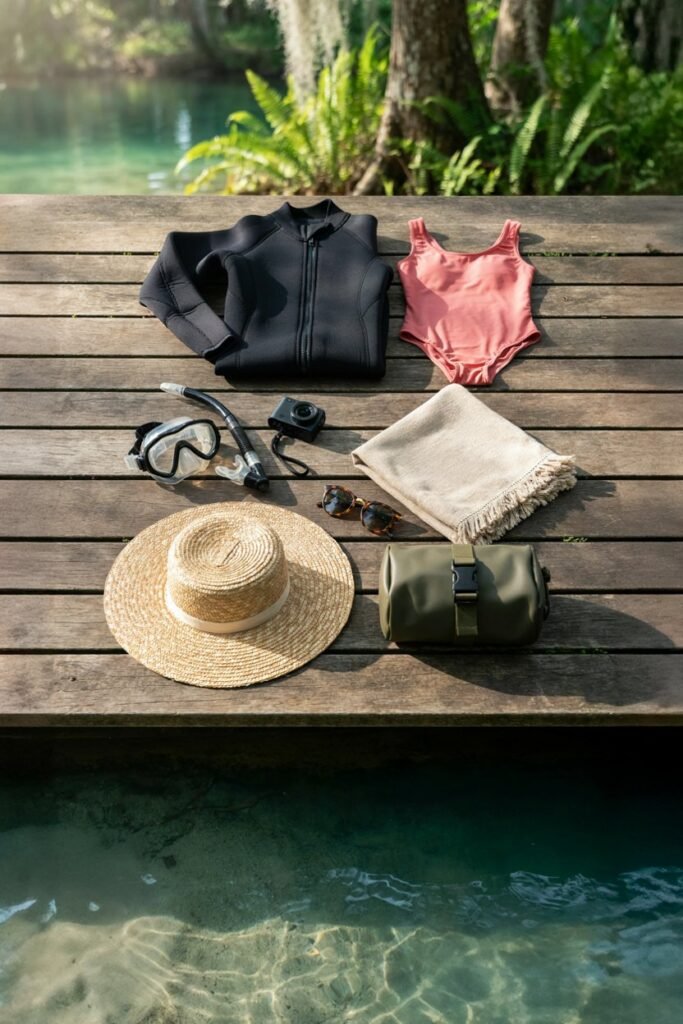
Florida may be warm, but spring water can feel surprisingly cool.
The springs remain around the low 70s in many areas.
If you’re going to spend significant time in the water, a wetsuit can make the experience much more comfortable.
A typical manatee excursion may involve:
- Swimsuit
- Wetsuit
- Mask
- Snorkel
- Fins if permitted
- Towel
- Dry clothes
- Water bottle
- Sun protection
- Waterproof camera if allowed
- Waterproof phone case
- Hair tie
- Waterproof bag
However, don’t assume every tour allows every piece of equipment.
Ask the operator what they provide.
Some guided experiences provide snorkeling equipment and other basic gear.
Do You Need a Full Wetsuit?
Not necessarily.
But if you’re someone who gets cold easily, I would consider one.
Spring water tends to stay much cooler than the surrounding Florida air.
You can be perfectly comfortable standing on the dock and then discover that the water feels chilly once you get in.
A wetsuit can make it easier to remain calm and still, which is exactly what you want during a manatee encounter.
What Kind of Camera Should You Bring?
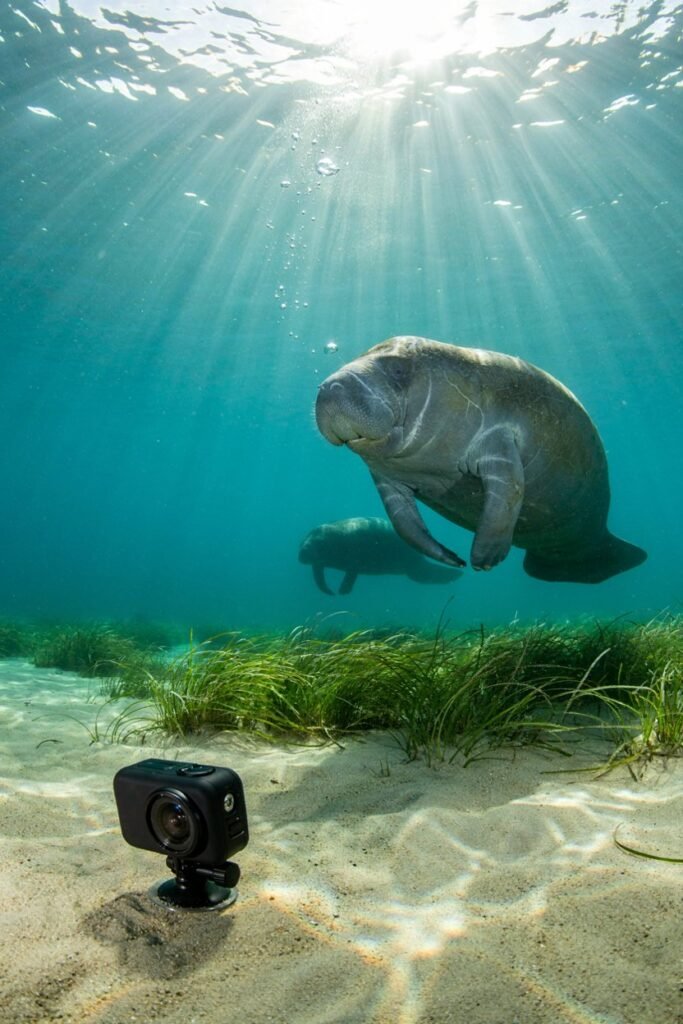
This is one of those trips where I would keep photography simple.
You don’t want to spend the entire experience worrying about your camera.
Your first priority should be enjoying the wildlife responsibly.
If photography is permitted, an underwater camera can capture beautiful images.
A waterproof action camera can also work well.
But remember that chasing a manatee for a photograph is never appropriate.
If the animal moves away, your photograph is finished.
Let it go.
Some of the most beautiful wildlife photographs are the ones where the animal is simply doing what it naturally does.
How Long Should You Spend in Crystal River?
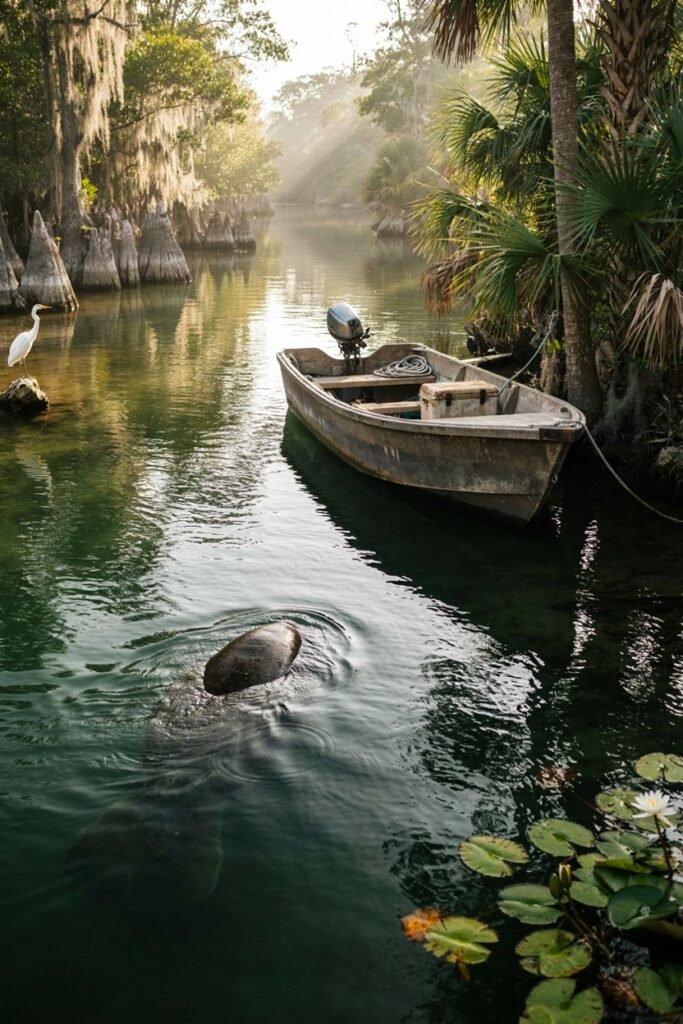
I would recommend at least a full day if your schedule allows.
A relaxed Crystal River day might look something like:
Morning
Start early.
Have breakfast.
Arrive at your chosen launch point or tour meeting location.
Allow time for parking, check-in, changing, and getting your equipment ready.
Late Morning
Take your manatee excursion.
Spend time exploring Kings Bay and the spring system.
Don’t rush.
Afternoon
Have lunch in Crystal River.
Then explore Three Sisters Springs from the boardwalk if conditions and access allow.
Evening
Enjoy dinner in town and relax.
If you’re staying overnight, the slower pace can be especially nice.
Should You Book a Guided Manatee Tour?
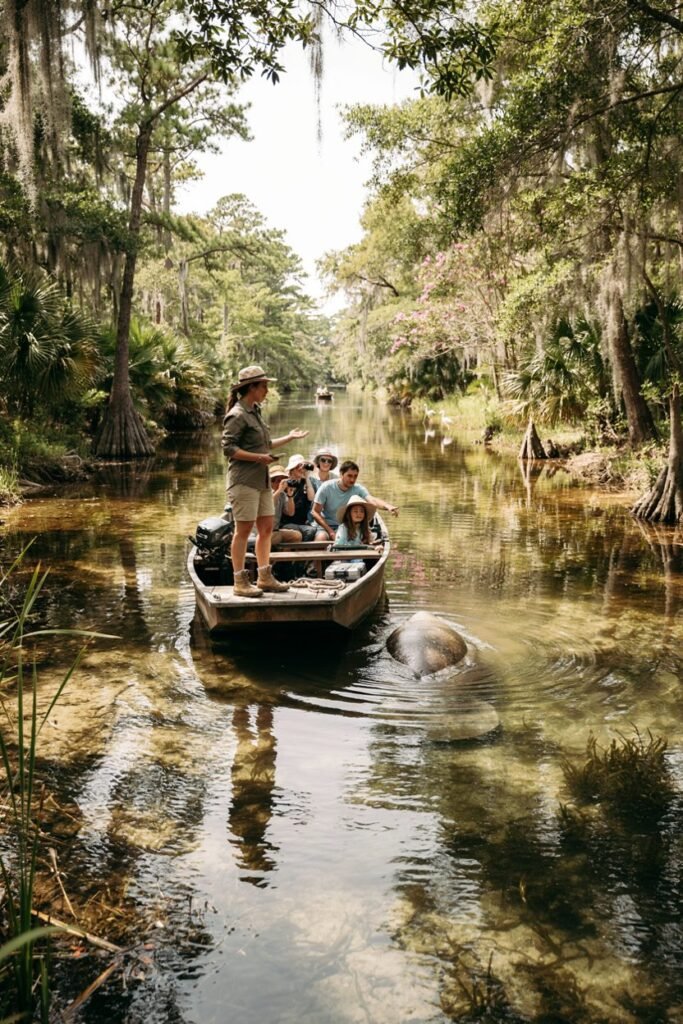
For a first-time visitor, a guided trip can simplify everything.
Crystal River National Wildlife Refuge has permitted tour operators that provide guided experiences in Kings Bay.
A guide can help you understand:
- Where you’re allowed to go
- Which areas are closed
- How to behave around manatees
- How to use the equipment
- Where wildlife is currently being seen
- How to navigate the water
- What to do if a manatee approaches
This doesn’t mean you need to book the most expensive tour.
Instead, look for an operator that emphasizes conservation, follows refuge rules, and teaches guests how to behave around wildlife.
I would be cautious about any experience marketed around promises of touching, holding, riding, feeding, or forcing interaction with a wild manatee.
That isn’t the kind of wildlife tourism I would recommend.
How to Choose a Responsible Manatee Tour
When researching operators, ask a few questions.
Is the operator permitted?
Crystal River National Wildlife Refuge provides Special Use Permits to businesses operating manatee tours in Kings Bay.
What does the tour teach?
A good tour should explain manatee behavior and conservation.
What happens if no manatees appear?
This is an important question.
A responsible company should not encourage guides or guests to chase wildlife simply because the group hasn’t had a close encounter.
Are touching and feeding prohibited?
They should be.
How large are the groups?
Smaller groups can sometimes make it easier to remain calm and avoid overcrowding.
Does the company explain seasonal closures?
It should.
Does the operator respect sanctuary boundaries?
This is essential.
Crystal River With Kids
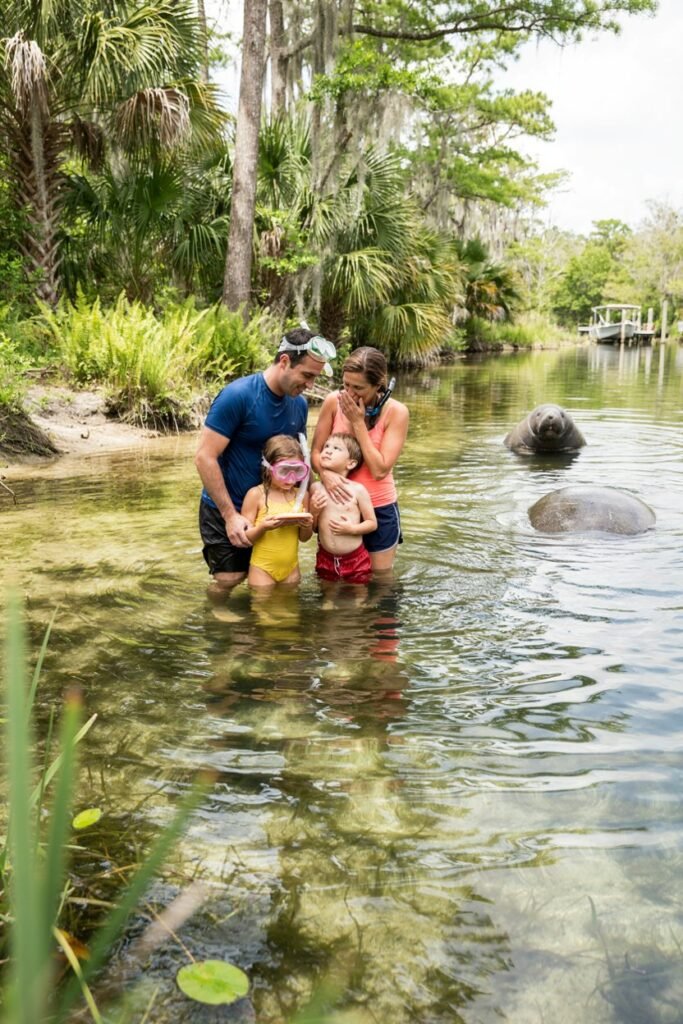
Crystal River can be a wonderful family destination, but expectations matter.
Children should understand before entering the water that the manatees are wild animals.
The rule is simple:
Look, don’t touch.
Talk about that before the trip.
Explain that a manatee isn’t a toy or a pet.
If a manatee swims nearby, the child should remain calm.
If it swims away, don’t follow it.
If the child is nervous about being in the water, there is absolutely no reason to force the experience.
You can still enjoy manatee viewing from land.
Three Sisters Springs and other viewing locations can be fascinating even without entering the water.
What If You’re Not a Strong Swimmer?
You don’t have to be an experienced swimmer to appreciate Florida’s manatees.
But if you’re participating in an in-water activity, you should be honest about your swimming ability and follow the operator’s requirements.
If you are uncomfortable in open water, consider a viewing-focused experience instead.
A wildlife encounter is supposed to be enjoyable.
You shouldn’t spend the entire trip worrying about staying afloat.
A guided excursion may provide flotation equipment, but you should confirm the details directly with the operator.
Can You Swim With Manatees in Winter?
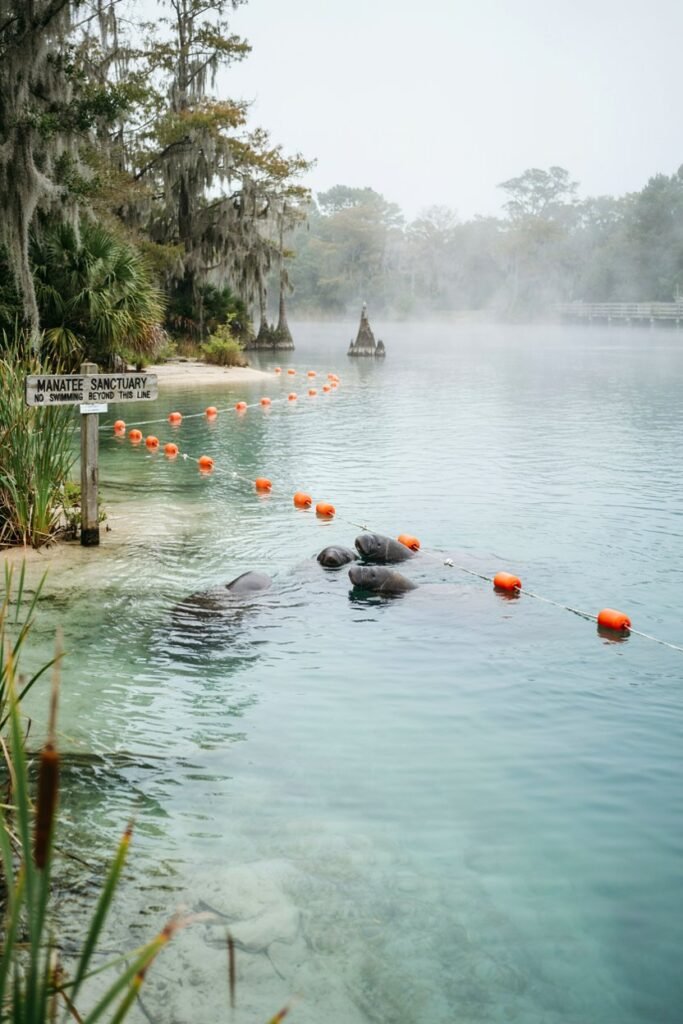
This is one of the most confusing parts of planning a manatee trip.
Winter is when manatees often gather in large numbers around warm springs.
But many of those warm-water areas are protected during the coldest months.
At Crystal River National Wildlife Refuge, the winter manatee season runs November 15 through March 31, and seven warm-water sanctuaries are in effect.
So don’t assume:
winter = unlimited swimming with manatees.
Instead:
winter = excellent manatee viewing + specific protected areas + seasonal restrictions.
If you want an in-water experience, check the exact rules for your destination and travel date.
This is one reason Crystal River is best approached as a wildlife destination rather than simply a swimming hole.
What Happens When the Water Gets Too Cold?
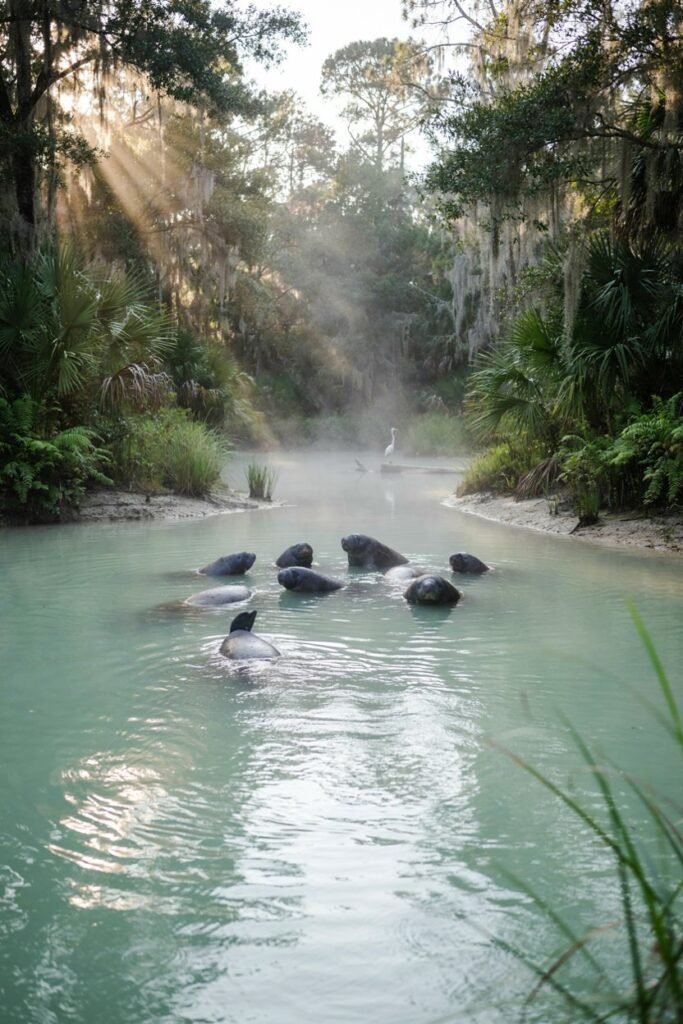
Manatees depend on warm-water habitat during cold weather.
The Crystal River refuge explains that manatees come into the springs during winter to conserve energy in colder Gulf waters.
This is also why some areas become more restricted as temperatures fall.
The protection isn’t arbitrary.
The animals are using these locations as critical habitat.
When you’re standing on a dock looking at a group of manatees, it can be easy to think of the area as a recreational attraction.
But to the manatees, it is home.
That perspective changes the way I think about the entire experience.
Other Things to Do in Crystal River
You don’t have to spend your entire vacation in the water.
Crystal River is a great place to slow down.
Consider adding:
- Three Sisters Springs
- Kings Bay
- Kayaking
- Paddleboarding
- Wildlife photography
- Nature walks
- Bird watching
- Local restaurants
- Scenic drives
- Spring exploration
- Sunset views
The Crystal River National Wildlife Refuge offers wildlife watching, photography, boating, paddling, hiking, birding, and educational opportunities.
That makes the area ideal for travelers who want a nature-focused weekend.
A Sample Two-Day Crystal River Itinerary
Day One: Manatees and Springs
Morning
Arrive in Crystal River.
Have breakfast and prepare for your excursion.
Mid-Morning
Join your guided manatee experience.
Spend time exploring Kings Bay.
Afternoon
Have lunch.
Visit the Three Sisters Springs area for land-based viewing if appropriate.
Evening
Walk around town.
Enjoy dinner.
Rest early.
Day Two: Slow Florida Adventure
Morning
Have a relaxed breakfast.
Explore another spring or nearby nature area.
Afternoon
Go kayaking or take a wildlife-focused excursion.
Evening
Enjoy dinner and a sunset.
This itinerary gives you enough flexibility that your trip isn’t ruined if weather or wildlife conditions change.
What to Do If You Don’t See a Manatee
This deserves its own section because wildlife trips don’t always go according to plan.
You may spend hours looking and see only a few animals.
You may visit when manatees are dispersed.
You may encounter weather conditions that affect visibility.
You may even have a trip where the animals simply aren’t cooperating.
That’s okay.
Try not to measure the success of your trip only by how many animals you see.
Enjoy the spring.
Watch the fish.
Listen to the birds.
Look at the water.
Learn about the ecosystem.
Wildlife travel becomes much more rewarding when you stop treating animals like attractions that owe you an appearance.
Best Place for a First Manatee Trip
If you’re visiting Florida specifically because you want the possibility of swimming near wild manatees, Crystal River is the destination I would research first.
Not because every other Florida location is uninteresting.
Quite the opposite.
Blue Spring is spectacular.
Manatee Springs is beautiful.
Homosassa is fascinating.
But they provide different experiences.
Crystal River is the place most closely associated with the regulated in-water manatee experience.
That distinction is important for planning.
Best Place for Seeing Hundreds of Manatees
If your dream is to stand above the water and see a huge gathering of manatees, Blue Spring State Park deserves serious consideration.
The park is one of Florida’s major winter manatee gathering sites.
Its boardwalk provides an elevated viewing experience, and the park has documented hundreds of wintering manatees.
Just remember:
You cannot swim with them there.
Best Place for Clear Spring Water
Three Sisters Springs is one of the most visually beautiful choices.
The combination of clear water, lush surroundings, and manatee habitat makes it an unforgettable place.
If you’re a photographer, this is one of the areas I would have on my list.
But always check current access restrictions.
Best Place for a Wildlife-Focused Family Day
Homosassa can be a wonderful choice if your group wants more than just swimming.
The state park offers opportunities to learn about manatees and other Florida wildlife.
The underwater observatory is especially interesting for children because it lets them see beneath the surface without actually entering the water.
Best Place for a Spring Swimming Experience
If your priority is simply swimming in a beautiful Florida spring rather than swimming with manatees, several Florida springs deserve attention.
Manatee Springs State Park offers swimming in the main spring under appropriate conditions.
Blue Spring also offers swimming during its designated swimming season, but not with manatees.
That distinction can help you choose your destination based on what you actually want to do.
Is Swimming With Manatees Safe?
Any interaction with wildlife requires responsibility.
Manatees are generally calm animals, but they are large wild mammals.
You should never assume that because an animal looks gentle, it is safe to touch or approach however you want.
The best approach is passive observation.
Remain aware of your surroundings.
Listen to your guide.
Follow posted rules.
Give animals room.
And never force an interaction.
The FWC emphasizes that altering a manatee’s natural behavior can constitute harassment and can put the animal at risk.
Why Manatees Matter So Much in Florida
Manatees are one of the animals that make Florida feel completely different from anywhere else.
They’re closely connected to Florida’s springs, rivers, coastal waters, and warm-water habitats.
They also face threats from human activity.
Boat strikes, habitat loss, water-quality problems, and other environmental pressures can affect manatee populations.
That’s why responsible tourism matters.
Every visitor has a small role in protecting the places these animals depend on.
When you follow the rules, you’re not simply protecting your own experience.
You’re helping reduce pressure on the animals.
Why You Should Never Chase a Manatee for a Photo
I know how tempting it can be.
You see a beautiful manatee underwater.
You have your camera.
You think:
“Just one more photo.”
But the best photograph isn’t worth making the animal uncomfortable.
If the manatee moves away, let it go.
If it dives, wait.
If it doesn’t return, enjoy the rest of your experience.
The FWC specifically says not to pursue a manatee if it moves away.
That is one of the simplest rules to remember.
How to Plan a Manatee Weekend in Florida
If you’re coming from another part of Florida, I would make your trip at least one night if possible.
This gives you more flexibility.
Wildlife doesn’t operate on a schedule.
If you only have a few hours, you may feel rushed.
With an overnight stay, you can slow down.
Day 1
Arrive.
Explore Crystal River.
Visit a viewing area.
Have dinner.
Day 2
Take your manatee excursion.
Have lunch.
Explore another spring or nature area.
Head home later in the day.
This approach also gives you a backup window if weather affects your first activity.
What to Pack for a Manatee Trip
Here is my practical packing list.
Water Gear
- Swimsuit
- Wetsuit
- Towel
- Snorkel equipment if not provided
- Waterproof bag
Sun Protection
- Reef-conscious sunscreen where appropriate
- Hat
- Sunglasses
- Lightweight cover-up
Photography
- Waterproof camera
- Waterproof phone case
- Extra battery
- Small dry bag
Comfort
- Change of clothes
- Comfortable sandals
- Reusable water bottle
- Light jacket for winter mornings
Important Documents
- Reservation information
- Park admission information
- Tour confirmation
- Identification if required by the operator
Don’t overpack.
The simpler your gear, the easier it is to focus on the wildlife.
What Not to Bring
You don’t need a giant collection of equipment.
Avoid bringing anything that could damage plants or disturb wildlife.
Don’t bring food to feed the animals.
Don’t bring objects for touching or interacting with manatees.
Don’t bring anything that encourages you to chase wildlife for photographs.
Your goal is observation.
How Early Should You Arrive?
If you’re visiting a popular Florida spring, I would avoid assuming that you can arrive at noon and have an easy day.
Some parks and attractions can reach capacity.
Blue Spring State Park, for example, warns visitors that it frequently reaches capacity and may temporarily close.
That makes early arrival especially useful for popular destinations.
If you’re joining a guided excursion, follow the operator’s arrival instructions instead.
Don’t Rely on Old Pinterest Information
This is especially important for this topic.
Manatee rules can change.
Water levels can change.
Park access can change.
Seasonal restrictions can change.
Even the same spring may operate differently depending on the time of year.
For example, Blue Spring’s swimming season and manatee protection period are clearly separated, while Three Sisters Springs has seasonal water-access restrictions.
So before your trip:
- Check the official park website.
- Check the refuge website.
- Check current closure information.
- Confirm your tour details.
- Review manatee guidelines.
- Check weather and water conditions.
That five-minute check can save you from a very disappointing travel day.
Manatee Swimming vs. Manatee Watching
If you’re still unsure which experience you want, here’s the easiest way I would think about it.
Choose Crystal River if:
You want a regulated possibility of being in the water where wild manatees may be present.
Choose Blue Spring if:
You want spectacular winter manatee viewing from a boardwalk.
Choose Homosassa if:
You want wildlife education, underwater viewing, and a broader wildlife experience.
Choose Manatee Springs if:
You want a beautiful spring environment where manatees may sometimes be seen, combined with other spring activities.
This isn’t about one destination being universally better.
They’re simply different experiences.
Is a Manatee Trip Worth It?
For anyone who loves wildlife, Florida springs, and nature travel, a manatee trip can be one of those experiences that stays with you.
What I love most is that it doesn’t have to be complicated.
You don’t need an elaborate itinerary.
You don’t need a luxury resort.
You don’t need to fill every hour.
Sometimes the best travel memories come from simply floating quietly in clear water and watching an animal move through its natural environment.
Just remember that the animal comes first.
Frequently Asked Questions
Where is the best place to swim with manatees in Florida?
Crystal River and Kings Bay are the main destinations to research for regulated in-water encounters with wild manatees.
The Crystal River National Wildlife Refuge specifically provides for regulated recreational access and permitted tour operators in the Kings Bay area.
Can you swim with manatees at Blue Spring?
No.
Swimming or diving with manatees is prohibited at Blue Spring State Park. Swimming in the spring run is permitted during the designated warmer-season period, but not with the animals.
Can you swim at Three Sisters Springs?
In-water recreation can be permitted, but access is seasonal and controlled.
Visitors must enter through the waterways rather than walking from the refuge property into the springs, and temporary closures can occur.
What month is best for seeing manatees?
The cooler months, particularly winter, are generally excellent for seeing manatees gathered around warm-water refuges.
At Crystal River National Wildlife Refuge, manatee season is November 15 through March 31.
Are manatees friendly?
Manatees are generally gentle animals, but they are wild animals.
Don’t treat them like pets.
Watch them passively and allow them to decide whether to approach.
Can you touch a manatee?
No.
Visitors should not touch, chase, grab, feed, ride, poke, or otherwise disturb manatees.
What if a manatee touches me?
Stay calm and do not intentionally initiate further contact.
Allow the animal to move freely.
Can children swim near manatees?
Where in-water recreation is permitted, families must follow all site rules and children should be closely supervised.
Teach children the basic rule before entering the water:
Look, don’t touch.
Do you need a wetsuit?
A wetsuit can make cool spring water more comfortable, particularly if you plan to remain in the water for an extended period.
Check with your tour provider about recommended equipment.
Can you see manatees without swimming?
Absolutely.
Blue Spring State Park is a particularly impressive example because its boardwalk provides excellent winter viewing opportunities.
Three Sisters Springs also provides land-based viewing from the boardwalk.
Homosassa offers underwater viewing through its Fish Bowl observatory.
Are manatees present all year?
Manatees can be found in Florida throughout the year, but their distribution changes with water temperatures.
During colder periods, they concentrate around warm-water refuges.
As temperatures rise, they can disperse into rivers, canals, coastal areas, and other habitats.
Is Crystal River good for a weekend trip?
Yes.
A weekend gives you enough time to enjoy a manatee experience without making the entire trip dependent on a single activity.
You can combine wildlife viewing with springs, kayaking, nature walks, and local restaurants.
My Tips for Making Your Manatee Trip Extra Special
After researching and planning nature-focused trips, I’ve learned that the best wildlife experiences usually happen when you leave a little room for the unexpected.
So here are the things I would personally keep in mind.
1. Don’t schedule every minute.
Give yourself time to slow down.
2. Go with realistic expectations.
You may see several manatees.
You may see one.
You may not get the perfect photograph.
That’s okay.
3. Choose conservation over closeness.
The best encounter isn’t necessarily the closest one.
4. Check the rules before leaving home.
Rules are not something to discover after arriving at the dock.
5. Listen to local guides.
They understand the area better than an old blog post does.
6. Bring layers.
Florida can be warm while spring water feels surprisingly cool.
7. Keep your camera secondary.
Your memories don’t need to be documented every second.
8. Respect wildlife.
This is the biggest one.
A Responsible Manatee Travel Checklist
Before leaving home, save this list.
Before Your Trip
☐ Choose your destination.
☐ Check the official park or refuge website.
☐ Confirm seasonal access.
☐ Confirm whether swimming is actually permitted.
☐ Check current closures.
☐ Book a permitted tour if appropriate.
☐ Check the weather.
☐ Pack swimwear.
☐ Pack a towel.
☐ Bring sun protection.
☐ Bring waterproof photography equipment if desired.
Before Entering the Water
☐ Listen to the guide.
☐ Review manatee rules.
☐ Know where sanctuaries are located.
☐ Understand where you can and cannot go.
☐ Make sure you are comfortable in the water.
Around Manatees
☐ Look but don’t touch.
☐ Don’t feed.
☐ Don’t chase.
☐ Don’t grab.
☐ Don’t ride.
☐ Don’t separate mothers and calves.
☐ Don’t surround animals.
☐ Don’t make excessive noise.
☐ Give animals room.
☐ Let manatees decide whether to approach.
Final Thoughts: Swimming With Manatees in Florida
Swimming near a wild manatee is one of those Florida experiences that sounds almost too magical to be real.
But the most important thing I would take away from the experience is that these animals aren’t there for our entertainment.
They’re using Florida’s rivers and springs because these places are part of their natural habitat.
That’s what makes the encounter so meaningful.
When a manatee slowly appears beneath the surface, you aren’t watching a performance.
You’re witnessing a wild animal going about its life.
For an actual in-water manatee experience, Crystal River and Kings Bay are the places I would research first, while Three Sisters Springs adds one of Florida’s most beautiful spring environments to the trip. The surrounding Crystal River National Wildlife Refuge was created specifically to protect manatee habitat, and its rules are designed around protecting the animals while allowing carefully managed recreation.
If swimming isn’t your priority, don’t overlook the other destinations.
Blue Spring State Park can be spectacular during winter, when hundreds of manatees may gather in its warm spring water.
Homosassa provides wonderful wildlife viewing and educational experiences.
Manatee Springs offers another beautiful spring environment where manatees may sometimes be seen.
The secret is knowing what each destination actually offers.
And if I could leave you with one thought before your trip, it would be this:
The goal isn’t to get as close to a manatee as possible. The goal is to experience one without changing its world.
That is what makes a manatee encounter truly unforgettable.
Quick Takeaway
Best place for an in-water manatee experience: Crystal River and Kings Bay
Best-known spring: Three Sisters Springs
Best winter manatee viewing: Blue Spring State Park
Best wildlife-focused experience: Homosassa
Best additional spring destination: Manatee Springs State Park
Best time for large winter gatherings: November through March
Most important rule: Look, don’t touch.
And before you go, always check the latest official regulations because seasonal wildlife protections, water access, and temporary closures can change.
Florida’s manatees are worth protecting, and the most memorable encounters are the ones where we leave the animals exactly as we found them—wild, peaceful, and wonderfully free.