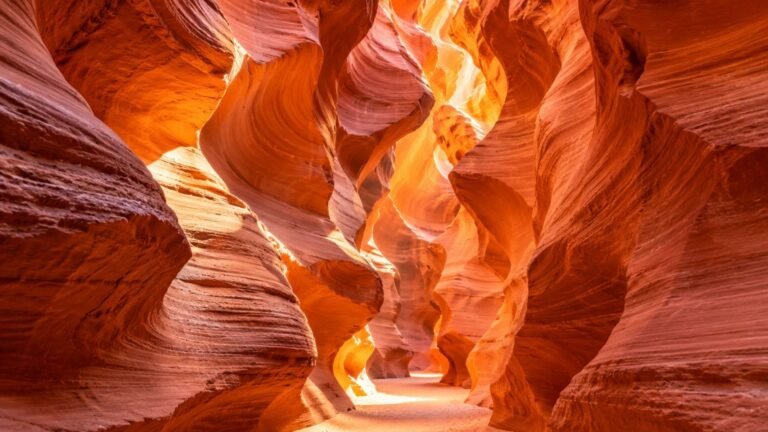

I love discovering unusual places that make a road trip feel a little more adventurous, and Belly of the Dragon in Utah is exactly the kind of destination that catches my attention.
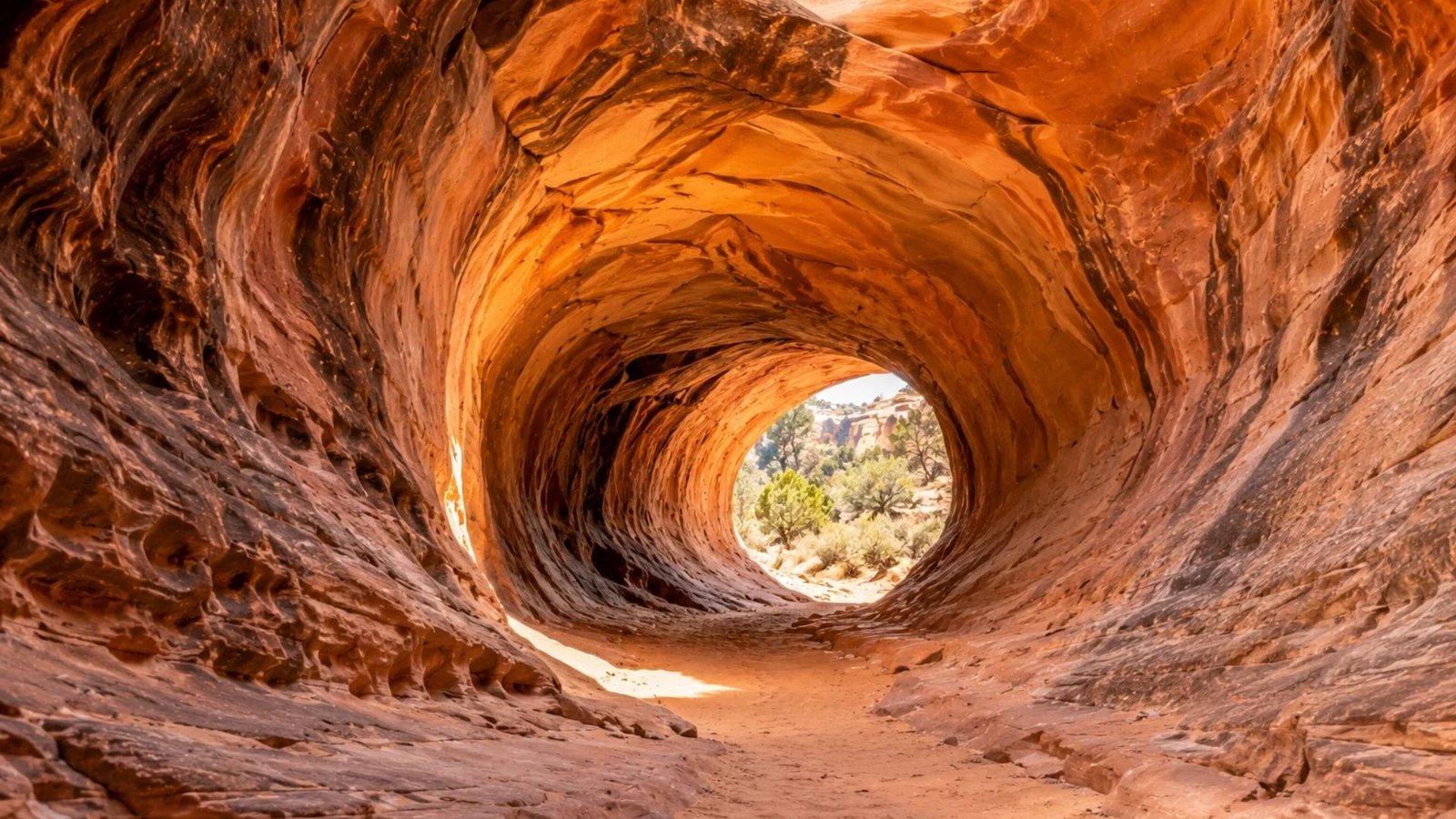
Tucked beneath Highway 89, this fascinating tunnel looks like something straight out of a fantasy movie, with rippled sandstone walls and a winding passage that feels like stepping into a dragon’s lair.
If you are exploring Southern Utah, this unusual stop is worth adding to your itinerary. In this guide, I’ll share how to find it, what to expect, photography tips, safety advice, and nearby places to explore.
Shop my amazon essentials
- Hiking Shoes
- Lightweight Hiking Backpack
- Reusable Water Bottle
- Headlamp or Flashlight
- Sun Hat
- Hiking Pants
- First Aid Kit
What Is Belly of the Dragon?
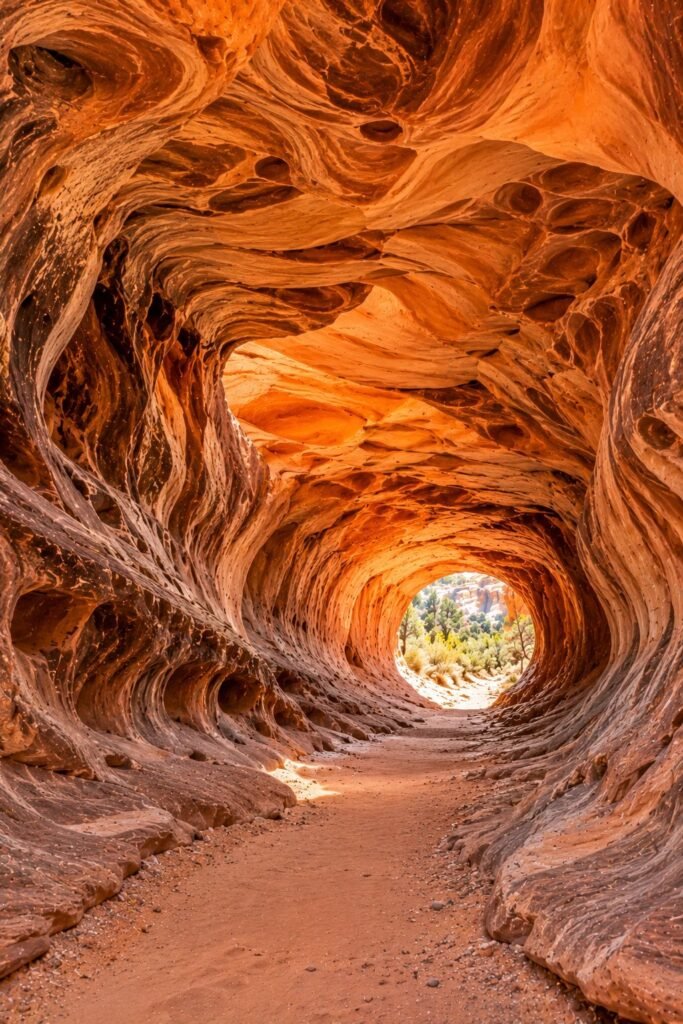
Belly of the Dragon is a short, cave-like tunnel located beneath Highway 89 in Southern Utah. Although it looks like a natural cave, it was originally constructed as a drainage tunnel to allow water to pass underneath the highway.
Over time, flowing water has shaped the tunnel’s sandstone surfaces, creating the unusual ripples, curves, and textured walls that make this destination so recognizable.
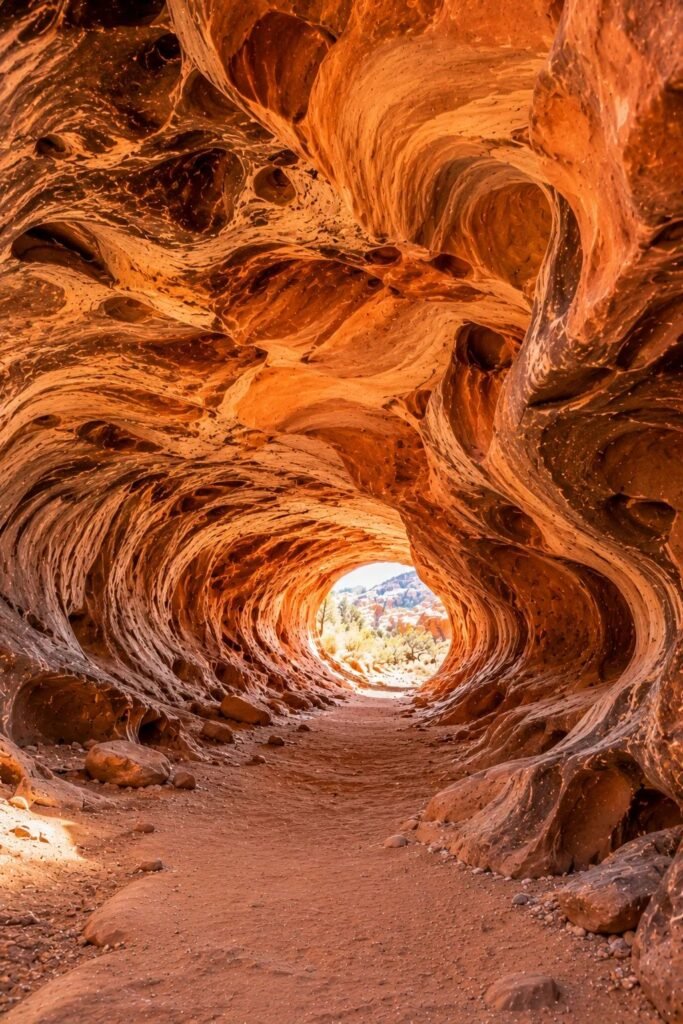
Walking through the tunnel can feel like entering the belly of a giant creature. The walls curve around you, the light changes as you move farther inside, and the opening at the opposite end creates a beautiful natural-looking frame.
What makes this place especially interesting is that it combines human engineering with the power of nature. The tunnel was built for a practical purpose, but water erosion has helped transform it into an unusual attraction for travelers and photographers.
It is not a traditional hiking destination with long trails or spectacular mountain summits. Instead, Belly of the Dragon is a quick adventure that gives you the chance to explore somewhere completely different without committing to a full day of hiking.
One important thing to know: This is a drainage tunnel, not a conventional cave. Rainwater can flow through it, so weather conditions must always be considered before visiting.
Where Is Belly of the Dragon Located?
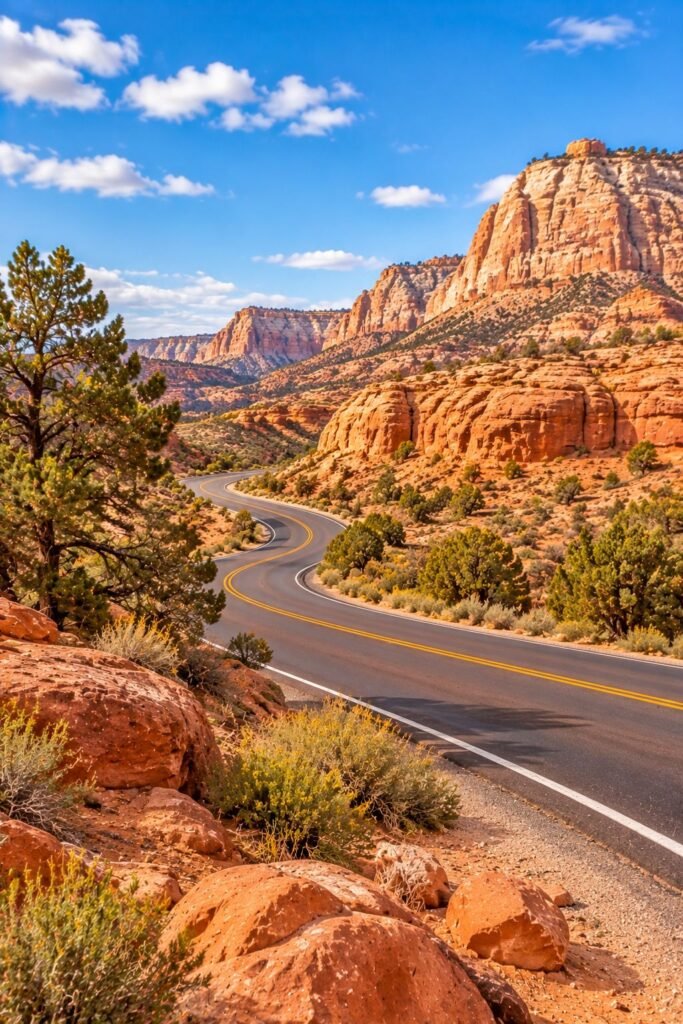
Belly of the Dragon is located near Mount Carmel Junction, between Orderville and Kanab, Utah.
It sits approximately 16 miles north of Kanab and about 20 miles from the eastern entrance area of Zion National Park. Its location makes it a convenient stop for travelers exploring Southern Utah’s red-rock landscapes.
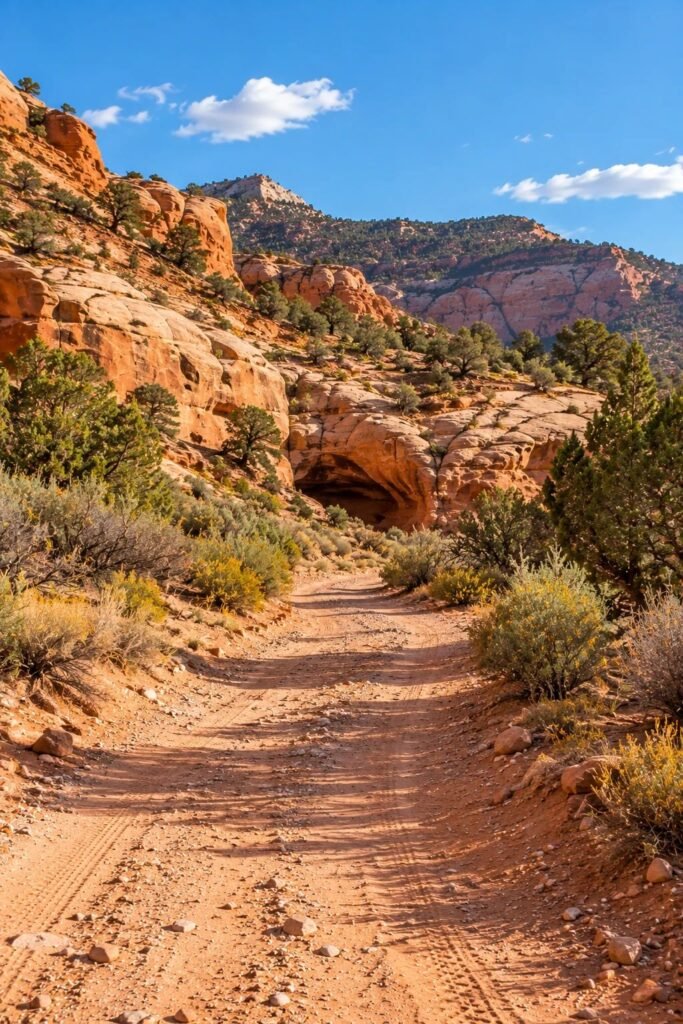
The attraction is accessed from the west side of Highway 89 via a short dirt access road. After parking, visitors follow a short trail toward the tunnel entrance.
Because the entrance sits close to the highway, it is easy to overlook when driving past. This is one reason I recommend planning your stop in advance rather than hoping to spot it while traveling.
How Far Is Belly of the Dragon From Nearby Destinations?
Here are some approximate distances to help you plan your road trip:
- Kanab, Utah: About 16 miles south.
- Mount Carmel Junction: Less than a mile north of the access area.
- Orderville, Utah: A short drive north along Highway 89.
- East Zion: Convenient for travelers exploring the eastern side of Zion National Park.
- Zion National Park: A practical addition to a broader Southern Utah itinerary, particularly when visiting the eastern entrance area.
Driving times depend on traffic, road conditions, and where you begin your journey. Check your navigation app before leaving, and confirm that the access road is suitable for your vehicle and current conditions.
How to Get to Belly of the Dragon
Finding Belly of the Dragon is relatively straightforward when you know where to look.
Step 1: Drive Along Highway 89
If you are coming from Kanab, head north on US Highway 89 toward Mount Carmel Junction. The attraction is approximately 16 miles from Kanab.
If you are coming from Mount Carmel Junction, travel south on Highway 89 for a short distance.
Step 2: Turn Onto the Access Road
Look for the dirt access road on the west side of Highway 89 near the tunnel area. Barracks Road is commonly used in directions to the parking area.
Use a current navigation map to locate the trailhead, and avoid making sudden turns or stopping on the highway shoulder. If the access road is muddy or conditions have deteriorated, do not attempt to drive through it.
Step 3: Park in the Designated Area
Park in the available dirt parking area near the trailhead. Parking and access have generally been free, but check for any current signs, closures, or restrictions when you arrive.
There are limited facilities in this area, so plan ahead if you need restrooms, food, or drinking water.
Step 4: Follow the Short Trail
From the parking area, follow the obvious path toward the tunnel entrance. The walk is short, but the terrain is not completely smooth.
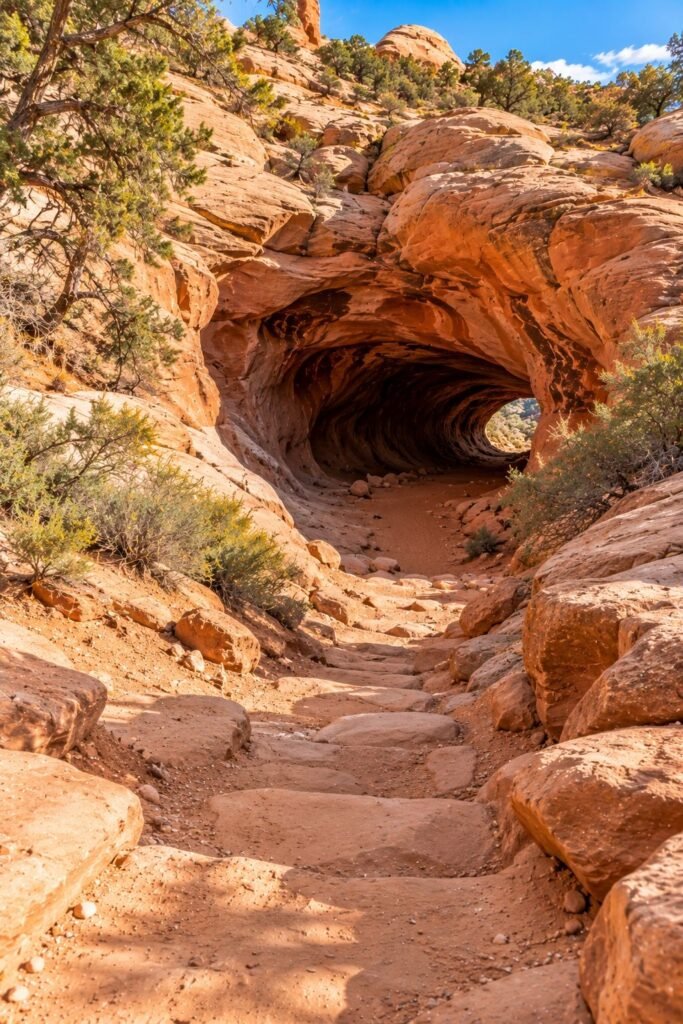
You will need to negotiate a small rocky or slick-rock descent to reach the entrance. Take your time and only continue if the footing feels manageable.
Once you reach the tunnel, you can explore the passage when conditions are safe.
Read How to Park Overnight Free Anywhere in the USA: A Complete Road Trip Guide
How Difficult Is the Belly of the Dragon Hike?
One of the biggest attractions of Belly of the Dragon is how little walking is required to reach it.
The short out-and-back route is generally around 0.3 to 0.5 miles, depending on where you measure the route and whether you explore beyond the tunnel.
Many visitors spend approximately 15 to 30 minutes at the attraction, although photography and exploring can take longer.
The walk itself is relatively easy for many visitors, but I would not describe it as completely accessible or effortless.
The main challenge is the uneven entrance. Reaching the tunnel requires a short scramble down a rocky ledge, and the surface can be slippery or sandy. The tunnel floor also has uneven sections that require careful footing.
Here is a quick overview:
- Distance: Approximately 0.3–0.5 miles round trip for the short visit.
- Difficulty: Easy walking with a short, potentially tricky scramble.
- Time needed: Around 15–30 minutes for a basic visit.
- Trail surface: Dirt, sand, and uneven rock.
- Elevation gain: Minimal.
- Facilities: Do not expect restrooms or drinking-water facilities at the trailhead.
- Cost: Generally free, subject to current access restrictions.
If you have children with you, keep them close and assess the entrance before proceeding. Anyone uncomfortable with uneven ground or scrambling may prefer to admire the area without entering the tunnel.
What to Expect When Exploring Belly of the Dragon
The experience begins with the unusual entrance, where the tunnel’s curved walls immediately catch your eye.
As you move inside, you will notice the rippled sandstone texture along the walls and ceiling. The shapes are irregular, giving the passage an almost sculpted appearance. It is easy to understand why visitors compare it to the inside of a mythical creature.
The tunnel extends beneath Highway 89 for roughly 100 yards. It is relatively short, but the lighting and changing shapes make it feel different from an ordinary roadside stop.
During daylight, light enters from both ends. However, sections can become quite dim, particularly around the slight bend. A flashlight can help you see the ground clearly.
The temperature inside may also feel cooler than the surrounding desert, especially during colder months. Wear layers if you are visiting in winter or early spring.
Once you reach the other end, the tunnel opens into a narrow wash surrounded by rock and desert scenery. You can turn around and return the way you came, which is what most visitors do on a short visit.
Some hikers continue farther into the wash, where additional scenery and a slot canyon can be found farther along.
This is a separate, longer outing and should not be treated as an automatic extension of the short tunnel walk. Research the route, weather, terrain, and turnaround point before deciding to continue.
Best Time to Visit Belly of the Dragon
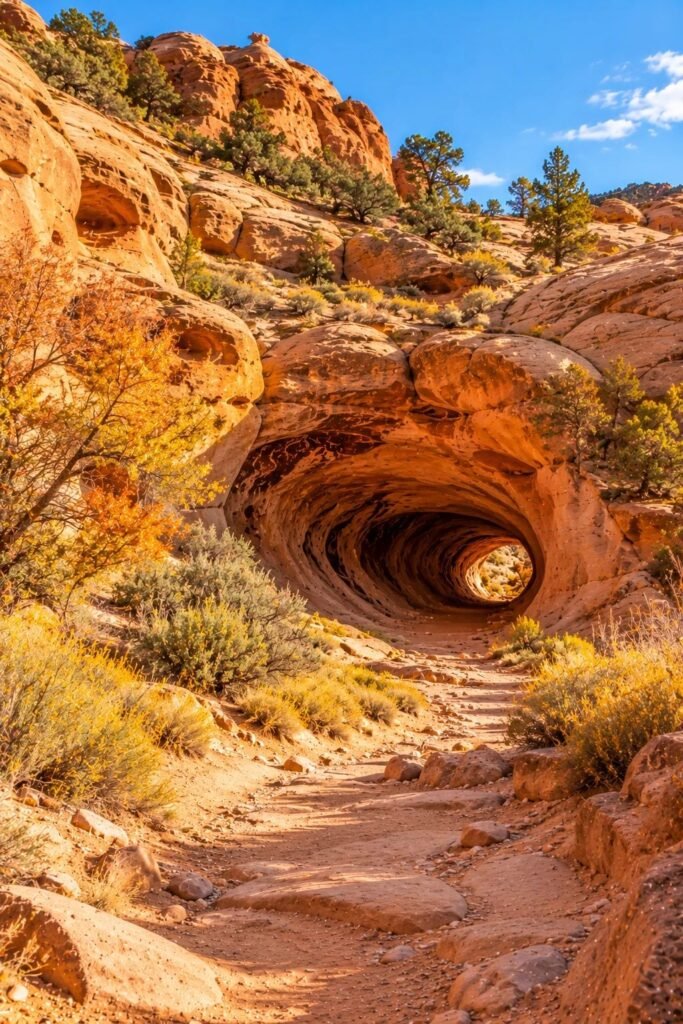
Belly of the Dragon can be visited in different seasons, provided the access road is passable and weather conditions are safe. However, some times of year are more comfortable than others.
Spring
Spring can be a pleasant time to explore Southern Utah. Temperatures are often more comfortable for walking, and the surrounding desert landscape can be beautiful in the softer seasonal light.
However, spring storms are possible. Always check the forecast before your visit because even a short shower can make the access road slippery and create dangerous conditions in a drainage tunnel.
Summer
Summer brings long daylight hours, making it easier to fit this stop into a road trip. The tunnel may also feel cooler than the exposed landscape outside.
However, summer heat can be intense in Southern Utah, and thunderstorms can develop quickly during the monsoon season. Never enter the tunnel when rain is occurring or when storms could send water into the drainage system.
Fall
Fall is an excellent season to consider for a Southern Utah road trip. Temperatures can be more comfortable than during midsummer, and the lower-angle sunlight can create beautiful conditions for photography.
Pack an extra layer for cooler mornings and evenings, and check the forecast before heading out.
Winter
Winter can offer a quieter atmosphere, but temperatures may be cold and the entrance can become slippery if moisture, ice, or snow is present.
Wear appropriate footwear, check the road conditions, and do not attempt the scramble if the rocks are slick or icy.
My recommendation: Choose a dry day with comfortable temperatures and enough daylight to explore without rushing. Weather safety matters far more than choosing a particular season.
Essential Safety Tips Before You Visit
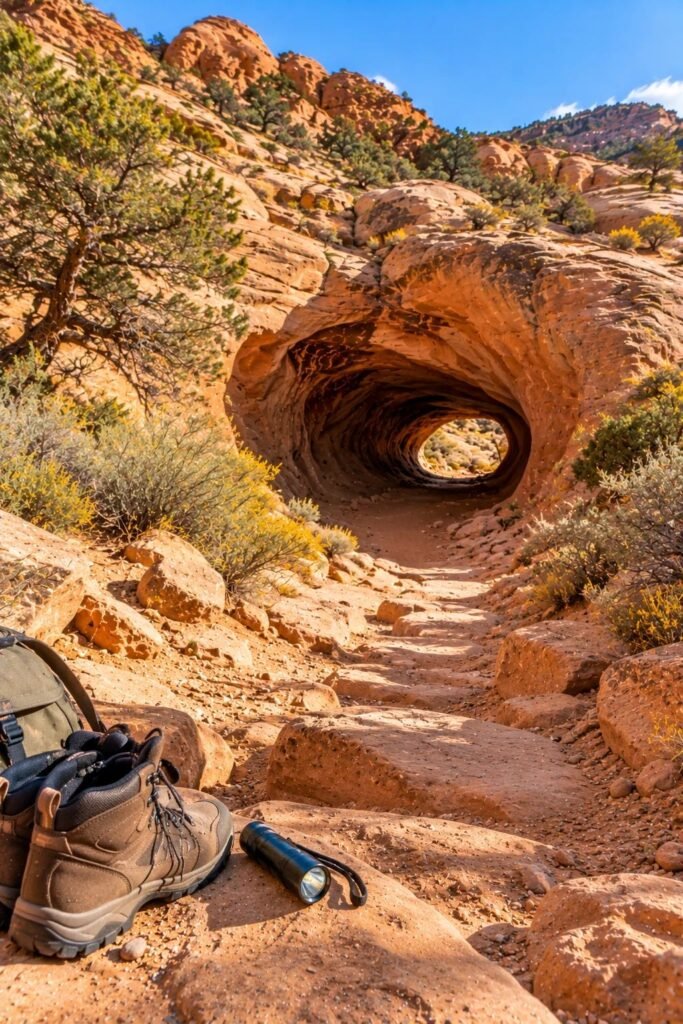
Although Belly of the Dragon is short, it is important to treat it with care. Its unusual appearance can make it seem like a simple photo stop, but the tunnel serves a real drainage purpose.
1. Never Enter During Rain or Threatening Storms
This is the most important rule. The tunnel carries drainage water, which means a storm can create a serious flash-flood hazard.
Do not enter during rain, when storms are approaching, or when upstream weather could send water through the area. A dry entrance does not guarantee that conditions farther upstream are safe.
If the weather forecast is uncertain, choose another activity.
2. Wear Shoes With Good Grip
The approach includes uneven ground and a short scramble. Sand and moisture can make rock surfaces slippery, so sturdy walking or hiking shoes are a better choice than smooth-soled shoes or sandals.
3. Bring a Flashlight
Even though daylight enters the tunnel from both ends, some sections are dim. A flashlight helps you see uneven ground and potential obstacles.
Keep your phone charged if you plan to use its light, but do not rely on a phone as your only safety preparation.
4. Watch Every Step
The tunnel floor may contain loose sand, rocks, and uneven surfaces. Walk slowly, pay attention to where you place your feet, and avoid rushing to take photographs.
If a section looks unstable or difficult to navigate, turn back rather than taking an unnecessary risk.
5. Do Not Climb the Walls
The sandstone walls are part of what makes the tunnel interesting, but they are not climbing structures. Avoid climbing on them, pulling at loose rock, or touching unstable sections.
6. Bring Water and Tell Someone Your Plans
There are no reliable drinking-water facilities at the attraction. Carry water, particularly when visiting during warmer weather.
If you are traveling alone, let someone know where you are going and when you expect to return. Cell reception can be unreliable in parts of Southern Utah.
7. Leave the Tunnel as You Found It
Unfortunately, graffiti has become a problem in the tunnel. Do not carve names, draw on the sandstone, or leave litter behind.
Take photographs, enjoy the unusual surroundings, and leave the area in good condition for the next visitor.
What to Pack for Belly of the Dragon
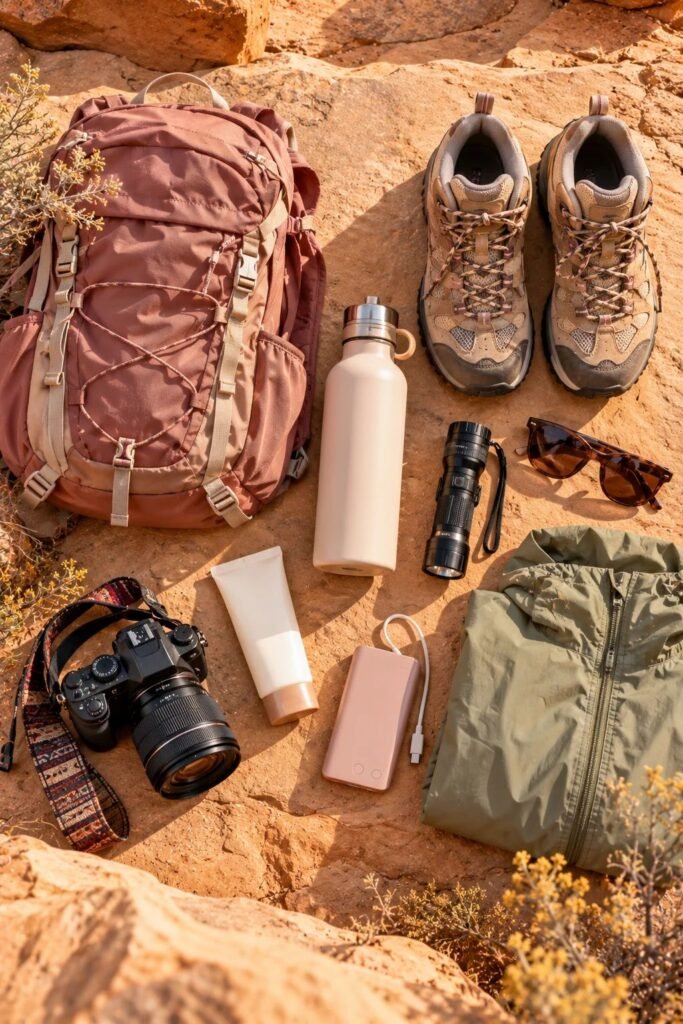
You do not need an elaborate hiking kit for this short visit, but a few essentials can make your stop more comfortable.
- Comfortable walking shoes: Choose footwear with reliable traction for the rocky entrance.
- Water bottle: Bring enough water for the drive and your outdoor activities.
- Flashlight: Useful for seeing the darker sections of the tunnel.
- Light jacket: The tunnel can feel cooler than the surrounding landscape.
- Phone or camera: Ideal for capturing the unusual rock textures.
- Portable power bank: Helpful if you are using your phone for navigation and photography throughout the day.
- Sun protection: Sunglasses, sunscreen, and a hat are useful while walking in the exposed desert.
- Small day bag: Keep your essentials together without carrying unnecessary items.
Keep your hands free when negotiating the entrance, and put away your camera or phone while moving across difficult ground.
Photography Tips for Belly of the Dragon
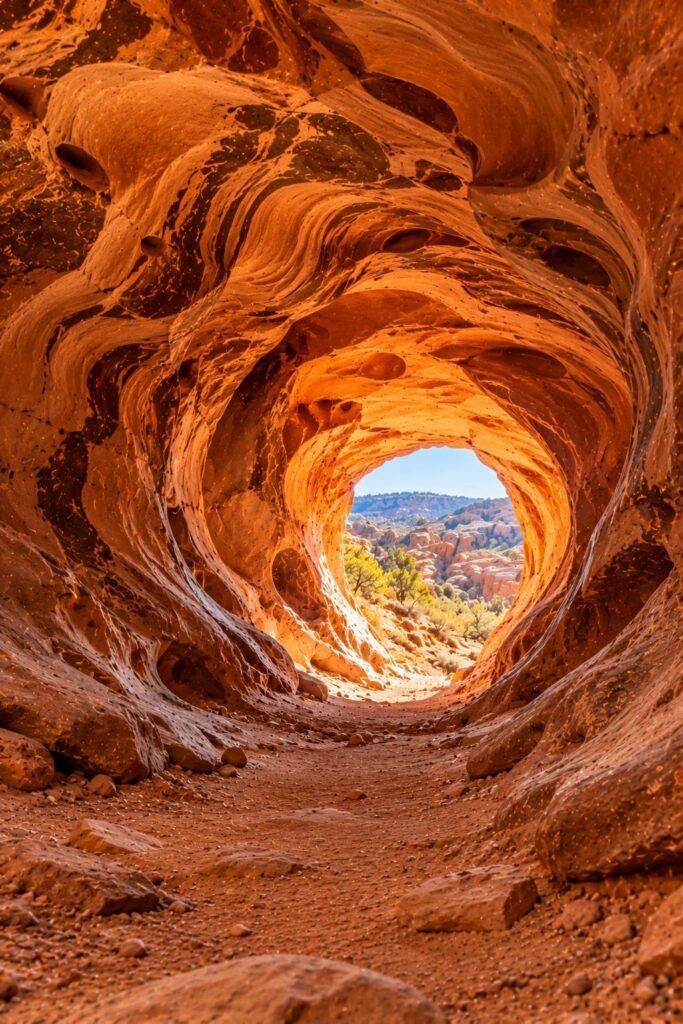
Belly of the Dragon is a fun destination for anyone who enjoys photographing unusual landscapes. The curved walls, contrasting light, and tunnel opening provide several interesting compositions.
Photograph the Tunnel From the Entrance
Start with a photograph that captures the overall shape of the tunnel. Position yourself where you can show the rippled walls and the light coming through the passage.
A wide-angle lens can help capture more of the surrounding texture, although a phone camera can also work well.
Capture the Textures
The walls are one of the tunnel’s most distinctive features. Try taking closer photographs of the curved sandstone patterns rather than photographing only the entire passage.
Look for repeating lines, shadows, and changes in the rock’s surface.
Use the Light at the Far End
The light coming from the opposite opening creates a natural focal point. If you photograph toward the exit, you can emphasize the contrast between the dim interior and the brighter desert landscape outside.
Be mindful of other visitors and avoid standing in a hazardous position just to get a particular angle.
Visit With Enough Daylight
Daylight makes it easier to photograph the tunnel without relying heavily on artificial lighting. It also helps you see the ground more clearly.
Avoid entering after dark simply to create a dramatic photograph. Your safety is more important than getting the perfect shot.
Respect Other Visitors
If the tunnel is busy, wait for a clear moment rather than blocking the passage. Never ask someone to stand on an unstable ledge or climb a wall for a photograph.
Can You Visit Belly of the Dragon With Kids or Dogs?
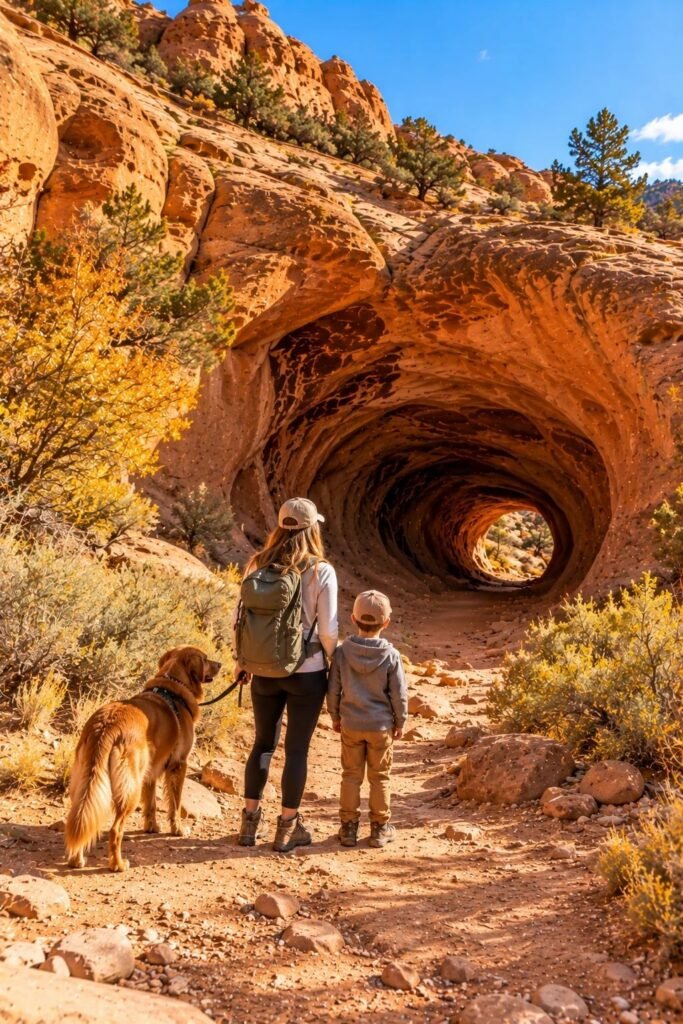
Belly of the Dragon can be an interesting stop for families because the main tunnel is short and does not require a long hike.
Children may enjoy the unusual shapes and the feeling of exploring a mysterious passage. However, the rocky entrance requires particular attention. Younger children may need assistance, and adults should assess the scramble carefully before deciding whether to enter.
The tunnel’s dim lighting and uneven floor are also worth considering. Keep children close, move slowly, and turn around if the footing is uncomfortable.
Dogs are generally permitted in the area, but conditions may not be suitable for every pet. Consider whether your dog can negotiate the rocky entrance safely, and keep them under control around other visitors.
Bring water for your pet, clean up after them, and check any current local restrictions before visiting.
Is Belly of the Dragon Worth Visiting?
I would recommend adding Belly of the Dragon to your itinerary if you enjoy unusual roadside attractions, short walks, and distinctive desert landscapes.
It is particularly appealing to travelers who want to explore something different without dedicating an entire day to hiking. The tunnel’s unusual walls make it memorable, and its location near other Southern Utah attractions makes it easy to combine with a broader road trip.
However, it is worth setting realistic expectations. This is a short attraction rather than an extensive cave system or a major hiking destination. Most visitors will not need hours to explore the tunnel itself.
I would not recommend making a long detour solely for the tunnel if your schedule is tight, especially when weather or access conditions are unfavorable. It makes the most sense as part of a day exploring the Kanab and East Zion area.
The entrance scramble also means it is not suitable for everyone. If you have mobility concerns or feel uncomfortable on uneven terrain, you can choose a different nearby attraction that better suits your needs.
Places to Visit Near Belly of the Dragon
One of the best ways to make the most of your visit is to combine it with other destinations in Southern Utah. Here are a few places worth considering.
1. Zion National Park
Zion National Park is one of the region’s most famous outdoor destinations, known for its dramatic sandstone cliffs, scenic drives, and hiking trails.
The eastern side of the park is particularly convenient to consider when planning a route that includes Belly of the Dragon. You could visit the tunnel as a short stop before or after exploring the park, depending on your itinerary.
Allow plenty of time for Zion itself, and check current park alerts, trail conditions, and access information before traveling.
2. Kanab, Utah
Kanab is a useful base for exploring Southern Utah’s desert landscapes and nearby outdoor attractions.
The town offers places to eat, accommodation options, and opportunities to plan additional day trips. If you are staying in Kanab, Belly of the Dragon can fit into a relaxed morning or afternoon outing.
You can also use Kanab as a starting point for exploring other regional attractions, depending on road conditions and your available time.
3. Coral Pink Sand Dunes State Park
If you want a change of scenery after exploring the tunnel, Coral Pink Sand Dunes State Park offers a landscape of striking pinkish-orange sand dunes.
The dunes provide a very different experience from the enclosed tunnel, with open views and plenty of opportunities for landscape photography.
Check park information before visiting, especially if you plan to participate in activities that have designated areas or specific rules.
4. Buckskin Gulch and Wire Pass
For travelers interested in slot canyons, the wider Kanab region has several options, including Buckskin Gulch and Wire Pass.
These adventures require more planning than Belly of the Dragon. Route conditions, access requirements, permits, weather, and hiking difficulty can vary, so research the specific route before setting out.
Do not treat a slot canyon as a casual extension of a short tunnel visit, and never enter narrow canyon terrain when rain or flash-flood conditions are possible.
5. The East Zion Area
The East Zion region is worth exploring for its sandstone scenery, outdoor adventures, and access to the eastern side of Zion National Park.
Depending on your interests, you could spend additional time on scenic drives, choose a suitable hiking trail, or book a guided outdoor activity.
Plan your route in advance so you are not rushing between stops, and check local conditions before heading onto unpaved roads.
Frequently Asked Questions About Belly of the Dragon
Is Belly of the Dragon free to visit?
Visiting and parking have generally been free. However, access rules can change, so check for current restrictions and signs when you arrive.
How long does it take to explore Belly of the Dragon?
Most visitors can explore the short tunnel and return to the parking area in approximately 15–30 minutes. Allow extra time for photographs, waiting for other visitors, or exploring the surrounding area.
Is Belly of the Dragon a natural cave?
No. It is a man-made drainage tunnel beneath Highway 89. Water erosion has shaped its surfaces, creating the unusual rippled appearance.
Do I need hiking experience?
You do not need extensive hiking experience for the short visit. However, you should be comfortable walking on uneven terrain and negotiating a small rocky descent. The attraction is not accessible to everyone.
Do I need a flashlight?
A flashlight is recommended because parts of the tunnel can be dim. It can help you see the uneven floor and avoid obstacles.
Can I visit Belly of the Dragon in winter?
Winter visits may be possible when the access road and trail are safe. Avoid the area if the entrance is icy, slippery, or affected by poor weather.
Is Belly of the Dragon safe during rain?
No. You should not enter during rain or when storms may send water through the drainage system. Flash flooding is a serious hazard, even if the tunnel entrance initially appears dry.
Can I explore beyond the tunnel?
The wash continues beyond the tunnel, and longer walks can lead toward additional canyon scenery. However, the longer route requires its own planning and assessment of weather, terrain, and available daylight. Do not continue if conditions are unsafe.
Are there restrooms at Belly of the Dragon?
You should not expect restrooms or drinking-water facilities at the trailhead. Use facilities in nearby towns before driving to the attraction.
Final Thoughts on Visiting Belly of the Dragon
Belly of the Dragon is one of those unusual Southern Utah stops that proves an adventure does not always need to involve a long hike or a challenging trail.
Its rippled walls, cave-like appearance, and short passage beneath Highway 89 make it a memorable addition to a road trip through the Kanab and East Zion region.
If you decide to visit, wear shoes with good grip, bring a flashlight and water, and check the weather carefully before setting out. Most importantly, remember that this tunnel was built to carry drainage water, so never enter when rain or flash-flood conditions are possible.
With sensible planning, a little patience, and respect for the landscape, you can enjoy this unusual destination while making time for the many other beautiful places Southern Utah has to offer.