
RV travel has a way of turning an ordinary vacation into an adventure.
I love the idea of waking up, opening the door of my RV, and finding mountains, forests, lakes, deserts, or the ocean waiting just outside.
Over the years, I’ve learned that choosing the right campground can be just as important as choosing the destination itself.
A beautiful campsite can make you want to stay an extra night, while the wrong one can make an otherwise amazing road trip feel stressful.
For 2026, I put together this bucket-list collection of RV campgrounds and camping destinations across the United States that are worth adding to your travel plans.
Why RV Campgrounds Belong on Your 2026 Travel Bucket List
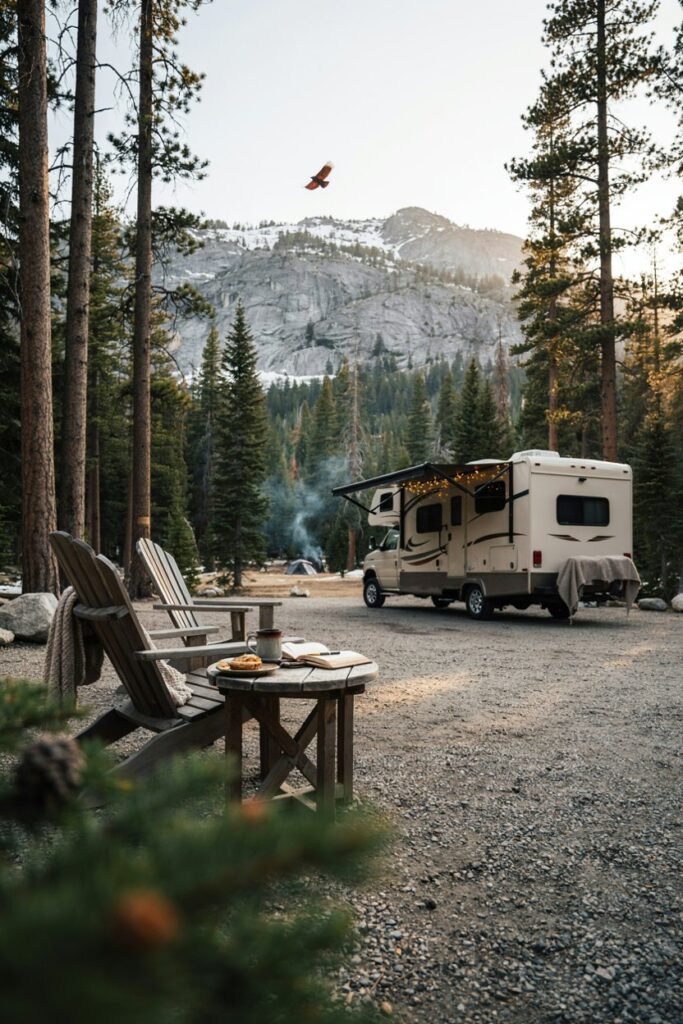
One of my favorite things about RV travel is the freedom it gives you.
You aren’t tied to a hotel check-in time, and you can bring many of the comforts of home with you while still being surrounded by nature.
You can make breakfast with a mountain view, enjoy coffee beside a lake, and end the evening watching the stars from your campsite.
The best RV campgrounds also put you close to some of America’s most incredible outdoor destinations.
From the red rocks of Utah to the forests of Maine and the enormous landscapes of Yellowstone, there is an RV campground for almost every kind of traveler.
For 2026, I recommend looking beyond just the campground name. Before booking, check:
- RV length restrictions
- Whether your site has electric, water, and sewer hookups
- Dump-station availability
- Road restrictions for larger RVs
- Reservation opening dates
- Seasonal campground closures
- Cell service
- Pet rules
- Generator restrictions
- Nearby grocery and fuel options
National park camping can be particularly different from private RV resorts.
Many national park campgrounds have little or no hookups, and some were designed decades ago for smaller vehicles. Your RV may technically be allowed in the park but still not fit at a particular campground or campsite.
With that in mind, here are some RV destinations I would put on a 2026 bucket list.
1. Fishing Bridge RV Park — Yellowstone National Park, Wyoming
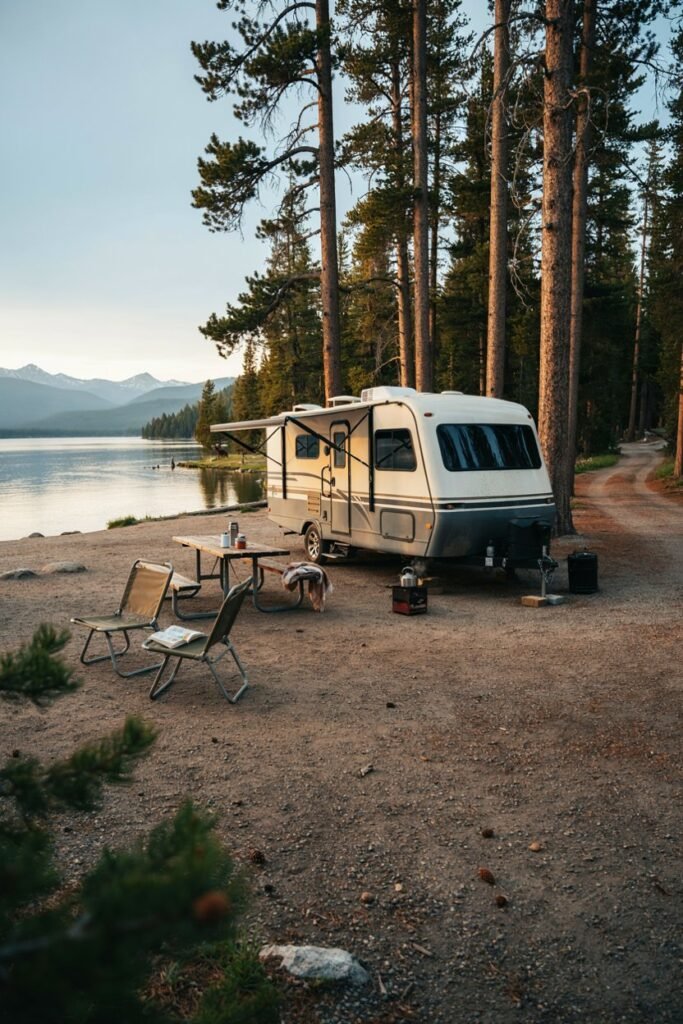
Few places feel as special from an RV as Yellowstone.
Fishing Bridge RV Park is an especially interesting option because it provides full hookups inside Yellowstone National Park.
The campground is designed for hard-sided RVs because of the wildlife environment, and it can accommodate some very large RV setups. Current 2026 information lists approximately 310 sites with electric, water, and sewer connections.
The location makes it a convenient base for exploring Yellowstone’s enormous collection of geothermal features and wildlife.
During your stay, make time for:
- Old Faithful
- Grand Prismatic Spring
- Yellowstone Lake
- Hayden Valley
- Mammoth Hot Springs
- Grand Canyon of the Yellowstone
- Wildlife watching
Why I would add it to my bucket list
Yellowstone is one of those destinations where I would rather stay several days than rush through it. Having your RV nearby gives you a comfortable base while you explore.
Keep in mind that Yellowstone is huge, so don’t underestimate driving times.
2. Watchman Campground — Zion National Park, Utah
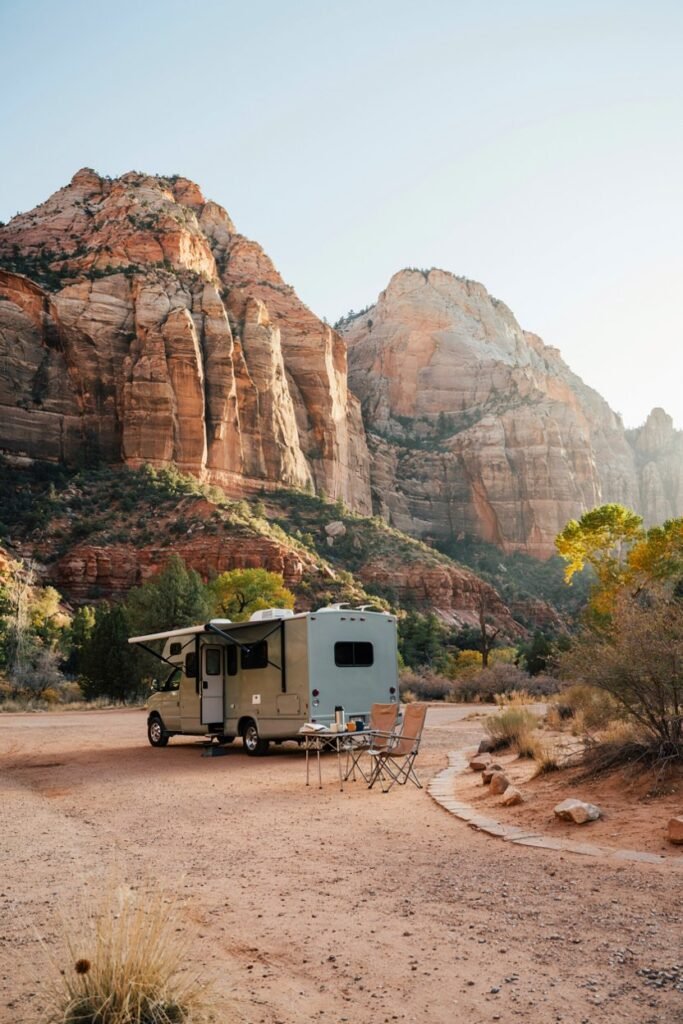
Zion is one of those places that almost doesn’t look real when you first see the canyon walls.
Watchman Campground is located close to the Zion Canyon Visitor Center and is one of the standout RV camping options in the park.
Some sites have electric hookups, which makes this campground especially useful for RV travelers who don’t want to completely rely on dry camping.
Current 2026 information lists electric sites and varying site-length restrictions, so check the individual campsite before reserving.
Once you’re settled, you can explore Zion’s dramatic canyon scenery, hiking trails, viewpoints, and shuttle system.
Things to do around Zion
- Ride the Zion Canyon shuttle
- Hike the Pa’rus Trail
- Explore the Zion Canyon Scenic Drive
- Visit the Court of the Patriarchs
- Walk along the Virgin River
- Explore Springdale
RV tip
Don’t assume that because a campground accepts RVs, every road in the park is suitable for your rig. Zion has vehicle restrictions and challenging sections for larger vehicles, so research your exact route before driving in.
3. Trailer Village — Grand Canyon National Park, Arizona
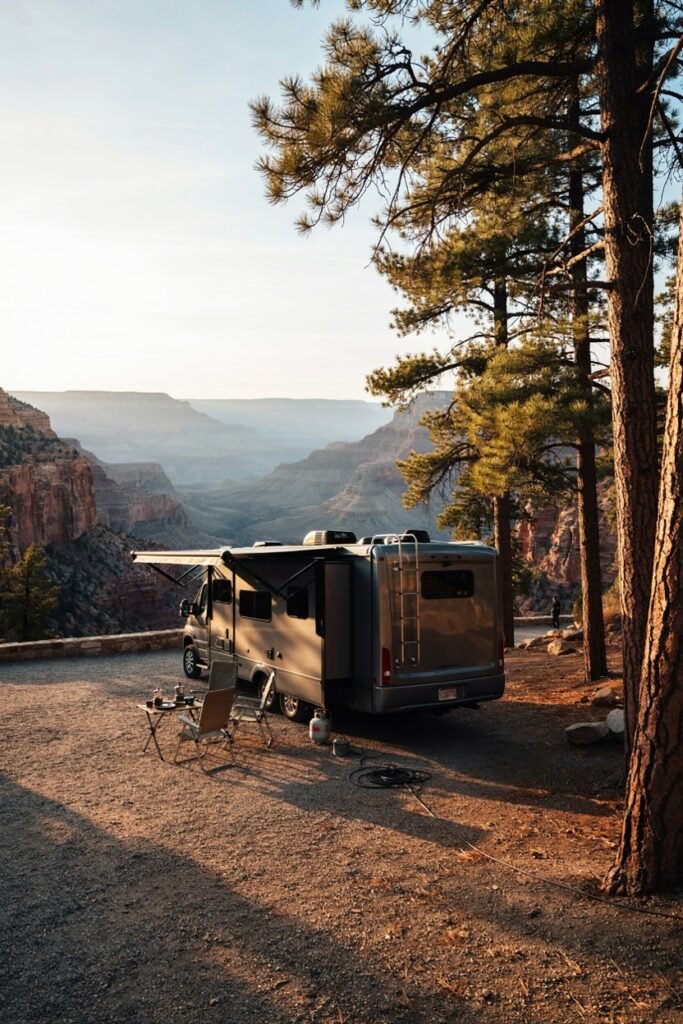
Waking up near the Grand Canyon is already a bucket-list experience.
Trailer Village on the South Rim is particularly attractive to RV travelers because it offers full hookups, something that is relatively uncommon inside national parks.
The South Rim also provides plenty of opportunities for sightseeing without needing to move your RV constantly.
Spend your time exploring:
- Mather Point
- Yavapai Point
- Desert View
- Grand Canyon Village
- Hermit’s Rest
- South Rim walking trails
One of my favorite things about a Grand Canyon RV trip would be slowing down enough to experience sunrise and sunset rather than treating the canyon as a quick roadside attraction.
RV tip
The Grand Canyon is much more than one viewpoint. Give yourself several days if possible.
4. Apgar Campground — Glacier National Park, Montana
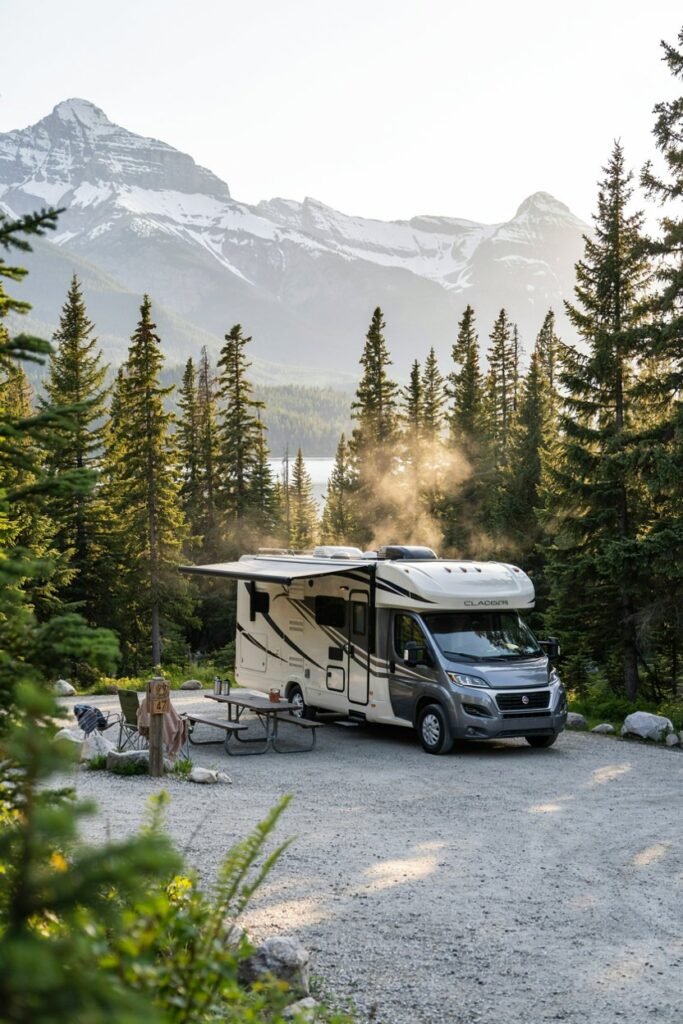
If mountain scenery is what makes you want to hit the road, Glacier National Park belongs on your list.
Apgar Campground sits near the western side of Glacier and provides access to forests, lakes, mountains, and some spectacular scenery.
Glacier is also a perfect example of why RV travelers need to check vehicle restrictions before arriving. Parts of the famous Going-to-the-Sun Road have restrictions that make it unsuitable for larger RVs.
That doesn’t mean you can’t enjoy the park with an RV.
Instead, use your RV as your comfortable base and explore the areas that are appropriate for your vehicle.
Don’t miss
- Lake McDonald
- Going-to-the-Sun Road viewpoints accessible to your vehicle
- Many Glacier area
- Logan Pass
- Hiking trails
- Wildlife viewing
Always check current road conditions and restrictions before your trip because mountain conditions can change quickly.
5. Upper Pines Campground — Yosemite National Park, California
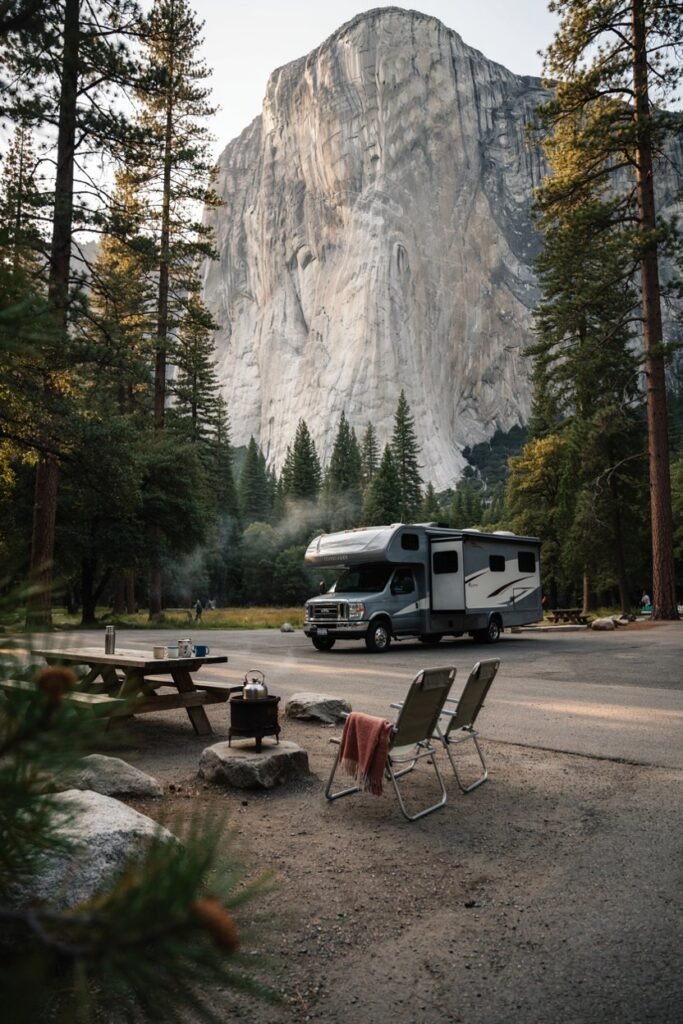
Yosemite is another destination where staying inside the park can completely change the experience.
Upper Pines Campground is located in Yosemite Valley and offers a spectacular base for exploring the park’s famous granite cliffs, waterfalls, and hiking trails.
There are no traditional hookups, so this is a better choice for RV travelers who are comfortable with dry camping.
The campground has RV length restrictions, and not every site can accommodate larger rigs. Current information lists a maximum of about 35 feet for RVs at Upper Pines, with individual sites varying.
What makes Yosemite special?
You can spend your days exploring:
- Yosemite Falls
- El Capitan
- Half Dome viewpoints
- Yosemite Valley
- Tunnel View
- Glacier Point
- Mariposa Grove
My planning tip
Don’t book Yosemite and then figure out your RV size afterward.
Check the campsite dimensions first.
A beautiful reservation is not useful if your rig doesn’t fit.
6. Blackwoods Campground — Acadia National Park, Maine
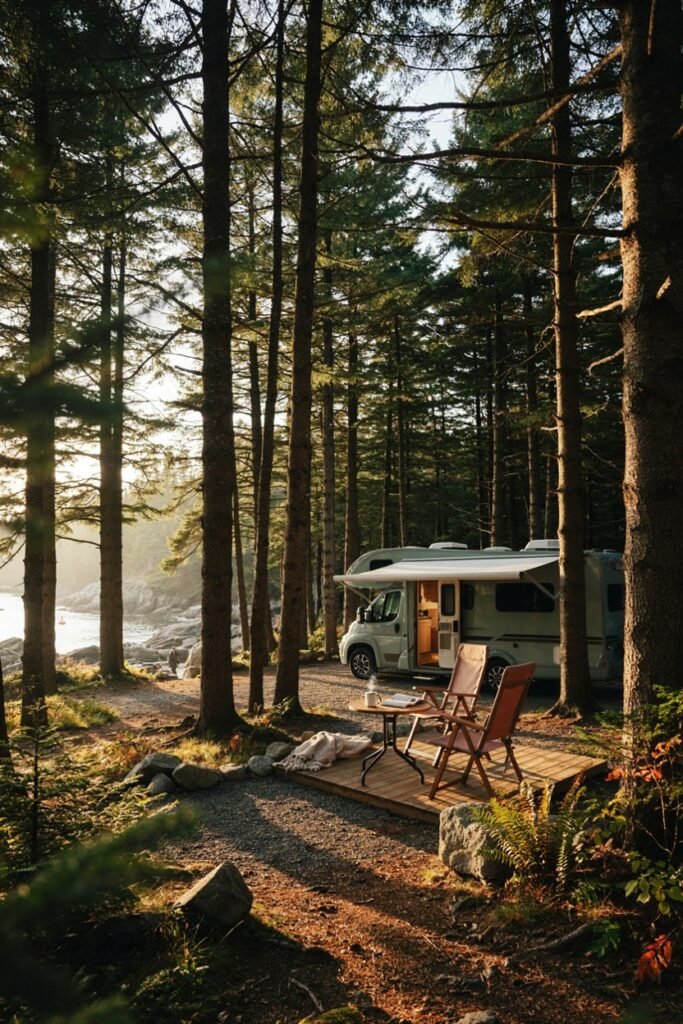
For RV travelers who love combining forests and coastline, Acadia is a wonderful choice.
Blackwoods Campground is close to many of the attractions that make Acadia special, including the rugged Atlantic coastline and scenic Park Loop Road.
The campground doesn’t offer traditional hookups, so come prepared for a more rustic camping experience. Current 2026 information also notes that RV-capable sites vary in size, with some accommodating smaller rigs than others.
Things to do in Acadia
- Watch sunrise at Cadillac Mountain
- Drive Park Loop Road
- Visit Sand Beach
- Explore Jordan Pond
- Walk Ocean Path
- Visit Bar Harbor
- Photograph the rocky coastline
Fall is particularly tempting here because of New England’s colorful foliage, although summer is also popular.
7. Mather Campground — Grand Canyon South Rim, Arizona
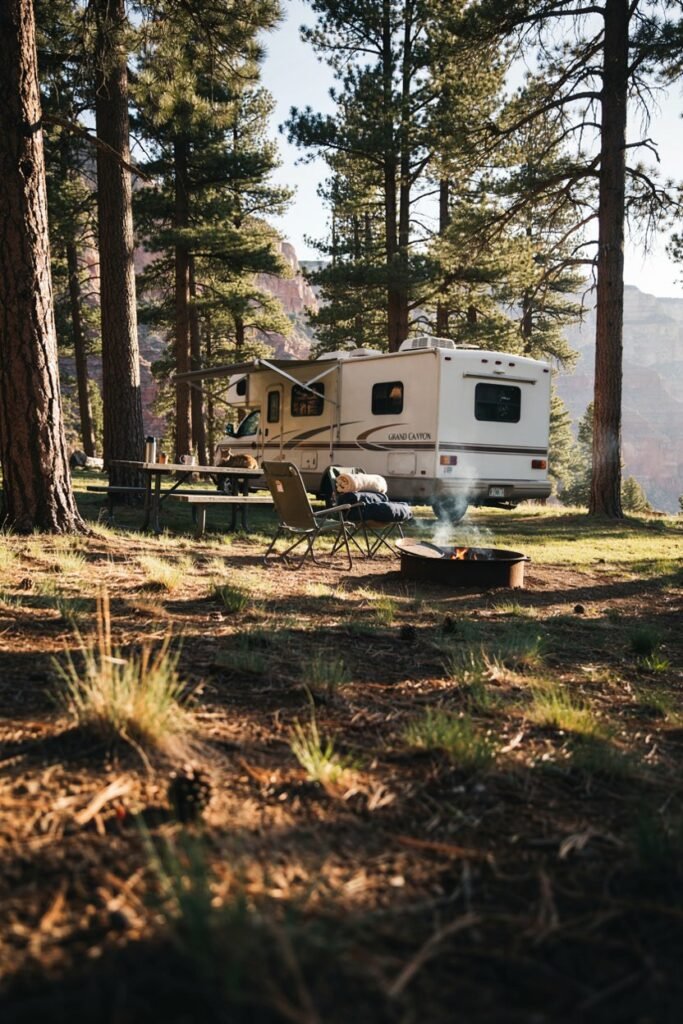
If Trailer Village is booked, Mather Campground is another option worth knowing about.
It doesn’t provide the same full-hookup experience, but its location inside Grand Canyon National Park is the real attraction.
This is a great reminder that RV camping doesn’t always have to mean luxury amenities.
Sometimes the biggest luxury is location.
Wake up, have breakfast, and head out to explore one of the world’s most famous landscapes without having to drive in from a distant town.
Best for
Mather is particularly appealing to RV travelers who:
- Don’t require hookups
- Want to stay inside the national park
- Prefer a more traditional camping atmosphere
- Want easy access to the South Rim
8. Jumbo Rocks Campground — Joshua Tree National Park, California
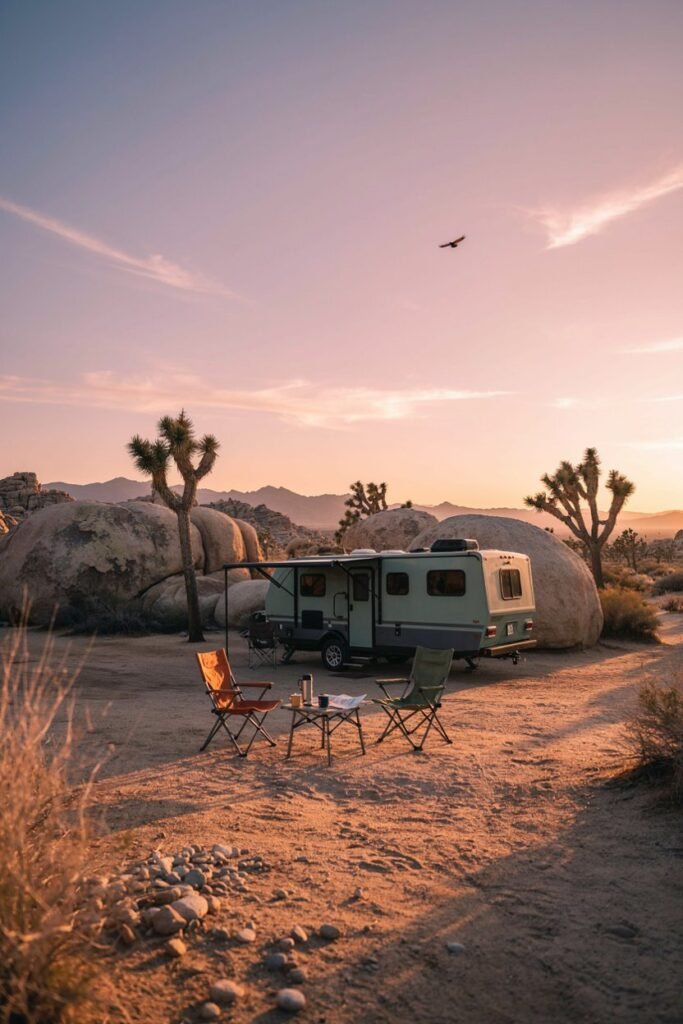
Joshua Tree feels completely different from Yellowstone, Yosemite, or Glacier.
Instead of towering mountains and thick forests, you’ll find enormous boulders, desert landscapes, unusual Joshua trees, and incredibly atmospheric sunsets.
Jumbo Rocks Campground places you right among the park’s famous granite formations.
There are no hookups, and RV length restrictions apply. Current 2026 information lists sites accommodating RVs up to around 35 feet, although individual sites vary.
Why visit?
Joshua Tree is fantastic for:
- Stargazing
- Photography
- Hiking
- Rock formations
- Desert sunsets
- Scenic drives
I would personally avoid planning a summer RV trip here because desert temperatures can become extremely uncomfortable.
Fall, winter, and spring can be much more appealing for outdoor exploration.
9. Valley of Fire State Park — Nevada
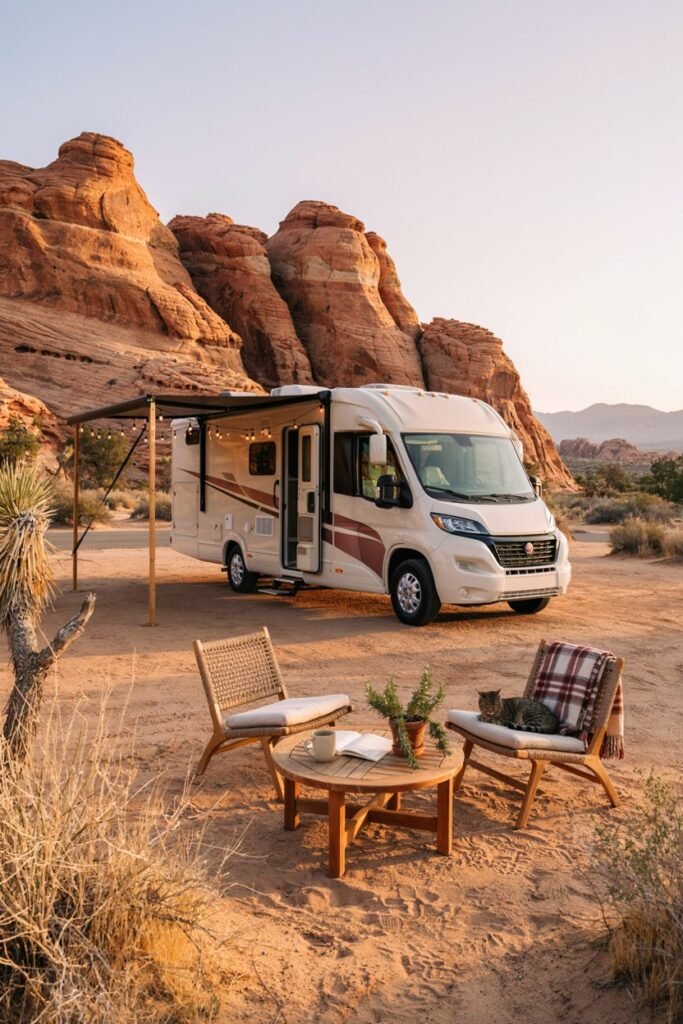
Not every bucket-list RV campground needs to be inside a national park.
Valley of Fire State Park is an incredible destination for anyone who loves dramatic desert scenery.
The red sandstone formations almost glow in the right light, creating an unforgettable backdrop for an RV road trip.
This is the kind of destination where I’d want to wake up early, make coffee outside, and photograph the landscape before the day gets too hot.
Things to do
- Drive the Valley of Fire Scenic Byway
- Photograph the red sandstone formations
- Explore hiking trails
- Visit the famous rock arches
- Enjoy sunset photography
- Explore nearby Las Vegas as part of a larger road trip
This destination works especially well as part of a Nevada and Utah RV adventure.
10. Arches National Park — Utah
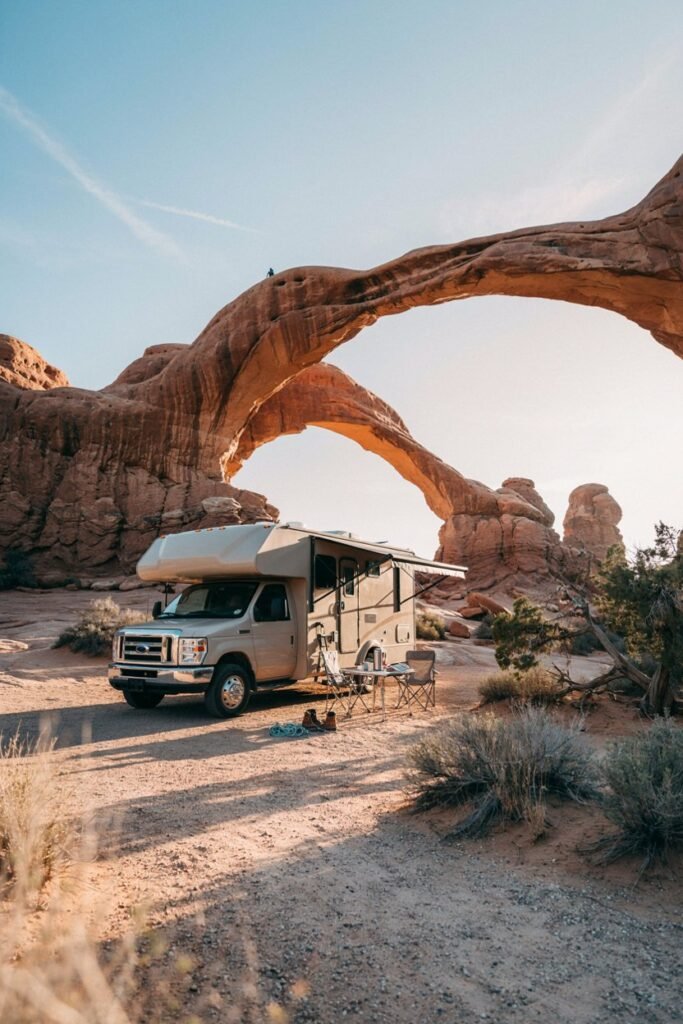
Arches is another destination that feels made for a road trip.
The park’s famous red-rock landscape includes hundreds of natural arches and dramatic desert formations.
Devils Garden is the main campground inside the park and is a memorable place to spend the night if your RV fits the requirements.
Arches has limited camping compared with the number of people who want to visit, so reservations and timing matter.
Add these to your itinerary
- Delicate Arch
- Balanced Rock
- Windows Section
- Double Arch
- Devils Garden
- Park Avenue
If you have more time, combine Arches with Canyonlands, Capitol Reef, Bryce Canyon, and Zion for an unforgettable Utah RV road trip.
11. Everglades National Park — Florida
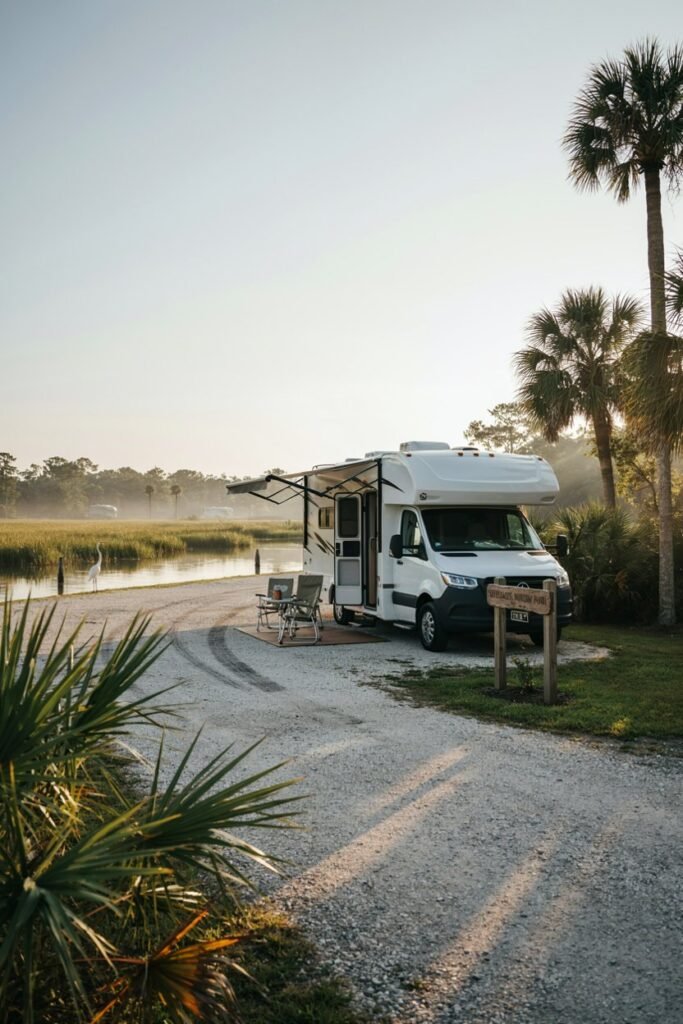
RV camping doesn’t always mean mountains.
The Everglades offers a completely different kind of adventure.
The road toward Flamingo takes you deep into a landscape of wetlands, mangroves, waterways, and abundant wildlife. The route from the eastern entrance toward Flamingo is a particularly scenic way to experience the park.
What to experience
- Wildlife viewing
- Birdwatching
- Scenic drives
- Boat excursions
- Kayaking
- Flamingo
- Wetland landscapes
For RV travelers, the cooler months are generally much more comfortable than the hottest part of the year.
12. Denali National Park — Alaska
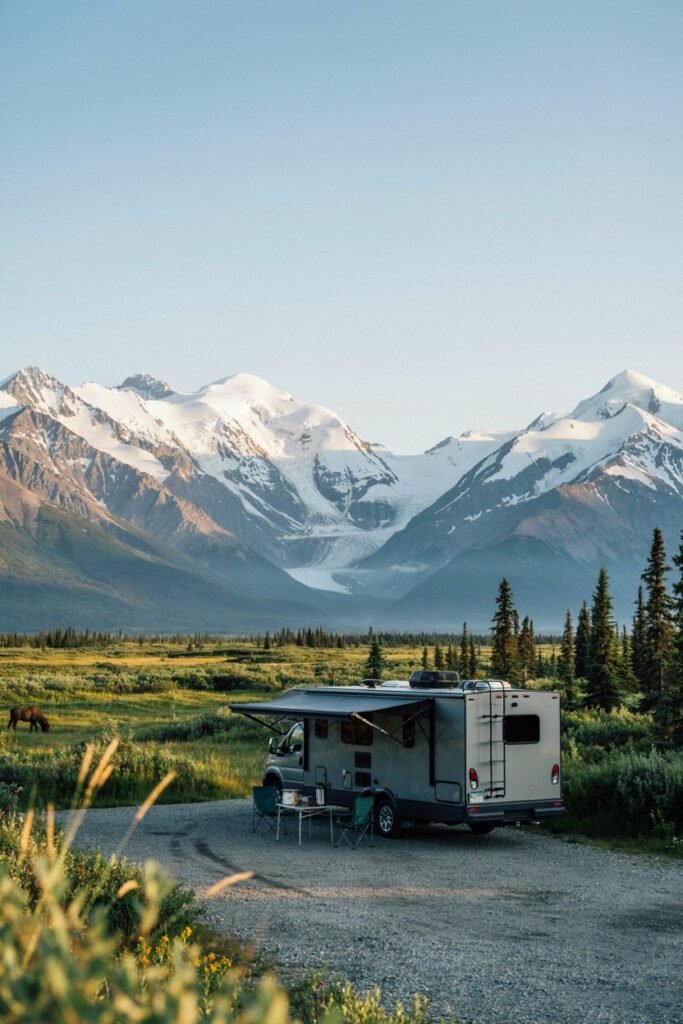
If you want your 2026 RV adventure to feel truly epic, put Alaska on the list.
Denali National Park offers huge landscapes, mountains, wildlife, and an unforgettable sense of remoteness.
RV travelers have several campground options, and the park’s road system creates an experience very different from a typical national park road trip. Lonely Planet identifies three campgrounds with hundreds of total spots and notes that RV access varies along Denali Park Road.
Why Denali?
You can experience:
- Incredible mountain scenery
- Wildlife viewing
- Long summer daylight
- Hiking
- Scenic drives
- Photography
- Alaska’s enormous wilderness
This is one trip where I would build in extra time for weather and changing road conditions.
13. Great Smoky Mountains National Park — Tennessee & North Carolina
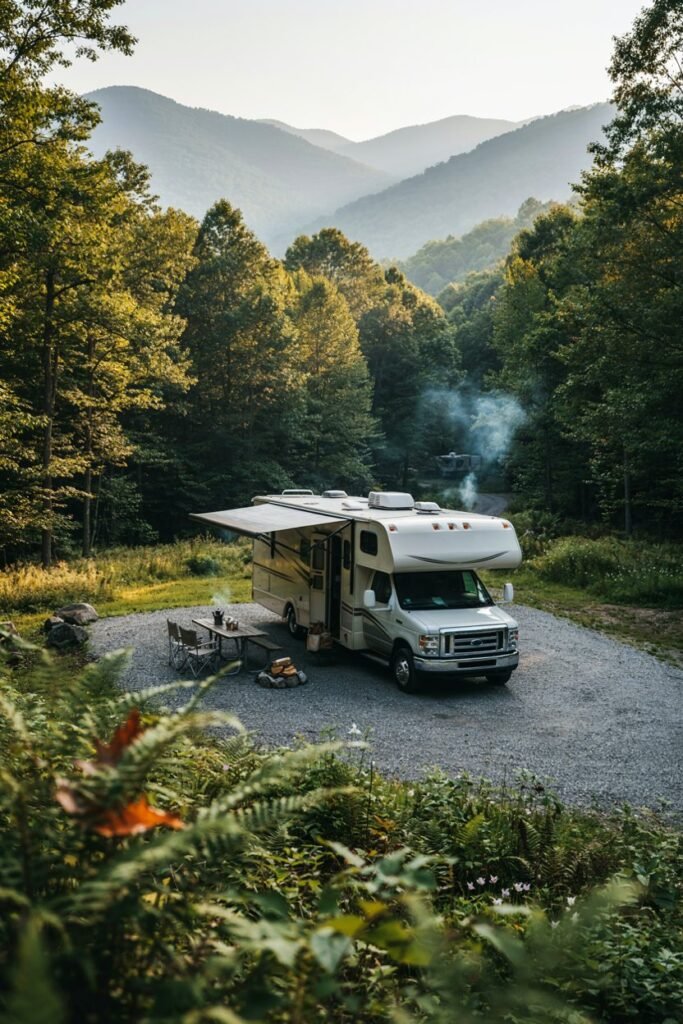
The Great Smoky Mountains are perfect for travelers who want beautiful scenery without traveling all the way west.
The park contains miles of forested roads, mountain overlooks, waterfalls, historic buildings, and hiking trails.
There are multiple campgrounds throughout the park, although RV availability and site lengths vary considerably.
Things to do
- Drive Newfound Gap Road
- Visit Cades Cove
- Explore mountain trails
- Photograph waterfalls
- Look for wildlife
- Visit historic cabins
- Enjoy fall foliage
Fall can be especially beautiful here, but it is also a popular season, so plan ahead.
14. Horsethief Campground — Near Moab, Utah
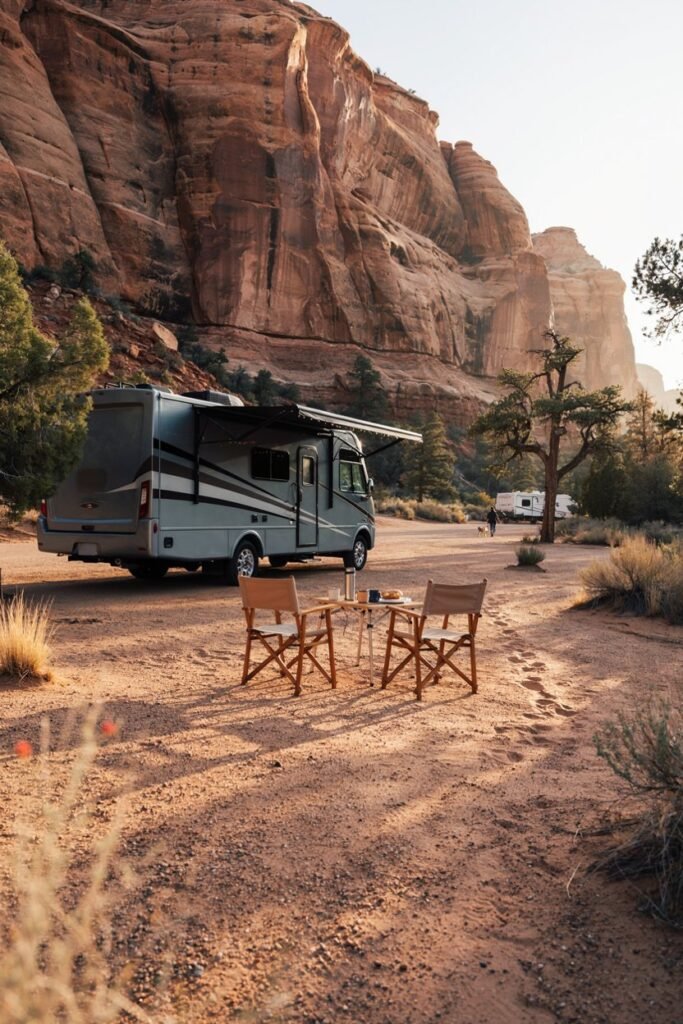
Sometimes staying just outside a national park makes more sense than trying to secure a site inside it.
Horsethief Campground near Moab is one example.
Its location makes it useful for travelers exploring the Moab area and nearby red-rock attractions. Current 2026 campground coverage highlights it as a notable national-park-neighbor option, with its Colorado River setting and access to outdoor recreation.
This approach can also give you more flexibility when traveling with a larger RV.
Instead of worrying about whether your rig can navigate every road inside a national park, you can leave the RV at camp and explore with your smaller vehicle.
15. Fishing, Forests & Lake Camping in the Pacific Northwest
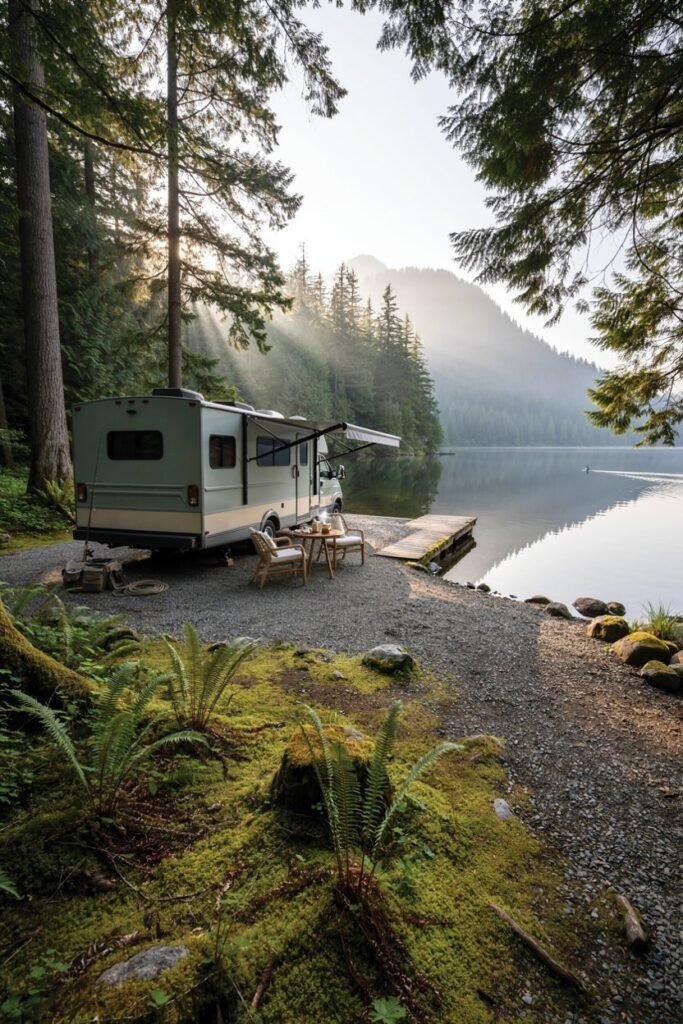
For RV travelers who prefer quieter landscapes, the Pacific Northwest deserves a spot on the list.
Washington and Oregon are filled with forested campgrounds, mountain lakes, coastal destinations, and scenic public lands.
Consider building a road trip around destinations such as:
- Olympic National Park
- Mount Rainier
- North Cascades
- Oregon Coast
- Columbia River Gorge
- Mount Hood
The biggest advantage here is variety.
You can start your morning beside a lake, spend the afternoon hiking through old-growth forest, and finish your day beside the Pacific Ocean.
How to Choose the Right RV Campground
With so many beautiful destinations, choosing where to stay can become overwhelming.
I always recommend starting with your RV rather than the photograph.
1. Check your RV length
This is one of the biggest mistakes new RV travelers make.
A campground may advertise that it accepts RVs, but that doesn’t mean every site can accommodate every RV.
Check:
- RV length
- Trailer length
- Total vehicle length
- Site width
- Height restrictions
- Turning space
National park campgrounds can be particularly restrictive because many were originally designed for smaller camping vehicles.
2. Decide whether you need hookups
Do you need:
- Electricity?
- Water?
- Sewer?
If yes, narrow your search immediately.
Many national park campgrounds are dry camping, while nearby private RV parks may offer full hookups.
For example, Fishing Bridge in Yellowstone and Trailer Village at Grand Canyon stand out because full hookups are available, while many other national park options require campers to operate without them.
3. Think about your travel style
I love scenic camping, but not every traveler wants the same experience.
You might prefer:
Rustic camping:
Nature, quiet surroundings, fewer amenities.
Family-friendly camping:
Larger sites, easy access, activities, and nearby attractions.
Luxury RV camping:
Full hookups, pools, laundry, Wi-Fi, and resort-style facilities.
Adventure camping:
Remote scenery, hiking, wildlife, and fewer distractions.
Knowing your travel style makes choosing much easier.
RV Reservation Tips for 2026
Popular campgrounds can disappear quickly, especially during summer and holiday periods.
Don’t wait until your road trip is a few weeks away to start looking.
For many national park campgrounds, reservations are handled through Recreation.gov, although some destinations use separate concessioners or park lodging systems.
Before booking, check:
- When reservations open.
- How far ahead you can reserve.
- Whether the campground is seasonal.
- Whether your RV fits the selected site.
- Cancellation rules.
- Entrance requirements.
- Current road restrictions.
Set a calendar reminder for the exact booking date.
For the most popular destinations, being ready when reservations open can make a huge difference.
What to Pack for an RV Campground Adventure
I like to keep my RV packing list practical rather than bringing everything I own.
Here are the essentials I’d check before leaving:
RV essentials
- Freshwater hose
- Drinking-water filter
- Sewer hose and fittings
- Electrical hookup equipment
- Leveling blocks
- Wheel chocks
- Extension cords
- Basic tool kit
- Tire-pressure gauge
- Flashlights
- Outdoor chairs
Camping essentials
- Folding table
- Outdoor rug
- Lanterns
- Cooler
- Reusable water bottles
- Camp cookware
- Blankets
- Hiking shoes
- Daypacks
- Bug spray
- Sunscreen
Don’t forget the boring stuff
Some of the most important items aren’t glamorous.
Make sure you have:
- Prescription medications if applicable
- Important documents
- RV insurance information
- Emergency contacts
- Roadside assistance information
- Extra food and water
- Weather-appropriate clothing
And before leaving, check your tires, lights, fluids, and other basic vehicle equipment.
The Best Time to Plan an RV Road Trip in 2026
The best season depends heavily on where you’re going.
Spring
Spring can be beautiful for desert destinations and southern states before summer temperatures become intense.
Summer
Summer is ideal for many mountain and northern destinations, including parts of Montana, Wyoming, Maine, and Alaska.
However, it is also peak camping season, so reservations can be competitive.
Fall
Fall is one of my favorite times for an RV adventure.
You can find beautiful foliage in destinations such as Acadia and the Great Smoky Mountains, while some western destinations become more comfortable as summer heat disappears.
Winter
Winter opens up a completely different category of RV travel.
Think Florida, Arizona, Southern California, and other warmer destinations.
A Few RV Mistakes I Would Avoid
After planning an RV trip, it’s easy to get caught up in the destination and forget the practical details.
Here are a few mistakes worth avoiding.
Booking before checking your RV dimensions
Always check the actual site requirements.
Assuming every campground has hookups
Many don’t.
Trying to see an enormous national park in one day
Yellowstone, Yosemite, Glacier, and Grand Canyon all deserve more time than a rushed visit.
Ignoring road restrictions
A campground might accept your RV while a scenic road you want to drive doesn’t.
Arriving without checking campground rules
Rules can cover generators, pets, food storage, fires, vehicles, and quiet hours.
Forgetting that weather can change your plans
Mountain weather, desert heat, snow, rain, and wildfire conditions can all affect an RV itinerary.
Check conditions shortly before departure and remain flexible.
Final Thoughts
My favorite thing about RV travel is that the campground becomes part of the adventure rather than simply a place to park for the night.
Imagine waking up surrounded by the mountains of Glacier, watching the desert glow around Joshua Tree, spending a few days exploring Yellowstone, or starting your morning near the Grand Canyon. Those are the kinds of travel memories that stay with you long after the RV is back home.
For 2026, I would focus less on trying to visit as many campgrounds as possible and more on choosing a few destinations that genuinely excite you.
Give yourself enough time to explore, check your RV’s limitations before booking, and don’t be afraid to stay just outside a national park when it makes the trip easier.
The perfect RV campground isn’t necessarily the one with the most amenities. Sometimes it’s simply the place where you open your RV door in the morning and think, “I’m really glad I came here.”