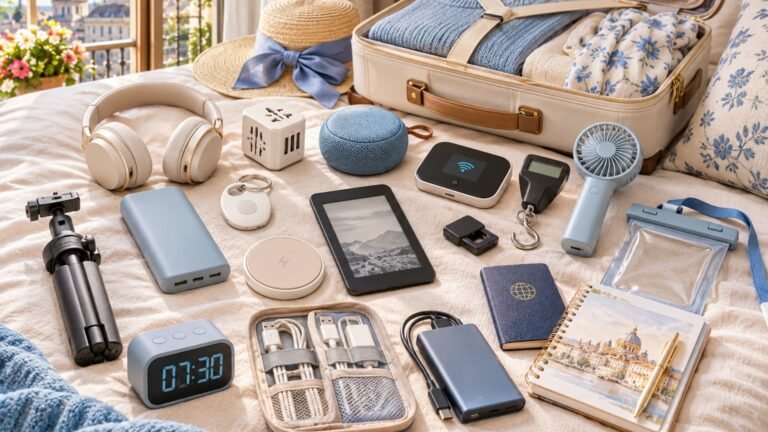
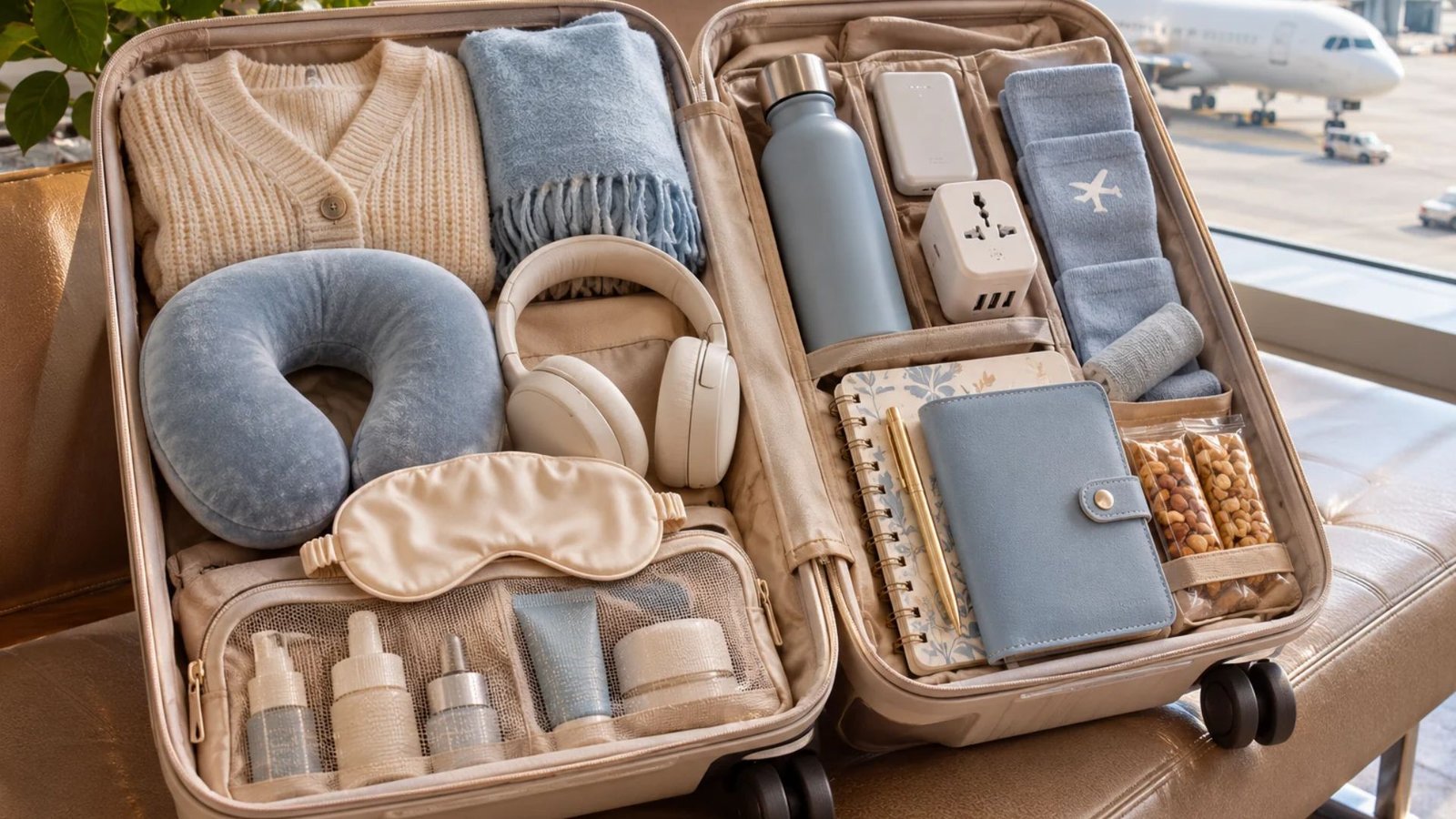

Long-haul flights can be exciting, especially when I know I’m heading somewhere I’ve been dreaming about visiting.
However, spending 8, 10, or even 15 hours on a plane has taught me that being comfortable doesn’t happen by accident.
I used to pack my carry-on with random items, only to realize halfway through the flight that I had forgotten something important. Now, I like to prepare a little differently.
I focus on practical travel essentials that help me sleep better, stay refreshed, keep my belongings organized, and make those long hours in the air feel much easier.
Whether you’re flying across the ocean, traveling to Europe, or preparing for a long international journey, having the right carry-on essentials can make a wonderful difference.
The goal isn’t to pack everything you own but to bring the items you’ll genuinely use throughout your flight.
In this guide, I’m sharing 20 carry-on travel essentials for long-haul flights that I think every traveler should consider packing, along with helpful tips for choosing and using them.
Why You Should Pack a Carry-On for Long-Haul Flights Carefully
When you’re spending several hours on an airplane, your carry-on becomes much more than a small bag for your belongings. It’s practically your little travel survival kit.
You want to have everything you need within reach without constantly opening the overhead luggage compartment or searching through a messy backpack.
Think about the things you might need during a long flight: something comfortable to wear, entertainment, skincare, snacks, medication, charging accessories, and items that help you sleep.
I recommend organizing your carry-on into smaller categories so you can find everything quickly. Packing cubes, toiletry pouches, and small zippered organizers can make a big difference.
Another important tip is to keep your valuables, travel documents, medication, and essential electronics in your personal item rather than checking them into your suitcase.
Now, let’s look at the 20 essentials worth making room for.
1. A Comfortable Travel Neck Pillow
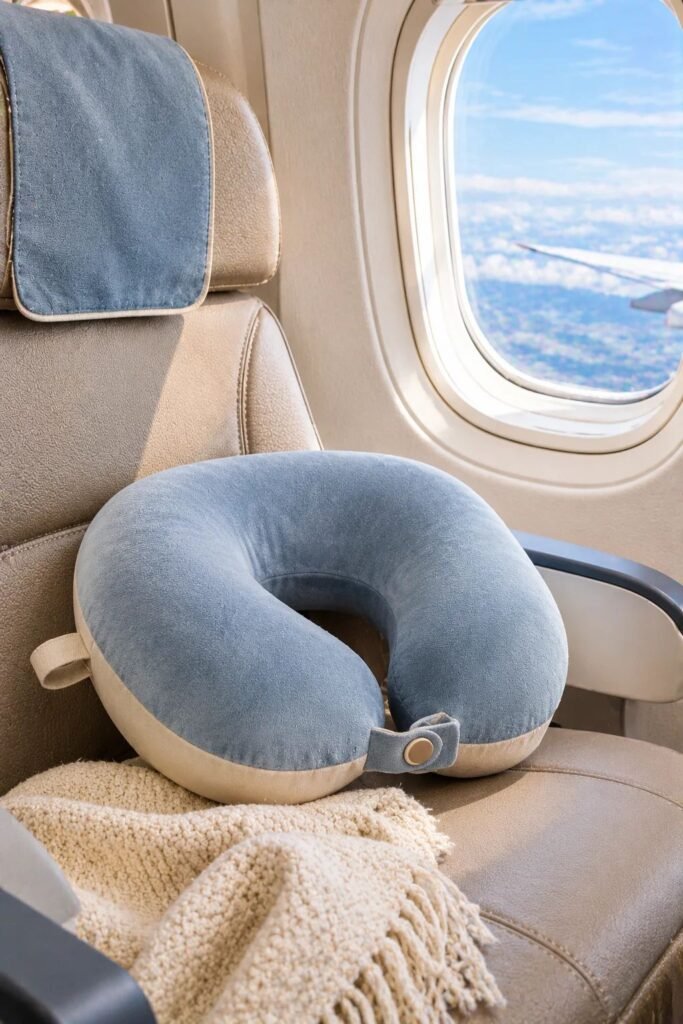
A good travel neck pillow is one of the first things I would recommend packing for a long-haul flight. Trying to sleep while your head keeps falling forward or leaning uncomfortably against the airplane window can quickly become frustrating.
A supportive neck pillow helps keep your head in a more comfortable position while you’re resting. This is particularly helpful when you’re flying overnight and want to get a few hours of sleep before arriving at your destination.
There are several styles available, including memory foam pillows, inflatable pillows, and ergonomic wraparound designs.
What to look for:
- Memory foam or supportive cushioning.
- A design that supports your neck and chin.
- A removable, washable cover.
- A compact design that’s easy to attach to your backpack.
My recommendation is to choose a pillow that provides actual support rather than simply looking attractive. A lightweight memory foam option with a washable cover is a great starting point.
Packing tip: Attach your neck pillow to the outside of your carry-on backpack if it doesn’t fit comfortably inside.
2. A Quality Sleep Mask
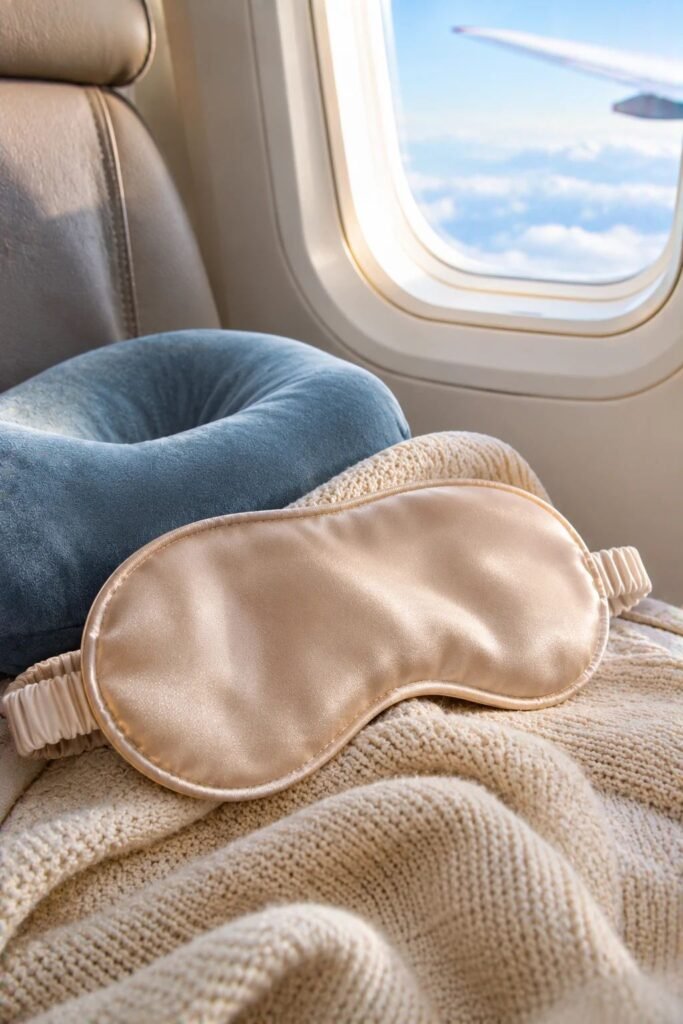
If there’s one small item that can make sleeping on an airplane easier, it’s a comfortable sleep mask.
Airplane cabins can be surprisingly bright, especially when passengers are watching movies, reading, or opening their window shades. Even during overnight flights, cabin lighting can interrupt your rest.
A sleep mask helps block out unwanted light and creates a darker environment when you’re ready to relax.
I particularly like soft, padded masks because they feel gentle against the face and don’t put unnecessary pressure on the eyes.
What to look for:
- Soft, breathable fabric.
- Adjustable straps that won’t pull your hair.
- A comfortable fit around your nose.
- Enough coverage to block surrounding light.
Silk and cotton options are both worth considering depending on your preference.
Packing tip: Keep your sleep mask inside the same pouch as your earplugs and neck pillow accessories so you can find everything when it’s time to sleep.
Read Cheap Travel Gadgets on Amazon That Are Totally Worth It
3. Noise-Canceling Headphones
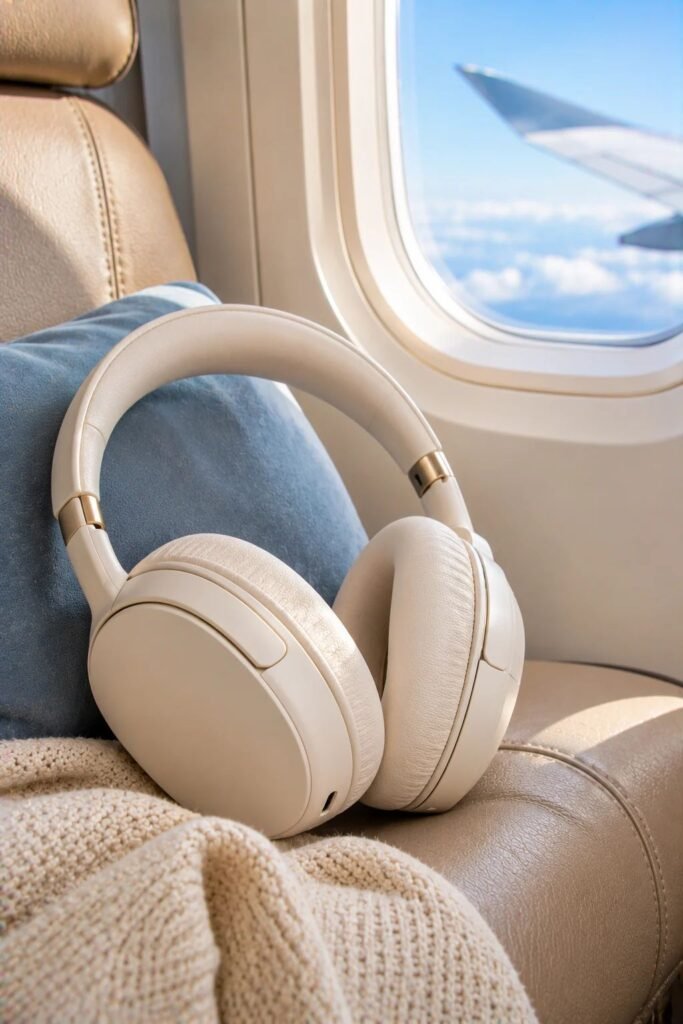
Airplane noise is one of those things you don’t always think about until you’ve been sitting inside a cabin for several hours.
Between engine sounds, conversations, crying babies, and announcements, it can become difficult to relax. This is where noise-canceling headphones are incredibly useful.
They help reduce surrounding noise, making it easier to listen to music, watch movies, read audiobooks, or simply enjoy a quieter environment.
If you travel frequently, investing in a comfortable pair can be worthwhile.
What to look for:
- Active noise cancellation.
- Comfortable ear cushions.
- Long battery life.
- Bluetooth connectivity.
- A foldable design and protective carrying case.
One thing I always recommend is downloading your favorite playlists, podcasts, and audiobooks before leaving home. You shouldn’t have to depend on an internet connection during your flight.
Packing tip: Bring a wired audio option or compatible airplane audio adapter if you want to use your headphones with the entertainment system. Also check whether your headphones support wired playback.
Read Traveling Safely with Babies: 10 Must-Know Tips for Stress-Free Trips
4. A Reusable Water Bottle
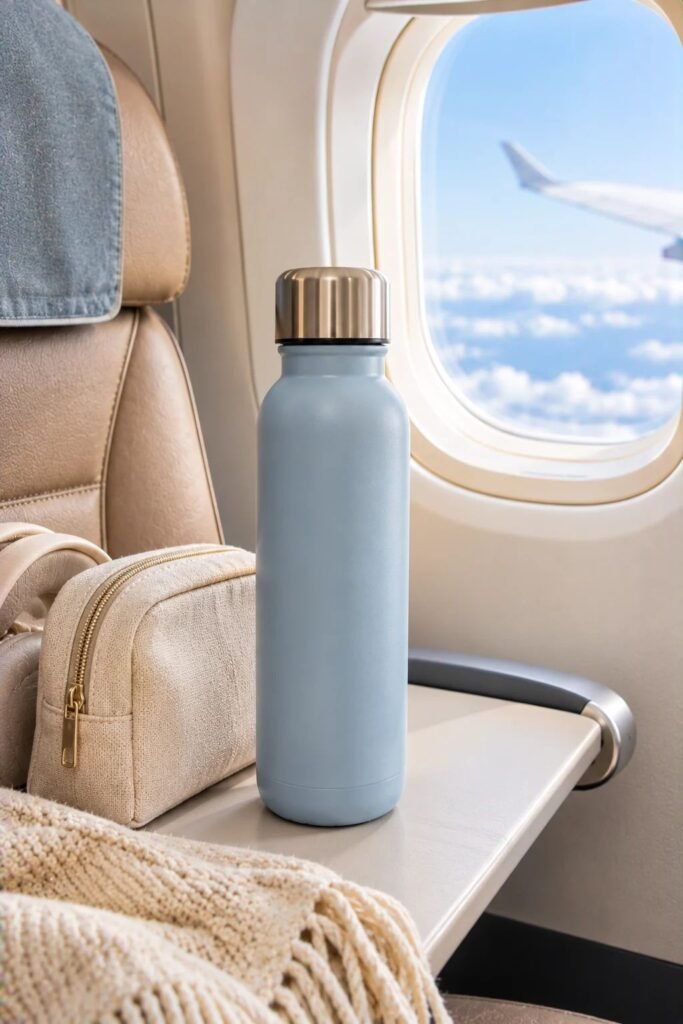
Staying hydrated during a long flight is important, and I wouldn’t recommend relying entirely on the small cups of water served by flight attendants.
Airplane cabins have relatively low humidity, which can leave your mouth, lips, and skin feeling dry. Having a reusable water bottle makes it easier to drink water regularly throughout the journey.
I prefer a lightweight bottle that doesn’t take up too much room in my personal item.
What to look for:
- Leakproof construction.
- Lightweight stainless steel or BPA-free materials.
- A convenient drinking opening.
- A capacity that suits your needs.
- Easy cleaning.
An insulated bottle is particularly useful if you enjoy keeping your water cool.
Packing tip: Bring your bottle empty through airport security and refill it after screening at an airport water station. Check the airport’s liquid restrictions before traveling.
Remember that a reusable bottle doesn’t replace asking the flight attendants for water when you need it.
5. A Portable Power Bank
Imagine settling into your airplane seat, getting comfortable, and discovering that your phone battery is almost empty. It’s not exactly the best way to begin a long journey!
A portable power bank is one of the most practical carry-on essentials because it allows you to recharge your phone and other compatible devices when you don’t have convenient access to a power outlet.
You can use it to keep your phone charged for entertainment, travel documents, navigation after landing, and communication with family.
What to look for:
- Enough capacity for at least one full phone recharge.
- USB-C charging.
- Multiple charging ports if you carry several devices.
- A compact, lightweight design.
- Built-in safety protections.
Important flight tip: Airlines generally require power banks to travel in cabin baggage rather than checked luggage. Battery capacity restrictions apply, so check your airline’s current rules before departure. Many airlines limit lithium-ion power banks to 100 Wh without special approval.
Keep your power bank somewhere accessible rather than burying it at the bottom of your backpack.
6. A Universal Travel Adapter
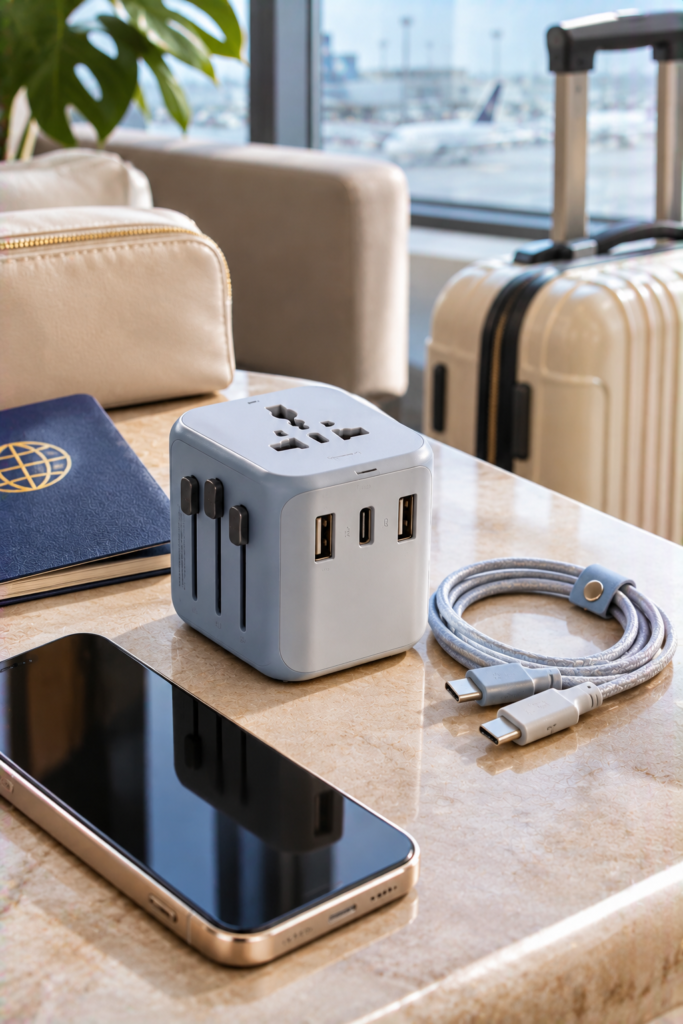
If you’re traveling internationally, a universal travel adapter is an item worth having in your carry-on.
Different countries use different electrical plug types, which means your regular charger might not work when you arrive.
A universal adapter allows you to connect compatible devices to different outlet styles without carrying several separate adapters.
This is especially useful when traveling through multiple countries during one trip.
What to look for:
- Compatibility with the countries you’re visiting.
- USB-A and USB-C ports.
- A compact design.
- Built-in surge protection where appropriate.
- Safety certifications.
One important distinction: a travel adapter changes the plug connection, but it doesn’t necessarily convert electrical voltage. Check that your electronics support the destination’s voltage before plugging them in.
Packing tip: Keep your adapter and charging cables in one small electronics pouch.
7. Compression Socks
Compression socks are particularly useful to consider when you’re preparing for a long-haul flight.
Sitting in the same position for many hours can cause your legs and feet to feel uncomfortable or swollen. Properly fitted compression socks apply graduated pressure that helps support blood circulation in your lower legs.
They’re often recommended for travelers who will be sitting for extended periods.
What to look for:
- The correct size for your measurements.
- Breathable, comfortable fabric.
- A fit that isn’t painfully tight.
- A suitable compression level for your needs.
If you have circulation problems, a history of blood clots, or another medical concern, ask a healthcare professional which compression level is appropriate.
I also recommend getting up periodically when it’s safe to do so and moving your feet and ankles while seated.
Packing tip: Wear your compression socks to the airport instead of taking up valuable space in your carry-on.
8. A Travel Toiletry Bag
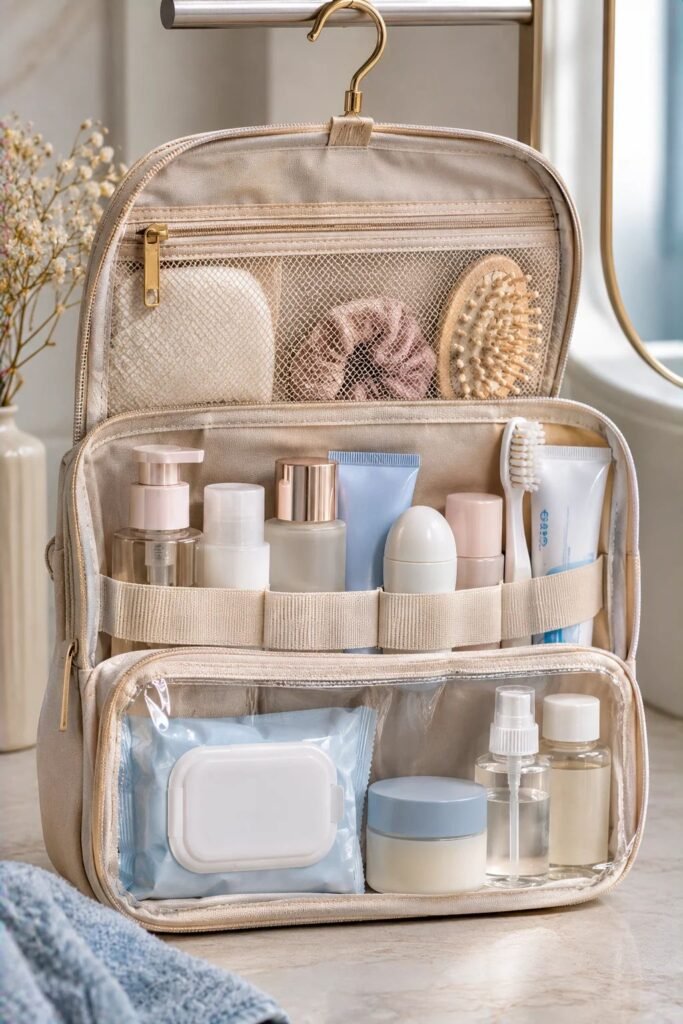
A small travel toiletry bag makes it much easier to keep your personal care essentials organized.
Long-haul flights can leave you feeling less than refreshed, particularly when you’re traveling overnight or arriving at your destination early in the morning.
Having a few basic toiletries available allows you to freshen up before landing without searching through your main suitcase.
I recommend packing:
- Travel-size toothpaste.
- A toothbrush.
- Lip balm.
- A small moisturizer.
- Facial wipes or cleansing cloths.
- Deodorant.
- A small hairbrush.
- Hand sanitizer.
Choose a waterproof or wipeable pouch to protect the rest of your belongings in case something leaks.
Packing tip: Keep liquids in containers that comply with the airport security rules for your departure airport. Store them in the required transparent bag if applicable.
9. A Comfortable Travel Outfit

What you wear on a long-haul flight can make a surprising difference to your overall comfort.
I personally think comfortable clothing should be one of your biggest priorities when planning an airport outfit. Tight jeans, stiff fabrics, and uncomfortable shoes might look lovely, but they aren’t always the best choice when you’re sitting for 10 hours.
A comfortable matching lounge set, soft leggings, breathable trousers, or loose-fitting joggers are all excellent options.
My favorite travel outfit combination includes:
- Stretchy trousers or leggings.
- A comfortable cotton or modal top.
- A lightweight cardigan.
- Comfortable sneakers.
- A pair of warm socks.
Airplane cabins can get chilly, even when the weather outside is warm, so having an extra layer is helpful.
Packing tip: Wear your bulkiest comfortable clothing to the airport to save room in your main luggage.
10. A Lightweight Travel Blanket or Large Scarf
Airplane temperatures can change throughout a journey, and sometimes the cabin feels colder than expected.
Although some airlines provide blankets, I like having an extra lightweight layer available, especially if I’m traveling with an airline that doesn’t provide them on every flight.
A compact travel blanket can keep you comfortable when you’re trying to sleep, while a large scarf or wrap can serve several purposes.
You can use it as:
- An extra layer over your shoulders.
- A lightweight blanket.
- A wrap when walking through a chilly airport.
- A cushion or additional layer around your legs.
Look for breathable, soft materials that fold down easily.
Packing tip: A large scarf is a particularly practical alternative if you want something that takes up very little space.
11. A Smartphone or Tablet for Entertainment
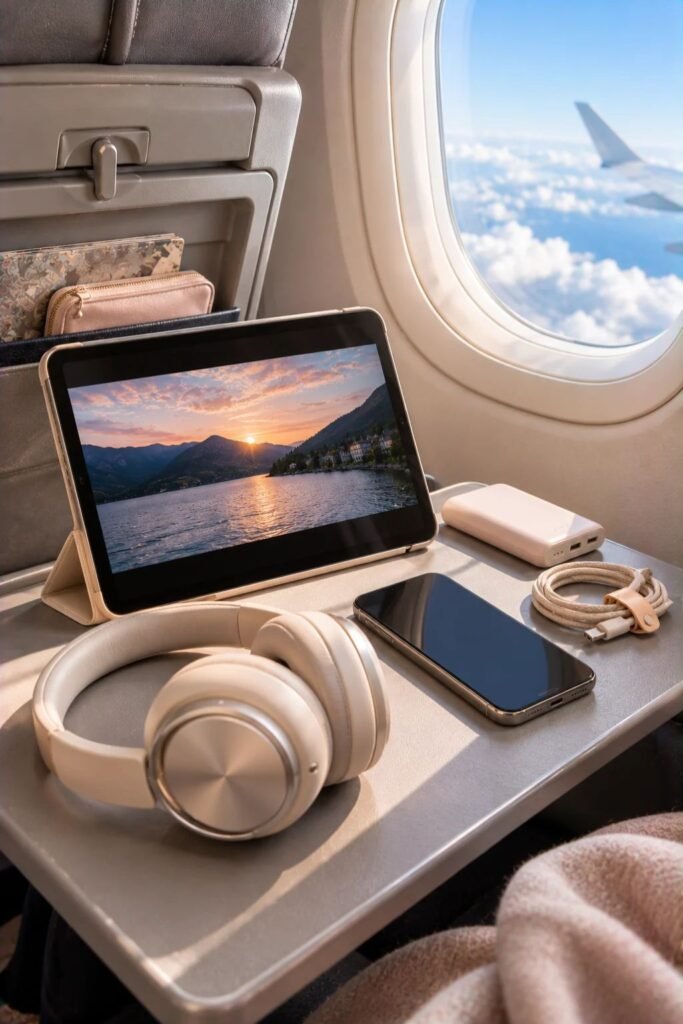
Long-haul flights can feel much shorter when you have something enjoyable to do.
Although many international airlines offer in-flight entertainment, I wouldn’t rely on it entirely. Screens may not work properly, the selection might be limited, or your preferred movies may not be available.
Bringing your own smartphone or tablet gives you more control over your entertainment.
Before leaving home, download:
- Your favorite movies and television shows.
- Podcasts and audiobooks.
- Music playlists.
- E-books.
- Offline games.
If you’re using a tablet, a lightweight protective case can make it easier to hold while watching something.
I also recommend downloading important travel documents and boarding passes to your phone so you can access them without an internet connection.
Packing tip: Charge your devices fully before leaving home and bring the correct charging cables.
12. A Small Travel First Aid Kit
A small first aid kit is one of those things you hope you won’t need but will be glad to have if something unexpected happens.
You don’t need to carry a full medical bag. A compact pouch with a few useful supplies is enough for most travelers.
Consider including:
- Adhesive bandages.
- Antiseptic wipes.
- Blister patches.
- Any personal medication you need.
- Motion sickness remedies if appropriate.
- Pain relief medication that you can safely take.
If you take prescription medication, keep it in its original packaging where possible and carry enough for your journey, plus a reasonable backup supply.
Check medication import rules for your destination, especially if you carry prescription or controlled medication.
Packing tip: Keep essential medication in your personal item, never in checked luggage. Don’t wait until you feel unwell to look for it.
13. Healthy Travel Snacks
Airline meals can be convenient, but meal schedules don’t always match your appetite.
Sometimes you might feel hungry between meals, arrive at the airport before your flight, or simply want something familiar to snack on.
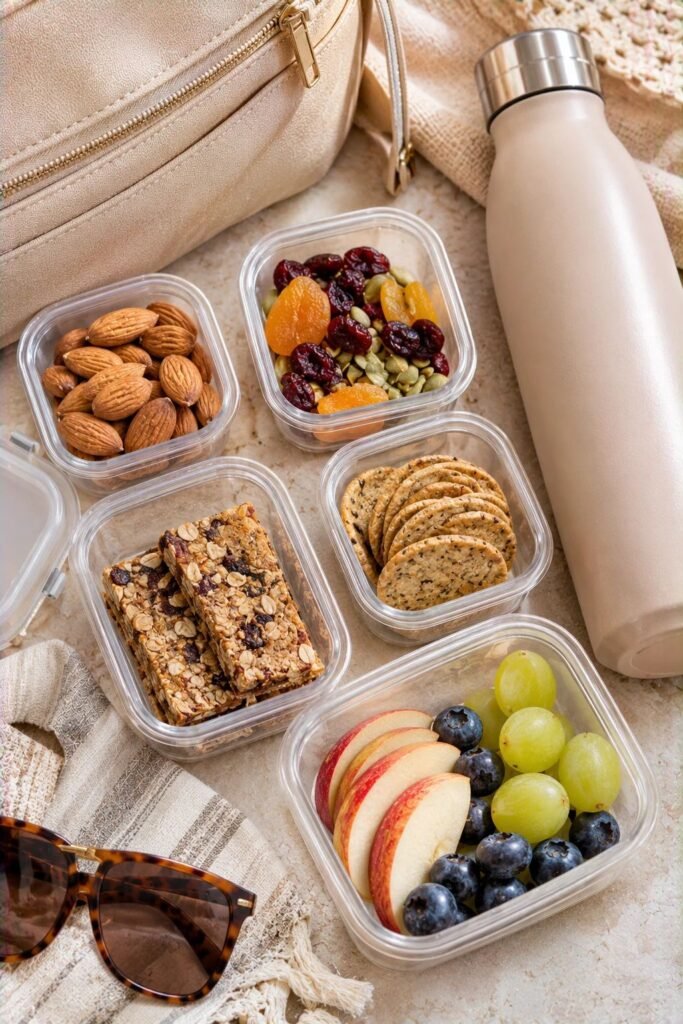
That’s why I recommend keeping a few easy-to-pack snacks in your carry-on.
Some good options include:
- Granola bars.
- Almonds and other nuts.
- Dried fruit.
- Crackers.
- Protein bars.
- Individually packaged snacks.
Choose snacks that don’t require refrigeration and aren’t too messy to eat in a small airplane seat.
It’s also worth considering whether your snacks have strong smells, especially when you’re sitting close to other passengers.
Packing tip: Check the food import rules of your destination before bringing snacks across international borders. Fresh fruit, meat, dairy, and certain other foods may be restricted.
14. A Hydrating Facial Mist or Moisturizer
If you’ve ever stepped off a long flight feeling like your skin needs a little attention, you’ll understand why I like packing a few skincare essentials.
The low humidity inside an airplane cabin can make your skin feel dry and uncomfortable.
A small moisturizer and facial mist can help you feel more refreshed during your journey.
I recommend keeping your in-flight skincare routine simple rather than bringing your entire bathroom cabinet.
Consider packing:
- A lightweight facial moisturizer.
- A gentle facial mist.
- A hydrating lip balm.
- A small hand cream.
- Sunscreen for your destination.
Avoid experimenting with new skincare products during a long flight. It’s better to bring products you already know work well with your skin.
Packing tip: Choose travel-size containers and make sure they meet your airport’s liquid restrictions. A simple moisturizer may be more useful than several different skincare products.
15. A Compact Travel Journal and Pen
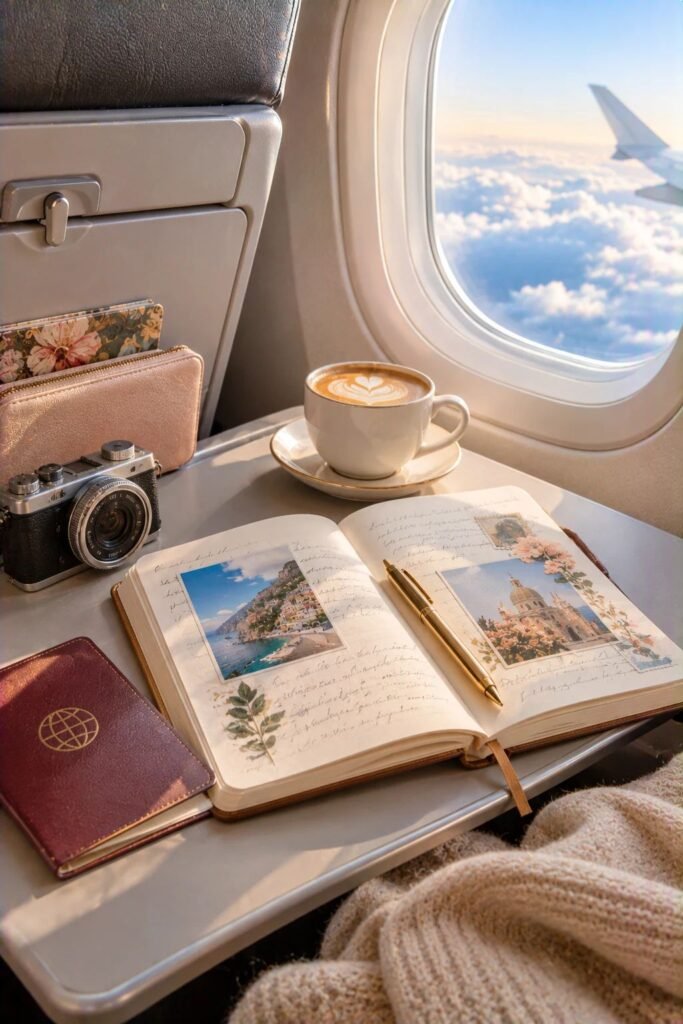
One of my favorite ways to spend part of a long flight is writing down travel plans, ideas, and little things I’m looking forward to experiencing.
A small travel journal gives you somewhere to record your thoughts without depending on your phone or tablet.
You can use it to:
- Write down your itinerary.
- Record hotel addresses.
- Make a list of places you want to visit.
- Write travel memories.
- Plan activities for your first day.
- Keep track of important information.
You don’t need an expensive notebook. A small, lightweight journal that fits into your personal item is perfect.
Packing tip: Keep a pen tucked into the journal so you don’t have to search for one when filling out arrival or customs forms.
16. A Microfiber Travel Towel
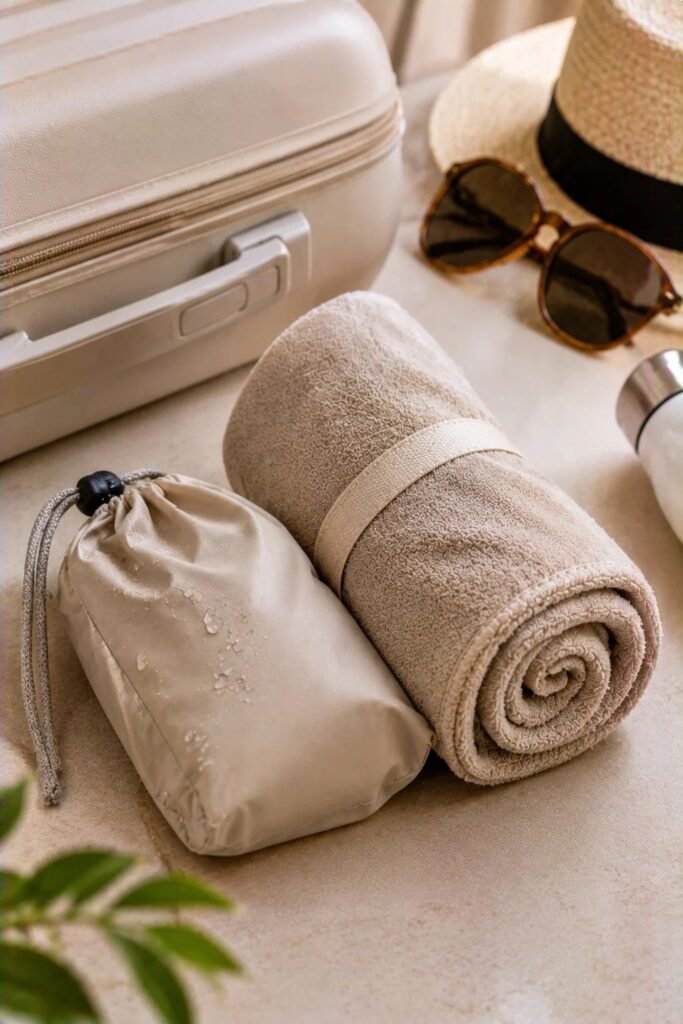
A microfiber travel towel might not be the first thing you think about when preparing for a flight, but it can be surprisingly useful.
It’s lightweight, compact, and dries much faster than many traditional towels.
During a long journey, you might find it useful for drying your hands, wiping up small spills, or freshening up after washing your face.
It’s also helpful if you’re connecting through multiple airports or heading straight into an adventure after landing.
What to look for:
- Quick-drying material.
- Compact folding design.
- Soft texture.
- A small carrying pouch.
- An appropriate size for your needs.
Packing tip: Choose a smaller face or hand towel rather than a large beach towel. You’ll save valuable carry-on space.
17. A Passport Holder and Travel Document Organizer
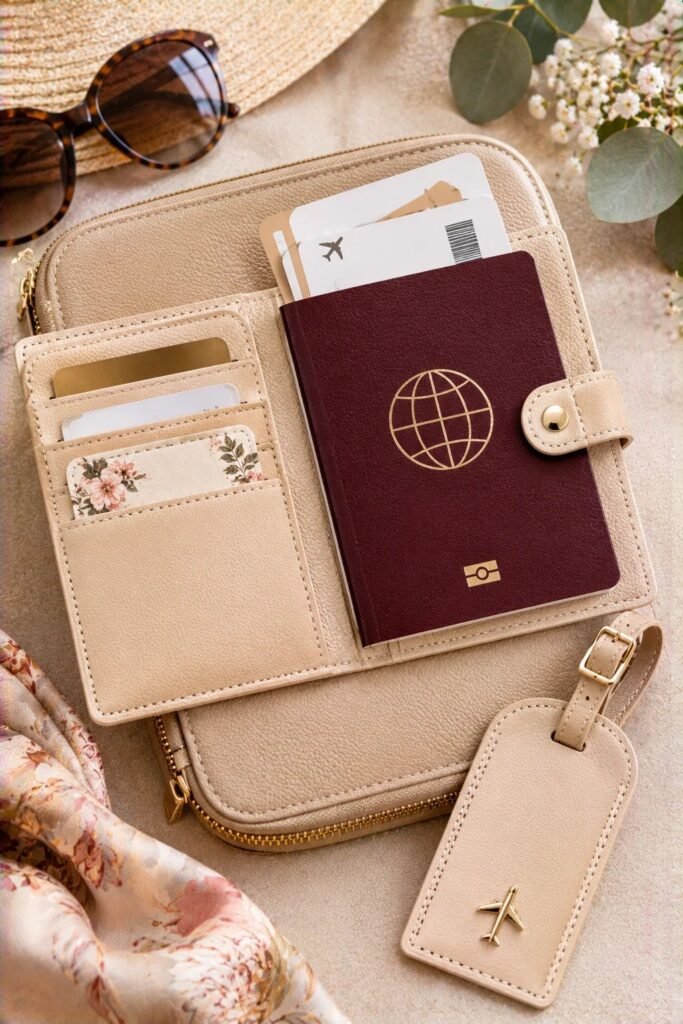
Keeping your travel documents organized is particularly important when you’re flying internationally.
You may need your passport, boarding pass, identification, hotel details, travel insurance information, and other documents at different stages of your journey.
Having everything in one place saves time and makes airport procedures less stressful.
A travel document organizer can help you store:
- Your passport.
- Boarding passes.
- Identification.
- Emergency contact information.
- Printed hotel reservations.
- Important travel confirmations.
I recommend keeping digital copies of important documents in a secure location as well.
Packing tip: Choose a slim passport holder rather than a bulky organizer. You want something that fits easily into a small personal item or crossbody bag.
Never leave your passport or other important documents unattended.
18. A Small Crossbody Bag
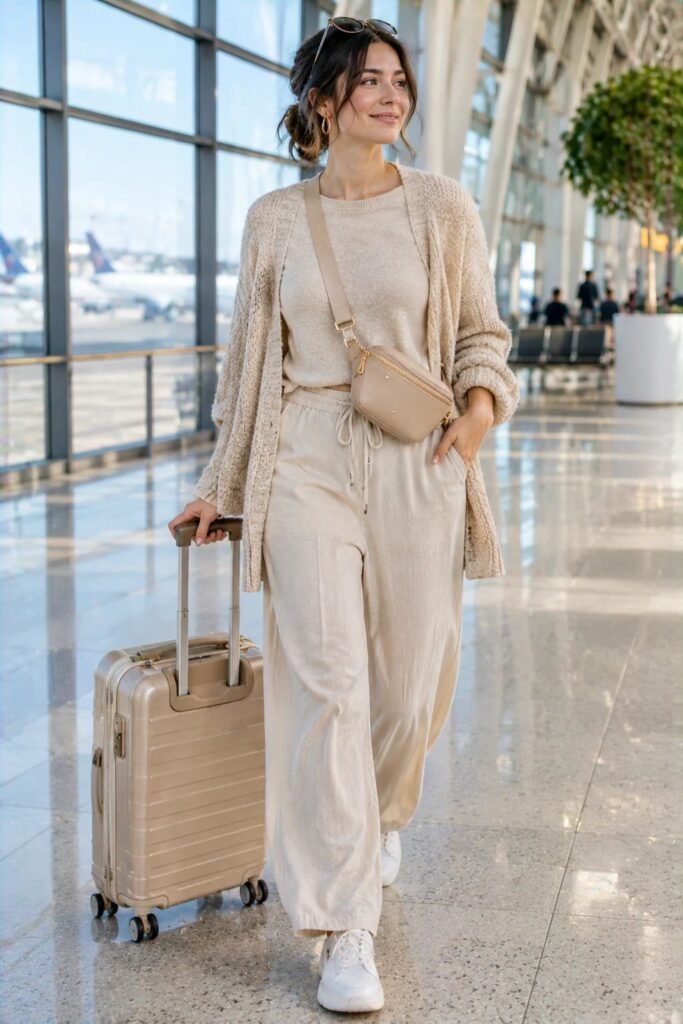
A small crossbody bag is incredibly convenient when you’re moving through busy airports.
Instead of repeatedly opening your main backpack, you can keep your most important everyday items somewhere easy to reach.
It’s particularly useful when going through security, boarding your flight, or walking around during a long airport connection.
I recommend choosing a lightweight bag with secure zippers and adjustable straps.
You can use it to carry:
- Your passport.
- Phone.
- Wallet.
- Earbuds.
- Lip balm.
- Boarding pass.
- Small hand sanitizer.
Make sure it fits comfortably under your seat or inside your personal item if your airline has strict baggage rules.
Packing tip: Avoid overfilling it. A small crossbody bag should make traveling easier, not become another heavy piece of luggage.
19. A Laundry Bag for Used Clothing
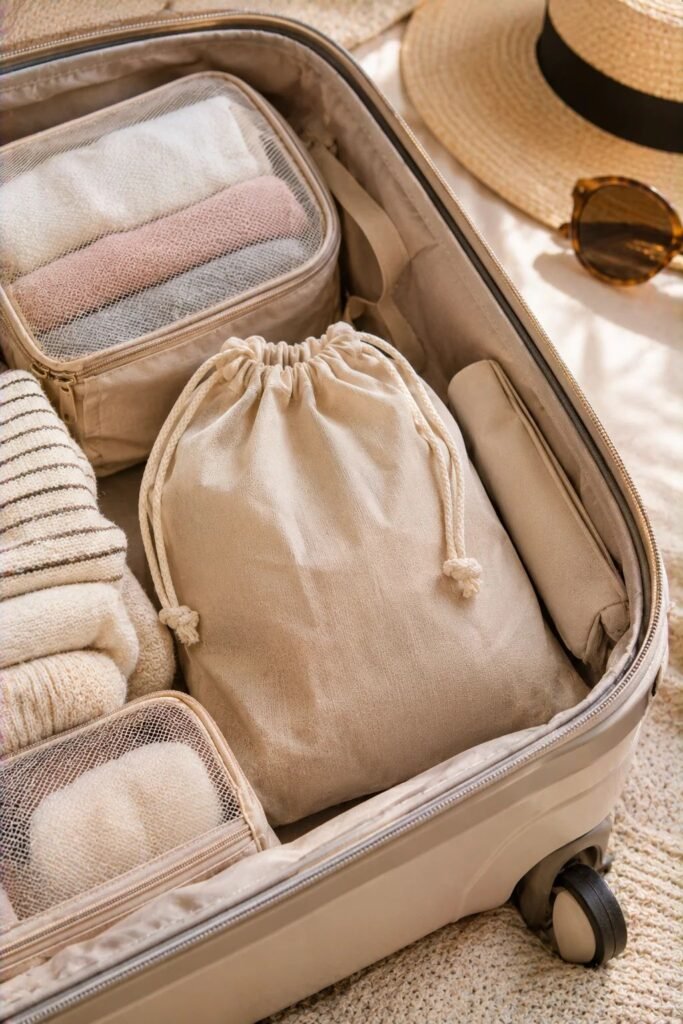
After several hours of traveling, it’s nice to have somewhere separate to put your used clothing.
A small laundry bag helps keep worn socks, underwear, and clothing away from your clean belongings.
This is especially helpful if you’re taking a long international flight with a connection or traveling for several weeks.
I prefer lightweight drawstring laundry bags because they’re easy to fold and take up very little space.
Why it’s useful:
- Keeps dirty clothing separate.
- Helps prevent unpleasant odors from spreading.
- Makes unpacking easier.
- Keeps your carry-on organized.
- Can be reused throughout your trip.
You can also use a small waterproof pouch for damp clothing if necessary.
Packing tip: Choose a washable bag rather than a disposable plastic bag. It’s a simple item that can be reused on every trip.
20. A Small Travel Comfort Kit
My final essential is a small travel comfort kit.
This is where I like to bring together the little things that don’t necessarily belong in another category but can make a long flight much more pleasant.
Instead of searching through different compartments whenever you need something, you have one small pouch with your most frequently used comfort items.
Depending on your preferences, your kit could include:
- Earplugs.
- Tissues.
- Lip balm.
- Hair ties.
- A small hand cream.
- Breath mints.
- A compact comb.
- An extra pair of socks.
- A small pack of facial wipes.
You can customize this pouch depending on how long your flight is and what makes you comfortable.
I particularly like having everything together because it makes it easy to reach for something without disturbing other passengers.
Packing tip: Keep your comfort kit in the front pocket of your personal item so you can access it without opening your entire bag.
How to Pack Your Carry-On for a Long-Haul Flight
Having the right travel essentials is important, but knowing how to organize them is equally valuable.
You don’t want to spend half your flight searching for your charging cable or trying to find your passport underneath your snacks.
Here are a few simple packing strategies I recommend.
1. Use Small Packing Pouches
Instead of throwing everything into one large backpack, separate your belongings into categories.
For example:
- Electronics pouch: Headphones, chargers, power bank, and cables.
- Toiletry pouch: Toothbrush, moisturizer, lip balm, and personal care items.
- Comfort pouch: Eye mask, earplugs, tissues, and hair ties.
- Document pouch: Passport, boarding pass, and travel paperwork.
This makes everything easier to find.
2. Keep Frequently Used Items Accessible
Think about the items you’re most likely to need during your flight.
Your phone, headphones, water bottle, snacks, and comfort kit should be easy to reach.
Place these items in the outer pockets or at the top of your personal item.
Keep less frequently used items toward the bottom.
3. Avoid Overpacking
It’s tempting to bring everything you might possibly need, but an overloaded carry-on can become uncomfortable.
Before packing something, ask yourself whether you’ll genuinely use it during the journey.
If you already have a similar item, choose the one that serves multiple purposes.
For example, a large scarf can work as an extra layer, a blanket, or a travel accessory.
4. Check Your Airline’s Baggage Allowance
Not all airlines have the same carry-on rules.
Some allow a cabin suitcase and a personal item, while others have stricter size and weight restrictions.
Before leaving home, check:
- Carry-on suitcase dimensions.
- Personal item dimensions.
- Cabin baggage weight allowance.
- Power bank restrictions.
- Liquid restrictions.
- Rules for special equipment.
This is especially important if you’re traveling internationally with connecting flights on different airlines.
What Should You Keep in Your Personal Item During a Long-Haul Flight?
Your personal item is usually the most important bag during a long flight because it’s the one you’ll keep underneath the seat in front of you.
I recommend keeping the following items in it:
| Category | What to pack |
|---|---|
| Travel documents | Passport, boarding pass, identification |
| Electronics | Phone, headphones, power bank, cables |
| Comfort | Neck pillow, eye mask, earplugs |
| Personal care | Toothbrush, moisturizer, lip balm |
| Health | Essential medication, small first aid kit |
| Food | Snacks and an empty reusable water bottle |
| Clothing | Extra socks, lightweight cardigan |
| Organization | Small pouches and laundry bag |
One important rule: never put essential medication, valuables, travel documents, or items you cannot easily replace in checked luggage.
What Not to Pack in Your Carry-On for a Long-Haul Flight
Packing smart also means knowing what you can leave behind.
Here are a few things I would avoid carrying unless you have a specific reason.
1. Full-size toiletries: These take up unnecessary space and may not meet airport liquid restrictions.
2. Too many clothing changes: One extra layer and perhaps a spare top or underwear are usually more practical than several outfits.
3. Bulky entertainment accessories: Choose lightweight headphones and compact electronics.
4. Unnecessary beauty products: You don’t need your entire skincare routine during a flight.
5. Heavy books: If you enjoy reading, an e-reader can save considerable space.
6. Items prohibited by airline or airport security: Always check the applicable rules before packing sharp objects, restricted liquids, and other regulated items.
Frequently Asked Questions About Carry-On Essentials for Long-Haul Flights
1. What are the most important things to bring on a long-haul flight?
The most important items include your passport, phone, charger, power bank, headphones, neck pillow, eye mask, essential medication, reusable water bottle, toiletries, and comfortable clothing.
These essentials help you stay organized, entertained, comfortable, and prepared throughout your journey.
2. How do I make a long-haul flight more comfortable?
Wear loose-fitting clothing, stay hydrated, move your legs regularly, bring a comfortable neck pillow, and use noise-canceling headphones.
If you’re traveling overnight, consider packing an eye mask and earplugs to make resting easier.
It’s also helpful to choose an aisle seat if you prefer getting up frequently or a window seat if you enjoy resting against the side of the cabin.
3. Should I bring my own blanket on a long flight?
You don’t necessarily need a full-size blanket, but a lightweight travel blanket or large scarf can be useful.
Airplane cabins can feel cold, and having an extra layer gives you more control over your comfort.
4. Can I bring a power bank on an international flight?
Generally, yes. Power banks must normally be carried in cabin baggage rather than checked luggage.
However, airlines have specific lithium battery capacity limits and handling requirements. Check your airline’s latest rules before traveling, particularly if your power bank has a high capacity.
5. How many bags should I bring on a long-haul flight?
For most travelers, a cabin suitcase and a small personal item are enough, provided the airline permits both.
Your suitcase can hold clothing and less frequently needed belongings, while your personal item should contain everything you might need during the flight.
6. What should I wear on a 10-hour flight?
Choose breathable, stretchy, and comfortable clothing.
Leggings, loose trousers, a soft top, sneakers, and a lightweight cardigan make a practical combination.
I would also recommend packing an extra pair of socks and avoiding shoes that feel tight when your feet become swollen.
7. How do I sleep better on a long-haul flight?
A supportive neck pillow, comfortable eye mask, earplugs or noise-canceling headphones, and warm layers can help create a more restful environment.
Try to follow the sleep schedule of your destination when practical, and avoid relying on alcohol or unprescribed sleeping medication to help you sleep.
Final Thoughts: Pack Smart and Enjoy Your Long-Haul Flight
Preparing for a long-haul flight doesn’t have to be complicated. With a little planning and the right essentials, you can make those long hours in the air much more comfortable.
My biggest advice is to focus on the items that genuinely improve your journey. A supportive neck pillow, comfortable headphones, a power bank, reusable water bottle, simple skincare products, and a few personal comfort items can make a noticeable difference.
You don’t need to fill every inch of your carry-on. Instead, choose practical essentials that serve a purpose and keep everything organized so you can find what you need without stress.
Whether you’re flying to Europe, exploring Asia, visiting family overseas, or heading off on your next big adventure, I hope this list helps you prepare for a more relaxing journey.
Happy travels, and don’t forget to enjoy the journey just as much as the destination!