
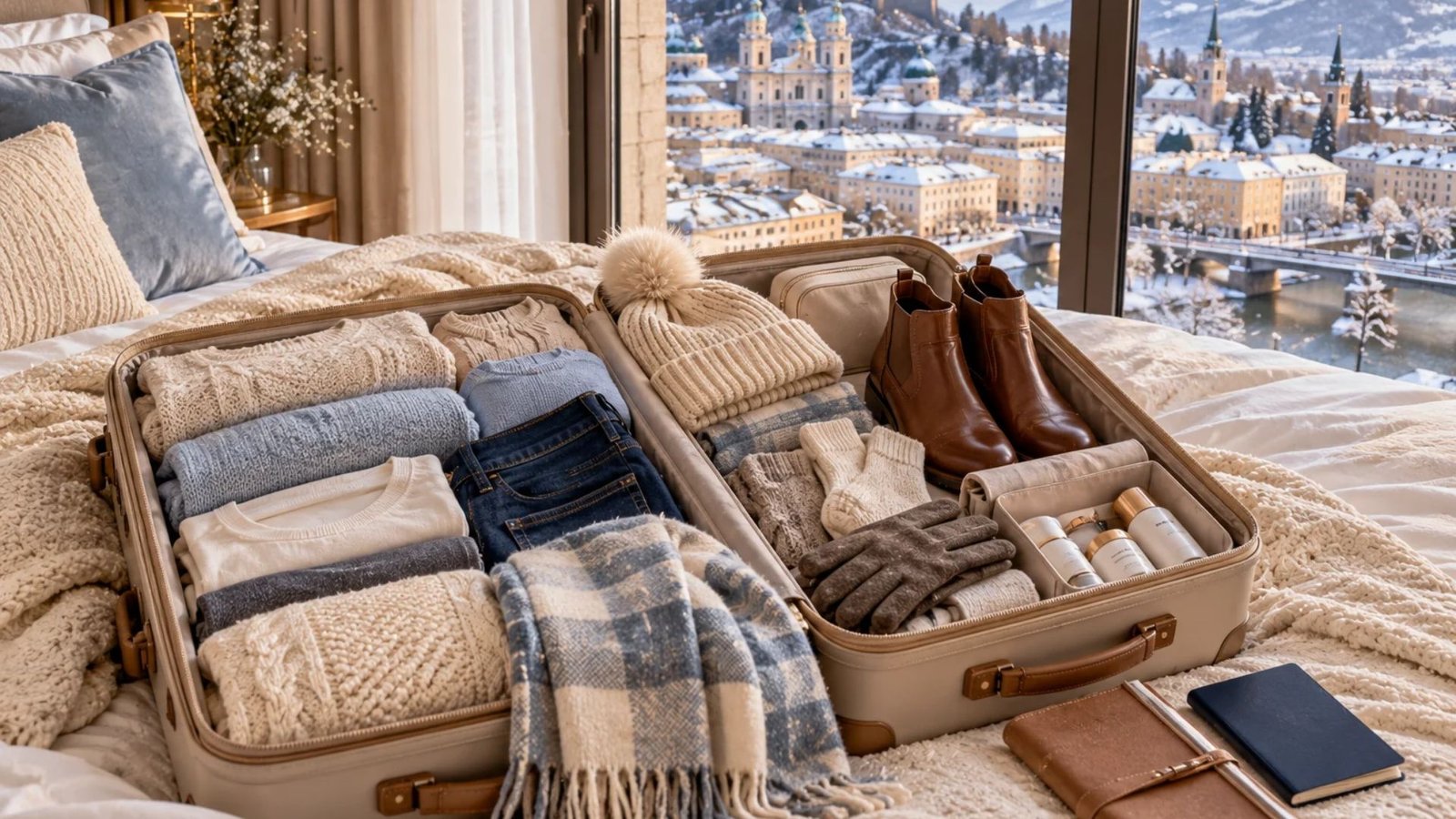

Winter in Europe is one of those travel experiences that feels almost magical.
Imagine walking through charming streets decorated with Christmas lights, exploring beautiful old towns, enjoying hot chocolate in a cozy café, and watching snow fall over historic buildings.
But before you can enjoy all those moments, you need to figure out what to pack.
Knowing what to pack for 10 days in Europe in winter can feel overwhelming, especially when you want to stay warm, look stylish, and avoid carrying a heavy suitcase everywhere.
The secret is choosing versatile clothing, comfortable shoes, and practical essentials that make every travel day easier.
What to Pack for 10 Days in Europe in Winter: Quick Checklist
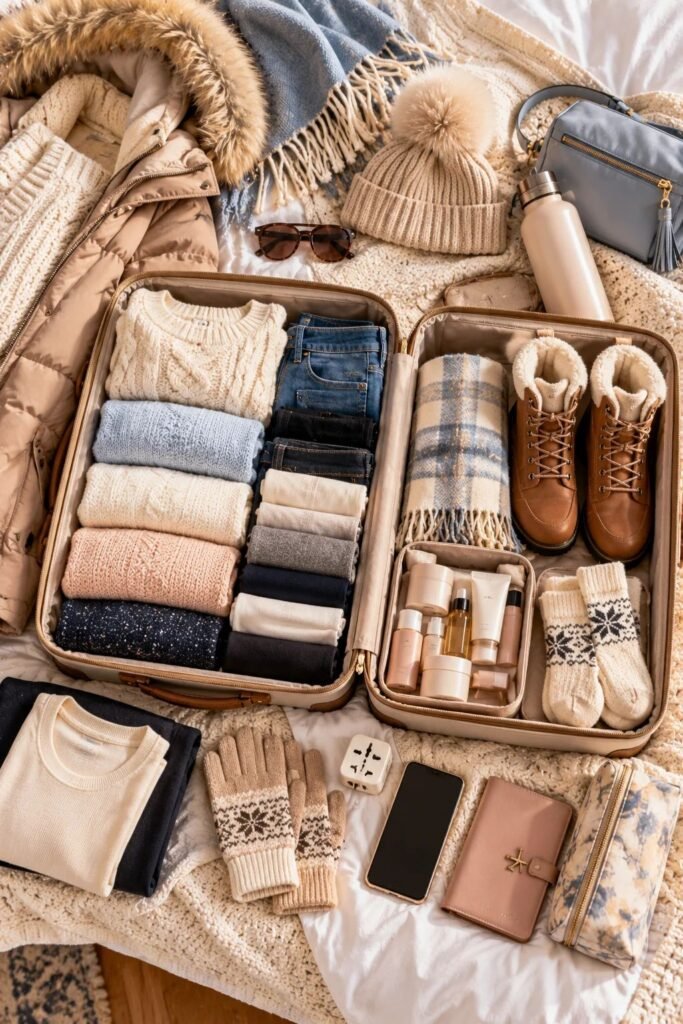
If you are planning a winter trip to Europe, you do not need to pack your entire wardrobe. The key is to choose clothing that works together, layer easily, and keeps you comfortable in changing weather.
Here is a quick overview of what to pack for 10 days.
Clothing
- 1 warm winter coat
- 1 lightweight insulated jacket or fleece
- 2 thermal tops
- 1–2 pairs of thermal leggings
- 4–5 long-sleeved tops
- 3 warm sweaters or cardigans
- 3 pairs of trousers or jeans
- 1 dress or dressier outfit
- 8–10 pairs of underwear
- 7–10 pairs of socks, including warm wool socks
- 1–2 sets of pajamas
- 1 comfortable outfit for travel days
Shoes and accessories
- 1 pair of comfortable, water-resistant walking boots
- 1 second pair of comfortable shoes
- 1 warm scarf
- 1 winter hat
- 1 pair of gloves
- 1 compact umbrella
- 1 everyday crossbody bag or small backpack
Travel essentials
- Passport and required travel documents
- Phone and charger
- Portable power bank
- Suitable travel plug adapter
- Toiletries and skincare
- Personal medications
- Travel insurance information
- Reusable water bottle
- Packing cubes
- Small day bag
This list is a starting point. You may need heavier clothing for Scandinavia, the Alps, or other snowy destinations, while Southern European cities may require fewer thick layers.
1. Choose the Right Winter Coat

Your winter coat is one of the most important things to pack for a European winter. You will probably wear it every day while sightseeing, walking between attractions, visiting Christmas markets, and exploring different neighborhoods.
I would prioritize a coat that is warm, comfortable, and suitable for the weather rather than choosing one based on appearance alone. A beautiful coat is lovely, but it will not be much help if the wind cuts straight through it or rain soaks the fabric.
For most winter city trips, look for a coat with insulation, wind resistance, and some water resistance. A hood can also be useful when the weather changes unexpectedly.
Which winter coat should you pack?
A long insulated coat: This is a practical choice for cold destinations because it provides extra coverage and works well with jeans, trousers, dresses, and winter boots.
A water-resistant puffer jacket: A puffer jacket is useful for casual sightseeing and can be especially practical if you expect cold mornings and chilly evenings.
A wool coat: If you are visiting cities with relatively mild winter weather, a wool coat can create a polished look for dinners, museums, and city walks. Pair it with thermal layers when temperatures drop.
A waterproof outer shell: If your main coat is warm but not waterproof, a suitable rain shell can provide extra protection in wet weather. Make sure your layers fit comfortably underneath it.
You only need one main winter coat for a 10-day trip. Wear it during your journey to save space in your suitcase.
Read Cheap Travel Gadgets on Amazon That Are Totally Worth It
2. Pack Thermal Base Layers
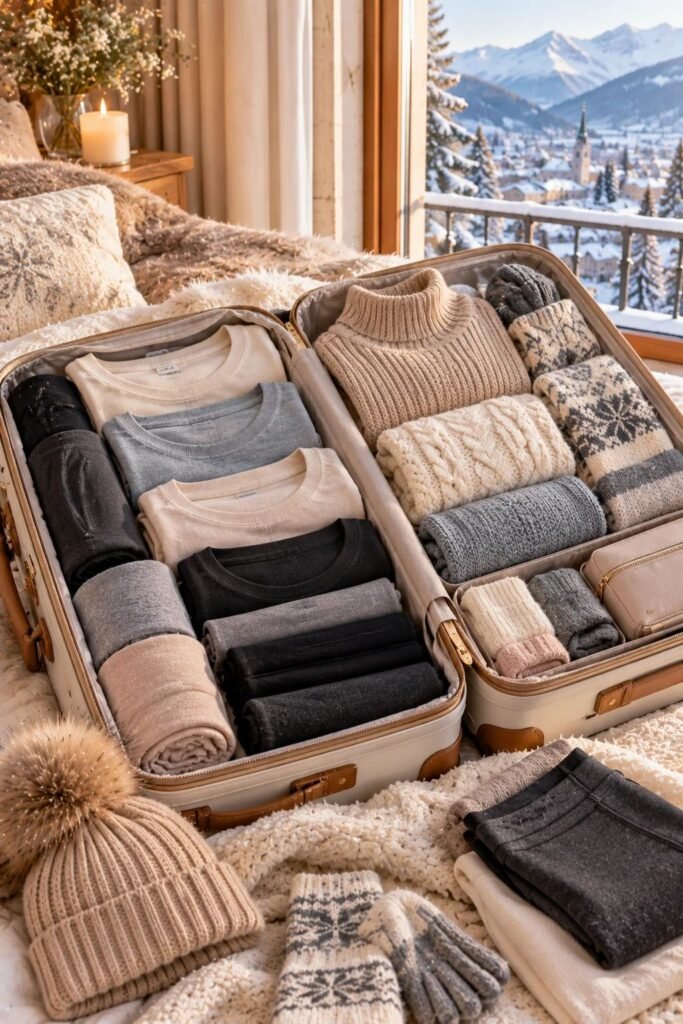
Thermal clothing is one of the most useful additions to a winter Europe packing list. These thin layers help you stay warm without forcing you to wear several bulky sweaters.
I especially recommend considering thermal tops and leggings if your itinerary includes Vienna, Prague, Berlin, Stockholm, the Swiss Alps, or other destinations that may experience freezing temperatures.
Pack two thermal tops and one or two pairs of thermal leggings as a starting point. You can wash and reuse them during your trip if necessary.
How to wear thermal layers
Wear a thermal top beneath a long-sleeved shirt or sweater, then add your winter coat when you go outside. On particularly cold days, thermal leggings can be worn underneath jeans or trousers.
Choose a comfortable fabric that feels good against your skin. Merino wool and synthetic thermal fabrics are popular options because they can provide warmth without adding too much bulk.
Avoid assuming you will need thermal clothing every day. If you are visiting places such as Rome, Lisbon, or Barcelona, the weather may be milder than in Northern Europe. Check the forecast for each destination before deciding how many thermal layers to bring.
3. Bring Sweaters That Work With Multiple Outfits

Sweaters are essential for winter travel, but they can take up a surprising amount of suitcase space. Instead of packing a different sweater for every day, choose three versatile options that complement the rest of your wardrobe.
I would start with a lightweight knit, a warm sweater for colder days, and a cardigan or another easy-to-layer piece.
Neutral colors such as cream, black, gray, camel, and navy make it easier to create different outfits without bringing too many clothes. You can add color with a scarf, hat, or handbag if you prefer a more playful look.
Sweater styles worth packing
- A lightweight turtleneck: Perfect beneath a coat and easy to dress up for dinner.
- A warm knit sweater: Useful for outdoor sightseeing and chilly evenings.
- A cardigan: Easy to remove when you enter a heated restaurant, museum, or train.
- A slightly dressier knit: A lovely option for photographs, cafés, and evenings out.
Try to choose sweaters that are warm without being excessively bulky. Fine-knit wool and other insulating fabrics can be easier to layer than several thick jumpers.
Remember that you will probably spend time moving between cold outdoor streets and warm indoor spaces. Clothing that is easy to remove makes your day much more comfortable.
4. Pack Long-Sleeved Tops and Basic Shirts

Basic tops are the foundation of a practical winter travel wardrobe. They allow you to create different outfits with the same trousers, sweaters, and coat.
For 10 days, pack around four or five tops, depending on your laundry plans. Include a mixture of long-sleeved shirts, comfortable everyday tops, and one slightly dressier option.
You do not need ten completely different tops for ten days. A smaller collection of coordinated pieces is usually easier to manage, especially if you will be changing hotels or traveling between cities by train.
What types of tops should you bring?
- Two or three comfortable long-sleeved tops
- One lightweight turtleneck or fitted layering top
- One blouse or dressier shirt
- One extra top in your favorite style
Choose fabrics that feel comfortable throughout a full day of sightseeing. If you expect cold weather, avoid relying entirely on thin cotton tops without warm layers.
A simple white shirt, for example, can work beneath a sweater during the day and look polished on its own indoors. A black long-sleeved top can be paired with almost any trousers in your suitcase.
Read Carry-On Packing List for Summer in Europe (The Only Guide You’ll Ever Need)
5. Choose Three Pairs of Trousers or Jeans
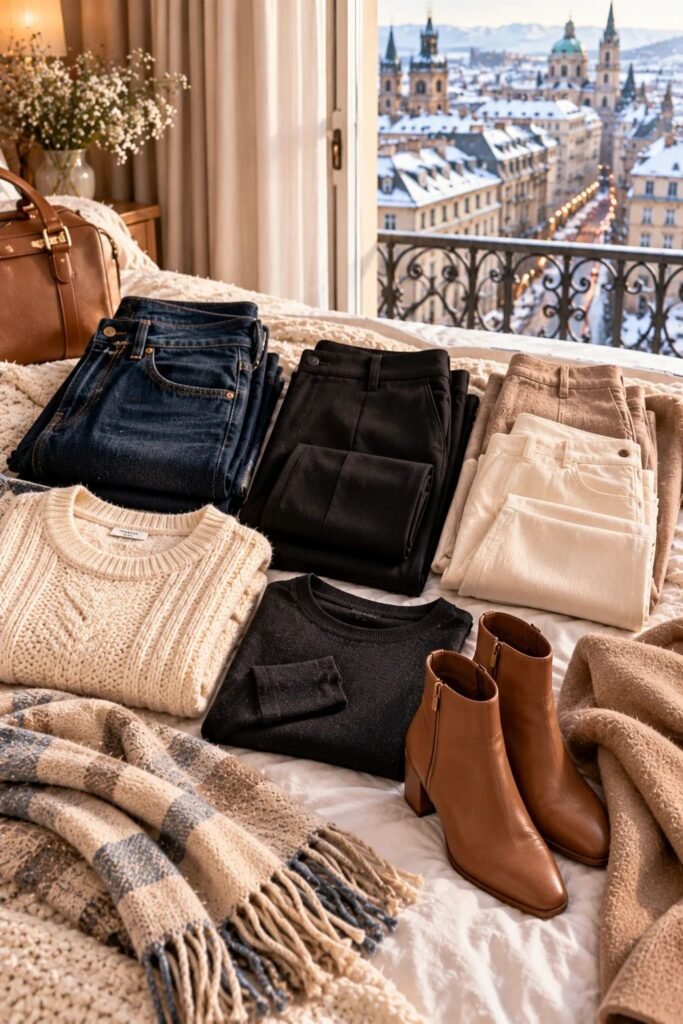
You do not need a separate pair of trousers for every day of your trip. Three versatile pairs can be enough for a 10-day holiday, particularly if you rotate them and have access to laundry.
Choose bottoms that feel comfortable when walking, sitting on trains, climbing stairs, and spending several hours exploring a city.
My recommended winter travel bottoms
One pair of dark jeans: Dark jeans are easy to style and work well with sweaters, boots, and a winter coat.
One pair of comfortable trousers: Choose a pair that feels slightly dressier than jeans but is still comfortable enough for sightseeing.
One additional pair of trousers or warm leggings: This gives you another outfit combination and can be especially useful if one pair gets wet.
If your destination is particularly cold, make sure your trousers leave enough room for thermal leggings underneath. Tight clothing can become uncomfortable when you add several layers.
You can also bring a skirt if you enjoy wearing one during winter. Pair it with warm tights, suitable boots, and layers that match the forecast.
6. Include One Dressier Outfit for Evenings

One of my favorite things about a European winter trip is the opportunity to enjoy a lovely dinner, visit a festive market, or spend an evening in a beautiful historic city. You do not need to pack an entirely separate evening wardrobe to enjoy these experiences.
One dressier outfit is usually enough for a 10-day trip.
Consider packing a simple knit dress, a blouse with tailored trousers, or a comfortable dress that works with warm tights and boots.
The secret is to choose something you can style with items you already have. A black dress, for example, can look different when paired with a cardigan, a scarf, or a different pair of shoes.
Before packing an evening outfit, think about your itinerary. If you plan to attend a concert or visit a restaurant with a dress code, choose something suitable for that occasion. Otherwise, comfortable, neat clothing is generally a practical choice.
Do not forget that winter evenings can be cold. Make sure your outfit works with your coat and other warm layers rather than leaving you uncomfortable on the walk back to your accommodation.
7. Pack Enough Underwear, Socks, and Sleepwear
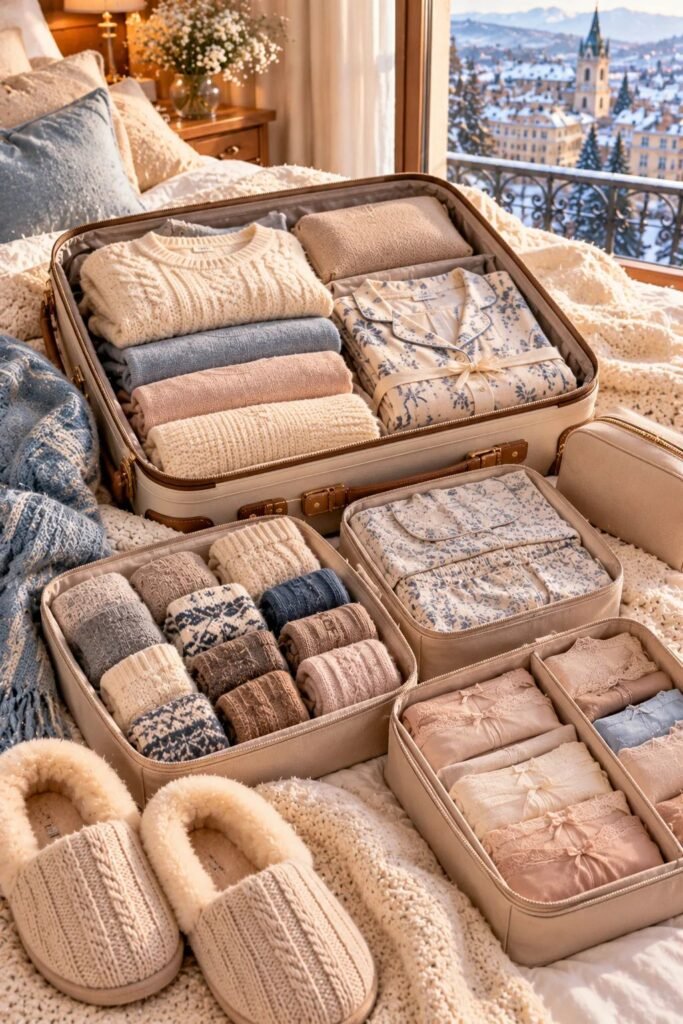
These smaller clothing items are easy to overlook when planning outfits, but they are essential for a comfortable trip.
For 10 days, pack enough underwear for your preferences, along with a practical supply of socks and sleepwear. If you do not want to do laundry, bring enough for the entire trip. If you plan to wash clothes midway through your holiday, you can pack fewer items.
How many should you bring?
- 8–10 pairs of underwear, depending on your laundry plans
- 7–10 pairs of socks
- 2–3 pairs of warm wool or thermal socks
- 1–2 sets of pajamas
- Any personal undergarments you need
Wool or synthetic winter socks can be especially useful in cold weather because they help keep your feet comfortable inside boots. Make sure your socks fit well with your shoes; thick socks inside tight boots may make your feet feel colder rather than warmer.
Pack pajamas that are comfortable for the expected indoor temperature. Some accommodations are very warm, while older buildings or rental apartments may feel cooler.
If you are staying in several hotels, keep one clean set of sleepwear somewhere easy to reach so you do not have to unpack your entire suitcase after every arrival.
8. Choose Comfortable, Weather-Appropriate Shoes
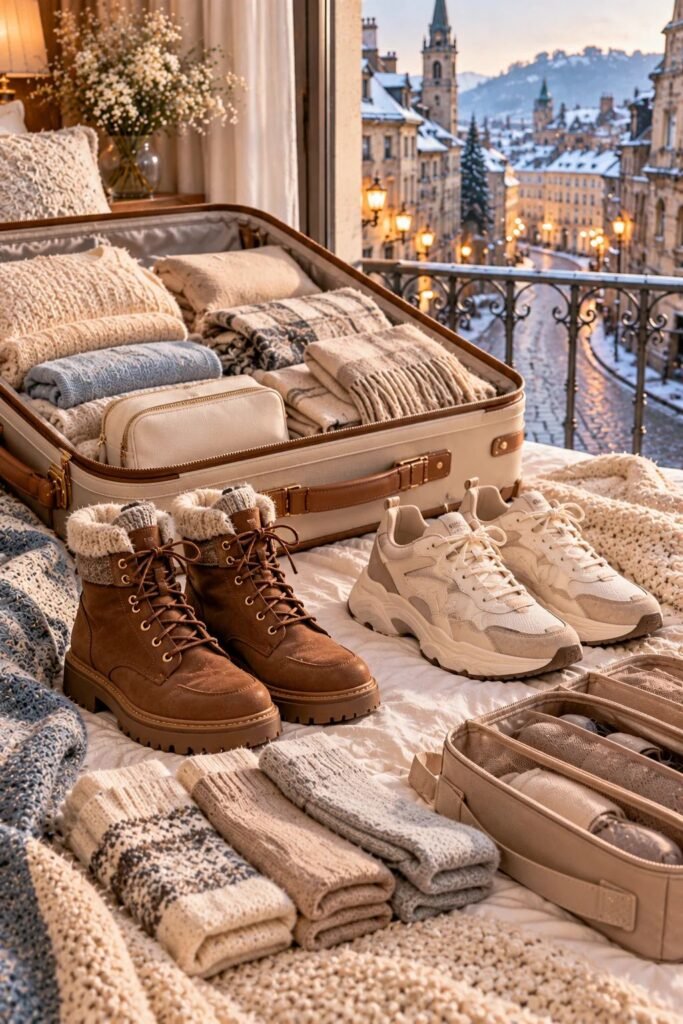
Shoes deserve special attention when planning what to pack for 10 days in Europe in winter. You may spend much of your holiday walking on cobblestones, crossing wet streets, exploring museums, and standing outdoors at attractions.
The wrong shoes can quickly make an otherwise wonderful day uncomfortable.
For most winter city itineraries, I recommend bringing two pairs of shoes: one reliable pair for walking and another comfortable pair for different weather or occasions.
Your first pair: Walking boots
Choose boots with good grip, comfortable cushioning, and water-resistant or waterproof construction. They should fit well with the socks you plan to wear.
If you buy new boots for the trip, wear them on several walks before leaving home. A winter holiday is not the best time to discover that your shoes rub against your heels.
Your second pair: Comfortable everyday shoes
A second pair gives your main boots time to dry if they become wet. Depending on the destination, this could be comfortable trainers, another pair of walking shoes, or a dressier pair of practical boots.
If you are visiting snowy mountain areas, you may need insulated winter boots with stronger traction. Ordinary city boots may not provide enough warmth or grip for icy paths.
Should you pack heels?
Only if you genuinely expect to wear them. High heels are rarely necessary for ordinary sightseeing, and uneven streets can make them inconvenient. A comfortable pair of dressier flats or low-heeled boots is often more versatile.
Before leaving, check the forecast and make sure your footwear suits the coldest and wettest conditions you expect to encounter.
9. Do Not Forget a Warm Scarf, Hat, and Gloves

Small accessories can make a significant difference during winter travel. They take up relatively little space, but they help protect you from cold wind and make outdoor sightseeing more comfortable.
Pack one warm scarf, one hat, and one pair of gloves.
A large scarf can be particularly versatile. You can wrap it around your neck outdoors, remove it inside, or use it as an extra layer during a chilly train journey.
A knitted hat or beanie is useful when temperatures drop, especially if you plan to spend time outside in the morning or evening.
Gloves are also important when you are walking around a city or waiting outside for public transportation. Touchscreen-compatible gloves are convenient if you regularly use your phone for navigation or photographs.
If your trip includes Christmas markets, nighttime walking tours, or extended outdoor activities, consider bringing hand warmers where appropriate.
A simple accessory color palette
You can make a small winter wardrobe feel more coordinated by choosing accessories in two or three complementary colors.
For example:
- A camel scarf with a cream sweater and dark coat
- A burgundy hat with a black jacket
- A gray scarf with navy trousers and a neutral coat
You do not need many accessories to create attractive outfits. A few carefully chosen pieces are easier to pack and style.
10. Pack a Compact Umbrella and Rain Protection
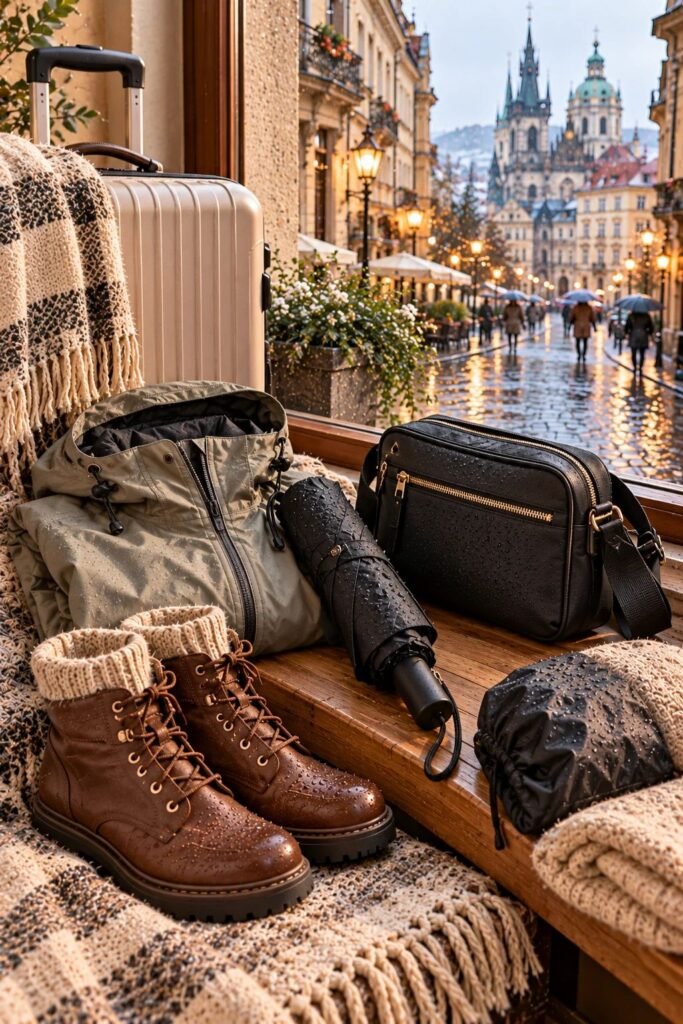
Winter weather in Europe is not always snowy. Depending on the destination, you may encounter rain, drizzle, wind, or a mixture of wet and cold conditions.
This is why checking average temperatures alone is not enough when preparing your suitcase.
Bring a compact umbrella if it suits your destination, or rely on a coat with a good hood and suitable rain protection. A small waterproof bag cover can also be useful if you expect to walk in wet weather.
If you will be traveling with a backpack, consider packing a lightweight waterproof layer for your belongings. It can help protect electronics, documents, and spare clothing from unexpected rain.
A small microfiber cloth can be handy for wiping moisture from your phone or glasses. You might also want a separate bag for damp socks or other items that need to dry before you pack them away.
The goal is not to prepare for every possible weather emergency. It is to make sure an ordinary rainy day does not ruin your plans.
11. Bring a Practical Day Bag
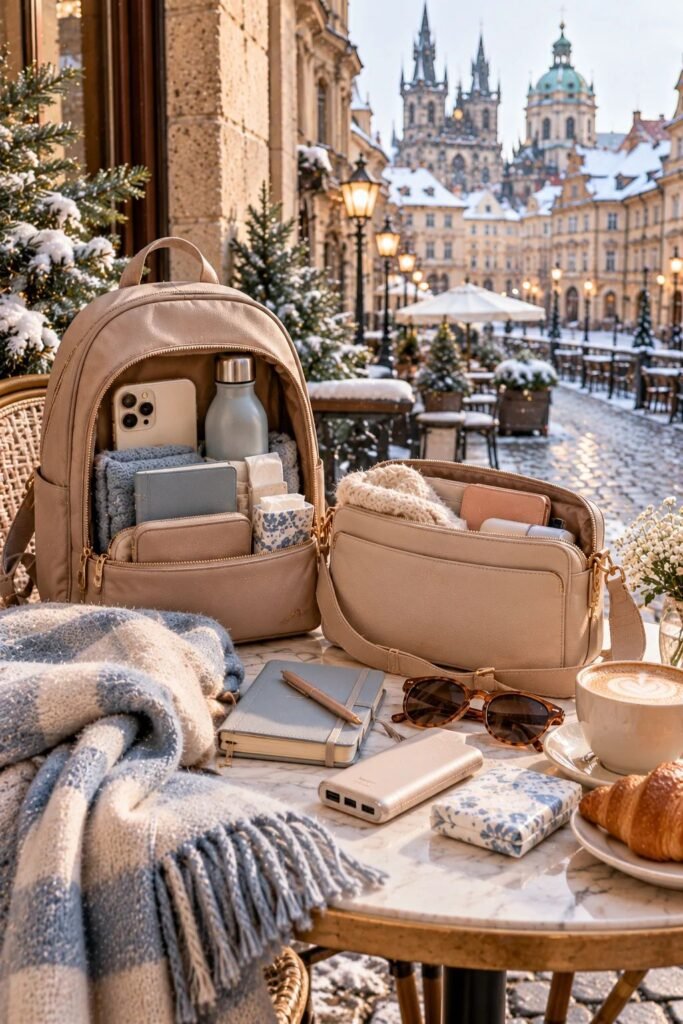
A good day bag makes sightseeing easier because you can carry your daily essentials without taking your main suitcase everywhere.
For a winter city trip, I would choose a comfortable crossbody bag or a small backpack that closes securely and works with your coat.
Look for enough space to carry your phone, wallet, travel documents you need that day, a power bank, tissues, lip balm, and a reusable water bottle.
A bag with several compartments can help you keep everything organized. It is also useful to have an easy-to-reach pocket for tickets or other items you use frequently.
What to carry during the day
- Phone and portable charger
- Wallet and payment card
- Small reusable water bottle
- Tissues and hand sanitizer
- Lip balm and hand cream
- Compact umbrella, if needed
- Reservation details or tickets
- A small snack for long sightseeing days
Keep your passport secure and follow the guidance of your accommodation and travel provider about carrying important documents. It is sensible to keep copies of key documents separately from the originals.
Avoid carrying unnecessary valuables or bringing a large bag that becomes uncomfortable after several hours of walking.
12. Toiletries and Winter Skincare Essentials

Cold weather, indoor heating, and wind can leave your skin feeling dry. Your winter toiletries should therefore focus on everyday personal care and products that help you stay comfortable.
You do not need to bring full-size bottles of everything. Travel-size products are often enough for a 10-day holiday, particularly if your accommodation provides some toiletries.
My winter toiletries checklist
- Toothbrush and toothpaste
- Shampoo and conditioner
- Body wash or soap
- Deodorant
- Facial cleanser
- Moisturizer
- Hand cream
- Lip balm
- Sunscreen
- Hairbrush or comb
- Hair ties and clips
- Makeup and makeup remover, if used
- Personal hygiene products
- Any personal medications you need
- Basic first-aid supplies, including blister plasters
Moisturizer and lip balm are especially useful if you spend a lot of time outdoors in cold or windy conditions.
Sunscreen can still be useful in winter, particularly on bright days or when visiting snowy mountain destinations where sunlight reflects off snow.
If you use prescription medication, keep it in its original packaging when practical and carry it in your hand luggage. Check any destination-specific requirements before traveling with medication.
For liquids in your carry-on, check your airline’s current rules and pack accordingly.
13. Electronics and Travel Accessories
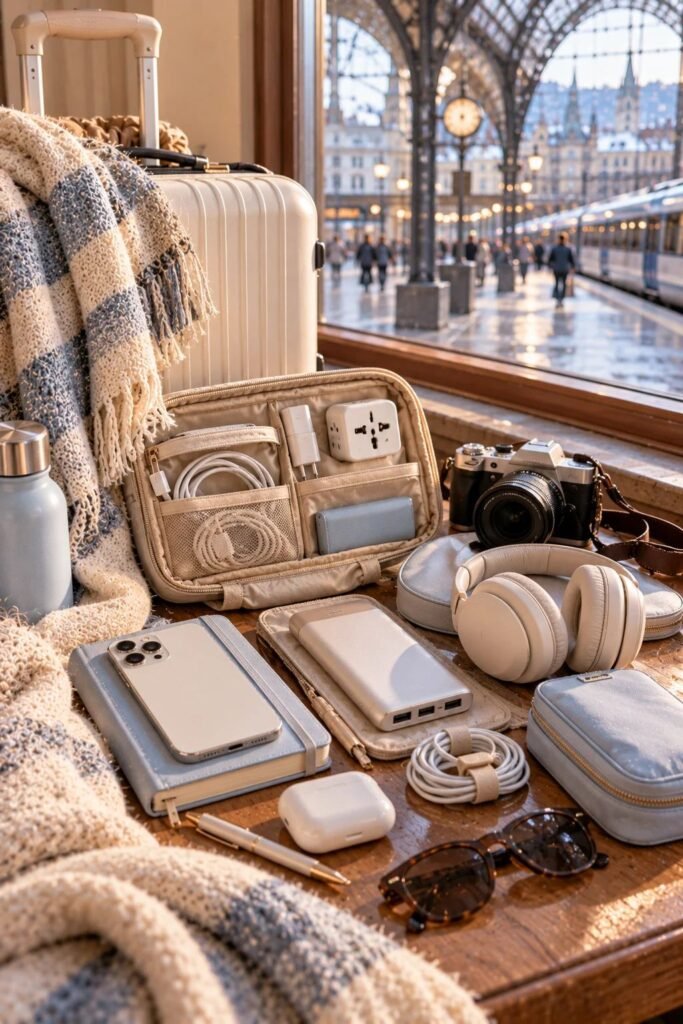
Electronics are another important part of your Europe winter packing list. Your phone may be your camera, navigation tool, boarding pass holder, train-ticket wallet, and way to contact your accommodation.
Make sure you have everything needed to keep your devices charged throughout the trip.
Electronics to pack
- Smartphone
- Phone charger
- Portable power bank
- Camera and accessories, if needed
- Headphones
- Charging cables
- Travel plug adapter
- E-reader or tablet, if you use one
A power bank is particularly useful on days when you rely on digital maps, translation apps, and mobile tickets.
If you are traveling through multiple European countries, check the socket types at your destinations. A universal travel adapter can be convenient, but it is important to confirm that it supports the plugs you need.
Also check the voltage and frequency requirements of any electrical styling tools you plan to bring. A plug adapter changes the plug connection; it does not necessarily convert voltage.
I would also recommend downloading offline maps, saving important booking confirmations, and keeping copies of essential travel information accessible without an internet connection.
14. Important Documents and Money
Before you leave, organize your travel documents and payment methods. Keeping these essentials together makes airport check-in, hotel arrivals, and transportation days easier.
Your document checklist should include:
- Valid passport
- Any required visa or travel authorization
- Flight confirmations
- Train or bus tickets
- Hotel and accommodation confirmations
- Travel insurance details
- Emergency contact information
- Copies of important documents
- Credit or debit cards
- A backup payment method
- Some local currency, where useful
Entry requirements depend on your nationality, passport, destination, and travel dates. Check the relevant official government guidance well before departure rather than assuming the same rules apply to everyone.
If you are visiting several countries, remember that not every European destination uses the euro. Check which currency is used at each stop and whether your payment cards charge foreign transaction fees.
Keep backup copies of important documents somewhere separate from the originals. You can also store secure digital copies, provided you use an appropriate account and device security.
15. Pack Smart for Different European Winter Destinations
One of the biggest mistakes travelers make is assuming that every European destination has the same winter weather.
A winter packing list for Rome may not be suitable for Stockholm, and a city break in London requires different preparation from a snowy holiday in the Swiss Alps.
Before finalizing your suitcase, look at the forecast for every stop on your itinerary.
London, Paris, and Amsterdam
These cities can be cold, damp, windy, and rainy during winter. A warm coat with rain protection, comfortable walking shoes, layers, and a compact umbrella are useful choices.
You may spend much of your day walking between attractions and using public transportation, so prioritize footwear that remains comfortable over long distances.
Prague, Vienna, and Budapest
These Central European destinations can experience freezing temperatures during winter. Bring a warm coat, thermal layers, gloves, a hat, and warm socks.
If you plan to visit Christmas markets, remember that you may spend hours outside after sunset. Dress in layers so you can stay comfortable while exploring.
Rome, Lisbon, and Barcelona
Southern European cities often have milder winters than Northern and Central Europe, although cold spells, rain, and chilly evenings are still possible.
A medium-weight coat, sweaters, long-sleeved tops, comfortable shoes, and a light extra layer may be enough for many city itineraries. Check the forecast before leaving because winter conditions can vary.
Switzerland, Scandinavia, and Alpine destinations
If your trip includes mountain areas, skiing, snowy villages, or very cold northern destinations, you may need more specialized winter clothing.
Consider insulated boots, warmer thermal layers, a suitable waterproof outer layer, and accessories designed for cold weather. If you plan to ski or participate in other snow sports, follow the specific equipment and clothing guidance for those activities.
Do not rely on a general city packing list if you expect deep snow, icy trails, or prolonged exposure to freezing temperatures.
16. How to Pack for 10 Days in Europe Without Overpacking
Packing for ten days does not mean you need ten separate outfits. The easiest way to reduce luggage is to plan a small capsule wardrobe in which most items work together.
Start by choosing a simple color palette. Black, cream, gray, navy, and camel are easy to combine, but you can use any colors you enjoy wearing.
Next, plan outfits before placing everything in your suitcase. Make sure each pair of trousers works with several tops and at least one sweater.
Use the outfit-planning method
Here is an example of how to create variety with a small wardrobe:
- Day 1: Dark jeans, a long-sleeved top, a sweater, and walking boots.
- Day 2: Trousers, a turtleneck, and your winter coat.
- Day 3: Jeans, a cardigan, and a thermal top.
- Day 4: Comfortable trousers, a knit sweater, and a scarf.
- Day 5: Repeat your favorite trousers with a different top and accessories.
- Day 6: Wear a dress with warm tights and boots.
- Day 7: Use a fresh combination of your existing layers.
- Day 8: Repeat a comfortable sightseeing outfit.
- Day 9: Wear your dressier top with trousers for dinner.
- Day 10: Choose your most comfortable travel outfit.
This is only an example. You can rearrange the combinations according to your itinerary, weather, and personal style.
Use packing cubes
Packing cubes can help separate tops, underwear, accessories, and other essentials. They also make it easier to find items without emptying your suitcase.
You can use one cube for clean clothing and another small bag for laundry. Compression cubes may save space with suitable garments, but they do not reduce the actual weight of your luggage.
Wear your bulkiest items while traveling
If you are comfortable doing so, wear your winter coat, heaviest sweater, and larger walking boots on the journey. This leaves more room in your suitcase.
You can remove your coat once you are comfortably seated on the plane or train.
Plan one laundry stop
For many travelers, doing laundry once during a 10-day trip is easier than carrying enough clothing for every day. Check whether your accommodation offers laundry facilities or whether there is a convenient laundromat nearby.
You can then pack enough clothing for approximately a week and reuse your favorite pieces.
17. What Not to Pack for a Winter Trip to Europe
It is just as helpful to know what to leave at home as it is to know what to bring.
Overpacking makes your suitcase heavier and can become inconvenient when you are moving between hotels, navigating train stations, or climbing stairs in older buildings.
Here are a few things you can usually leave behind:
Too many bulky sweaters: Three versatile sweaters are often more useful than several pieces that only work with one outfit.
Uncomfortable shoes: Avoid bringing shoes you have not tested on a proper walk.
Too many evening outfits: One or two dressier options are generally enough unless your itinerary includes several formal events.
Full-size toiletries: Travel-size containers can save space, provided they meet your airline’s rules.
Accessories that do not match anything: Choose scarves, hats, and bags that work with several outfits.
Clothing for imaginary activities: If you do not plan to ski, hike, attend a formal event, or exercise, think carefully before packing specialized clothing for those activities.
Bulky items you can borrow or rent: Depending on your destination and plans, some specialist winter equipment may be available to rent. Check arrangements in advance rather than carrying everything from home.
The goal is to pack for the trip you are actually taking, not every possible situation you can imagine.
18. Final Winter Europe Packing Checklist
Before closing your suitcase, use this checklist to make sure you have the essentials.
Clothing
- One warm winter coat
- One additional lightweight insulating layer
- Two thermal tops
- One or two pairs of thermal leggings
- Four or five tops
- Three sweaters or cardigans
- Three pairs of trousers or jeans
- One dressier outfit
- Underwear and socks
- Warm sleepwear
- Any extra clothing required for planned activities
Shoes and accessories
- Comfortable walking boots
- Second pair of suitable shoes
- Warm scarf
- Winter hat
- Gloves
- Compact umbrella or suitable rain protection
- Everyday day bag
Toiletries and personal items
- Toothbrush and toothpaste
- Shampoo and body wash
- Moisturizer and hand cream
- Lip balm and sunscreen
- Hairbrush and personal grooming essentials
- Personal hygiene products
- Required medication
- Basic first-aid supplies
Travel essentials
- Passport and required travel documents
- Flight and accommodation confirmations
- Travel insurance information
- Wallet and payment cards
- Phone and charger
- Power bank
- Travel adapter
- Reusable water bottle
- Packing cubes
- Offline maps and saved booking details
Review the list against your itinerary and remove anything you will not need. Then check your airline’s baggage allowance so your suitcase is ready for the journey.
Frequently Asked Questions About Packing for Europe in Winter
How many outfits do I need for 10 days in Europe in winter?
You can plan around seven to ten days of underwear and socks, four or five tops, three sweaters, three pairs of trousers, one dressier outfit, and suitable outerwear. You can create more combinations by repeating pieces and changing accessories. If you plan to do laundry, you may be able to pack even less.
Can I pack for 10 days in Europe in a carry-on suitcase?
Yes, it can be possible, particularly if you choose a coordinated capsule wardrobe, wear your bulkiest items, and use packing cubes. Winter clothing can take up more space than summer clothing, so you will need to be selective. Check your airline’s carry-on size, weight, and liquid restrictions before traveling.
What shoes are best for Europe in winter?
Comfortable walking boots with good grip and suitable water resistance are a strong choice for many winter city trips. A second pair of comfortable shoes gives you an alternative if your main pair gets wet. Snowy or icy destinations may require warmer, more specialized boots.
Do I need thermal clothing for Europe in winter?
Thermal clothing is particularly useful in cold destinations, during long periods outdoors, and when visiting snowy regions. In milder southern cities, you may not need thermal layers every day. Check the forecast and choose clothing according to the places you will visit.
What should I wear to Christmas markets in Europe?
Wear a warm coat, insulating layers, comfortable footwear, warm socks, gloves, a hat, and a scarf. Since Christmas markets often involve standing outdoors after sunset, pay particular attention to warmth and comfort. Hand warmers can be useful if you expect to spend a long time outside.
How can I look stylish without overpacking?
Choose clothing in a coordinated color palette and bring versatile pieces that work for several occasions. A good coat, comfortable boots, a few sweaters, and simple accessories can create plenty of attractive combinations. Focus on clothing you feel comfortable wearing repeatedly rather than packing a new outfit for every photograph.
What is the most important thing to pack for a European winter trip?
If I had to prioritize just a few things, I would choose a suitable winter coat, comfortable weather-appropriate walking shoes, and warm layers. These items have the biggest impact on your comfort while sightseeing. Your exact requirements will depend on the temperatures, rain, snow, and activities expected during your trip.
Final Thoughts
Packing for 10 days in Europe in winter becomes much easier when you focus on warmth, comfort, and versatility instead of trying to bring a different outfit for every day. A good coat, a few sweaters, thermal layers, comfortable walking boots, and practical accessories will help you prepare for a wide range of winter adventures.
Before you leave, check the forecast for every destination, plan a few outfit combinations, and make sure your shoes are comfortable enough for long days of exploring. Remember that Europe is wonderfully diverse, and winter in Rome can feel very different from winter in Stockholm or the Swiss Alps.
With a little preparation, you can keep your luggage manageable and spend less time worrying about what to wear. That leaves you more time to enjoy the charming streets, festive markets, cozy cafés, and beautiful winter scenery that make a European getaway so memorable.