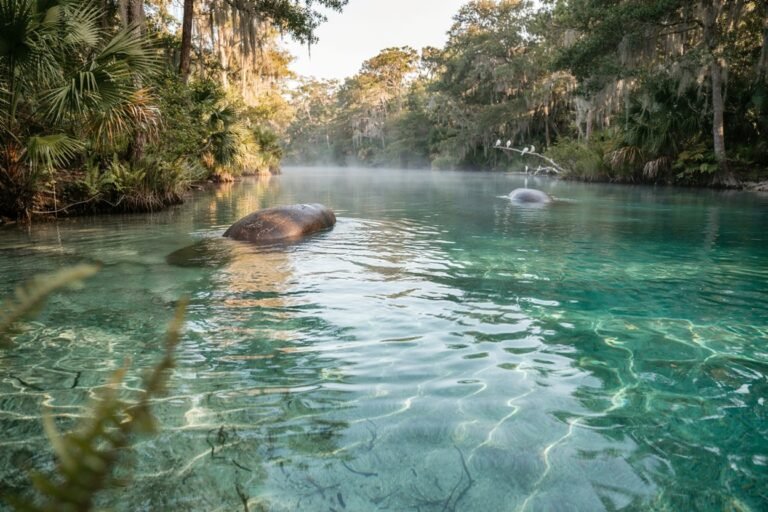
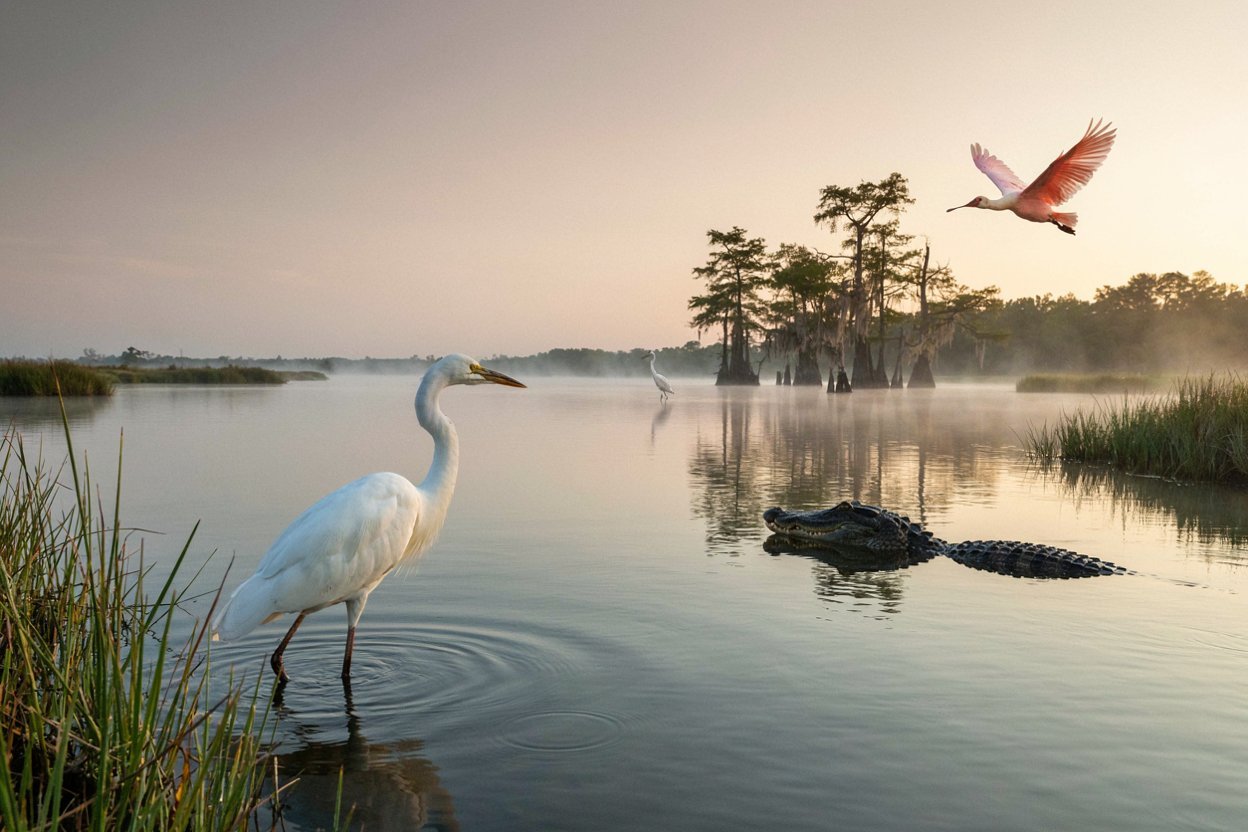

Florida is one of those places that constantly surprises me when I slow down and actually look around.
Beyond the beaches, theme parks, and busy cities, I’ve found an entirely different side of the state filled with manatees, alligators, wild horses, colorful birds, turtles, and even bison.
What I love most about wildlife watching in Florida is that you don’t always need to plan an intense adventure to see something incredible.
A quiet boardwalk, scenic drive, or early-morning walk can turn into a memorable experience. If you’re hoping to see more of Florida’s wild side, these 13 spots are wonderful places to start.
1. Everglades National Park
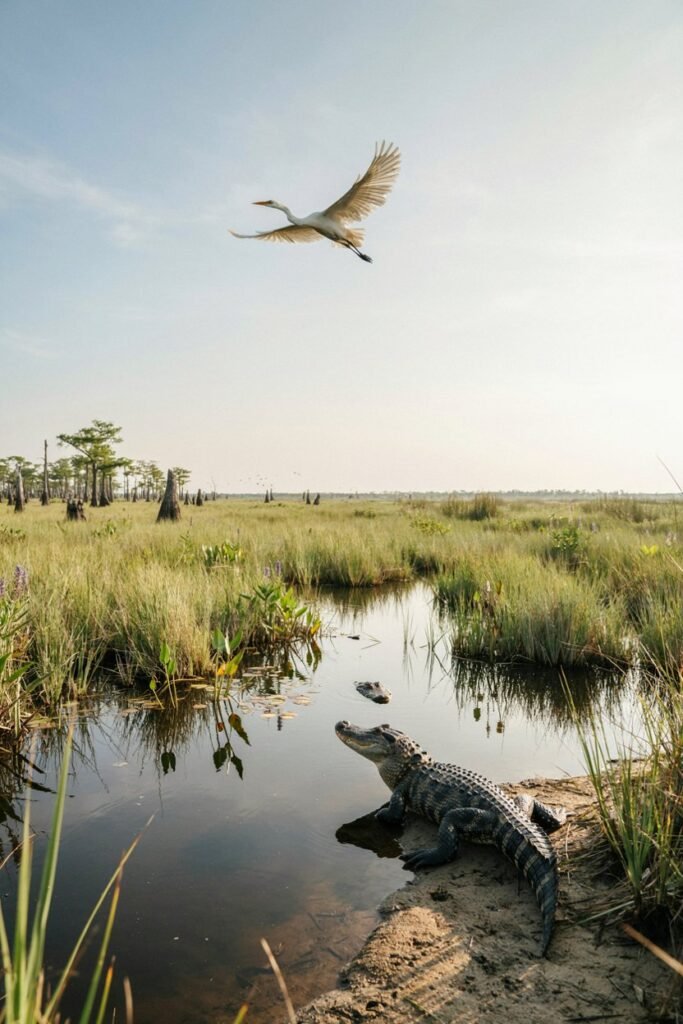
Everglades National Park
The Everglades is probably one of the first places I would think about when planning a Florida wildlife trip.
This enormous wetland ecosystem feels completely different from the rest of the state, and it offers opportunities to see wildlife in its natural environment.
American alligators are among the easiest animals to spot, especially around waterways and marshy areas. Depending on where you explore, you may also see turtles, herons, egrets, ibises, anhingas, and other wading birds.
One of my favorite things about visiting places like the Everglades is that you never really know what might appear next. You can be watching birds one minute and suddenly notice an alligator resting near the water.
Wildlife to look for:
- American alligators
- Great blue herons
- Great egrets
- White ibis
- Anhingas
- Turtles
- Ospreys
- Manatees in suitable waterways
- Dolphins in coastal areas
Wildlife-watching tip: Go early in the morning when temperatures are cooler and animals are often more active. Bring binoculars and give wildlife plenty of space.
2. Merritt Island National Wildlife Refuge
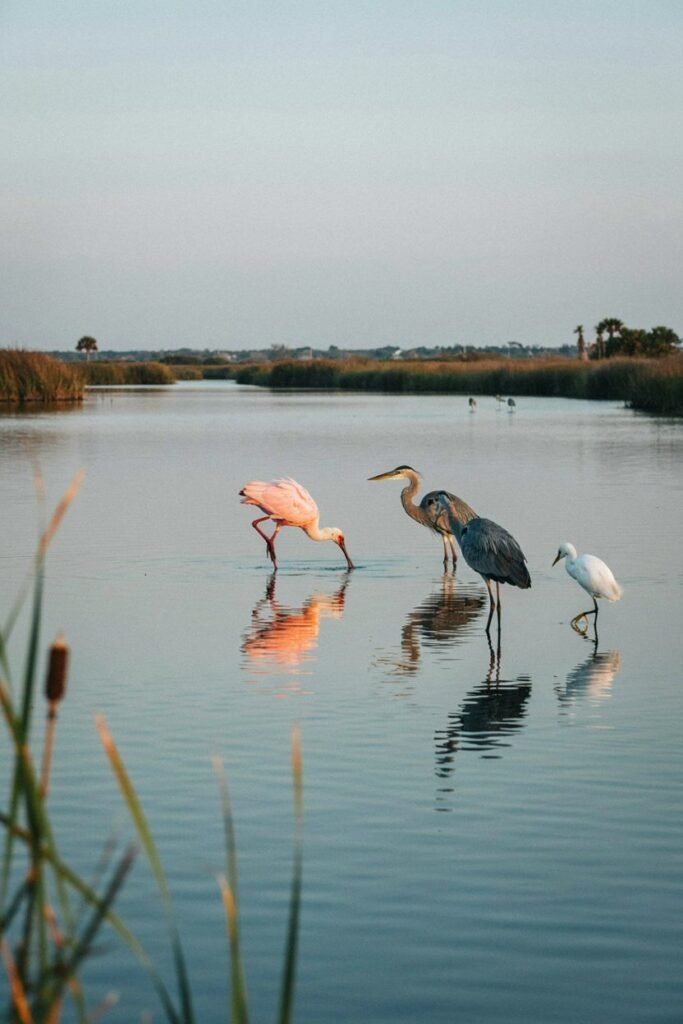
Merritt Island National Wildlife Refuge
Merritt Island National Wildlife Refuge is one of the places I would put near the top of any Florida bird-watching itinerary.
Located along Florida’s east coast near the Kennedy Space Center, the refuge covers about 140,000 acres and includes coastal dunes, marshes, pine flatwoods, hardwood hammocks, and other habitats.
The Black Point Wildlife Drive is particularly useful if you want to see wildlife without spending the entire day hiking. The seven-mile auto tour is the refuge’s most popular wildlife-viewing area.
Bird lovers have plenty to look forward to here. The refuge has recorded hundreds of bird species, including bald eagles, brown pelicans, roseate spoonbills, reddish egrets, and mottled ducks.
You may also spot alligators, manatees, turtles, and other wildlife around the wetlands.
Best tip: Early morning and late afternoon are excellent times for wildlife watching. The refuge notes that November through April is generally a particularly good period for birding.
Read Kelly Park Rock Springs: Tubing Tips for Florida’s Lazy River
3. Paynes Prairie Preserve State Park
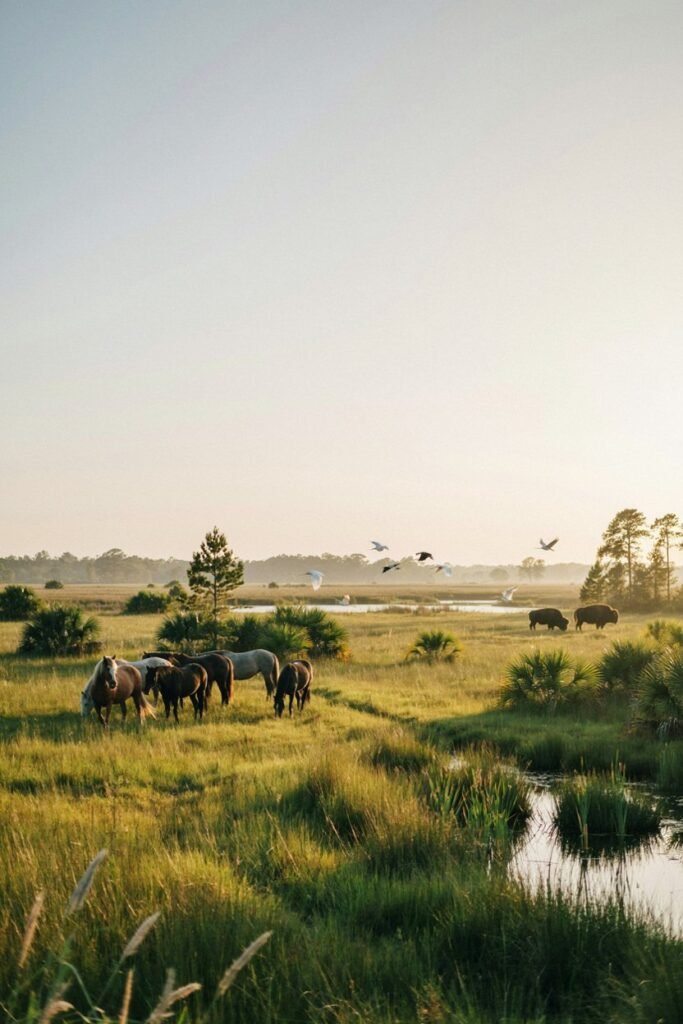
Paynes Prairie Preserve State Park
If someone told me that Florida had wild bison and horses roaming across an enormous prairie, I might not believe them at first. That is exactly what makes Paynes Prairie so fascinating.
Located near Gainesville, Paynes Prairie is Florida’s first state preserve and covers nearly 23,000 acres. The preserve is home to wild horses, bison, alligators, deer, and hundreds of bird species.
The 50-foot observation tower is one of the best places to get a broader view of the landscape. Instead of looking at just one small section of habitat, you can scan across the prairie and wetlands with binoculars.
I would also recommend stopping at the visitor center before exploring. It can help you understand the landscape and decide which trails make sense for your visit.
What you might see:
- Wild horses
- American bison
- Alligators
- Deer
- Bald eagles
- Wading birds
- Waterfowl
- Other prairie wildlife
Helpful tip: Wildlife sightings are never guaranteed, so don’t rush. Give yourself time to sit quietly and scan the prairie.
Read 16 Secret Places to Visit in Florida Even Locals Don’t Know
4. Myakka River State Park
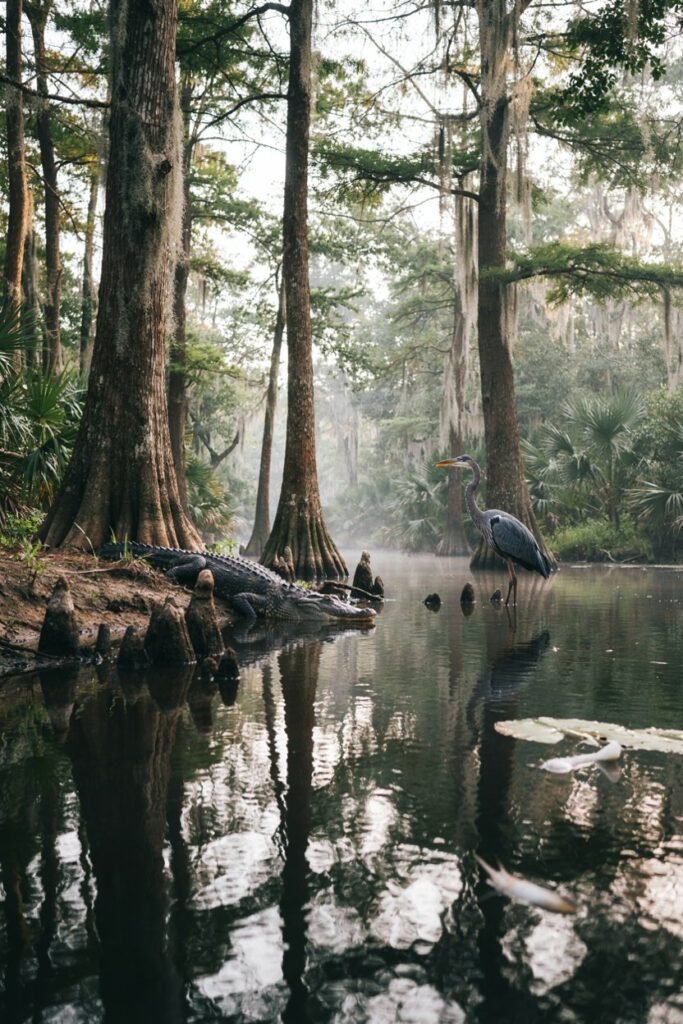
Myakka River State Park
Myakka River State Park is one of my favorite kinds of wildlife destinations because you can experience several Florida habitats in one visit. The park covers more than 37,000 acres and includes wetlands, prairies, hammocks, and pinelands.
Alligators are common sights around the waterways, while birds can be found throughout the wetlands and prairie.
The Birdwalk is particularly interesting for wildlife watchers. From the boardwalk, visitors may spot herons, egrets, ibises, ducks, limpkins, anhingas, roseate spoonbills, ospreys, and bald eagles. Alligators and turtles may also be seen along the water.
If you’re comfortable climbing stairs, the Canopy Walkway gives you a completely different perspective. The walkway reaches 25 feet above the ground, while its tower rises 74 feet, providing views over the treetops and surrounding habitats.
Best tip: January through March can be particularly productive for wildlife viewing at the Birdwalk when water levels are generally lower.
5. Crystal River National Wildlife Refuge
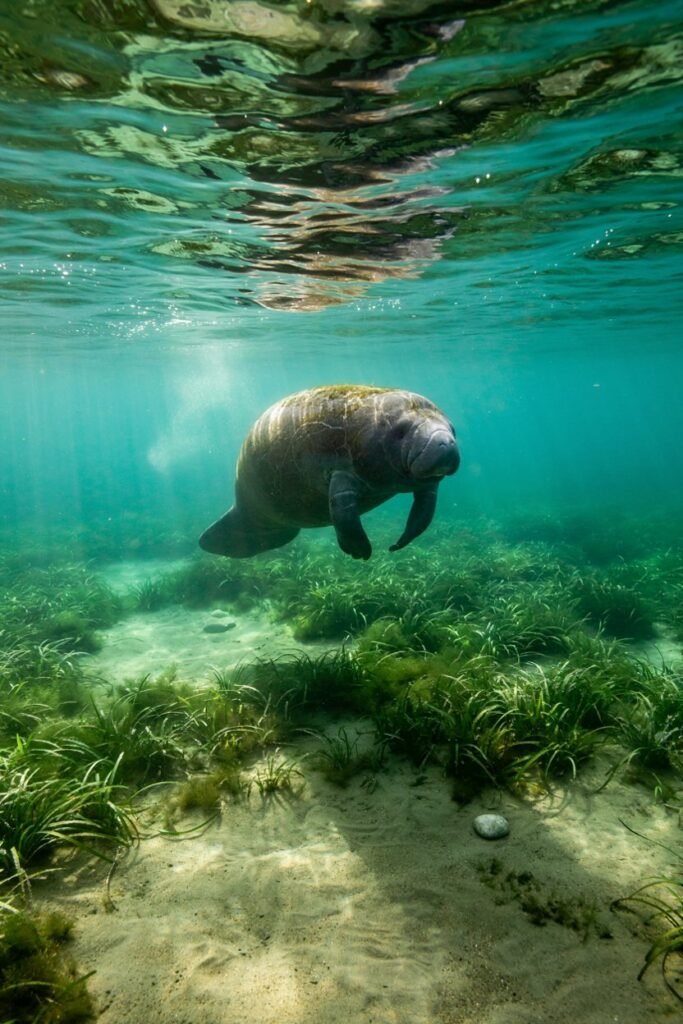
Crystal River National Wildlife Refuge
If seeing manatees is high on your Florida bucket list, Crystal River deserves a spot on your itinerary.
Crystal River National Wildlife Refuge was specifically established to protect habitat for the Florida manatee, making this one of the state’s most important places for manatee conservation and viewing.
The famous Three Sisters Springs is particularly popular during the cooler months when manatees gather around the warm spring waters.
You can view manatees from above at the boardwalk, while other opportunities involve being on the water through permitted recreational activities or guided experiences.
When to visit
Manatee season is especially important to know when planning your trip. Ranger-led programs at Three Sisters Springs are offered daily during the main manatee season from November 15 through March 31.
And please remember that these are wild animals. Don’t touch, chase, surround, feed, or otherwise disturb manatees.
My tip: If you visit during winter, allow extra time rather than trying to squeeze Crystal River into a rushed afternoon.
6. Ellie Schiller Homosassa Springs Wildlife State Park
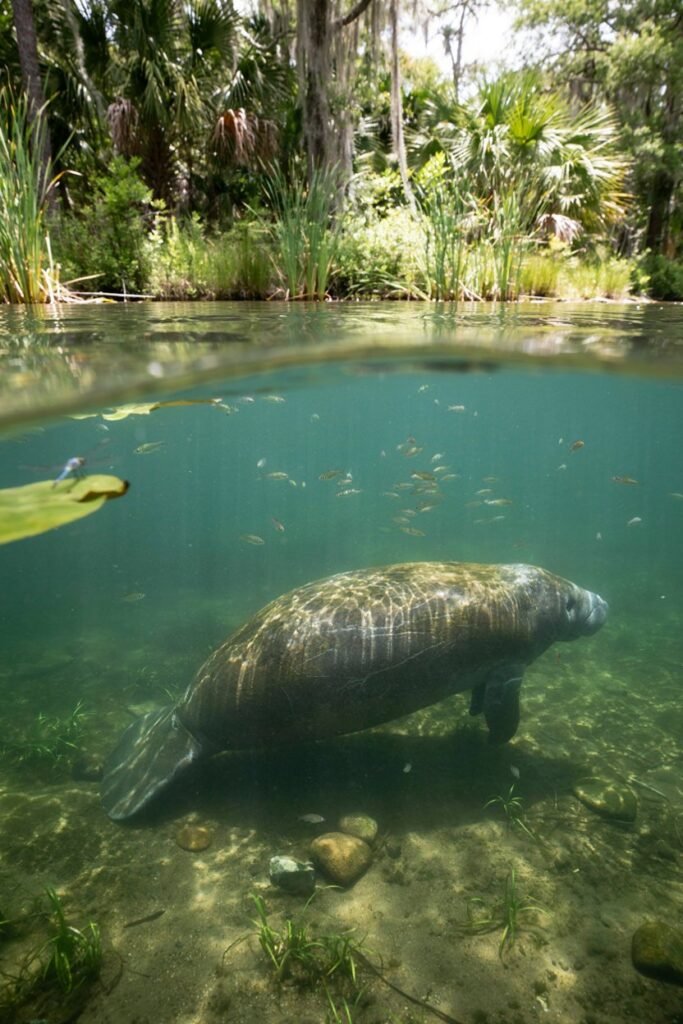
Ellie Schiller Homosassa Springs Wildlife State Park
Homosassa Springs is a little different from some of the other places on this list because it combines opportunities to learn about native Florida wildlife with wildlife ambassadors that cannot survive independently in the wild.
The park is home to wildlife ambassadors including black bears, red wolves, alligators, whooping cranes, and other animals. The natural spring also attracts fish and manatees.
One of the most interesting features is the Underwater Observatory, where visitors can look beneath the spring’s surface and observe fish and manatees.
The park also has approximately a 1.1-mile trail where you can learn about Florida’s wildlife in an educational setting.
Good to know: Current park information says shuttle boat service is unavailable because of low water levels, so check the latest conditions before visiting.
7. St. Marks National Wildlife Refuge
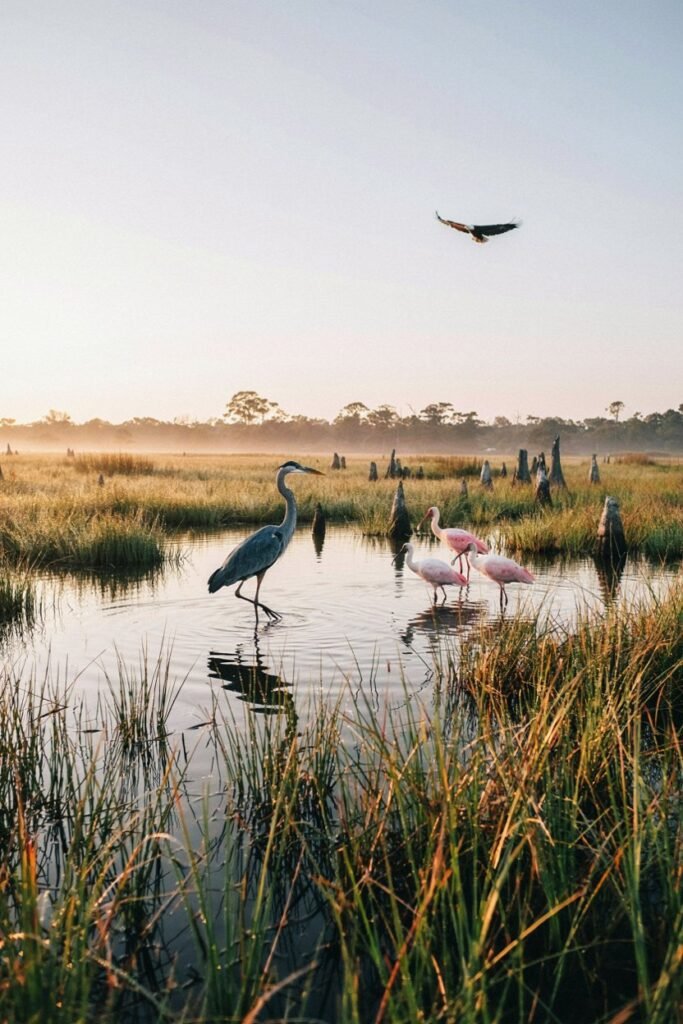
St. Marks National Wildlife Refuge
For bird lovers, St. Marks National Wildlife Refuge is another Florida destination worth adding to your list.
The refuge is about 25 miles south of Tallahassee and protects a fascinating mixture of coastal and wetland habitats. The refuge lists hundreds of bird species along with dozens of mammal and amphibian/reptile species.
One of the easiest ways to begin exploring is by driving along Lighthouse Road. You can stop at appropriate viewing areas, walk sections of the refuge, and spend time scanning the wetlands.
The refuge is open during daylight hours, with the Lighthouse Road gate opening early in the morning.
Bring:
- Binoculars
- Camera with a zoom lens
- Water
- Sun protection
- Comfortable walking shoes
- Insect repellent
Tip: Fall, winter, and early spring are generally more comfortable seasons for exploring the refuge.
8. Corkscrew Swamp Sanctuary
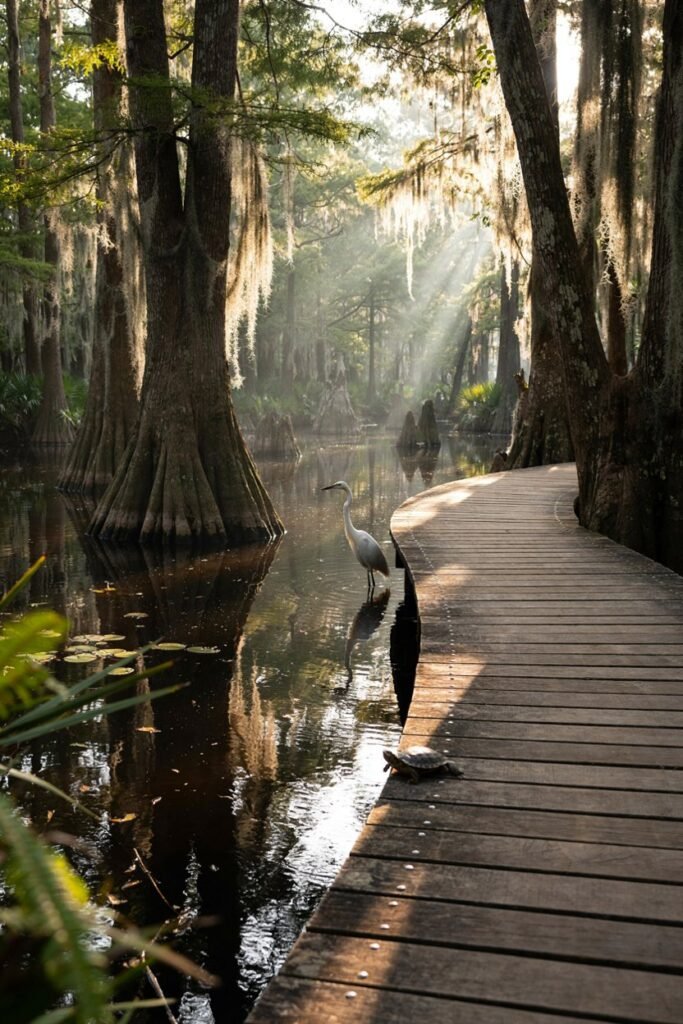
Corkscrew Swamp Sanctuary
Corkscrew Swamp Sanctuary is the kind of place I would choose when I want a peaceful walk surrounded by Florida’s natural landscape.
The boardwalk experience is a major attraction because it allows visitors to move through wetlands without disturbing the fragile habitat beneath them.
Keep your eyes open for wading birds, turtles, alligators, otters, and other animals that use the swamp ecosystem.
This is also a beautiful place for photography because the landscape changes constantly with the light, water levels, vegetation, and seasons.
Wildlife tip: Don’t spend the entire walk looking straight ahead. Look into the trees, scan the water, and listen for bird calls.
9. Fakahatchee Strand Preserve State Park
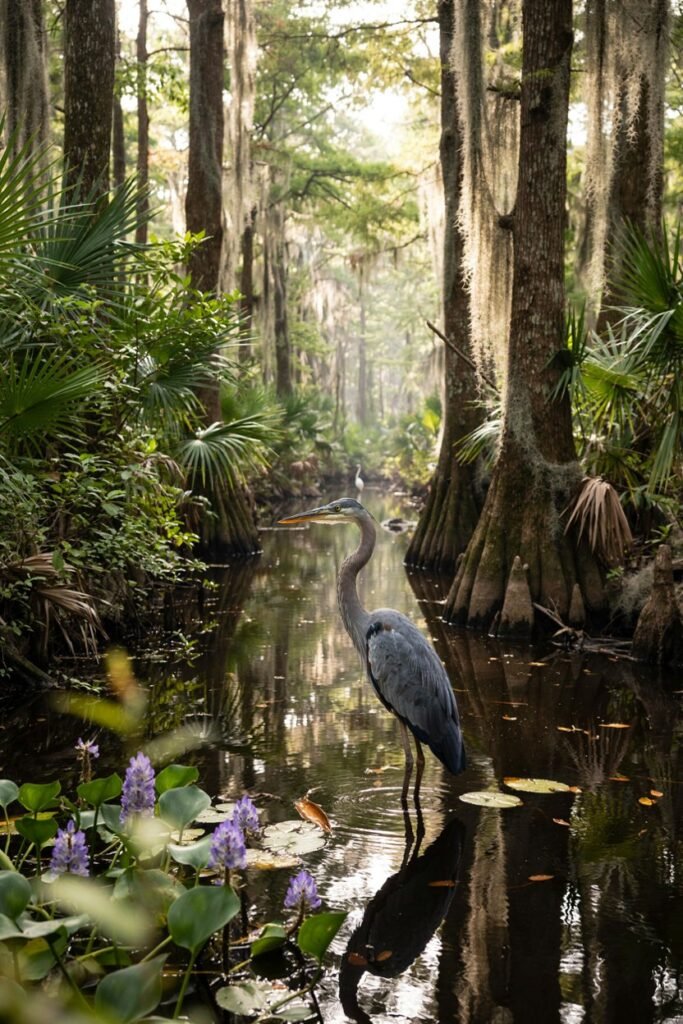
Fakahatchee Strand Preserve State Park
Fakahatchee Strand is often described as one of Florida’s wildest landscapes, and it is a wonderful choice if you want something that feels more remote.
The preserve contains swamps, cypress forests, wetlands, and dense vegetation that provide habitat for many species.
Wildlife watchers may encounter birds, turtles, alligators, snakes, deer, and other animals.
The preserve is also particularly interesting for anyone who loves orchids and native plants. Rather than expecting constant animal sightings, I recommend treating the entire environment as part of the experience.
My tip: Wear comfortable shoes that you don’t mind getting dirty, carry plenty of water, and check conditions before setting out.
10. Big Cypress National Preserve
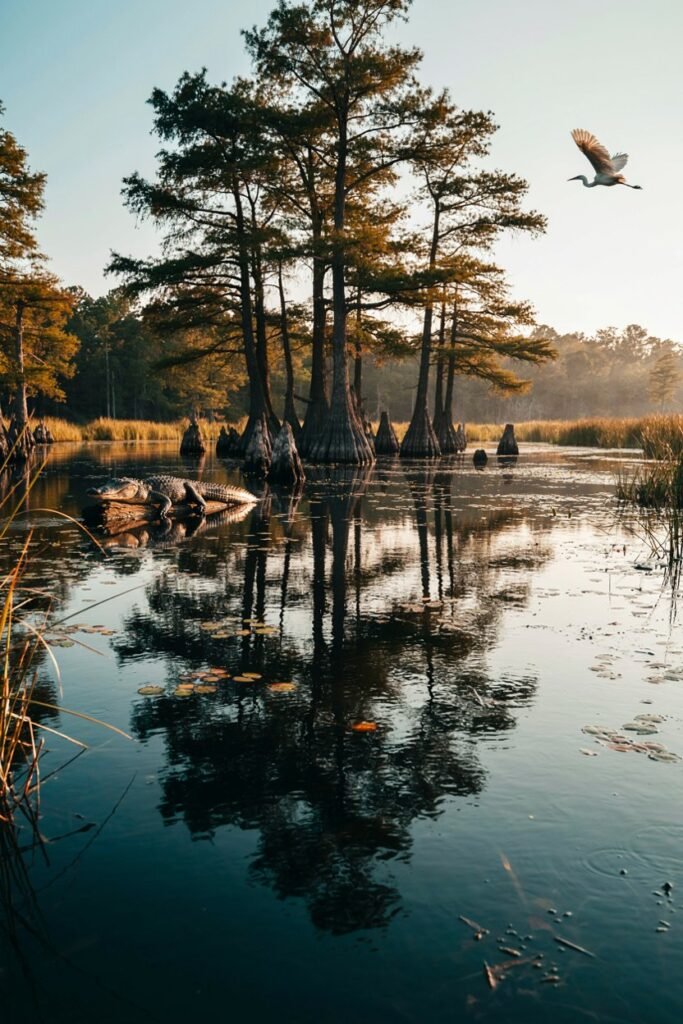
Big Cypress National Preserve
Big Cypress National Preserve sits next to the Everglades and protects an enormous freshwater swamp ecosystem.
What I love about this area is how different it can feel depending on where you explore. You can find cypress forests, wetlands, waterways, and open landscapes, all supporting different kinds of wildlife.
American alligators are one of the animals visitors often hope to see, but keep an eye out for wading birds, turtles, deer, and other wildlife too.
The preserve is also an important place to understand the connection between South Florida’s wetlands. Water moving through this region plays a major role in the wider ecosystem.
Best tip: Drive carefully and never stop your vehicle in an unsafe location simply because you spot an animal.
11. Florida Panther National Wildlife Refuge
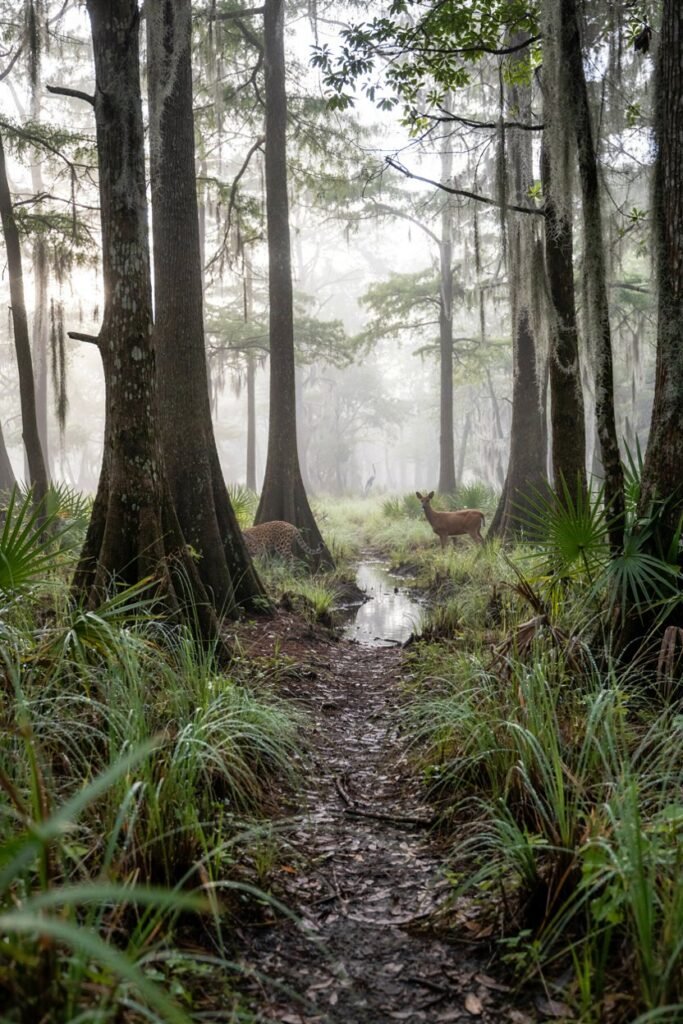
Florida Panther National Wildlife Refuge
Florida Panther National Wildlife Refuge is a particularly interesting stop for anyone fascinated by rare wildlife.
The refuge protects important habitat for the endangered Florida panther, but spotting one should not be the expectation of your visit. Panthers are elusive, and a wildlife-watching trip is much more rewarding when you appreciate the entire ecosystem rather than focusing on one animal.
You may encounter signs of wildlife without actually seeing the animal itself.
Look for birds, deer, turtles, alligators, and other species while enjoying the landscape.
Important: Stay on designated paths and follow refuge rules. When wildlife is involved, responsible observation matters just as much as getting a photograph.
12. Fort De Soto Park
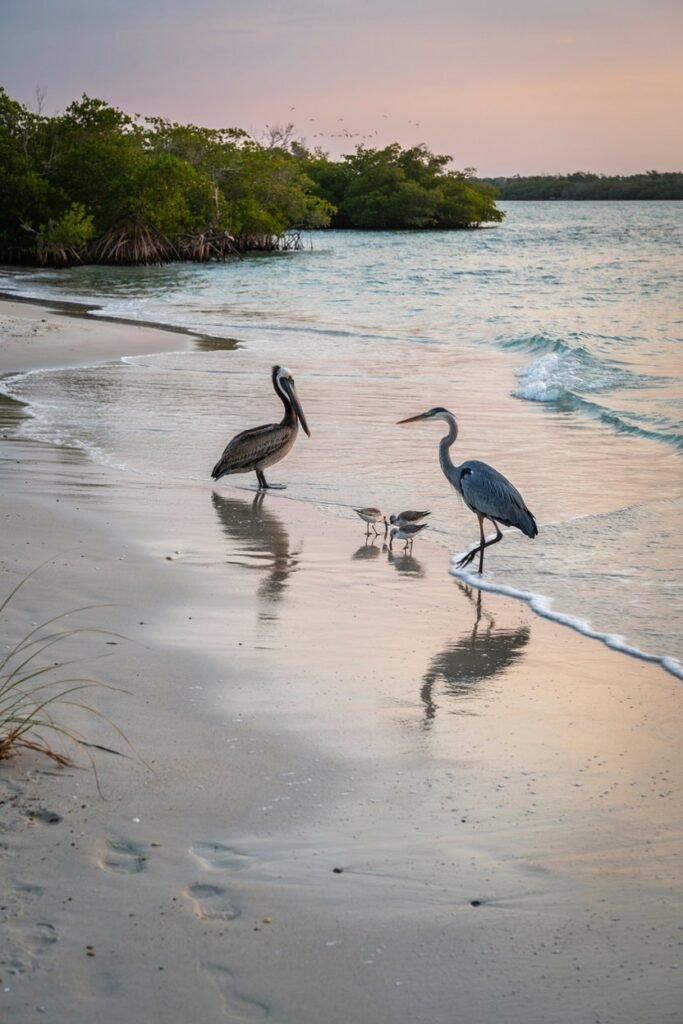
Fort De Soto Park
Fort De Soto is a great option if you want to combine a beach day with wildlife watching.
The park’s coastal environment attracts a variety of birds, especially around its beaches, mangroves, mudflats, and other natural areas.
Depending on the season and conditions, you may spot shorebirds, herons, pelicans, dolphins offshore, and other coastal wildlife.
I particularly like destinations like this because you don’t have to dedicate an entire day to serious birding. You can explore the beach, walk through natural areas, and keep your binoculars nearby.
Tip: Early morning is a lovely time to visit. The temperatures are usually more comfortable, and the softer light is much better for photography.
13. Crystal River Preserve State Park
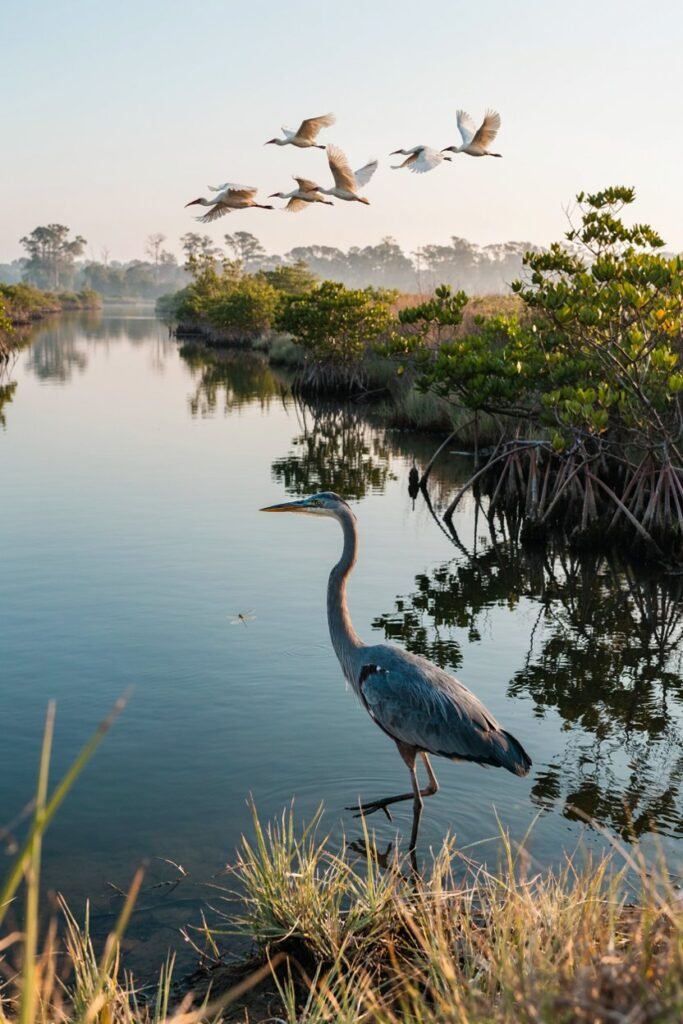
Crystal River Preserve State Park
If you’re already visiting Crystal River to see manatees, I would consider adding Crystal River Preserve State Park to your itinerary.
The preserve protects more than 27,500 acres of scrub, pinewoods, hardwood forests, salt marshes, and mangrove islands. It is also an important estuary where freshwater and saltwater ecosystems meet.
The park is a good choice for hiking, paddling, and bird watching.
Its Eco-walk Trail is a two-mile loop that passes through wet prairie and swamp-edge habitat. During spring and fall migrations, visitors may see birds and hawks, while deer, turkeys, and wading birds can also be found in the area.
My tip: Bring binoculars even if birding isn’t your main goal. You may be surprised by how much wildlife you notice once you slow down.
Tips for Wildlife Watching in Florida
Wildlife watching isn’t really about checking animals off a list. The best experiences usually happen when you give yourself enough time to observe quietly.
Here are a few things I always recommend keeping in mind.
Go early
Early morning is often one of the best times to explore. Temperatures can be more comfortable, there may be fewer visitors, and animals can be more active.
Bring binoculars
You don’t need expensive professional equipment. A simple pair of binoculars can completely change your experience, especially when birds or animals are far away.
Don’t approach wildlife
This is probably the most important rule.
Never chase an animal because you want a better photograph. Don’t feed wildlife, and don’t try to touch wild animals.
A good wildlife photograph is one where the animal can continue behaving naturally.
Wear comfortable clothing
Florida can be hot, humid, sunny, and buggy. Lightweight clothing, comfortable shoes, sunscreen, insect repellent, and plenty of water can make a huge difference.
Check conditions before visiting
Wildlife areas sometimes have temporary trail closures, changing water conditions, seasonal restrictions, weather-related closures, or altered services.
For example, Merritt Island National Wildlife Refuge notes that access can occasionally be restricted because of Kennedy Space Center launch operations.
Always check the official park or refuge website before leaving.
Don’t forget your camera but watch with your eyes too
I love taking photographs, but sometimes I think it’s even more important to put the camera down.
A bald eagle flying overhead, an alligator quietly slipping into the water, or a manatee surfacing beside you can be a moment you remember long after the trip.
When Is the Best Time to Go Wildlife Watching in Florida?
The answer depends on what you want to see.
For manatees: Winter is especially popular around Crystal River, with the main manatee season running from November 15 through March 31 at Crystal River National Wildlife Refuge.
For birding: Cooler months are generally comfortable and can bring migratory birds to many areas. Merritt Island National Wildlife Refuge specifically identifies November through April as generally strong months for birding.
For comfortable hiking: Fall, winter, and spring can be easier than Florida’s hottest summer months.
That said, Florida wildlife doesn’t disappear in summer. You simply need to prepare for heat, humidity, insects, and afternoon storms.
What to Pack for a Florida Wildlife-Watching Trip
You don’t need a huge backpack, but a few items can make your day much easier.
- Binoculars
- Reusable water bottle
- Sunscreen
- Insect repellent
- Comfortable walking shoes
- Lightweight clothing
- Hat
- Sunglasses
- Camera
- Portable phone charger
- Small backpack
- Trail map or park map
- Light rain jacket
If you’re visiting wetlands or spending several hours outside, I would rather carry a little extra water than realize halfway through the day that I didn’t bring enough.
Final Thoughts
Florida has a side that is easy to miss if you only visit its famous beaches and attractions.
From wild horses and bison at Paynes Prairie to manatees in Crystal River and hundreds of bird species at places like Merritt Island and St. Marks, the state offers an incredible variety of wildlife experiences.
What I love most is that you don’t have to be an expert birder or serious photographer to enjoy them. Sometimes all you need is a pair of binoculars, comfortable shoes, a little patience, and a willingness to slow down.
And honestly, that’s often when Florida feels the most magical to me.