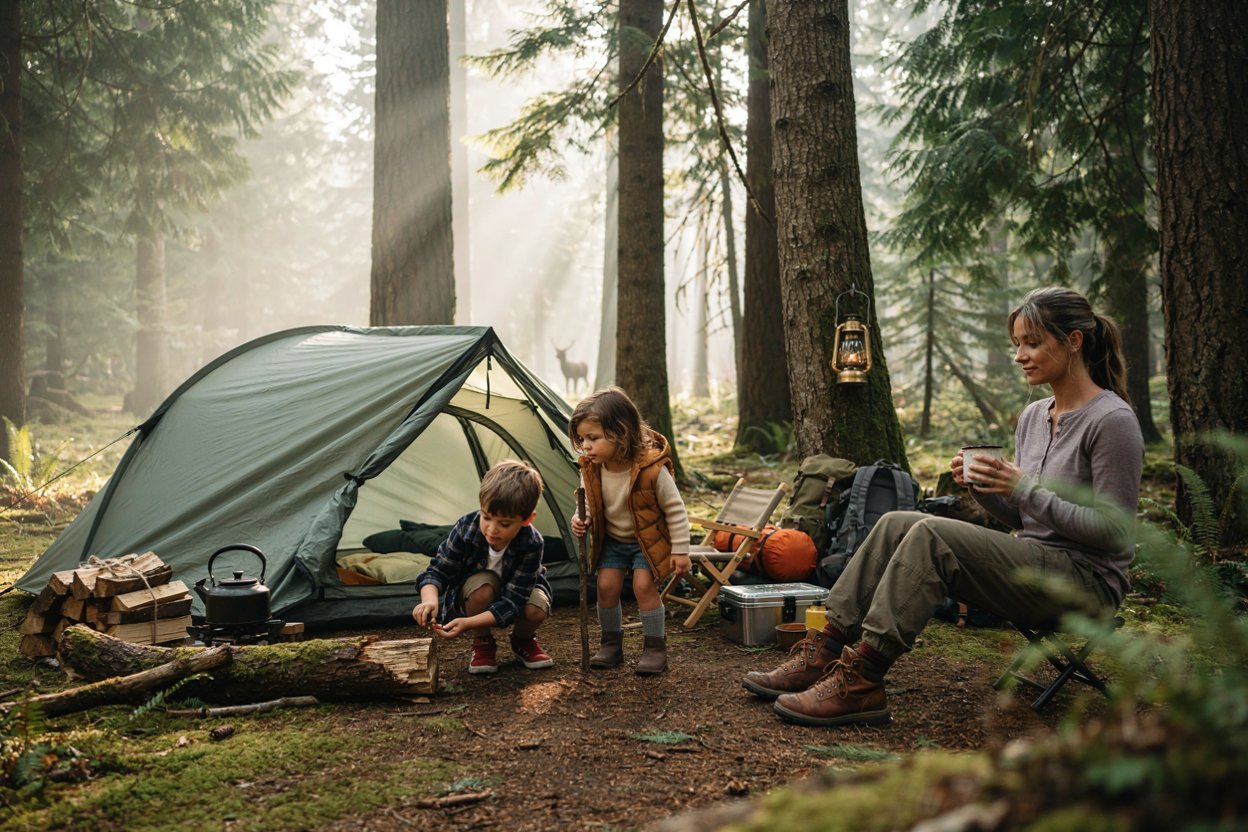

Camping with kids can be one of those trips that looks simple until you start packing. I learned that bringing too much can be just as stressful as forgetting something important.
After a few family camping trips, I realized that the secret is having the right essentials, keeping everything organized, and leaving room for a little spontaneity.
With this guide, I’ll share the family camping packing list and practical tips I wish I had known sooner.
Why Camping With Kids Is Worth It
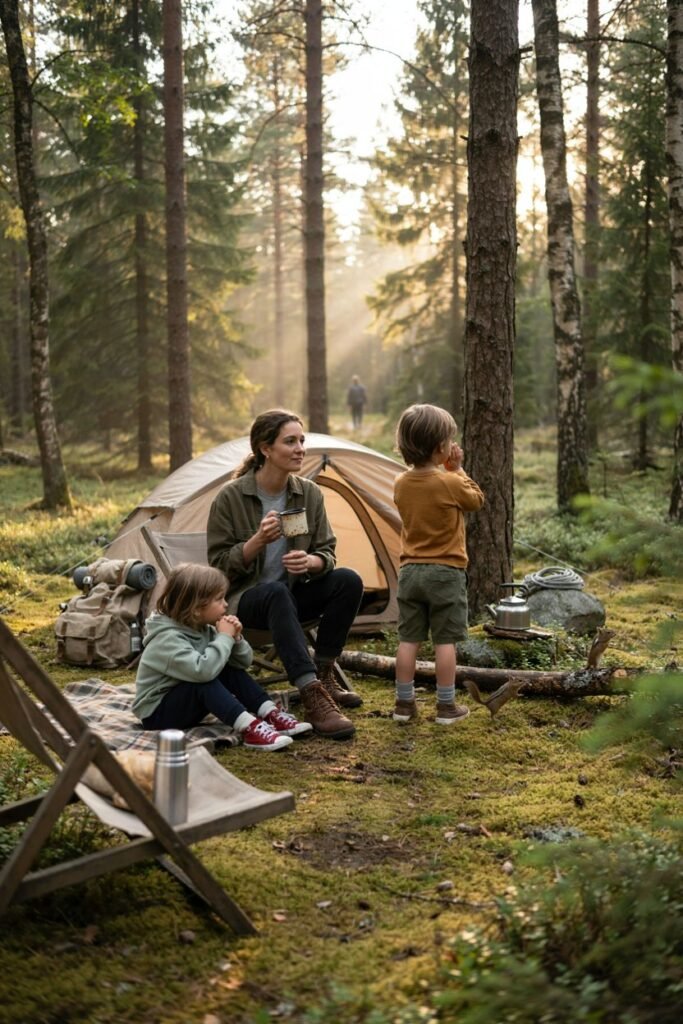
Camping gives families a chance to slow down and spend real time together.
Instead of everyone being distracted by screens, you can spend the day hiking, swimming, exploring, telling stories, playing games, and sitting around the campfire.
Kids also get the opportunity to experience nature in a way that is difficult to recreate at home.
Of course, camping with children requires more preparation than camping alone or with adults. Younger children need extra clothing, snacks, entertainment, and comfort items.
Weather can also change quickly, and something as simple as a wet pair of socks can turn into a very unhappy afternoon.
That does not mean you need to pack your entire house.
The goal is to pack smart rather than pack everything.
A good camping setup should make your trip easier, not create more work.
Camping With Kids Packing List
Before you start packing, divide everything into categories. This makes it much easier to see what you actually need.
Here are the main categories I recommend:
- Shelter and sleeping gear
- Clothing
- Food and cooking supplies
- Toiletries
- Safety and first-aid supplies
- Outdoor gear
- Entertainment
- Baby and toddler essentials
- Camp organization items
- Emergency supplies
Let’s go through each one.
1. Tent and Shelter
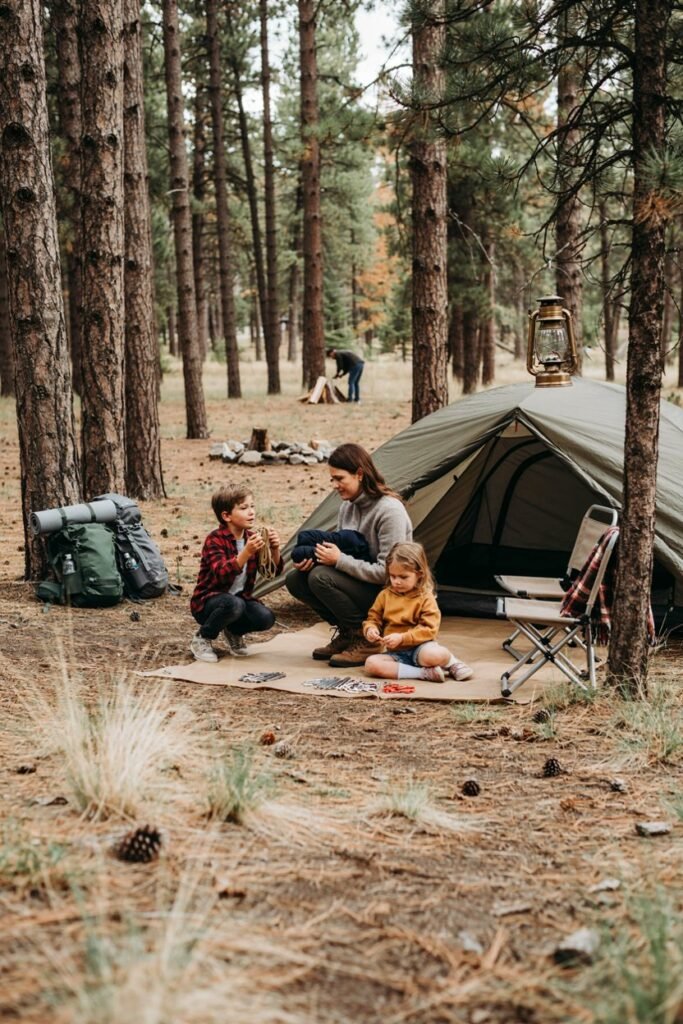
Your tent is obviously one of the most important things to bring.
When camping with kids, I prefer having a little more space than we technically need. A cramped tent can make nighttime much harder, especially if you have young children moving around.
Pack:
- Family-size tent
- Tent rainfly
- Tent footprint or groundsheet
- Tent stakes
- Mallet
- Extra tent stakes
- Sleeping bags
- Sleeping pads or camping mattresses
- Pillows
- Blankets
- Small camping fan if appropriate
- Headlamps
- Tent storage bags
Before your trip, practice putting the tent up at home if it is new.
This might sound unnecessary, but it can save you a lot of frustration at the campsite.
The first time you want to figure out how a tent works should not be after driving several hours with tired children.
2. Sleeping Essentials for Kids
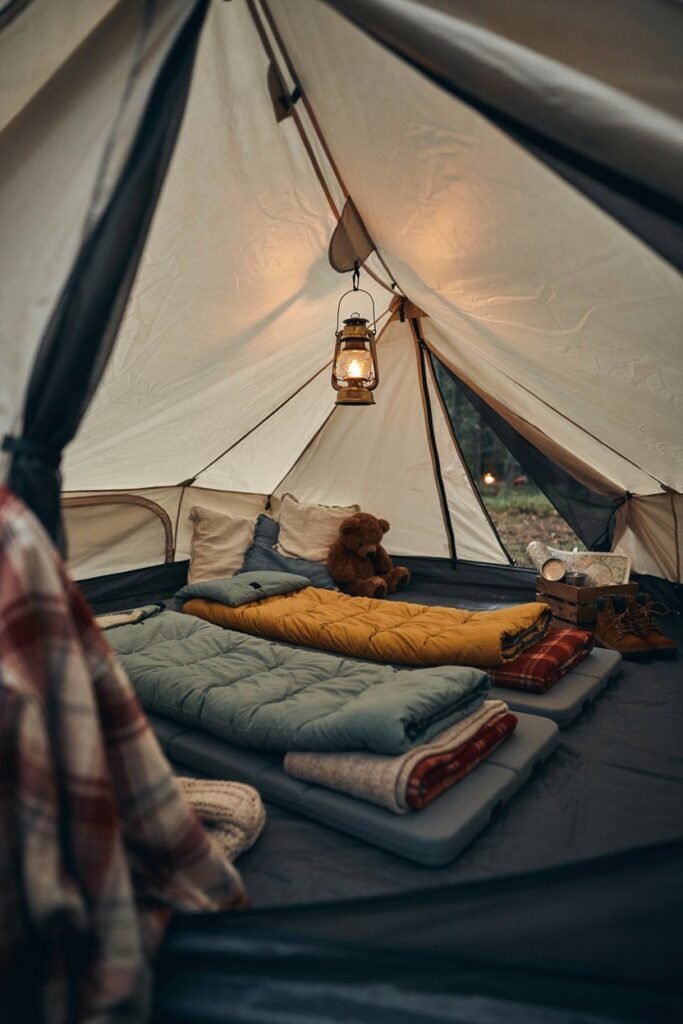
Sleeping comfortably can make or break a family camping trip.
Children can become uncomfortable quickly when they are cold, too hot, or sleeping on an unfamiliar surface.
For each child, consider packing:
- Sleeping bag suitable for the expected temperature
- Small pillow
- Sleeping pad
- Favorite blanket
- Familiar stuffed animal
- Pajamas
- Warm socks
- Comfortable sleep clothes
- Extra blanket
If your child normally sleeps with a favorite blanket or stuffed animal, bring it.
Camping is already a new environment. Having something familiar can make bedtime much easier.
A helpful tip
Do not assume that nighttime temperatures will feel the same as daytime temperatures.
Check the forecast before leaving and pack layers that allow you to adjust easily.
3. Clothing: Pack for Changing Weather
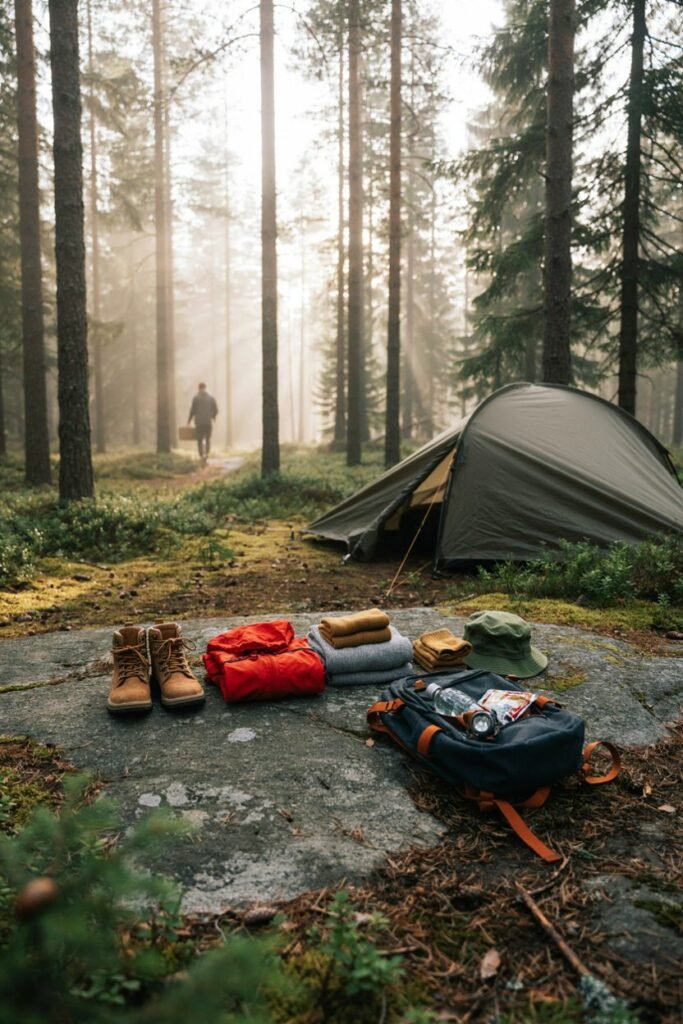
One of my biggest camping lessons is that kids can go through clothes surprisingly quickly.
A shirt that was clean in the morning can be covered in dirt, food, or mud by lunchtime.
Instead of packing one outfit per day, I recommend bringing a few extra basics.
For each child:
- T-shirts
- Long-sleeve shirts
- Shorts
- Long pants
- Underwear
- Socks
- Pajamas
- Hoodie or fleece
- Light jacket
- Waterproof jacket
- Comfortable walking shoes
- Extra shoes
- Sandals
- Hat
- Swimwear if needed
Don’t forget extra socks
This deserves its own reminder.
Bring more socks than you think you need.
Wet socks can make children uncomfortable very quickly, especially when temperatures drop.
I like keeping spare socks in a waterproof bag so they stay completely dry.
4. Weather Protection
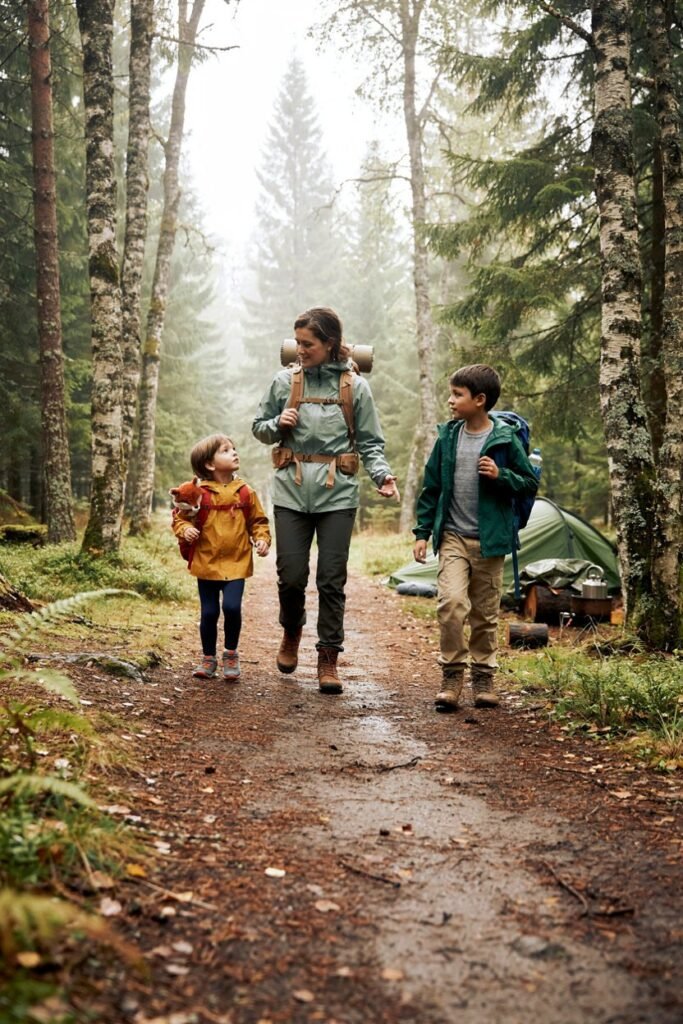
Outdoor weather can change quickly, so make sure your children are prepared.
Depending on the destination and season, pack:
- Sunscreen
- Sun hats
- Sunglasses
- Rain jackets
- Waterproof pants
- Warm layers
- Gloves
- Beanies
- Insect repellent
- Lip balm
- Lightweight blankets
For hot-weather camping, pay particular attention to shade and hydration.
For cooler camping, think in layers rather than bringing one extremely heavy item.
Layers make it easier to adjust throughout the day.
5. Food and Snacks
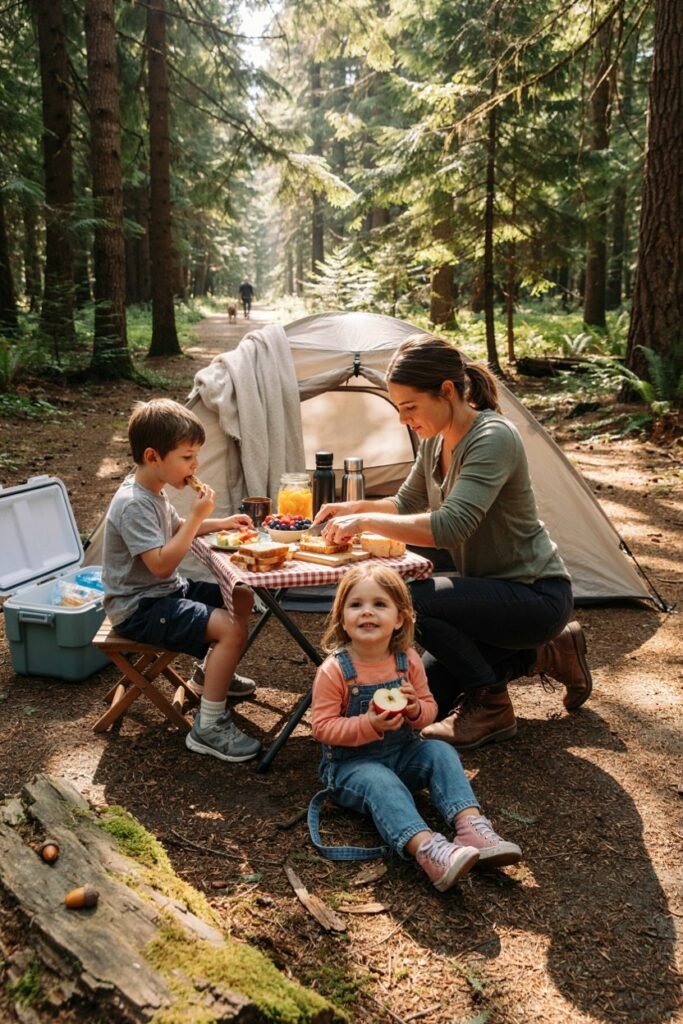
Hungry children are not always patient campers.
I recommend bringing more snacks than you would normally pack for a regular day out.
Good camping snacks include:
- Granola bars
- Crackers
- Fresh fruit
- Dried fruit
- Applesauce pouches
- Sandwiches
- Trail mix where age-appropriate
- Cheese
- Yogurt in a cooler
- Popcorn
- Cereal
- Nut or seed butter where appropriate
- Plenty of drinking water
Try to choose foods that are easy to eat outdoors.
You do not want to spend your entire afternoon preparing complicated meals while the children are waiting.
6. Camping Cooking Supplies
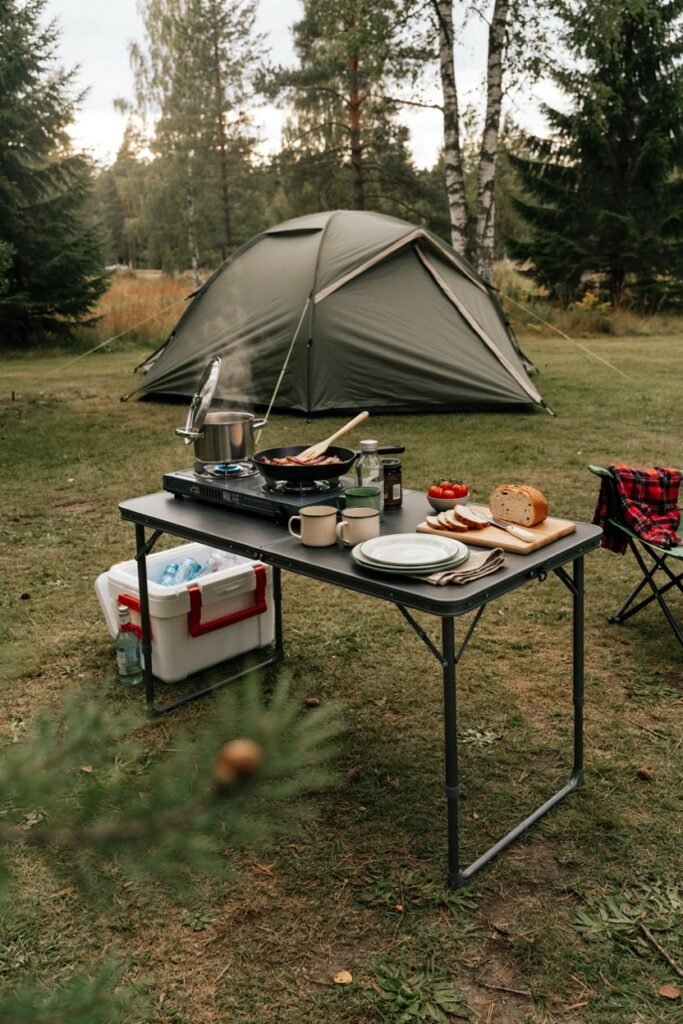
Your cooking setup will depend on the campsite and how much cooking you plan to do.
A basic family camping kitchen might include:
- Camping stove
- Fuel appropriate for the stove
- Matches or lighter kept safely away from children
- Pots and pans
- Plates
- Bowls
- Cups
- Forks and spoons
- Cooking utensils
- Cutting board
- Knife for adult use
- Can opener
- Cooler
- Ice packs
- Water containers
- Food storage containers
- Reusable food bags
- Paper towels
- Dish soap
- Sponge
- Trash bags
Keep cooking equipment organized in one container instead of scattering it around the campsite.
This makes meal preparation much easier.
7. Water and Hydration
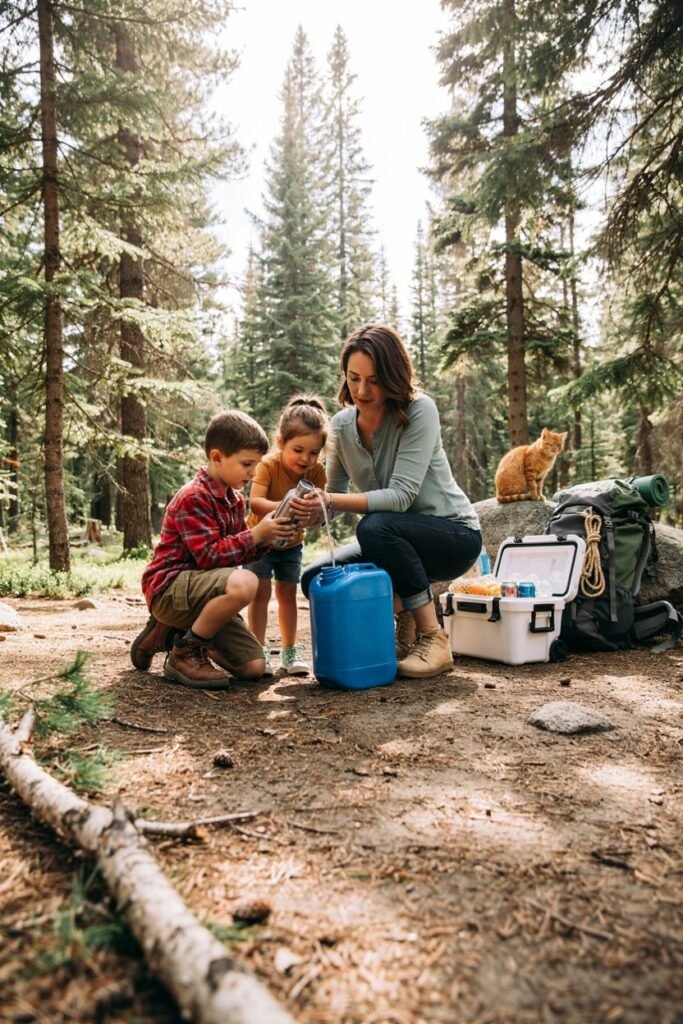
Always plan your water supply before arriving.
Some campsites have drinking water, while others may not.
Check the campsite rules and facilities before your trip.
Bring:
- Reusable water bottles
- Extra drinking water
- Water container
- Cups
- Electrolyte drinks if appropriate
- Cooler
Give each child their own labeled water bottle.
This simple trick can reduce the number of times you hear, “Where’s my water?”
8. Toiletries for Kids
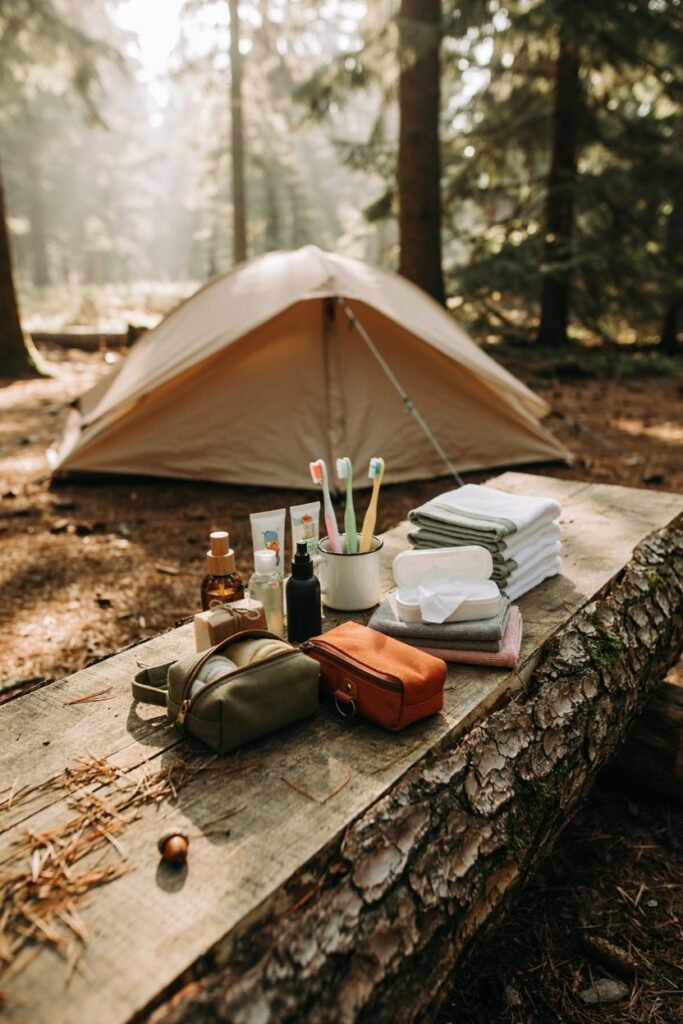
Camping does not mean you have to completely abandon your normal hygiene routine.
Pack a small toiletry bag for each child containing:
- Toothbrush
- Toothpaste
- Hairbrush
- Hair ties
- Soap
- Shampoo if showers are available
- Hand sanitizer
- Wet wipes
- Toilet paper
- Tissues
- Washcloth
- Quick-dry towel
Wet wipes are especially useful when you are camping somewhere without easy access to showers.
They are also helpful for cleaning muddy hands and faces before meals.
9. First-Aid Kit
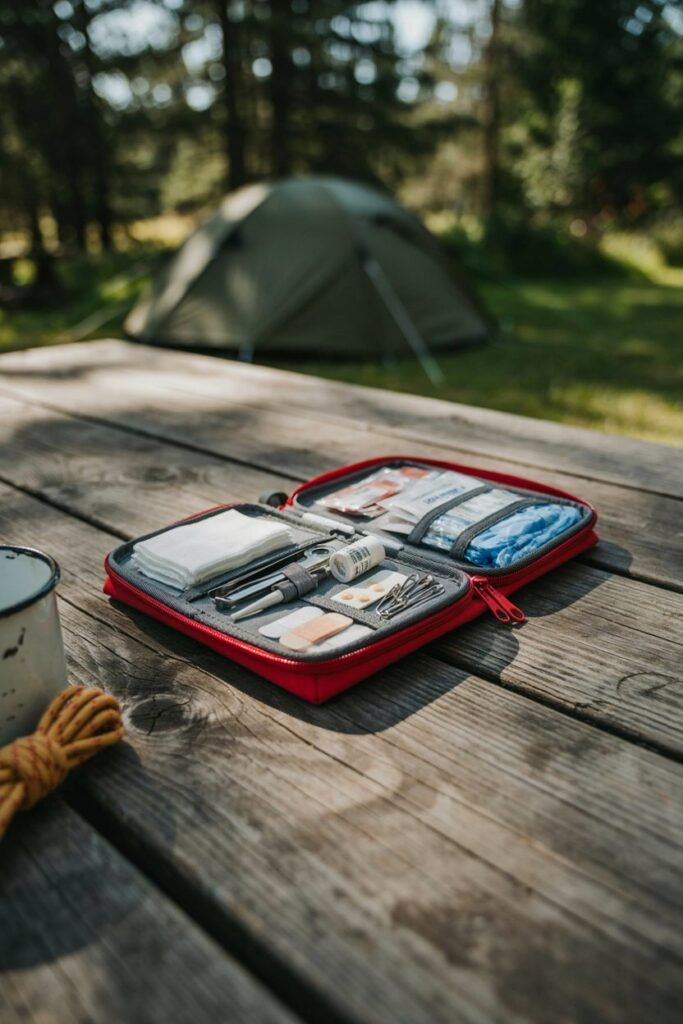
A family camping first-aid kit should always be easy to reach.
Consider packing:
- Adhesive bandages
- Gauze
- Medical tape
- Antiseptic wipes
- Tweezers
- Small scissors
- Instant cold pack
- Disposable gloves
- Thermometer
- Blister care supplies
- Any regularly needed personal medications
- Emergency contact information
Make sure adults know where the first-aid kit is.
Do not bury it at the bottom of a large storage box.
10. Bug Protection
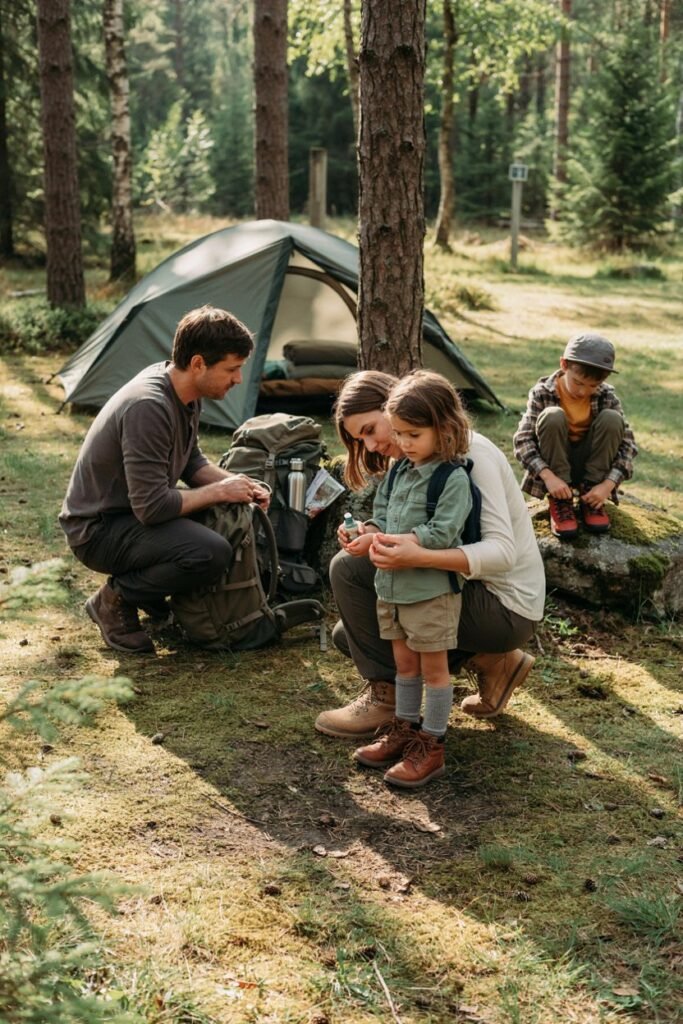
Depending on where you camp, insects can become a major part of the experience.
Pack appropriate insect protection for the area and follow the product’s directions carefully.
You may also want:
- Insect repellent
- Long-sleeve shirts
- Lightweight pants
- Mosquito netting where appropriate
- After-bite treatment
- Closed-toe shoes
Try to keep food covered and clean up crumbs around the campsite.
A tidy campsite is generally much easier to manage.
11. Outdoor Gear for Kids
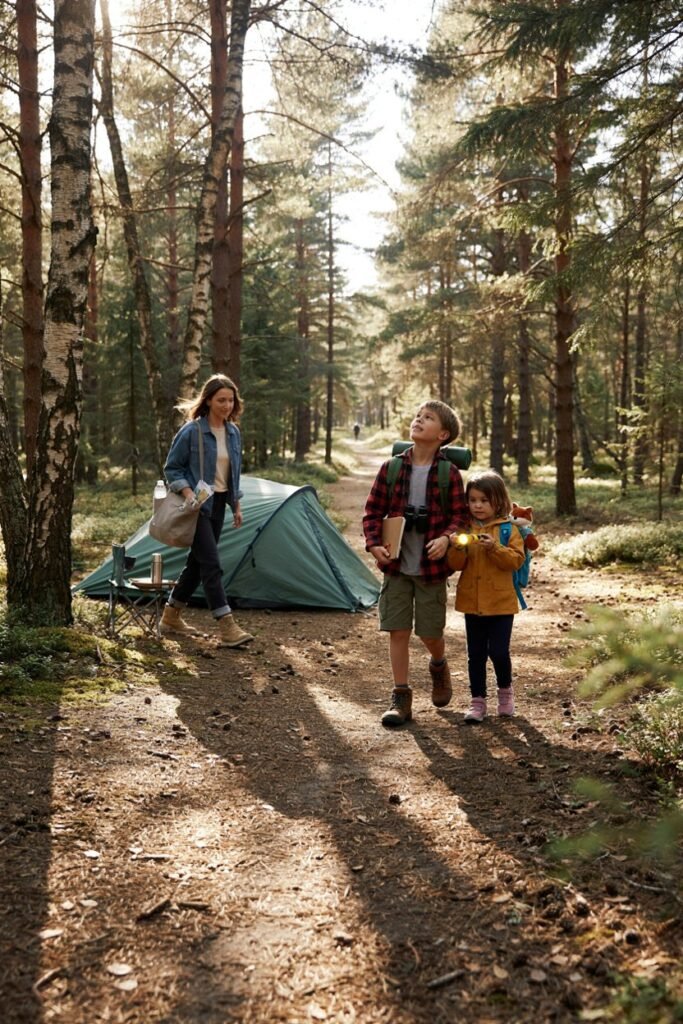
Children do not need expensive equipment to enjoy camping.
Simple gear is often enough.
Consider:
- Small backpack
- Water bottle
- Child-friendly binoculars
- Flashlight
- Headlamp
- Nature journal
- Magnifying glass
- Comfortable walking shoes
- Swim gear
- Small camping chair
- Life jacket where needed
- Hiking poles for older children if appropriate
Let children carry a small backpack with a few of their own belongings.
It can make them feel involved in preparing for the adventure.
12. Entertainment and Camping Activities
You do not need to pack a suitcase full of toys.
Nature provides plenty of entertainment.
Some simple ideas include:
- Card games
- Coloring books
- Drawing supplies
- Storybooks
- Nature scavenger hunts
- Bird watching
- Stargazing
- Rock spotting
- Leaf collecting
- Simple board games
- Frisbee
- Ball
- Bubbles
- Nature journal
One of my favorite ideas is creating a simple camping scavenger hunt.
Give the kids a list of things to look for, such as:
- A pinecone
- A bird
- A yellow flower
- A smooth rock
- A butterfly
- Animal tracks
It gives them something fun to focus on while exploring.
13. Baby and Toddler Camping Essentials
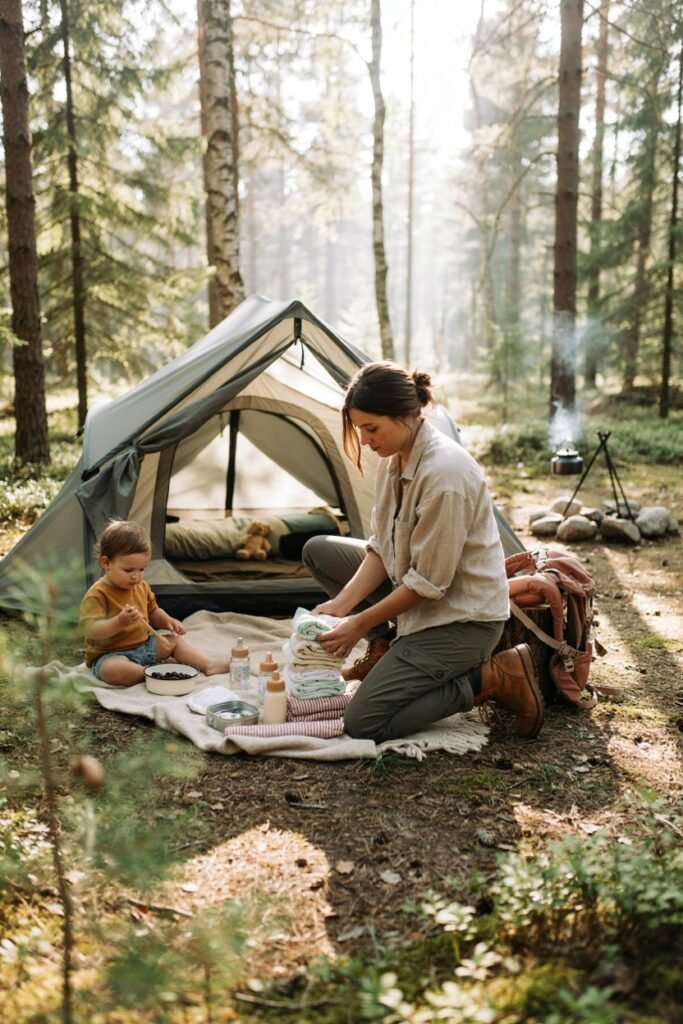
Camping with a baby or toddler requires a little extra planning.
Depending on your child’s age and needs, you may need:
- Diapers
- Wipes
- Changing mat
- Diaper bags
- Extra clothes
- Warm layers
- Sun protection
- Baby carrier
- Familiar sleeping items
- Bottles
- Formula or feeding supplies
- Baby food
- Bibs
- Pacifiers
- Portable changing supplies
- Comfort toys
Pack more diapers and wipes than you think you’ll need.
Outdoor trips can create unexpected delays, and running out of basic baby supplies is something you want to avoid.
14. Camp Organization Supplies
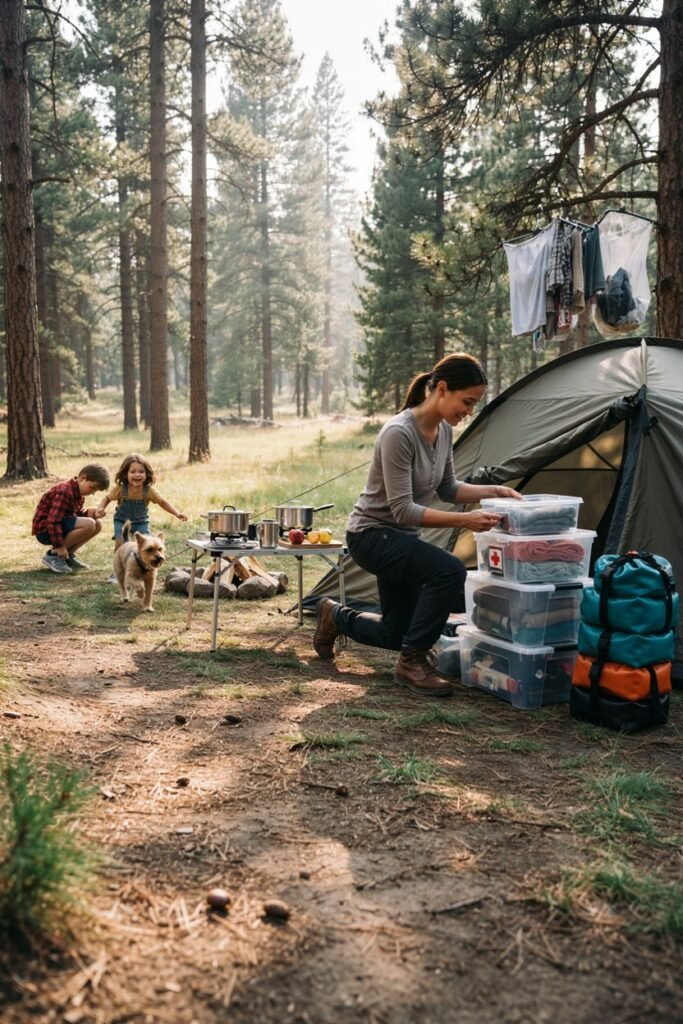
Organization might not sound exciting, but it can make family camping much less stressful.
I recommend bringing:
- Plastic storage bins
- Zip bags
- Waterproof bags
- Laundry bag
- Hanging organizer
- Small trash bags
- Labels
- Rope or clothesline
- Carabiners
- Extra reusable bags
Use separate containers for different categories.
For example:
Bin 1: Cooking
Bin 2: Clothing
Bin 3: Toiletries
Bin 4: Outdoor activities
Bin 5: Emergency and safety supplies
This makes finding things much easier.
15. The Family Camping Checklist
Here is a simple checklist you can save before your trip.
Shelter
- Tent
- Rainfly
- Groundsheet
- Tent stakes
- Sleeping bags
- Sleeping pads
- Pillows
- Blankets
Clothing
- Shirts
- Pants
- Shorts
- Underwear
- Socks
- Pajamas
- Jacket
- Rain gear
- Walking shoes
- Extra shoes
- Hat
Food
- Snacks
- Meals
- Water
- Cooler
- Ice packs
- Cooking equipment
- Plates
- Cups
- Utensils
- Food storage bags
Toiletries
- Toothbrushes
- Toothpaste
- Soap
- Towels
- Wet wipes
- Toilet paper
- Hand sanitizer
Safety
- First-aid kit
- Flashlights
- Headlamps
- Extra batteries
- Emergency contacts
- Necessary medications
- Sunscreen
- Insect protection
Fun
- Books
- Games
- Coloring supplies
- Binoculars
- Nature journal
- Outdoor toys
Tips for Stress-Free Family Camping
Packing correctly is only half the battle.
How you plan the trip can make an even bigger difference.
1. Choose an Easy Campsite for Your First Trip
If this is your family’s first camping trip, do not feel like you need to disappear deep into the wilderness.
Start somewhere relatively easy.
A campground with:
- Toilets
- Drinking water
- Defined campsites
- Nearby activities
- Reasonable road access
can make your first experience much easier.
Once your family becomes more comfortable with camping, you can gradually try more adventurous locations.
2. Arrive Before Dark
This is one of my strongest camping tips.
Try to arrive with plenty of daylight left.
Setting up a tent in the dark while children are tired is not how you want to begin your weekend.
Arriving early gives you time to:
- Set up the tent
- Organize sleeping areas
- Prepare food
- Locate bathrooms
- Let the kids explore safely
- Get everyone settled
It also gives you time to deal with anything unexpected.
3. Let the Kids Help
Children do not need to sit around while adults do everything.
Give them simple jobs.
For example:
- Carrying their small backpack
- Choosing where to put their sleeping bag
- Helping collect safe camping items
- Organizing books
- Checking off the packing list
- Helping prepare simple meals with adult supervision
It makes the trip feel like a family adventure instead of something being done for them.
4. Keep the First Day Simple
Do not plan six activities for your arrival day.
You will probably be tired from driving, unpacking, and setting up camp.
Instead, keep the first afternoon simple.
Set up camp, have a snack, explore nearby, prepare dinner, and enjoy the evening.
You can save bigger activities for the following day.
5. Bring Familiar Foods
Camping is not always the best time to introduce five completely new meals.
Children may be tired, excited, or simply unwilling to eat something unfamiliar.
Bring a few foods you already know they enjoy.
A familiar breakfast can make the morning much easier.
6. Prepare for Mess
Kids and camping naturally create mess.
There will probably be dirt.
There may be muddy shoes.
Someone might spill a drink.
That is part of the experience.
Instead of trying to keep everything perfectly clean, bring supplies that make cleanup easy.
Keep a small cleaning kit nearby with:
- Wet wipes
- Paper towels
- Trash bags
- Extra clothes
- Hand sanitizer
- Small towel
7. Have a Rain Plan
Never assume your camping trip will stay sunny.
Check the forecast before leaving, but still prepare for rain.
Bring:
- Waterproof jackets
- Waterproof bags
- Extra clothes
- Indoor games
- Books
- Extra towels
- Tent rainfly
If rain is expected throughout the trip, think carefully about whether the campsite is appropriate for your family’s experience level.
8. Create a Simple Camp Routine
Children often do better when they know what comes next.
A simple routine could look like:
Morning: Breakfast → brush teeth → get dressed → explore
Afternoon: Lunch → quiet time → outdoor activity
Evening: Dinner → games → cleanup → bedtime routine
You do not have to follow it perfectly.
It simply gives everyone a basic rhythm.
9. Keep Nighttime Easy
Nighttime can be challenging for children in a new environment.
Before bedtime, make sure everyone:
- Uses the bathroom
- Has water nearby
- Has warm clothes
- Has their sleeping bag ready
- Has access to a flashlight
Keep headlamps or flashlights somewhere they can be found easily.
10. Don’t Overpack
This might be the hardest advice to follow.
When camping with children, it is tempting to bring everything.
But too much gear can make the trip harder.
Ask yourself:
Will we actually use this?
If the answer is probably not, leave it at home.
Focus on the essentials first.
11. Pack One “Just in Case” Bag
I like having one small bag for unexpected situations.
Put things inside such as:
- Extra clothes
- Extra socks
- Extra snacks
- Rain jacket
- Wet wipes
- Plastic bags
- Small towel
Keep this bag somewhere easy to reach.
You will appreciate it when someone suddenly gets soaked or covered in mud.
12. Teach Basic Camping Safety
Before your trip, explain simple rules to children.
Depending on your campsite, teach them:
- Stay within the agreed boundaries
- Do not wander away alone
- Never touch unknown plants or animals
- Stay away from cooking equipment
- Never approach wildlife
- Tell an adult if they get lost or feel unsafe
- Ask before picking up objects
Keep safety instructions simple and age-appropriate.
13. Check the Campsite Rules Before Leaving
Every campsite can be different.
Before your trip, check:
- Check-in time
- Quiet hours
- Fire rules
- Pet rules
- Bathroom facilities
- Drinking water availability
- Food storage rules
- Trash disposal
- Parking
- Swimming areas
- Hiking trails
Knowing these details beforehand can prevent unpleasant surprises.
14. Keep Important Things Accessible
Do not put everything inside the deepest storage box.
Keep frequently used items where you can reach them.
For example:
Easy access bag:
- Sunscreen
- Water
- Snacks
- Wet wipes
- First-aid kit
- Flashlights
- Extra layers
You do not want to unpack half your car just to find sunscreen.
15. Give Yourself Extra Time
Family camping rarely goes exactly according to schedule.
Someone needs the bathroom.
Someone loses a shoe.
Someone wants another snack.
Someone suddenly decides they absolutely cannot live without their favorite toy.
Build extra time into your plans.
A relaxed schedule is much more enjoyable than constantly rushing.
What Not to Pack for Family Camping
Sometimes knowing what to leave behind is just as useful as knowing what to bring.
Avoid bringing:
Too many toys
Nature is the main entertainment.
Too many clothes
Bring enough for changing weather and accidents, but do not bring an entire wardrobe.
Complicated cooking equipment
Simple meals are usually easier.
Fragile items
Camping involves dirt, movement, and outdoor activities.
Unnecessary electronics
A phone for emergencies and practical needs is useful, but children do not need a suitcase full of devices to enjoy camping.
How to Make Camping More Fun for Kids
The best family camping memories are often created through small activities.
Try making a camping tradition.
For example, every camping trip could include:
- A special breakfast
- A nature scavenger hunt
- Stargazing
- A family story night
- A new hiking trail
- A favorite camping dessert
- A family photo
- A simple journal entry
These little traditions can become something your children look forward to every time you go camping.
A Simple Family Camping Meal Plan
You do not need complicated meals.
Breakfast
Choose something quick:
- Oatmeal
- Cereal
- Fruit
- Pancakes
- Breakfast sandwiches
Lunch
Keep it easy:
- Sandwiches
- Wraps
- Fruit
- Crackers
- Cheese
Dinner
Depending on your equipment:
- Pasta
- Rice bowls
- Grilled foods
- Foil packet meals
- Soup
- Simple campfire meals
Snacks
Keep snacks available throughout the day.
This is especially useful when you are hiking or exploring away from the campsite.
Final Family Camping Checklist
Before leaving home, ask yourself:
Shelter: Do we have everything needed to sleep comfortably?
Clothing: Does everyone have warm and weather-appropriate layers?
Food: Do we have enough meals, snacks, and water?
Safety: Can we quickly access the first-aid kit and emergency supplies?
Kids: Does each child have a few things that will make them comfortable and entertained?
Weather: Are we prepared for rain, cold, heat, or changing conditions?
Organization: Can we find the things we need without unpacking the entire car?
If the answer is yes, you are probably ready.
Final Thoughts
Camping with kids does not have to be perfectly organized to be memorable.
Some of the best family moments can come from the things you did not plan the muddy walk, the unexpected sunset, the funny story around the fire, or the morning when everyone wakes up to birds singing.
Pack the essentials, prepare for changing weather, keep your plans flexible, and give yourself permission to slow down. The goal is not a perfect camping trip. It is simply spending meaningful time together outdoors.