
My love affair with slot canyons started the way most good obsessions do completely by accident.
I wasn’t chasing a viral photo spot or checking a box off someone else’s bucket list.
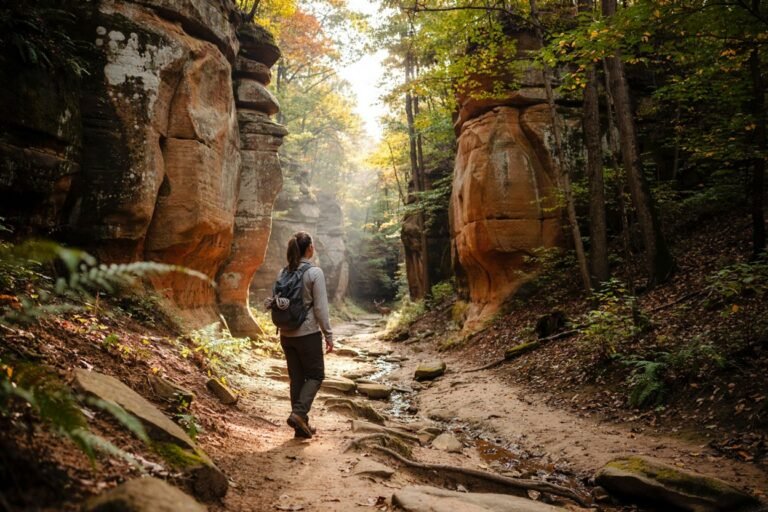
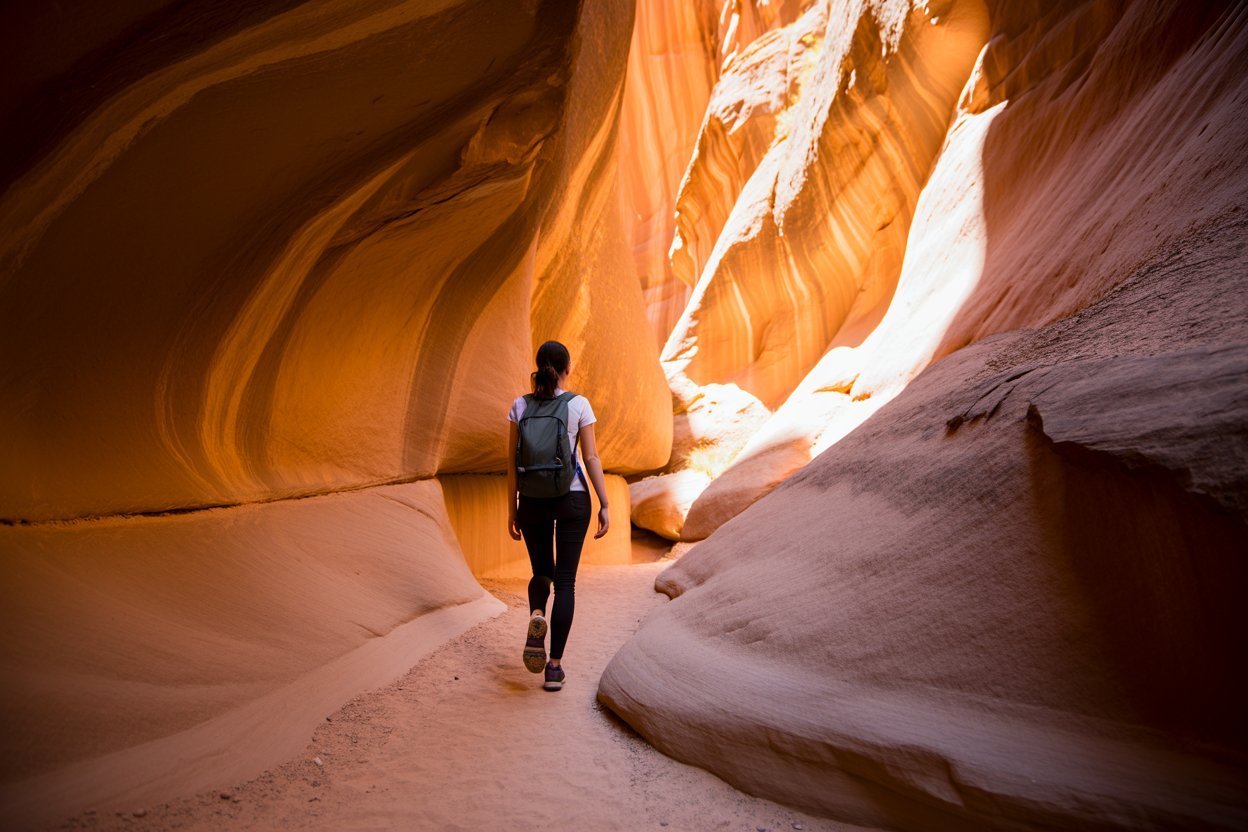
I was tired, a little lost, and squeezing sideways through a gap of pink sandstone so narrow my hips brushed both walls at once, sunlight falling in a thin gold ribbon far above my head.
I remember thinking: nobody told me the desert could feel like this. Since then, I’ve spent years seeking out the canyons that don’t make the postcards the ones you have to earn.
This guide is everything I wish someone had handed me before that first hike.
Why Hidden Canyons Deserve a Spot on Your List
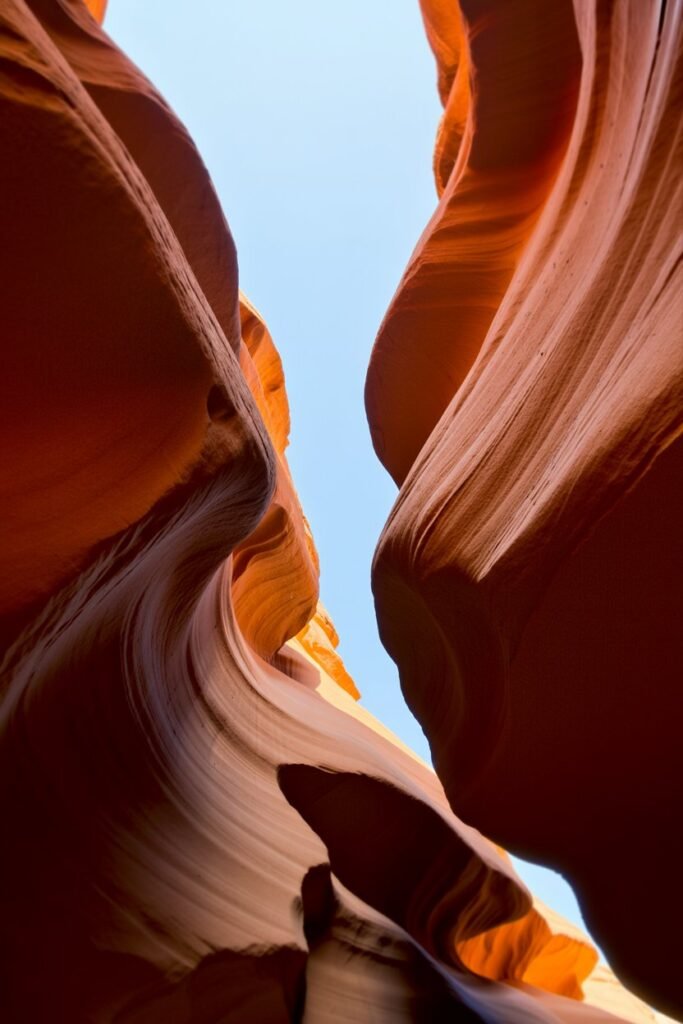
There’s something different about hiking into a slot canyon compared to almost any other kind of trail.
You’re not walking toward a view you’re walking into the landscape itself. The walls close in, the temperature drops, the light changes color as it bounces off centuries of sculpted sandstone, and for a little while, the outside world genuinely disappears.
These canyons were carved slowly, over millions of years, by flash floods rushing through soft Navajo sandstone, and every curve and scallop on the walls tells you exactly where the water has been.
They’re also, refreshingly, some of the least crowded corners of the American Southwest. While everyone else is queuing for a photo at the same three overlooks in Zion or Bryce, you can be alone in a canyon so narrow you can touch both walls with your fingertips. T
So let’s get into it: the canyons themselves, how to actually find them, what to pack, and the tips I wish I’d known before my boots hit the sand.
The Canyons
1. Hidden Canyon — Zion National Park, Utah
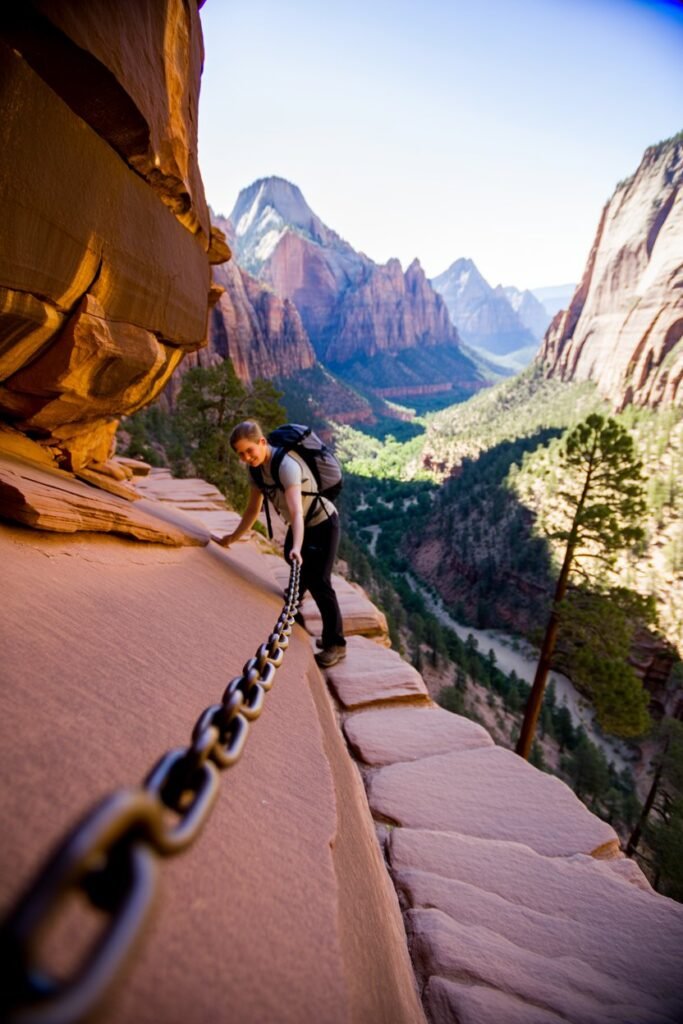
Hidden Canyon has always felt like Zion’s quiet sibling overshadowed by Angels Landing and Observation Point, but every bit as dramatic.
The trail begins at the Weeping Rock shuttle stop and climbs a set of steep, sandy switchbacks before joining the Observation Point Trail for about three-quarters of a mile.
From there, it splits off and traces a narrow ledge blasted into the cliff face, complete with chain handholds bolted into the rock to help you along the exposed sections.
It’s not a hike for anyone with a serious fear of heights, but for those who don’t mind a little exposure, it opens into a shaded, hanging canyon with a small natural arch and cool, mossy walls that feel a world away from the desert heat below.
- Distance: Roughly 2.4–3 miles round trip, depending on how far into the canyon you go
- Elevation gain: Around 850–1,000 feet
- Difficulty: Moderate to strenuous, with real cliff exposure
- Time needed: 2 to 5 hours
- Trailhead: Weeping Rock (Zion Canyon Shuttle, stop 7)
Important note: As of early 2026, Hidden Canyon has been closed due to rockfall damage, and this closure has been in effect since late 2019.
It is not a permanent closure according to the National Park Service, but there’s no confirmed reopening date.
Before you plan a trip around this one, check the current trail status directly on the Zion National Park website or call the visitor center I’d hate for you to build an itinerary around a canyon you can’t actually step into yet.
2. Little Wild Horse Canyon — San Rafael Swell, Utah
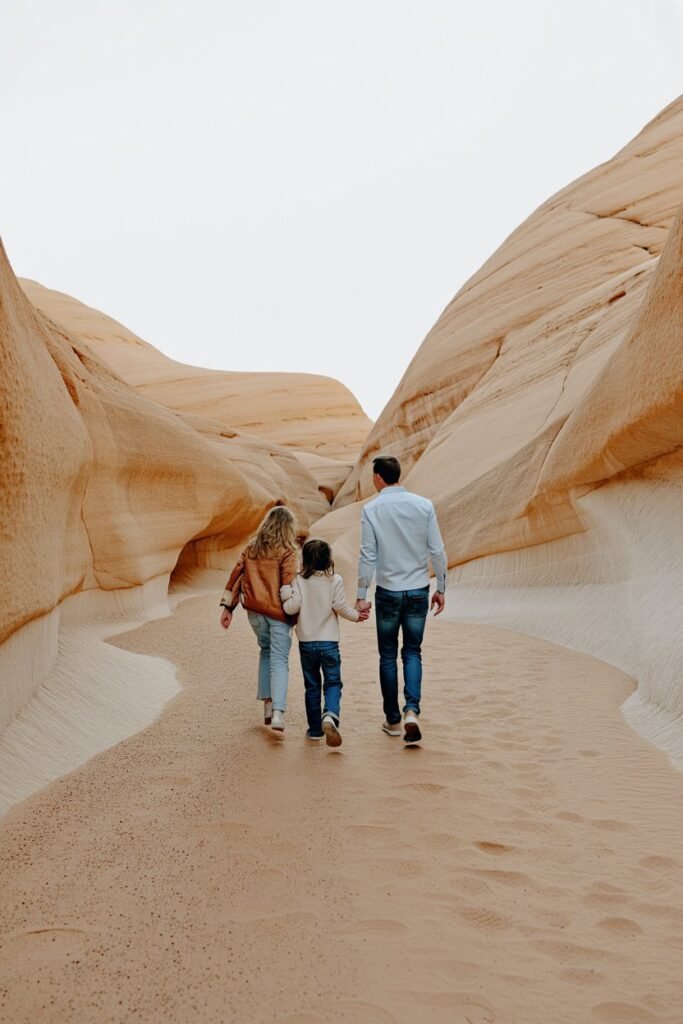
If Zion’s Hidden Canyon is the moody, dramatic older sister, Little Wild Horse is the fun, easygoing one who never makes you work too hard for a good time.
Tucked into the San Rafael Swell a massive dome of folded sandstone in east-central Utah this is one of the most accessible slot canyons in the state, and it’s an absolute favorite for families, photographers, and first-time canyon hikers.
The trail follows a sandy wash into a narrow, twisting slot with curving, scalloped walls that rival Antelope Canyon’s famous swirls, minus the crowds and the entry fee.
Most hikers combine it with the neighboring Bell Canyon to make a full loop, though you can just as easily walk in and out of Little Wild Horse alone if you’re short on time.
- Distance: About 4.5 miles for an out-and-back into just Little Wild Horse, or roughly 8 miles for the full Little Wild Horse–Bell Canyon loop
- Elevation gain: Around 800 feet for the full loop
- Difficulty: Easy to moderate — some scrambling over small chokestones, but no technical gear required
- Time needed: 2 to 5 hours
- Trailhead: Along Wild Horse Road, about 5.5 miles west of Goblin Valley State Park
This one is genuinely dog- and kid-friendly (with a boost here and there for shorter legs and paws), and the paved access road makes it easy to reach in a regular car.
3. Peekaboo and Spooky Gulch — Grand Staircase-Escalante, Utah
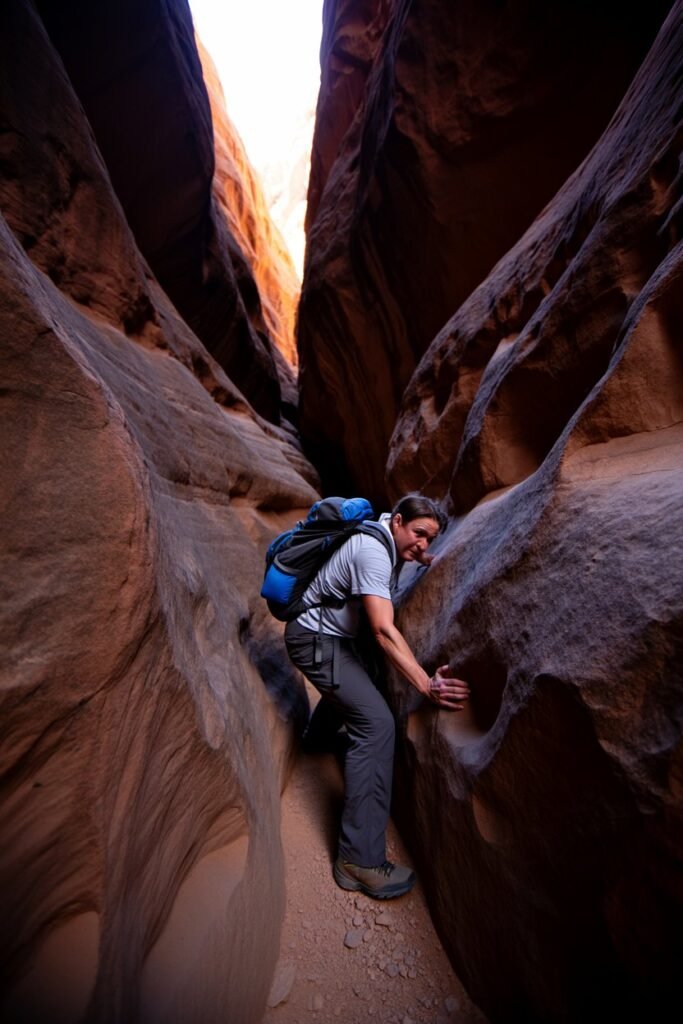
This is the hike that turns hikers into canyon people. Peekaboo and Spooky Gulch sit off the long, bumpy Hole-in-the-Rock Road outside Escalante, and together they form one of the most playful, adventurous loops in the Southwest.
You’ll scramble up a chest-high rock wall to enter Peekaboo, wind past twin natural bridges and deep potholes, then cross overland to drop into Spooky a canyon so tight in places that the walls narrow to about ten inches apart.
You’ll be turning sideways, holding your breath a little, and grinning the entire time.
- Distance: Around 4 to 6 miles round trip, depending on your exact route and whether you add nearby Brimstone Gulch
- Elevation gain: Roughly 700 feet
- Difficulty: Moderate to strenuous expect real scrambling and tight squeezes, not just walking
- Time needed: 3 to 4 hours
- Trailhead: Dry Fork Trailhead, about 26 miles down Hole-in-the-Rock Road from Highway 12 near Escalante
A few honest notes: dogs generally aren’t a good fit for this one because of the climbing and squeezing involved, and it’s not recommended for anyone who is pregnant or claustrophobic.
Hike Peekaboo first and Spooky second climbing up into Peekaboo is far easier than climbing down into it, and the loop direction keeps traffic flowing smoothly when the canyon gets busy.
4. Zebra Slot Canyon — Grand Staircase-Escalante, Utah
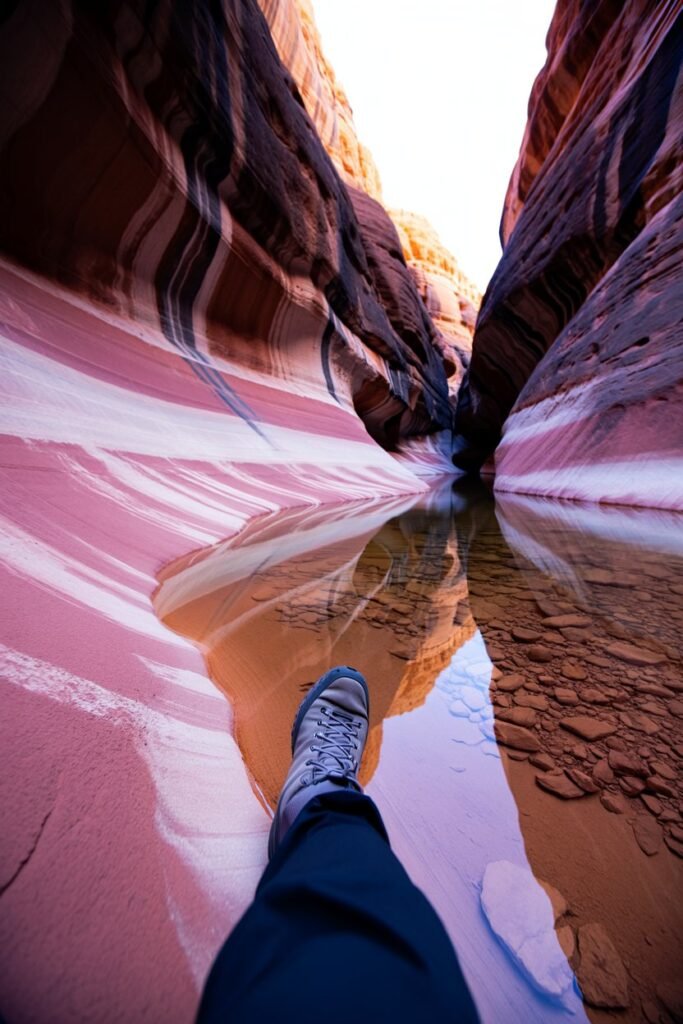
Zebra Canyon is proof that the best things come to those who walk.
The approach is a long, flat, exposed desert trail sandy, sunny, and, if I’m being honest, a little monotonous but it leads to one of the most striking slot canyons in Utah: a narrow passage striped in bands of pink and white sandstone that genuinely look painted on.
The catch is that the good part is short, often only a couple hundred feet of true “zebra stripes,” and there’s frequently standing water inside, anywhere from ankle-deep to chest-deep depending on recent rain.
- Distance: About 5 to 5.3 miles round trip
- Elevation gain: Fairly minimal, around 235–300 feet
- Difficulty: The approach is easy; the slot itself is narrow and can be genuinely tricky, especially with water in it
- Time needed: 3 to 4 hours
- Trailhead: Along Hole-in-the-Rock Road, about 8 miles from Highway 12 near Escalante
No permit is required for Zebra, which makes it a wonderful lower-key alternative to permit-only spots like The Wave.
Stop by the BLM Interagency Visitor Center in Escalante before you go they’ll tell you exactly how much water is in the canyon that week, which changes your gear list quite a bit.
5. Coyote Gulch’s Peekaboo Cousins and Beyond
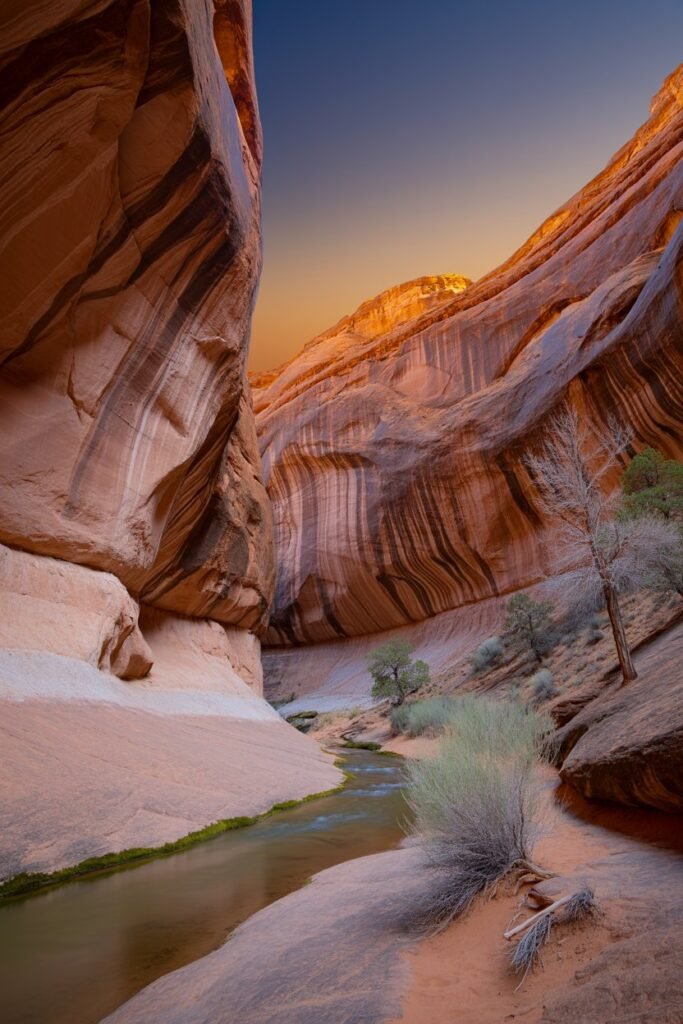
If these four canyons light something up in you, the good news is that Grand Staircase-Escalante alone holds dozens more Brimstone Gulch, Willis Creek, Egypt, and the wilder, longer routes into Coyote Gulch among them.
Once you’ve got a feel for reading a wash, following cairns, and respecting flash flood risk, this entire region opens up. I’d recommend working your way up gradually rather than diving into the more remote, technical routes right away.
How to Actually Find These Canyons
This is the part that trips people up the most, so let’s slow down here.
Unlike national park trails with paved parking lots and clear signage, most hidden slot canyons sit on Bureau of Land Management (BLM) land, reached by unpaved, sometimes rough desert roads. Here’s how to set yourself up for success.
Start with the access road, not the canyon. Nearly every canyon in the Escalante area is reached from Hole-in-the-Rock Road, a long dirt road running southeast out of the town of Escalante off Highway 12.
Reset your trip odometer at the turnoff nearly every trailhead is described by mileage down this road (for example, roughly 8 miles for Zebra, about 26 miles for Peekaboo and Spooky).
The road is generally passable in a regular sedan when dry, but becomes difficult or impassable after rain, so check conditions before you commit.
Use GPS coordinates, not just names. Trail names can be inconsistent (there’s more than one “Peekaboo” in southern Utah alone), so before you go, look up the specific trailhead coordinates for your hike and drop a pin in an offline maps app.
I personally use a GPS app with downloaded offline maps every single time, because cell service disappears the moment you leave pavement.
Stop at a visitor center first. The BLM Interagency Visitor Center in Escalante (755 West Main Street) and the Zion Visitor Center are genuinely useful stops, not just formalities.
Rangers can tell you about current water levels, recent flash flood damage, road conditions, and trail closures — information that simply isn’t available anywhere online in real time.
Follow washes and cairns, not a painted trail. Many of these hikes have no formal, maintained trail once you’re off the initial approach path.
You’ll be following a sandy wash, watching for small stacked-rock cairns, and using landmarks to navigate. Take note of distinctive features on your way in (a lone juniper, a particular rock formation) so you can retrace your steps confidently.
Download offline maps and a topo layer before you lose signal. Apps like AllTrails, Gaia GPS, or OnX Backcountry all offer offline map downloads. Do this the night before, at your hotel or campsite with wifi — not standing at the trailhead.
Your Hiking Gear Checklist
Packing for a slot canyon hike is a little different from packing for a standard day hike, mostly because you’re dealing with sand, sun, tight spaces, and sometimes water, all in the same few hours.
On your feet
- Sturdy hiking shoes or trail runners with good grip for scrambling over sandstone
- Water shoes or old sneakers you don’t mind soaking, for canyons like Zebra that often have standing water
- Moisture-wicking socks, and a spare dry pair stashed in your pack
On your body
- Lightweight, quick-drying clothing (avoid cotton, which stays wet and heavy)
- A long-sleeve sun shirt much of the approach hiking is fully exposed to desert sun
- A wide-brimmed hat and sunglasses
- A small, well-fitting daypack — bulky packs make tight squeezes much harder, so pack light and consider a smaller bag for canyons like Spooky Gulch
In your pack
- At least 3 to 4 liters of water per person; there is no reliable water source on any of these trails
- High-energy snacks (trail mix, bars, dried fruit)
- Sunscreen and lip balm with SPF
- A physical map or offline GPS app, plus a compass as backup
- A basic first-aid kit
- A headlamp, even for a day hike better safe than stuck in the dark
- A dry bag or waterproof pouch for your phone and camera if water is likely
- A whistle, for emergencies or to signal your hiking partner around blind corners
Nice to have
- Trekking poles for the sandy approach trails
- A satellite communicator or personal locator beacon, especially for the more remote Escalante hikes where cell service is nonexistent
- Gloves, if you’re tackling a canyon with chain handholds like Hidden Canyon
Helpful Tips From One Canyon Lover to Another
Check the weather everywhere the canyon drains, not just where you’re standing. This is the single most important rule of slot canyon hiking.
Flash floods can roar through a canyon even when the sky above you is perfectly clear, because the storm might be miles away, upstream. Never enter a slot canyon if there’s any rain in the forecast for the wider drainage area not just your immediate location.
Go early. Starting your hike in the first couple of hours after sunrise means cooler temperatures, softer light for photos, and a real chance at having a canyon to yourself before the day-trippers arrive.
Travel with a buddy, and tell someone your plan. These canyons are remote, and cell service is rarely reliable. Share your route and expected return time with someone before you head out, and consider a satellite messenger for the more isolated hikes.
Pack out everything, including toilet paper. These canyons don’t erode or flush the way you’d think trash and waste linger in a fragile desert ecosystem for a very long time. Leave No Trace principles matter more here than almost anywhere else.
Respect the squeeze. If a slot canyon narrows to the point where you genuinely can’t fit comfortably, that’s your body telling you something useful.
Larger hikers, and anyone who’s pregnant, should check canyon width descriptions ahead of time Spooky Gulch, for example, narrows to around ten inches in spots.
Bring cash for gateway towns. Small towns like Escalante and Springdale often have limited card readers at gas stations, gear shops, and roadside stands. A little cash goes a long way out here.
Layer for temperature swings. Slot canyons can be surprisingly cold and shaded even on a hot desert day, especially the deeper, narrower ones. A light layer you can add and remove makes a real difference in comfort.
Know your turnaround time and stick to it. It’s easy to lose track of time when you’re marveling at swirling sandstone walls, but many of these canyons involve a long drive out on rough roads. Set a hard turnaround time and honor it, even if you haven’t reached the very end of the canyon.
When to Go: A Season-by-Season Breakdown
Timing genuinely changes everything about these hikes, so it’s worth planning around the calendar rather than just squeezing a canyon hike into whatever week you happen to be free.
Spring (March–May) is my favorite window for most of these canyons. Temperatures are mild, wildflowers dot the wash edges, and you’ll avoid the brutal summer heat on the long, exposed approach trails. The tradeoff is that spring also brings more unpredictable storms, so keep a close eye on the forecast.
Summer (June–August) works for shaded, narrower canyons like Hidden Canyon or the interior of Spooky Gulch, where the walls block direct sun.
But the sandy approach hikes to places like Zebra and Little Wild Horse can be brutal, with surface temperatures well over 100°F. If you go in summer, start at first light and plan to be off the exposed sections by late morning.
Summer is also peak flash flood season in southern Utah, thanks to monsoon storms that build quickly in July and August this is the time of year to be most cautious.
Fall (September–November) rivals spring for the best overall conditions: cooler air, fewer storms, and gorgeous late-afternoon light on the canyon walls. This is when I see the most other hikers on trail, so go early if solitude matters to you.
Winter (December–February) is quiet, cold, and strikingly beautiful, but it comes with real risk. Water inside canyons like Zebra can be icy and dangerously cold, shaded sections may hold ice on the rock, and some access roads become impassable after snow or rain.
Winter hiking here is best left to experienced desert hikers with the right gear.
What to Expect on Your First Slot Canyon Hike
If this is your first time heading into a canyon like this, a few things will probably surprise you. The temperature drops noticeably the moment the walls close in around you bring a light layer even on a warm day.
The light does something almost otherworldly, bouncing between orange, pink, and gold sandstone in a way that shifts by the minute depending on the sun’s angle, which is why so many photographers chase these canyons around midday, when light can reach deeper into the slot.
You’ll also likely encounter moments where the “trail” simply isn’t visible anymore just a wash, a wall, and a decision to make. That’s completely normal.
Slow down, look for cairns or footprints in the sand, and trust that most of these routes have obvious, if unmarked, paths once you know to look for them.
And don’t be surprised if a hike that measures only two or three miles on paper takes you three or four hours between scrambling, photo stops, and simply soaking in your surroundings, distance is a poor predictor of time out here.
A Quick Word on Permits and Fees
Good news for planning purposes: most of the canyons in this guide, including Little Wild Horse, Zebra, and Peekaboo/Spooky, sit on BLM land within Grand Staircase-Escalante National Monument and require no permits or entrance fees for day hiking. Hidden Canyon, by contrast, sits inside Zion National Park, so you’ll need a park entrance pass, and access is via the Zion Canyon Shuttle during the busier months. Always double-check current requirements before you go, since land management rules can shift from year to year.
Frequently Asked Questions
Do I need technical canyoneering skills for these hikes? No — every canyon featured here can be done as a non-technical hike, meaning no ropes, harnesses, or rappelling gear required. That said, expect real scrambling, some exposure to heights, and tight squeezes, so a reasonable comfort level with all three will serve you well.
Are these hikes safe to do solo? They can be, but I’d encourage caution, especially in the more remote Grand Staircase-Escalante canyons, where cell service is nonexistent and help could be hours away.
If you do go solo, share your route and timeline with someone, carry a satellite communicator if you can, and be extra conservative about turning back.
What’s the biggest danger in a slot canyon? Flash flooding, without question.
A storm dropping rain miles away can send a wall of water through a canyon in minutes, even under a blue sky where you’re standing. Always check the regional forecast, not just your immediate location, before entering any narrow canyon.
Can beginners do these hikes? Little Wild Horse Canyon is genuinely one of the most beginner-friendly slot canyons in the Southwest, with an easy-to-moderate rating and a family-friendly reputation.
I’d save Spooky Gulch and Zebra for once you’ve got a canyon hike or two under your belt, simply because of the tighter squeezes and route-finding involved.
A Final Thought Before You Go
The thing about hidden canyons is that they ask something of you a little research, a little grit, a willingness to get sandy, occasionally wet, and thoroughly turned around before you find your footing.
But that’s exactly why they stay with you. There’s a kind of quiet confidence that comes from navigating an unmarked wash, spotting your first cairn, and stepping into a canyon that most people will never see.
I hope one of these five finds its way onto your calendar soon. And when it does, I’d love to hear which one stole your heart.
Happy hiking, friend. The desert is waiting.