
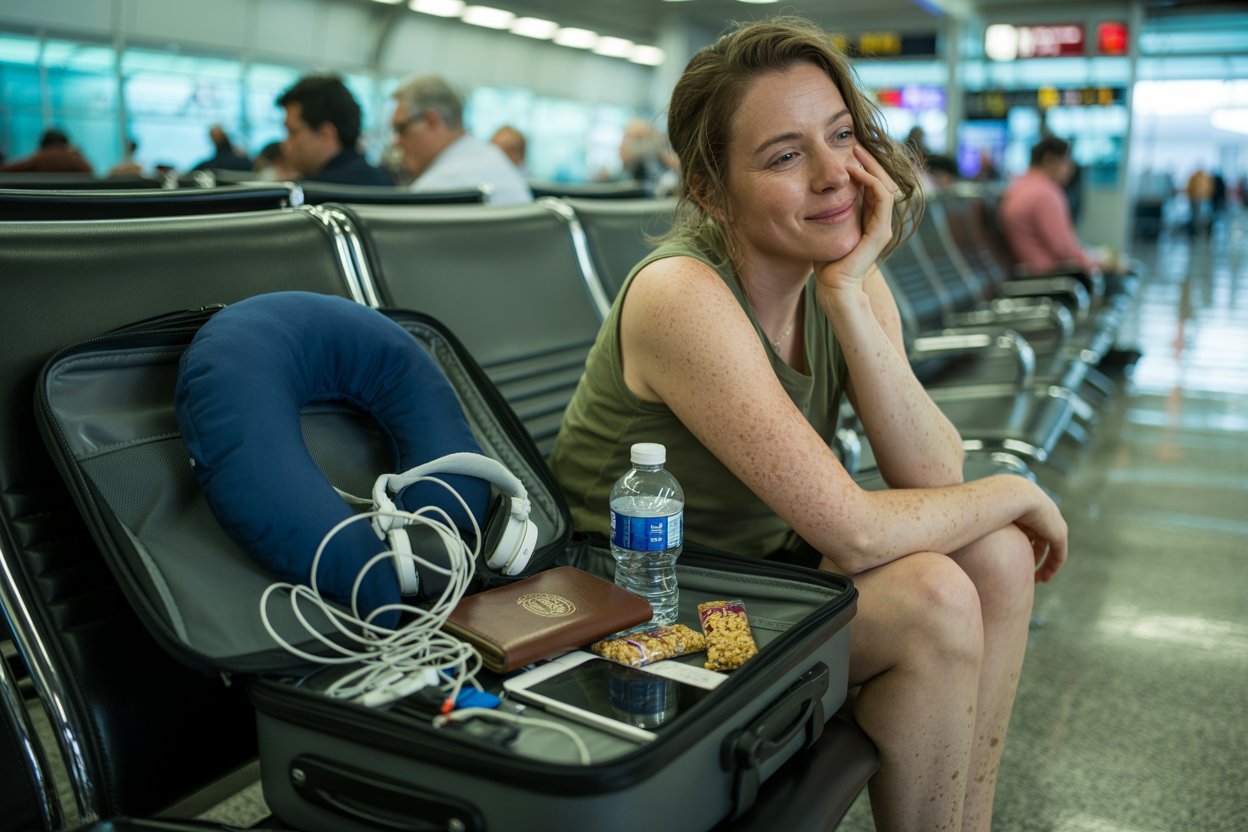

There was a time when I treated my carry-on like an afterthought just a place for my passport, maybe a snack, and whatever didn’t fit in my suitcase. Then one trip completely changed my mindset.
I landed after a long international flight, stood at baggage claim watching the carousel spin and my suitcase never came. Not that day. Not the next morning either.
For almost two days, my carry-on was all I had and honestly? It saved my entire trip.
Since then, I’ve treated carry-on packing like a personal travel safety system. It’s not about overpacking. It’s about protecting your comfort, health, time, and peace of mind.
If you pack these 11 essentials, you can handle:
- Lost luggage
- Flight delays
- Long layovers
- Unexpected overnight stays
- Climate differences
- Tech emergencies
And yes every item listed is easy to find on Amazon, which makes rebuilding or upgrading your travel kit simple.
This guide is detailed because I want you to feel confident, calm, and fully prepared every time you step into an airport.
ready for your next stress-free flight
After my luggage went missing, i started choosing airline wih higher reliability ratings. use this tool to compare prices and check baggage policies for your next trip
Why Smart Carry-On Packing Matters More Than You Think
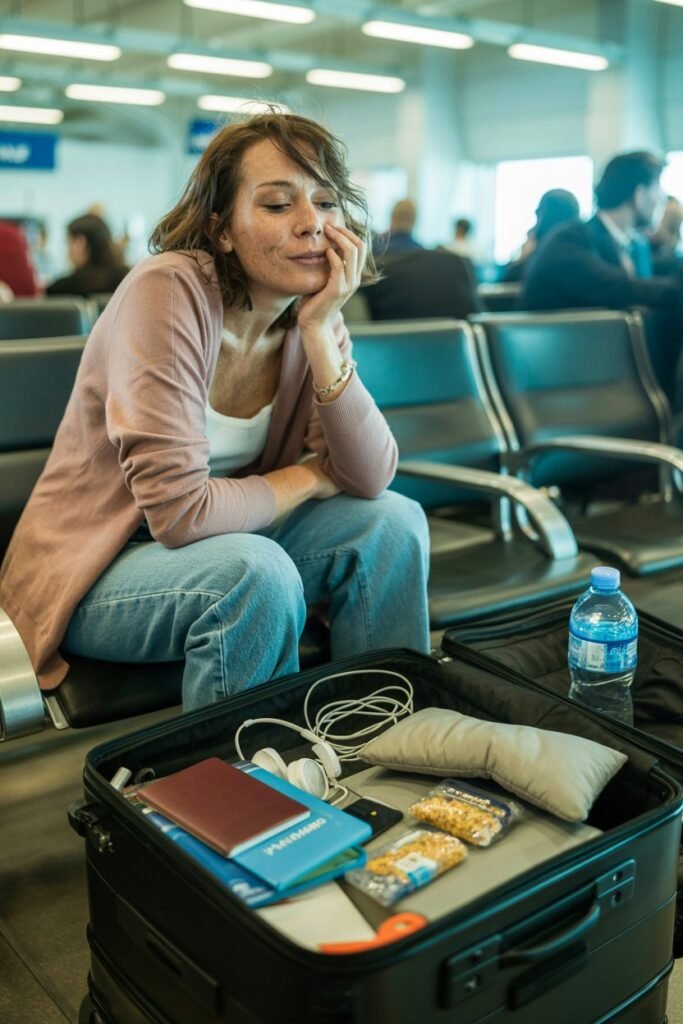
Before we get into the list, let’s talk about why this matters so much.
Modern travel is unpredictable. Weather delays flights. Airlines lose bags. Connections get missed. Airports get crowded. And when things go wrong, the travelers who packed smart are the ones who stay relaxed.
Your carry-on should support three things:
- Comfort
- Health
- Functionality
If it does all three, your trip starts smoother and stays smoother.
Shop my amazon essentials
- Portable Charger
- Neck Pillow
- Universal Travel Adapter
- Noise-Cancelling Headphones
- Travel-Size Toiletries
- Reusable Water Bottle
- Travel Snack Pack
- Mini First Aid Kit
- Packing cubes
The Ultimate Carry-On Packing Guide
1. High-Capacity Portable Charger (Your Non-Negotiable Travel Lifeline)
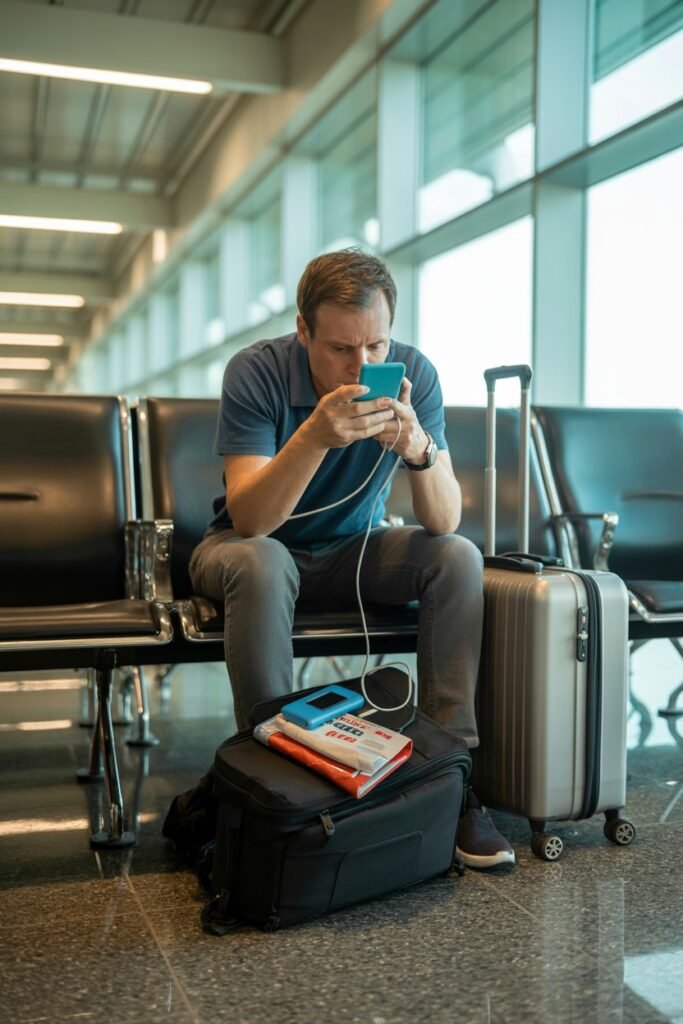
If I had to pick one item I would never board a plane without, it would be this. Not my skincare. Not my headphones. Not even snacks (and I love snacks). My portable charger is the one thing that keeps my entire trip functioning.
I learned this the hard way during a delayed flight where I spent almost 6 extra hours inside an airport. My phone battery dropped to 9%, and suddenly everything felt stressful.
Boarding passes are digital now. Hotel bookings are digital. Even airport maps are digital. When your phone dies, travel instantly becomes harder.
Why Portable Chargers Are Essential for Modern Travel
Your phone is no longer optional while traveling. It is:
- Your boarding pass
- Your wallet (Apple Pay / Google Pay)
- Your map and navigation tool
- Your translator
- Your travel itinerary
- Your emergency contact system
Without power, you lose access to all of it.
What Capacity Should You Choose?
For carry-on travel, I always recommend:
- 10,000 mAh minimum → Good for short trips
- 20,000 mAh ideal → Best for long travel days
A 20,000 mAh charger can usually charge a phone 3–5 times.
Features That Actually Matter (Not Marketing Fluff)
Look for:
- Fast charging (PD or Quick Charge)
- Slim, lightweight design
- Airline safe battery rating
- Multiple ports (charge 2 devices at once)
Personal Carry-On Habit
The night before travel:
- Charge power bank to 100%
- Pack charging cable inside carry-on pouch
- Test it quickly before leaving home
It sounds small but it prevents huge travel stress later.
2. Memory Foam Neck Pillow (The Difference Between Surviving a Flight vs Enjoying It)
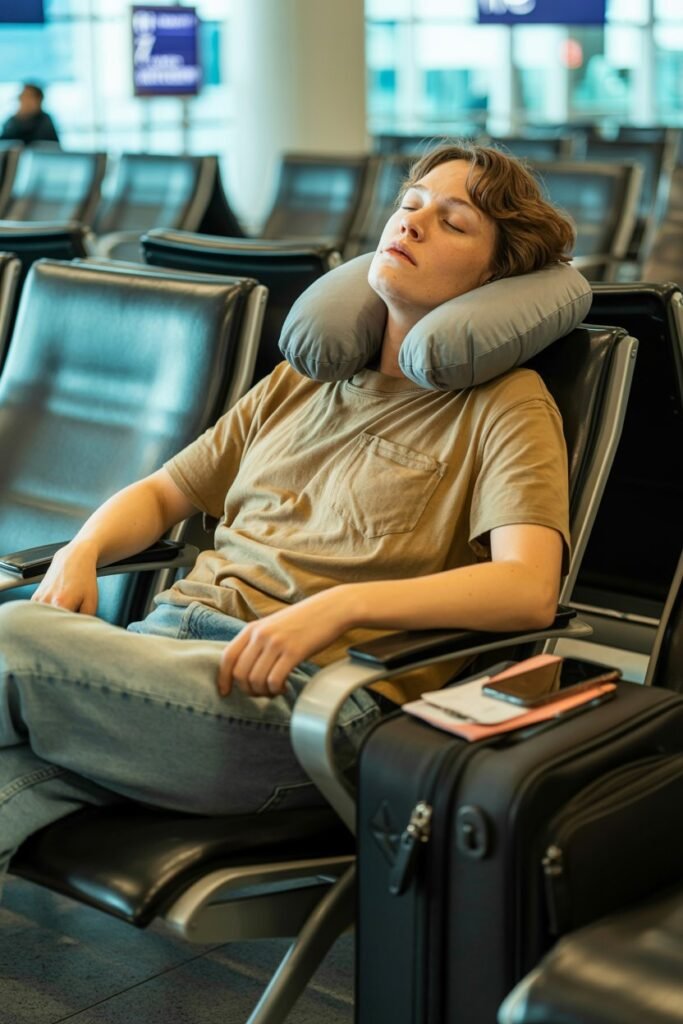
I used to think neck pillows were just airport accessories people bought because they looked “travel ready.” Then I used a good memory foam one during a red-eye flight and realized I had been traveling uncomfortably for years.
Now my neck pillow is part of my “flight comfort system.”
Why Neck Support Matters More Than You Think
When you sit upright for hours:
- Neck muscles strain
- Shoulder tension increases
- Sleep quality drops
- You arrive exhausted
A proper neck pillow keeps your spine aligned and reduces fatigue.
Why Memory Foam Is Worth It
Compared to inflatable pillows:
Memory foam:
- Holds shape better
- Supports head naturally
- Feels softer and more stable
Inflatable pillows:
- Save space
- But often shift during sleep
If you have space in your carry-on, memory foam wins.
When You’ll Use It (Even Off the Plane)
Most people think neck pillows are only for flights but I use mine:
- During long layovers
- On airport chairs
- On train rides
- Even in Ubers after long flights
Pro Travel Tip
Choose one with:
- Snap strap → attaches to carry-on handle
- Removable washable cover → travel hygiene matters
Read Packing Light for Winter Travel: A Simple, Feminine Guide to Staying Warm Without Overpacking
3. Universal Travel Adapter (The Small Item That Prevents Big Travel Problems)
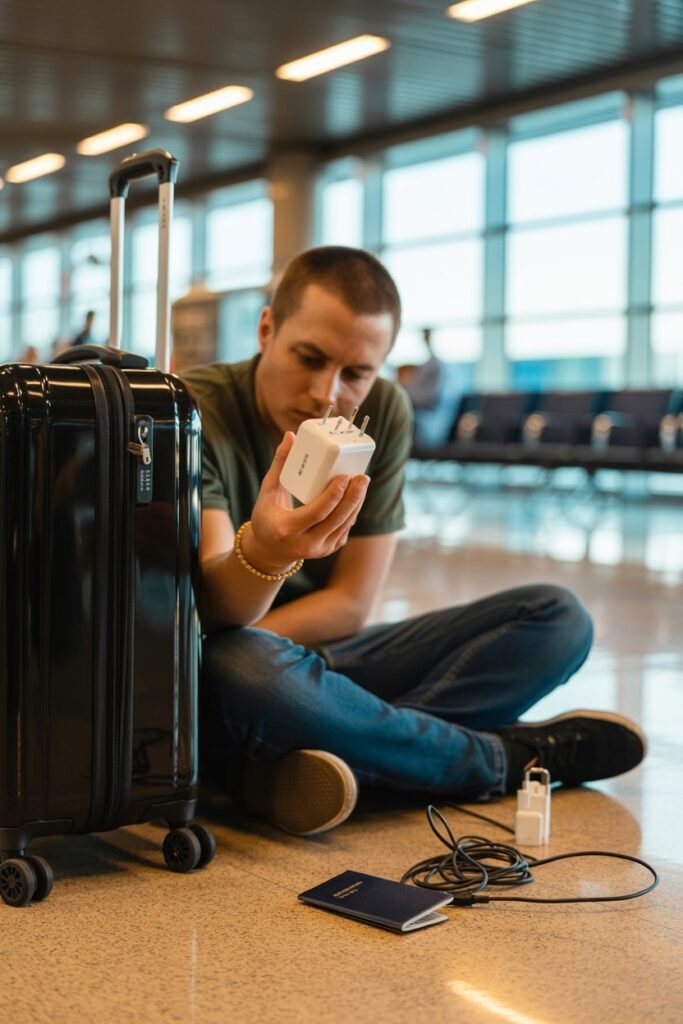
This is one of those items travelers only forget once. After that, it becomes permanent carry-on equipment.
I once landed late at night internationally, went to plug in my phone, and realized nothing fit. Every airport shop was closed. My phone battery was at 14%. That level of travel stress is something I never want again.
Why You Need This Even If You’re “Not Sure”
Even if your destination uses your plug type:
- Airports sometimes don’t
- Hotels sometimes use mixed outlets
- Cruise ships often use different sockets
A universal adapter eliminates guesswork.
What Makes a Good Universal Adapter
Look for:
- Multiple country plug types
- USB charging ports
- Surge protection
- Compact cube design
Why USB Ports Matter
You can charge:
- Phone
- Watch
- Earbuds
- Tablet
All from one wall outlet.
My Personal Rule
My adapter lives permanently in my carry-on.
It never gets unpacked.
That way I can’t forget it.
4. Noise-Cancelling Headphones or High-Quality Travel Earbuds
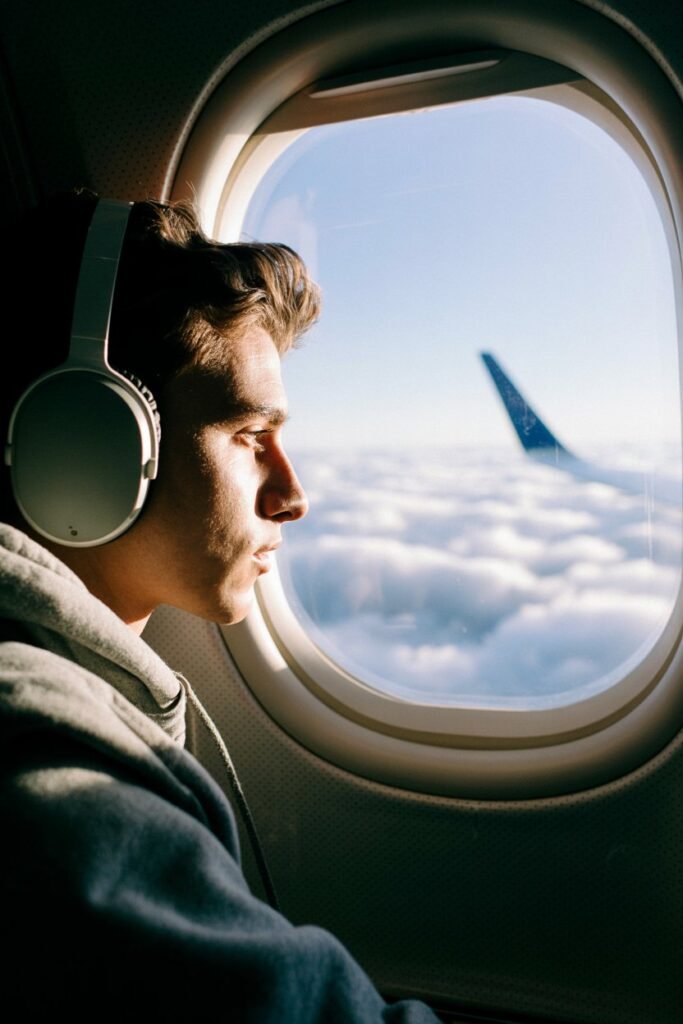
Air travel is loud. Not just engine noise — but people noise, announcements, carts, conversations, and random background sounds that make it hard to relax.
The first time I used noise-cancelling headphones on a long flight, I felt like I entered a calm bubble. It genuinely changed how I experience flights.
Why Noise Control Improves Travel Comfort
Noise fatigue is real. Constant sound increases stress levels and reduces rest quality.
Noise cancellation helps you:
- Sleep easier
- Watch movies clearly
- Focus if working
- Reduce anxiety during turbulence
Headphones vs Earbuds — Which Is Better?
Headphones:
- Stronger noise cancellation
- More comfortable for long wear
- Better sound quality
Earbuds:
- More compact
- Easier to pack
- Good for short flights
Battery Life Matters
For long travel days, choose:
- 25–40 hour battery life
- Quick charge feature
My Travel Ritual
I put headphones on before takeoff even without music. The quiet helps me mentally transition into travel mode.
5. Emergency Change of Clothes (The Confidence Saver)
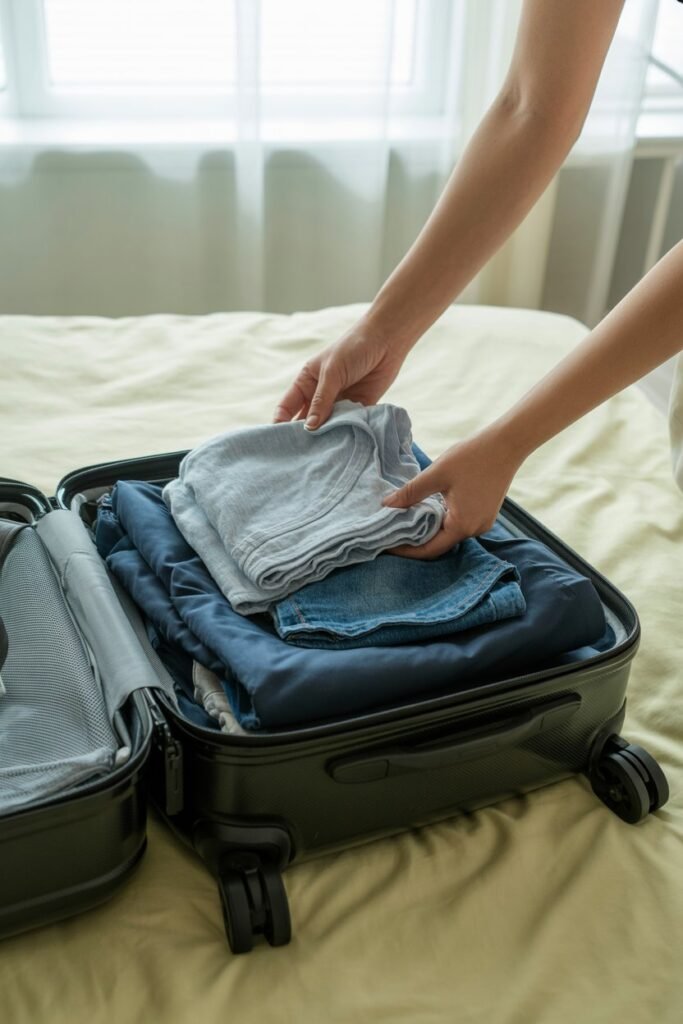
This is the item people skip… until the day they desperately need it.
I started packing backup clothes after:
- A suitcase delay
- A coffee spill during turbulence
- A missed connection overnight stay
What You Actually Need (Not a Full Outfit)
Keep it simple:
- 1 pair underwear
- 1 pair socks
- 1 lightweight top
- 1 soft pant or leggings
That’s it.
Why This Adds Huge Travel Value
It protects you from:
- Lost luggage
- Sweating during long travel days
- Climate change between locations
- Unexpected overnight airport stays
Fabric Matters More Than You Think
Choose:
- Wrinkle resistant fabric
- Lightweight material
- Neutral colors (easy to restyle)
Personal Packing Trick
I roll backup clothes inside a packing cube or zip pouch.
It keeps them clean and easy to grab quickly.
Why These First 5 Carry-On Items Matter Most
If you pack nothing else, these five protect:
- Your communication
- Your comfort
- Your ability to rest
- Your ability to function
- Your confidence if travel goes wrong
They are your travel foundation layer.
6. Travel-Size Toiletries & Skincare Kit (Your In-Flight Refresh Survival System)
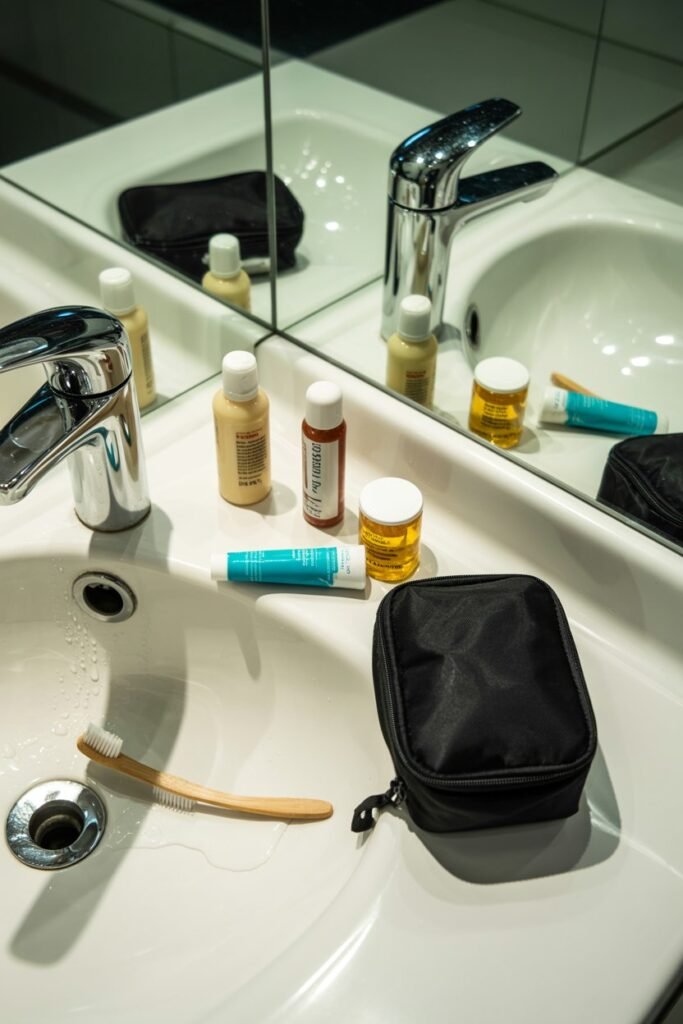
This is one of those carry-on categories that seems “nice to have” until you experience a long flight without it.
Airplane cabins are extremely dry sometimes less humid than a desert environment. After 6–10 hours, your skin, lips, and eyes feel it.
I used to land after long flights feeling exhausted and uncomfortable. Now, doing a quick skincare refresh before landing makes me feel like I’m arriving fresh instead of drained.
Why Travel Toiletries Matter More Than People Realize
They help you:
- Feel human after long flights
- Reduce dry skin and irritation
- Stay confident during travel days
- Prevent odor during long travel hours
My Personal Carry-On Toiletry Essentials
I keep these permanently in a TSA-approved pouch:
Hygiene Basics
- Travel toothbrush
- Mini toothpaste
- Deodorant
- Hand sanitizer
Skincare Basics
- Gentle face cleanser
- Moisturizer
- Lip balm
- Face mist (optional but amazing)
TSA Packing Strategy That Saves Stress
Use:
- Clear TSA liquid pouch
- Refillable silicone travel bottles
- Mini solid versions when possible
Personal Travel Habit
About 45 minutes before landing, I:
- Brush teeth
- Wash face (if possible)
- Reapply moisturizer
- Apply lip balm
It makes arrivals feel so much better.
7. Reusable Water Bottle (Hydration = Better Travel Experience)
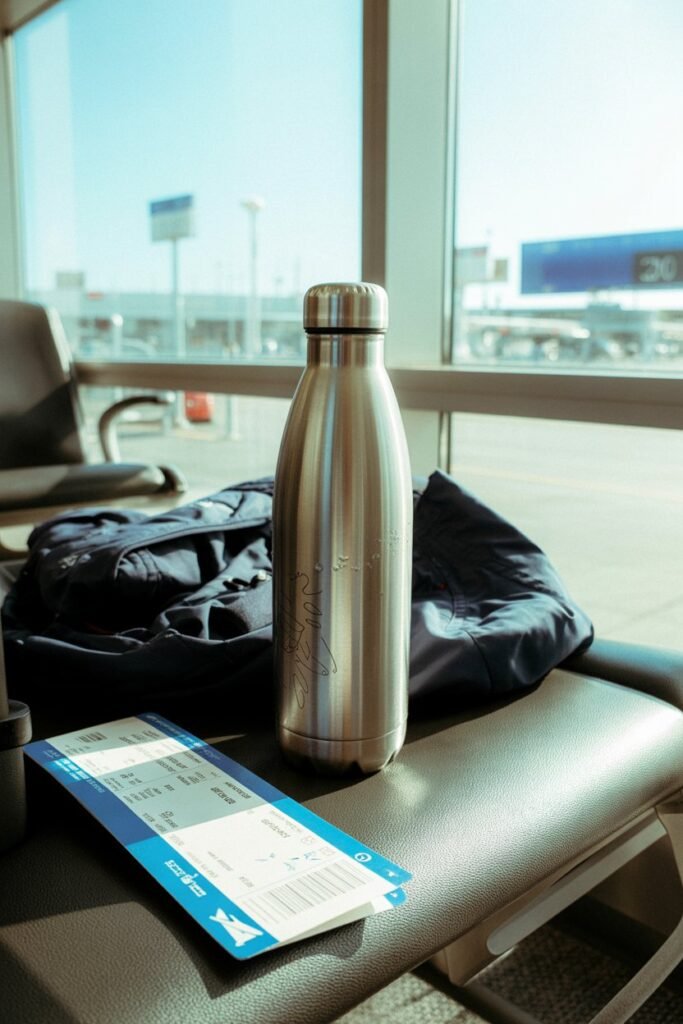
If you asked me what silently ruins trips for people, I would say dehydration. Flying dries your body out fast. And when you’re dehydrated, everything feels harder jet lag, headaches, fatigue, mood swings.
Once I started traveling with a reusable bottle, I noticed:
- Fewer headaches
- Better energy after landing
- Less jet lag
Why Airport Hydration Is So Important
Airplane cabins pull moisture from your body. Combined with coffee, alcohol, or salty snacks, dehydration happens quickly.
What Type of Bottle Works Best for Travel
Best options:
- Collapsible bottles (space saving)
- Lightweight BPA-free bottles
- Leakproof lids
Smart Travel Hydration Routine
- Bring bottle empty through security
- Fill after security
- Refill before boarding
- Sip during flight every 30–45 minutes
Bonus Travel Beauty Benefit
Hydration improves:
- Skin appearance
- Lip hydration
- Energy levels
8. Smart Travel Snack Pack (Your Energy & Mood Protection Kit)
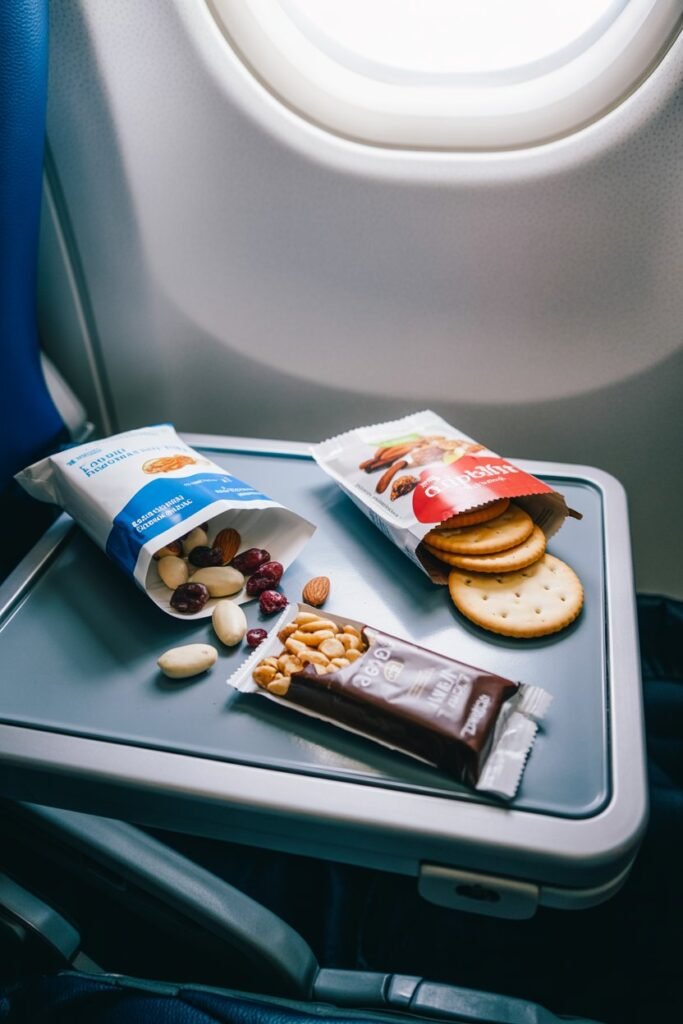
Airport food is unpredictable. Sometimes it’s expensive. Sometimes it’s closed. Sometimes it’s just not something you want to eat before a long flight.
I started bringing snacks after getting stuck in an airport overnight with only vending machine options. Now I always travel with my own snack kit.
Why Snacks Are Actually a Travel Essential
Stable blood sugar helps:
- Reduce stress
- Maintain energy
- Prevent travel headaches
- Improve mood
My Personal Carry-On Snack Formula
Protein
- Protein bars
- Roasted nuts
Comfort Snacks
- Crackers
- Dark chocolate
Natural Energy
- Dried fruit
- Trail mix
What Makes a Good Travel Snack
Look for:
- Shelf stable
- Non messy
- Easy to eat in small spaces
- Not strong smelling
Personal Travel Rule
I pack snacks even for short flights. Delays can happen anytime.
9. Travel Document Organizer (The Stress-Free Security Line Secret)
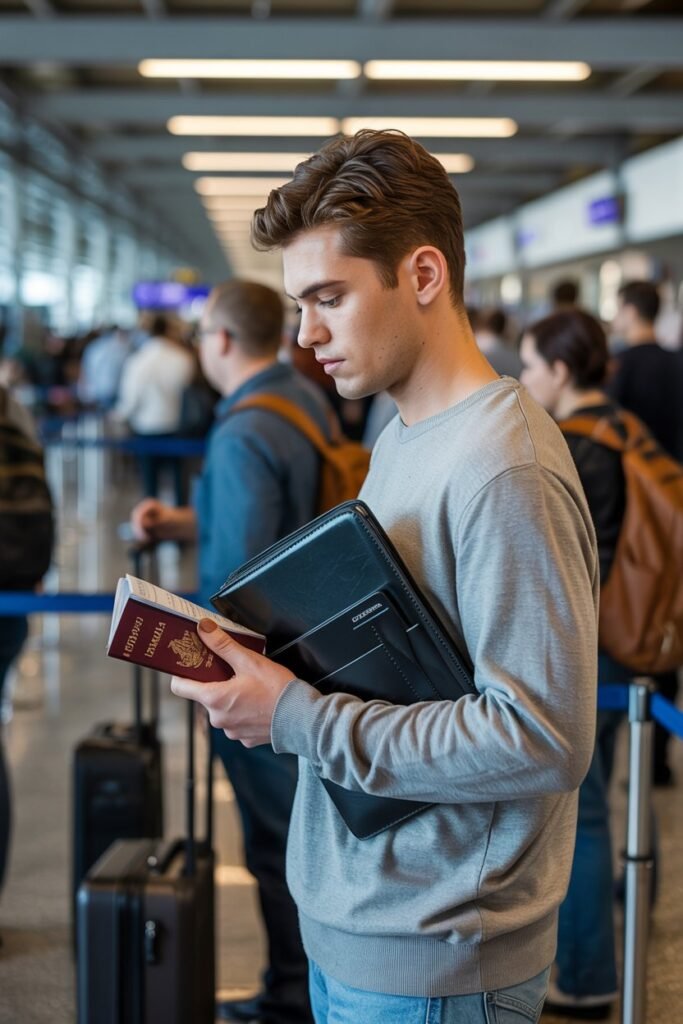
I didn’t realize how stressful it was digging through my bag for documents until I started using a travel organizer. Now security and boarding feel smoother and faster.
Why Organization Reduces Travel Anxiety
When documents are easy to access:
- Security feels easier
- Boarding is smoother
- You feel more confident
What I Keep Inside Mine
Core Travel Documents
- Passport
- Boarding passes
- Travel insurance
Backup Documents
- Hotel confirmations
- Emergency contacts
- Extra ID copies
Why Zippered Organizers Work Best
They prevent:
- Papers falling out
- Passport damage
- Loose items getting lost
Personal Habit
My document folder always goes in the same pocket of my carry-on. No guessing. No searching.
10. Medication + Mini First Aid Kit (The “You’ll Be Glad You Packed This” Category)
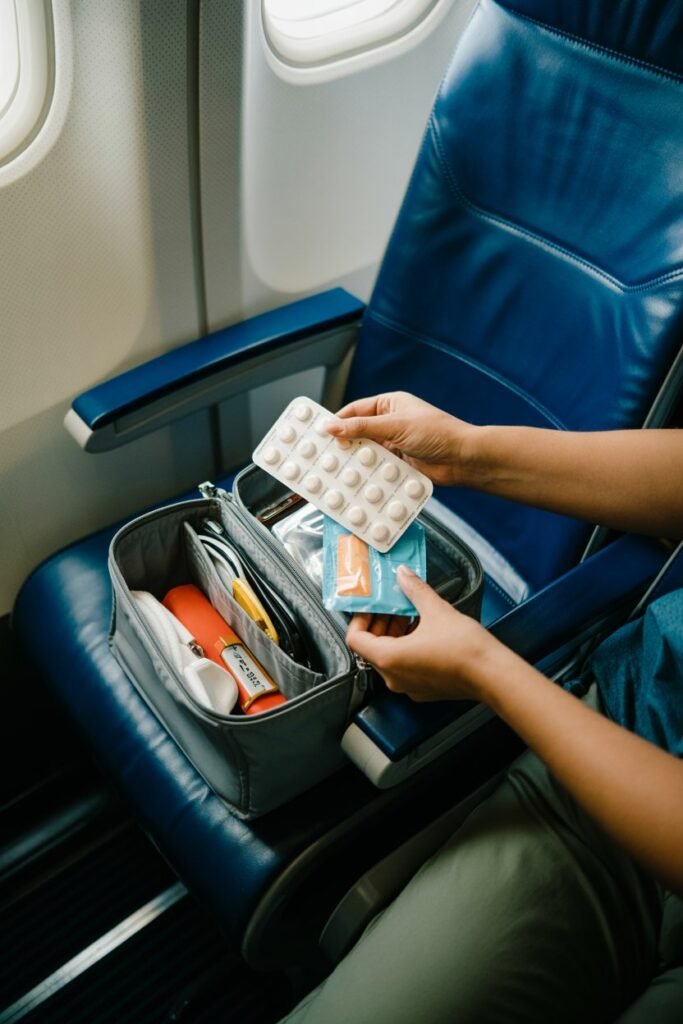
This is one of the most overlooked but most important carry-on categories.
Never put medication in checked luggage. Ever.
Why Medication Must Stay With You
Checked luggage can be:
- Delayed
- Lost
- Sent to wrong destination
My Carry-On Medical Essentials
Health Basics
- Prescription meds
- Pain reliever
- Motion sickness tablets
- Allergy medicine
Mini First Aid
- Bandages
- Blister patches
- Anti-nausea tablets
Why Flights Can Trigger Discomfort
Cabin pressure + dehydration can cause:
- Headaches
- Sinus pressure
- Nausea
Having medication ready prevents small problems becoming big travel issues.
11. Packing Cubes or Carry-On Organizers (The Secret to Calm, Easy Travel)
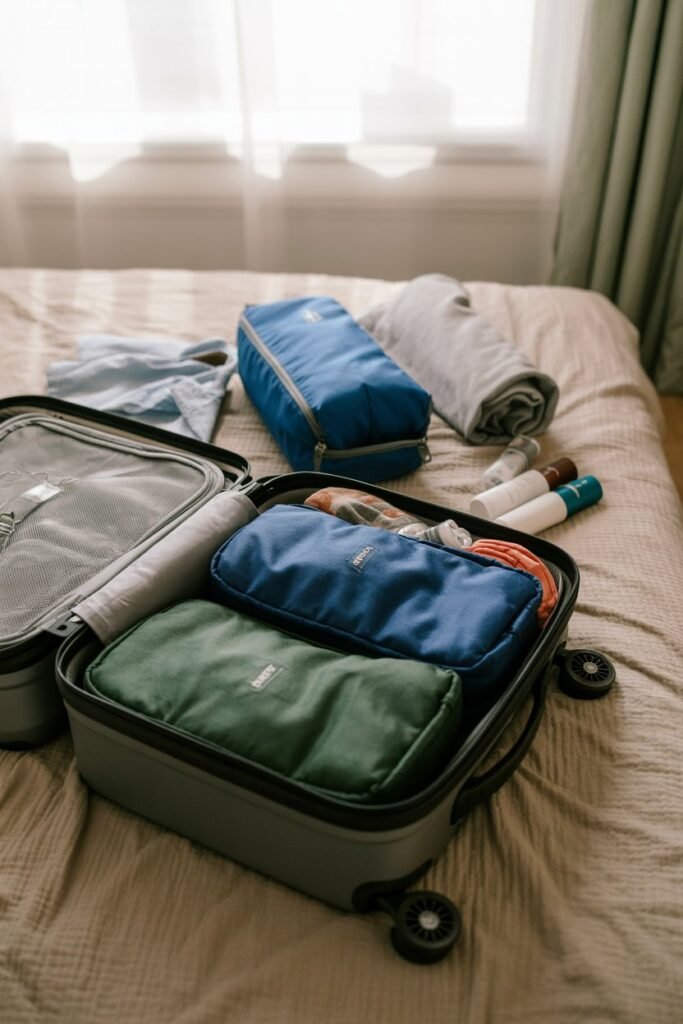
Packing cubes completely changed how my carry-on feels. Instead of digging through a messy bag, everything has a place.
Why Organization Changes Your Travel Experience
Packing cubes help you:
- Find items instantly
- Separate clean vs used items
- Repack quickly
- Stay visually organized
How I Use My Carry-On Cubes
Small Cube → Toiletries
Medium Cube → Backup clothes
Pouch → Chargers + tech
Why This Matters During Travel Stress
When flights are delayed or gates change, being able to grab items quickly is huge.
Final Thoughts: Your Carry-On Is Your Travel Confidence Kit
If there’s one thing I’ve learned from years of traveling from smooth luxury trips to chaotic delay-filled airport days it’s this: a well-packed carry-on changes everything.
Your carry-on is not just a bag for “extra stuff.”
It’s your comfort plan.
It’s your backup plan.
It’s your peace-of-mind plan.
When you pack these 11 essentials, you’re not just preparing for flights you’re preparing for real travel situations:
- The delayed flight that turns into an overnight stay
- The suitcase that shows up a day late
- The long layover that drains your energy
- The dry cabin air that makes you feel exhausted before you even land
I used to think carry-on packing was about space. Now I know it’s about strategy.
The goal isn’t to pack more.
The goal is to pack smarter.
Once you build your personal carry-on system, something really nice happens — travel days feel calmer. You move through airports with more confidence. Delays feel manageable instead of stressful. And honestly, your trips start feeling smoother from the very first moment.
And the best part? Every item in this guide is easy to find on Amazon, easy to restock, and easy to keep ready for your next trip which means less last-minute stress and more excitement about where you’re going next.
If you take one mindset with you from this post, let it be this:
Pack your carry-on like it’s the only bag you might have for 24–48 hours.
Because sometimes, it is.
And when you’re prepared?
Travel feels lighter, easier, and a lot more enjoyable — exactly how it should feel.