
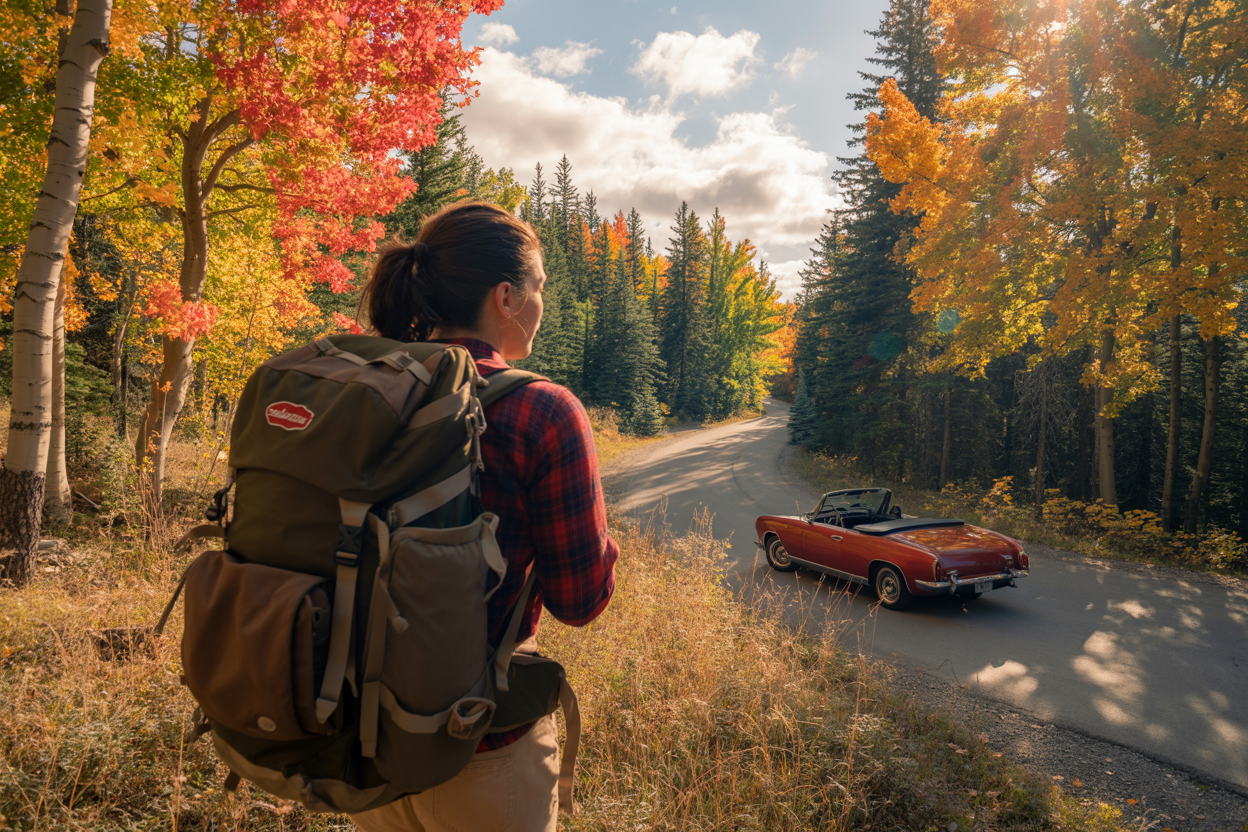

Introduction: Why Fall is the Best Season for Hiking and Scenic Drives in the USA
When the air turns crisp, the skies clear blue, and forests burst into fiery shades of red, gold, and orange, there’s no better time to lace up your boots or hit the open road than autumn.
The United States is home to some of the most spectacular fall foliage destinations in the world, stretching from the Appalachian Mountains to the Rockies, the Great Lakes, and the Pacific Northwest.
Fall hiking and scenic drives not only immerse you in breathtaking landscapes but also offer:
- Comfortable Temperatures: Cooler weather makes for pleasant, sweat-free hiking.
- Vibrant Colors: Maples, aspens, birches, and oaks put on a dazzling show.
- Less Crowds: Compared to summer, trails and roads are less packed.
- Wildlife Encounters: Elk, deer, and migrating birds are more active in fall.
But autumn adventures require preparation. Days are shorter, weather changes quickly, and some mountain regions can see early snow.
Having the right gear, safety tools, and planning knowledge makes the difference between an unforgettable experience and a risky misstep.
This guide will take you through 12 of the best fall hikes and drives in the USA, with detailed mini-guides for each one covering how to get there, when to go, best routes, safety tips, distances, costs, recommended tools, and insider pro tips.
Let’s start with the first three: Blue Ridge Parkway (NC/VA), Smoky Mountains (TN/NC), and Stowe & Smuggler’s Notch (VT).
1. Blue Ridge Parkway (North Carolina & Virginia)
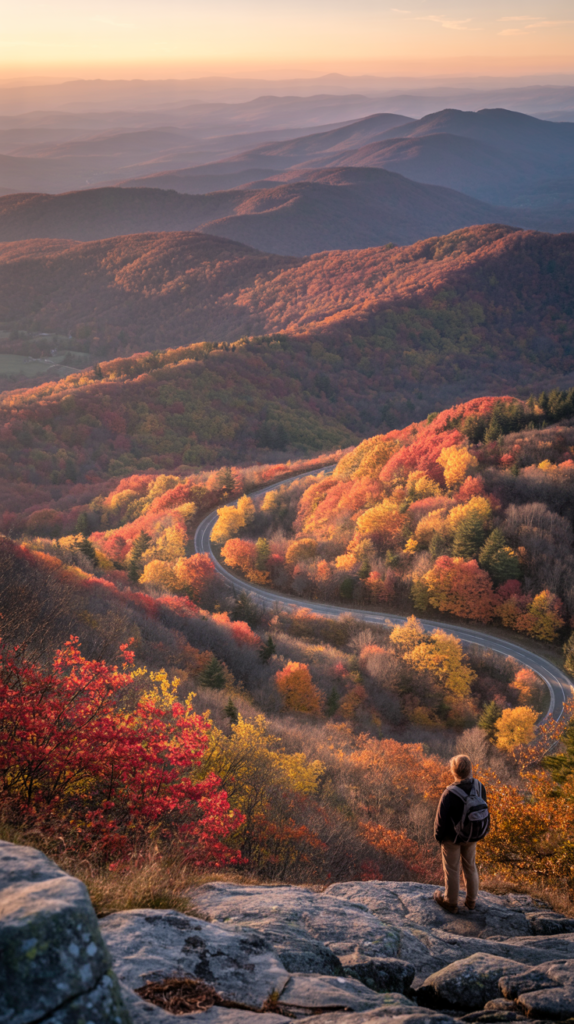
Known as “America’s Favorite Drive,” the Blue Ridge Parkway is one of the most scenic autumn road trips in the country, stretching 469 miles through the Appalachian Highlands.
In fall, its rolling mountains are carpeted in blazing reds, golden yellows, and burnt oranges.
1. How to Get There
- Closest airports: Asheville Regional (AVL), Roanoke-Blacksburg Regional (ROA), or Charlotte Douglas International (CLT).
- From Asheville, North Carolina → Access the Parkway at Milepost 382.
- From Roanoke, Virginia → Access at Milepost 120.
Pro Tip: Start early traffic builds during peak leaf season.
2. When to Go
- Peak foliage:
- Higher elevations (NC): late September–early October.
- Lower elevations (VA): mid-October–early November.
- Best times of day: Mornings for clear skies, late afternoons for golden light.
3. Safest Drive Route to Take
The full Parkway is 469 miles, but highlights for fall include:
- Milepost 304.4 – Linn Cove Viaduct: A stunning elevated road curving around Grandfather Mountain.
- Milepost 364.6 – Craggy Gardens: Hiking trails with panoramic views.
- Milepost 469 – Great Smoky Mountains Entrance: A dramatic gateway into Tennessee.
Safety note: Fog can roll in quickly; always use headlights.
4. Distance & Duration
- Full Drive: 469 miles.
- Duration: 2–7 days depending on stops.
5. Cost Breakdown
- Parkway: Free to drive.
- Gas: $80–$150 depending on distance.
- Accommodation: $80–$250 per night.
6. Essential Hiking Tips
- Even if just driving, pack hiking boots — short hikes along the Parkway are spectacular.
- Cell service is limited; download offline maps.
- Dress in layers; mornings can be chilly, afternoons warm.
7. Tools & Lifesaving Gear
- Navigation: Garmin DriveSmart 65 GPS.
- Cooler for road trip snacks: Yeti Roadie 24.
- Hiking boots (for stopovers): Merrell Moab 3 Waterproof.
8. Food & Water Prep
- Carry a full-day cooler with sandwiches, fruit, nuts.
- 2 liters of water per person minimum.
9. Accommodation Options
- Inside the Parkway: Peaks of Otter Lodge (VA) and Pisgah Inn (NC).
- Nearby towns: Asheville, Blowing Rock, Roanoke.
10. Pro Tips from Experienced Travelers
- Start south in Asheville and head north for the best sunrise drives.
- Pull off at lesser-known overlooks they’re often better than crowded viewpoints.
- Don’t rush; the Parkway is about slow travel.
2. Great Smoky Mountains National Park (Tennessee & North Carolina)
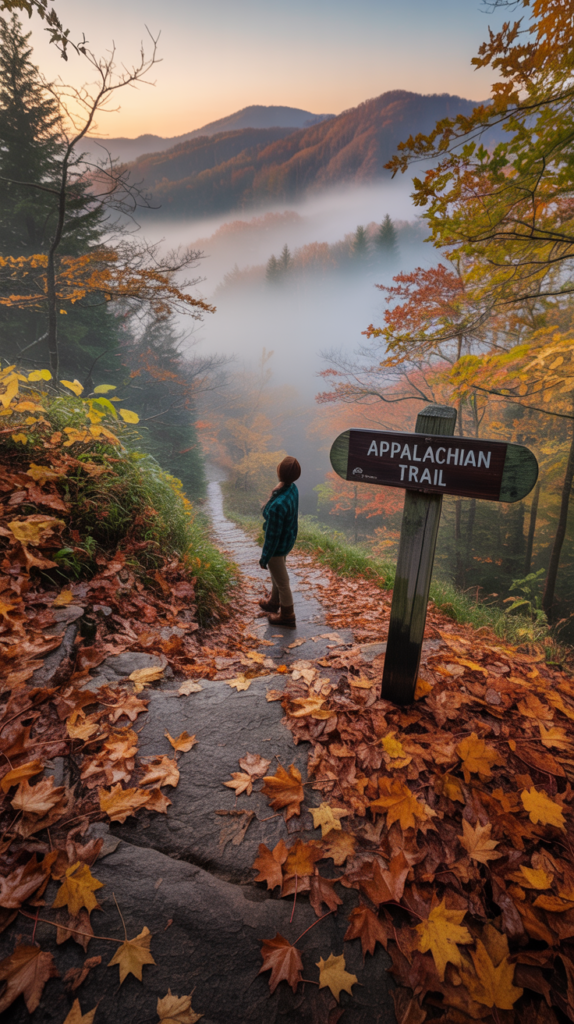
The Smokies are the most visited national park in the U.S., and fall is their shining season.
With over 100 species of native trees, the mountains become a fiery tapestry of red, orange, and gold from late September through early November.
1. How to Get There
- Closest airports: Knoxville (TYS), Asheville (AVL).
- Main entrances: Gatlinburg (TN) or Cherokee (NC).
2. When to Go
- Peak foliage: Mid-October in higher elevations, late October–early November in lower valleys.
- Best hikes for colors: Alum Cave Trail, Chimney Tops, Clingmans Dome.
3. Safest Hiking Path to Take
For a safe fall hike, Alum Cave Trail to Inspiration Point (4.4 miles RT) is perfect.
- Moderate hike with fall color views, unique rock formations, and minimal exposure to steep cliffs.
- For scenic driving, take Newfound Gap Road (US 441) — 33 miles crossing the park.
4. Distance & Duration
- Alum Cave Trail: 4.4 miles, 3–4 hours.
- Newfound Gap Drive: 33 miles, 1–2 hours (without stops).
5. Cost Breakdown
- Park entrance: Free.
- Parking in Gatlinburg: $10–$20 daily.
- Accommodation: $100–$200 per night.
6. Essential Hiking Tips
- Arrive early — parking lots fill fast.
- Fall mornings can bring heavy fog (hence “Smoky” Mountains).
- Bears are active — store food properly.
7. Tools & Lifesaving Gear
- Bear spray: Counter Assault Bear Deterrent.
- Hiking poles: Black Diamond Trail Trekking Poles.
- Rain jacket: Patagonia Torrentshell 3L.
8. Food & Water Prep
- Water: 2–3 liters per hiker.
- Trail snacks: Trail mix, beef jerky, energy chews.
9. Accommodation Options
- Inside park: LeConte Lodge (hike-in only).
- Nearby: Gatlinburg (family hotels, cabins), Townsend (quiet & rustic).
10. Pro Tips from Experienced Hikers
- Sunrise from Clingmans Dome is breathtaking.
- Carry binoculars for elk spotting in Cataloochee Valley.
- Avoid weekends if possible — crowds are intense.
3. Shenandoah National Park’s Skyline Drive (Virginia)
Introduction
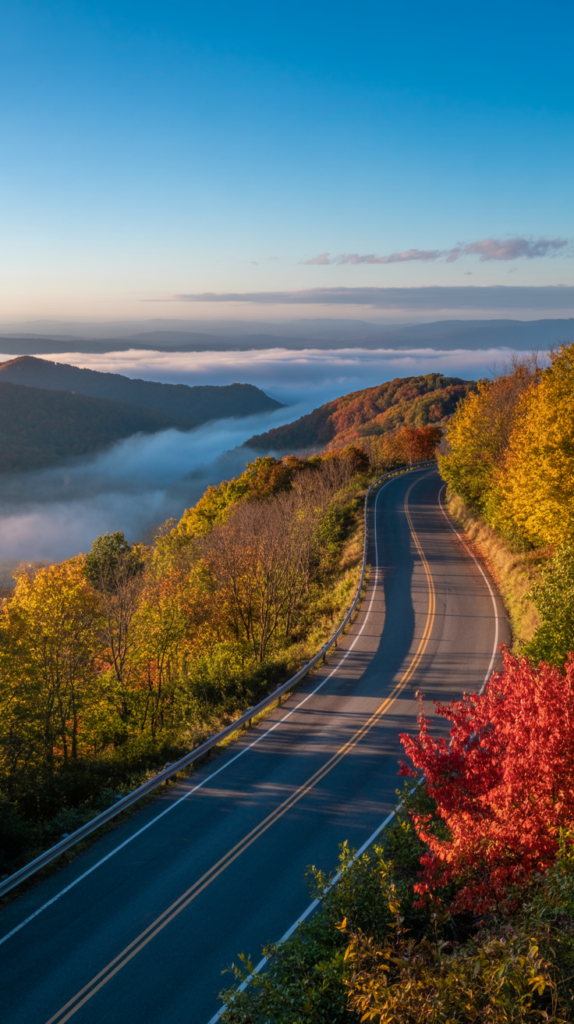
Skyline Drive is one of America’s most iconic fall road trips, winding 105 miles along the crest of the Blue Ridge Mountains in Shenandoah National Park.
Every autumn, the park explodes with fiery reds, golds, and burnt oranges, creating a painter’s dream.
The road includes 75 overlooks, each offering sweeping views of the Shenandoah Valley to the west and the Piedmont region to the east.
When to Visit
Peak color in Shenandoah usually occurs between mid-October and early November, depending on elevation.
Higher ridges change first, while the valleys follow later, giving you a two-week window of breathtaking foliage.
The Drive Experience
- Total Length: 105 miles
- Average Drive Time: 3–5 hours (without stops)
- Speed Limit: 35 mph (perfect for slow leaf-peeping)
Expect lots of pull-offs where you can park safely and take photos or hike one of the many trails branching from Skyline Drive.
Best Short Hikes Along Skyline Drive
- Stony Man Trail (1.6 miles roundtrip): A family-friendly trail leading to one of the best viewpoints in the park.
- Hawksbill Summit (2.1 miles roundtrip): Highest peak in Shenandoah at 4,051 feet, with jaw-dropping panoramic views.
- Dark Hollow Falls (1.4 miles roundtrip): Short but steep trail to a beautiful cascading waterfall framed by fall colors.
Wildlife & Safety Tips
- Black Bears: Shenandoah is home to a healthy bear population—store food properly and keep your distance if spotted.
- Deer Crossings: Especially during the rut season, deer often dart across Skyline Drive. Stay alert while driving.
- Weather: Fog is common in fall, sometimes reducing visibility. Drive carefully and use headlights.
Cost Breakdown
- Entrance Fee: $30 per vehicle (valid for 7 days).
- Lodging: Park lodges (Skyland or Big Meadows) start at $150/night, but nearby towns like Luray and Front Royal offer cheaper motels and cabins.
- Food: Pack snacks or picnic; dining is limited inside the park.
Pro Tips
- Start early to beat traffic—weekends in October are notoriously busy.
- Bring binoculars for spotting hawks and eagles migrating south.
- Download offline maps; cell service is limited inside the park.
4. Maroon Bells Scenic Area (Colorado)
Introduction
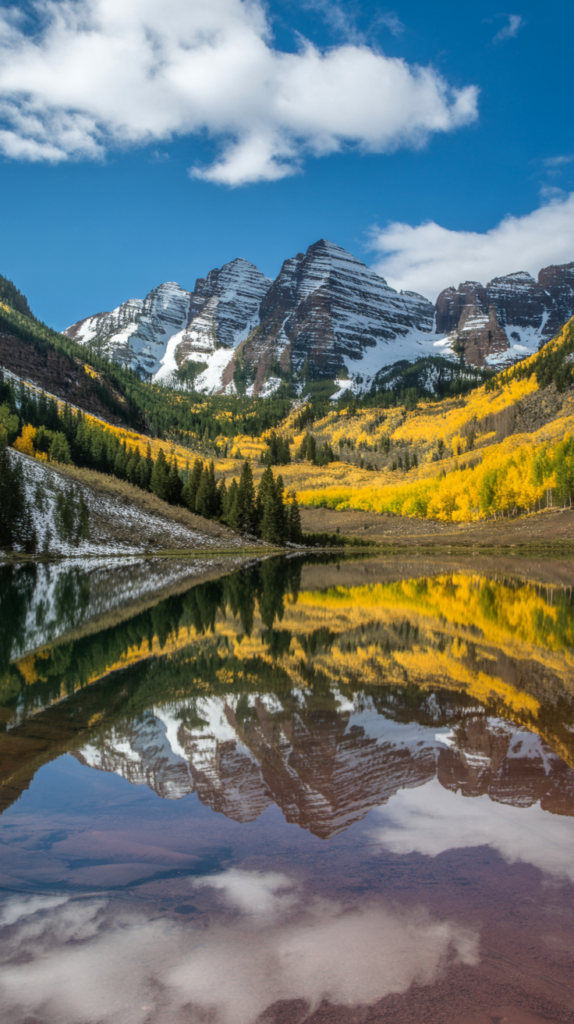
Located near Aspen, the Maroon Bells are two snow-dusted peaks that tower over a reflective alpine lake.
This spot is one of the most photographed fall destinations in North America, thanks to golden aspen groves carpeting the valleys below.
When to Visit
Peak color in the Rockies usually hits in late September to early October, with aspens turning vibrant yellow before the first snow arrives.
Best Hikes at Maroon Bells
- Maroon Lake Scenic Trail (1 mile roundtrip): A flat, accessible path around Maroon Lake, perfect for those who just want a leisurely stroll and iconic photos.
- Crater Lake Trail (3.6 miles roundtrip): More challenging but offers closer views of the Maroon Bells and surrounding aspens.
- West Maroon Pass (13 miles roundtrip): For seasoned hikers, this trail leads deep into the Elk Mountains, surrounded by endless fall color.
Scenic Drive Logistics
- Access Road: Maroon Creek Road
- Restrictions: Between June and October, private vehicle access is limited between 8 a.m. – 5 p.m. You’ll need to book a shuttle bus ($16–20 per person) from Aspen Highlands.
Safety & Wildlife
- Altitude: Maroon Bells sit at nearly 10,000 feet. Stay hydrated and watch for altitude sickness.
- Moose & Elk: Keep at least 75 feet away—fall is rut season, and animals can be aggressive.
- Cold Nights: Even in September, temperatures can drop below freezing. Bring layers.
Cost Breakdown
- Entrance Fee: $10–$20 per vehicle/shuttle reservation.
- Parking: Limited; must reserve in advance during peak season.
- Lodging: Aspen hotels are pricey ($250+ per night), but you can find budget options in nearby Basalt or Carbondale.
Pro Tips
- Arrive before sunrise to witness alpenglow on the peaks—an unforgettable experience.
- Tripods are essential for photographers aiming to capture mirror-like lake reflections.
- Book shuttle tickets weeks in advance; spots sell out fast during peak foliage.
5. Acadia National Park’s Jordan Pond & Carriage Roads (Maine)
Introduction
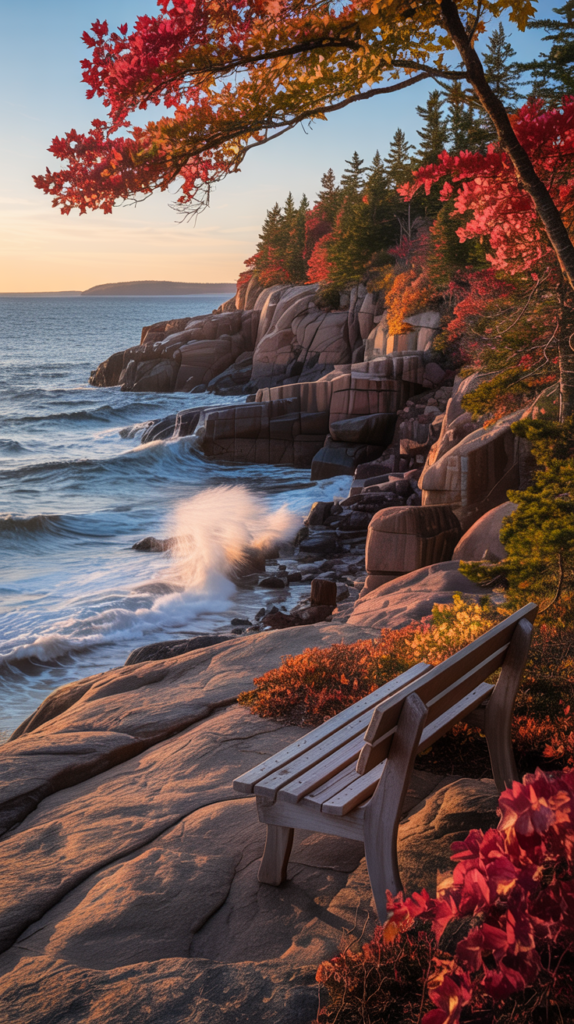
Acadia National Park, perched on Maine’s rugged coast, is a breathtaking fall destination where vivid autumn colors meet the Atlantic Ocean.
The most famous fall spot is Jordan Pond, a crystal-clear lake framed by the iconic Bubbles Mountains and surrounded by fiery red maples, golden birches, and evergreens.
The historic Carriage Roads, built by John D. Rockefeller Jr., provide a peaceful and scenic way to explore the park’s foliage by foot, bike, or horse-drawn carriage.
When to Visit
Peak foliage in Acadia usually occurs in early to mid-October.
The mix of hardwood forests and coastal climate creates some of the most brilliant, long-lasting colors in New England.
Best Fall Hikes & Walks
- Jordan Pond Path (3.3 miles roundtrip): Flat and family-friendly, this trail circles the pond with uninterrupted foliage reflections in the water.
- South Bubble Trail (1.5 miles roundtrip): Short but steep climb to a famous rock called “Bubble Rock” with panoramic views of Jordan Pond and surrounding forests.
- Carriage Roads (45 miles total): A network of wide gravel paths perfect for walking or cycling under colorful fall canopies.
Scenic Drive Option
- Park Loop Road (27 miles): The main road through Acadia, offering overlooks of the coastline, Cadillac Mountain, and vibrant forests.
Wildlife & Safety Tips
- Moose & Deer: Keep a safe distance, especially during fall rut season.
- Cold Winds: Even in October, coastal winds can feel chilly—pack a windbreaker.
- Slippery Rocks: Granite trails near Jordan Pond can get slick after rain or morning frost.
Cost Breakdown
- Entrance Fee: $35 per vehicle (valid 7 days).
- Lodging: Bar Harbor offers everything from budget motels ($120+) to luxury waterfront inns ($300+).
- Food: Don’t miss Jordan Pond House Restaurant, famous for its warm popovers with jam.
Pro Tips
- Sunrise at Cadillac Mountain (the highest point on the East Coast) is magical in autumn—arrive early, as reservations are required.
- Visit midweek for fewer crowds.
- Carry binoculars—fall is peak season for bird migration along the coast.
6. The Great Smoky Mountains National Park (Tennessee & North Carolina)
Introduction
The Great Smoky Mountains are often called “America’s most visited national park” and for good reason.
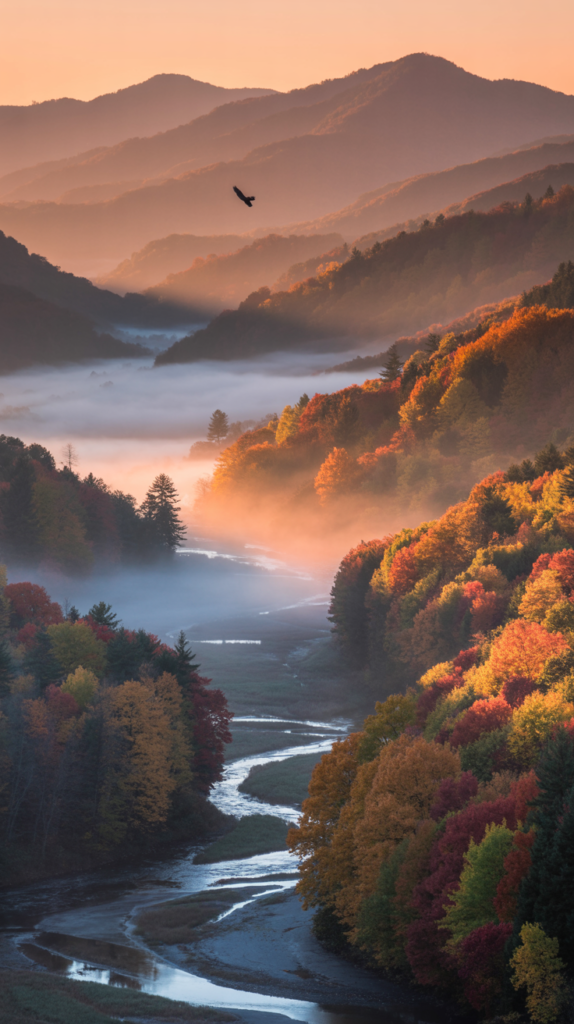
In fall, this UNESCO World Heritage Site transforms into a patchwork quilt of colors, with over 100 species of native trees contributing to a stunning display of red maples, golden hickories, scarlet oaks, and orange sugar maples.
The Smokies are especially unique because their elevation range (875 ft to 6,643 ft) allows for a long foliage season, lasting from late September to early November.
When to Visit
- Late September – Early October: Higher elevations (Clingmans Dome, Newfound Gap) turn first.
- Mid to Late October: Mid-elevations peak.
- Late October – Early November: Lower valleys (Cades Cove, Little River Road) show peak color.
Best Fall Hikes
- Alum Cave Trail (5 miles roundtrip): Moderate hike with dramatic views, arching trees, and stunning vistas.
- Clingmans Dome (1 mile roundtrip paved trail): Short but steep climb to the highest peak in the Smokies, with panoramic fall views.
- Andrews Bald (3.6 miles roundtrip): A grassy meadow at high elevation, offering wide-open vistas framed by fall foliage.
Scenic Drives
- Newfound Gap Road (33 miles): Runs through the park, crossing the state line with countless overlooks.
- Cades Cove Loop Road (11 miles): A valley drive surrounded by mountain views, historic cabins, and herds of deer and wild turkey.
Wildlife & Safety Tips
- Black Bears: Common in the Smokies—never feed or approach them.
- Fog & Rain: The park is nicknamed “Smoky” for its mist—visibility can drop quickly, so drive cautiously.
- Traffic: Expect congestion, especially in Cades Cove during peak weekends.
Cost Breakdown
- Entrance Fee: The park itself is free, but you’ll need a parking tag ($5/day or $15/week).
- Lodging: Gatlinburg and Pigeon Forge have hotels from $120/night, with plenty of cabins and chalets available.
- Food: BBQ, Southern comfort food, and pancake houses abound in nearby towns.
Pro Tips
- Arrive at Clingmans Dome for sunrise—the mist rising from the valleys creates an ethereal golden glow.
- Midweek visits are far less crowded than weekends.
- Carry layers—temperatures can swing drastically between low valleys and high peaks.
7. Catskill Mountains (New York)
Introduction
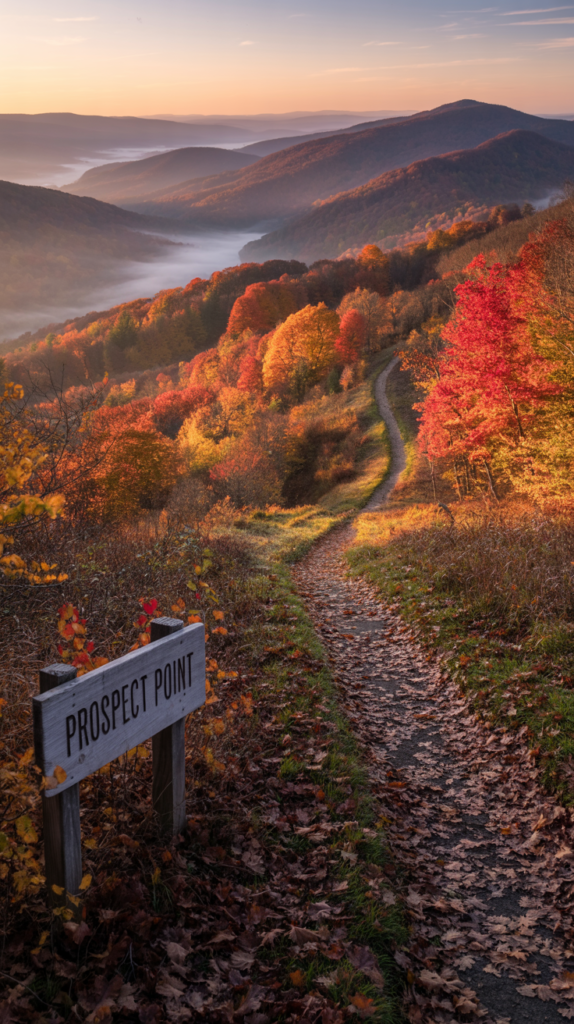
Just two hours north of New York City, the Catskill Mountains are one of the best places in the eastern U.S. to witness fall foliage.
Known for their rolling forested hills, rocky cliffs, and cascading waterfalls, the Catskills become a fiery blend of crimson, orange, and gold from late September through October.
The region is steeped in history, having inspired 19th-century Hudson River School painters, and today it draws hikers, leaf-peepers, and weekend travelers from across the Northeast.
When to Visit
- Peak Season: Late September to mid-October.
- Colors peak earlier at higher elevations (above 2,500 feet) and later in valleys.
Best Fall Hikes
- Kaaterskill Falls Trail (2.6 miles roundtrip): Leads to one of New York’s tallest waterfalls (260 ft), surrounded by blazing maples and oaks.
- Overlook Mountain (4.6 miles roundtrip): Moderate hike with sweeping valley views and a fire tower at the summit.
- Giant Ledge & Panther Mountain (6.3 miles roundtrip): A challenging trail but worth it for endless panoramic views of colorful ridgelines.
Scenic Drive
- Route 28 Scenic Byway: Cuts across the Catskills with multiple pull-offs for fall photos.
- Route 23A: Winding mountain road with dramatic cliffs, waterfalls, and vibrant foliage.
Wildlife & Safety Tips
- Black Bears: Still active in fall—store food properly.
- Slippery Trails: Fallen leaves can hide rocks and roots, increasing risk of slips.
- Steep Drop-offs: Exercise caution around Kaaterskill Falls—stay on marked paths.
Cost Breakdown
- Most trailheads are free or require a $10–$15 parking fee.
- Lodging: Cozy inns and cabins range from $140–$250/night.
- Food: Farm-to-table restaurants and cider mills are abundant in the region.
Pro Tips
- Visit midweek for quieter trails.
- Stop by Hunter Mountain for scenic gondola rides above the foliage.
- Combine hiking with local fall festivals and apple picking.
8. White Mountains & Kancamagus Highway (New Hampshire)
Introduction
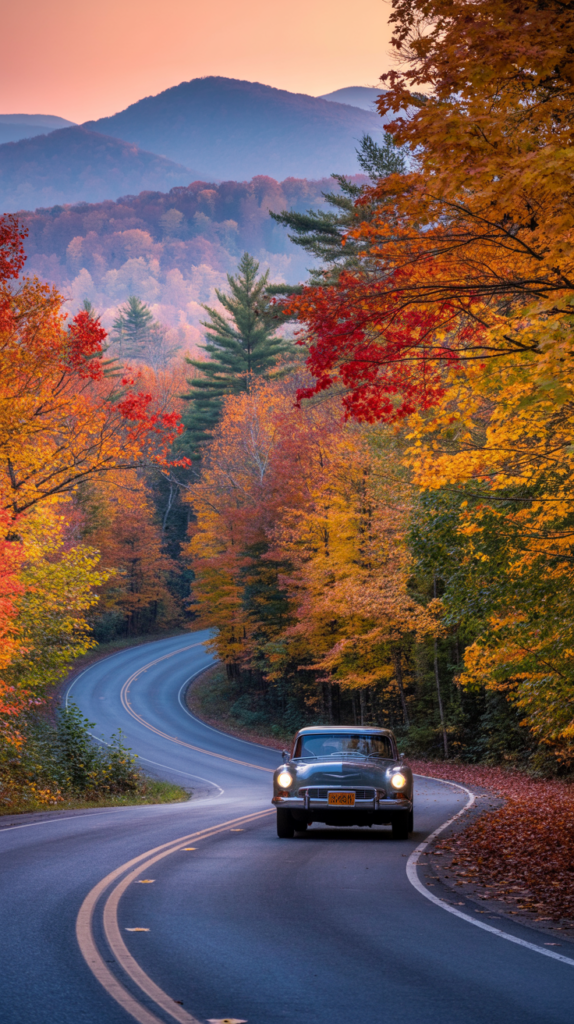
The White Mountains of New Hampshire are one of the crown jewels of New England fall foliage.
Here, the legendary Kancamagus Highway (Route 112) a 34-mile scenic byway winds through dense hardwood forests, covered bridges, and rushing rivers.
Fall hikers are treated to trails that climb above the treeline, where sweeping views of valleys filled with fiery foliage stretch to the horizon.
When to Visit
- Peak Season: Early to mid-October.
- The White Mountains are among the earliest regions in New England to hit peak foliage, making them ideal for early October trips.
Best Fall Hikes
- Franconia Ridge Loop (8.6 miles roundtrip): A strenuous but iconic trail traversing alpine ridgelines with world-class fall views.
- Mount Willard Trail (3.2 miles roundtrip): Moderate hike with a grand view of Crawford Notch.
- Artist’s Bluff (1.5 miles roundtrip): A short, steep hike that rewards hikers with postcard-perfect views of Echo Lake surrounded by fall color.
Scenic Drive
- Kancamagus Highway (34 miles): Nicknamed “The Kanc,” this route is one of the most famous fall drives in America, with multiple overlooks such as Sabbaday Falls, Sugar Hill, and Rocky Gorge.
Wildlife & Safety Tips
- Moose Crossings: Be alert when driving at dusk and dawn.
- Cold Winds: Even in fall, alpine ridges can be frigid—bring layers.
- Slippery Rocks: Trails with waterfalls and rivers can be hazardous after rain.
Cost Breakdown
- Day use fee: $5 for White Mountain National Forest parking.
- Lodging: North Conway is a popular base, with motels starting around $120/night and resorts from $250/night.
- Food: Hearty New England fare—try maple syrup treats and local cider donuts.
Pro Tips
- Start hikes early—parking lots fill quickly during peak weekends.
- Visit midweek for quieter drives along The Kanc.
- Bring a camera filter for photographing waterfalls against vibrant leaves.
9. Ozark National Forest (Arkansas)
Introduction
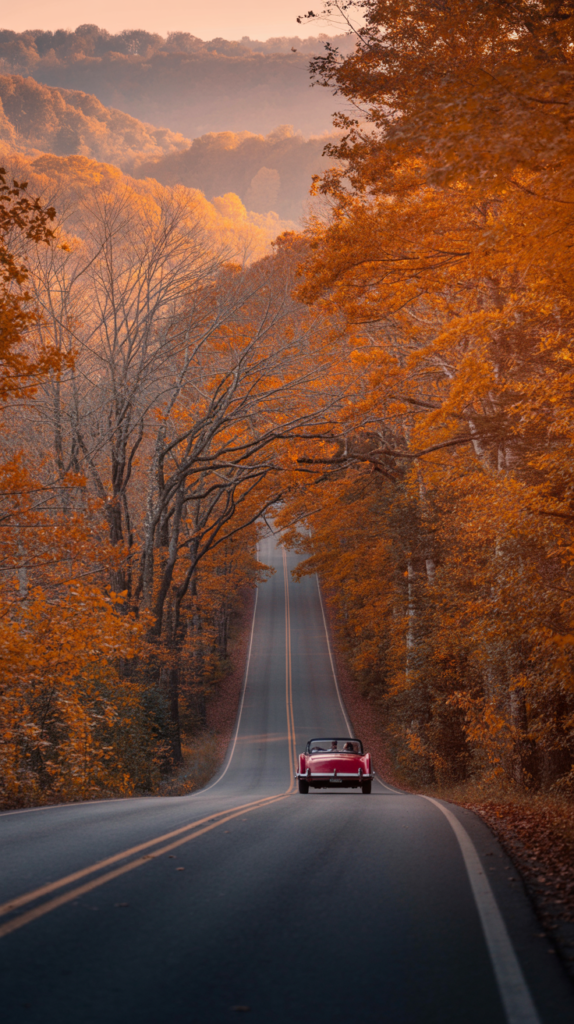
When people think of fall foliage, Arkansas isn’t always the first destination that comes to mind but the Ozark National Forest is a hidden gem.
With over 1.2 million acres of protected wilderness, this region offers rolling mountains, river valleys, and thick hardwood forests that explode into shades of scarlet, orange, and gold each autumn.
Because of its mix of elevations and tree species, the Ozarks offer a long foliage season that rivals better-known destinations.
When to Visit
- Peak Season: Mid-October through early November.
- The higher peaks like Mount Magazine change earlier, while valleys hold color into November.
Best Fall Hikes
- Whitaker Point Trail (a.k.a. Hawksbill Crag, 2.9 miles roundtrip): Perhaps the most photographed spot in Arkansas, this rocky outcrop juts dramatically over a valley of brilliant fall color.
- Glory Hole Falls Trail (2 miles roundtrip): A short but stunning hike to a waterfall that pours through a natural rock hole—surrounded by fiery leaves in autumn.
- Mount Magazine Trail System (various lengths): The state’s highest peak offers sweeping fall panoramas and multiple interconnected trails.
Scenic Drive
- Pig Trail Scenic Byway (19 miles): A winding route through the Boston Mountains, lined with blazing hardwoods.
Wildlife & Safety Tips
- Copperhead Snakes: Still active in early fall—watch where you step.
- Steep Cliffs: Hawksbill Crag has sheer drop-offs—use extreme caution.
- Remote Areas: Cell service is limited—carry a map or GPS unit.
Cost Breakdown
- Most trails are free, though some parking areas request a $3–$5 fee.
- Lodging: Rustic cabins and campgrounds are abundant ($30 campsites, $120–$200 cabins).
- Food: Local diners offer hearty Southern cooking.
Pro Tips
- Go early in the morning at Whitaker Point to avoid crowds and capture fog rising from the valleys.
- Bring trekking poles—many trails have uneven footing covered in leaves.
- Fall is hunting season in some areas—wear bright colors when hiking off main trails.
10. Columbia River Gorge (Oregon)
Introduction
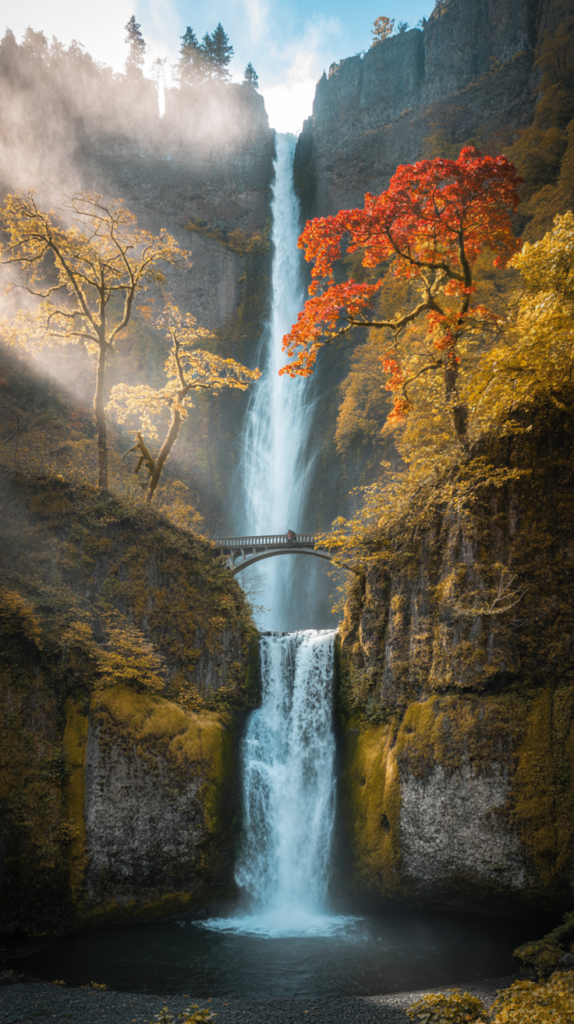
The Columbia River Gorge is one of the Pacific Northwest’s natural wonders, a massive canyon carved by the Columbia River on the Oregon-Washington border.
In fall, its steep basalt cliffs, lush forests, and iconic waterfalls are framed by fiery autumn foliage.
This area is known for waterfall hikes, moss-draped trails, and sweeping river vistas, all glowing with autumn hues from late September through October.
When to Visit
- Peak Season: Early October to late October.
- Fall is also prime salmon migration season—watch for fish leaping in streams.
Best Fall Hikes
- Multnomah Falls (2.4 miles roundtrip): Oregon’s tallest waterfall (620 ft), surrounded by brilliant foliage.
- Eagle Creek Trail (up to 13 miles): A dramatic hike past multiple waterfalls, sheer cliffs, and lush autumn scenery.
- Latourell Falls Loop (2.4 miles): Short but scenic loop trail around a picture-perfect waterfall framed by maples.
Scenic Drive
- Historic Columbia River Highway (70 miles): One of the most scenic drives in the U.S., with multiple viewpoints, waterfalls, and hiking trailheads.
Wildlife & Safety Tips
- Slippery Trails: Mist from waterfalls and fallen leaves make surfaces slick.
- Landslides: Fall rains can destabilize cliffs—pay attention to trail conditions.
- Crowds: Multnomah Falls is extremely popular—arrive early.
Cost Breakdown
- Parking permits: Some trailheads require a $5 Northwest Forest Pass.
- Lodging: Hood River offers boutique hotels ($160–$250/night) and cozy B&Bs.
- Food: Sample Pacific Northwest cuisine—fresh salmon, craft beer, and local cider.
Pro Tips
- Drive the old highway west to east for the best waterfall stops.
- Carry a waterproof jacket—fall rain showers are frequent.
- Combine hiking with a stop at a local orchard for fresh apples and pears.
11. Aspen & Maroon Bells (Colorado)
Introduction
Few places are as iconic in fall as Aspen, Colorado, where the town is named after the golden aspen trees that blanket the mountainsides.
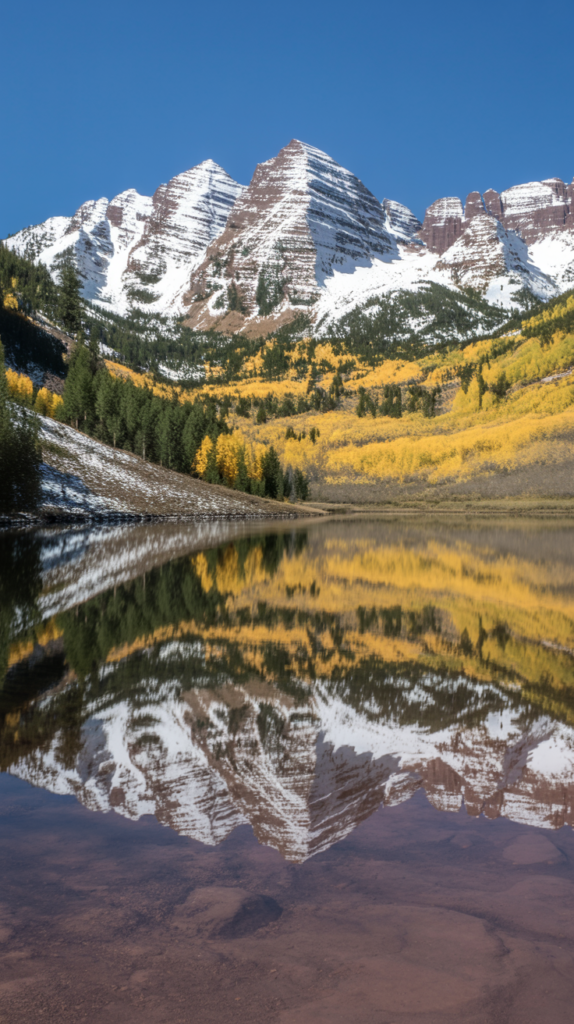
The surrounding Maroon Bells-Snowmass Wilderness is one of the most photographed landscapes in North America, especially in autumn when fiery yellow aspens contrast sharply against the rugged peaks of the Elk Mountains.
When to Visit
- Peak Season: Mid to late September.
- The high elevation means color changes earlier here than in most of the country.
Best Fall Hikes
- Maroon Lake Scenic Trail (1 mile): An easy loop around the lake with stunning views of the Maroon Bells reflected in the water.
- Crater Lake Trail (3.6 miles roundtrip): Moderate hike through aspen groves to a glacial lake surrounded by dramatic peaks.
- Cathedral Lake Trail (5.6 miles roundtrip): A challenging hike with alpine views and brilliant aspens along the lower sections.
Scenic Drive
- Maroon Creek Road: Access to the Maroon Bells area (closed to private vehicles during peak season—shuttle reservations required).
- Independence Pass (32 miles): One of Colorado’s highest paved roads, with breathtaking fall foliage at 12,000 feet.
Wildlife & Safety Tips
- Altitude Sickness: Trails start at 8,000+ feet—stay hydrated and pace yourself.
- Cold Nights: Temperatures can drop below freezing, even in September.
- Limited Parking: Shuttle reservations are required for Maroon Bells during peak season.
Cost Breakdown
- Entrance/shuttle: $10–$16 per person for Maroon Bells access.
- Lodging: Aspen hotels range from $250–$500/night, though budget options exist in nearby Carbondale.
- Food: Upscale dining dominates Aspen, but cafes and breweries are available.
Pro Tips
- Visit at sunrise for the classic reflection photo of the Maroon Bells glowing pink against golden aspens.
- Pack layers—the temperature can shift from hot midday sun to freezing evenings.
- Book shuttles or lodging months in advance—fall is peak season here.
12. Glacier National Park (Montana)
Introduction
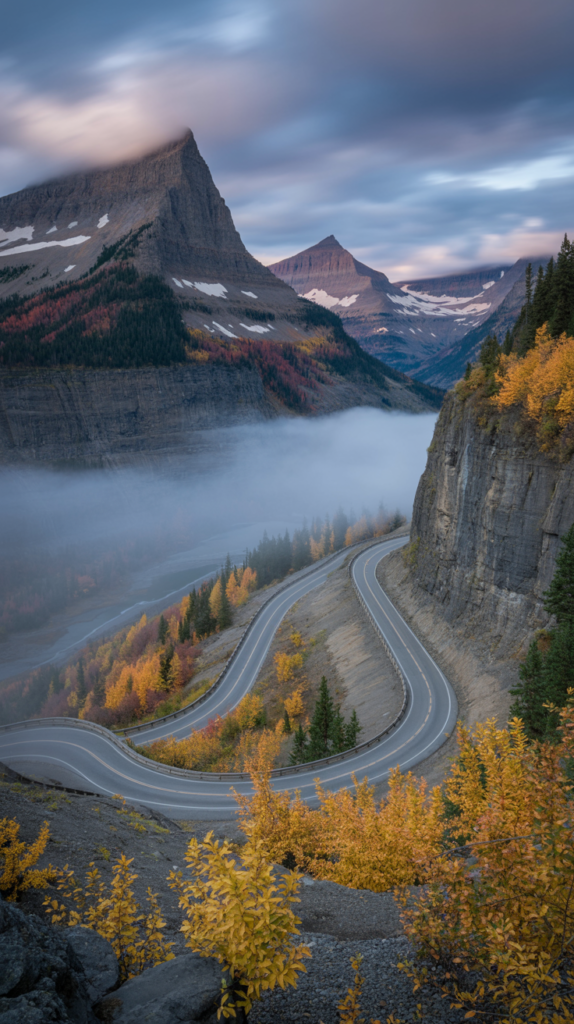
Known as the “Crown of the Continent,” Glacier National Park is a wild and rugged fall destination that blends dramatic mountains, alpine lakes, and vast forests.
While most visitors come in summer, early fall offers fewer crowds, vibrant colors, and crisp mountain air.
Golden larches, glowing aspens, and scarlet huckleberry bushes light up the slopes in late September and early October, creating an alpine wonderland.
When to Visit
- Peak Season: Mid-September to early October.
- Snow can arrive suddenly, so plan for flexible travel dates.
Best Fall Hikes
- Trail of the Cedars (1 mile): Easy boardwalk through mossy forest and waterfalls, framed by fiery fall foliage.
- Hidden Lake Overlook (2.7 miles roundtrip): Short but iconic trail near Logan Pass with sweeping autumn views.
- Highline Trail (up to 11 miles one-way): A longer, more strenuous alpine hike with breathtaking fall scenery.
Scenic Drive
- Going-to-the-Sun Road (50 miles): One of the most spectacular drives in America, climbing from valleys to alpine passes with panoramic views of fall-colored forests.
Wildlife & Safety Tips
- Grizzly Bears: Extremely active in fall—carry bear spray and hike in groups.
- Sudden Weather: Snow and ice can arrive as early as September.
- Road Closures: Check conditions before traveling—the Going-to-the-Sun Road often closes by mid-October.
Cost Breakdown
- Entrance Fee: $35 per vehicle (valid 7 days).
- Lodging: In-park lodges start at $200+, while towns like Whitefish offer more budget options.
- Food: Limited in-park dining in fall—bring your own supplies.
Pro Tips
- Start early—sunlight fades quickly in autumn’s shorter days.
- Visit Two Medicine Valley for quieter hikes with brilliant colors.
- Pack binoculars—fall is peak wildlife viewing season
Conclusion
Fall in the U.S. offers some of the world’s most breathtaking hiking and driving experiences.
From the fiery ridges of the White Mountains to the golden aspens of Colorado and the misty waterfalls of the Columbia River Gorge, every region brings its own unique palette of colors and landscapes.
Key Takeaways
- Timing is everything: Peak foliage shifts by region plan carefully.
- Safety first: From bears in Glacier to slippery cliffs in the Ozarks, know the risks before you go.
- Pack smart: Hiking poles, layers, water filtration, and navigation tools can turn a tough trek into an enjoyable adventure.
- Enjoy locally: Fall festivals, apple orchards, cider mills, and regional foods add richness to your trip.