

Visiting Vienna at Christmas is very thrilling — but it’s more than just excitement. It’s that deep, heartwarming feeling you get when a place welcomes you into its festive world the moment you arrive.
Vienna doesn’t simply decorate for the season; it embraces it. And as a traveler, you can’t help but feel like you’ve stepped straight into the soft glow of a holiday dream.
The first time you wander through the city during Advent, something magical happens. Historic squares shimmer under delicate lights, the air carries the scent of roasted chestnuts, and palace courtyards feel almost enchanted.

You might find yourself slowing down without even realizing it — taking in the twinkling stalls, the laughter around you, and that comforting warmth that seems to float through the cold winter air.
What makes Vienna truly special at Christmas is how personal it feels.
Whether you’re strolling hand-in-hand with someone you love, watching your kids press their faces against market stalls, or exploring solo with a warm cup of Glühwein, the city has a way of making you feel completely at home in its holiday magic.
A quick planning note: Vienna’s Christmas markets usually open from mid-November through late December, with a few running into the New Year.
Dates shift each year, so it’s always worth checking ahead. The famous Rathausplatz market and Ice World often run until late December or early January, and Schönbrunn Palace keeps its festive market open well into the holiday season too.
But what truly stays with you is how Vienna touches all your senses.
You see the golden lights wrapped around Baroque buildings.
You hear soft classical music echoing from churches and courtyards.
You smell cinnamon, cloves, pastries, and warm punch drifting through the air.
You feel a kind of peaceful joy that only this city seems to deliver.
In this guide, I’ll show you how to create your own unforgettable Christmas in Vienna — from the markets worth lingering in, to the best places to stay, what to taste, how to get around, thoughtful gift ideas, sample itineraries, budgets, and all the insider tips that make your holiday smooth and magical.
Let’s make your Vienna Christmas experience one you’ll cherish long after the lights fade.
Quick facts & timing (what to expect)
- Typical season: Vienna’s Christmas markets usually open mid-November and run through late December (many markets operate until Dec 24–26 and some run into early January). These markets include major ones at Rathausplatz (City Hall), Schönbrunn Palace, Spittelberg, and others.
- Major attractions to plan around: Rathausplatz Christkindlmarkt (main market and ice rink), Schönbrunn Palace Christmas Market, Spittelberg’s artisan market, the Wiener Eistraum (ice skating on Rathausplatz).
- Weather: Expect cold temperatures (often around −1°C to 5°C / 30°F–41°F), frequent overcast days, possible snow. Layering and waterproof outerwear are essential.
- Language: German is the official language; English is widely spoken in hotels, markets, and tourist sites.
- Currency: Euro (EUR). Credit cards accepted widely, but small market stalls often prefer cash — bring some euros for food stalls and small purchases.
Why Christmas in Vienna is special
- Imperial backdrop: Vienna’s Habsburg palaces, cobblestone lanes and Gothic façades make the markets cinematic; twinkling lights look spectacular against the Rathaus, Belvedere and Schönbrunn.
- Music & tradition: Vienna’s musical calendar is busy in December from church concerts to the Vienna Boys’ Choir and intimate chamber concerts.
- Food & drink: Seasonal Austrian treats (Lebkuchen, Maroni/chestnuts, roasted sausages, handicraft hot chocolates and punch) pair with the markets’ handmade goods for an authentic festive experience.
- Variety for all tastes: Large, tourist-friendly markets (Rathausplatz) sit beside intimate, artisan markets (Spittelberg), while palatial settings (Schönbrunn) are family-friendly and scenic.
Shop my Christmas Travel Essentials on amazon




Top Christmas markets & what to expect (must-visits)
Below are Vienna’s top festive markets and what makes each one worth a stop.
Rathausplatz — the big show (Christkindlmarkt & Wiener Eistraum)

The market in front of City Hall (Rathausplatz) is Vienna’s flagship Christmas market.
Expect dozens of stalls, a large decorative tree, lights, family attractions, and an expansive ice-skating area called the Wiener Eistraum that transforms the square into a glittering ice landscape.
It’s lively, very photogenic, and usually runs from mid-November through December. If you want the full, classic “Vienna at Christmas” picture, start here.
Schönbrunn Palace Christmas Market — palatial & family friendly

Set before the golden baroque façade of Schönbrunn Palace, this market combines elegant stalls, arts & crafts, and family activities (sometimes children’s workshops and concerts).
It’s a short trip from the city center and great for photography and a slightly calmer market experience. Dates and exact opening hours vary year to year (usually early November through late December).
Spittelberg — artisan, romantic lanes

Located in narrow Biedermeier alleys, Spittelberg’s market is renowned for handcrafted gifts, boutique makers and a cozy, intimate atmosphere.
It’s perfect for unique presents and quieter evenings away from the biggest crowds.
Karlsplatz / Art Advent — artisan and eco-conscious

Art Advent at Karlsplatz highlights handmade items and often emphasizes sustainability (organic food, crafts).
It’s next to the great baroque Karlskirche a dramatic setting for artisan stalls.
Other notable markets
- Belvedere Palace market: Beautiful Baroque setting and more refined stalls.
- Freundlich/Stephansplatz: Near St. Stephen’s Cathedral central and traditional.
- Local neighborhood markets: Smaller markets pop up in many districts (e.g., in front of neighborhood churches) great for fewer crowds and local finds.
(For a full official overview of the main markets and dates, Vienna’s tourism pages provide the annual schedule and locations.)
What to do (beyond market hopping)
Here’s a checklist of the best seasonal experiences in Vienna:
- Ice skating at Wiener Eistraum (Rathausplatz): Skate on a large rink with views of City Hall skate rentals available. It sometimes includes a curling area and extended evening hours.
- Attend a Christmas concert or mass: Book a classical concert (many churches and halls host Advent/Christmas music). St. Stephen’s Cathedral, Musikverein and smaller churches put on seasonal concerts book ahead.
- Try seasonal foods: Sample roasted chestnuts (Maroni), Stollen, Lebkuchen, Kaiserschmarrn (shredded pancake) at stalls, and a cup of Glühwein or non-alcoholic Kinderpunsch.
- Visit pastry shops & cafés: Demel and Café Sacher are institutions try Sachertorte or holiday pastries in historic interiors.
- See the lights & window displays: Karlsplatz, Graben, Kärntner Straße and the shopping streets glow at night. Walking through the Innere Stadt (Old Town) after dark is magical.
- Horse-drawn carriage ride (Fiaker): If you want ultra-romantic winter vibes, a short Fiaker ride through the historic center is possible (note: prices vary and it’s a touristy experience).
- Tours: Consider a guided walking tour of the Christmas markets or a specialized food/walking tour to sample the best eats and learn local holiday traditions.
- Museum visits & palace tours: Combine a market morning with visits to the Hofburg, Kunsthistorisches Museum or Belvedere (some have special holiday exhibits).
How to get to Vienna — flights & trains
By air (Vienna International Airport — VIE)
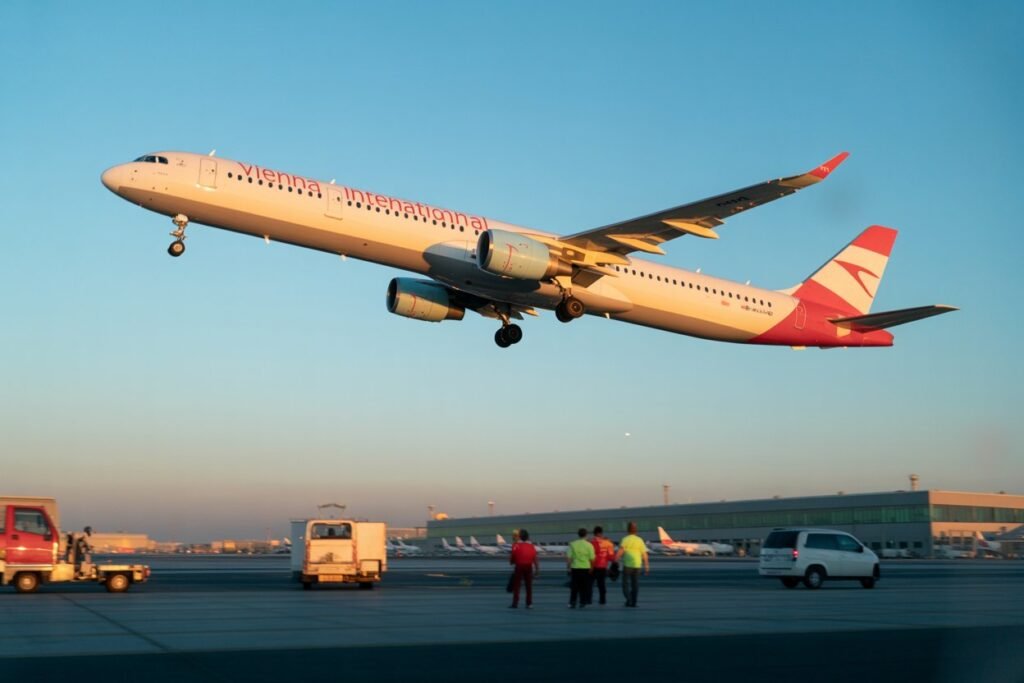
Vienna International Airport is the main gateway. From the airport you have fast rail and S-bahn connections into the city:
ÖBB Railjet reaches Wien Hauptbahnhof quickly (about 15 minutes) and the S-Bahn (S7) connects to Wien Mitte in about 25 minutes both are frequent.
If you prefer taxis or transfers, the ride into the center takes about 20–40 minutes depending on traffic.
Pro tip: people also read 20+ Jaw-Dropping Christmas Yard Decorating Ideas That’ll Wow Your Neighbors
By train (strong option from Europe)

Vienna is well connected by rail across Europe via ÖBB Railjet and international routes: fast trains arrive from cities like Salzburg, Linz, Munich, Budapest and Prague.
Wien Hauptbahnhof is the main long-distance rail terminal with frequent services and easy connections to the U-bahn and trams.
From surrounding countries / road
Driving is straightforward but watch for winter weather and parking restrictions; central Vienna is best navigated by public transport once you arrive.
Getting around inside Vienna: public transport & cards

Vienna’s public transport is efficient and tourist-friendly: U-bahn (subway), trams, buses and S-bahn. Tickets are single rides or tourist passes (24/48/72-hour, 7-day).
The Vienna City Card or 24/48/72-hour travel passes give unlimited rides within the city zone and often include discounts at attractions they’re worth it for market hopping across districts.
Buy tickets from machines, apps or validation points.
Practical tips:
- Validate paper tickets if required; digital tickets via the Wiener Linien/WienMobil app are easiest.
- U-bahn stops are frequent; most major markets are an easy ride from Innere Stadt stations.
- Night trams/U-bahn operate, but check schedules on weekends/holidays.
Where to stay — neighborhoods & hotel picks
Choosing the right neighborhood depends on your priorities: historic sights, nightlife, shopping, or quieter family stays.
Best areas for Christmas visitors

- Innere Stadt (1st District) — Best for first-time visitors. Steps from St. Stephen’s Cathedral, major markets, and many top hotels. Good for walking to markets in the Old Town.
- Leopoldstadt (2nd District) — Close to Prater and within short transit rides to the center; family friendly.
- Mariahilf (6th District) / Mariahilfer Straße — Great for shopping (Mahü) and mid-range hotels; easy access to markets and restaurants.
- Neubau (7th District) — Trendy, creative area with boutique shopping and cafés — stylish if you want design-led neighborhoods.
Hotel suggestions (examples across budgets)

- Luxury: Hotel Sacher Wien (classic Viennese luxury, near Opera), The Ritz-Carlton (if available), Do&Co/Grand Hotel Wien.
- Upper-mid: Hotel Das Triest, Falkensteiner, or Radisson Blu Style (close to Rathausplatz).
- Boutique / design: 25hours Hotel, Hotel Altstadt Vienna in Neubau.
- Budget / charming: Hostels and 3-star hotels around Mariahilf and Naschmarkt are convenient and well-located.
Book early for peak holiday dates (especially if you want a room in the Innere Stadt near market squares), and watch for special holiday cancellation rules.
Where to shop — best places and gift ideas
Vienna is a wonderful place to buy Christmas gifts — from handcrafted ornaments to gourmet food items.
Shopping streets & markets
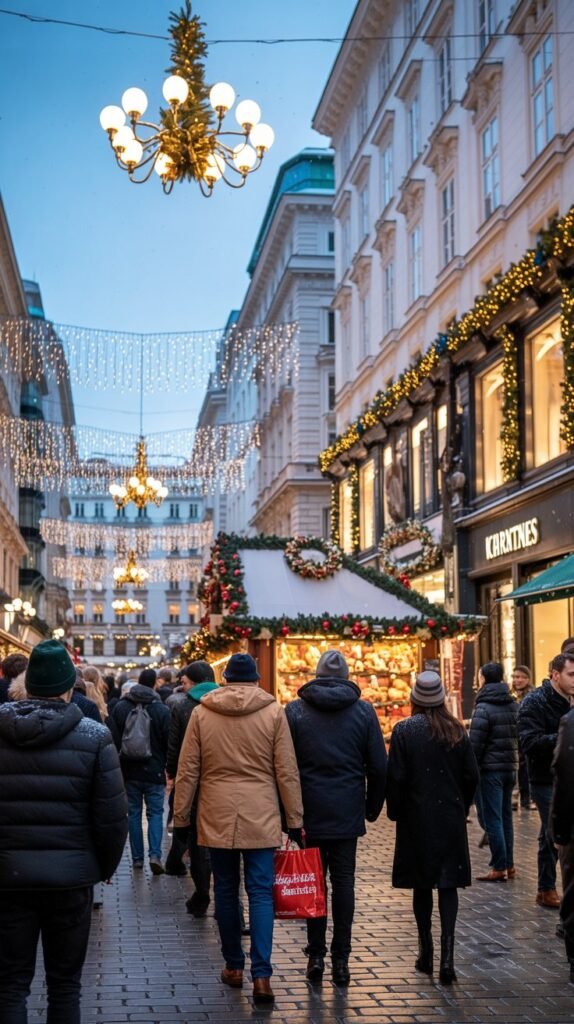
- Mariahilfer Straße: Vienna’s longest, busiest shopping street with high-street brands and department stores ideal for general shopping.
- Kärntner Straße, Graben & Kohlmarkt: Luxury shopping and Viennese boutiques near the Ringstraße for premium gifts (jewelry, fashion).
- Naschmarkt: For edible gifts spices, specialty oils, quality coffee, sweets and local delicacies; the adjacent restaurants and food stalls also make great culinary presents.
Best Vienna gift ideas
- Hand-blown glass/ornaments: Market stalls and artisan shops offer beautiful decorations.
- Austrian chocolates & pastries: Sacher cake slices (vacuum-packed), Mozartkugeln (sweets), and seasonal Lebkuchen.
- Wool scarves / knitwear: Austrian designers and markets sell quality winter wear.
- Coffee & tea from Julius Meinl: Packaged blends make excellent gifts.
- Crystal and jewelry: Swarovski (Austrian brand) and smaller artisan jewelers in the Golden Quarter (Kohlmarkt).
- Local crafts & wooden toys: Especially from artisan stalls at Spittelberg and Karlsplatz.
Tips for buying at markets
- Bargaining is not common in Austria; price is usually fixed.
- Ask vendors about packaging – many will wrap fragile items for travel.
- Small-value cash is handy for market purchases.
Best stores and specialty shops (quick list)
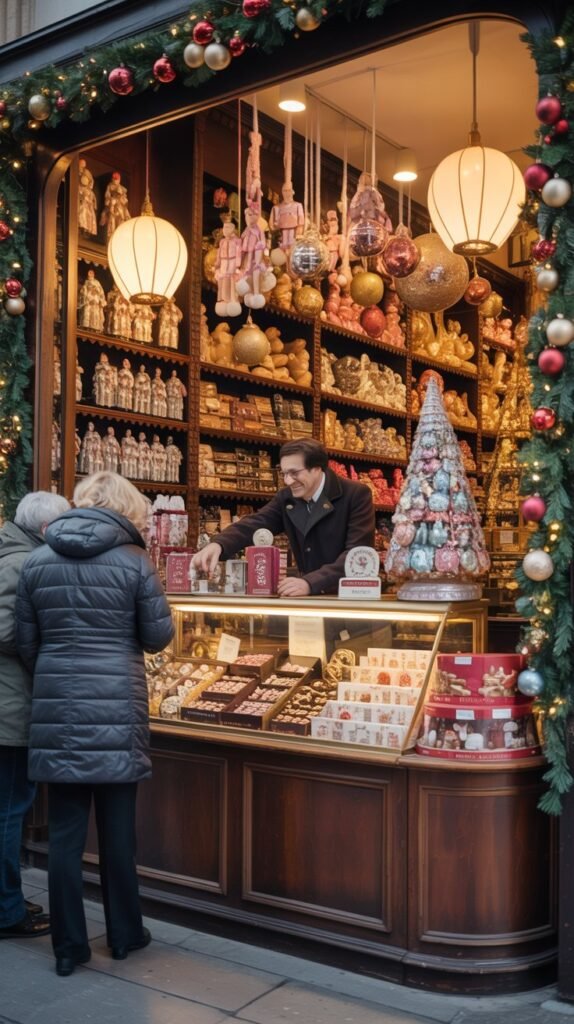
- Demel / Café Sacher: Pastries and packaged sweets to take home.
- Julius Meinl: Coffee and Viennese gourmet food gifts.
- Traditional crafts at Spittelberg & Karlsplatz: For handmade ornaments, toys and ceramics.
- Swarovski boutiques: Crystal gifts and ornaments (look for holiday collections).
- Local independent boutiques along Neubau & Mariahilf: For design-forward gifts, clothing and homewares.
Food & drink guide — seasonal must-eats
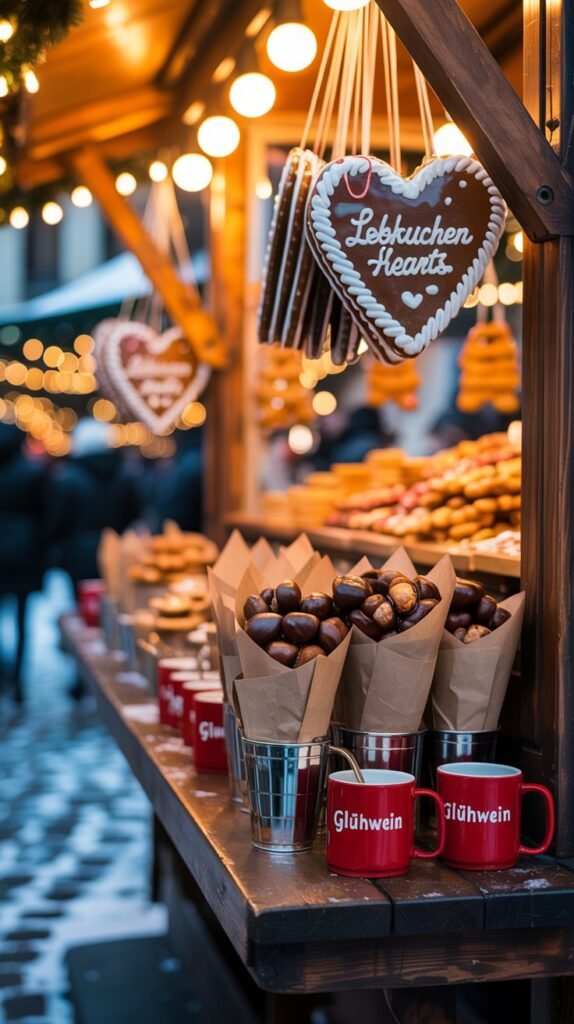
- Glühwein / Punsch: Warm mulled wine or non-alcoholic punch sold across stalls.
- Maroni (roasted chestnuts): Classic winter street snack.
- Kaiserschmarrn: Fluffy shredded pancake warm and filling on a cold day.
- Sausages & Käsekrainer: Hearty grilled options at many market stalls.
- Sachertorte & Linzer Torte: Iconic Austrian desserts try in a historic café for the full experience.
- Austrian biscuits & chocolate: Pack as gifts popular names include Mozartkugeln and Hofer/ Lindt firm offerings.
Sample itineraries
Below are two sample itineraries (3-day and 5-day) tailored to Christmas market visitors. Adjust pacing if you want slower exploration or extra concerts.
3-Day Vienna Christmas Weekend (packed but magical)
Day 1 — Arrival & Old Town
- Arrive, check into Innere Stadt hotel.
- Afternoon: Walk Kärntner Straße and Graben to see window displays. Coffee & cake at Café Central or Demel.
- Evening: Rathausplatz Christkindlmarkt + Wiener Eistraum (skating and market).
Day 2 — Palaces & Concert
- Morning at Schönbrunn Palace & the Schönbrunn Christmas Market. Enjoy crafts and palace grounds.
- Afternoon: Naschmarkt for food gifts and lunch.
- Evening: Book a concert (church or smaller venue) Advent music or chamber concert.
Day 3 — Artisan markets & Departure
- Morning: Spittelberg market for handcrafted gifts.
- Early afternoon: Last walks, pick up packaged sweets, head to the airport/train station.
5-Day Vienna — slower pace, more depth
Day 1: Arrival, settle in, evening at Rathausplatz.
Day 2: Schönbrunn Palace market + children’s workshops; palace tour.
Day 3: MuseumsQuartier, Belvedere Palace market, fine art & palace interiors.
Day 4: Naschmarkt tasting tour & Mariahilfer Straße shopping; evening musical performance.
Day 5: Spittelberg artisan market, slow coffee, departure.
Budgeting: how much will it cost?
Estimates depend on travel style, but here’s a practical breakdown for a 3-night mid-range trip (per person):
- Flights: Varies widely by origin (book early for best fares).
- Accommodation (per night):
- Budget hostel: €25–60 (dorm).
- 3-star hotel: €80–150.
- 4-star hotel: €150–300.
- Luxury: €300+.
- Food & drink: €30–70/day (mix of market food, cafés and 1–2 restaurant meals).
- Activities & tickets: Museum entries €10–20 each; concert tickets €25–120 depending on venue; skating rental ~€10–15 (varies).
- Transport: Vienna 72-hour pass ~€17–20 (approx — check current prices), single tickets less expensive for short stays; airport transfer by rail ~€4.30–€15 depending on connection and class.
Tip: book concerts and any special palace tours in advance (they can sell out during the season).
Practical travel tips & holiday etiquette
- Book early: Hotels and concert tickets can sell out early in December reserve 2–3 months ahead for good options.
- Cash vs card: Carry some cash for market stalls; most big shops and restaurants accept cards.
- Dress for cold: Layering (thermal base, fleece, waterproof coat), warm hat, gloves, scarf and slip-resistant shoes for icy cobbles.
- Opening hours on holidays: Many shops close or have reduced hours on Dec 24–26 and New Year’s Day; markets sometimes close on Dec 24 earlier in the day check market pages for exact hours.
- Pickpockets: Markets draw crowds keep wallets secure and use zipped bag or money belt.
- Public holidays & transport: Public transit runs but with holiday schedules on certain days verify times for Dec 24–26 and New Year’s Eve.
- Tipping: Service is appreciated 5–10% in restaurants is common; small tip for taxis and coat check is normal.
Family travel & traveling with kids

- Kid-friendly markets: Schönbrunn often offers children’s activities and workshops.
- Ice rink & sleds: Some markets allow supervised play areas; bring simple sled-friendly clothing if you plan to visit snowy suburbs.
- Stroller access: Cobblestones and narrow market alleyways can be tricky a compact stroller works best.
Safety, accessibility & health
- Safety: Vienna is generally very safe. Use common sense in crowded areas to avoid pickpockets.
- Accessibility: Major markets and museums have improved accessibility, but older streets may be uneven check venue websites for specifics.
- Health: Travel insurance covering winter sports and trip cancellation is wise in winter months.
Photography & social media tips
- Golden hour & blue hour: The city looks spectacular around sunset plan early evening market strolls for photos.
- Avoid tripod restrictions: Some markets or palaces may restrict tripods use a fast lens or stabilized camera/phone.
- Be mindful of vendors & locals: Ask permission before close portraits and be respectful of crowds.
Packing checklist — Christmas in Vienna
- Warm waterproof coat (insulated).
- Thermal base layers & sweaters.
- Comfortable, waterproof walking boots with grip.
- Warm hat, scarf, gloves (spare pair).
- Travel umbrella (small).
- Daypack with zip pockets for wallet/phone.
- Plug adapter (Austria uses type F / 230V).
- Pocket tissues & hand sanitizer.
- Small foldable shopping bag for market purchases.
- Copies of reservation confirmations & printed concert tickets (or digital).
How to plan bookings & reservations
- Flights & hotels: Book weeks to months in advance for December.
- Concerts: Reserve early (popular concerts sell fast).
- Market stalls & workshops: Some family workshops require advance booking check market websites (e.g., Schönbrunn children’s program).
Special events & seasonal highlights to check each year
- Wiener Eistraum opening & closing dates: Varies year to year (check official site for exact seasonal schedule).
- Schönbrunn & Rathaus market dates and special programming: The official market sites publish dates & family program details annually.
FAQs
Q: When is the best time to visit for Christmas markets?
A: Mid-November through the first half of December is ideal for fewer crowds; the second half of December is busiest, especially around weekends and before Dec 24.
Q: Are markets open on Christmas Eve (Dec 24)?
A: Many markets either close early on Dec 24 or operate reduced hours. Always check the market’s official page for precise opening times.
Q: Can I do day trips from Vienna during Christmas?
A: Yes Salzburg and Bratislava are popular day trips by train. However, schedules can be reduced during holidays, so plan ahead.
Final tips for a flawless trip
- Plan but leave space for serendipity: Carry a flexible day with time to wander the best market finds often come by chance.
- Mix experiences: Pair big market evenings (Rathaus) with quieter mornings at Schönbrunn or Spittelberg to avoid burnout.
- Pack a reusable cup or mug if you’re eco-minded: Many stalls now offer discounts for reusable cups check with the vendor.
- Learn a few German phrases: “Danke” (thank you), “Bitte” (please/you’re welcome), “Guten Tag” (good day) locals appreciate the effort.
- Check official sites: For exact opening dates, markets and skating schedules, use the official Vienna tourism pages and the market event pages before booking.
pro tip: The Best Christmas Train Rides Across the United States