


Want to fly for free not once, but all year? You’re in the right place.
This long, practical guide walks you through the exact legal strategies we use to secure “free” airline tickets year-round: sign-up bonuses, credit-card spend strategies, loyalty programs, award redemptions, mistake fares, volunteering for bumping, companion passes, and smart redemption tactics.
I’ll explain not only what to do, but how to do it, tools to use, common pitfalls, and realistic expectations so you can replicate the system.
Quick overview the 7 pillars we use
- Sign-up bonuses & card churning — the fastest way to stockpile a lot of points quickly. (Major load-bearing tactic.)
- Everyday spend optimization — use cards that give category bonuses, take advantage of portals & promotions.
- Transferable points ecosystem — Chase, Amex, Citi, Capital One points give flexibility across airlines. (Makes “free” bookings easier.)
- Award booking tactics & alliances — use airline partners, award calendars, and routing rules to find the best redemptions.
- Companion passes, vouchers & elite perks — some programs offer companion tickets or vouchers that reduce cost to taxes and fees only. (Southwest Companion Pass is a famous example.)
- Opportunistic deals: mistake fares & flash sales — score near-free trips when prices misprice or airlines run huge promos. (Be cautious; airlines can cancel.)
- Volunteer bumping & negotiated compensation — give up a seat to get vouchers that cover future tickets. DOT rules protect volunteers’ rights.
I’ll unpack each pillar in depth, then show a sample 12-month plan, tools to make life easier, scripts you can use at the gate, and a final checklist.
Pillar 1 — Sign-up bonuses: your fastest route to many “free” ticket

Why it matters: card sign-up bonuses routinely give you 40k–100k points after meeting a spend threshold that’s enough for several domestic roundtrips or one long-haul award in economy or premium economy.
If you’re strategic, those bonuses are where most of your “free tickets” come from.
How to do it (step-by-step):
- Pick cards with high welcome bonuses — focus on cards whose points transfer to multiple airline partners (Chase Ultimate Rewards, Amex Membership Rewards, Citi ThankYou, Capital One). These give you maximum flexibility. NerdWallet, The Points Guy, and similar outlets track offers and minimum spend windows.
- Time the applications — plan applications when you can meet the minimum spend easily (big bill months, planned purchases, business expenses). Be mindful of issuer rules: Chase 5/24 (limits approvals if you’ve opened five+ new cards in 24 months) is commonly enforced. (Check latest issuer rules before applying.)
- Stack authorized users and referral bonuses — sometimes adding an authorized user or using referral links gives you extra points. (Follow issuer T&Cs.)
- Meet minimum spend legally and deliberately — use planned spending (bills, taxes, tuition, business expenses) or manufactured spending within legal limits (e.g., buying gift cards for future use). Don’t commit to risky schemes use what you would spend anyway.
- Redeem strategically — convert those points into airline miles or book directly with transferable currencies depending on which redemption gives the best value.
Realistic example: A 60k-point welcome bonus (after $4k spend) redeemed for 12.5k–25k roundtrips domestically yields multiple free flights. NerdWallet and travel blogs show how these math out to “free” travel if used properly.
Pitfalls:
- Annual fees may offset value if you keep the card and don’t use perks.
- Issuers change offers — always verify current offer pages before applying.
Pillar 2 — Everyday spend optimization & bonus categories

Sign-up bonuses give a big initial balance. Everyday spend keeps the funnel full.
Tactics:
- Put recurring & big purchases on rewards cards. Rent, utilities (if allowed by processor), groceries, gas, streaming services, and business expenses should go on the card that earns the most points per dollar.
- Use rotating categories and bonus category cards. Cards like those with 3x–5x categories during promotional periods are gold for stacking points.
- Stack with shopping portals. Before buying online, click through airline or card shopping portals to earn extra miles per dollar. Over months this adds up.
- Use dining programs and promo partnerships. Airline dining portals or temporary merchant promos can multiply point earnings.
How to track:
- Keep a spreadsheet or use an app like AwardWallet (tracks balances) and set calendar reminders for category rotations and anniversary bonuses.
Example: If your card gives 3x on dining and you spend $500/month on dining, that’s 1,500 points/month just from dinner. Over a year that’s thousands of points.
Pillar 3 — Transferable points: flexibility = more free seats

Why transferable points matter: I often convert Chase, Amex, Citi, or Capital One points into airline partners to take advantage of sweet spots and award availability. Being able to choose where to transfer is a huge advantage.
Key transferable currencies to know (examples):
- Chase Ultimate Rewards — transfers to United, Southwest, British Airways, etc.
- American Express Membership Rewards — transfers to Delta (varies), Air France/KLM, ANA, Singapore Airlines, and others.
- Citi ThankYou — transfers to Turkish, Avianca LifeMiles, etc.
- Capital One Miles — transfers to multiple partners and can also buy tickets via the portal.
Why this helps: If Airline A has no saver seats on your date, you can transfer to Airline B or to a partner airline with availability or use a partner award chart sweet spot.
Guides on “how many miles for a free flight” demonstrate that award pricing varies greatly by program, so you can save huge points by choosing the smart program.
Pro tip: Keep a “transfer spreadsheet” showing the common transfer partners for each currency and typical transfer ratios/times. Some transfers are instant, others take hours/days don’t transfer until you’re ready to book unless the transfer is instant.
Pillar 4 — Award booking tactics & alliances (the art part)

Once you have miles, booking smart is how those miles convert to free flights.
Tactics and examples:
- Search award space directly on the airline or alliance sites (e.g., United for Star Alliance, American Airlines for Oneworld partners). Use alliance partners to create routes that the primary airline’s own inventory might not show.
- Use flexible routing rules — sometimes booking two one-ways on different carriers saves miles vs. a single roundtrip. For example, you might fly outbound on a low-saver award on Partner A and return on Partner B with a partner award.
- Look for “sweet spots” on award charts — some airlines price region pairs cheaply (e.g., short-haul Avios redemptions). NerdWallet and award guides list common sweet spots.
- Be nimble on dates and airports — shifting dates by a day or flying from/to a nearby airport can convert “no availability” to an immediate free ticket. Use Google Flights calendar + award search results together.
- Book one-way awards for flexibility; they let you mix cabins, carriers, and use different programs for each leg.
How to find seats (toolbox):
- Google Flights — great for general availability and calendar views.
- Airline award search engines — use the airline’s own tool first. Then check partner sites.
- ExpertFlyer / seat alerts — can notify you when award seats open (paid tools are useful if you travel a lot).
- AwardWallet — track points across accounts. (Useful for managing expirations and transfers.)
Example workflow:
- Decide on destination + flexible date range.
- Check Google Flights to find cheap cash flights and identify carrier possibilities.
- Search award space on your preferred airline’s site.
- If nothing shows, check partner airline search tools or call the airline to see if partner inventory is bookable.
- Transfer points only when you see confirmable award space (unless transfer is instant and you’re confident).
Pillar 5 — Companion passes, corporate & family pooling

Certain programs let you add a companion for free or let family members pool miles — these multiply your seat output.
- Southwest Companion Pass: Earn it by flying 100 qualifying one-way flights or earning 135,000 qualifying points in a calendar year; the Pass covers a designated companion who flies free (only taxes/fees apply) for the pass validity. Always check the airline’s site for exact thresholds and dates.
- Family/household accounts: British Airways Household Account and others let you pool Avios, making redemptions easier. Check each program’s rules for dependent accounts and pooling limits.
- Corporate travel credits & employee perks: If you or a family member has corporate travel benefits or elite status, leverage them for seat upgrades, better award availability, and complimentary companion options.
Pro tip: Companion passes can be earned with credit-card bonuses or special promotions; monitor travel news outlets for temporary offers that reduce the threshold.
Pillar 6 — Opportunistic deals: mistake fares, flash sales, and deals services
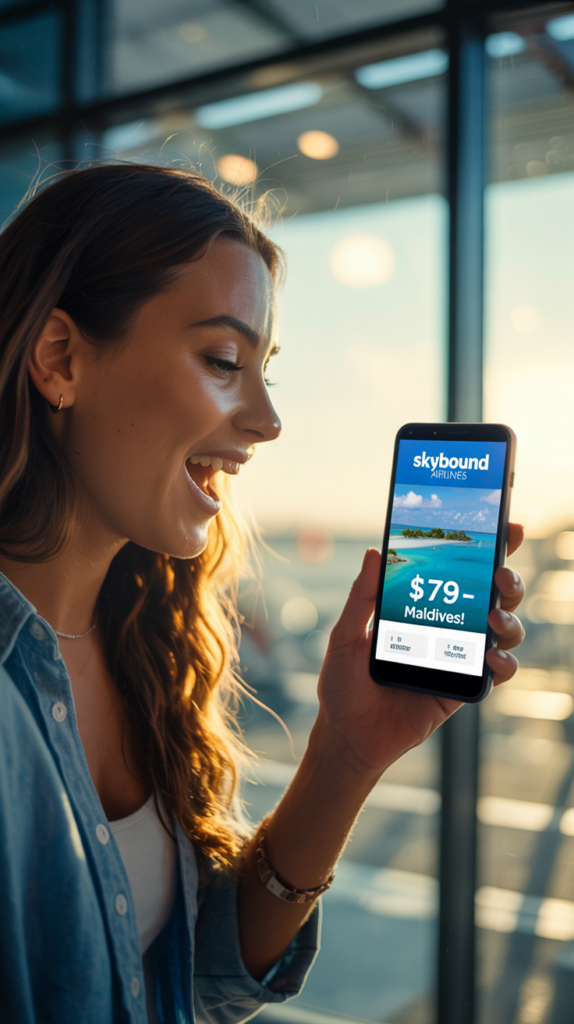
Mistake fares and flash sales can create near-free or extremely cheap tickets. But they’re unpredictable and come with risk (cancellations/refunds). Here’s how to exploit them responsibly.
What is a mistake fare?
- A mistake fare occurs when a flight is incorrectly priced due to human or system error. Airlines can cancel these and must refund passengers if they do so but many mistake fares are honored. The Points Guy and official guides explain the unpredictability and airline discretion involved.
How to find them:
- Deal alert services — Scott’s Cheap Flights/Going/Secret Flying/SeatSpy deliver curated alerts for mistake fares and flash sales (some are paid).
- Twitter and travel forums — communities often repost deals instantly.
- Set Google Flights alerts and track price drops — sometimes a huge drop signals a mistake fare.
- Use multi-city searches and odd routing — mistake fares sometimes appear on odd routings and are catchable if you notice quickly.
How to act:
- Book immediately — mistake fares disappear fast. Use a refundable booking method or a card that offers trip protection if available.
- Use flexible travel plans — don’t book non-refundable hotels or commitments before the ticket is confirmed and you’ve checked baggage/seat policies.
- Be ready for cancellation — if the airline cancels, you’ll get a full refund. Keep receipts for any out-of-pocket costs if you want to pursue compensation (rare success).
Ethical note: Don’t intentionally abuse loopholes, and understand airlines can cancel mistaken bookings. Use reputable deal services rather than crawling airline inventory yourself if you’re new to this.
For more on mistake fares and how airlines handle them, see The Points Guy and Forbes guides.
Pillar 7 — Volunteer bumping & negotiating at the airport

Occasionally, airlines overbook and ask for volunteers to take a later flight. This is a legitimate, repeatable way to get vouchers or cash that you can use toward free tickets.
Rights & regulations:
- The U.S. Department of Transportation requires airlines to seek volunteers before involuntarily bumping passengers, and they must disclose compensation and passengers’ rights. Knowing the DOT rules helps you negotiate effectively.
How to maximize compensation:
- Be the first volunteer — when gate staff announces volunteers, make quick eye contact and raise your hand early. If you have flexible plans, volunteers are often chosen first and can negotiate.
- Negotiate beyond the initial offer — gate agents can increase offers if you ask. Ask for travel vouchers with long validity (12–24 months), cash, or a combination. Vouchers can be more valuable for future free tickets.
- Ask for additional perks — rebooking on the airline’s business or first class on the new flight, lounge passes, or hotel accommodations (if the delay is overnight).
- Get the agreement in writing — ask the gate agent to email you the voucher details or confirmation number.
Negotiation tip: Airlines are under pressure to get flights out; they’ll often increase the offer rather than delay the flight. Be polite but firm.
Putting it all together — a replicable annual plan

Below is a 12-month example plan for generating a steady stream of free tickets. Adjust it based on your lifestyle, spend, and travel goals.
Month 1 — Strategy & baseline
- Audit all travel credit cards and miles. Create accounts for airline loyalty programs you’ll use.
- Apply for 1–2 high-value sign-up bonus cards timed to your big-spend month. (Meet minimum spend.)
Month 2 — Consolidate & transfer
- Track sign-up bonus arrival and transfer a portion to an airline with a good short-term award availability for a planned trip.
- Use shopping portals for any online holiday shopping.
Month 3 — Opportunistic hunting
- Subscribe to mistake-fare alerts and deal newsletters (free and paid tiers). If a strong deal appears, book it immediately and keep plans flexible.
Month 4 — Companion passes & promotions
- If a companion pass or promotion is in reach (e.g., Southwest), plan spend or flights to hit the threshold. Use anniversary bonuses and partner promotions to top up points.
Month 5 — Volunteer bumping readiness
- Travel with flexible tickets. When flights are oversold, volunteer to be bumped for vouchers — that’s free future airfare. Know DOT rules and your negotiating script.
Month 6 — Mid-year award redemptions
- Use accumulated points for a mid-year family trip. Search award availability, mix one-ways, and use transferable points for flexibility.
Month 7 — Reapply & rotate cards
- When safe per issuer rules, apply for another sign-up bonus card to replenish points (respect issuer restrictions like Chase 5/24).
Month 8 — Hotel & travel packages
- Use points for combined hotel+flight packages if they give better value — sometimes credit card portals or airlines offer good bundled deals.
Month 9 — Off-season mistake fares
- Mistake fares often appear off-season. Keep alerts on and be ready to book.
Month 10 — Use promotions & shop portals heavily
- Q4 promotions often give big bonuses for shopping portals, groceries, or travel. Maximize category spend.
Month 11 — Year-end transfers & partner bookings
- Transfer to airline partners for holiday travel before award charts change. Confirm seats and fees.
Month 12 — Review & plan
- Audit rewards, hotel status, upcoming expirations. Make a plan for the next year, keeping a rolling 12-month calendar of when to apply for cards and when bonuses post.
Tools & services we use daily (short toolbox)

- Google Flights — flexible calendar and price exploration.
- Award search on airline sites (United, American, Delta, Air France/KLM, ANA) — primary award searches.
- ExpertFlyer / Seat alerts — paid but useful for heavy award travelers.
- AwardWallet — tracks point balances and expiry.
- Deal newsletters: Scott’s Cheap Flights, Going, Secret Flying, The Points Guy alerts. Paid tiers often deliver earlier, higher-quality deals.
- Reddit & FlyerTalk — community tips and recent deal posts.
- Card issuer portals — keep an eye on targeted offers and limited-time promotions.
Sample real booking scenarios (examples you can copy)

Scenario A — Domestic roundtrip “free” via sign-up bonuses
- You earn a 60k points bonus from a card that transfers 1:1 to Airline X.
- Search Airline X’s saver awards for your dates — find a 25k one-way award (12.5k each way) or better.
- Transfer 25k points, book the award — base fare covered; you pay taxes/fees only.
Scenario B — Two passengers via Southwest Companion Pass
- Earn the Companion Pass (135k points or required flights) this calendar year.
- Book your ticket on Southwest using cash or points. Add your Companion — they fly free (pay only taxes/fees). Repeat for other trips during the pass window.
Scenario C — Volunteer bumping turned into voucher value
- You’re at the gate. Flight is oversold. You volunteer for a later flight.
- Negotiate for a $700 travel voucher + overnight hotel. Agent agrees. You use the voucher later to cover a future ticket.
Common mistakes & how to avoid them

- Holding points in many tiny accounts — consolidate to transferable currencies when it makes sense; track expirations.
- Transferring points before confirming award space — only transfer when you can confirm seats (unless transfer is instant).
- Forgetting taxes & fees — “free” ticket usually still incurs taxes/airport fees. Budget for $5–$100 depending on route and country.
- Over-applying for credit and hurting your credit — space out card applications; monitor credit reports.
- Ignoring change/cancellation rules — many awards are non-refundable or charge high change fees; know the rules before booking.
Safety, ethics, and legal notes

- Follow airline & card terms. Don’t misuse partner pages or create fraudulent accounts.
- Don’t hide or misrepresent travel reasons for bumping — be honest when negotiating.
- Mistake fares: Understand airlines may cancel; book flexible plans, and don’t assume the airline must honor a mistake. Guides from DOT and travel experts explain your rights.
Frequently Asked Questions (FAQ)

Q: Are “free” tickets actually free?
A: Mostly — base fare is covered by miles, vouchers, or companion passes; you usually still pay taxes and small fees. Volunteer bumping might give you vouchers or cash. Always check taxes/fees before booking.
Q: How long before a trip should I start looking for award seats?
A: Start as soon as possible. Popular routes open inventory ~330 days out. For best availability: search frequently and book when saver seats appear.
Q: How reliable are mistake fares?
A: Unpredictable. Some are honored, others canceled. Use deal services to get early alerts, and be willing to accept cancellations or rebookings.
Q: Can I do this with family?
A: Yes — use household accounts, companion passes, or book award seats for multiple passengers. Availability for multiple award seats can be limited, so plan early.
Q: Will this hurt my credit?
A: Responsible card use won’t hurt your credit. Opening multiple cards can temporarily lower your score; keep utilization low and pay on time.
Final checklist — ready to get your first 3 “free” tickets
- Sign up for one transferable-points card with a big welcome bonus (time it with a large planned spend).
- Set up AwardWallet and link accounts to track balances.
- Subscribe to 2–3 deal newsletters (Scott’s, Going, Secret Flying or paid tiers).
- Make a spreadsheet: card, monthly spend categories, annual fees, anniversary credits, and next application window.
- Learn DOT bumping rules and keep your negotiation script in your phone for future volunteer opportunities.