
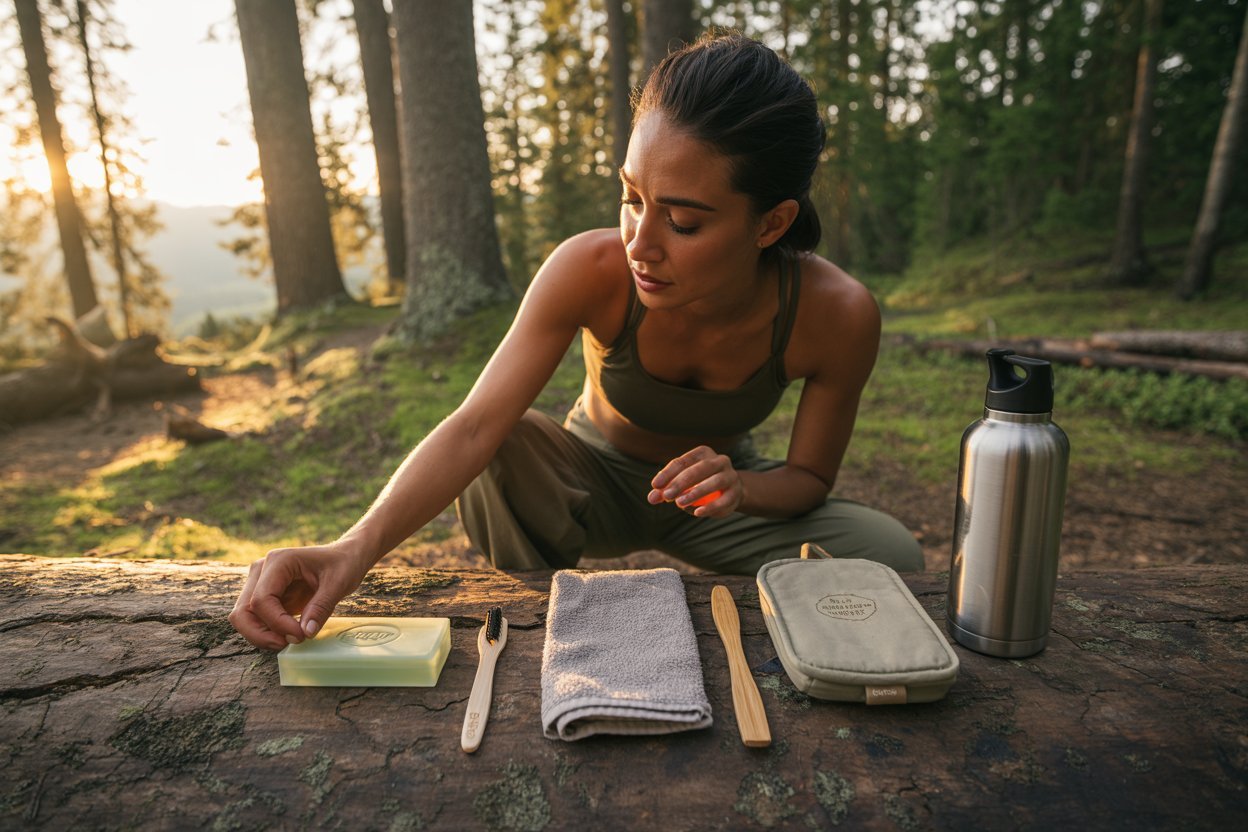

Spending time in nature has a beautiful way of reminding us how connected we are to the world around us.
Fresh mountain air, quiet forests, and star-filled nights are some of the greatest gifts hiking and camping offer. But enjoying the outdoors also comes with responsibility.
Practicing good hygiene while respecting nature ensures that trails stay clean, wildlife remains safe, and future adventurers can enjoy the same breathtaking landscapes.
These eco-friendly outdoor hygiene tips will help you stay fresh, comfortable, and environmentally conscious on every hiking or camping trip.
Why Eco-Friendly Hygiene Matters in the Outdoors
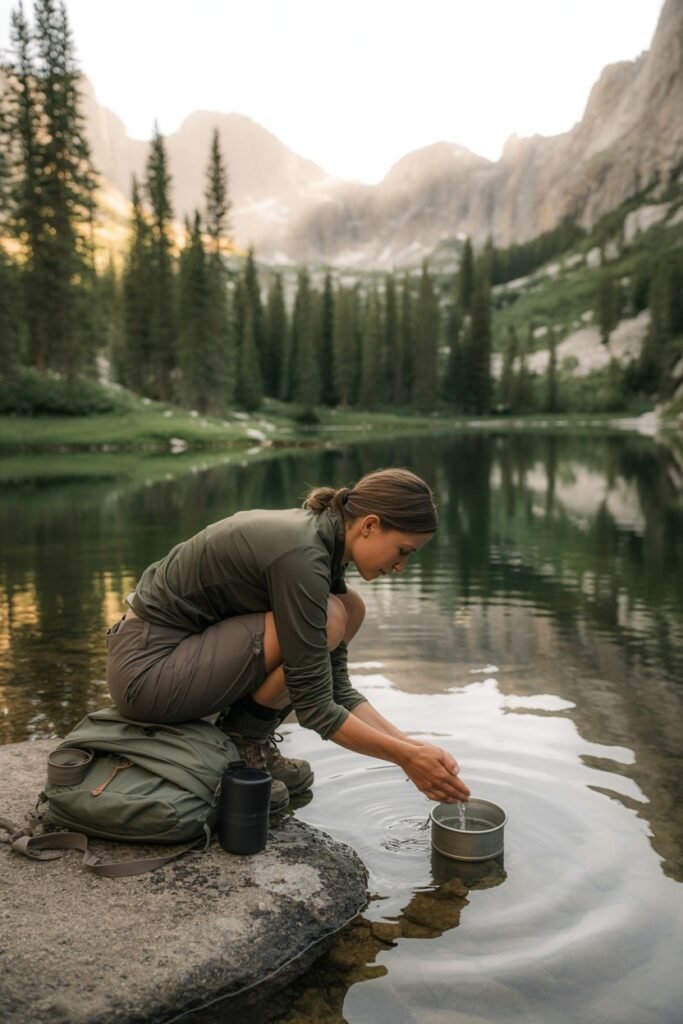
Outdoor hygiene is about more than just staying clean. When you’re miles away from modern plumbing and waste systems, every action you take has a direct impact on the environment.
Many common hygiene products like wipes, soaps, and plastics can damage fragile ecosystems if used improperly.
Streams can become contaminated, wildlife can be harmed, and trails can become littered if hikers don’t follow responsible practices.
Practicing eco-friendly hygiene helps you:
✔ Protect rivers, lakes, and drinking water sources
✔ Prevent harm to wildlife and plant life
✔ Reduce plastic waste in natural spaces
✔ Leave trails cleaner than you found them
✔ Follow Leave No Trace principles
When hikers adopt sustainable habits, nature stays healthier and the outdoor experience remains magical for everyone.
1. Always Follow Leave No Trace Principles
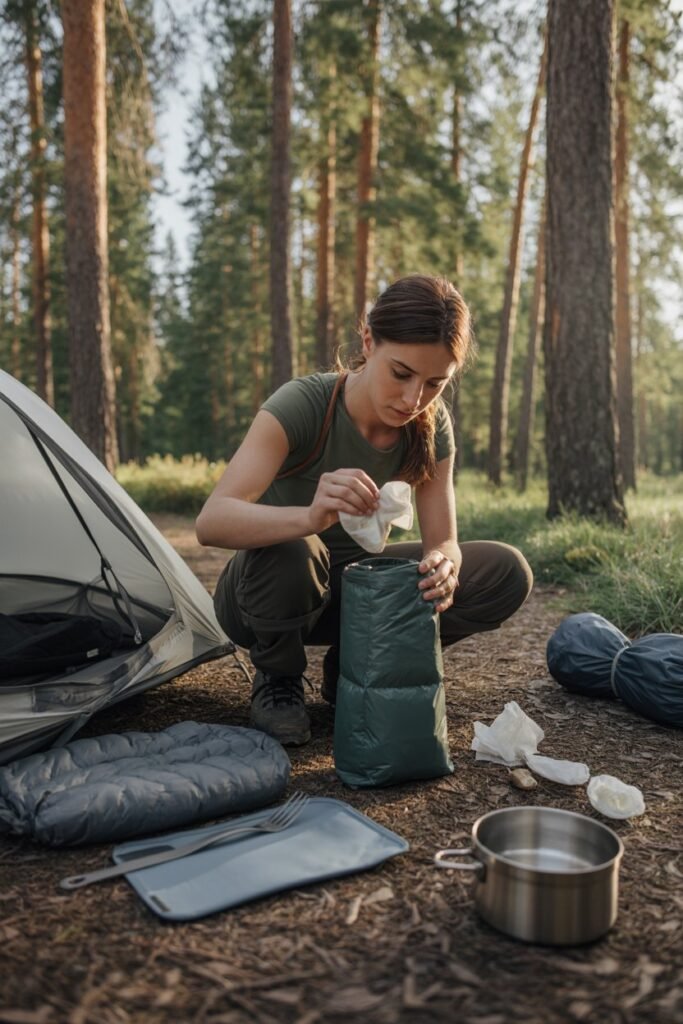
One of the most important foundations of eco-friendly outdoor hygiene is following the Leave No Trace philosophy. This approach encourages outdoor travelers to minimize their impact on the environment.
When it comes to hygiene, this means being mindful of where you wash, how you dispose of waste, and what products you use.
Key hygiene practices under Leave No Trace include:
• Packing out trash and hygiene products
• Disposing of human waste properly
• Avoiding soap directly in lakes and streams
• Using biodegradable products responsibly
• Respecting wildlife habitats
Even something as small as brushing your teeth in a river or leaving wipes behind can affect ecosystems. The goal is simple: leave nature looking as if you were never there.
A good rule of thumb is this:
If it didn’t come from nature, it shouldn’t stay in nature.
2. Pack Biodegradable Hygiene Products
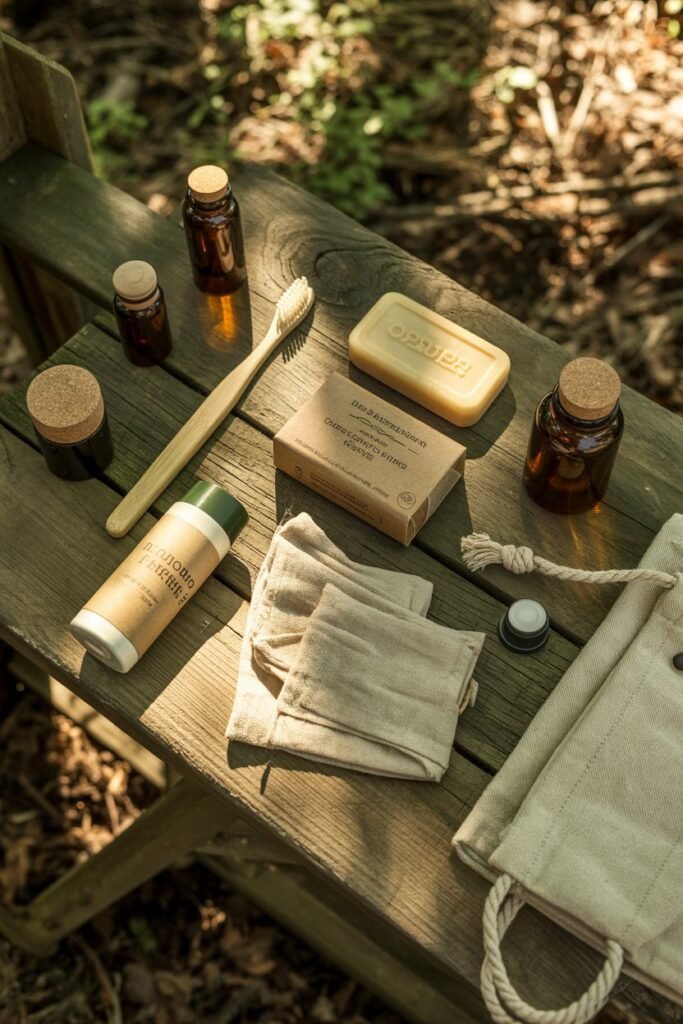
Choosing eco-friendly hygiene products makes a huge difference when you’re outdoors. Many conventional products contain chemicals that don’t break down easily and can harm soil and water systems.
Instead, pack items designed specifically for outdoor use.
Look for:
• Biodegradable soap
• Natural deodorant
• Compostable toilet paper
• Plastic-free toothbrushes
• Reusable cloth wipes
Biodegradable soap breaks down much faster in soil compared to regular soap. However, even biodegradable products should never be used directly in lakes or streams because they can still disrupt aquatic ecosystems.
Carry a small hygiene kit in a waterproof bag that includes only the essentials. Lightweight travel containers help reduce waste and keep your backpack organized.
Sustainable swaps like bamboo toothbrushes and refillable containers are small choices that collectively protect the environment.
3. Wash at Least 200 Feet Away from Water Sources
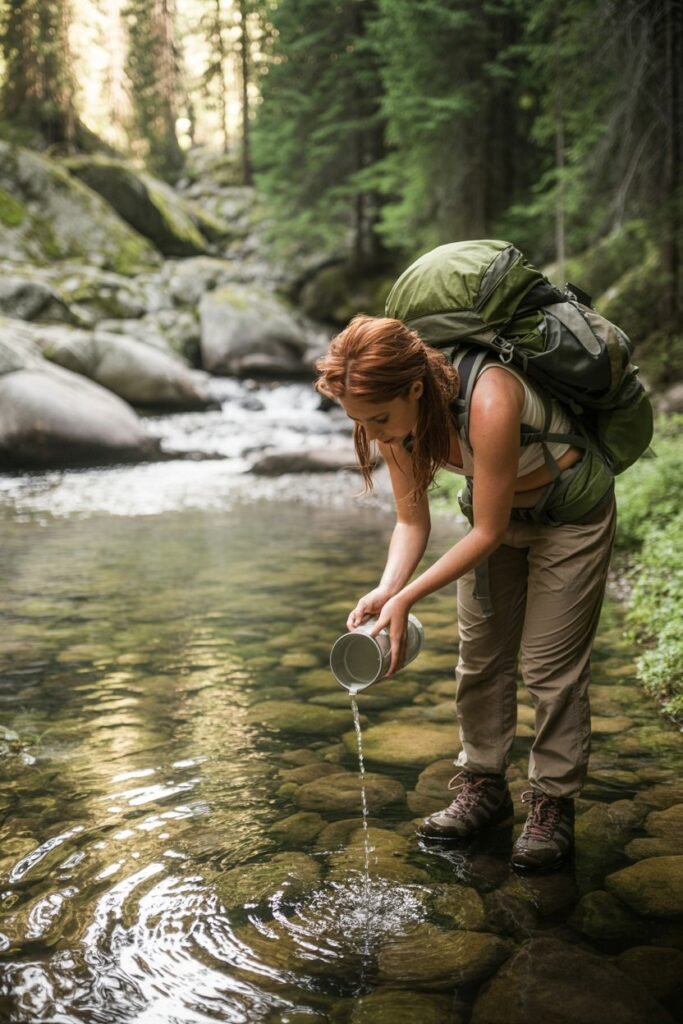
Rivers, lakes, and streams are often the main water sources for wildlife and other hikers. Washing directly in them even with biodegradable products can introduce bacteria, soap residue, and contaminants into the ecosystem.
A simple rule that experienced hikers follow is the 200-foot rule.
Always wash:
• At least 200 feet away from lakes or streams
• At least 200 feet away from campsites
• At least 200 feet away from trails
Use a small container to carry water away from the source before washing.
This method protects the natural filtration systems around water sources and helps maintain safe drinking water for everyone on the trail.
4. Learn the Proper Way to Handle Human Waste
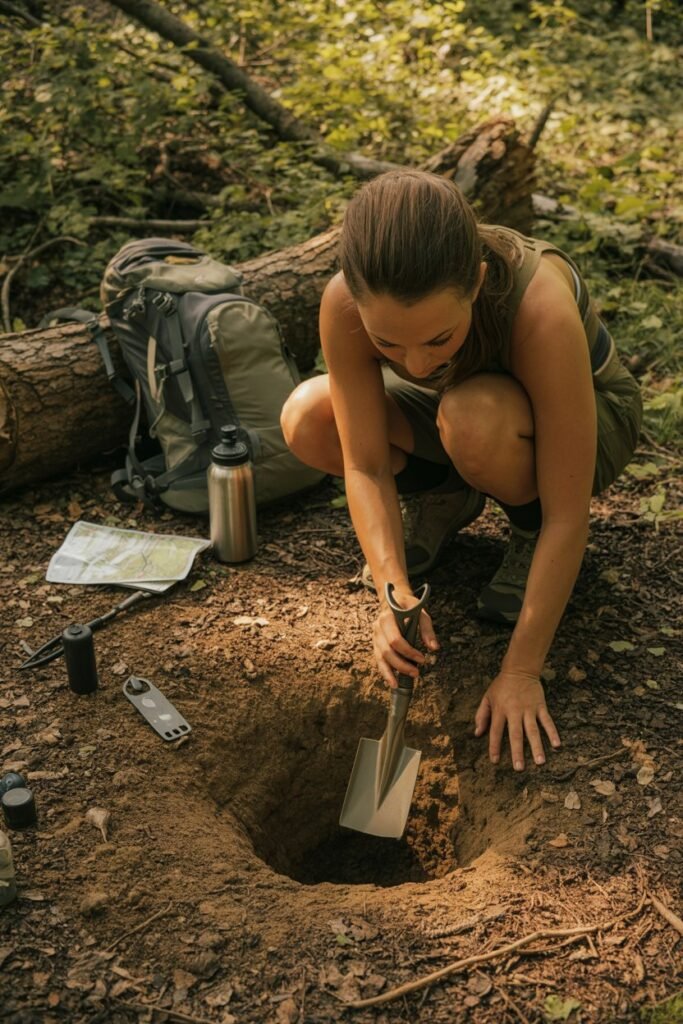
This is one of the most important hygiene practices for campers and hikers, yet it’s often misunderstood.
Improper waste disposal can contaminate soil and water and create unpleasant experiences for others.
The most widely recommended method is digging a cathole.
Steps for proper waste disposal:
- Walk 200 feet away from trails, camps, and water.
- Dig a hole about 6–8 inches deep.
- Do your business.
- Cover the hole completely with soil.
- Pack out toilet paper if possible.
Many hikers carry wag bags or portable waste bags, especially in fragile environments like deserts or alpine zones where decomposition happens slowly.
While it may feel awkward at first, responsible waste disposal is one of the most important ways to protect nature.
5. Use Eco-Friendly Toilet Paper Alternatives
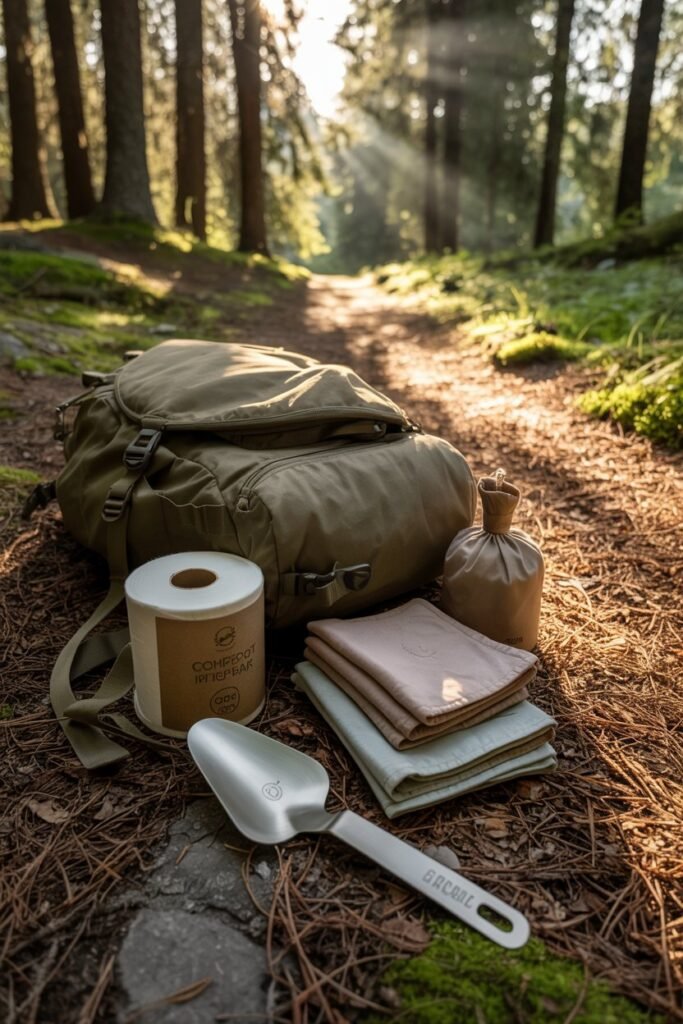
Traditional toilet paper can take a surprisingly long time to decompose outdoors. In busy camping areas, this can quickly create unsightly waste problems.
Eco-friendly alternatives include:
• Compostable toilet paper
• Reusable cloth wipes
• Smooth natural materials like leaves or snow (if safe)
Many experienced hikers prefer packing out toilet paper rather than burying it. A simple way to do this is by carrying a sealable waste bag inside an opaque pouch.
If using cloth wipes, keep a separate waterproof bag for used items until you can wash them properly.
These small habits dramatically reduce trail pollution.
6. Choose Sustainable Feminine Hygiene Options
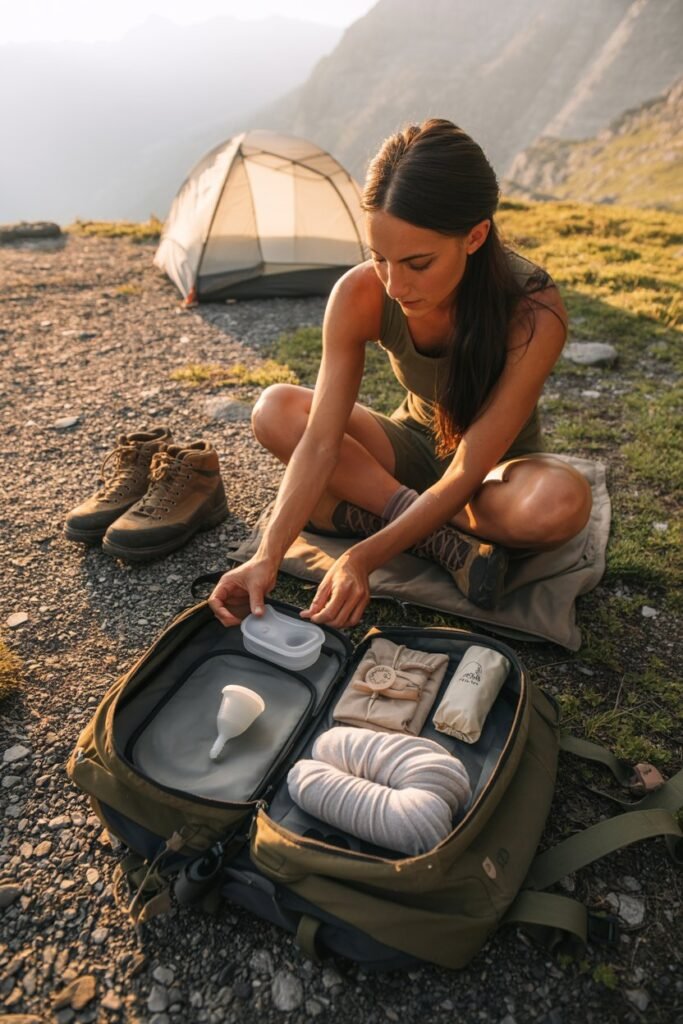
For women who hike and camp, managing menstrual hygiene sustainably is an important part of outdoor planning.
Thankfully, there are eco-friendly options that are lightweight and trail-friendly.
Popular choices include:
• Menstrual cups
• Reusable cloth pads
• Organic tampons (pack out waste)
Menstrual cups are especially popular among long-distance hikers because they:
✔ Reduce waste
✔ Last for years
✔ Take up very little pack space
When cleaning a menstrual cup in the outdoors, use boiled water or biodegradable soap away from water sources.
If using disposable products, always pack them out in sealed bags.
7. Skip Disposable Wet Wipes
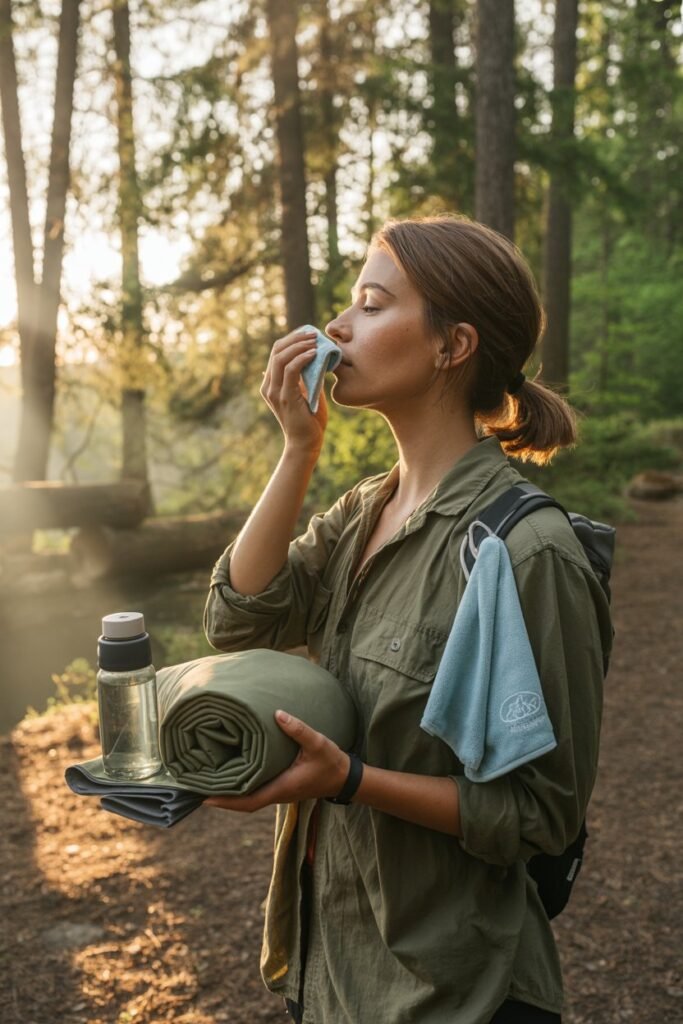
Wet wipes might seem convenient on the trail, but they are one of the biggest contributors to outdoor waste.
Even wipes labeled “biodegradable” can take months or years to break down, especially in dry environments.
Instead, consider eco-friendly alternatives like:
• Reusable microfiber cloths
• Small camp towels
• Natural sponge wipes
A lightweight microfiber cloth can easily replace dozens of wipes. Simply rinse it with water and a small amount of biodegradable soap when needed.
This reduces trash while keeping your pack lighter.
8. Keep Your Hands Clean
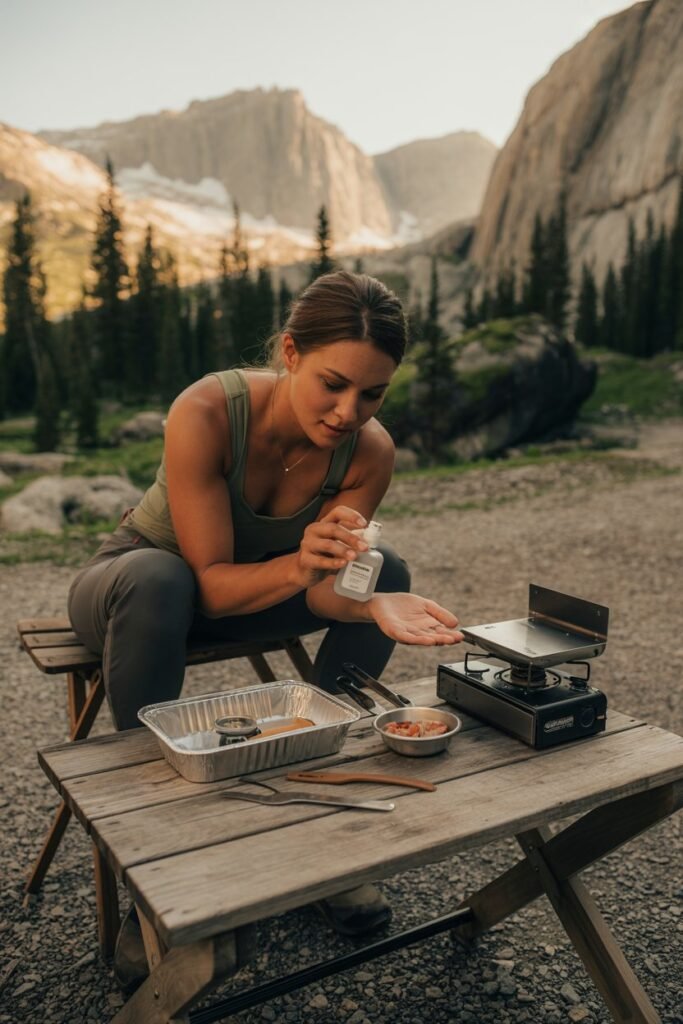
Clean hands are essential for staying healthy during outdoor adventures.
Food preparation, bathroom breaks, and touching gear can spread bacteria quickly.
The most eco-friendly hand hygiene methods include:
• Alcohol-based hand sanitizer
• Biodegradable soap with minimal water
• Reusable hand towels
Hand sanitizer is often the easiest option because it requires no water and produces zero waste.
Make it a habit to sanitize your hands:
✔ Before cooking
✔ Before eating
✔ After bathroom use
✔ After handling trash
Healthy hikers make happier campers.
9. Practice Water-Smart Dishwashing
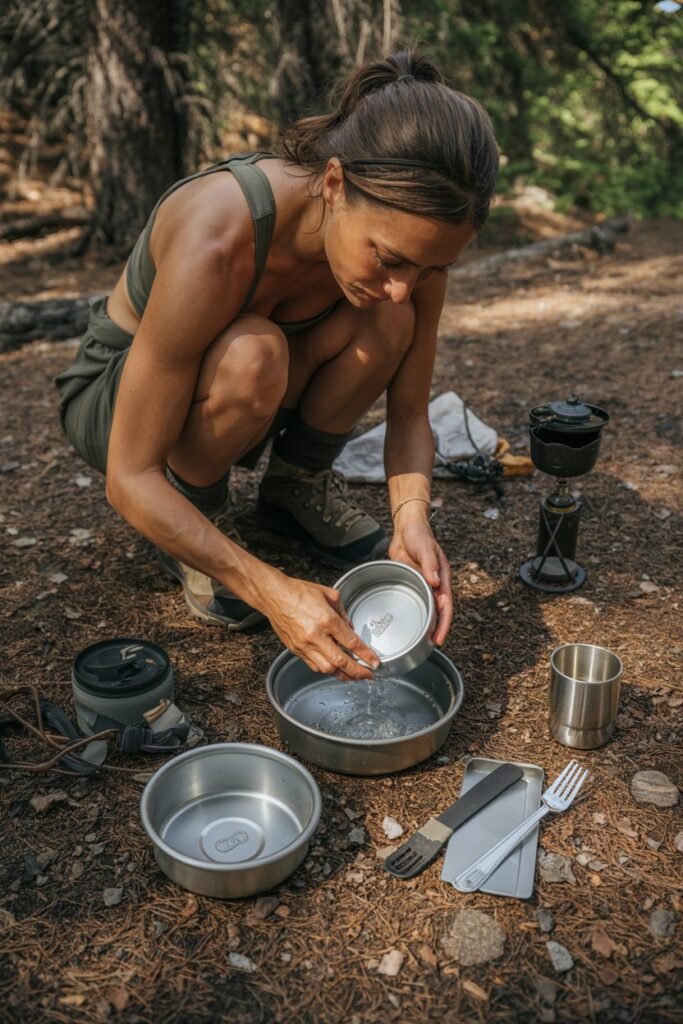
Washing dishes improperly can contaminate soil and water sources with food scraps and soap.
To minimize environmental impact, follow this simple dishwashing routine.
Step 1: Scrape all food scraps into a trash bag.
Step 2: Use a small amount of biodegradable soap.
Step 3: Wash dishes 200 feet away from water sources.
Step 4: Scatter strained dishwater widely.
This technique allows soil microbes to break down soap residue naturally.
Avoid dumping greywater in one place, as it can attract wildlife or damage vegetation.
10. Manage Food Waste Responsibly
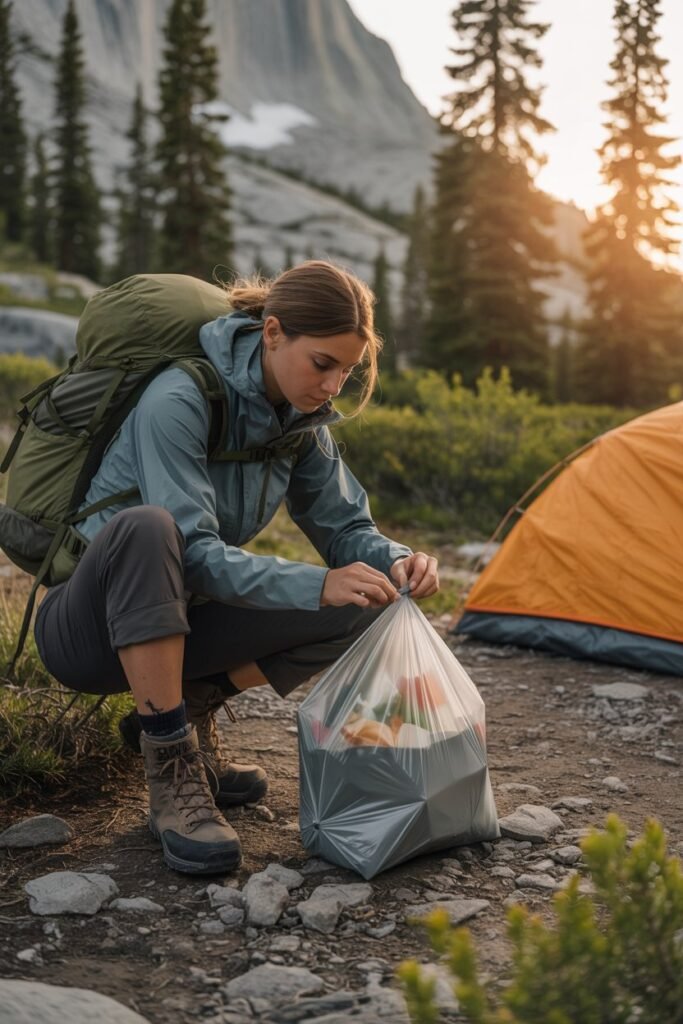
Food scraps might seem harmless, but they can attract wildlife and disrupt natural animal behaviors.
Animals that become dependent on human food can lose their ability to forage naturally and may become aggressive.
Always:
• Pack out food scraps
• Store trash in sealed bags
• Use bear-proof containers when necessary
• Never bury food waste
Even small items like orange peels or nut shells take much longer to decompose in the wild than people expect.
11. Stay Fresh Without Full Showers
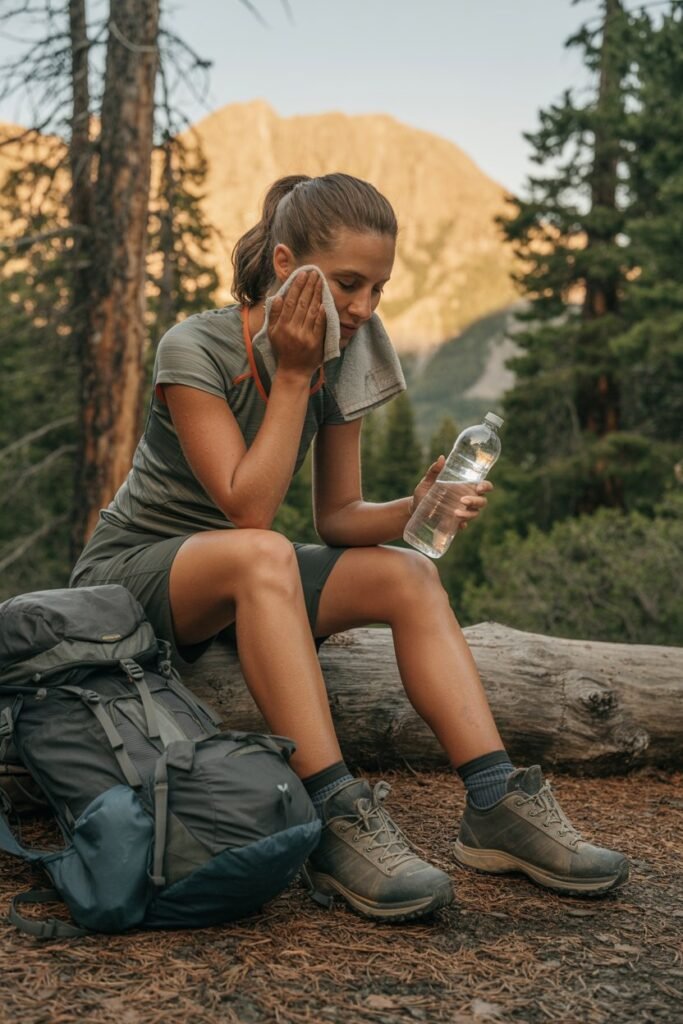
One of the biggest adjustments when camping is learning to stay clean without a traditional shower.
Fortunately, a few simple techniques can keep you feeling refreshed.
Focus on cleaning the key areas:
• Face
• Hands
• Feet
• Underarms
A small cloth with warm water can work wonders after a long hiking day.
Quick refresh tips:
✔ Change into clean base layers
✔ Air out your hiking clothes
✔ Brush dirt off your skin
✔ Use a small towel bath
These simple routines keep you comfortable without using large amounts of water.
12. Care for Your Feet
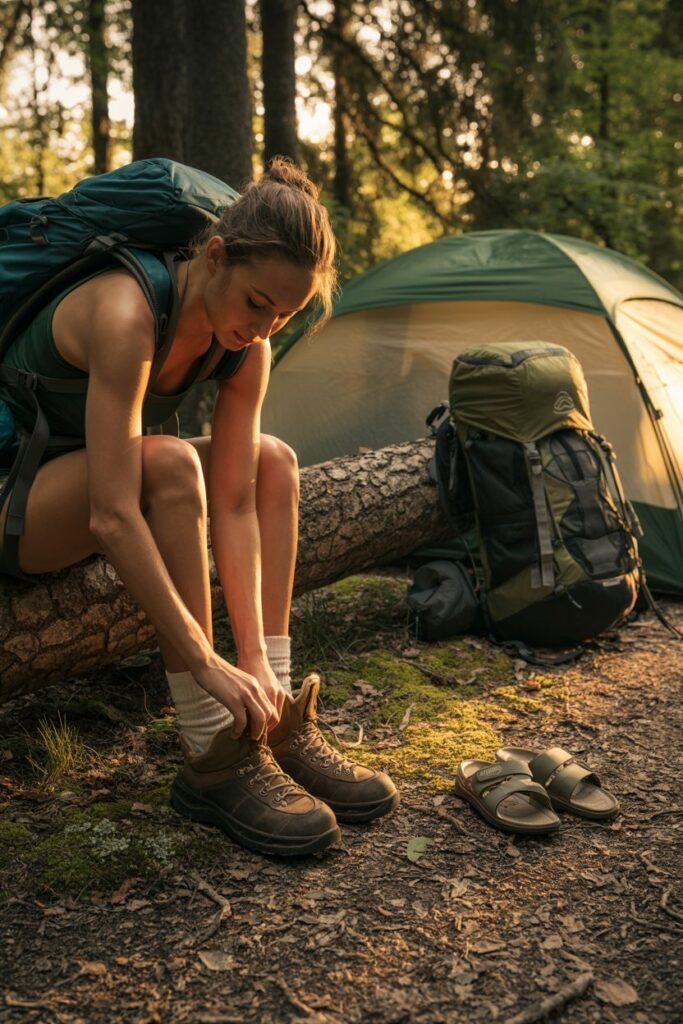
Happy feet are essential for every hiker.
Long miles, sweat, and dirt can quickly lead to blisters or infections if foot hygiene is neglected.
Each evening, take a few minutes to:
• Remove your hiking shoes
• Let your feet dry in fresh air
• Wipe them clean with a cloth
• Apply blister prevention if needed
Carrying a lightweight pair of camp sandals can also help your feet breathe after a long day.
Clean, dry feet can make the difference between an enjoyable trip and a miserable one.
13. Store Hygiene Items Safely
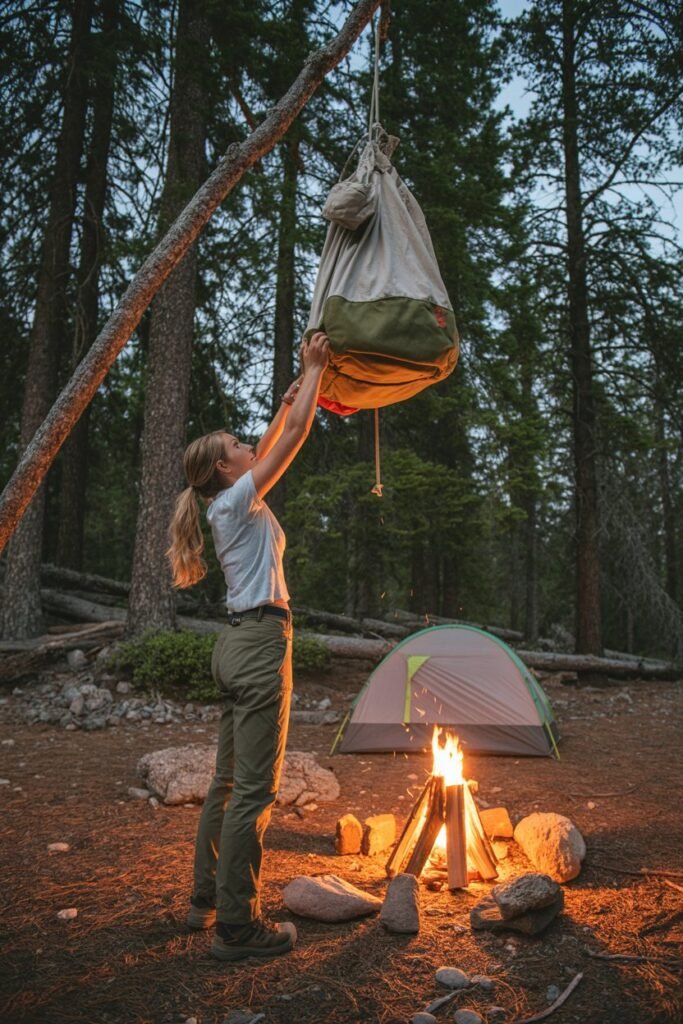
Wildlife is often attracted to scented products like toothpaste, soap, and deodorant.
Improper storage can lead to animals rummaging through campsites.
Always store hygiene items:
• In odor-proof bags
• Inside bear canisters where required
• Hung in bear bags if camping in bear country
Keeping scented items secured protects both you and the wildlife.
14. Reduce Plastic Waste in Your Pack
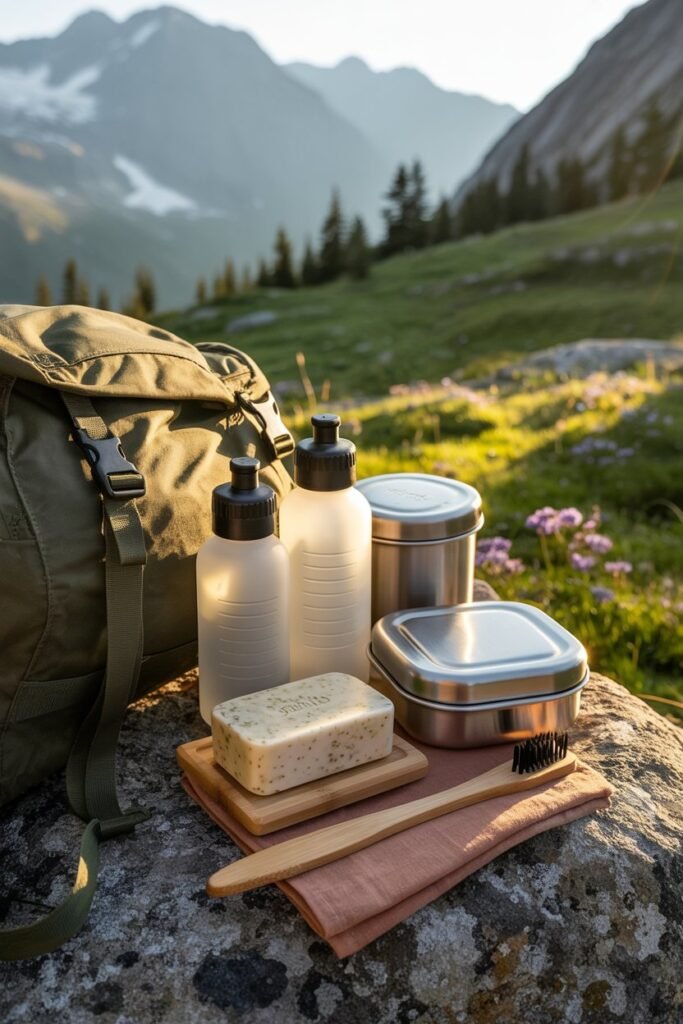
Sustainability begins with what you choose to bring on your trip.
Many hikers are now transitioning toward low-waste gear setups.
Ways to reduce plastic waste include:
• Using refillable travel bottles
• Choosing bar soap instead of liquid soap
• Carrying reusable cloth towels
• Buying bulk hygiene products before trips
Over time, these habits significantly reduce the amount of trash produced during outdoor adventures.
15. Respect Wildlife and Natural Spaces
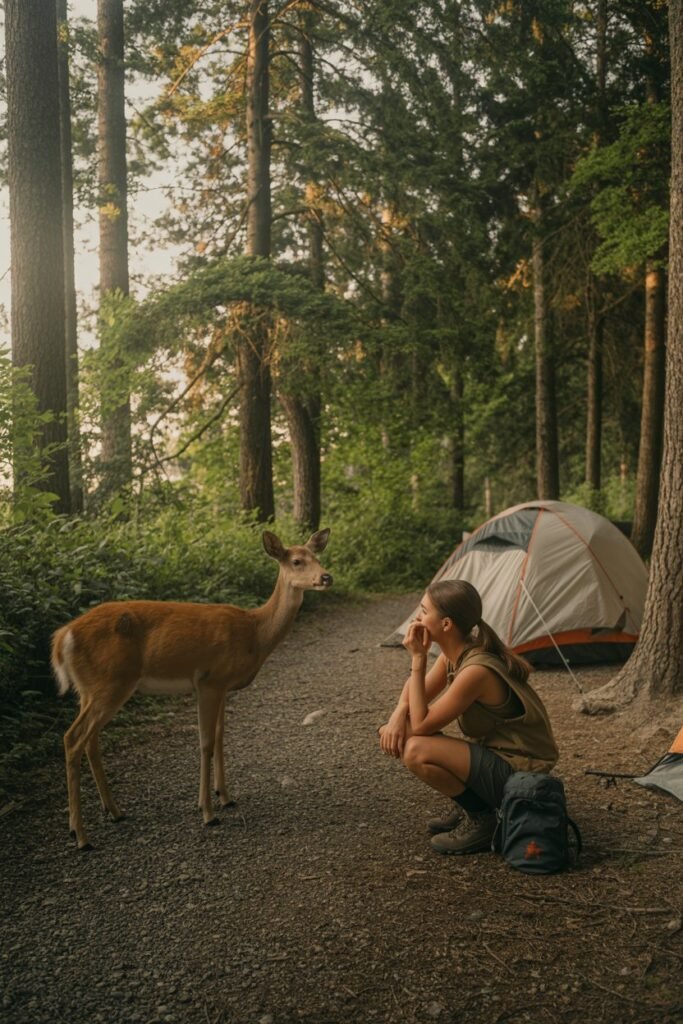
Good hygiene in the outdoors also includes respecting the animals and landscapes around you.
Strong scents, improperly stored food, and waste can alter animal behavior.
Simple ways to reduce impact:
✔ Avoid strong perfumes or scented lotions
✔ Keep campsites clean
✔ Store trash securely
✔ Never feed wildlife
The goal is to enjoy nature while allowing animals to live undisturbed in their natural habitat.
16. Leave Campsites Cleaner Than You Found Them
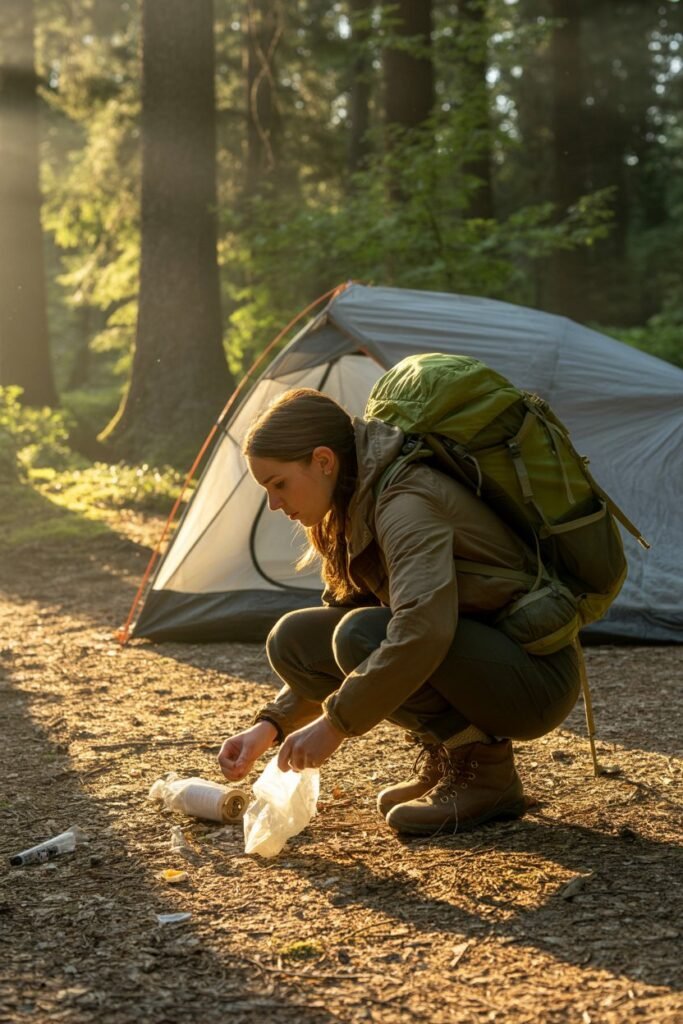
One of the most rewarding outdoor habits is leaving a campsite better than when you arrived.
Before packing up camp:
• Walk the area and pick up micro trash
• Check for forgotten food scraps
• Ensure waste is packed out
• Restore disturbed ground if possible
This simple act of stewardship protects the environment and supports the hiking community.
Every small effort contributes to preserving the beauty of the outdoors.
Final Thoughts
Eco-friendly hygiene might seem like a small detail when planning a hiking or camping trip, but it plays a powerful role in protecting the places we love to explore.
By choosing sustainable products, managing waste responsibly, and respecting natural ecosystems, hikers can enjoy incredible outdoor adventures while keeping trails clean and wildlife safe.
The outdoors gives us breathtaking views, peaceful moments, and unforgettable memories. Treating nature with care ensures those experiences remain just as magical for the next generation of adventurers.
A little preparation and mindfulness go a long way. With these eco-friendly hygiene tips in your backpack, you can stay fresh, confident, and environmentally responsible on every trail you hike and every campsite you call home.