
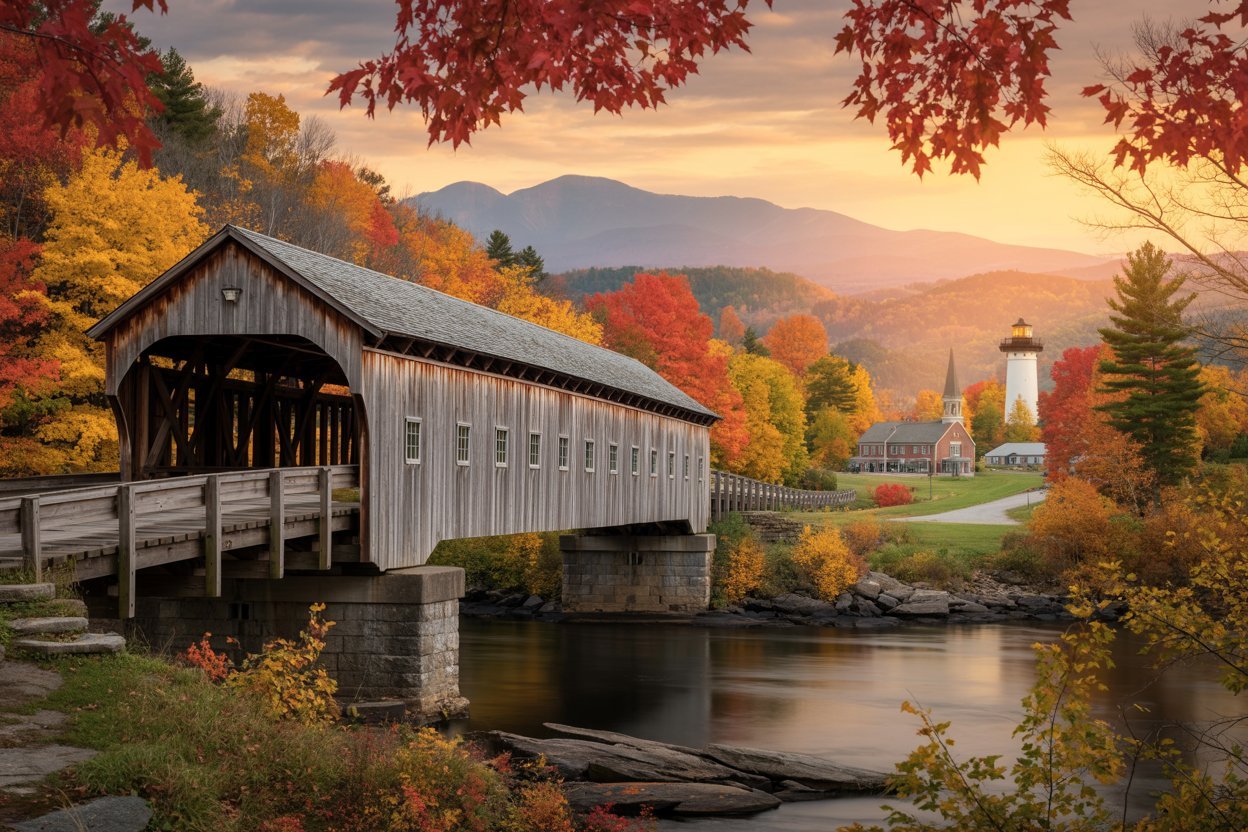

Autumn in the United States has always felt like my favorite kind of magic: the crisp air that makes your skin tingle, the smell of warm cider donuts drifting through small towns, and the trees bursting into fiery reds, oranges, and golds that feel almost too perfect to be real.
I’ll never forget my first fall road trip windows down, cozy scarf wrapped tight, playlists queued, and that sense of wonder that every stop would reveal something new: a hidden waterfall, a pumpkin patch tucked into a farm, or a quiet hilltop with endless views.
It’s this feeling of discovery, comfort, and seasonal charm that inspired me to put together this guide to the Best Fall Trips in the U.S. You’ll Want to Take This Season — The Ultimate Guide (+ all the tips).

I want you to experience that same joy I felt—whether it’s chasing vibrant mountain vistas, wandering quaint towns with covered bridges, enjoying moody coastal walks, or hiking alpine trails glowing in golden sunlight.
Inside this guide, you’ll find everything you need to plan an unforgettable fall escape: when the colors peak, how to get there, top things to do, suggested itineraries, cozy accommodations, the best local eats, family- and pet-friendly options, accessibility and safety tips, and budgeting advice to make your trip stress-free.
Below, you’ll discover the most photogenic and immersive fall destinations in the U.S., each with its own seasonal charm that will make you fall in love with autumn all over again.
Quick timeline: when to expect fall color in the U.S.
Most of the country hits its “leaf-peeping sweet spot” in October, but peak timing varies widely by elevation and latitude.
Northern New England and high-elevation Rocky Mountain locales often peak in late September to early October; the Appalachians (Blue Ridge, Smokies) usually color up mid-to-late October; the Deep South tends to show color in late October into November.
Online fall-foliage maps and local park forecasts are your best friends when planning exact travel dates.
Pro tip: I use trip.com for my bookings. there offer exclusive deals up to 60% off flights and hotels.
shop my travel essentials on amazon

Hiking BootsDurable, supportive boots built for rocky trails, long hikes, and all-weather outdoor adventures. Price: Varies Get on Amazon |

Trekking PoleLightweight and adjustable poles that improve stability and reduce joint strain on tough trails. Price: Varies Get on Amazon |

Travel PillowSoft ergonomic neck support pillow that keeps you comfortable on flights, buses, and long rides. Price: Varies Get on Amazon |

First Aid KitCompact emergency kit with medical essentials for hiking, travel, camping, and road trips. Price: Varies Get on Amazon |

Travel LuggageLightweight, durable suitcase with smooth wheels and secure interior compartments. Price: Varies Get on Amazon |

Travel BackpackComfortable, multi-pocket backpack ideal for day trips, flights, and outdoor adventures. Price: Varies Get on Amazon |

Portable ChargerHigh-capacity power bank designed to keep phones, tablets, and gadgets charged on the go. Price: Varies Get on Amazon |

Luggage TagDurable and stylish tag that keeps your suitcase identifiable and secure during travel. Price: Varies Get on Amazon |
1) New England: The classic autumn postcard

Why go
If you imagine a perfect fall scene red sugar maples, covered bridges, apple orchards, and small towns with pumpkins on every stoop New England is it.
The region is the canonical fall destination in the U.S., with routes like Vermont’s Route 100 and Maine’s coastal drives delivering unforgettable panoramas.
Interactive local foliage maps make planning straightforward.
When to go
- Northern Vermont and northern New Hampshire: late September → early October.
- Central New England (central Vermont, western Massachusetts): early → mid October.
- Coastal Maine and the southern parts: mid → late October.
Peak timing can shift year-to-year; check regional foliage trackers in the weeks before you go.
How to get there
Major airports: Boston (BOS), Manchester NH (MHT), Burlington VT (BTV), Portland ME (PWM).
Renting a car is recommended for mobility public transit is limited outside cities.
Top things to do
- Drive a scenic byway: Vermont’s Route 100, Kancamagus Highway in NH, and the Mohawk Trail in MA.
- Apple picking + cider mills: ubiquitous and often paired with farm stands and pumpkin patches.
- Covered-bridge hunting and small-town strolling: Woodstock, Stowe (VT), Kennebunkport (ME), and Stockbridge (MA) are standouts.
- Hike a classic: Mount Monadnock (NH) for panoramic views; trails in the White Mountains for stronger alpine color.
- Fall festivals: foliage festivals, harvest fairs, and craft markets are abundant.
Suggested 5-day sample itinerary (Vermont-centred)
Day 1: Arrive Burlington — stroll Church Street + dinner.
Day 2: Drive Route 100 → stop in Stowe; hike a short trail; visit a cider mill.
Day 3: Continue south through Middlebury → Brandon → overnight in Woodstock.
Day 4: Explore Quechee Gorge and the Green Mountain Byway; scenic driving.
Day 5: Return to Burlington via small towns, stop at a farm for apples.
Where to stay
Book early October weekends sell out.
Charming inns, historic B&Bs, and small boutique hotels are the vibe.
For a splurge, choose a lakeside inn in Vermont or a seaside boutique B&B in coastal Maine.
Tips & pitfalls
- Weekends are the busiest; midweek travel gives quieter roads and lower rates.
- Expect two-lane mountain roads; drive slower than you would on flat highways there are lots of scenic pullouts and photo stops.
- Check local farm and orchard schedules (some close earlier in the season).
- Dress in layers mornings can be frosty, afternoons pleasantly warm.
2) Great Smoky Mountains & Blue Ridge Parkway / Asheville, NC

Why go
The Blue Ridge and Smoky Mountains deliver layered ridgelines that glow with copper and scarlet.
Asheville is the cultural hub wonderful food, breweries, and easy access to scenic drives and hikes.
Skyline Drive and Shenandoah National Park give you overlook after overlook for quick leaf-peeping without difficult trails.
When to go
- Smokies lower elevations: mid → late October; higher elevations often color earlier.
- Blue Ridge Parkway: color progression follows elevation; typically mid-October through early November.
How to get there
Fly into Asheville (AVL) for Blue Ridge and Smokies access; Knoxville (TYS) or Greenville-Spartanburg (GSP) are alternatives. Shenandoah: drive from Washington D.C. (1.5–3 hours depending on entrance).
Top things to do
- Drive the Blue Ridge Parkway for endless sweeping vistas.
- Hike to Clingmans Dome or Alum Cave in the Smokies for panoramic colors.
- Visit the Biltmore Estate (Asheville) its grounds are spectacular in fall.
- Skyline Drive: drive the full 105 miles for early-morning overlooks and picnic stops. Local guides list great nearby restaurants and towns to fuel up.
Suggested 4-day sample itinerary (Asheville + Blue Ridge)
Day 1: Arrive Asheville explore downtown breweries and farm-to-table dining.
Day 2: Drive Blue Ridge Parkway south, stop at overlooks and short hikes; sunset at Craggy Gardens.
Day 3: Day trip to Pisgah National Forest or a waterfall hike.
Day 4: Biltmore Estate visit and wine tasting (or head east to Great Smoky Mountains).
Where to stay
Asheville has boutique hotels and mountain cabins. For a cabin-with-view experience, book early—these properties fill fast for peak foliage weekends.
Tips & pitfalls
- Popular overlooks get busy early; arrive at sunrise for solitude and softer light for photos.
- Cell service can be intermittent in the parkways download maps offline and carry a paper map as a backup.
- Entry fees can apply for national parks; verify current park alerts and road closures.
3) Colorado high country — Aspen, Maroon Bells, San Juan Skyway
Why go
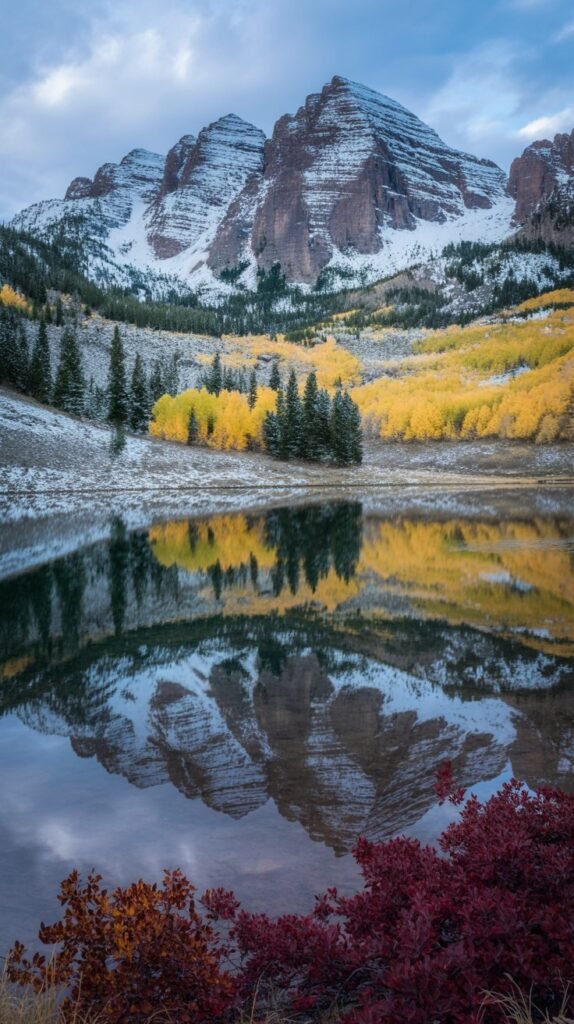
Colorado’s aspens turn a luminous gold in autumn there’s nothing quite like the shimmer of quaking aspens across a mountain valley.
Iconic spots like Maroon Bells near Aspen produce postcard-perfect reflections in alpine lakes.
Mountain passes and scenic byways (San Juan Skyway) deliver dramatic contrasts of yellow aspens against evergreens and craggy peaks.
When to go
Late September → early October is typically peak for many Colorado aspens timing depends on elevation and snow.
Watch local forecasts; some years bring an early freeze that accelerates color.
How to get there
Fly into Aspen/Pitkin County Airport (ASE), Grand Junction (GJT), or Durango (DRO) depending on the area. Driving is common expect mountain roads and occasional high-altitude passes.
Top things to do
- Maroon Bells: walk the lakeshore trail for classic reflections (note: access is sometimes restricted to shuttles during peak times).
- San Juan Skyway: a loop drive through Telluride, Ouray, and Silverton spectacular engineering and vistas.
- Hike moderate trails for valley views or take a scenic gondola (e.g., Telluride) for alpine panoramas.
- Take a photography-focused outing aspens are luminous at golden hour.
Where to stay
Choose from mountain lodges, small inns, and cozy cabins. If you want a quiet retreat, stay outside town and drive in for day outings.
Tips & pitfalls
- Weather changes fast at altitude carry layers and be prepared for sudden rain or snow.
- Shuttles or timed entry at popular spots (Maroon Bells) help manage crowds book in advance if required.
- Altitude sickness is real for some visitors hydrate, take it easy your first 24 hours, and avoid heavy exertion until you feel acclimated.
4) Michigan’s M-22 & the Great Lakes shoreline
Why go
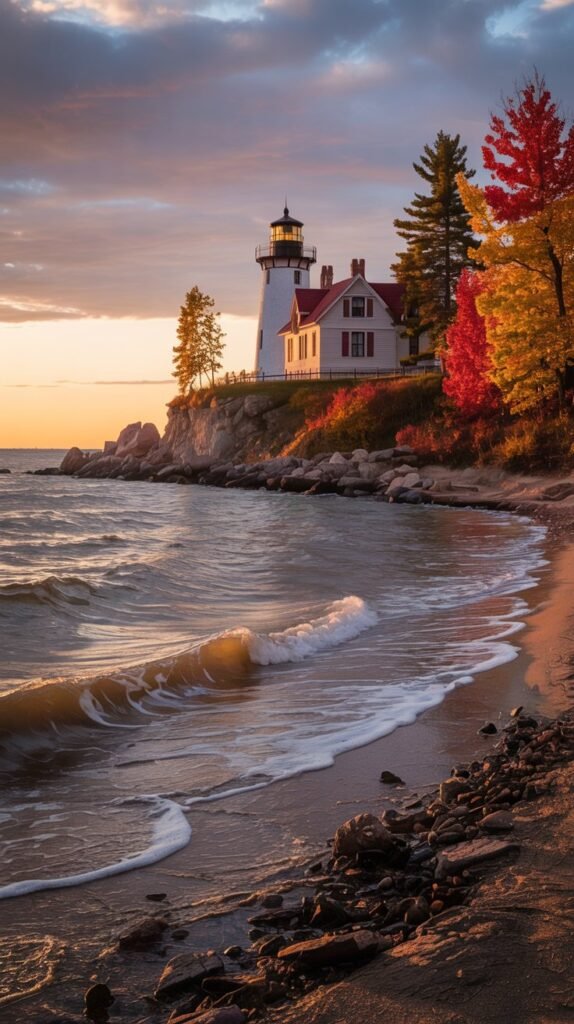
Great Lakes fall brings a different kind of magic: forests meeting freshwater coastlines, lighthouses framed by color, and dramatic dunes.
Michigan’s scenic drives especially M-22 along Lake Michigan are perfect for relaxed autumn road trips.
When to go
Mid → late October for much of Michigan’s lower peninsula; earlier on the Upper Peninsula.
How to get there
Fly into Grand Rapids (GRR), Traverse City (TVC), or Detroit (DTW) and rent a car for the coastal loops.
Top things to do
- Drive M-22 along the Leelanau Peninsula and stop at small lakeside towns.
- Visit Sleeping Bear Dunes National Lakeshore for dune walks and lake vistas.
- Lighthouse hopping and visiting local wineries and cideries.
Tips & pitfalls
- Roads are scenic but can be narrow be patient with passing traffic.
- Bring waterproof footwear for lakeshore exploration and dune hikes.
- Fall weather near the lakes can be windy and chilly pack windproof layers.
5) Upper Midwest and Great Lakes

Why go
The Midwest’s mixed hardwood forests create a bright, saturated palette in autumn.
Minnesota’s northwoods, Wisconsin’s North Shore, and Ohio’s Hocking Hills offer accessible hikes, waterfalls, and small-town charm.
When to go
October is usually ideal, with northern areas sometimes peaking toward early October.
How to get there
Fly to Minneapolis (MSP), Milwaukee (MKE), Cleveland (CLE), or Columbus (CMH) then drive to regional parks.
Top things to do
- Hike the Hocking Hills (Ohio) for waterfalls enclosed by fall color.
- Drive the North Shore Scenic Drive (MN) along Lake Superior.
- Explore small towns and farmers’ markets.
Tips & pitfalls
- Bring sturdy hiking shoes trail conditions can be muddy with falling leaves.
- Parking lots at popular trailheads can fill quickly arrive early.
6) Pacific Northwest
Why go
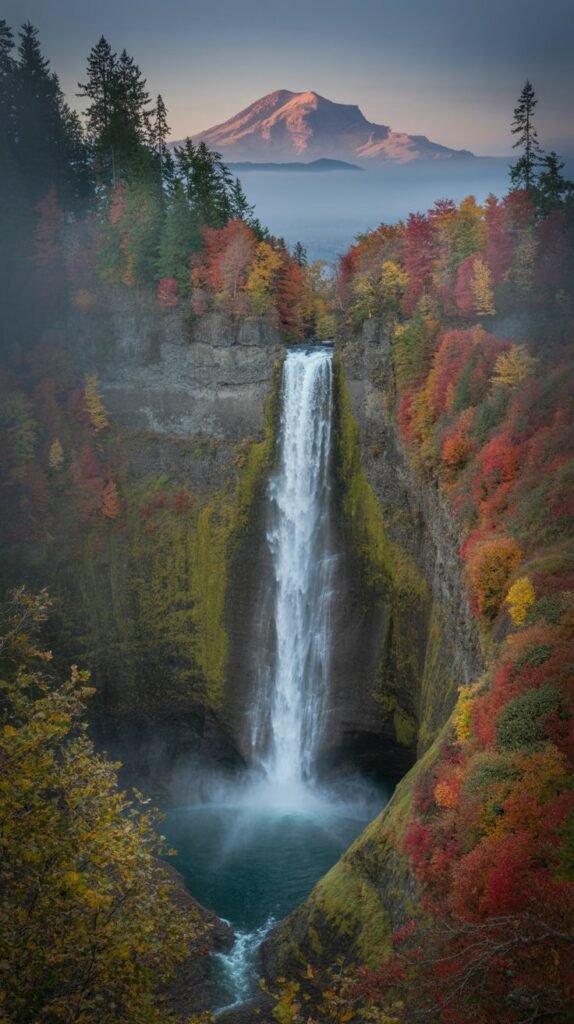
Fall in the PNW is more subdued and moody deep evergreen forests with bright pockets of deciduous color, dramatic waterfalls with fog or mist, and fewer crowds than the East.
The Columbia River Gorge has waterfalls framed by color; Mount Rainier and the Olympic Peninsula offer stunning mountainous backdrops.
When to go
Late September → October. Coastal fog and rain are typical as the season progresses—plan for wet weather.
How to get there
Fly into Portland (PDX) for the Gorge, Seattle (SEA) for Mount Rainier and Olympic National Park, then rent a car.
Top things to do
- Hike to waterfalls (Multnomah Falls is iconic; many smaller cascades are reachable from short hikes).
- Drive scenic loops and stop at viewpoints.
- Head inland for clearer skies and warmer fall days.
Tips & pitfalls
- Rainproof jackets and footwear are essential.
- Be flexible with plans the PNW’s weather can change fast.
7) New York State & New England-adjacent options
Why go
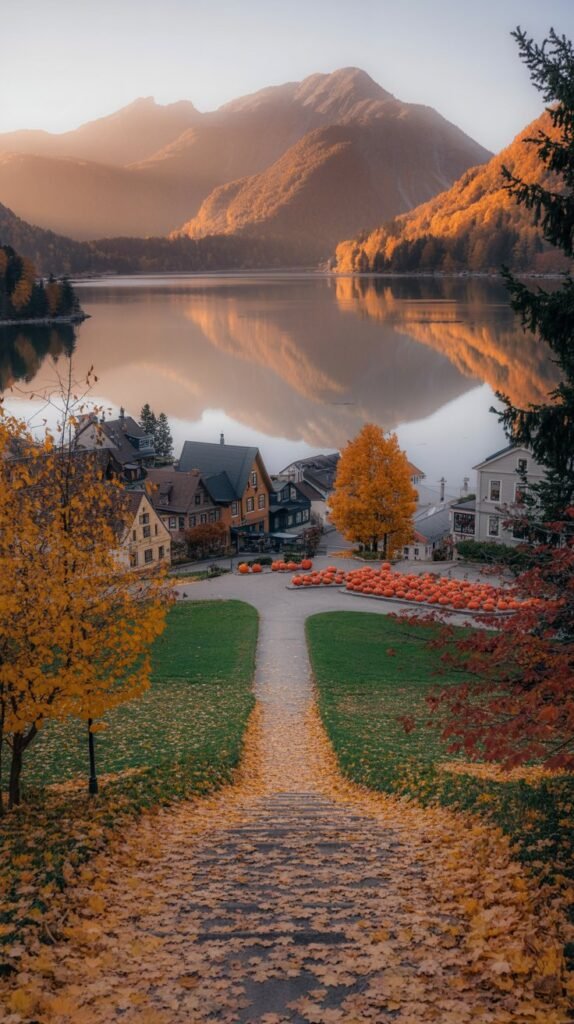
If you want leaf-peeping plus culture, the Hudson Valley and the Catskills are perfect: wineries, farm-to-table food, hiking, and proximity to NYC.
Central Park is an easy urban foliage hit; the Adirondacks deliver wilderness and mirror lakes.
When to go
Mid → late October for many valley and upstate regions; early October in higher elevations.
How to get there
Drive from New York City, or fly into Albany (ALB) / Syracuse (SYR) for nearby regions.
Top things to do
- Hike short mountain trails for panoramic views (Breakneck Ridge, Mount Jo).
- Visit wineries in the Finger Lakes or Hudson Valley.
- Take a scenic train (if available) or drive a loop of high-elevation roads.
Tips & pitfalls
- Expect elevated weekend traffic on tourist routes close to NYC.
- Book any popular vineyard or tasting room reservations in advance.
8) National Parks of the West
Why go
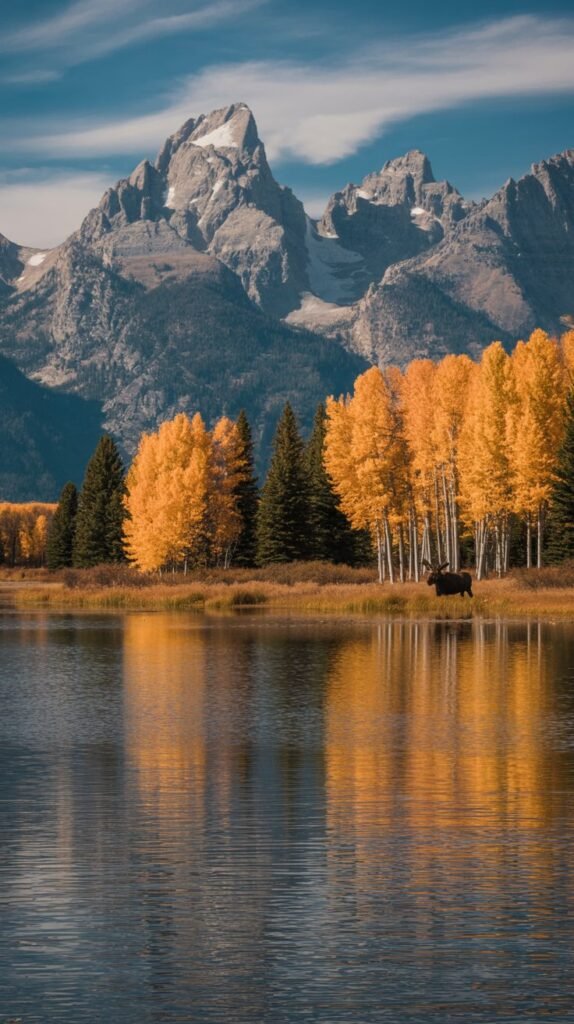
National parks reveal a quieter, more dramatic side of fall smaller crowds, colder nights, and crisp, clear light.
Yellowstone’s aspen and cottonwood stands, Grand Teton’s reflective lakes, and Glacier’s golden valleys are sublime when paired with cool, blue-sky days.
When to go
September → early October is often ideal for many western parks; higher elevations color earlier.
How to get there
Fly into regional airports (Jackson Hole for Grand Teton, Bozeman for Yellowstone, Salt Lake City for Zion/Bryce) and drive in.
Top things to do
- Wildlife watching at dawn and dusk (elk and moose are more visible in cooler months).
- Hike shorter trails or scenic drives; some high-elevation roads may close early with snow.
- Photograph reflections in still lakes autumn mornings are often calm.
Tips & pitfalls
- Park roads can start to close for winter in October check park websites before departure.
- Wildlife is more active in cooler conditions; keep a safe distance and carry bear spray where recommended.
9) Southern gems with unexpected color

Why go
Not all fall trips are about fireworks of color.
Southern destinations like Charleston bring pleasant temperatures, lower humidity, and seasonal food and festival culture perfect for a mellow fall escape.
Asheville and Shenandoah (covered above) are top choices for mountain color.
When to go
October → November for the most pleasant southern fall weather.
How to get there
Charleston SC (CHS), Asheville NC (AVL), Richmond VA (RIC) for Shenandoah access.
Top things to do
- Food-focused weekends (farm dinners, oyster roasts).
- Historic district walking tours with cooler temps.
- Harbor cruises that are less crowded than summer.
Tips & pitfalls
- Southern fall is also hurricane season’s tail check forecasts if planning coastal trips in early fall.
Planning & Logistics — EVERYTHING you need to know
1. Using foliage forecasts and local trackers
Foliage maps and prediction tools are invaluable check national and local trackers in the 2–4 weeks before departure to narrow your window.
Popular resources update frequently and even offer interactive maps so you can target peak dates with higher precision.
2. Book early (and strategically)
- Accommodations: Peak weekends (usually mid-October in many regions) sell out fast. Book at least 6–8 weeks in advance for popular spots; earlier if you want a highly sought-after cabin or B&B.
- Shuttles & timed entries: Places like Maroon Bells or popular park overlooks sometimes use shuttle systems or timed permits reserve those early.
- Restaurants & activities: If you plan to dine at popular farm-to-table restaurants or take guided photography/wine tours, book ahead, especially on weekends.
3. Transportation tips
- Rent a car with good clearance if you’re driving mountain roads. Four-wheel drive is not always necessary, but an AWD vehicle is comforting for variable weather.
- Road conditions: Fall can bring early snow at high elevations; check road status in the parks.
- Gas stations are fewer in remote areas fill up when you can.
4. What to pack (a practical checklist)
- Layering pieces: base layer (thermal), mid-layer (fleece/wool), and windproof/waterproof outer layer.
- Warm hat, gloves, and scarf for early mornings and high-altitude locations.
- Sturdy walking shoes or hiking boots (waterproof preferred).
- Headlamp/flashlight (shorter daylight hours).
- Reusable water bottle, snacks, and a compact first-aid kit.
- Camera gear: tripod, polarizer, spare batteries (cold drains them faster), and memory cards.
- Insulated mug for coffee/cider on the go.
- Paper maps or downloaded offline maps (cell service is unpredictable in many scenic regions).
5. Avoiding crowds (smart timing)
- Go midweek rather than on Saturday-Sunday peaks.
- Sunrise visits are both peaceful and yield better light.
- If a spot has a shuttle or timed entry, book the earliest or latest slots to avoid midday crowds.
6. Family-friendly and accessibility considerations
- Choose destinations with shorter, accessible trails if traveling with kids or family members with limited mobility (many parks list accessible viewpoints and boardwalks).
- Bring a compact stroller (some trails are stroller-friendly) and a child-friendly trail pack/carrier for longer hikes.
- Look for ranger-led programs and visitor centers with family activities.
7. Budgeting and money-saving tips
- Consider house rentals outside hotspot towns for cheaper nightly rates and more space for groups.
- Cook some meals in a rented cabin farmers’ markets and local orchards are great for ingredients (and fun to explore).
- Avoid paid parking lots by arriving early for free roadside pullouts when allowed.
- Consider a National Park annual pass if you’re visiting multiple national parks in a year.
8. Safety basics
- Always tell someone your route and expected return time for longer hikes.
- Carry bear spray in bear country and know how to use it.
- Check weather and avalanche/potential-closure alerts for high mountain roads in early fall.
- Drive slowly on two-lane scenic roads; watch for cyclists and pull over in designated turnouts to let traffic pass.
The ultimate 2-week fall road-trip route
If you have two weeks and want variety mountains, lake coastlines, and charming towns this loop mixes top fall spots with manageable driving days.
Day 1–3: Fly into Boston; drive to Western Massachusetts (Mohawk Trail) → overnight in Stockbridge.
Day 4–6: Vermont loop (Stowe, Route 100, Woodstock).
Day 7: Drive south toward the Hudson Valley (overnight in Rhinebeck or Hudson).
Day 8–9: Head to the Catskills / Hudson Valley hikes; wine tastings.
Day 10–11: Fly/drive to Asheville, NC Blue Ridge Parkway and Biltmore Estate.
Day 12–13: Drive Great Smoky Mountains (or a day trip) hiking + scenic drives.
Day 14: Fly home from Asheville or drive back to a major airport.
Alternate: Replace the Hudson Valley leg with a drive across to Michigan’s M-22 region if you prefer lakeshore color over vineyards.
Special sections: Tailored tips
For solo travelers
- Pick smaller day-hike loops with clear wayfinding.
- Book shared-group nature or photography tours for company on scenic hikes.
- Keep accommodations in town center or near other travelers for social evenings.
For couples
- Book a cozy cabin with a fireplace; plan scenic drives and one special dinner at a highly-rated local restaurant.
- Try a fall-themed couple’s activity: apple-picking followed by a winery/ cidery tasting.
For families with young kids
- Choose destinations with short, waterfall hikes and education centers (many parks have junior ranger programs).
- Include one relaxed day no big drives or hikes to prevent meltdowns.
For photographers
- Scout compositions in advance using Google Earth and park maps; look for reflections and foreground interest.
- Use graduated ND filters for balanced skies when shooting landscapes with bright skies and shaded valleys.
For hikers / backpackers
- Autumn nights can be chilly bring a sleeping bag rated for lower temperatures and an insulating sleeping pad.
- Many alpine routes see snow by late October have microspikes or traction devices if you’ll be above treeline.
- Daylight is shorter plan hikes to finish well before dusk.
Budget breakdown examples (very rough estimates per person for a 4-day trip)
- Low-budget (camping, road trip, cook most meals): $150–$300 gas, campsite fees, groceries.
- Mid-budget (mid-range hotels, some dining out, park fees): $500–$1,200.
- Splurge (cabins, guided tours, higher-end dining): $1,500+.
Prices vary dramatically by region, accommodation level, and how many paid activities you book.
Sustainability & Leave No Trace
- Stay on marked trails; pack out all waste.
- Avoid driving off-road or damaging roadside vegetation for photos.
- Support local economies by visiting farmer’s markets, local cafes, and artisans.
- Consider carbon offsets for flights, or choose train/carpool options where feasible.
Packing kit for a fall trip (printable checklist)
- Thermal base layers (tops & bottoms)
- Mid-layers (fleece, wool sweater)
- Waterproof/windproof shell jacket
- Hiking boots + comfortable city shoes
- Warm hat + gloves + scarf
- Lightweight daypack with rain cover
- Headlamp and extra batteries
- Reusable water bottle + snacks
- First aid kit and personal meds
- Camera, tripod, extra batteries & memory cards
- Printed map + phone offline maps
- Portable charger & charging cables
- Identification, park passes, reservation confirmations
Common mistakes people make (and how to avoid them)
- Booking too late: Book accommodations and timed-entry passes early especially in New England and Colorado.
- Wrong gear: Not bringing waterproof layers or warm clothes for mornings can ruin the experience pack for surprises.
- Rushing the drive: Fall roads reward slow exploration plan for many short stops.
- Relying solely on cell service: Download maps offline and carry printed directions for remote park drives.
Top 10 fall-photo prompts (for inspiration)
- Sunrise reflecting off a mirror lake with aspens framing the shore.
- A covered bridge framed by a carpet of fallen leaves.
- A lone tree on a hill saturated red or golden leaves against a blue sky.
- A close-up of leaves with backlit light shining through.
- A farmhouse and barn with pumpkins and hay bales in front.
- A mountain ridge layered in autumn color at dusk.
- A boardwalk through a wetland with reeds and golden grasses.
- Orchard rows with people picking apples (human element).
- A winding scenic highway cutting through a forest canopy.
- Foggy morning on a lake with trees fading into mist.
Final tips — plan like a pro
- Use live foliage trackers in late September–October for fine timing. Resources that map progressive color can save you from arriving a week too late or too early.
- Book midweek for the quietest experience and better hotel rates.
- Bring layers fall weather changes rapidly, and mornings are commonly the coldest.
- Photograph at golden hour that light makes fall color sing.
- Respect closures and local rules parks may limit access to fragile areas or require shuttles during peak times.
Resources & further reading (short list to bookmark before you travel)
- Interactive regional foliage and peak maps for New England and nationwide forecasts.
- National Park Service fall color pages for park-specific timing, closures, and safety guidance.
- Local tourism sites (e.g., Visit My Smokies for Smoky Mountains updates) for up-to-date peak predictions and events.
Parting thought
Whether you crave a cozy cabin with a woodstove, a dramatic alpine valley of golden aspens, a peaceful lakeshore strewn in red and orange, or a cultural weekend in a food-forward small city, fall in the U.S. delivers.
Plan with foliage trackers, pack for changing temperatures, move slowly, and give yourself time to savor the colors.
The best fall trip isn’t the one with the most photos it’s the one where you slow down, breathe the crisp air, and come home a little more relaxed and a lot more inspired.