
Few travel experiences have brought my family closer together than hiking the famous Tour du Mont Blanc.
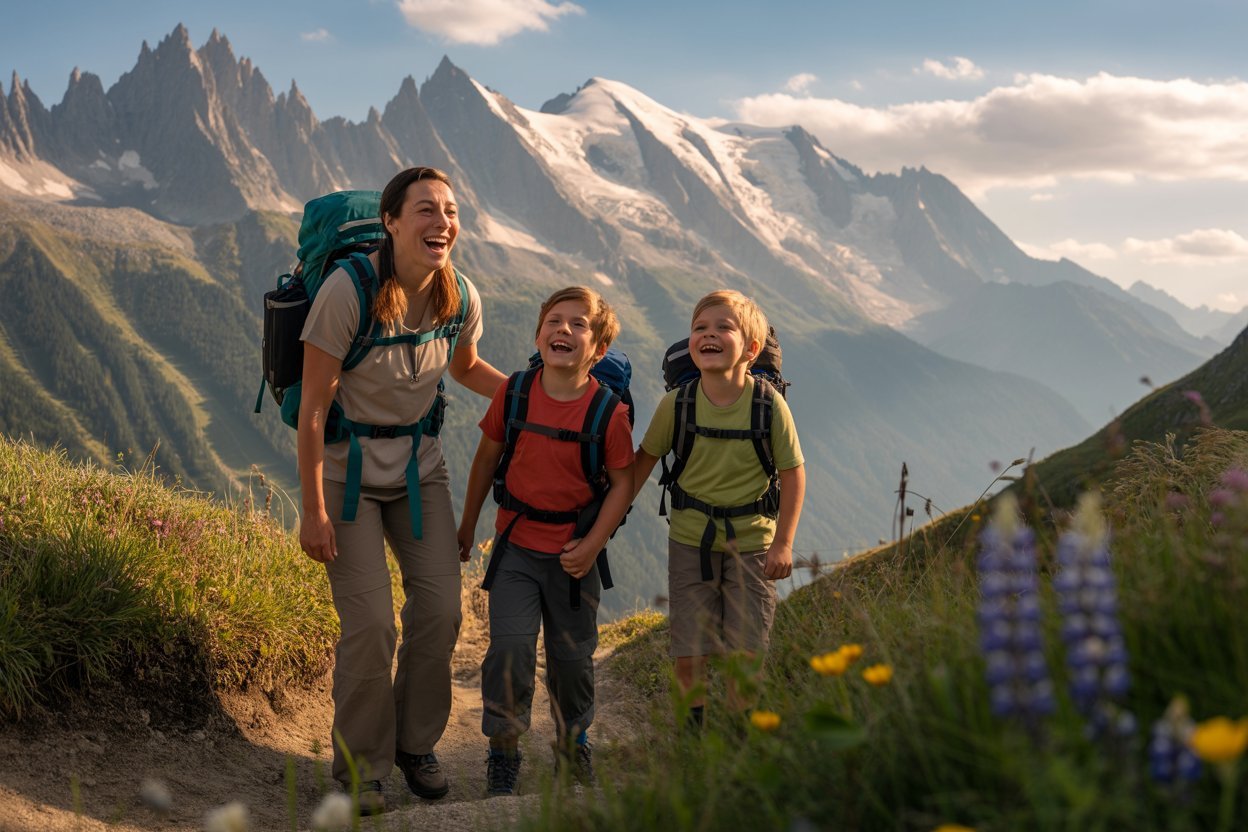
One moment we were sharing croissants in a tiny French mountain village, and the next we were crossing flower-filled alpine meadows while the kids chased butterflies beneath snowy peaks. Every day felt like stepping into a storybook.
Planning a self-guided family hike around Mont Blanc can feel overwhelming at first. Questions about safety, accommodations, luggage transfers, food, and daily hiking distances start piling up quickly especially when children are involved.
But after experiencing it firsthand, I can honestly say that a self-guided Tour du Mont Blanc family adventure is not only possible, it can become one of the most meaningful trips your family ever takes together.
Unlike guided tours that move at a fixed pace, a self-guided trek gives your family freedom. You can stop for hot chocolate in cozy mountain huts, let the kids splash in alpine streams, take extra photo breaks, or even shorten hiking days when little legs get tired. The flexibility makes all the difference.
This guide walks you through the best practical and emotional tips for hiking the Tour du Mont Blanc as a family. From choosing the right route to keeping children motivated on long trail days, these tips are designed to help you feel prepared, confident, and excited for the adventure ahead.
Shop my amazon essenial
- Hiking backpack (30–50L)
- Waterproof, comfortable hiking boots
- Trekking poles
- Water bottles or hydration bladder
- Weather-appropriate clothing layers
- Physical map
- First aid kit
- Portable power bank
- Headlamp or flashlight
Why Families Love the Tour du Mont Blanc
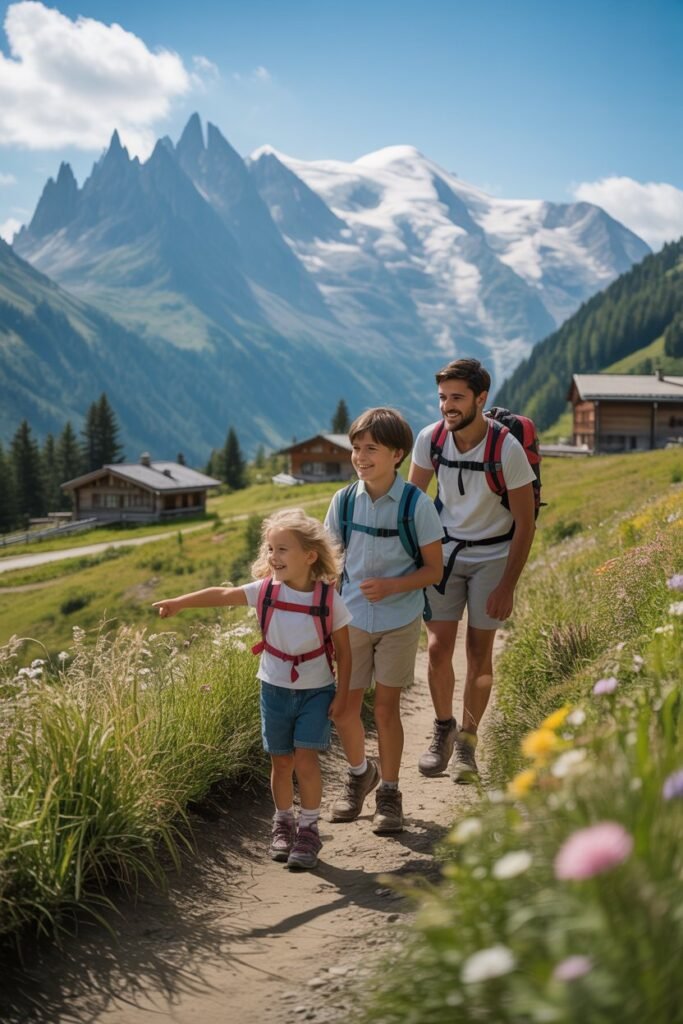
The Tour du Mont Blanc, often called the TMB, circles the Mont Blanc massif through France, Italy, and Switzerland.
It is considered one of the most beautiful long-distance hikes in the world, yet many families are surprised to learn that sections of it are very manageable for children.
What makes the TMB especially family-friendly is the combination of:
- Well-marked trails
- Charming mountain villages
- Frequent refuges and cafes
- Flexible route options
- Incredible scenery every single day
- Opportunities to shorten stages using transport
- Warm alpine hospitality
Instead of feeling like a hardcore survival expedition, the hike often feels like a moving mountain holiday filled with pastries, wildflowers, cowbells, and unforgettable family memories.
1. Choose the Right Section Instead of Hiking the Entire Route
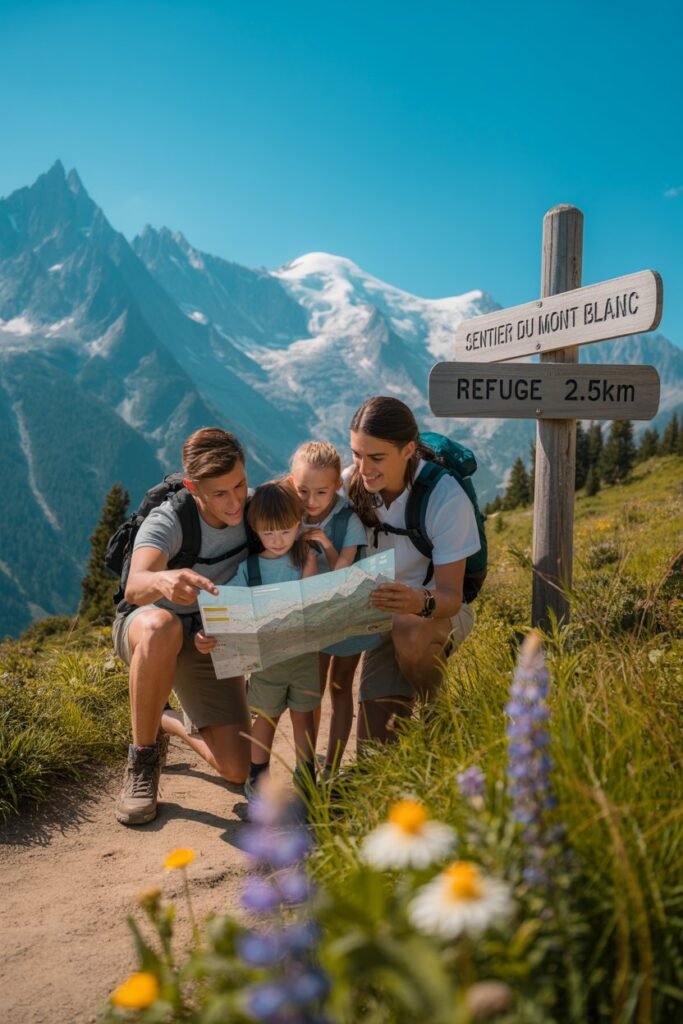
One of the biggest mistakes families make is trying to complete the full Tour du Mont Blanc in one trip.
While experienced hikers may complete the entire loop in 10–12 days, families often enjoy the experience far more by hiking only selected sections. Children usually care less about “finishing the whole trail” and more about enjoying each day.
For most families, the best option is choosing a shorter 4–7 day itinerary.
Some excellent family-friendly sections include:
Chamonix to Les Contamines (France)
Chamonix is one of the most popular starting points because it combines easy logistics with stunning scenery. This section offers beautiful valleys, manageable climbs, and excellent accommodation options.
Perfect for:
- First-time hiking families
- Younger children
- Families wanting shorter hiking days
Courmayeur Area (Italy)
Courmayeur offers incredible food, dramatic mountain scenery, and gentler cultural days mixed with hiking. Italian refuges are often especially welcoming for children.
Perfect for:
- Food-loving families
- Families wanting more comfort
- Moderate hiking experience
Switzerland Sections
The Swiss stages around Champex-Lac are peaceful, scenic, and less crowded. The villages feel cozy and calm, making them ideal for families wanting a slower pace.
Perfect for:
- Families wanting quieter trails
- Scenic lake views
- Relaxed daily distances
Pro Tip
Instead of focusing on completing the entire route, focus on creating positive hiking memories. Happy children are far more important than checking off every kilometer.
Read Bali With Kids: Top 51 Things To Do (A Real, Honest, Magical Family Guide)
2. Keep Daily Hiking Distances Realistic
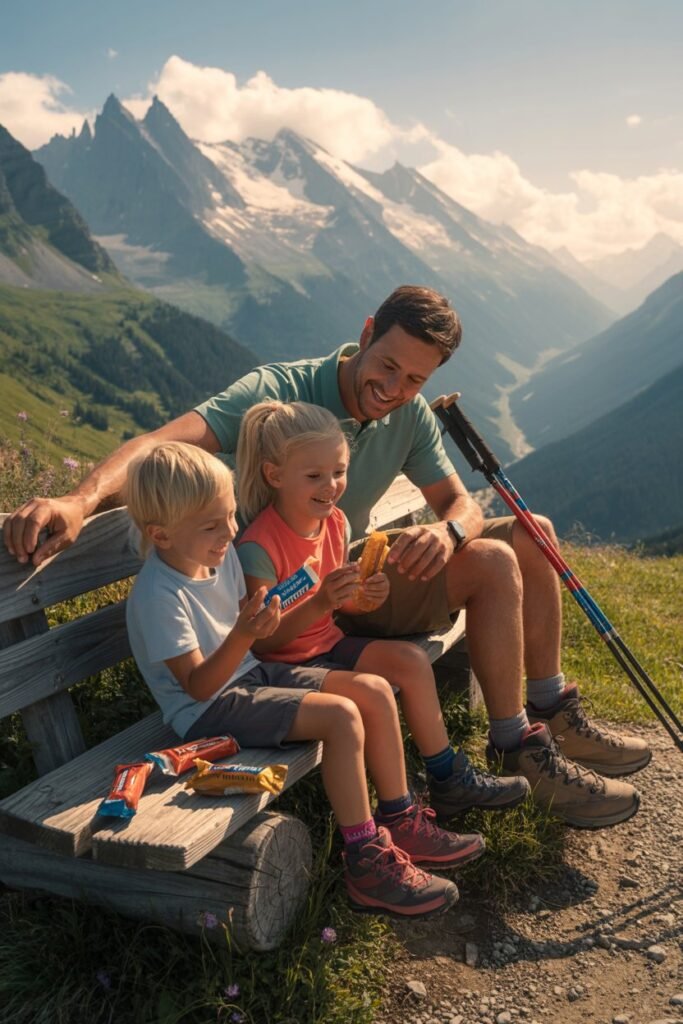
This single tip can completely change your family’s experience.
Adults often underestimate how tiring mountain hiking can be for children. A 10-mile alpine hike with elevation gain feels very different from a flat 10-mile walk at home.
When planning your itinerary:
- Aim for shorter hiking days
- Include longer lunch breaks
- Allow time for snacks and play
- Plan extra rest stops
- Finish hiking early whenever possible
Recommended Daily Distances by Age
Ages 5–7
- 3–5 miles (5–8 km)
Ages 8–12
- 5–8 miles (8–13 km)
Teenagers
- 7–10 miles (11–16 km)
Of course, every child is different. Some energetic kids can hike surprisingly long distances, while others need slower pacing.
The key is flexibility.
One of the best things about the TMB is that many villages are connected by buses, cable cars, or taxis, so you can shorten days if needed.
3. Book Family-Friendly Refuges and Hotels Early
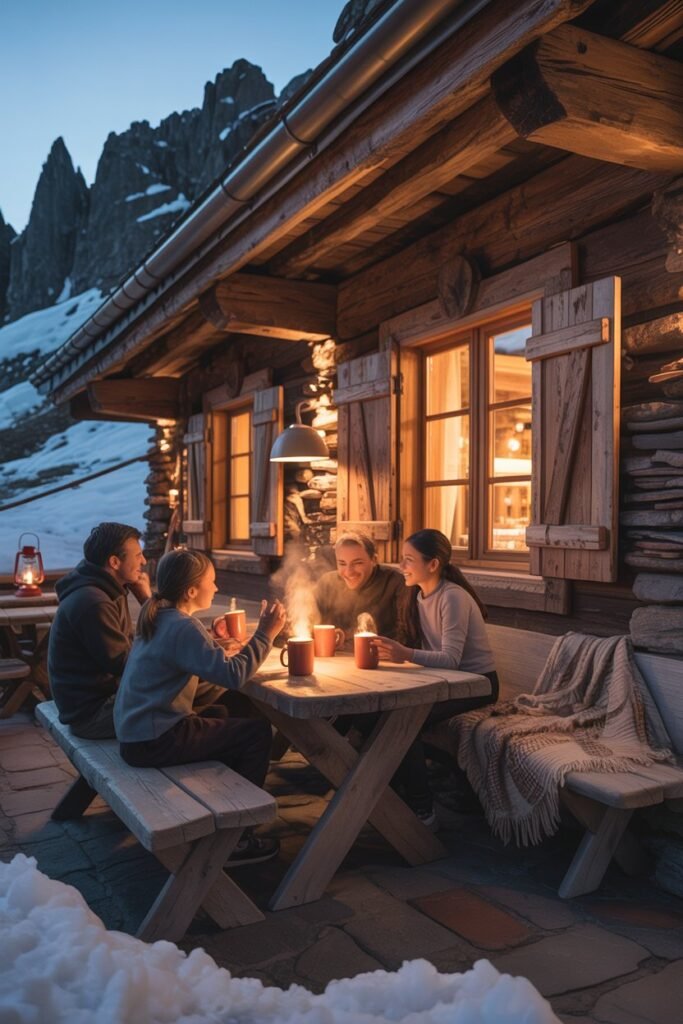
Accommodation on the Tour du Mont Blanc fills up incredibly fast especially during summer.
If you are traveling as a family, booking early becomes even more important because:
- Family rooms are limited
- Private rooms sell out quickly
- Some refuges have age restrictions
- Bathrooms may be shared
- Quiet sleeping arrangements matter more with kids
Start booking at least 6–9 months ahead if possible.
What Type of Accommodation Works Best for Families?
Mountain Refuges
These are traditional alpine huts located directly on the trail.
Pros:
- Authentic experience
- Incredible mountain atmosphere
- Kids often love the adventure
Cons:
- Shared dorms
- Limited privacy
- Noise at night
Hotels and Inns
Many families prefer staying in small alpine hotels in villages.
Pros:
- Private bathrooms
- Better sleep
- More comfortable for younger children
- Easier meal options
Cons:
- Slightly higher cost
- May require short transfers
Apartments
Family apartments work beautifully for longer stays because you can:
- Cook meals
- Wash clothes
- Spread out comfortably
- Save money on food
4. Use Luggage Transfers Whenever Possible
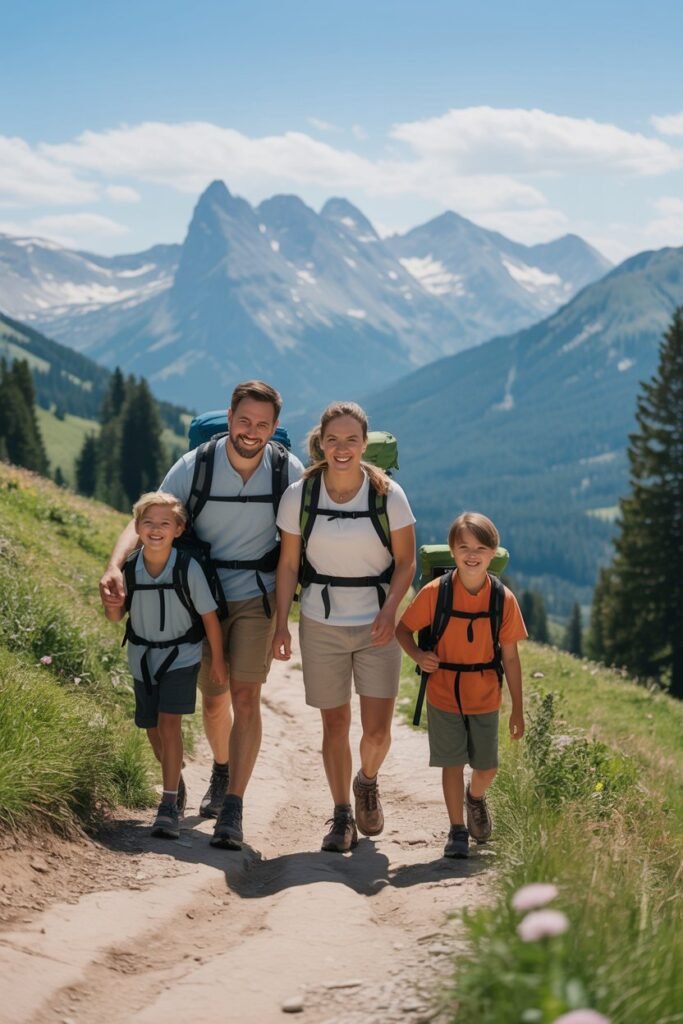
One of the smartest decisions families make on the TMB is using luggage transfer services.
Instead of carrying heavy backpacks for the entire trek, your luggage gets moved from one accommodation to the next while you hike with only a small daypack.
This completely changes the experience for families.
Why Luggage Transfers Are Worth It
Children already use a lot of energy hiking uphill. Carrying heavy packs can quickly turn excitement into exhaustion.
With luggage transfers:
- Kids stay happier
- Parents carry less stress
- Hiking becomes more enjoyable
- You reduce injury risk
- Daily walks feel lighter and more relaxed
Your daypack only needs:
- Water
- Snacks
- Rain jackets
- Sunscreen
- Small first-aid kit
- Extra layers
That’s it.
For family hiking, this is one of the best investments you can make.
Read 10 Best Destinations for Families in the USA That Moms Will Absolutely Love
5. Pack Layers for Every Type of Weather
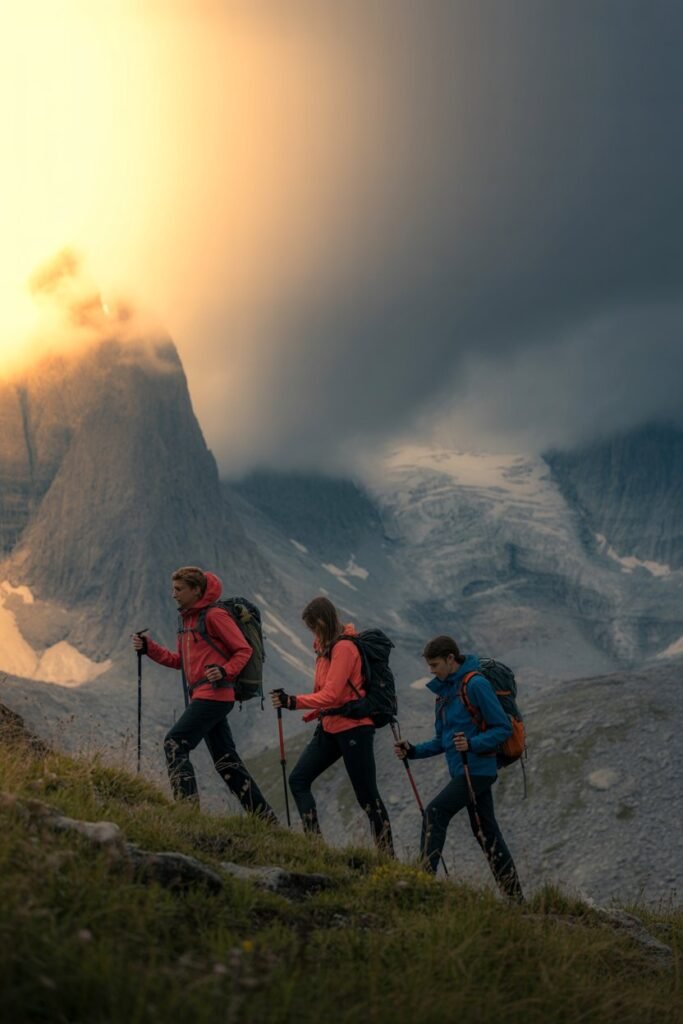
Mountain weather changes unbelievably fast around Mont Blanc.
One minute you are hiking in sunshine, and an hour later you may be walking through cold fog or rain.
Families need to be especially prepared because children can become cold much faster than adults.
Essential Clothing Layers
Base Layer
Lightweight moisture-wicking shirts help keep everyone dry.
Mid Layer
Fleece jackets or lightweight insulated layers provide warmth.
Waterproof Layer
A good rain jacket is absolutely essential.
Hiking Pants
Quick-dry pants work best because conditions change constantly.
Extra Warm Layer
Even during summer, higher passes can feel cold and windy.
Family Packing Essentials
Here are some items many families are grateful they packed:
- Trekking poles
- Blister patches
- Electrolyte tablets
- Sunscreen
- Lip balm
- Reusable water bottles
- Lightweight gloves
- Portable chargers
- Headlamps
- Small travel games
- Wet wipes
- Snacks children already love
6. Turn the Hike Into an Adventure Instead of a Challenge
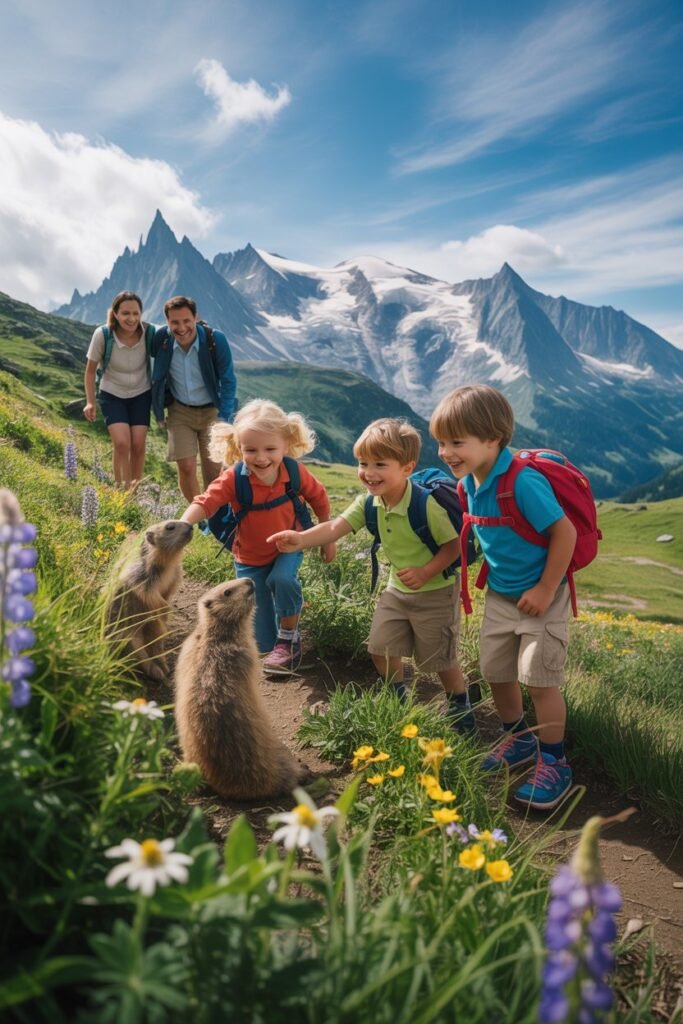
Children respond much better to adventure than pressure.
If every day becomes about “finishing the hike,” motivation can disappear quickly. But if the trail feels like an exciting journey filled with discoveries, kids usually become far more engaged.
Fun Ways to Keep Kids Motivated
Create Mini Challenges
- Count waterfalls
- Spot marmots
- Find wildflowers
- Listen for cowbells
Let Kids Lead Sometimes
Children love feeling independent on trails.
Celebrate Small Wins
A hot chocolate stop after a climb works wonders.
Take Frequent Scenic Breaks
The TMB has endless picnic spots with jaw-dropping views.
Bring Surprise Snacks
Tiny treats can completely reset moods during tough climbs.
7. Build Rest Days Into Your Itinerary
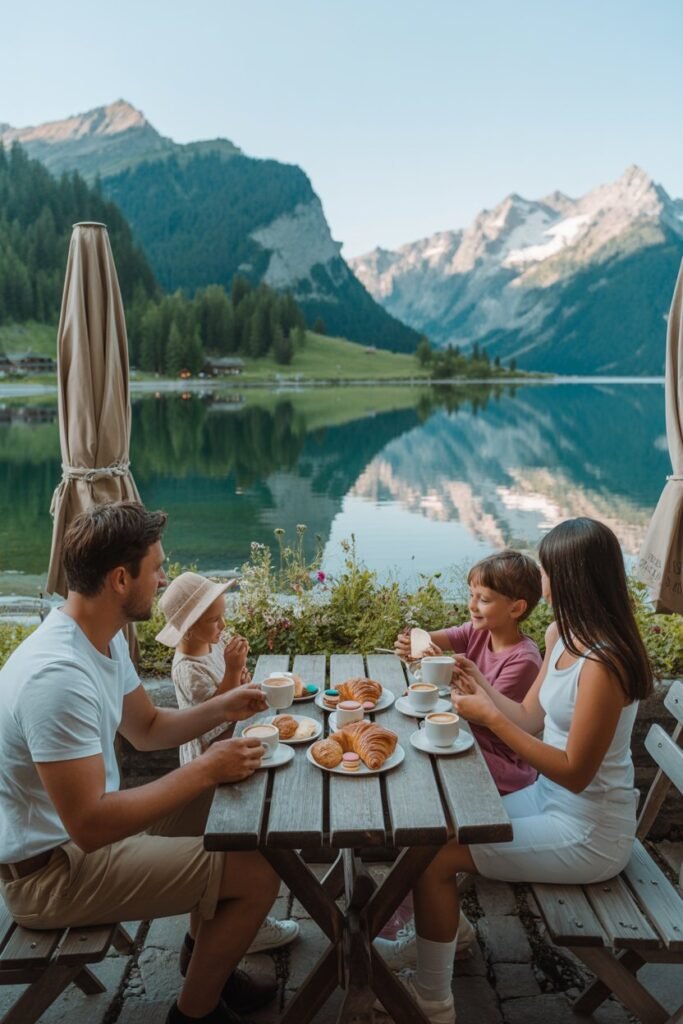
One of the best family travel decisions is slowing down.
Instead of hiking every single day, schedule rest days in beautiful villages along the route.
Great Rest-Day Locations
Chamonix
Perfect for:
- Cable cars
- Cafes
- Shopping
- Scenic walks
Courmayeur
Perfect for:
- Italian food
- Relaxed atmosphere
- Family restaurants
Champex-Lac
Perfect for:
- Lakeside relaxation
- Easy walks
- Calm scenery
Rest days help:
- Prevent burnout
- Reduce injuries
- Improve moods
- Restore energy
- Create balance
Families often enjoy the overall experience much more when they slow the pace slightly.
8. Prepare Kids for the Mental Side of Hiking
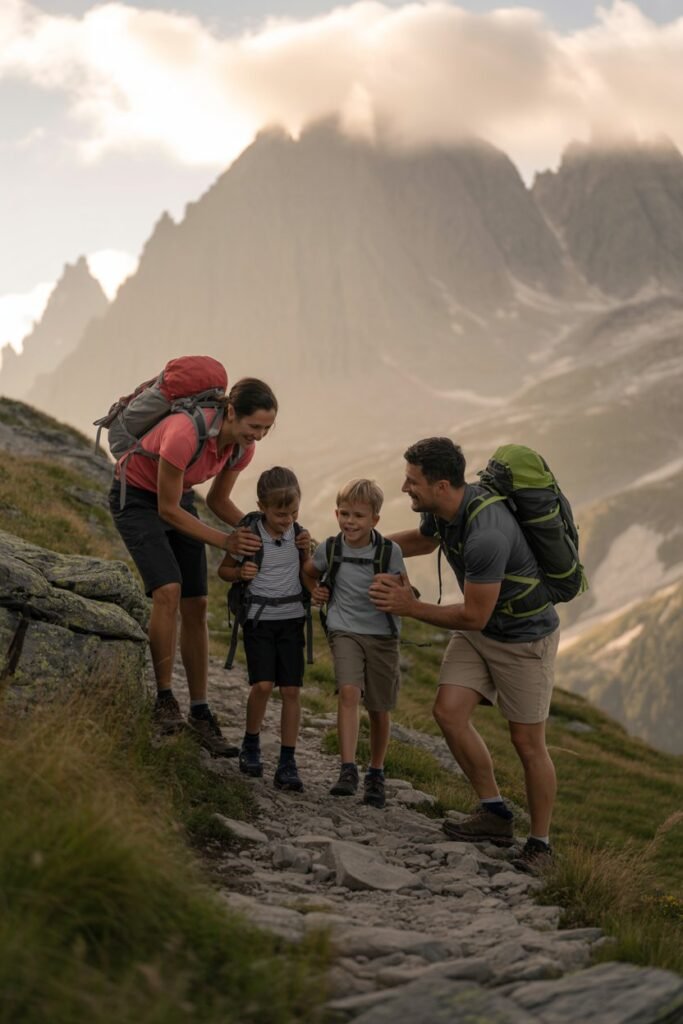
Physical preparation matters, but mental preparation matters just as much.
Some trail days feel magical. Others feel long, steep, and tiring.
Before your trip:
- Talk honestly about challenges
- Practice hiking at home
- Explain mountain weather
- Teach basic trail safety
- Build excitement gradually
Helpful Mental Strategies
Focus on the Next Stop
Instead of thinking about the entire climb, focus on reaching the next viewpoint or refuge.
Normalize Breaks
Resting is part of hiking, not failure.
Avoid Comparing Children
Every child handles hiking differently.
Keep the Mood Positive
Parents’ energy affects children more than anything else.
If adults stay calm and encouraging, kids usually respond well too.
9. Start Hiking Early Each Morning
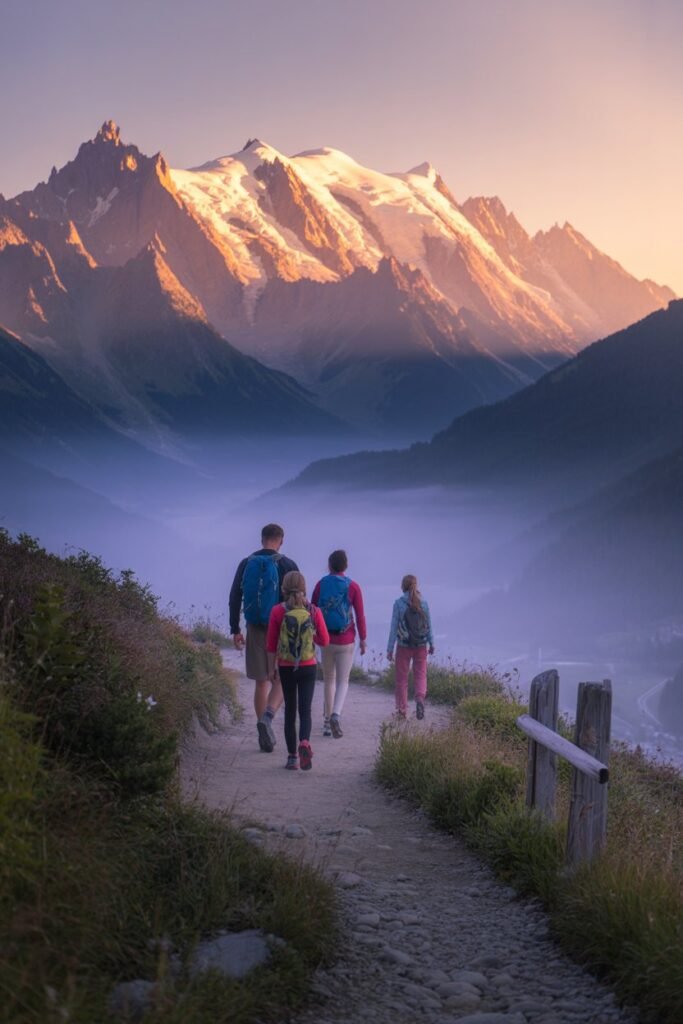
Early starts make a huge difference on the Tour du Mont Blanc.
Morning hiking offers:
- Cooler temperatures
- Fewer crowds
- Better weather conditions
- More flexibility
- Less afternoon storm risk
Families also benefit because children tend to have more energy earlier in the day.
Ideal Daily Rhythm
Morning
- Early breakfast
- Start hiking around 7–8 AM
Midday
- Long scenic lunch stop
Afternoon
- Arrive at accommodation early
- Relax and recover
This rhythm creates a far more enjoyable experience than rushing late into the evening.
10. Remember That the Journey Matters More Than the Distance
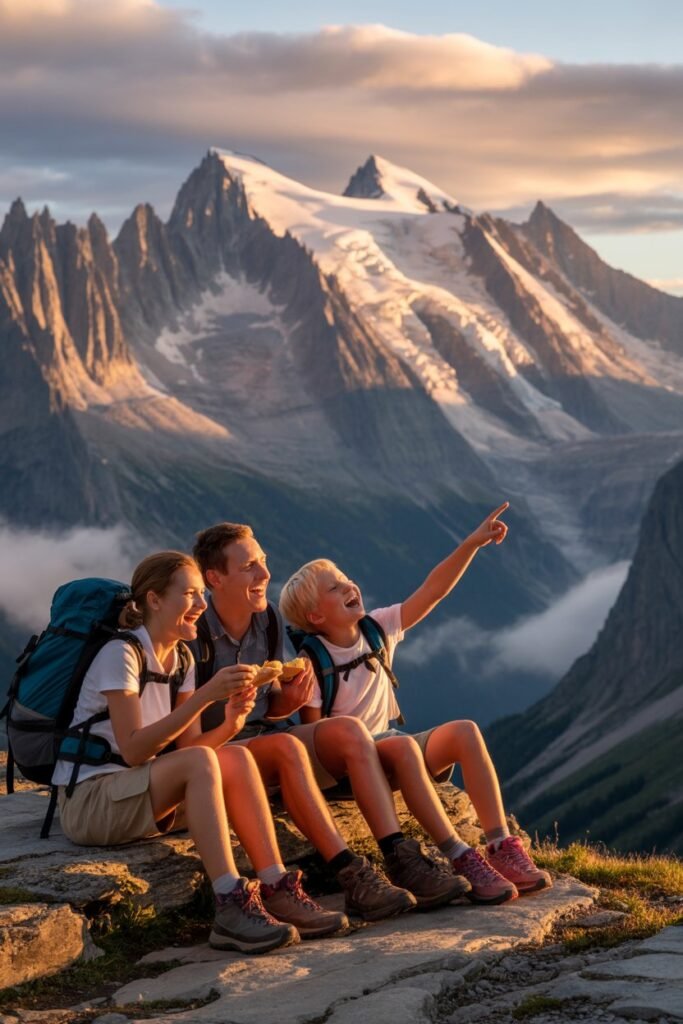
This may be the most important tip of all.
Children rarely remember exact mileage totals years later. What they remember are:
- Sleeping in mountain huts
- Eating warm pastries after hiking
- Seeing glaciers for the first time
- Playing cards during rainstorms
- Watching cows cross alpine meadows
- Laughing during difficult climbs
- Feeling proud at the end of the day
The Tour du Mont Blanc becomes special because of those shared moments.
Some days may feel messy.
Some hikes may feel harder than expected.
Someone may cry at some point.
Plans may change.
That is completely normal.
Family adventure travel is not about perfection. It is about experiencing something meaningful together.
Best Time to Hike the Tour du Mont Blanc as a Family
Timing matters a lot when hiking with children.
Best Months
Late June
- Wildflowers
- Fewer crowds
- Cooler weather
July
- Best trail access
- Warm temperatures
- Long daylight hours
August
- Reliable mountain conditions
- Busy but lively atmosphere
Early September
- Quieter trails
- Beautiful golden colors
- Cooler temperatures
For families, late June through early September is usually ideal.
Family Budget Expectations
The Tour du Mont Blanc can be surprisingly flexible depending on your travel style.
Budget Family Style
- Dormitory refuges
- Simple meals
- Public transport
Approximate cost:
- €80–€150 per person daily
Mid-Range Family Style
- Private rooms
- Luggage transfers
- Mix of restaurants and packed lunches
Approximate cost:
- €150–€300 per person daily
Comfort Family Style
- Boutique hotels
- Taxi transfers
- Frequent restaurant dining
Approximate cost:
- €300+ per person daily
Costs vary significantly based on season and accommodation type.
Common Mistakes Families Make on the TMB
Avoiding these mistakes can make your trip dramatically smoother.
Overpacking
Heavy bags quickly become exhausting.
Hiking Too Fast
Children need slower pacing and more breaks.
Booking Too Late
Popular family rooms disappear early.
Ignoring Weather Forecasts
Mountain conditions change rapidly.
Skipping Training Hikes
Practice hikes before the trip help enormously.
Planning Every Minute
Leave room for flexibility and spontaneous moments.
Safety Tips for Families
The Tour du Mont Blanc is generally very safe, but mountain hiking always requires caution.
Important Family Safety Tips
- Check weather forecasts daily
- Carry extra snacks and water
- Start early
- Stay on marked trails
- Teach children basic trail rules
- Carry a small first-aid kit
- Have offline trail maps downloaded
- Know emergency numbers
Most importantly, trust your instincts. If weather or exhaustion becomes an issue, it is always okay to shorten or skip a stage.
Final Thoughts
Hiking the Tour du Mont Blanc as a family is not just a vacation it becomes a shared life experience your children may talk about for years.
The mountains have a beautiful way of slowing everyone down. Screens matter less. Conversations become deeper. Meals taste better. Tiny moments suddenly feel important again.
You do not need to be elite hikers to enjoy this journey together. With thoughtful planning, realistic expectations, and a flexible mindset, families of many ages can successfully experience the magic of the Tour du Mont Blanc.
The key is keeping the experience joyful rather than rushed.
Walk slowly.
Take the scenic detours.
Order the extra pastry.
Pause for the mountain views.
Celebrate every little victory along the way.
Because long after the sore legs disappear, the memories of hiking beneath the Alps together will stay with your family forever.