

Switzerland is the kind of place where storybooks come to life.
Jagged alpine peaks pierce the sky, mirror-still lakes reflect chocolate-box chalets, medieval castles perch like watchful sentinels on rocky promontories, and car-free mountain villages feel paused in time.
In this guide I’ll walk you through the most fairy-tale-perfect places across Switzerland from waterfall-carved valleys to turreted castles and give you very practical tips so your trip is smooth, magical, and photograph-ready.
Quick overview — what makes a “fairy-tale” place in Switzerland
Before we dive into specific locations, let’s be clear on what gives a place that fairytale feel:
- Dramatic natural backdrops (vertical cliffs, waterfalls, high-alpine meadows).
- Storybook architecture (timber chalets, painted medieval façades, stone castles on lakes).
- Timeless transport (cogwheel trains, cable cars, horse-drawn sleighs in winter).
- Small-scale human settlements that feel preserved rather than modernized.
- A sense of quiet and scale big mountains + small villages = awe.
Now let’s visit the towns and landscapes that most reliably deliver on that fantasy.
find the cheapest flight to switzerland today
flying into Zurich or Geneva is the first step towards alpine escape. I recommend checking current fares early to lock in the best rate
Shop my travel essentials on Amazon
| Product | Get |
|---|---|
 Hiking Shoes |
Get on Amazon |
 Wool Socks |
Get on Amazon |
 Power Adapter |
Get on Amazon |
 Collapsible Trekking Poles |
Get on Amazon |
 Apple AirTag |
Get on Amazon |
 Headphones |
Get on Amazon |
 Neck Pillow |
Get on Amazon |
 Packing Cubes |
Get on Amazon |
 Reusable Water Bottle |
Get on Amazon |
1. Lauterbrunnen Valley — the valley of waterfalls

Why it feels like a fairy tale
Lauterbrunnen is the archetypal Swiss postcard: steep vertical rock faces rise from a green valley floor dotted with wooden chalets, and dozens of waterfalls tumble from dizzying heights.
The valley is often called the “Valley of 72 Waterfalls” and walking through it feels like stepping into a glen where magic could happen at any bend.
What to do (must-dos)
- Walk the valley floor from Lauterbrunnen to Stechelberg for constant waterfall views.
- Visit Staubbach Falls (visible from the village) and Trümmelbachfälle the dramatic glacier-fed falls inside a mountain.
- Take the cable car up to Grütschalp and the train to Mürren (see section on Mürren). Hikes to Mürren and Gimmelwald offer postcard panoramas.
Getting there & transport tips
- Lauterbrunnen is accessible by train from Interlaken Ost (fast regional services). Trains in this region are frequent and scenic bring a window seat.
- If you plan multiple regions, consider a Swiss Travel Pass for convenience (covers many trains, boats, and some cable cars).
Best time to visit
- Summer (June–September) for hiking and lush meadows. Spring brings powerful waterfall flows due to snowmelt. Winter is quieter and magical with frozen falls and snow-draped roofs but some mountain transport can be reduced.
Practical tips
- Wear waterproof layers: spray and mist from the falls can be surprising.
- For photos, sunrise or late afternoon light in the valley gives soft contrasts and fewer crowds.
- Trümmelbachfälle is inside a mountain and can be busy in peak season arrive early.
people also read 9 Best Hiking Trails in Lauterbrunnen, Switzerland
Tour Switzerland
2. Mürren & Gimmelwald — car-free mountain villages (Bernese Oberland)
Why it feels like a fairy tale
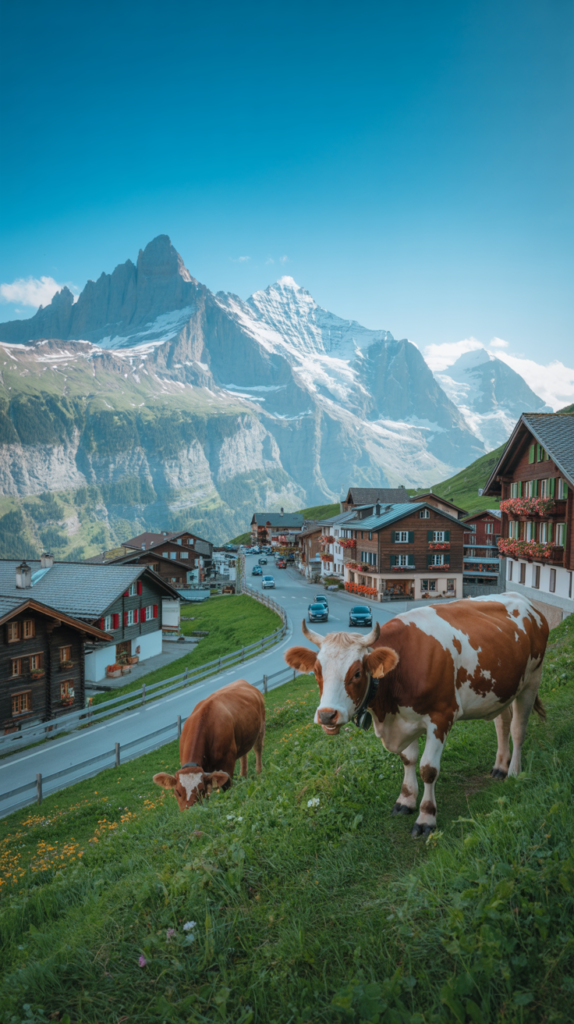
Mürren and nearby Gimmelwald are perched on a sunblessed ledge above the Lauterbrunnen Valley.
They’re car-free (transport by cable car / mountain railway) and dominated by alpine chalets and grazing cows; the surrounding ridges and peaks feel cinematic.
Rick Steves calls Gimmelwald a beloved offbeat alpine gem for exactly this reason.
What to do
- Hike trails between Mürren, Gimmelwald, and beyond easy to moderate day hikes with sweeping valley views.
- Ride the Schilthorn cable car (Piz Gloria) for iconic panoramas and a revolving restaurant if you like Bond trivia the summit was used in On Her Majesty’s Secret Service.
- Relax in a terrace café and watch the clouds roll through the peaks.
Getting there
- From Lauterbrunnen, take the cable car and mountain railway via Grütschalp to Mürren (frequent, scenic). Plan connections on the SBB timetable.
Practical tips
- Car-free villages mean luggage transfer can be trickier pack light and confirm hotel luggage help.
- Weather changes quickly at altitude; layers and a waterproof wind layer are essential.
- If you want solitude, walk the ridgelines early morning when day-trippers are still sleeping.
3. Grindelwald — alpine meadows, jagged peaks, and mountain drama

Why it feels like a fairy tale
Grindelwald opens into wide green meadows with wooden chalets backed by jagged, glacier-trimmed peaks like the Eiger and Wetterhorn.
Meadows dotted with cows and the high peaks beyond create that classic alpine-imagery that storybooks borrow from.
Top activities
- Ride the Eiger Express cable car for fast access to high alpine trails and the Eiger Walk of Fame (new trail celebrating alpine history). The area is a hub for hikers and climbers.
- Hike to Bachalpsee for the iconic lake reflection shots of the surrounding peaks.
- Try the First Cliff Walk and the trotti-bike rides in summer; skiing and tobogganing in winter.
Where to stay
- Grindelwald has a range from budget guesthouses to luxurious alpine hotels. Choose a room with mountain views if possible mornings are special.
Practical tips
- The Eiger Walk and high trails can be exposed; check local trail conditions and weather.
- If you want to avoid crowds, visit midweek or target shoulder seasons (late spring / early autumn).
check out The Ultimate Switzerland Road Trip Itinerary for 2 Weeks
4. Zermatt & the Matterhorn — the mountain that defines a country

Why it feels like a fairy tale
Zermatt is car-free and sits beneath one of the most famous mountains on earth: the Matterhorn.
The motif of a peaked mountain mirrored in a village pond is textbook fairy tale.
The treatment of the village dark wooden chalets, a spire of a church, ringed by glaciers makes Zermatt cinematic year-round.
Highlights & activities
- See the Matterhorn from the village and from vantage points like Gornergrat and Klein Matterhorn (cable cars). The Matterhorn Glacier Paradise has panoramic terraces and year-round snow.
- Hike the 5-Seenweg (Five Lakes Walk) several small alpine lakes reflect the Matterhorn on calm days (perfect photography).
- Autumn and spring offer dramatic light and thinner crowds; winter is full-on ski-resort magic.
Getting there
- Zermatt is reached by train from Visp cars stop at Täsch and a shuttle train brings visitors to Zermatt proper. The car-free policy preserves village charm, but plan luggage transfer accordingly.
Practical tips
- Book mountain railway tickets in advance for peak times (summer weekends & holidays).
- For skies and reflections, aim for early morning when winds are light and lakes are mirror-like.
- Matterhorn views can be fleeting cloud cover can roll in quickly at altitude.
5. Château de Chillon (Montreux) — a real water castle

Why it feels like a fairy tale
Château de Chillon sits on a rocky island in Lake Geneva, a compact stone stronghold with towers and ramparts reflected in the lake an idyllic fairy-tale castle straight out of a painting.
It’s also one of Switzerland’s most visited historic buildings and is easy to pair with pleasant lakeside walks in Montreux.
Visiting tips
- Combine a visit to Chillon with Montreux’s lakeside promenade and a boat ride on Lake Geneva for that picture-postcard sequence.
- Arrive early or late afternoon to avoid peak tour groups; self-guided audio tours make exploring the castle easier.
Accessibility & transport
- Regular trains run to Montreux; you can reach Chillon by boat, bus, or a short walk along the lakeside from Veytaux-Montreux station.
Practical tips
- Check opening hours seasonally; parts may close for events or private hires.
- If you’re into history, read the plaque summaries and highlights before visiting so the rooms and artifacts mean more.
6. Gruyères — medieval charm + cheese-town coziness
Why it’s fairy-tale perfect
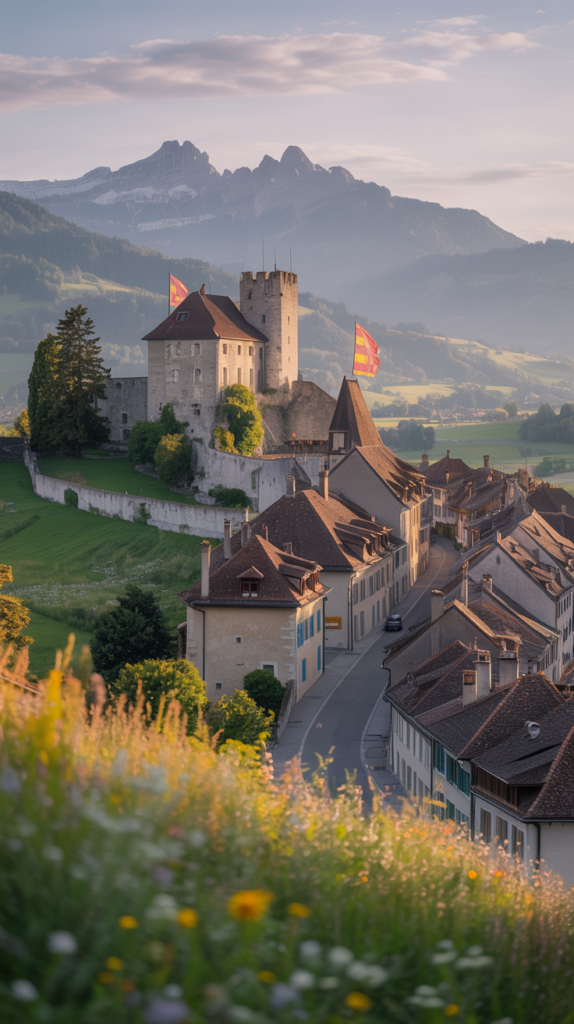
Gruyères is a small hilltop town surrounded by pastoral landscapes.
Medieval stone streets, an imposing castle, and a chocolate-and-cheese culture make it feel like a lived-in storybook.
The slow rhythms and the smell of melted cheese in winter are part of the charm.
What to do
- Visit Château de Gruyères for castle rooms and views over the valley.
- Try hot fondue at local restaurants Gruyères cheese is famous worldwide.
- Pair with a stop at the nearby Cailler chocolate factory or the HR Giger Museum (for a darker twist).
Practical tips
- Weekdays are less busy; many visitors combine Gruyères with travel between Lausanne and Fribourg.
- Book cheese-focused experiences ahead in high season.
Pro tip: people also read Amazing Things to Do in Switzerland
7. Stein am Rhein — painted houses on the Rhine

Why it’s fairy-tale perfect
Stein am Rhein’s well-preserved medieval old town is famous for frescoed buildings and timber-frame houses that look as though an illustrator stopped mid-stroke and left them there. Strolling its alleys is like wandering through an illuminated manuscript come alive.
How to enjoy it
- Walk the river promenade and climb to Hohenklingen Castle for panoramic views.
- Explore the stadt (town) by foot the painted façades invite close-up inspection.
Getting there
- Day trips from Zurich are easy by train; Stein am Rhein makes a perfect half-day or full-day trip.
Practical tips
- If photographing façades, mid-morning light works well to avoid harsh shadows.
- Small shops and cafés close early on Sundays in some Swiss towns plan accordingly.
8. Appenzell & the Alpstein — pastoral Alps and painted cottages

Why it feels like a fairy tale
Appenzell’s patchwork hills, bright painted cottages, and traditions (yodeling, folk dress, alpine cheese-making) give it an old-world charm that feels ceremonially Swiss.
The Alpstein massif’s small alpine lakes and ledges (Seealpsee, Aescher) are postcards come alive.
Must-do experiences
- Hike to Seealpsee a jewel-like lake framed by cliffs and meadows.
- Visit the Aescher cliff-side restaurant for dramatic mountain vistas and that “suspended-in-time” vibe.
- Sample Appenzeller cheese and take a short tour at a local show dairy.
Practical tips
- Summer is hiking season; snow can linger into late spring on higher trails.
- Local buses and cable cars connect the valley villages, making it easy to plan half- or full-day routes.
9. Soglio & Val Bregaglia — a quiet alpine picture

Why it feels fairy-tale perfect
Tucked on terraces above deep valleys near the Italian border, Soglio feels almost Italianate but Swiss: narrow streets, stone buildings, and terraces of chestnut trees with mountains in the background. It’s quiet, remote, and infused with an old-world serenity.
What to expect
- Small guesthouses, slow afternoons, and superb photo opportunities at golden hour.
- Hiking routes into Val Bregaglia and access to alpine passes.
Practical tips
- Soglio is remote; plan transport connections and check seasonal services carefully.
- Bring cash for small village cafés, though cards are widely accepted elsewhere.
10. Small winter wonders: Lucerne’s Christmas glow & horse-drawn sleighs

Why winter makes fairy tales come true
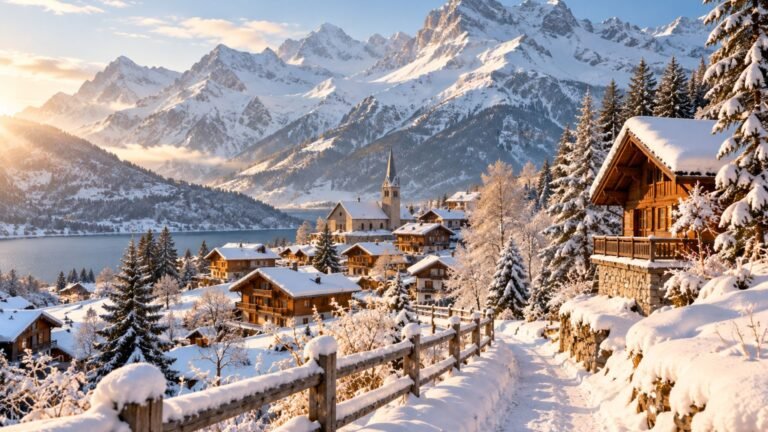
When fresh snow settles on roofs and sidewalks, towns like Lucerne and mountain resorts (e.g., Engelberg, St. Moritz’s old quarters) drift into storybook mode: twinkling lights, glowing windows, and sleigh bells. For restaurants and hotels, book far in advance between December and early January.
Practical winter tips
- Dress in layers with thermals + waterproof outer shells. Temperatures at altitude can be harsh.
- Pack traction aids for icy cobbles in older towns.
- Check opening hours: many mountain passes and trails close seasonally.
Practical planning & packing — the non-romantic but essential magic
Transport & passes
- Swiss trains are punctual, extensive, and scenic. For multi-day travel across regions, a Swiss Travel Pass is convenient (covers most trains, some boats, and many museums). If you’ll stick to one region, regional passes or point-to-point tickets can be cheaper check current official SBB info before you buy.
- Mountain lifts (cable cars, mountain railways) are often not fully included in base passes or may offer reduced fares check each operator’s policy.
Accommodation
- Book early for summer and winter high seasons; shoulder seasons (late spring, early autumn) offer better availability and softer light.
- For fairy-tale vibes, choose family-run guesthouses, farm stays, or boutique hotels with mountain views rather than chain hotels.
Packing essentials (practical list)
- Waterproof, breathable jacket and trousers (mountain weather changes fast).
- Sturdy hiking shoes (broken-in) and wool socks.
- Lightweight thermal base layers and a warm mid-layer (fleece/down).
- Camera with spare batteries and memory cards (cold drains batteries faster).
- Daypack with water, snacks, map/offline GPS, and a small first-aid kit.
- Power adapter (Switzerland uses Type J plugs) and a portable charger.
Money & etiquette
- Switzerland is cash-friendly but cards are accepted widely; smaller vendors sometimes prefer cash.
- Tipping is modest service is already included in many bills, but rounding up or leaving small change is appreciated.
- Respect quiet hours in towns (typically around 10–11 pm Swiss are strict about noise).
Food & drink tips
- Try regional specialties: fondue, raclette, rösti, and local alpine cheeses. Each region often has its own take (Gruyères vs. Appenzell cheeses).
- Mountain huts (alpine restaurants) often serve hearty food with spectacular views a perfect reward after hikes.
Photography tips how to capture the fairy tale
- Golden hour (sunrise/sunset) is your friend: softer light, longer shadows, and more dramatic contrast.
- Use a polarizer to reduce glare on lakes and boost skies.
- For reflections, aim for calm mornings; arrive early to catch mirror surfaces.
- Include scale (a person or a small cottage) to show the grandeur of cliffs and waterfalls.
- In winter, expose for highlights (snow) carefully cameras often underexpose snow scenes.
Itinerary ideas (sample 7-day loop for fairy-tale highlights)
- Day 1–2: Zürich arrival → day trip to Stein am Rhein → overnight Zurich/Lucerne
- Day 3: Montreux + Château de Chillon & boat on Lake Geneva → overnight Montreux
- Day 4–5: Travel to Lauterbrunnen → hike valley, visit Trümmelbach, cable to Mürren/Gimmelwald → overnight Lauterbrunnen or Mürren
- Day 6: Grindelwald & First / Eiger Express → overnight Grindelwald
- Day 7: Zermatt & Matterhorn (or reverse order depending on transport timing)
Customizing based on pace: extend any stay to get slower, more atmospheric time in the mountain towns that’s when the fairytale vibe settles strongest.
Safety & health — staying sensible in the enchanted places
- Altitude awareness: many fairy-tale places are high; know symptoms of mild altitude sickness (headache, nausea). Ascend gradually and hydrate.
- Trail safety: stick to signposted trails, inform someone about longer hikes, and check local weather/avalanche advisories in winter.
- Emergency numbers: Switzerland’s EU emergency number is 112, but 144 is for ambulance and 117 for police have them saved locally.
A few less-known, high-reward spots
- Oberhofen Castle on Lake Thun smaller than Chillon but with a charming lakeside garden and turreted silhouette.
- Valle Verzasca (Ticino) a southern-Swiss valley with turquoise water and stone bridges that feel Mediterranean and mythic at once.
- Sils & Maloja (Upper Engadine) shimmering lakes and poetic landscapes that inspired Nietzsche and look like frozen-time retreats.
Final thoughts — how to get the most out of fairy-tale Switzerland
- Slow down. The fairy tale is in the quiet moments the bell of a grazing cow, the steam of hot chocolate in a snow-dusted square, the sun cutting a golden ribbon across a mountainside.
- Mix iconic sites with a single small village: the contrast makes the big moments more memorable.
- Travel light through alpine villages; agility makes it easier to hop a cable car or take a local bus.
- Respect local customs and the landscape: stick to trails, keep noise low in car-free villages, and leave no trace.