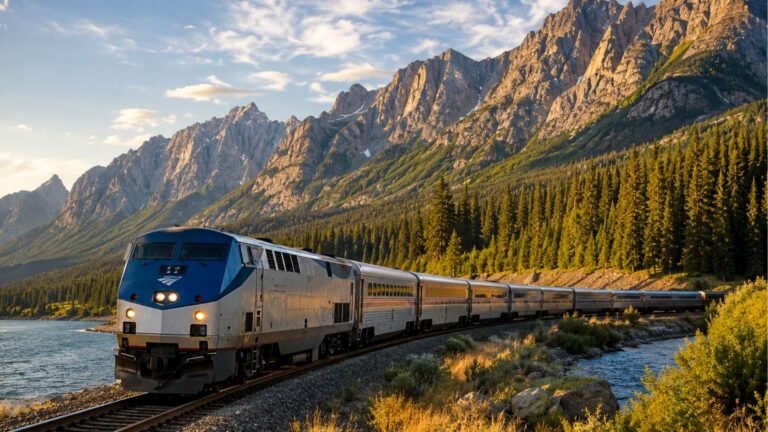


Why Fall Road Trips in the USA Are Magical
There are few travel experiences that rival the magic of autumn in the United States. When September rolls into November, forests burst into fiery hues of red, orange, and gold.
The air turns crisp, pumpkin spice lattes reappear, and scenic highways transform into natural masterpieces.
Unlike spring or summer road trips, fall adds something extra:
- Cooler weather (ideal for hiking and exploring without sweltering heat).
- Vibrant scenery (every bend of the road feels like driving through a painting).
- Seasonal activities (apple picking, pumpkin festivals, harvest fairs, and cozy bonfires).
- Fewer crowds (compared to summer, especially in national parks).
A fall foliage road trip isn’t just about driving. It’s about slow travel stopping at small towns, tasting apple cider donuts, hiking a short trail for a panoramic view, and filling your camera with golden landscapes.
Best Time to Take a Fall Foliage Road Trip
The USA is huge, so peak foliage varies:
- Northern States (New England, Upper Midwest, Rockies): Late September to mid-October.
- Mid-Atlantic (Virginia, Pennsylvania, New York): Early to mid-October.
- Southern Appalachians (North Carolina, Tennessee): Mid-October to early November.
- Pacific Northwest: Late October to mid-November.
Pro Tip: Use fall foliage trackers (like “Smoky Mountains Fall Foliage Map”) to plan your trip around peak color.
Why Road Trips Are the Best Way to See Fall Colors
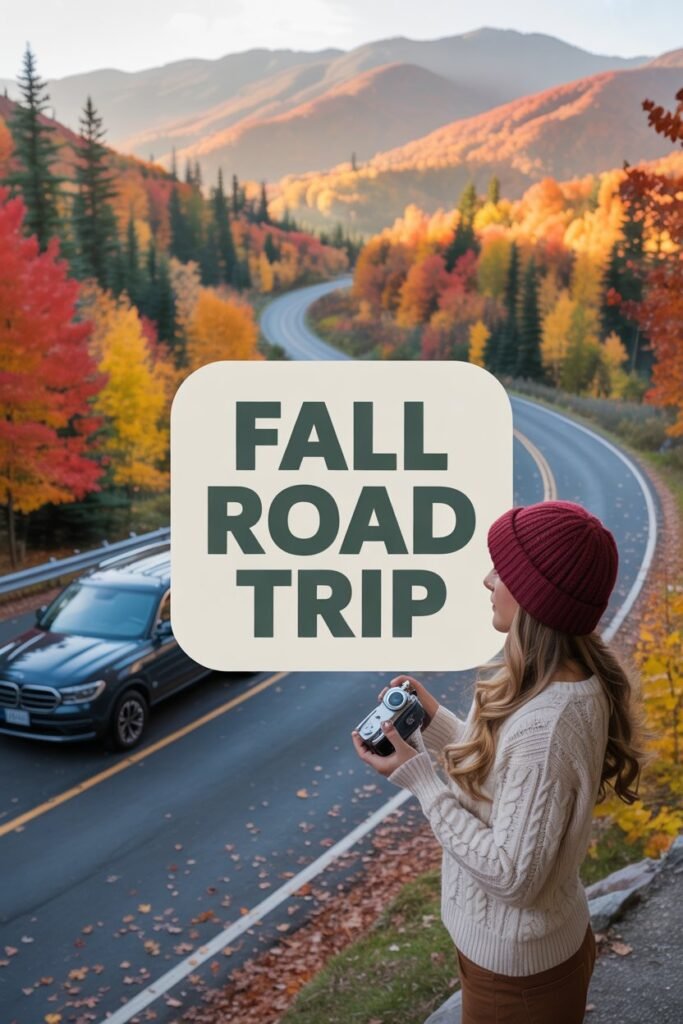
You could fly into a city and stay put, but driving lets you:
- Cover multiple regions in one trip.
- Stop at hidden gems (small towns, local diners, roadside orchards).
- Chase peak colors if leaves have already fallen in one place, drive south or west.
- Pack all the essentials without worrying about luggage limits.
The beauty of a fall foliage road trip is the freedom to explore at your own pace.
shop my amazon essentials
- Lightweight waterproof jacket for unpredictable fall weather
- Reusable water bottle to stay hydrated on long scenic drives
- Portable phone charger or power bank for maps and photos
- Cozy travel blanket for chilly mountain mornings and evenings
- Comfortable hiking shoes for leaf-peeping trails and overlooks
- DSLR camera or smartphone tripod for capturing fall foliage views
General Tips for Planning a Fall Foliage Road Trip
- Book Accommodations Early – Fall is high season in popular spots like New England and the Rockies. Inns and cabins fill up fast.
- Travel Mid-Week – Weekends are crowded, especially near national parks. Mid-week trips offer quieter roads and cheaper stays.
- Start Early in the Morning – Golden sunlight makes colors glow, and you’ll avoid traffic.
- Mix Driving with Short Hikes – The best views often require a 1–2 mile walk.
- Layer Your Clothes – Mornings can be chilly, afternoons warm, and evenings cold.
- Bring Cash – Many roadside orchards, farms, and small towns still prefer cash.
- Plan Fuel Stops – In rural areas, gas stations can be sparse.
- Download Offline Maps – Cellular service can be patchy in the mountains.
The Ultimate Fall Road Trip Packing Checklist
Packing for a fall foliage trip is about balancing comfort, safety, and photography gear.
Here’s a detailed checklist to make sure you’re fully prepared:
Clothing Essentials
- Lightweight sweaters (for layering).
- Flannel shirts (warm + stylish for fall photos).
- Insulated jacket (especially for higher elevations).
- Waterproof rain jacket or poncho.
- Comfortable jeans or hiking pants.
- Warm hat, gloves, and scarf (mornings/evenings can be frosty).
- Hiking boots or sturdy walking shoes.
- Sneakers for casual exploring.
- Wool socks (to keep feet warm and dry).
Road Trip & Car Essentials
- Spare tire, jack, jumper cables.
- Emergency roadside kit (flares, flashlight, duct tape).
- First aid kit.
- Blanket (for warmth or impromptu picnics).
- Reusable water bottles & thermos.
- Car phone charger & power bank.
- Cooler with snacks and drinks.
- Travel pillow for passengers.
- Sunglasses (for glare on sunny drives).
Photography Gear
- DSLR or mirrorless camera (for pro-level shots).
- Smartphone with wide-angle lens attachment.
- Tripod (for sunset or family shots).
- Extra memory cards & batteries.
- Drone (if legal in the area—epic overhead fall shots).
Food & Snacks
- Apple cider or pumpkin spice lattes (a fall must!).
- Trail mix & granola bars.
- Fresh apples or pears from roadside farms.
- Sandwich fixings for picnic stops.
- Reusable cutlery and plates.
Entertainment & Navigation
- Offline maps or GPS device.
- Travel journal to record experiences.
- Playlist or audiobooks (create a fall-themed playlist for extra vibes).
Extra Road Trip Hacks for Fall
- Stay flexible: Weather and foliage timing vary. If one area is past peak, shift your route south.
- Pack picnic supplies: Many fall drives have scenic overlooks perfect for a roadside meal.
- Scout photo spots ahead: Instagram geotags or Google Maps saved lists help you find the best viewpoints.
- Bring cash for tolls: Some scenic byways and older roads may still require exact change.
- Check for festivals: Apple festivals, pumpkin patches, and fall fairs make the trip even richer.
New England Classics (5 Road Trips)
New England is the undisputed fall foliage capital of the USA.
From covered bridges in Vermont to winding mountain passes in New Hampshire, this region glows with fiery autumn hues every September through October.
If you’re building a fall foliage road trip bucket list, these five drives are absolute musts.
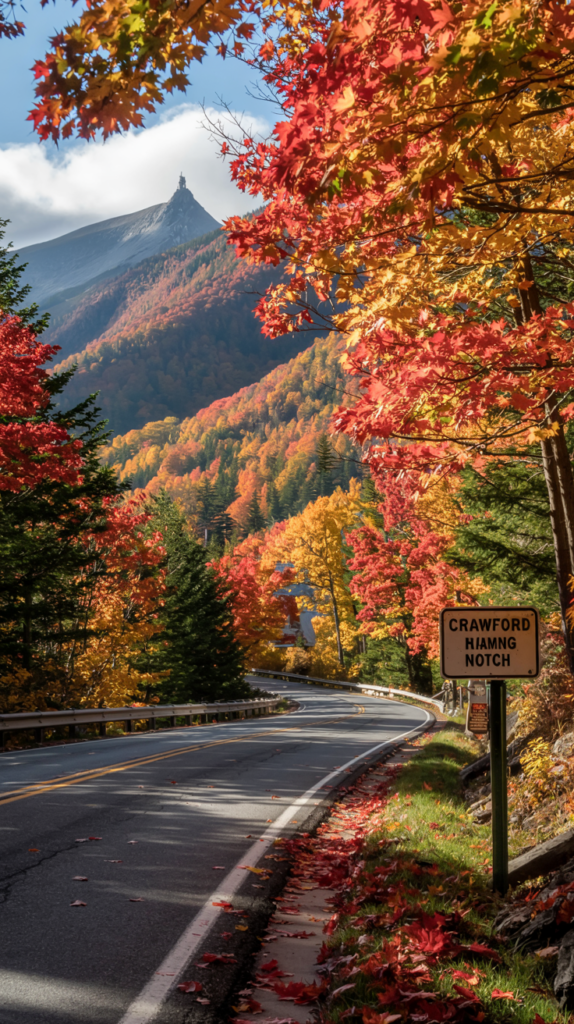
1. Kancamagus Highway, New Hampshire
Quick Facts:
- Location: Runs between Lincoln & Conway, New Hampshire
- Distance: 34 miles
- Duration: 1–2 hours nonstop (but you’ll want at least a full day)
- Best Time: Late September to mid-October
Known affectionately as “The Kanc,” this route is perhaps the most iconic fall drive in America. It’s a short highway, but nearly every mile offers jaw-dropping mountain views, covered bridges, waterfalls, and fiery foliage.
Highlights & Must-Stops
- Sabbaday Falls – A short hike to one of the prettiest waterfalls in the White Mountains.
- Rocky Gorge Scenic Area – A stunning gorge with walking trails.
- Sugar Hill Overlook – Panoramic views of mountains covered in reds and oranges.
- Albany Covered Bridge – Classic New England photo spot.
- Lincoln Woods Trail – Great for a quick nature walk among colorful trees.
Where to Stay
- Lincoln, NH – Family-friendly lodges and cozy inns.
- North Conway – Charming village with shops, cafes, and fall festivals.
Fall Experiences
- Stop at a local orchard near Conway for apple cider donuts.
- Ride the Conway Scenic Railroad for leaf-peeping by train.
- Visit the White Mountain National Forest visitor center for trail info.
Budget & Costs
- Gas for 34 miles: $10–15
- National Forest Parking Fee: $5/day
- Lodging: $120–$250/night depending on season
- Food: $40–$80/day (local diners are budget-friendly)
What to Pack (Specific for This Trip)
- Hiking boots (for trail stops).
- Rain jacket (weather changes fast in the White Mountains).
- Binoculars (great for spotting wildlife like moose).
- Reusable water bottles (few facilities along the highway).
Pro Tip: Drive early in the morning to avoid traffic. The Kanc is extremely popular during peak foliage weekends.
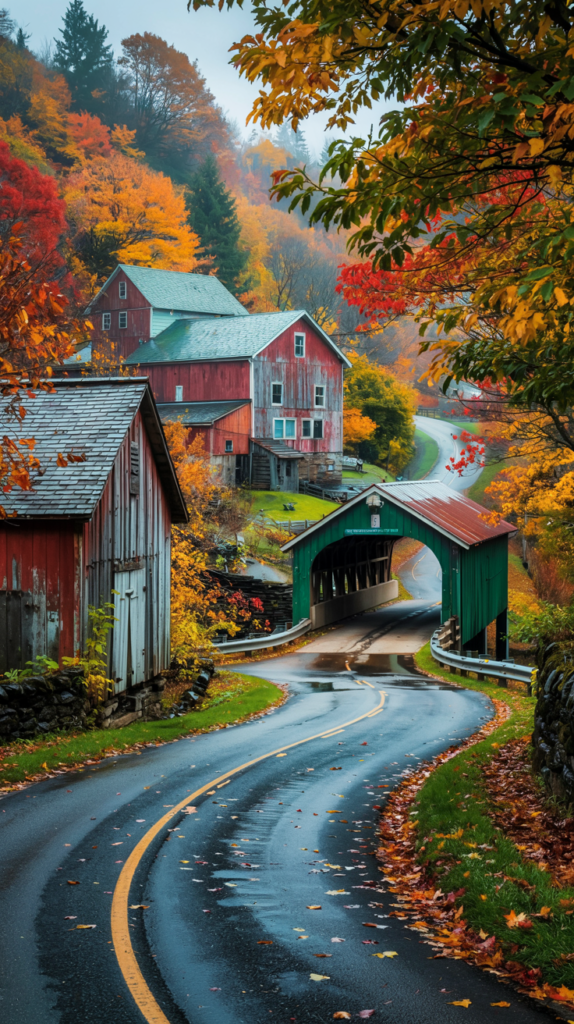
2. Vermont Route 100
Quick Facts:
- Location: Runs north-south almost the entire length of Vermont
- Distance: 216 miles
- Duration: 5–6 hours nonstop, best enjoyed over 2–3 days
- Best Time: Early to mid-October
Called “Vermont’s Main Street,” Route 100 is a dream for leaf peepers. This road takes you through the Green Mountains, with rolling hills, ski towns, farms, and more covered bridges than you can count.
Highlights & Must-Stops
- Stowe, VT – Quintessential fall town with shops, covered bridges, and cider mills.
- Moss Glen Falls – One of Vermont’s most famous waterfalls.
- Warren & Waitsfield – Charming towns with artisan markets.
- Killington – Known for ski slopes but stunning in fall.
- Woodstock – Arguably the most picturesque New England village.
Where to Stay
- Stowe – Luxury resorts and boutique inns.
- Woodstock – Cozy bed-and-breakfasts.
- Budget Tip: Look for farm stays or Airbnb cabins for cheaper options.
Fall Experiences
- Visit a maple sugar farm for fresh Vermont maple syrup.
- Take a gondola ride at Stowe Mountain Resort for panoramic fall views.
- Stop at Cold Hollow Cider Mill for apple cider and donuts.
Budget & Costs
- Gas for full length: $30–40
- Lodging: $100–$300/night
- Maple syrup/cider experiences: $10–20 per person
- Food: $50–100/day
What to Pack (Specific for This Trip)
- Layers (mountain weather changes quickly).
- Small cooler for fresh cider, cheese, and maple goodies.
- Camera with zoom lens (perfect for photographing barns and landscapes).
Pro Tip: Spend at least 3 days on Route 100 to enjoy small towns at a leisurely pace.
Read Best Fall Trips in the U.S. You’ll Want to Take This Season — The Ultimate Guide (+ all the tips)
3. Acadia National Park Loop, Maine
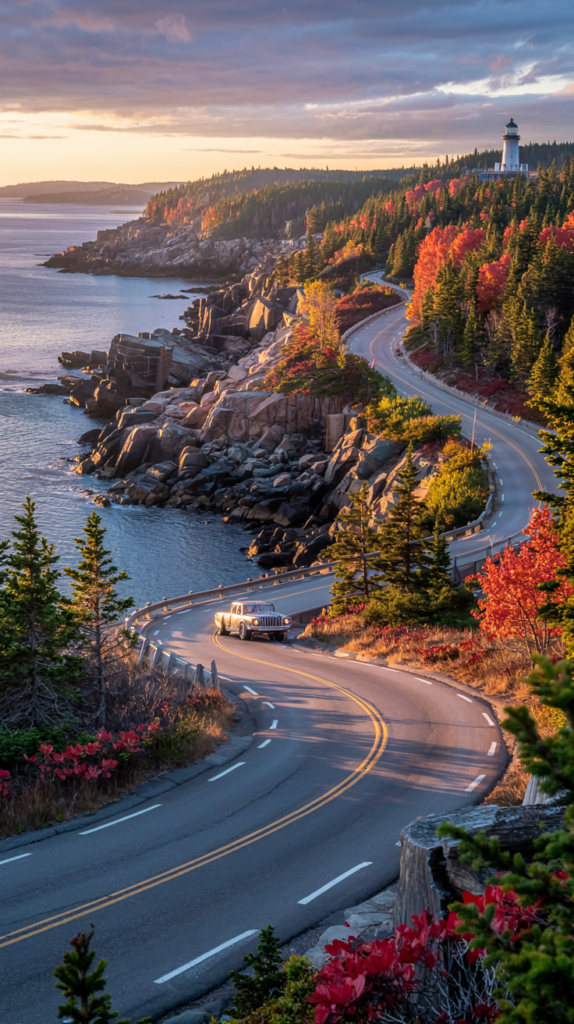
Quick Facts:
- Location: Bar Harbor, Maine
- Distance: 27 miles (Park Loop Road)
- Duration: 3–4 hours with stops
- Best Time: Early to mid-October
Maine’s Acadia National Park is a coastal paradise in autumn. The Park Loop Road combines mountain views, rocky coastlines, and forests bursting with fiery colors.
Highlights & Must-Stops
- Cadillac Mountain – Sunrise views over fall foliage and the Atlantic.
- Jordan Pond – Famous for its crystal-clear waters and popovers at Jordan Pond House.
- Sand Beach – Unique fall scenery with foliage meeting the ocean.
- Thunder Hole – Dramatic coastal waves against cliffs.
Where to Stay
- Bar Harbor – Tourist hub with hotels, inns, and seafood restaurants.
- Nearby Cabins & Cottages – Rustic stays in the woods for more seclusion.
Fall Experiences
- Eat fresh lobster rolls by the harbor.
- Take a whale-watching cruise (still available in early October).
- Hike Jordan Pond Path for easy, family-friendly leaf peeping.
Budget & Costs
- Park Entrance Fee: $35 per vehicle (valid 7 days)
- Gas: $10–15 for loop
- Lodging: $150–$300/night
- Food: $50–120/day (seafood-heavy menus)
What to Pack (Specific for This Trip)
- Warm hat & gloves (ocean winds are chilly).
- Comfortable hiking shoes.
- Thermos for hot coffee/tea at sunrise on Cadillac Mountain.
- Rain gear (fog and mist are common).
Pro Tip: Cadillac Mountain requires a timed-entry reservation in fall—book online in advance.
4. Mohawk Trail, Massachusetts
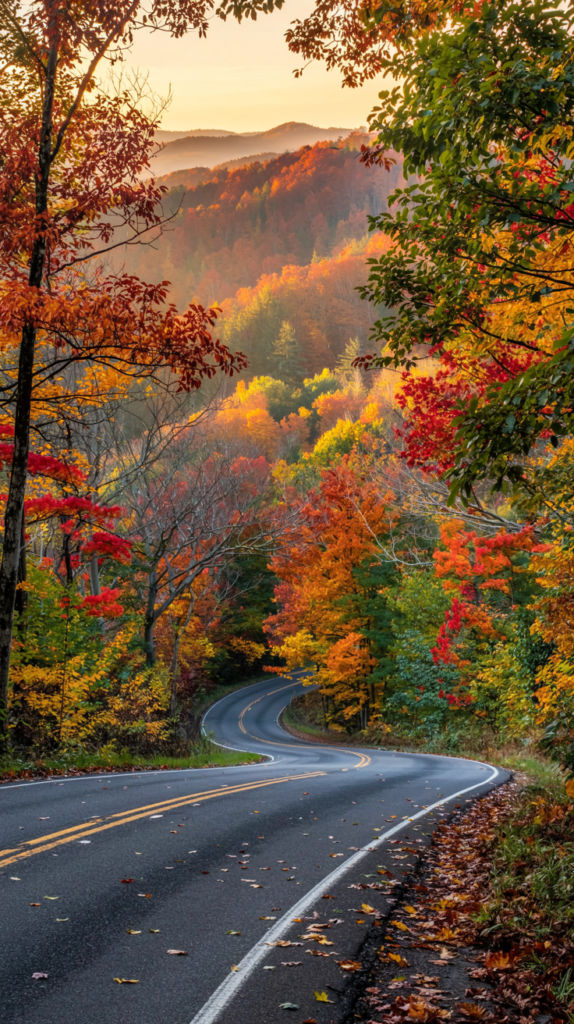
Quick Facts:
- Location: Runs from the Massachusetts–New York border to Millers Falls
- Distance: 69 miles
- Duration: 3–4 hours
- Best Time: Early to mid-October
The Mohawk Trail is one of America’s oldest scenic byways, originally a Native American trade route. Today, it’s a mix of mountain passes, quaint villages, and roadside attractions.
Highlights & Must-Stops
- Hairpin Turn Overlook – Iconic panoramic view of the valley.
- Bridge of Flowers in Shelburne Falls – A pedestrian bridge turned into a flower garden.
- Mass MoCA in North Adams – World-class contemporary art museum.
- Charlemont – Great for outdoor activities like ziplining.
Where to Stay
- North Adams – Artsy town with boutique hotels.
- Shelburne Falls – Quaint B&Bs.
Fall Experiences
- Pick-your-own apples at a local orchard.
- Stop at roadside farm stands for pumpkin pies.
- Drive through the Berkshires for extended foliage views.
Budget & Costs
- Gas: $15–20
- Lodging: $120–$220/night
- Attractions (Mass MoCA, activities): $20–40 per person
- Food: $40–80/day
What to Pack (Specific for This Trip)
- Comfortable shoes for walking through artsy towns.
- Light jacket for crisp evenings.
- Extra tote bags for farmstand purchases.
Pro Tip: Plan your trip to coincide with Berkshire fall festivals for a richer cultural experience.
5. Connecticut River Valley Drive

Quick Facts:
- Location: Connecticut & Massachusetts
- Distance: ~100 miles (flexible route along the river)
- Duration: 4–6 hours
- Best Time: Mid-October
This drive winds along the Connecticut River, showcasing rolling farmland, historic towns, and scenic river views. It’s less crowded than Vermont or New Hampshire but equally stunning.
Highlights & Must-Stops
- Hartford, CT – Historical city with museums and parks.
- Northampton & Amherst, MA – College towns with artsy vibes.
- Old Saybrook – Quaint riverside village.
- Gillette Castle State Park – A whimsical medieval-style castle overlooking the river.
Where to Stay
- Northampton – Quirky inns and B&Bs.
- Hartford – Larger hotels with city amenities.
Fall Experiences
- Riverboat cruise for foliage views from the water.
- Visit local wineries and cideries.
- Explore small-town farmers’ markets.
Budget & Costs
- Gas: $20–30
- Lodging: $100–200/night
- Attractions (castle, boat tours): $10–30 per person
- Food: $40–100/day
What to Pack (Specific for This Trip)
- Lightweight daypack for walking through small towns.
- Comfortable clothes for vineyard/winery tours.
- Sunglasses for river reflections.
Pro Tip: This drive pairs well with Route 100 in Vermont if you want to combine trips.
Read Maine in the Fall: A Guide to the 7 Best Leaf-Peeping Locations
Mid-Atlantic & Appalachian Routes (5 Road Trips)
6. Blue Ridge Parkway (Virginia & North Carolina)
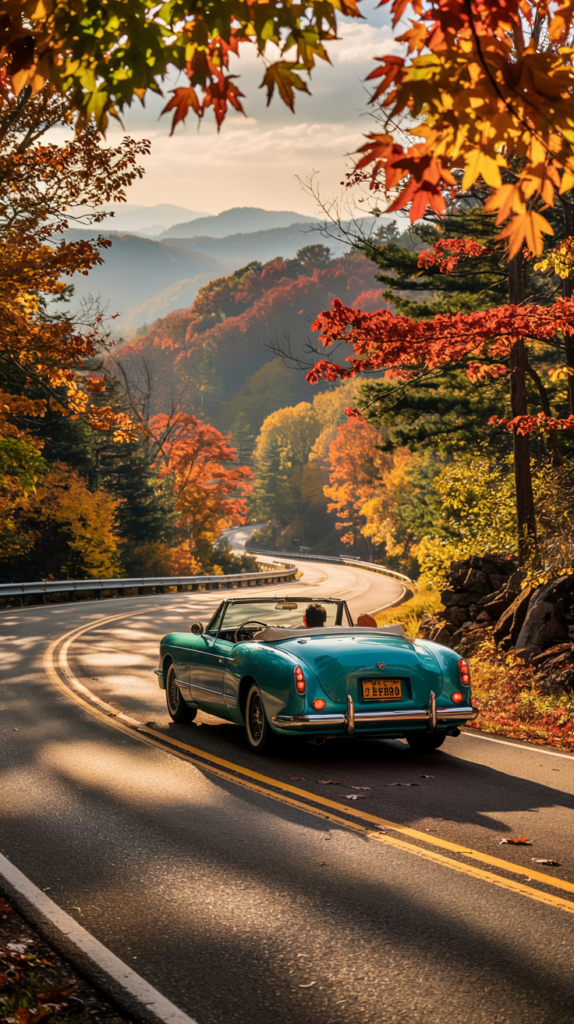
Quick Facts:
- Location: Shenandoah National Park, VA ➝ Great Smoky Mountains, NC
- Distance: 469 miles
- Duration: 3–5 days recommended
- Best Time: Early October in Virginia, late October in North Carolina
The Blue Ridge Parkway is one of the most iconic scenic drives in the USA. Winding through the Appalachian Highlands, it showcases layer upon layer of fiery ridges, mountain farms, and valleys blanketed in orange, gold, and scarlet.
Highlights & Must-Stops
- Mabry Mill – Historic gristmill, one of the most photographed spots on the Parkway.
- Peaks of Otter – Hiking trails with panoramic fall views.
- Linn Cove Viaduct – Famous elevated stretch of road curving around Grandfather Mountain.
- Craggy Gardens – Known for its twisted trees and brilliant foliage.
- Mount Pisgah – Perfect for sunrise or sunset views.
Where to Stay
- Asheville, NC – Artsy mountain city with breweries, B&Bs, and luxury hotels.
- Roanoke, VA – Larger city with good access to northern Parkway.
- Cabins & lodges – Scattered along the Parkway for rustic charm.
Fall Experiences
- Visit orchards for apple picking near Asheville.
- Explore Appalachian crafts at folk art centers.
- Taste local barbecue and mountain trout.
Budget & Costs
- Gas for full length: $60–80
- Lodging: $100–300/night depending on location
- Food: $50–120/day
- Parkway entry: Free!
What to Pack (Specific for This Trip)
- Hiking boots (many short trails lead to overlooks).
- Warm jacket (mountain temps drop quickly).
- Camera with wide-angle lens.
- Portable cooler for snacks between long stretches.
Pro Tip: There are no gas stations directly on the Parkway—plan fuel stops in advance.
7. Skyline Drive, Shenandoah National Park, Virginia
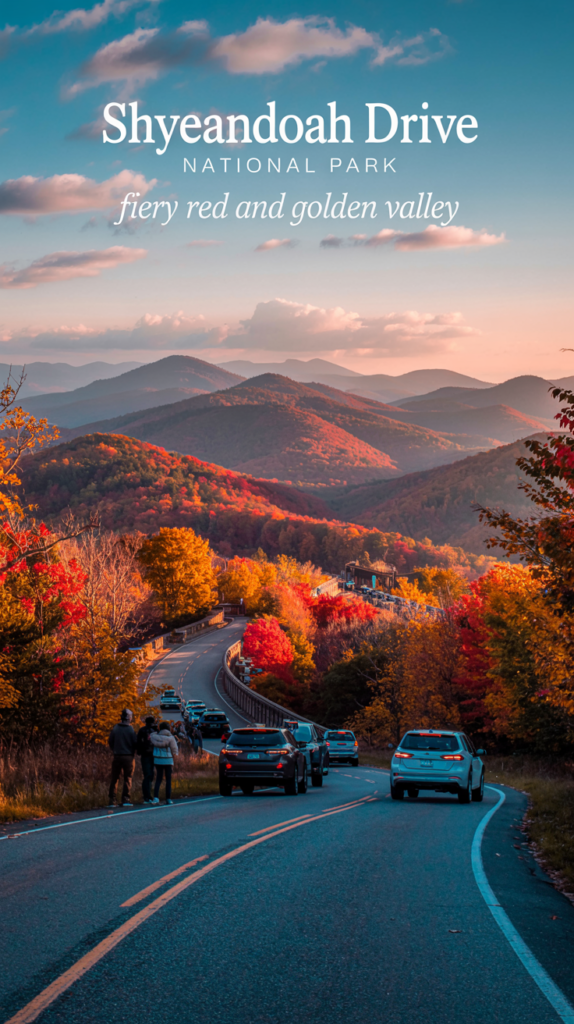
Quick Facts:
- Location: Shenandoah National Park
- Distance: 105 miles
- Duration: 1–2 days
- Best Time: Early to mid-October
Running along the crest of the Blue Ridge Mountains, Skyline Drive is essentially the northern extension of the Blue Ridge Parkway. It’s famous for 75 overlooks and unmatched fall color.
Highlights & Must-Stops
- Thornton Gap Entrance – Scenic entry point near Luray Caverns.
- Stony Man Trail – Short hike with stunning summit views.
- Big Meadows – Known for wildlife sightings (deer, black bears).
- Loft Mountain Overlook – Sweeping panoramic views.
Where to Stay
- Skyland Resort – Historic lodge inside the park.
- Big Meadows Lodge – Cozy stay with rustic vibes.
- Nearby towns: Luray and Front Royal.
Fall Experiences
- Stargazing at Big Meadows (one of the darkest skies on the East Coast).
- Wine tasting at Virginia vineyards nearby.
- Explore Luray Caverns before/after your drive.
Budget & Costs
- Park entry: $30 per vehicle (valid for 7 days)
- Gas: $20–30
- Lodging: $150–250/night inside park
- Food: $40–80/day
What to Pack (Specific for This Trip)
- Binoculars (for birdwatching and wildlife).
- Layered clothing (temperatures vary by elevation).
- Picnic supplies—many overlooks are perfect for roadside meals.
Pro Tip: Fall weekends can get congested. Arrive before 9 AM for quieter roads.
8. Catskill Mountains, New York
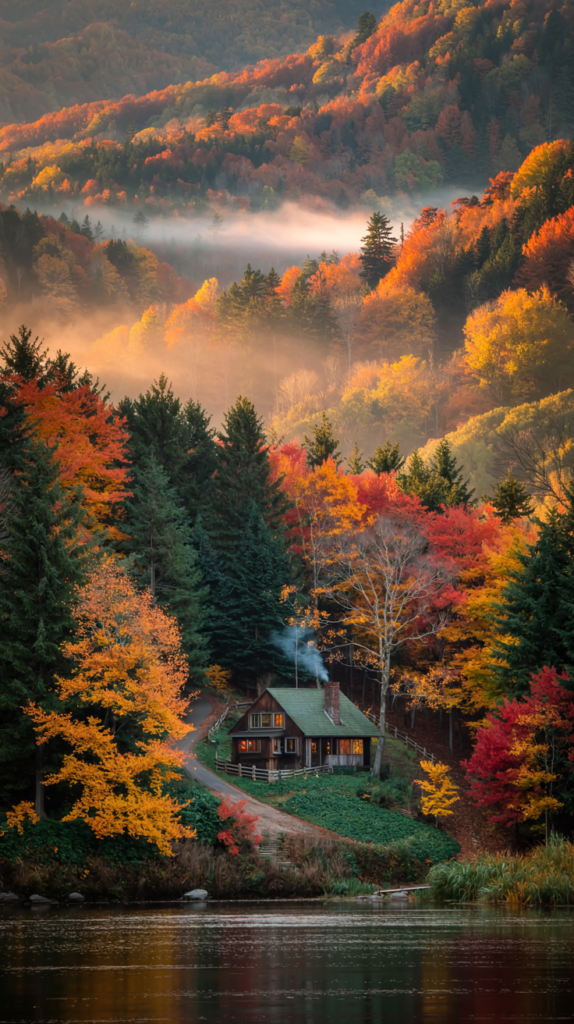
Quick Facts:
- Location: Southeastern New York, 100 miles north of NYC
- Distance: Flexible loops, ~200 miles
- Duration: 2–3 days
- Best Time: Early to mid-October
The Catskills are a classic NYC escape, especially in autumn. Think covered bridges, waterfalls, historic villages, and vibrant hiking trails just a short drive from the city.
Highlights & Must-Stops
- Kaaterskill Falls – Iconic two-tier waterfall surrounded by fall foliage.
- Hunter Mountain Scenic Skyride – Gondola ride for panoramic leaf views.
- Woodstock – Quirky, artsy village.
- Phoenicia – Known for tubing in summer, cozy cabins in fall.
- Catskill Scenic Trail – Bike or hike along old railroad tracks.
Where to Stay
- Woodstock – Artsy B&Bs and boutique inns.
- Hunter – Ski lodges that transform into fall foliage retreats.
- Phoenicia – Rustic cabins and mountain lodges.
Fall Experiences
- Attend Oktoberfest at Hunter Mountain.
- Try apple cider donuts at roadside stands.
- Explore Catskill breweries and distilleries.
Budget & Costs
- Gas from NYC: $25–40 round trip
- Lodging: $100–220/night
- Food & festivals: $50–100/day
- Attractions (gondola, events): $10–30 per person
What to Pack (Specific for This Trip)
- Comfortable hiking shoes for waterfall treks.
- Reusable tote bags for farm markets.
- Light fleece for chilly evenings.
Pro Tip: The Catskills are popular for NYC weekenders—plan midweek for fewer crowds.
9. Finger Lakes Region, New York
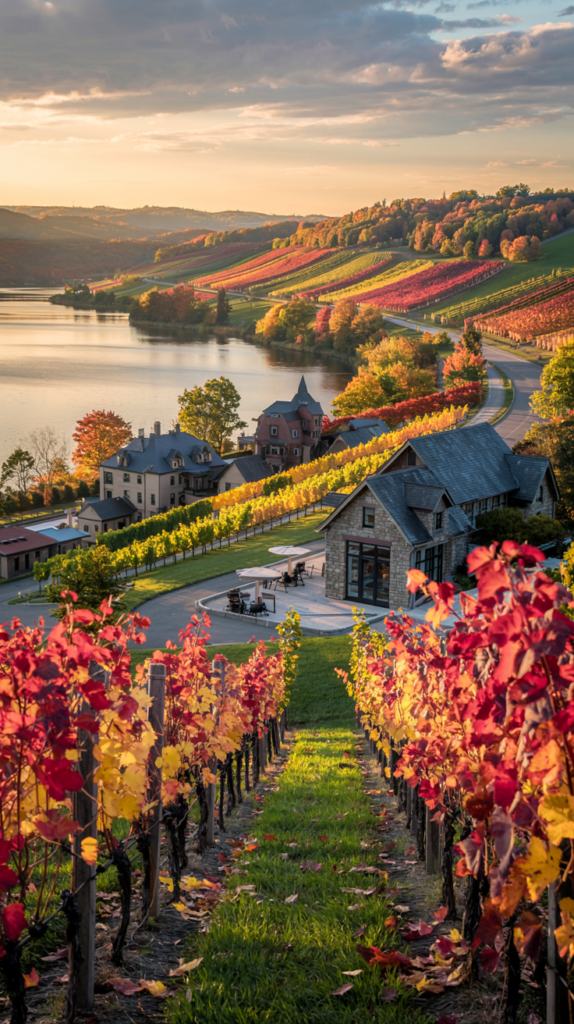
Quick Facts:
- Location: Central New York
- Distance: ~120 miles of scenic loops
- Duration: 2–3 days
- Best Time: Mid-October
The Finger Lakes combine vineyard-covered hillsides, sparkling lakes, and fiery foliage. It’s a paradise for road trippers who love wine, waterfalls, and charming small towns.
Highlights & Must-Stops
- Watkins Glen State Park – 19 waterfalls along a breathtaking gorge trail.
- Seneca Lake Wine Trail – Dozens of wineries with autumn views.
- Taughannock Falls – Taller than Niagara Falls!
- Ithaca – Quirky college town with farm-to-table dining.
Where to Stay
- Ithaca – Boutique hotels and eco-lodges.
- Geneva – Wine country stays along Seneca Lake.
- Lakeside cabins for rustic charm.
Fall Experiences
- Wine tasting at Cayuga and Seneca Lake wineries.
- Kayaking or boating with foliage reflections on the water.
- Attend fall harvest festivals in local villages.
Budget & Costs
- Gas: $20–30 for regional loops
- Lodging: $120–250/night
- Wine tastings: $5–10 each (or $30–50/day if touring multiple)
- Food: $50–120/day
What to Pack (Specific for This Trip)
- Wine travel case (if buying bottles).
- Comfortable walking shoes for gorge trails.
- Camera tripod for waterfall photography.
Pro Tip: Watkins Glen Gorge Trail often closes by late October—visit early for peak fall photos.
10. Laurel Highlands Scenic Byway, Pennsylvania
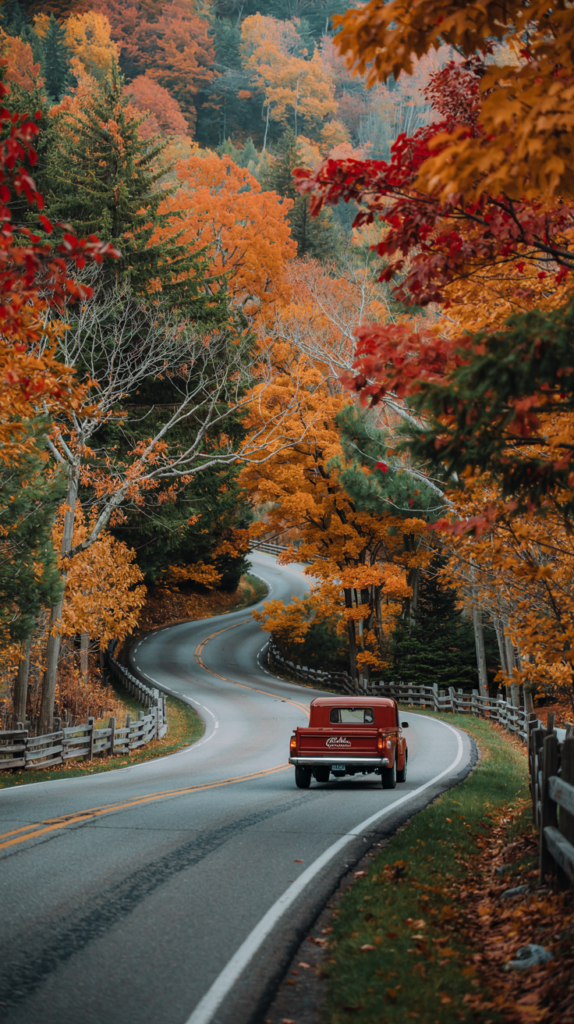
Quick Facts:
- Location: Southwestern Pennsylvania
- Distance: 70 miles
- Duration: 1–2 days
- Best Time: Mid-October
This underrated drive through the Laurel Highlands combines rolling hills, state parks, and cultural gems. It’s less crowded than New England but every bit as beautiful.
Highlights & Must-Stops
- Ohiopyle State Park – Famous for waterfalls and hiking trails.
- Fallingwater – Frank Lloyd Wright’s architectural masterpiece.
- Laurel Hill State Park – Peaceful lakes and colorful forests.
- Flight 93 National Memorial – Historic and moving stop.
Where to Stay
- Ohiopyle – Cabins and lodges near the park.
- Seven Springs Resort – Ski resort turned fall retreat.
Fall Experiences
- Whitewater rafting at Ohiopyle (runs until early fall).
- Hike to Cucumber Falls surrounded by fiery foliage.
- Sample craft beers in mountain breweries.
Budget & Costs
- Gas: $15–20
- Lodging: $100–200/night
- Entry fees: Most state parks are free
- Fallingwater tour: ~$35 per person
- Food: $40–90/day
What to Pack (Specific for This Trip)
- Comfortable hiking boots for Ohiopyle trails.
- Rain gear (fall showers common).
- Travel journal (the mix of nature + history makes it reflective).
Pro Tip: Book tickets for Fallingwater in advance tours sell out fast during fall weekends.
The Kancamagus Highway, New Hampshire – A Classic New England Drive
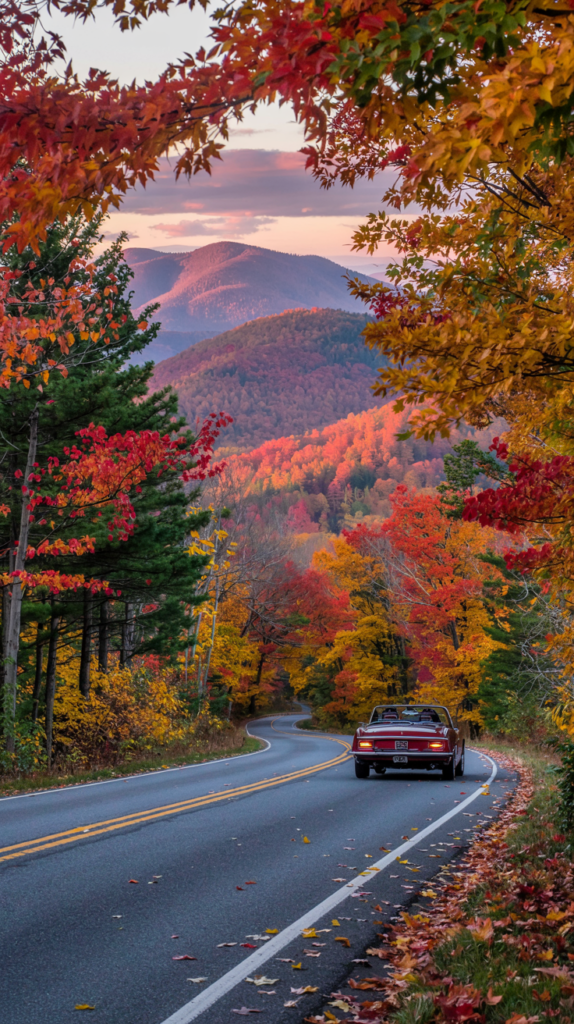
If there’s one road trip that perfectly defines the magic of New England fall foliage, it’s the Kancamagus Highway (known locally as “the Kanc”).
Stretching 34.5 miles through New Hampshire’s White Mountain National Forest, this scenic byway is often listed among the top fall drives in the entire United States.
And for good reason: every twist and turn delivers a jaw-dropping view of fiery red sugar maples, brilliant yellow birches, and deep orange oaks set against the backdrop of rugged mountain peaks.
Nicknamed “the jewel of New England’s foliage crown,” the Kancamagus Highway is not just a drive it’s an experience that blends breathtaking landscapes, quiet trails, cascading waterfalls, and charming roadside pullouts that encourage you to stop and soak in the view.
Why the Kancamagus Highway Belongs on Your Fall Bucket List
Perfect length for a day trip – At just over 30 miles, the drive is manageable in one day, but you’ll want to take your time with stops.
Incredible color variety – Thanks to the mixed hardwood forests, the color palette is dazzling. Maples blaze scarlet, while birches and aspens glow golden.
Dozens of scenic pullouts – The highway has designated scenic overlooks, picnic areas, and trailheads where you can pause, snap photos, and explore.
Proximity to other foliage routes – The Kanc is near other famous routes, making it easy to build a longer New England road trip.
Route Overview
- Start Point: Lincoln, New Hampshire
- End Point: Conway, New Hampshire
- Length: 34.5 miles (approx. 1 hour without stops, but plan 4–6 hours with breaks)
- Best Time to Visit: Late September to mid-October
- Driving Conditions: Paved, well-maintained, winding mountain road with no gas stations along the route
This isn’t just a highway it’s a continuous ribbon of fall beauty, cutting through one of the most spectacular corners of the Northeast.
Must-See Stops Along the Kancamagus
To make the most of your road trip, plan to stop at these highlights:
1. Hancock Overlook
Located near the Lincoln entrance, this is the perfect spot to begin your journey. From here, you’ll get sweeping views of the valley below, with tree canopies exploding in color.
2. Sabbaday Falls
A short and easy 0.3-mile hike leads you to a cascading waterfall framed by autumn foliage. It’s one of the most photographed stops on the Kanc.
3. Rocky Gorge Scenic Area
Here, the Swift River tumbles through granite rocks, creating stunning rapids surrounded by bright leaves. Picnic tables make it a great lunch stop.
4. Lower Falls Scenic Area
This family-friendly stop features shallow pools and flat rocks where you can relax. In fall, the reflections of foliage in the water are magical.
5. Sugar Hill Scenic Overlook
One of the highest points along the highway, offering a panoramic view of layered mountain ridges bathed in fiery autumn hues.
Hiking Trails Worth Exploring
If you have extra time, lace up your hiking boots:
- Boulder Loop Trail (3.1 miles, moderate) – Offers great views of the Swift River Valley.
- Champney Falls Trail (3.6 miles, moderate) – Leads to another waterfall, especially pretty with golden leaves surrounding it.
- Greeley Ponds Trail (7 miles, easy to moderate) – Ideal for those who want to see reflective ponds surrounded by vivid colors.
Pro Tips for Driving the Kancamagus
Fuel Up First – There are no gas stations along the highway. Fill up in Lincoln or Conway.
Pack Snacks & Water – While there are picnic areas, food services are limited, so bring road trip snacks and plenty of water.
Expect Limited Cell Service – The forested mountains cut off most signals, so download offline maps in advance.
Arrive Early – The Kanc is extremely popular during peak foliage. Start early to avoid traffic and secure parking at the most scenic stops.
Layer Up – Temperatures can drop quickly in the White Mountains, especially in the mornings and evenings.
What to Pack for the Kancamagus Highway Road Trip
Here’s a handy packing checklist:
Essentials
- Full gas tank before entering
- Offline maps (Google Maps or Maps.me)
- Snacks & reusable water bottles
- Sunglasses (glare from colorful leaves can be intense)
- Cash (parking fees at some trailheads)
Photography Gear
- Camera with wide-angle lens
- Tripod for waterfall shots
- Extra memory cards
- Polarizing filter to reduce glare and enhance colors
Clothing
- Warm layers (temperatures can range from 40–65°F / 4–18°C)
- Comfortable hiking shoes
- Lightweight rain jacket (New England weather changes fast)
Where to Stay
If you want to extend your visit:
- Lincoln: Quaint mountain town with cozy lodges, inns, and family resorts.
- Conway: A larger town with restaurants, shopping, and more accommodation options.
- Woodstock Inn Station & Brewery (Lincoln): Perfect for craft beer lovers.
- Scenic Cabins & Airbnbs: Many offer rustic charm with views of the mountains.
Budget Breakdown (for 2 people, 1-day road trip)
- Gas: $20–$30 (depending on vehicle)
- Food & snacks: $30–$50
- Parking/Trailhead fees: $5 per site (day pass $5 covers multiple sites)
- Lodging (if overnight): $120–$200 per night
- Total Estimate: $60–$300 depending on your style
Final Thoughts on the Kancamagus Highway
The Kanc isn’t just a road it’s a journey through the heart of autumn.
It’s perfect for travelers who want a taste of classic New England foliage without committing to a long multi-state trip.
With accessible trails, iconic waterfalls, and unforgettable mountain vistas, it’s no wonder this route is a bucket list essential for anyone who loves fall.
If you only have time for one fall foliage drive in the Northeast, the Kancamagus Highway should be it.
The Great River Road (Minnesota & Wisconsin) – Autumn Along the Mississippi
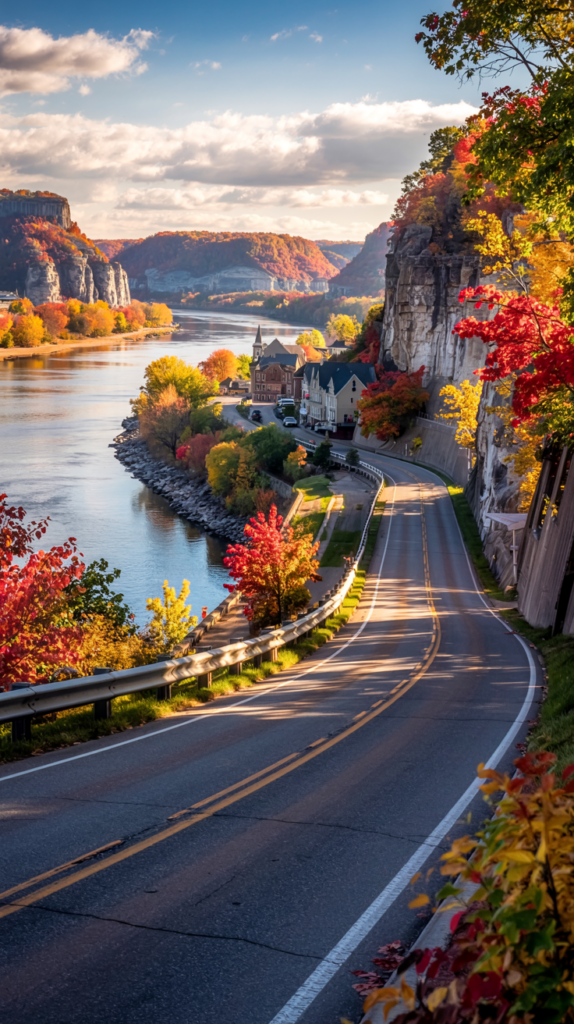
When most people think of fall foliage, New England usually steals the spotlight.
But the Great River Road, which traces the mighty Mississippi River, proves that the Midwest deserves equal recognition. Running for 3,000 miles through 10 states, the Great River Road is a National Scenic Byway.
For fall road trips, the Minnesota and Wisconsin stretch stands out as one of the best places in the U.S. to experience golden bluffs, charming river towns, and forests glowing with seasonal color.
If you’re craving a road trip that blends natural beauty, history, and culture, the Great River Road is a must for your bucket list.
Why the Great River Road is a Fall Foliage Gem
Dramatic river views – Towering limestone bluffs rise above the Mississippi, creating jaw-dropping scenery as they glow with orange, yellow, and red foliage.
Charming river towns – From historic Winona to artsy Red Wing, every stop offers a mix of culture, local shops, and autumn festivals.
Long but flexible – You can drive the entire route or just focus on a shorter, picturesque stretch.
Perfect pairing of history and nature – From Native American heritage sites to Victorian mansions, the drive is rich with stories of America’s past.
Route Overview
- Start Point: Red Wing, Minnesota
- End Point: La Crosse, Wisconsin
- Length: About 100 miles (ideal 1–2 days)
- Best Time to Visit: Late September to mid-October (peak varies slightly north to south)
- Driving Conditions: Well-paved, relatively flat highways following the river with easy access to towns and stops
Must-See Stops Along the Great River Road
Here are the highlights you won’t want to miss:
1. Red Wing, Minnesota
Known for its historic downtown and Red Wing Shoes factory, this town is also home to Barn Bluff, a hiking spot with panoramic views of the river valley lit up in gold and crimson.
2. Lake Pepin
A natural widening of the Mississippi, Lake Pepin looks like an autumn mirror reflecting fiery hillsides. Stop in the town of Lake City, which claims to be the birthplace of water skiing, for a lakeside stroll.
3. Wabasha, Minnesota
This charming river town is famous for the National Eagle Center, where you can see bald eagles against the backdrop of fall foliage.
4. Winona, Minnesota
A university town filled with art, culture, and stunning views. Drive up Garvin Heights Overlook for one of the most iconic fall vistas of the Mississippi Valley.
5. La Crosse, Wisconsin
End your trip here with a visit to Grandad Bluff, a towering overlook offering sweeping views of the city and river framed by autumn’s best colors.
Fall Hiking & Outdoor Activities
Barn Bluff (Red Wing) – Moderate 2-mile trail to incredible Mississippi River views.
Great River Bluffs State Park (Winona, MN) – Known for its steep bluffs and quiet trails, perfect for leaf peeping.
Perrot State Park (Trempealeau, WI) – Features scenic bluffs overlooking the river with fiery fall colors.
Pro Tips for Driving the Great River Road
Mix short and long stops – It’s tempting to drive straight through, but plan time to linger in towns and take short hikes.
Check local fall festivals – Many towns host apple festivals, Oktoberfests, and harvest markets.
Bring binoculars – This is prime eagle-spotting territory in autumn.
Stay flexible – Weather and leaf peak times can vary, so allow extra days if possible.
What to Pack for the Great River Road
Road Trip Essentials
- Reusable water bottles & thermos for hot drinks
- Local maps or offline GPS (cell service can dip in rural areas)
- Snacks like trail mix, apples, or sandwiches for picnic stops
- Sunglasses (the river glare can be intense)
Photography Gear
- Telephoto lens for capturing eagles and distant bluffs
- Drone (if permitted) for aerial river shots
- Travel tripod for sunrise/sunset photography
Clothing
- Comfortable walking shoes for trails
- Light jacket or flannel (temperatures range 45–70°F / 7–21°C in fall)
- Beanie and gloves for crisp mornings near the river
Where to Stay
Red Wing: St. James Hotel – a historic 19th-century hotel with elegant charm.
Winona: Alexander Mansion Bed & Breakfast – cozy and full of old-world character.
La Crosse: Radisson Hotel Riverside – modern comfort with river views.
For a more rustic experience, consider camping in Great River Bluffs State Park or booking a riverfront cabin.
Budget Breakdown (for 2 people, 2-day road trip)
- Gas: $40–$60
- Food: $60–$120 (mix of restaurants & snacks)
- Lodging: $120–$250 per night (varies by choice)
- Park entrance fees: $7–$10 per day
- Total Estimate: $350–$600 depending on comfort level
Final Thoughts on the Great River Road
The Great River Road is a hidden treasure of American fall foliage, offering a unique blend of scenic drives, cultural experiences, and wildlife encounters.
It’s less crowded than New England routes but delivers equally impressive autumn views.
With its soaring bluffs, charming towns, and golden reflections on the Mississippi, this road trip promises an unforgettable fall experience.
If you want a slower-paced, soulful drive, the Great River Road should be on your bucket list.
The Blue Ridge Parkway (Virginia & North Carolina) – America’s Ultimate Fall Drive
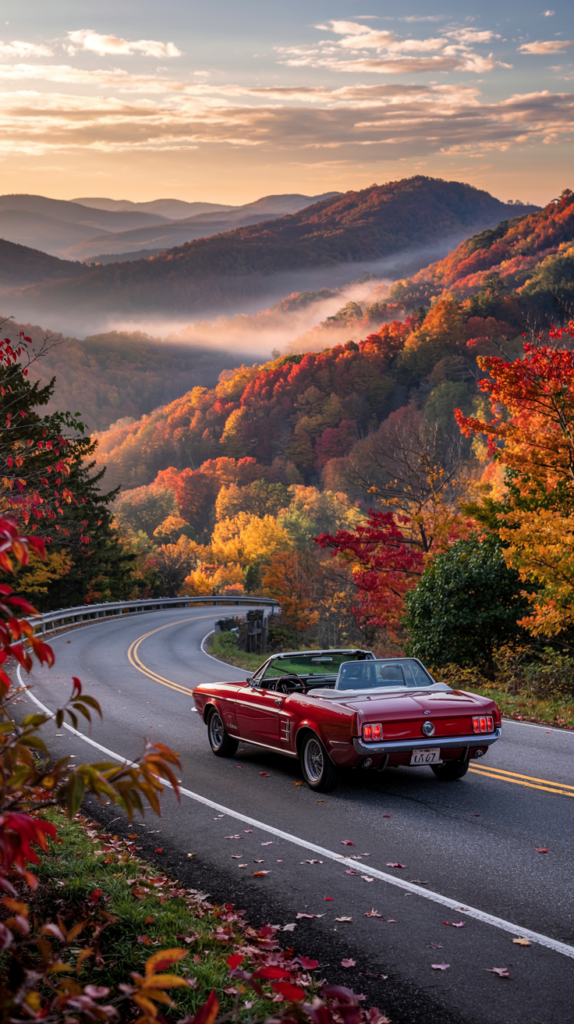
Stretching 469 miles from Virginia to North Carolina, the Blue Ridge Parkway is often called “America’s Favorite Drive.”
Winding through the Blue Ridge Mountains, this legendary route links two national parks Shenandoah (north) and Great Smoky Mountains (south) making it one of the most scenic drives in the entire world.
In autumn, the parkway transforms into a living painting: scarlet maples, golden oaks, copper hickories, and amber poplars spill down the rolling ridges.
Fog drapes the valleys at dawn, while sunsets ignite the horizon in fiery colors.
Whether you’re a casual driver, a hiker, a photographer, or a road trip enthusiast, the Blue Ridge Parkway is the ultimate fall foliage bucket list experience.
Why the Blue Ridge Parkway is a Fall Icon
Unmatched length & variety – At nearly 500 miles, no other foliage road trip offers this much diversity in scenery, altitude, and color range.
Staggered peak season – Because the road spans elevations from 650 to over 6,000 feet, different sections peak at different times, extending the leaf-peeping season.
Countless overlooks – With over 200 scenic pullouts, you’re never far from a jaw-dropping view.
Hiking & waterfalls – From gentle strolls to strenuous climbs, trails along the Parkway lead to waterfalls, panoramic ridges, and quiet forests.
Cultural heritage – The drive weaves through historic Appalachian towns, folk art centers, and Bluegrass music hubs.
Route Overview
- Start Point: Rockfish Gap, Virginia (near Shenandoah National Park)
- End Point: Cherokee, North Carolina (near Great Smoky Mountains National Park)
- Length: 469 miles (recommended 3–7 days to enjoy fully)
- Best Time to Visit: Mid-September to early November (higher elevations peak earlier, valleys peak later)
- Driving Conditions: Two-lane paved road, curvy, speed limit rarely exceeds 45 mph
Top Fall Foliage Stops Along the Parkway
Here are the must-see highlights along the Blue Ridge Parkway in autumn:
Virginia Section
- Humpback Rocks (MP 6)
A steep hike but worth it for 360° views of golden and red mountain ridges. - Peaks of Otter (MP 86)
A serene mountain lake reflecting fiery foliage, perfect for sunrise photography. - Mabry Mill (MP 176)
One of the Parkway’s most iconic sights—a rustic gristmill framed by blazing maples.
North Carolina Section
- Linville Falls (MP 316)
A series of cascades plunging into a gorge surrounded by glowing autumn forests. - Grandfather Mountain (MP 305)
Famous for its mile-high swinging bridge and dramatic fall views. - Craggy Gardens (MP 364)
High-elevation ridges that turn deep crimson in October. - Pisgah National Forest (MP 408)
Dense hardwood forests filled with fiery colors, plus waterfalls like Looking Glass Falls nearby. - Waterrock Knob (MP 451)
One of the best sunset spots, with endless ridges fading into autumn hues.
Hiking Trails You Shouldn’t Miss
Sharp Top Trail (Peaks of Otter, VA) – 2.5 miles roundtrip, moderate, epic summit view.
Linville Gorge Trail (NC) – Known as the “Grand Canyon of the East,” rugged but stunning in fall.
Craggy Pinnacle Trail (NC) – Easy 1.5 miles with panoramic views.
Mount Pisgah Trail (NC) – 2.6 miles, moderate climb to a fire tower with breathtaking views.
Pro Tips for Driving the Blue Ridge Parkway
Go slow & stop often – The road is designed for leisurely driving. Plan fewer miles per day than usual.
Check foliage reports – Websites and park services track leaf progression weekly.
Bring cash – Some attractions and small towns along the Parkway still prefer cash.
Pack a picnic – Many scenic overlooks have tables, and nothing beats lunch with a view.
Avoid night driving – The Parkway is unlit and winding; drive during daylight hours only.
What to Pack for a Blue Ridge Parkway Road Trip
Essentials
- Cooler with drinks & snacks
- Printed maps (cell service is unreliable)
- Flashlight or headlamp for evening stops
- Binoculars for birdwatching
Photography Gear
- Wide-angle lens for sweeping landscapes
- Drone (only permitted outside National Park boundaries)
- Neutral density filter for waterfalls
- Extra batteries (colder weather drains them fast)
Clothing
- Layered outfits (temps range from 30s°F at high elevations to 60s°F in valleys / -1°C to 15°C)
- Comfortable hiking shoes
- Gloves & scarf for chilly mornings
- Rain jacket (fall showers are common)
Where to Stay
Virginia Section: Peaks of Otter Lodge – rustic charm with lakeside views.
North Carolina Section: Pisgah Inn – perched at 5,000 feet with panoramic fall vistas.
Asheville, NC: A vibrant city with boutique hotels, breweries, and artsy culture.
Cabins & Campsites: Numerous options throughout, perfect for stargazing nights.
Budget Breakdown (for 2 people, 5-day road trip)
- Gas: $100–$150 (depending on stops)
- Food: $200–$350 (mix of restaurants & groceries)
- Lodging: $150–$250 per night (varies widely)
- Park/attraction fees: $0 (Parkway is free; only side attractions may charge $5–$20)
- Total Estimate: $1,100–$2,000 depending on comfort & length of stay
Final Thoughts on the Blue Ridge Parkway
The Blue Ridge Parkway isn’t just a road—it’s the ultimate fall pilgrimage.
Every curve reveals a new masterpiece of nature: ridges cloaked in gold, valleys painted in crimson, and waterfalls framed by fiery leaves.
Whether you drive a short stretch or cover the entire 469 miles, the Parkway offers a once-in-a-lifetime fall foliage adventure.
If you’re looking for the single most iconic autumn road trip in America, this is it. Put it at the very top of your bucket list.
The Columbia River Gorge, Oregon – Waterfalls & Autumn Splendor
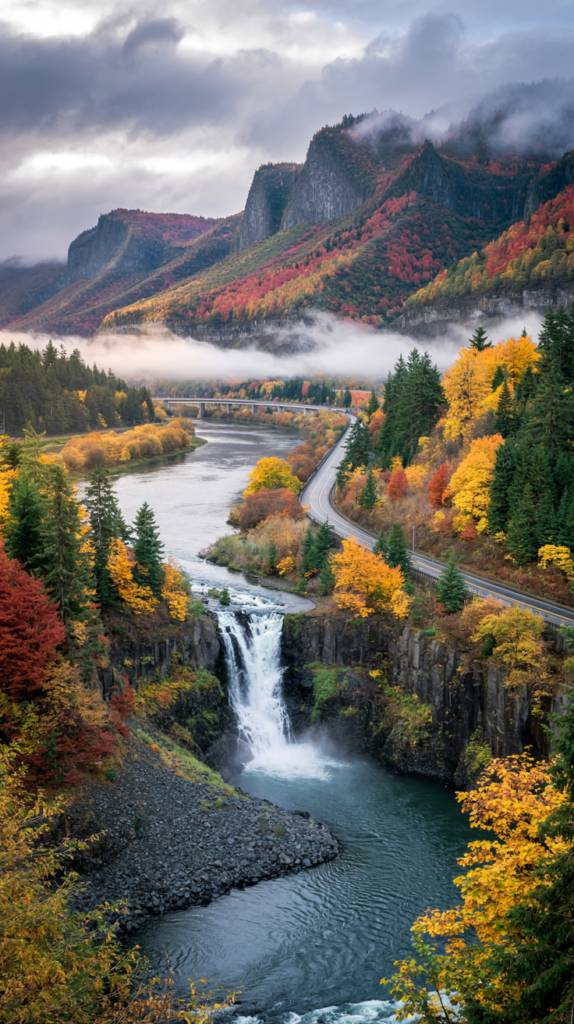
When it comes to dramatic scenery, few places can rival the Columbia River Gorge in the fall.
Carved over centuries by the mighty Columbia River, this 80-mile canyon along the Oregon-Washington border is a showcase of towering basalt cliffs, over 90 waterfalls, and forests that glow in fiery shades of orange, gold, and crimson come autumn.
Unlike New England’s gentle rolling hills, the Gorge offers a wild, rugged landscape where waterfalls tumble down sheer cliffs, hiking trails wind through mossy forests, and viewpoints reveal the Columbia River snaking below.
Add fall foliage to the mix, and you’ve got one of the most photogenic fall drives in the United States.
Why the Columbia River Gorge is a Must-See Fall Drive
Waterfall wonderland – From iconic Multnomah Falls to hidden gems, autumn foliage enhances every cascade.
Varied scenery – The Gorge transitions from lush rainforests in the west to golden grasslands in the east, offering multiple fall landscapes in one trip.
Proximity to Portland – Just a 30-minute drive from the city, making it an easy getaway.
Wine & orchards – The Hood River Valley, part of the Gorge, is bursting with vineyards, cider houses, and apple orchards in October.
Route Overview
- Start Point: Troutdale, Oregon (east of Portland)
- End Point: Hood River, Oregon (extend to The Dalles for drier landscapes)
- Length: 75–100 miles depending on side routes
- Best Time to Visit: Mid-October (fall color peak varies slightly by elevation)
- Driving Conditions: Mostly along I-84 and Historic Columbia River Highway; paved, well-maintained
Must-See Stops Along the Columbia River Gorge
1. Crown Point Vista House
Your first stop on the Historic Columbia River Highway offers sweeping views of the Gorge, especially magical at sunrise when mist hugs the river.
2. Multnomah Falls
The most famous waterfall in Oregon, plunging 620 feet in two tiers. In fall, the surrounding maples and bigleaf trees glow golden, framing the cascade like a postcard.
3. Latourell Falls
A striking single-drop waterfall surrounded by basalt columns and fiery foliage—less crowded than Multnomah.
4. Bridal Veil Falls
A short hike leads to this romantic waterfall tucked into a colorful autumn forest.
5. Horsetail Falls & Oneonta Gorge
Easily accessible roadside waterfalls that shimmer with golden reflections in October.
6. Hood River
A lively town known for its apple orchards, cider tasting, and farm stands bursting with pumpkins and pears during fall.
Fall Hiking Trails in the Gorge
Eagle Creek Trail (to Punch Bowl Falls) – 4.2 miles roundtrip; waterfalls framed by autumn leaves.
Dog Mountain (Washington side) – Strenuous 7 miles; panoramic fall views of the Gorge.
Rowena Crest (near The Dalles) – Easy 2-mile trail; sweeping views of golden hills and fiery forests.
Multnomah-Wahkeena Loop – 4.9 miles, connecting multiple waterfalls surrounded by color.
Pro Tips for Driving the Gorge in Fall
Start early – Parking at popular waterfalls fills quickly.
Take the Historic Columbia River Highway – Slower but far more scenic than I-84.
Check waterfall trail updates – Landslides and fires sometimes close sections.
Pair with Hood River Fruit Loop – A 35-mile scenic drive lined with orchards, vineyards, and cideries.
Stay flexible – The Gorge can be misty or rainy in autumn, so bring waterproof gear.
What to Pack for the Columbia River Gorge Road Trip
Essentials
- Waterproof daypack
- Snacks or picnic lunch (perfect at Rowena Crest)
- Thermos with hot cider or coffee
- National Forest recreation pass (if hiking multiple trails)
Photography Gear
- Wide-angle lens for waterfalls
- Tripod for long-exposure shots
- Rain cover for camera gear
- Extra microfiber cloths (for wiping mist off lenses)
Clothing
- Waterproof jacket and boots (trail mud is common)
- Layered clothing (temps range 45–65°F / 7–18°C)
- Warm hat and gloves for windy overlooks
Where to Stay
Hood River: A cozy base with boutique hotels, B&Bs, and breweries.
Skamania Lodge (Stevenson, WA): Mountain resort with fall foliage views from your window.
Historic Columbia Gorge Hotel (Hood River): Overlooks its own waterfall and gardens.
Camping: Ainsworth State Park for tent camping under autumn trees.
Budget Breakdown (for 2 people, 2-day trip)
- Gas: $30–$50
- Food & cider tastings: $80–$150
- Lodging: $150–$250 per night
- Passes/fees: $5–$10 per site
- Total Estimate: $400–$700 depending on comfort
Final Thoughts on the Columbia River Gorge
The Columbia River Gorge offers a Pacific Northwest twist on fall road trips.
Unlike New England’s rolling hills, here you get waterfalls, cliffs, and misty forests paired with autumn colors.
Add in orchard tastings, scenic hikes, and epic viewpoints, and this drive easily ranks as one of the most unique fall foliage experiences in the USA.
For travelers wanting a mix of adventure, photography, and local culture, the Gorge is unbeatable.
The Kancamagus Highway, New Hampshire – The Crown Jewel of New England Fall Foliage

If there’s one fall road trip that deserves to be on every traveler’s bucket list, it’s the Kancamagus Highway a 34.5-mile scenic byway that cuts across the White Mountain National Forest in New Hampshire.
Known simply as “the Kanc,” this drive is often hailed as one of the most stunning fall foliage routes in the United States.
Every twist and turn reveals sweeping mountain views, fiery red maples, golden birches, and glowing orange oaks, making it the ultimate fall escape.
Why the Kancamagus Highway Should Be on Your Bucket List
- Breathtaking Views: Panoramic mountain vistas, dense forests, and dramatic river valleys.
- Vibrant Colors: Peak foliage often features some of the most intense reds and oranges in New England.
- Compact Yet Epic: Just 34.5 miles long, making it perfect for a half-day or full-day trip with multiple scenic stops.
- Historic Significance: The route follows paths once used by Native Americans and early settlers.
- Perfect Balance: Combines serene natural beauty with accessible hiking trails, waterfalls, and picnic spots.
When to Visit
- Best Time for Fall Colors: Late September to mid-October, with peak color usually the first two weeks of October.
- Time of Day: Morning drives offer softer light and fewer crowds, while late afternoons give golden-hour magic.
- Weather Tips: New Hampshire’s mountain weather changes quickly. Be prepared for chilly mornings and warmer afternoons.
Route Overview
The Kancamagus Highway stretches between Lincoln and Conway, New Hampshire. While you can drive it in under an hour, the real joy is in stopping at its many overlooks, waterfalls, and trailheads.
Key Scenic Stops Along the Kanc:
- Hancock Overlook – A panoramic viewpoint of sweeping mountain ranges.
- Sabbaday Falls – A short hike leads to one of the most photogenic waterfalls in New England.
- Rocky Gorge Scenic Area – A dramatic gorge with rushing water and brilliant foliage framing it.
- Lower Falls – A family-friendly picnic area with natural swimming pools (though too cold in fall!).
- Sugar Hill Scenic Vista – Offers postcard-perfect views of rolling hills bursting with autumn colors.
Hiking Options
If you’d like to stretch your legs during the drive, here are some popular trails:
- Sabbaday Falls Trail (0.7 miles round trip): Easy, quick, and rewarding.
- Boulder Loop Trail (3.1 miles): Moderate hike with sweeping views over the Kanc.
- Pemi Overlook Trail (short walk): Accessible viewpoint perfect for families
Road Trip Packing List for the Kanc
Since the Kancamagus is a relatively short but remote drive (no gas stations along the way), pack smart:
Essentials:
- Full tank of gas (fill up in Lincoln or Conway before starting).
- Layers of clothing (mornings and evenings can be chilly).
- Snacks and a picnic basket (perfect for stopping at overlooks).
- A camera or smartphone with extra batteries for nonstop photo ops.
Optional Extras:
- A thermos with hot cider or coffee for roadside stops.
- Binoculars for spotting hawks or moose in the distance.
- Folding chairs or blankets for scenic picnic stops.
Pro Tips for Driving the Kanc
- No Cell Service: Expect long stretches without reception. Download maps offline.
- Parking Pass: Many stops require a White Mountain National Forest recreation pass ($5/day, $30/year).
- Timing Matters: Go early morning or late afternoon to avoid heavy leaf-peeping traffic.
- Stay Overnight Nearby: Lincoln and Conway have charming inns, cabins, and lodges that make the trip more relaxing.
Estimated Costs
- Gas: $10–$15 depending on your vehicle.
- Parking/Pass Fees: $5–$10.
- Food: $20–$50 per person if dining locally; less if you pack a picnic.
- Accommodation (optional): $120–$250 per night at a cozy inn or lodge.
Where to Stay
- In Lincoln: RiverWalk Resort at Loon Mountain – luxury meets mountain charm.
- In Conway: Cranmore Inn – a boutique inn with classic New England hospitality.
- Cabin Rentals: Airbnb options tucked in the White Mountains offer a rustic yet comfortable stay.
Why You’ll Never Forget the Kanc
Driving the Kancamagus Highway in the fall feels like being inside a living painting.
Every curve of the road offers a new masterpiece towering peaks covered in scarlet, golden forests glowing in the sun, and crisp mountain air filling your lungs.
Whether you’re chasing foliage with your camera, hiking to waterfalls, or simply savoring a picnic under the autumn leaves, this road trip will leave you with timeless memories.
Bucket List Verdict: If you can only do one fall road trip in New England, make it the Kancamagus Highway
Conclusion & Final Thoughts: Crafting Your Perfect Fall Foliage Road Trip
After exploring some of the most stunning fall foliage road trips in the USA, it’s clear that autumn is not just a season—it’s an experience. With vibrant colors, crisp air, cozy stops, and scenic drives, there’s nothing quite like it.
But beyond simply listing destinations, planning the perfect fall foliage road trip requires a mix of preparation, flexibility, and enthusiasm for adventure.
Why Fall Foliage Road Trips Belong on Everyone’s Bucket List
- A Once-a-Year Experience – Unlike beaches or mountains that can be enjoyed year-round, fall foliage is fleeting. You only get a few weeks each year to experience peak colors, making it a rare, must-do experience.
- The Journey is the Destination – Road trips give you the freedom to stop at charming towns, local diners, scenic overlooks, and unexpected hidden gems. Fall roads are filled with surprises, from roadside pumpkin patches to apple orchards.
- Affordable & Flexible – Unlike international trips, fall road trips can be budget-friendly. With your own car (or rental), you set the pace, stops, and detours. Camping, Airbnbs, or boutique lodges let you customize the trip to your budget.
- A Multi-Sensory Adventure – It’s not just about the colors—it’s about the crunch of leaves underfoot, the smell of cider donuts, the taste of pumpkin pie, and the crispness of morning air.
Tips for Planning Your Ideal Route
- Check Fall Foliage Trackers – Websites like Smoky Mountains Foliage Map or state tourism boards provide updated maps showing when peak colors arrive in each region.
- Be Flexible with Dates – Peak season varies every year depending on weather. Try to leave some wiggle room in your schedule.
- Book Accommodations Early – Popular routes (like Vermont’s Route 100 or the Blue Ridge Parkway) book up months in advance. Secure your stay early.
- Mix Short & Long Drives – Some days, a 2-hour scenic drive with hiking stops is perfect; other days, you might want a longer 6-hour cruise through changing landscapes.
- Plan Seasonal Stops – Local farms, wineries, and fall festivals often coincide with peak foliage. Add them to your itinerary for a more cultural experience.
Road Trip Essentials Recap
Fall trips require smart packing, so let’s revisit the must-haves:
- Car Gear: Roadside emergency kit, jumper cables, spare tire, windshield washer fluid, blankets.
- Clothing: Layered outfits (thermal, fleece, waterproof jacket), gloves, hats, and comfortable walking shoes.
- Food & Snacks: Granola, trail mix, thermos with hot drinks, reusable water bottles.
- Navigation: Offline maps (Google Maps downloaded), a paper atlas as backup.
- Photography Gear: DSLR or mirrorless camera, tripod, extra batteries, and phone lenses for mobile photography.
- Comfort Items: Travel pillow, cozy blanket, playlists or audiobooks, small cooler for drinks.
Capturing the Magic: Photography Tips
- Golden Hour is Your Friend – Early mornings and late afternoons create the best lighting for fall colors.
- Use Leading Lines – Roads, rivers, and fences guide the eye into the frame.
- Don’t Overlook the Details – A single red maple leaf on the ground can be just as stunning as a sweeping mountainside.
- Experiment with Angles – Shoot upward into the canopy, capture reflections in lakes, or photograph through car windows for a road-trip vibe.
Pro Travel Hacks
- Travel Midweek – Weekends are crowded; weekdays give you quieter trails and less traffic.
- Fuel Up Often – Remote routes may not have frequent gas stations, so keep your tank at least half full.
- Bring Cash – Some small-town shops, tolls, or orchards don’t accept cards.
- Check Road Closures – Fall weather can bring early snow or detours, especially in mountain regions.
- Stay Present – While photos are great, don’t forget to simply breathe in the beauty and enjoy the ride.
Final Thoughts: Your Fall Road Trip Awaits
A fall foliage road trip isn’t just about seeing leaves it’s about experiencing autumn in its purest form.
Whether you’re winding through Vermont’s covered bridges, cruising along the Blue Ridge Parkway, or gazing at golden aspens in Colorado, each road tells a story.
By now, you have the ultimate bucket list of 15 routes, complete with practical tips, road trip hacks, and inspiration to make your journey unforgettable.
All that’s left is to grab your keys, pack your bags, and hit the open road.
This fall, let the road guide you, the colors inspire you, and the journey change you.
Bonus Section: Resources, Tools & Sample Itineraries for Your Fall Foliage Road Trip
While the main 15 routes we’ve explored are the heart of your fall adventure, having a few ready-to-use resources, tools, and itineraries can take your trip from “good” to “unforgettable.”
This section is designed to give you practical add-ons that you can actually use while planning.
Useful Tools & Resources for Planning
- Fall Foliage Maps & Trackers
- Smoky Mountains Fall Foliage Prediction Map– Updated yearly with week-by-week forecasts.
- New England Foliage Central – State tourism boards (Vermont, Maine, New Hampshire) have real-time updates.
- Weather Apps – AccuWeather, Weather Underground (for frost predictions which affect colors).
- Road Trip Planning Apps
- Roadtrippers – Helps plan scenic routes and find attractions along the way.
- iOverlander – Perfect if you’re camping or RVing.
- AllTrails – Find hiking trails near your road trip stops.
- GasBuddy – To find the cheapest gas on the road.
- Photography & Travel Inspiration
- Instagram Hashtags: #FallFoliage #FallRoadTrip #LeafPeepingUSA
- Pinterest Boards for Fall Travel Inspiration
- Google Earth for virtual route previews
Sample 7-Day New England Fall Road Trip Itinerary
This is for travelers who want a week-long fall foliage adventure:
Day 1: Boston, Massachusetts → Kancamagus Highway, New Hampshire
- Explore Boston’s Freedom Trail in the morning.
- Drive north to Conway and start the “Kanc.”
- Stay overnight in Lincoln, NH.
Day 2: White Mountains Scenic Drives & Hikes
- Take the Cannon Mountain Aerial Tramway.
- Hike Flume Gorge.
- Stay in North Conway.
Day 3: Vermont Route 100
- Drive through Stowe & Waterbury.
- Stop at Cold Hollow Cider Mill.
- Overnight in Woodstock, VT.
Day 4: Green Mountains → Burlington, VT
- Visit Lake Champlain.
- Stroll Church Street Marketplace.
- Stay in Burlington.
Day 5: Adirondacks (NY)
- Cross into upstate New York.
- Scenic drive through Lake Placid.
- Stay in Saranac Lake.
Day 6: Catskills, New York
- Drive through Phoenicia and Woodstock, NY.
- Visit Kaaterskill Falls.
- Overnight in Kingston, NY.
Day 7: Hudson Valley → Return to Boston/NYC
- Explore farm stands, wineries, and pumpkin patches.
- Wrap up your trip with a cozy dinner before heading home.
Fall Road Trip Packing Checklist (Quick Printable Version)
1. Layers: thermal base, sweater, waterproof jacket
2. Hiking boots or sturdy walking shoes
3. Beanie, scarf, gloves
4. Reusable water bottle & thermos
5. Road snacks & cooler
6. Car emergency kit + flashlight
7. Offline maps & charger
8. Camera + tripod
9. Cash for tolls, farms & small towns
10. Blanket for roadside picnics or chilly nights
Common Mistakes to Avoid on a Fall Road Trip
- Chasing Peak Too Hard – Don’t stress about hitting the “exact” peak day. Fall beauty lasts several weeks, and even just-past-peak forests are stunning.
- Overstuffed Itineraries – Fall driving is slower than expected with scenic stops, so plan shorter driving days.
- Forgetting Reservations – Last-minute bookings are nearly impossible during peak foliage.
- Ignoring the Weather – Be ready for sun, fog, and even early snow in mountain areas.
- Not Packing Snacks – Some stretches (like Blue Ridge Parkway) have very few services.
Extending the Journey: More Bucket List Fall Drives
If you’ve ticked off the 15 iconic routes already, here are 5 bonus honorable mentions worth considering:
- Ozark Highlands Scenic Byway, Arkansas
- Enchanted Circle Scenic Byway, New Mexico
- San Juan Skyway, Colorado
- Door County Coastal Byway, Wisconsin
- Natchez Trace Parkway, Mississippi to Tennessee
Final Encouragement
With 15 iconic routes, a bonus list of hidden gems, sample itineraries, and practical resources, you now have everything you need to craft your dream fall foliage road trip. Remember:
It’s not just about the destination—it’s about the memories made between every curve in the road.