
Introduction: Why New England for Fall?
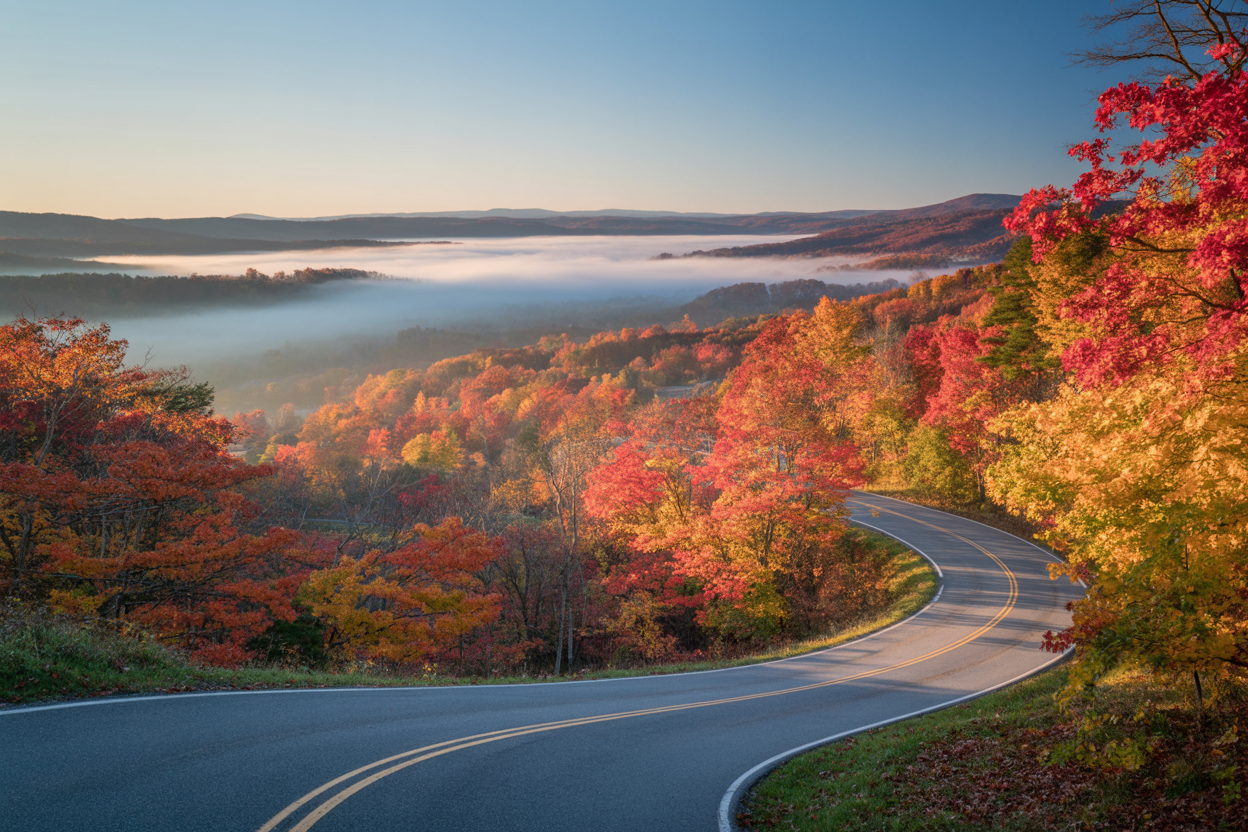
New England is the world’s fall poster child: sugar maples, birches, oaks, and beeches paint entire valleys in gold, orange, and crimson.
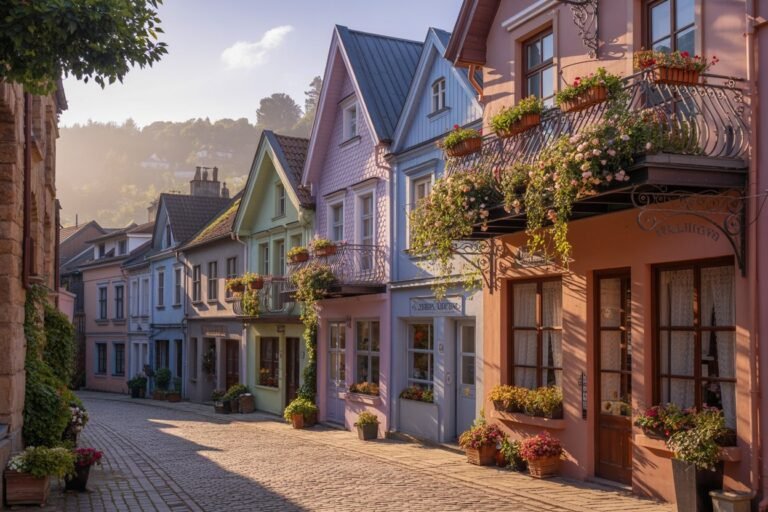
From coastal Maine’s rocky headlands to the height-of-land mountain overlooks in Vermont and New Hampshire, the region offers a huge variety of leaf-peeping experiences sweeping scenic drives, ladder-back towns straight out of a storybook, gondolas and mountain railways for panoramic views, and quiet lakeside calm for reflection and photography.
This guide is organized into 12 easily editable parts. Each part is a standalone mini-guide you can paste into a page or use as a separate blog post. Practical planning details (when to go, how to get there, best viewpoints, where to stay and eat, photo tips, accessibility) are included so readers can plan a trip without further research.
Quick timing note (how foliage typically behaves)
New England’s foliage progresses from north to south and from high elevations to low: high peaks and northern Maine often color up first (mid-to-late September), while coastal and southern spots usually peak later (mid-to-late October). Peak windows vary year to year and usually last about 7–10 days for any given location. Check local foliage trackers and state reports in the weeks before travel.
1) Kancamagus Highway (The Kanc), New Hampshire

Why go: The Kancamagus Scenic Byway (Route 112), a 34.5-mile mountain ribbon through the White Mountain National Forest, is one of the most famous autumn drives in the U.S. Rugged ledges, river crossings, and dense stands of maple and birch make for classic New England fall photos.
Best viewpoints & stops
- Lover’s Leap parking pull-off and short trail for rocky ledge vistas.
- Lower Falls/Upper Falls picnic areas and easy viewpoints on Swift River.
- Sabbaday Falls boardwalk for a short waterfall walk framed by colorful trees.
- Lookouts at the Lincoln Woods and Hancock Overlook for broad valley views.
When to go: Leaves typically begin changing mid-September; peak is usually late September to the first two weeks of October (exact dates shift with the year). Aim early October for reliable color.
How to get there: The Kancamagus runs between North Conway (east) and Lincoln (west) on NH-112. North Conway and Lincoln are well-served by US-302 and I-93 respectively; parking pull-offs are frequent but can fill on peak weekends.
Things to do
- Short hikes (Sabbaday Falls, Rocky Gorge).
- River photography and picnic stops.
- Combine with a ride on the Conway Scenic Railroad out of North Conway (historic trains add atmosphere).
Where to stay: Lincoln and North Conway offer numerous inns, B&Bs, and small hotels; book early for October weekends. Camping in designated forest campgrounds is possible but fills fast.
Photo tips: Early morning mist over the Swift River + golden maples = classic shots. Use a polarizing filter to deepen sky and reduce glare on leaves.
Accessibility & crowds: Some overlooks and boardwalks are wheelchair- or stroller-friendly (Sabbaday Falls area). Expect heavy weekend traffic during peak; midweek mornings are best for solitude.
2) White Mountains Region (Franconia Notch, Mount Washington Valley), New Hampshire

Why go: The White Mountains combine dramatic alpine scenery with dense hardwood forests think panoramic ridge views above an ocean of color.
Drive the scenic byways, ride the Mount Washington Auto Road or the Cannon Mountain Aerial Tramway for viewpoints above tree line.
The region frequently ranks among top U.S. foliage destinations.
Best viewpoints & stops
- Franconia Notch State Park: Flume Gorge boardwalk and the Basin.
- Cannon Mountain Aerial Tramway: one of the most dramatic vantage points for color.
- Mount Washington Auto Road: summit views (note variable weather).
- Kinsman Notch and Newfound Lake area for reflective water-and-tree compositions.
When to go: Late September through the second week of October in much of the White Mountains; higher elevations will color earlier in September.
How to get there: I-93 runs north from Concord into the Mount Washington Valley; US-3 and I-93 give access to Franconia and Lincoln. Expect mountain roads and winter closures after October/November in high parts.
Things to do
- Take the Cannon Mountain tram or drive the Mount Washington Auto Road (reserve ahead).
- Hike short and scenic trails (e.g., Lonesome Lake Trail, Artists Bluff).
- Ride scenic gondolas where offered, visit small mountain towns for cider and donuts.
Where to stay: North Conway, Lincoln, and Franconia have lodges, inns and cabins. For a quieter experience, choose an Inn in Sugar Hill or Sugar Hill Farm B&Bs.
Photo tips: Get up high ridge-top overlooks at sunrise give glowing valleys of color. Pack layers and wind protection summit temps can be drastically colder than valley floors.
Safety: Mount Washington is notorious for severe weather; check road and tram status before heading up. Always carry water and warm clothes if hiking.
3) Route 100 & Stowe area, Vermont (Green Mountains)

Why go: Vermont is shorthand for fall color. Route 100 is the state’s “spine” road through classic Vermont villages and forests; Stowe, Smugglers’ Notch and the villages along Route 100 deliver quintessential New England scenes covered bridges, red barns, and endless maples. Vermont’s heavy concentration of sugar maples means intense reds and oranges.
Best viewpoints & stops
- Route 100 from Waterbury through Stowe down to Ludlow endless scenic pull-offs.
- Stowe Mountain Road (seasonal toll) and Smugglers’ Notch for dramatic passes.
- Mount Mansfield (highest VT peak) via scenic drives or gondola for alpine views.
- Covered bridges around Woodstock and the Ottauquechee River valley.
When to go: Mid-September begins color at higher elevations; peak in most central VT towns is commonly early to mid-October. Gondola rides often run through peak weeks check lift dates.
How to get there: Interstate 89 reaches Waterbury and Burlington; Route 100 connects the mountain towns. Stowe is easily reached from Burlington (about 40–45 minutes).
Things to do
- Drive Route 100 slowly, stopping at local farms and sap houses for cider and maple products.
- Hike or take a gondola at Stowe for panoramic views.
- Visit fall festivals and farmers’ markets in towns like Woodstock and Manchester.
Where to stay: Inns in Stowe, bed & breakfasts in Waterbury Center, or small resorts up and down Route 100. Book early for Columbus/Indigenous Peoples’ Day weekends.
Photo tips: Barns framed by maples — golden hour light on a red barn is an iconic Vermont shot. For gondola shots, polarizer + wide angle works well.
4) Green Mountain National Forest & Mad River Valley, Vermont
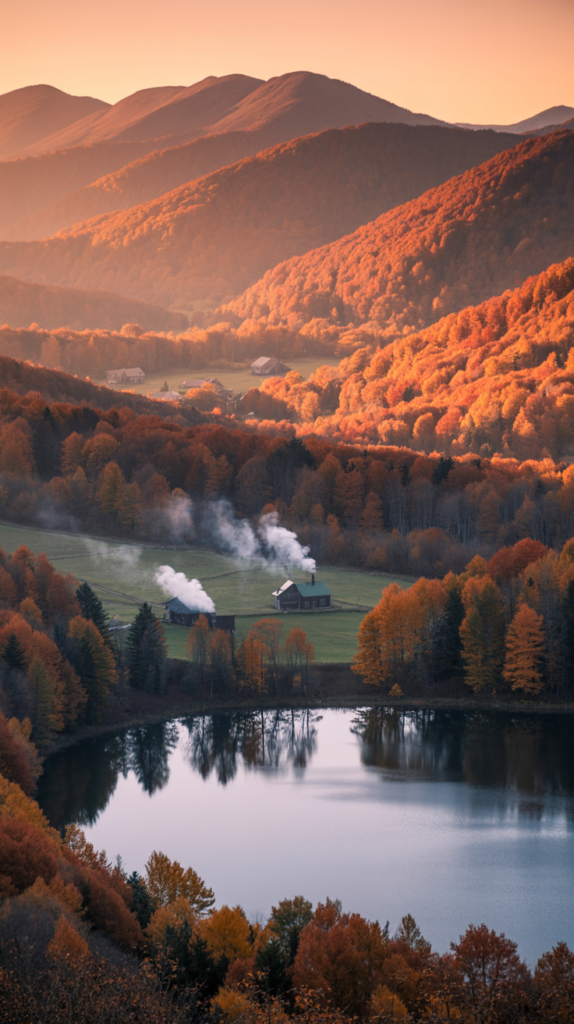
Why go: Less “town” and more wilderness than Route 100, the Green Mountain National Forest and Mad River Valley are ideal for hikers, leaf-peeping by foot, and quiet reflective lakes.
The region gives long stretches of uninterrupted color and scenic ridgelines.
Best viewpoints & stops
- Appalachian/Long Trail ridgeline hikes: for sweeping panoramas.
- Mad River Glen & Sugarbush areas for valley views and gondola rides.
- Sachs Covered Bridge and small mountain hamlets for classic scenes.
When to go: High-elevation sections color earlier (mid-September); valleys and lower elevations peak later into October. Use local foliage trackers for precision.
How to get there: From VT Route 100 or I-89; regional roads access trailheads and the Mad River Valley. Parking at trailheads can fill quickly on fair-weather weekends.
Things to do
- Ridge hikes on the Long Trail.
- Mountain biking and scenic chairlift rides where open.
- Farm stands and fall fairs in small towns.
Where to stay: Mountain lodges and farm stays; book family-run inns for the coziest experience.
Photo tips: On long hikes, pack a light tripod and neutral-density filter for lakeside long exposures with reflections of color.
5) Woodstock & Quechee, Vermont (The Ottauquechee River Valley)

Why go: Woodstock’s postcard Main Street, Quechee Gorge, covered bridges, and quaint inns make this valley one of Vermont’s most photogenic fall destinations.
The Ottauquechee River and Quechee Gorge provide dramatic watery contrasts to blazing tree slopes.
Best viewpoints & stops
- Quechee Gorge: short walks to overlook a deep gorge carved into green-and-gold hills.
- Woodstock Village: historic streets and surrounding rolling hills.
- Mount Tom and Mount Peg: short hikes for valley views.
When to go: Early to mid-October is a typical sweet spot for this area; peaks can vary year to year.
How to get there: About 30–40 minutes south of I-89; easily accessible from Route 4. Parking near Quechee can be limited on weekends.
Things to do
- Visit Billings Farm & Museum for heritage and fall activities.
- Paddle on the Ottauquechee or take a short gorge hike.
- Browse galleries and artisan shops in Woodstock.
Where to stay: The Woodstock Inn & Resort and nearby B&Bs. For budget travelers, family motels exist in nearby villages.
Photo tips: Early morning light in the gorge brings saturated color and mist in cooler weather. Use foreground elements (stone walls, covered bridges) to add depth to compositions.
6) Mount Mansfield & Stowe/Smugglers’ Notch Vermont (alpine outlooks)

Why go: Mount Mansfield (Vermont’s highest peak) and Smugglers’ Notch present the alpine experience: leaves below the peaks blaze while you get views from chairlifts, gondolas, or moderate summit hikes.
The juxtaposition of stern granite faces and soft fall color is spectacular.
Best viewpoints & stops
- Stowe Mountain Resort gondola & Mount Mansfield Auto Road (where available).
- Smugglers’ Notch: narrow mountain pass with dramatic geology and color.
- Sterling Valley and Elmore State Park for quieter leaf-peeping.
When to go: Mid-September through early October for upper ridgelines and early October in valleys. Gondola schedules vary check ahead.
How to get there: Stowe is a short drive from Burlington; motorsports/park roads give access to scenic lifts and trailheads.
Things to do
- Drive up for gondola/Chairlift photos.
- Moderate hikes to summit viewpoints for panoramic shots.
- Visit local breweries and cideries for warm post-hike refreshments.
Where to stay: Stowe lodges, farm stays, and cabins. Peak weekends require early booking.
Photo tips: Shoot from above the treeline for layered color; telephoto lenses compress ridgelines and make color bands pop.
7) The Mohawk Trail & Mount Greylock, Massachusetts
Why go: Western Massachusetts mixes historic New England towns with dramatic high points.
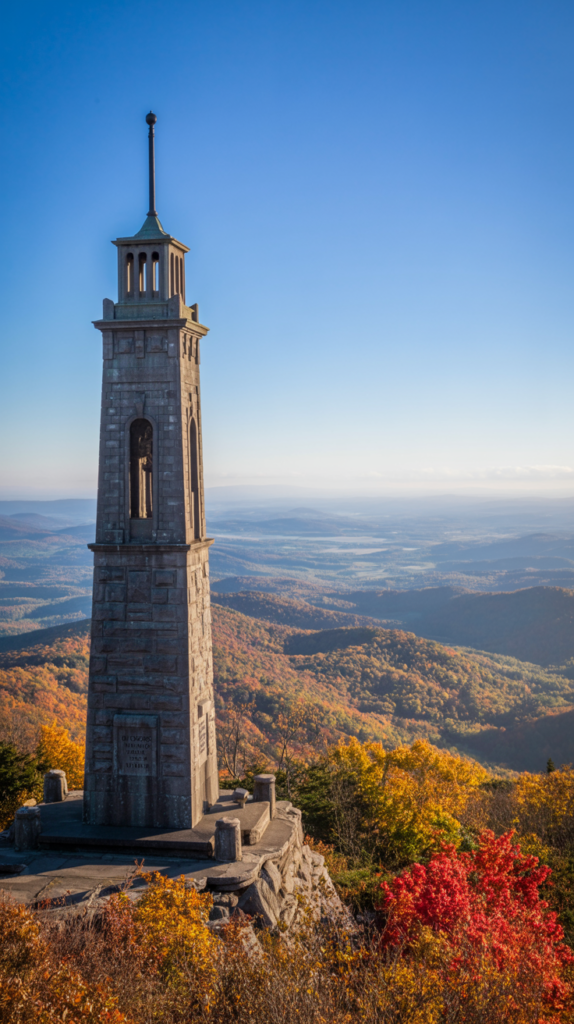
The Mohawk Trail (MA-2) is a classic fall drive with river valleys and ridges, while Mount Greylock (the state’s high point) offers sweeping views across the Berkshires into Vermont and New York. Both are reliable foliage performers in October.
Best viewpoints & stops
- Mohawk Trail scenic pull-offs and lookouts (e.g., Shelburne Falls and Bridge of Flowers).
- Mount Greylock summit: Bascom Lodge and observation tower.
- Berkshire towns (Stockbridge, Lenox) for cultural stops and galleries.
When to go: Mid-October is prime for much of Massachusetts’ higher elevations and river valleys; Mount Greylock typically shows glorious color in October.
How to get there: The Mohawk Trail runs from Greenfield to Williamstown; I-90 (Mass Pike) and smaller state roads lead into trailheads and towns. Mount Greylock access from Route 8A/Route 2.
Things to do
- Walk Shelburne Falls’ Bridge of Flowers.
- Visit museums and the Tanglewood/Lenox area (seasonal events in fall).
- Hike or drive to the Greylock summit and explore the stone tower & Bascom Lodge.
Where to stay: Charming inns and boutique hotels in the Berkshires. Expect cultural events and festivals during the fall season.
Photo tips: The Bridge of Flowers framed by fall color is a classic Instagram shot; at Mount Greylock, capture sunrise for cold, sharp light and long shadows.
8) The Berkshires Massachusetts (Great Barrington, Stockbridge)
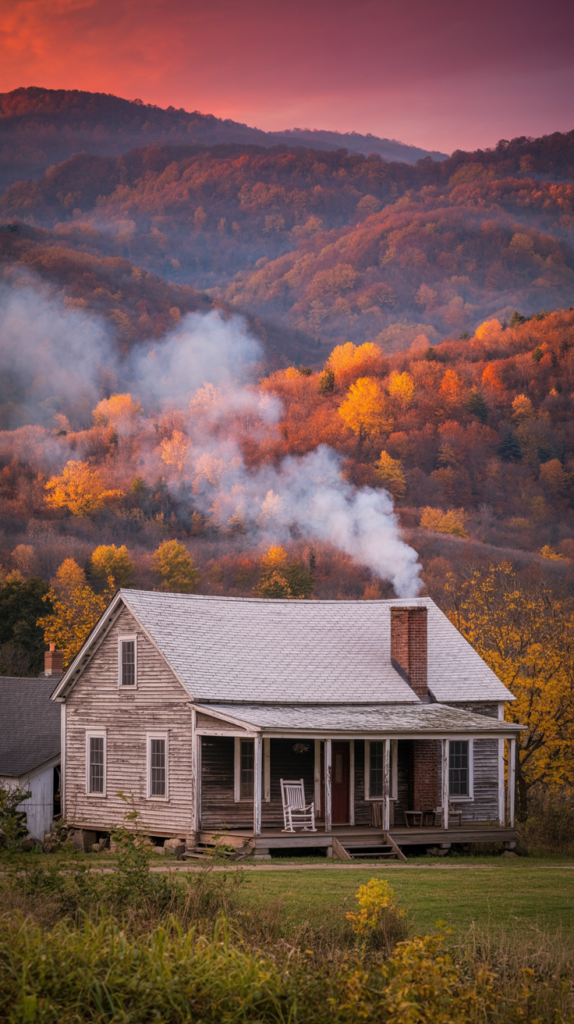
Why go: The Berkshires combine arts, culture and mountain scenery.
Leaf color pairs with museums, performing arts venues and small culinary scenes so it’s perfect for travelers who want scenic drives plus gallery/culture time.
Best viewpoints & stops
- Bash Bish Falls and nearby trails for waterfall + color scenes.
- Scenic drives around Great Barrington and Stockbridge.
- Norman Rockwell Museum in Stockbridge for a cultural day.
When to go: Mid-to-late October in most Berkshire valleys and hilltops; check local foliage trackers.
How to get there: Western Massachusetts is accessible via I-90 and several state roads; Pittsfield and Great Barrington are good gateway towns.
Things to do
- Hike to waterfalls and scenic overlooks.
- Visit museums, galleries and fall music festivals.
- Sample farm-to-table local restaurants and apple orchards.
Where to stay: Boutique B&Bs and small inns; some luxury hotels operate seasonally and must be booked in advance for October.
Photo tips: Include human-scale elements (park benches, museum facades) in wide shots to communicate the “cozy culture” vibe of the region.
9) Rangeley Lakes & Western Maine (The High Peaks & Lake Loops)
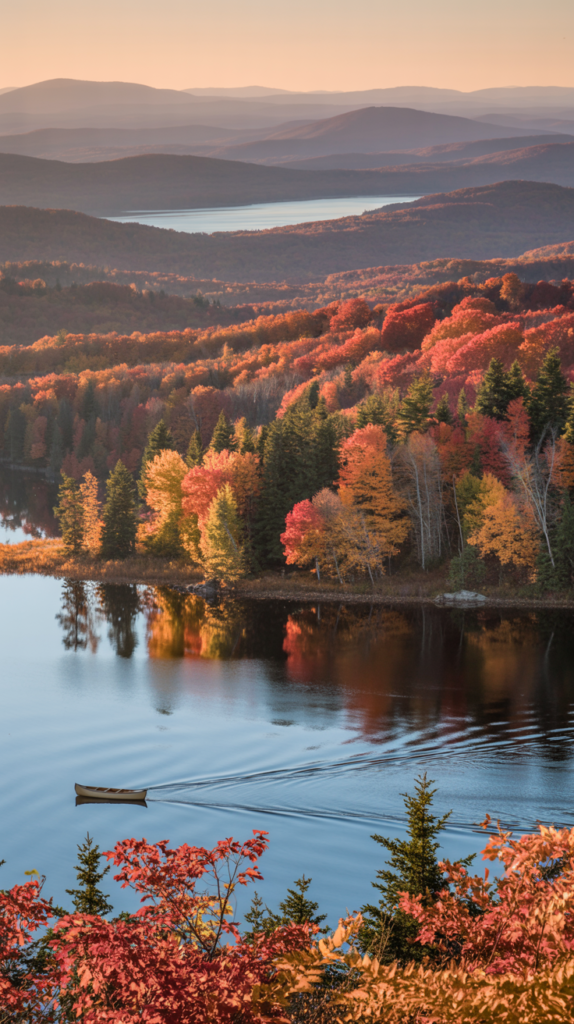
Why go: Western Maine’s Rangeley Lakes region mixes calm mirror lakes and forested highlands.
This area often peaks slightly earlier than Maine’s coastal islands and provides reflective lake photography with saturated foliage.
Best viewpoints & stops
- Height of Land lookout for sweeping lake-and-forest panoramas.
- Rangeley Lake and Mooselookmeguntic Lake for reflections and shoreline walks.
- Saddleback and Sugarloaf nearby for higher-elevation overlooks.
When to go: Late September into early-to-mid October is typical for Rangeley; exact timing depends on elevation and annual weather.
How to get there: Rangeley sits off US-201 and various state routes; the nearest larger towns are Farmington and Skowhegan. Expect rural roads and limited services fuel up.
Things to do
- Lake cruises or canoeing for reflections.
- Hikes to viewpoints and classic Maine blue-water views.
- Visit local lodges and guided foliage tours.
Where to stay: Family-run lodges, cabins and resorts on the lakefront. Western Maine can be quieter than Acadia in October, so it’s great for solitude.
Photo tips: Dawn and dusk produce the best reflections; use a tripod and a low ISO for glassy-lake shots.
10) Acadia National Park & Mount Desert Island, Maine
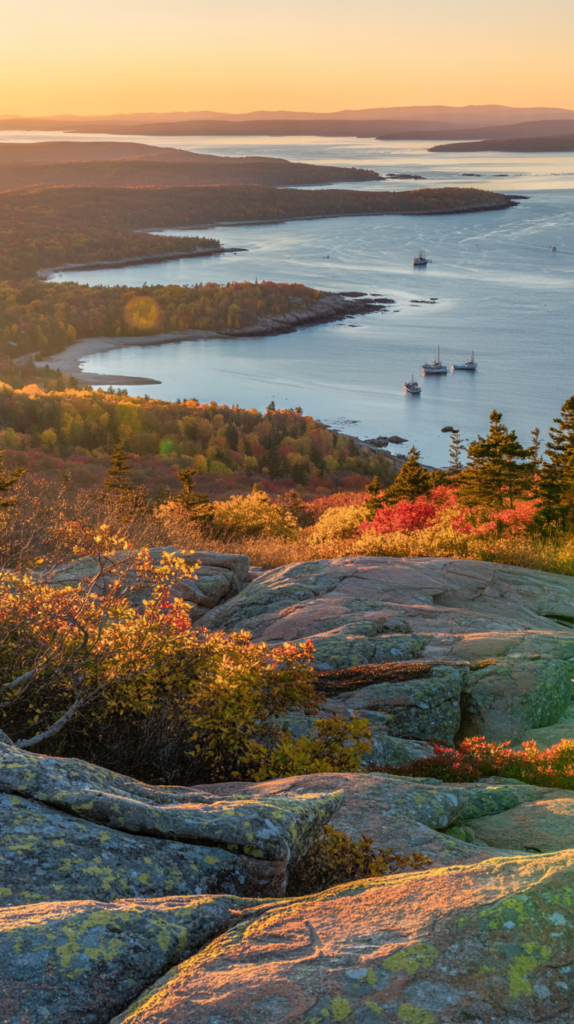
Why go: Acadia is unique ocean and granite meet hardwood forest.
The coastal contrast of sea-blue and fiery trees is stunning.
The Park’s carriage roads, summits like Cadillac Mountain, and the Schoodic Peninsula offer varied vantage points.
The National Park Service notes peak color often arrives in mid-October.
Best viewpoints & stops
- Cadillac Mountain: sunrise views above islands and colorful shoreline.
- Park Loop Road for a variety of coastal-and-forested overlooks.
- Jordan Pond and the carriage roads for calm water and tree reflections.
- Schoodic Peninsula for a quieter coastal leaf-peeping alternative.
When to go: Acadia typically reaches peak foliar color in mid-October the park’s NPS pages and Maine foliage trackers are useful to check before travel.
How to get there: Bar Harbor is the primary gateway to Mount Desert Island (Maine State Route 3). Expect seasonal traffic; parking restrictions may apply in peak October weeks.
Things to do
- Sunrise on Cadillac Mountain (reservation/parking rules may apply).
- Walk carriage roads and paddle on Jordan Pond.
- Explore coastal villages like Bar Harbor for dining, craft shops and lobster rolls.
Where to stay: Bar Harbor and nearby inns; book early for October. Consider staying on the quieter Schoodic Peninsula for fewer crowds.
Photo tips: Combine granite outcrops and tide pools with distant foliage for layered coastal compositions. Bring wind protection autumn days can be breezy on exposed headlands.
11) Litchfield Hills & Route 169 (Connecticut)
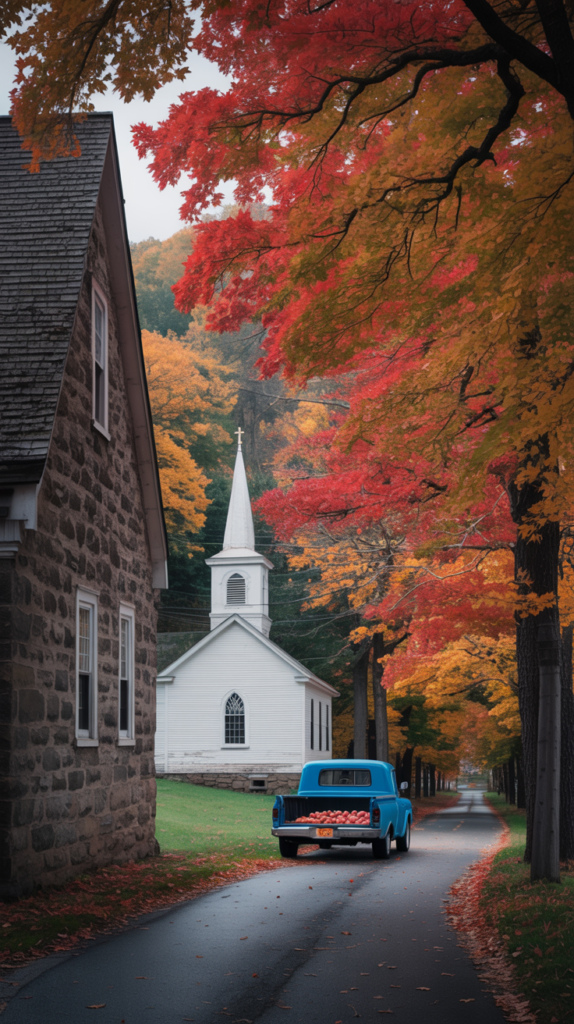
Why go: Connecticut’s “Quiet Corner” and the Litchfield Hills offer pastoral fall color: stone walls, old churches, rolling farmland and maple-lined roads.
The Mohawk Trail equivalent in CT is slower paced, with elegant backroads and charming New England towns.
Recent reporting names scenic CT byways like Route 169 among top New England foliage drives.
Best viewpoints & stops
- Route 169 for a long, scenic drive.
- Litchfield County towns (Litchfield, Kent) for village scenes and local cafes.
- Hop Brook Lake and Bantam Lake areas for watery reflections and leaf color.
When to go: Mid-to-late October for the Litchfield Hills and Connecticut interior; coastal CT will be later. Check local trackers — Connecticut often peaks around mid-October.
How to get there: I-84 and I-84 spur roads connect to Route 169 and Litchfield County. Road trips here are shorter distances from NYC/Boston for weekend visitors.
Things to do
- Explore antique shops and country markets.
- Hike short trails and visit local orchards for apple-picking.
- Visit small cideries and farm stands.
Where to stay: Inns and B&Bs in towns like Kent and Litchfield. Weekend demand spikes in October.
Photo tips: Stone walls and split-rail fences make strong compositional lines through colorful fields.
12) Newport & Coastal Rhode Island (Cliff Walk & Coastal Drives)
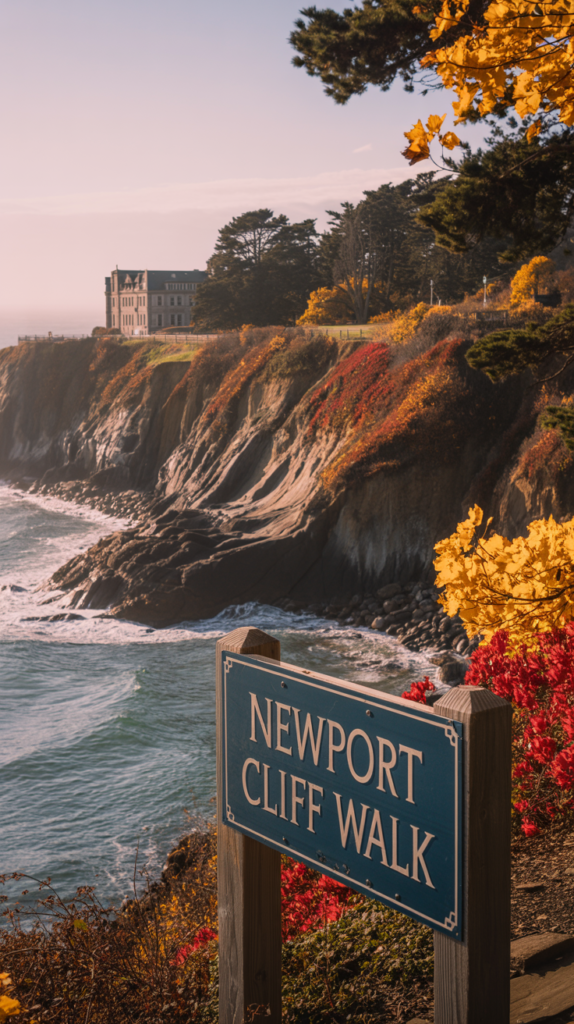
Why go: Rhode Island isn’t all inland forests coastal New England offers a different fall mood: rugged shoreline, dramatic mansions framed by fall color, and the famous Cliff Walk in Newport where ocean and trees meet.
If you want fall color without full mountain driving, Newport provides easy access and charming town life.
Best viewpoints & stops
- Newport Cliff Walk for rocky coastlines with fall foliage on the bluffs.
- Ocean Drive (Narragansett) for seaside color and historic estates.
- Block Island (day trip ferry) for a windswept island perspective on autumn color.
When to go: Mid-to-late October is usual for southern New England coastal foliage; coastal areas tend to peak slightly later than mountain interiors.
How to get there: Newport is reachable via I-95 to Route 138; parking for the Cliff Walk can be limited and some sections are steep.
Things to do
- Walk the Cliff Walk and explore Newport’s mansions.
- Take a coastal drive and stop at seaside parks for photography.
- Enjoy local seafood lobster rolls with a fall view are an underrated classic.
Where to stay: Newport inns, boutique hotels, and bed & breakfasts; October is less crowded than summer but still popular on fall weekends.
Photo tips: Use slower shutter speeds at rocky coastlines to soften surf against colorful headlands; overcast days can intensify color saturation.
Practical planning peak timing, crowds & route strategy
- Peak windows: As a rule of thumb: higher elevations and northern New England (northern NH, northern VT, northern ME) color first (mid-late September). Central New England (Vermont interior, White Mountains) often peaks late September–early October. Southern and coastal areas usually peak mid-to-late October. Because conditions change yearly, use state foliage trackers (Maine, New Hampshire, Vermont, Massachusetts) and the Old Farmer’s Almanac forecasts to plan precise dates.
- Crowds: Peak weekends (typically early October through mid-October in many areas) draw large crowds. To avoid traffic and full parking lots: go midweek, start before sunrise, or pick quieter alternatives (Schoodic Peninsula rather than Bar Harbor; Rangeley instead of Acadia crowds).
- Road strategy: Big + slow scenic routes (Kancamagus, Mohawk Trail, Route 100) are best enjoyed at a leisurely pace. Plan two or three “anchor” stops per day rather than trying to check off every overlook.
- Accommodation tip: Book at least 6–12 weeks ahead for October weekends; small inns fill fastest.
Safety & comfort checklist for leaf-peeping
- Layered clothing (temperature swings between valley and summit can be large).
- Warm hat and gloves for dawn and summit visits.
- Reserve parking or timed-entry if required (some parks or Cadillac Mountain have limits).
- Carry cash/credit (some small rural businesses are cash-first).
- Full gas tank in rural Maine/VT/White Mountains.
- Follow Leave No Trace — don’t trample vegetation for a “better shot.”
Sample 3-Day New England Fall Itinerary (mix of highlights)
Day 1: Arrive in North Conway — drive the Kancamagus Highway, stop at Sabbaday Falls and Rocky Gorge, overnight in Lincoln/North Conway.
Day 2: Head west into the White Mountains take the Cannon Mountain tram, visit Franconia Notch, then drive into Vermont via Route 100. Overnight in Stowe.
Day 3: Route 100 scenic drive, cover Woodstock & Quechee stops, then head south along the Mohawk Trail for sunset at Mount Greylock or a cozy Berkshires dinner.
Final notes how to use this post on your blog
- Each numbered section above is designed as a standalone mini-guide. Use them as separate posts or split into “Top 5 drives,” “Best mountain vistas,” and “Coastal fall escapes.”
- If you want, I can produce: (a) shareable Pinterest-optimized titles & descriptions for this post, (b) four-square collages prompts for Ideogram/Ideogram-style images, or (c) a printable one-page itinerary to add as a PDF download for readers.