
I still remember stepping off the train in Zurich that crisp morning the air smelled like pine and fresh snow, and the mountains in the distance looked like they had been painted into the sky.
Traveling solo through Switzerland was one of the most peaceful, empowering, and beautiful experiences of my life.
There’s just something about this country everything feels safe, clean, and breathtakingly perfect, from the quiet lakes to the alpine villages that look like storybook scenes.
Switzerland is a country where every turn feels like a postcard. Whether you’re into outdoor adventures, café hopping, or simply finding yourself in nature, you’ll fall in love with its balance of beauty and simplicity.
Over the next few sections, I’ll walk you through 12 amazing things to do in Switzerland based on my own journey, packed with insider tips, hidden gems, and a few smart product recommendations that made my trip smoother (and could do the same for you).
| Product | Buy |
|---|---|
 Sony ZV-1 II Vlogging Camera |
Get on Amazon |
 GoPro HERO12 Black |
Get on Amazon |
 Merrell Moab 3 Hiking Shoes |
Get on Amazon |
 NOMATIC 40L Travel Bag |
Get on Amazon |
 Travelon Anti-Theft Classic Crossbody Bag |
Get on Amazon |
1. Explore the Matterhorn and Zermatt
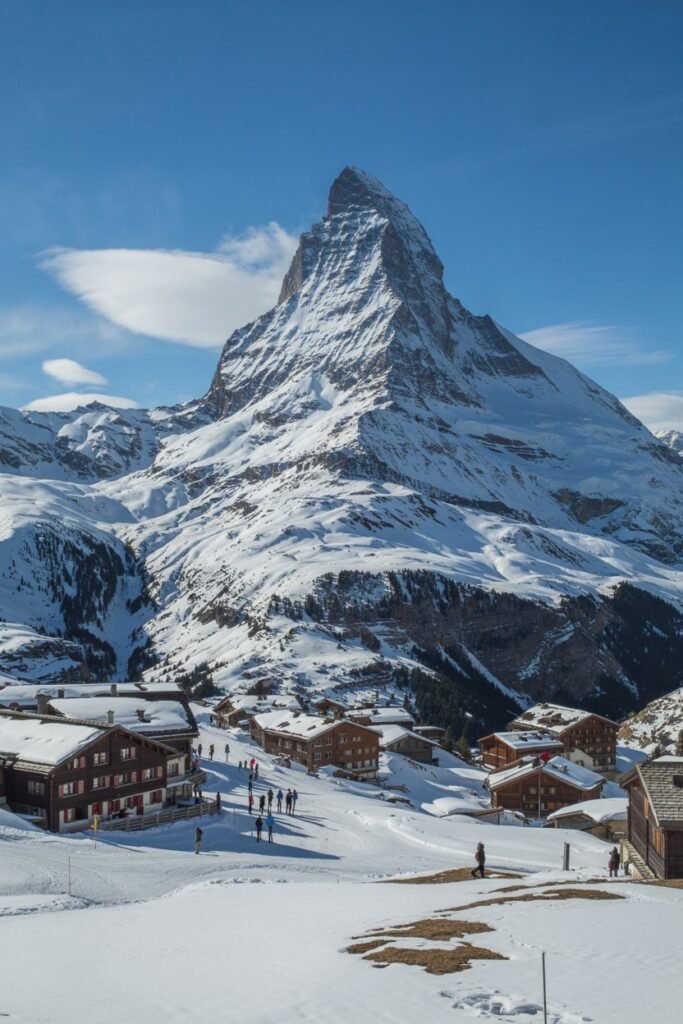
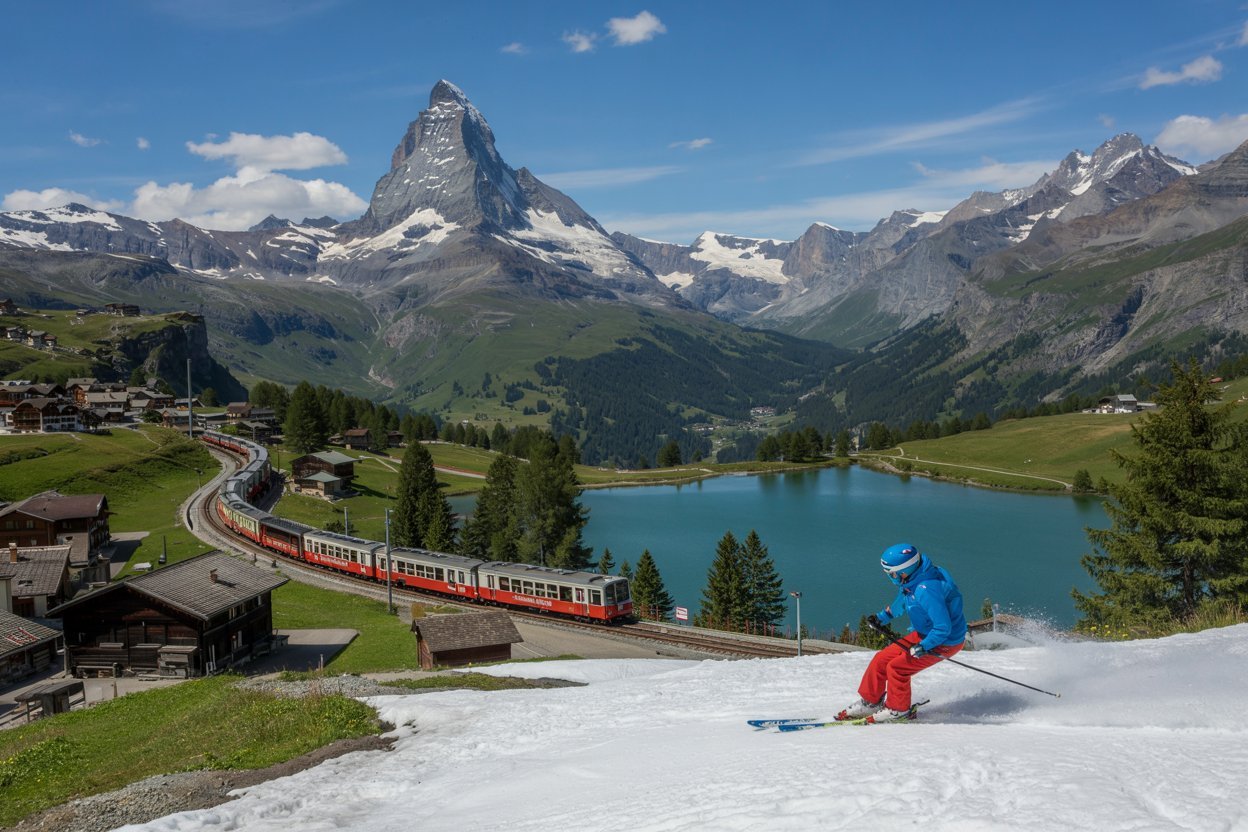
There’s no mountain quite like the Matterhorn it’s tall, dramatic, and unforgettable. Standing at 4,478 meters (14,692 ft), it almost looks unreal, like a giant pyramid cutting into the clouds.
Zermatt, the cozy alpine town at its base, is completely car-free, which makes it extra peaceful and clean. I remember sipping hot chocolate at a café while watching the sunlight turn the mountain pink it was pure magic.
How to Get There
You can easily reach Zermatt by train from major cities like Zurich or Geneva in around 3.5 hours. The final leg of the journey the climb from Visp to Zermatt is scenic and unforgettable.
Tip: Cars aren’t allowed in Zermatt, so if you’re driving, you’ll need to park in Täsch and take the shuttle train (just 12 minutes).
What to Do
- Take the Gornergrat Railway – This iconic cogwheel train climbs over 3,000 meters and gives you panoramic views of the Matterhorn.
- Hike the Five Lakes Walk – A stunning 9 km trail where each lake mirrors the Matterhorn perfectly on calm days.
- Explore the Glacier Paradise – The world’s highest cable car station, offering 360° views of 38 peaks and 14 glaciers.
What to Pack
For Zermatt’s alpine adventures, layering is key. Here are a few essentials I swear by:
- Columbia Women’s Arcadia II Rain Jacket – lightweight, waterproof, and stylish enough for town strolls.
- Sony ZV-1 II Vlogging Camera – compact and ideal for capturing mountain scenery.
- Anker Prime Power Bank (27,650mAh) – a must for full-day hikes where outlets are rare.
My Experience
As a solo traveler, I loved how friendly and safe Zermatt felt. Everyone from café owners to fellow hikers was open and kind.
I spent my evenings in small, wood-paneled restaurants enjoying fondue with mountain views and honestly, I never once felt lonely.
Pro Tip: “I recommend Trip.com for your bookings they frequently feature exclusive discounts on Switzerland stays and make planning your trip simple and quick.”
2. Take a Scenic Train Ride on the Glacier Express
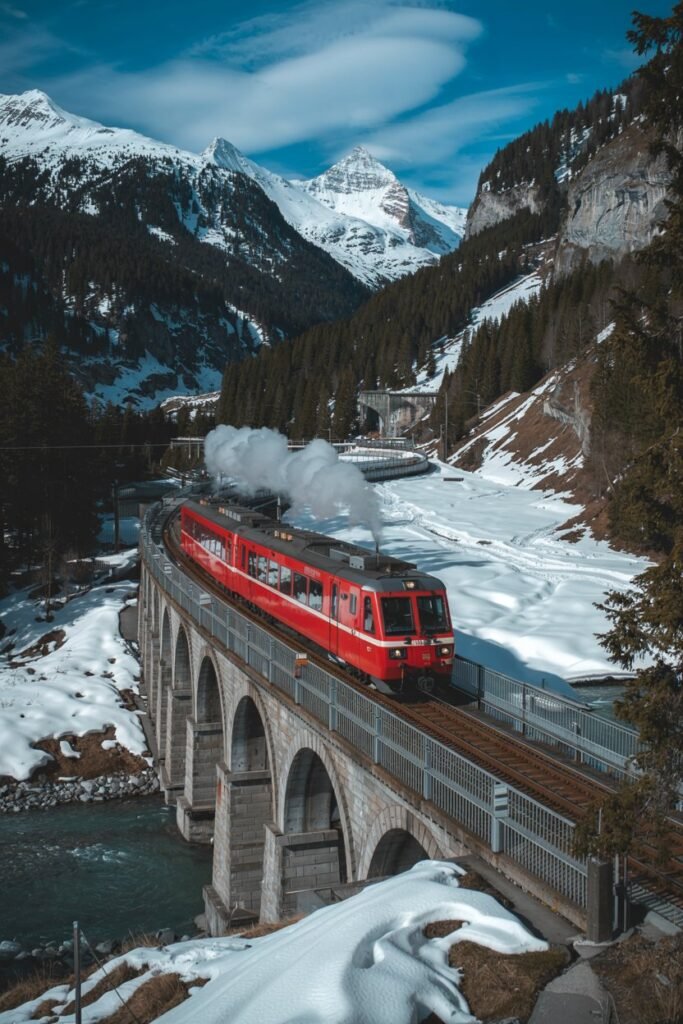
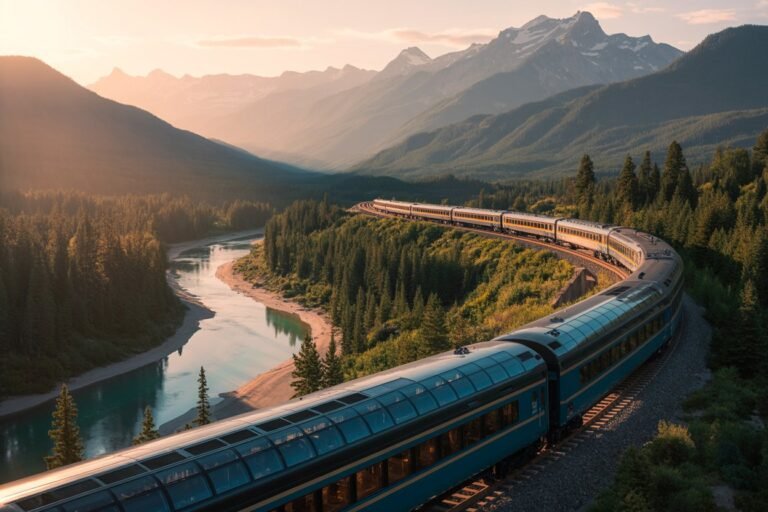
Imagine sitting by a panoramic window while glaciers, valleys, and stone bridges glide by that’s the Glacier Express experience. This world-famous train connects Zermatt and St. Moritz, offering one of the most picturesque journeys on Earth.
I did this ride in early spring, and it was pure magic snow still blanketed the peaks, but valleys were blooming with green.
How to Get There
You can hop on the Glacier Express in Zermatt (western Switzerland) or St. Moritz (eastern Switzerland). The full journey takes about 8 hours, but trust me it’s worth every minute.
Tip: Book your panoramic seat in advance on Trip.com or the official Glacier Express site; they sell out quickly, especially in summer.
What to Expect
- The Landwasser Viaduct: That iconic curved bridge high above the valley it’s the moment everyone waits for.
- Onboard Dining: I treated myself to a three-course Swiss lunch served right at my seat. The warm soup and rösti felt like heaven as snow fell outside.
- Audio Commentary: Available in multiple languages, it helps you understand the history of every town you pass.
What to Pack
Since this is a full-day trip, you’ll want to be comfy and prepared:
- Bose QuietComfort Ultra Earbuds – perfect for relaxing while the train hums along.
- Anker Prime Power Bank – I kept my camera and phone charged for every scenic shot.
- Cozy socks or a scarf- the air conditioning can get chilly.
My Experience
It felt like watching a live documentary of Switzerland through glass. I met another solo traveler from Canada, and we ended up chatting about mountain life over dessert.
It was one of those rare travel moments that felt effortless and special.
Pro Tip: “Book your Glacier Express seat early on Trip.com they often list deals for first-class panoramic tickets and flexible passes.”
Tour Switzerland
3. Visit Jungfraujoch – The Top of Europe
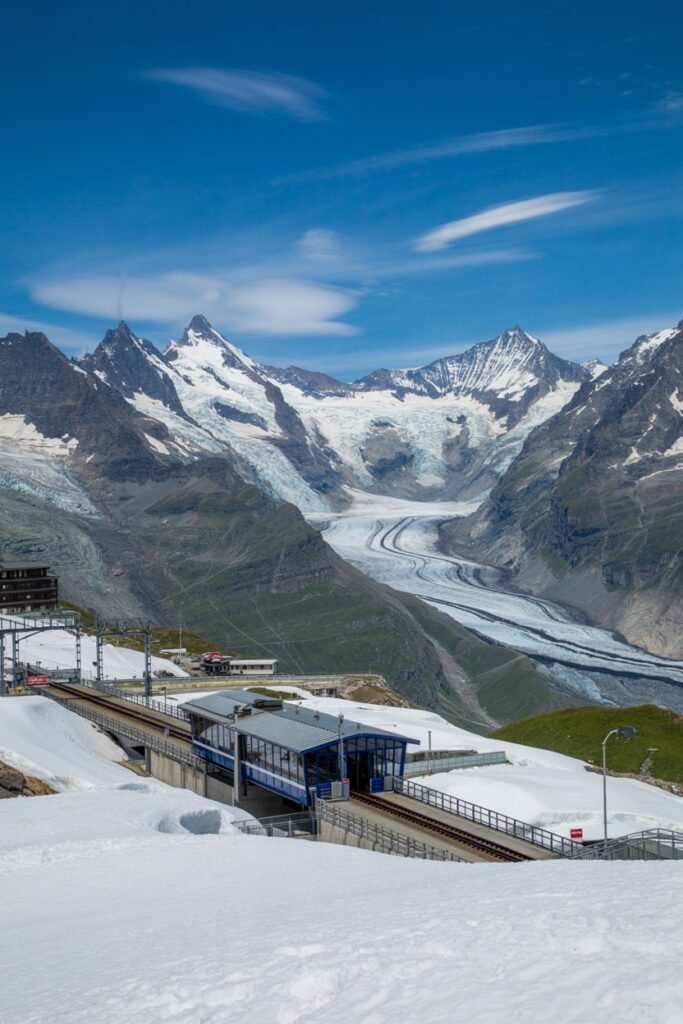
There are moments in travel that just take your breath away and standing at Jungfraujoch, often called “The Top of Europe,” was one of mine.
Perched at 3,454 meters (11,332 ft), it’s the highest railway station in Europe, and getting there feels like entering another world.
The crisp mountain air, the crunch of ice under your boots, and the endless white horizon it’s hard not to tear up a little.
How to Get There
Start your journey from Interlaken Ost, and hop on the Bernese Oberland Railway to Lauterbrunnen or Grindelwald.
From there, the Eiger Express Gondola will whisk you up in just 15 minutes and yes, it’s as scenic as it sounds.
Tip: Purchase a Swiss Travel Pass for discounted train rides and easy access to major Swiss destinations.
What to Do
- Visit the Ice Palace: Walk through tunnels carved into a glacier everything glistens, from the floor to the frozen sculptures.
- Step onto the Glacier Plateau: You can literally stand above the clouds here. Don’t skip this it’s where you get those postcard-worthy shots.
- Stop at the Lindt Swiss Chocolate Heaven: Yes, even at the top of Europe, there’s chocolate.
What to Pack
Even in summer, temperatures are below freezing up here. Trust me, you’ll thank yourself for packing:
- Ozero Thermal Insulated Gloves – keep hands warm while snapping photos.
- Columbia Women’s Arcadia II Rain Jacket – perfect layering against alpine wind.
- UV400 Polarized Sunglasses – essential when sunlight reflects off the snow.
My Experience
I went solo, but I didn’t feel alone everyone up there was just as amazed. I met a couple celebrating their anniversary, and they offered to take my picture with the Alps behind me.
The photo is still my favorite souvenir. On the way back, I stopped in a cozy café in Grindelwald and had hot chocolate with whipped cream so thick it felt like dessert heaven.
4. Discover Lucerne and Its Beautiful Lake
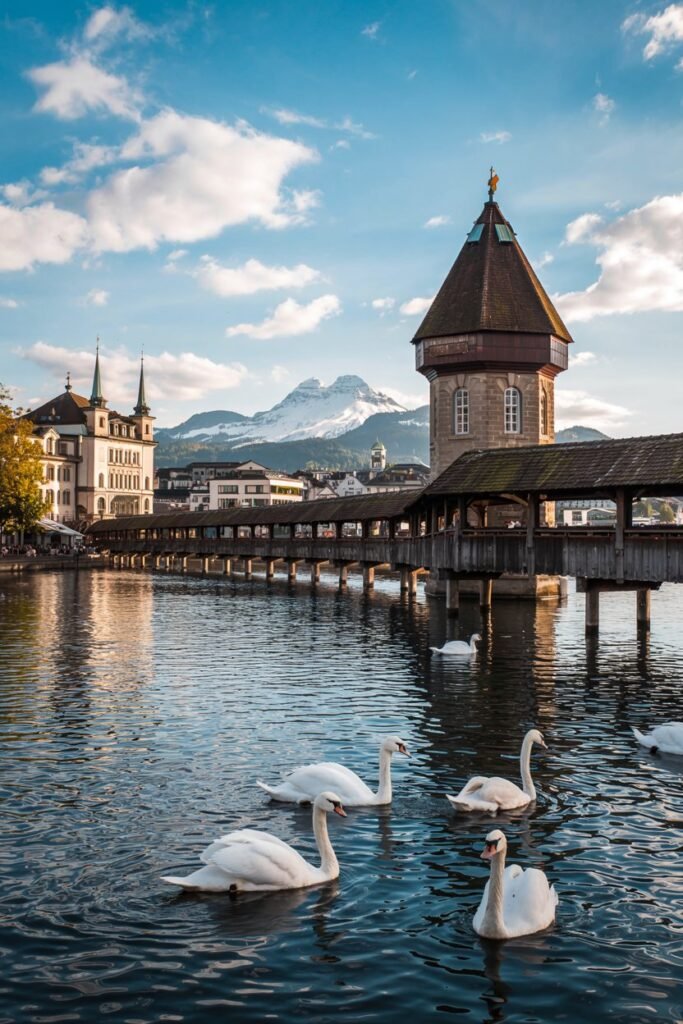
Lucerne is the kind of city that instantly charms you small enough to feel cozy but grand enough to make your heart skip a beat.
Nestled between mountains and Lake Lucerne, it has that perfect mix of old-world charm and natural beauty.
Walking its cobbled streets felt like stepping into a fairytale, and every corner seemed made for photos.
How to Get There
Lucerne is one of the easiest cities to reach in Switzerland about 45 minutes from Zurich by train. I used Trip.com to grab my ticket online the night before, and it was completely hassle-free.
What to Do
- Chapel Bridge (Kapellbrücke): Walk across Switzerland’s most famous wooden bridge with medieval paintings under its roof.
- Lake Lucerne Cruise: Take a boat ride surrounded by snow-capped peaks. I went just before sunset — it was golden, peaceful, and unforgettable.
- Mount Pilatus: Take the world’s steepest cogwheel railway to the top for an epic panoramic view.
What to Pack
- Sony ZV-1 II Camera – compact, great for city shots and reflections on the lake.
- Neutrogena Hydro Boost SPF 50 Sunscreen – Swiss sunlight can be intense, especially near water.
- Bose QuietComfort Earbuds – perfect for enjoying quiet lakeside moments with soft music.
My Experience
I stayed two nights in Lucerne and spent my evenings by the lake, watching boats glide by.
One night, I met an older Swiss couple who shared stories about the city’s festivals and traditions they said Lucerne is “where the heart of Switzerland beats.” I couldn’t agree more.
5. Ski in the Swiss Alps
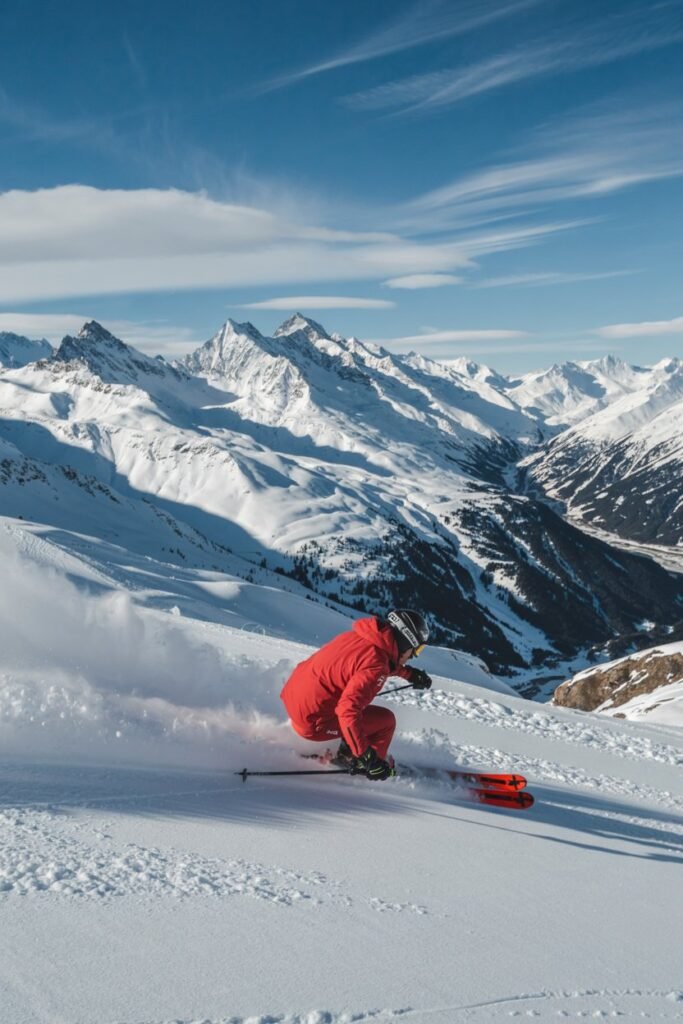
Even if you’ve never skied before (like me before this trip!), the Swiss Alps make it feel magical rather than intimidating.
Whether it’s Verbier, St. Moritz, or Davos, the slopes are smooth, the air crisp, and the après-ski vibes are straight out of a winter movie. I took my first ski lesson in Davos, and by the second day, I was gliding wobbly but proud.
How to Get There
- Verbier: Take the train from Geneva to Martigny, then transfer to Le Châble for a cable car to Verbier.
- St. Moritz: Reachable via the Glacier Express from Zermatt luxury meets adventure.
- Davos: A direct train from Zurich gets you there in about 2.5 hours.
What to Do
- Ski or Snowboard: Resorts like Verbier cater to all skill levels. You can also hire instructors who speak English and are incredibly patient.
- Snowshoe Hikes: For a slower, more peaceful way to explore the Alps.
- Après-Ski: Cozy chalets, live music, and Swiss mulled wine it’s a vibe you don’t want to miss.
What to Pack
- Smartwool Merino Wool Socks – keeps your feet warm and dry all day.
- Thermal Base Layer Set by TSLA – breathable and warm under ski wear.
- Anker Prime Power Bank – to recharge your phone for those summit selfies.
My Experience
I’ll never forget that feeling snowflakes dancing around me while I sat on a wooden terrace sipping hot chocolate.
Skiing pushed me out of my comfort zone, but it also reminded me how good it feels to try something new on your own.
I met people from all over the world, and somehow, laughter sounds the same in every language.
6. Visit the Rhine Falls – Europe’s Largest Waterfall
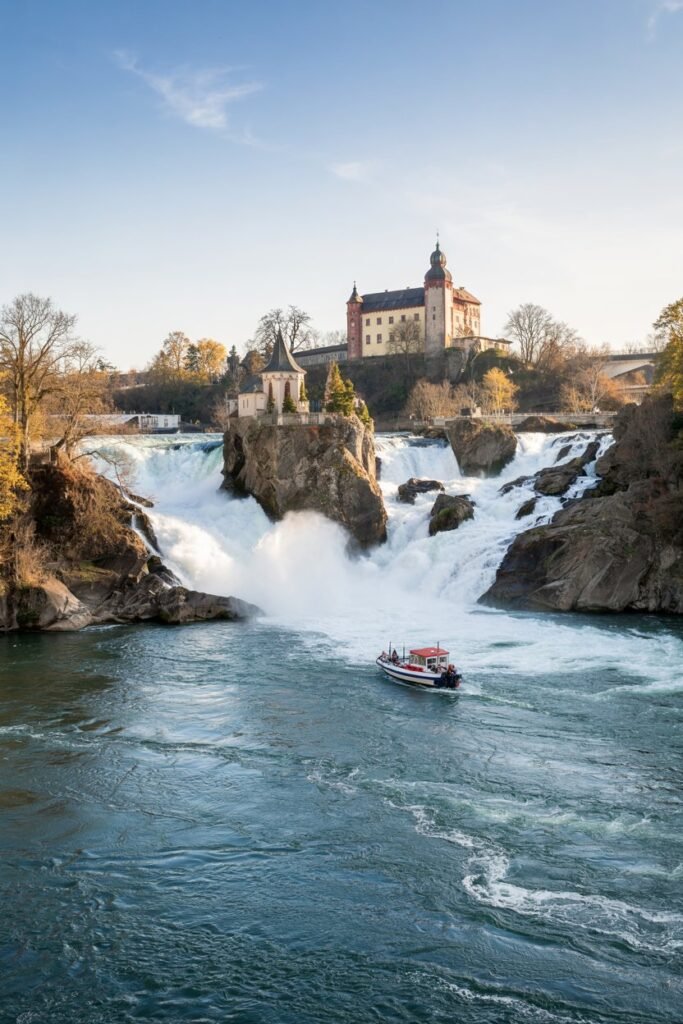
If there’s one sound that still echoes in my memory from Switzerland, it’s the roar of the Rhine Falls a deep, thunderous rush that made me feel both small and alive.
Standing before Europe’s largest waterfall, near the town of Schaffhausen, is like witnessing raw nature in motion.
The power of the water is hypnotic, and you can feel its mist on your face long before you reach the viewing platform.
Why It’s Worth Visiting
At 150 meters wide and 23 meters high, the Rhine Falls are magnificent year-round, but summer is when the flow is at its strongest a spectacle that draws travelers, photographers, and dreamers alike.
I visited at sunset, and the whole waterfall glowed gold under the evening light. It was pure magic.
How to Get There
Take a one-hour train ride from Zurich to Schaffhausen, then hop on a short local bus or a riverside walk to reach Schloss Laufen, the castle perched right above the falls.
There’s also an elevator that leads straight down to the viewing platforms (a blessing after a day of exploring).
Must-Do Experiences
- Boat Tour to the Central Rock: This is the most exhilarating part you’ll ride through the spray and actually climb a staircase to stand on the rock in the middle of the falls!
- Visit Schloss Laufen: The medieval castle offers panoramic terraces and a small exhibition about the falls’ history.
- Walk the Belvedere Trail: A short but stunning route that brings you right to the edge of the waterfall.
What to Pack
- Patagonia Women’s Torrentshell 3L Jacket – lightweight and waterproof for the misty spray.
- GoPro HERO12 Black – perfect for capturing the waterfall’s power in 4K.
- Merrell Moab 3 Hiking Shoes – sturdy grip for wet pathways and uneven terrain.
My Experience
I went solo, but it didn’t feel that way. The energy of the crowd, the laughter of kids getting splashed by the spray it all felt communal.
I remember standing there with my coffee from the nearby kiosk, just breathing it all in.
It reminded me why I love solo travel: the freedom to pause and feel without rushing.
7. Tour the Lavaux Vineyards and Taste Swiss Wine
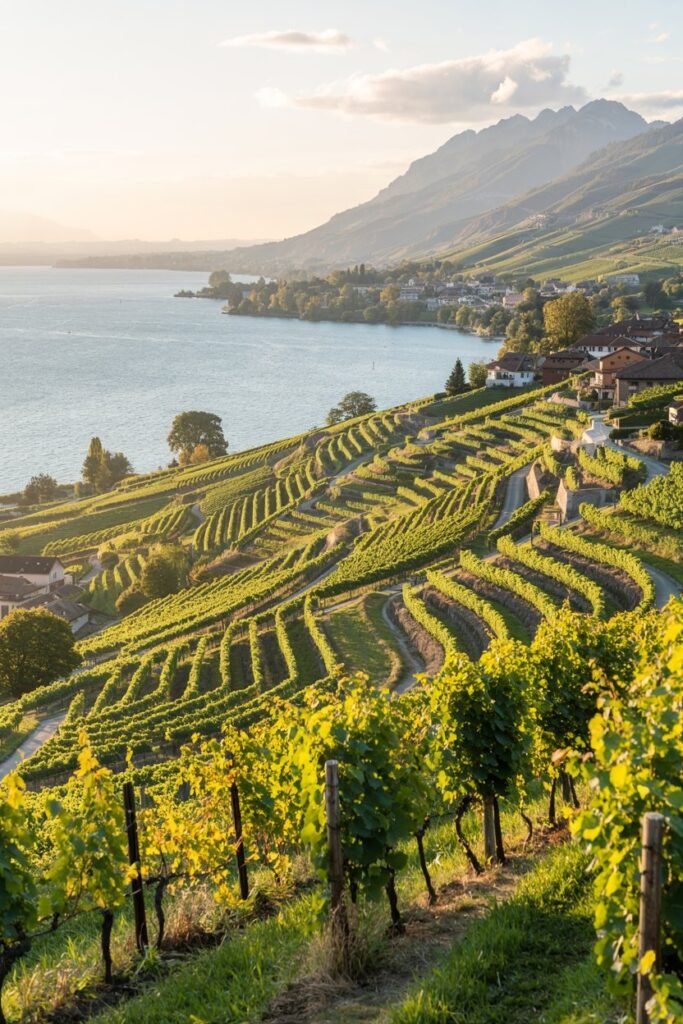
Imagine standing on a terrace overlooking Lake Geneva, sunlight sparkling on the water, with row after row of lush green vines stretching to the horizon.
That’s Lavaux, Switzerland’s wine country and one of the most enchanting UNESCO World Heritage sites I’ve ever explored.
I spent half a day here, sipping crisp white Chasselas wine and watching trains hum through the terraced hillsides. It was peaceful almost dreamlike.
Why It’s Special
Lavaux isn’t just a vineyard region it’s an experience of slow travel at its finest. You can walk or cycle through villages like Chexbres, Epesses, and Rivaz, each offering spectacular lake views.
The best part? Every winery has its own personality from family-run cellars to chic tasting lounges.
How to Get There
From Lausanne, take a quick 15-minute train to Vevey or Chexbres-Village. From there, it’s an easy scenic walk right into the heart of Lavaux’s terraced vineyards.
Must-Do Experiences
- Wine-Tasting Tours: Stop at a small estate like Domaine Bovy or Domaine Croix Duplex for local wines and conversation with winemakers.
- Lavaux Express Train: A cute mini tourist train that winds through vineyards it’s adorable and incredibly photogenic.
- Vevey and Chaplin’s World: A museum dedicated to Charlie Chaplin, set in his former home absolutely worth visiting.
What to Pack
- Furtalk Women’s Wide Brim Straw Hat – stylish protection from the sun while exploring vineyards.
- Supergoop! Glowscreen SPF 40 – gives your skin that dewy glow even under the Swiss sun.
- Fjällräven Kånken Mini Backpack – lightweight, chic, and perfect for carrying your wine souvenirs.
My Experience
I met a kind winemaker named Luc who poured me a glass of his favorite vintage and said, “Wine tastes better when you have nowhere to be.” I smiled because he was right that afternoon felt timeless.
I lingered until the last light dipped behind the Alps, and the lake mirrored the sky in soft pastels.
Pro Tip: “Use Trip.com to find wine-tasting day tours that include transport and a local guide it’s ideal if you want to sip freely without worrying about getting back.”
8. Explore Geneva and Visit the United Nations Headquarters
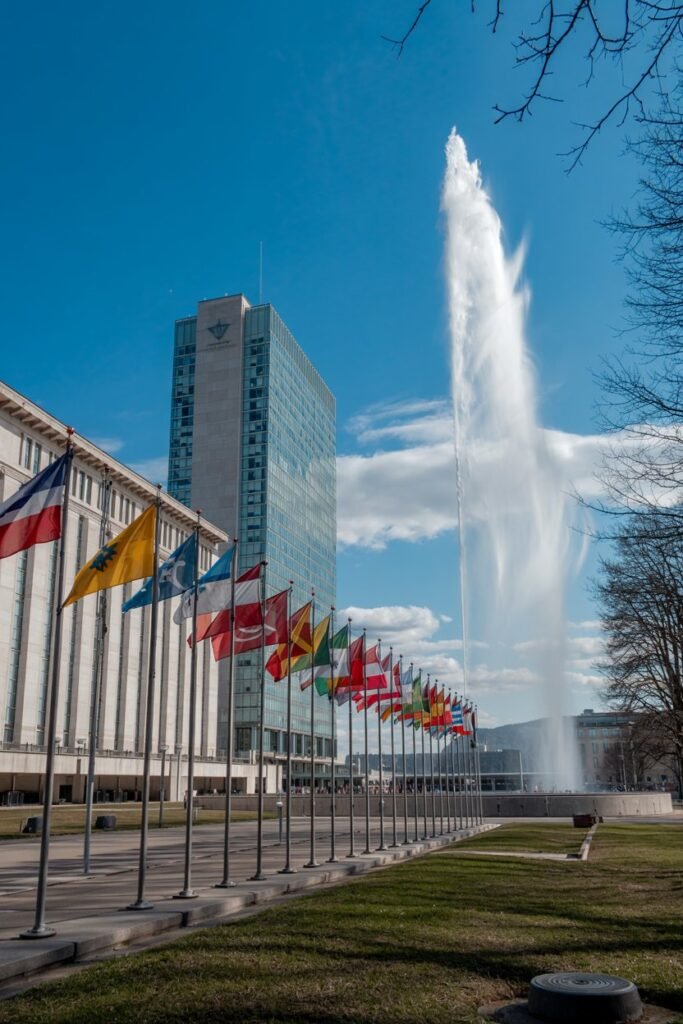
Geneva felt like a beautiful blend of diplomacy and serenity a city where history, art, and global culture come together under one elegant skyline.
It’s polished but never cold, and I instantly fell in love with its lakeside charm. Whether you’re here for a few hours or a few days, Geneva has that cosmopolitan calm that makes you feel like you belong.
Why It’s Worth Visiting
Geneva is home to world-famous landmarks from the United Nations Office to the Jet d’Eau, one of the tallest water fountains in the world.
But beyond the symbols of diplomacy lies a city full of cozy cafés, art galleries, and green parks that invite you to slow down.
How to Get There
Direct trains from Zurich or Lausanne make Geneva super accessible.
The city’s transport system is excellent, and if you stay overnight, your hotel usually gives you a free public transport pass I used it to hop from my hotel to the lakeshore with ease.
Must-Do Experiences
- Visit the United Nations Office: Guided tours run daily walking through the Assembly Hall feels surreal.
- Stroll the Old Town (Vieille Ville): Don’t miss St. Pierre Cathedral and its panoramic tower view.
- Relax by Lake Geneva: Grab a scoop of Movenpick ice cream and watch sailboats drift by it’s bliss.
What to Pack
- The North Face Women’s Resolve 2 Jacket – for unpredictable lake breezes.
- Anker Magnetic Battery Pack – slim and handy for powering your phone all day.
- LANEIGE Lip Sleeping Mask (Berry) – my travel must-have for combating dry air from Swiss winds.
My Experience
I spent my last night in Geneva sitting by the water, journaling as the Jet d’Eau shimmered in the distance. I thought about how this country manages to blend adventure, elegance, and peace so effortlessly.
I ordered a fondue-for-one at a cozy restaurant near the Rue du Rhône, and the waiter smiled, saying, “You travel like a local.” I smiled back maybe, for a moment, I was.
9. Ride the Bernina Express to Italy
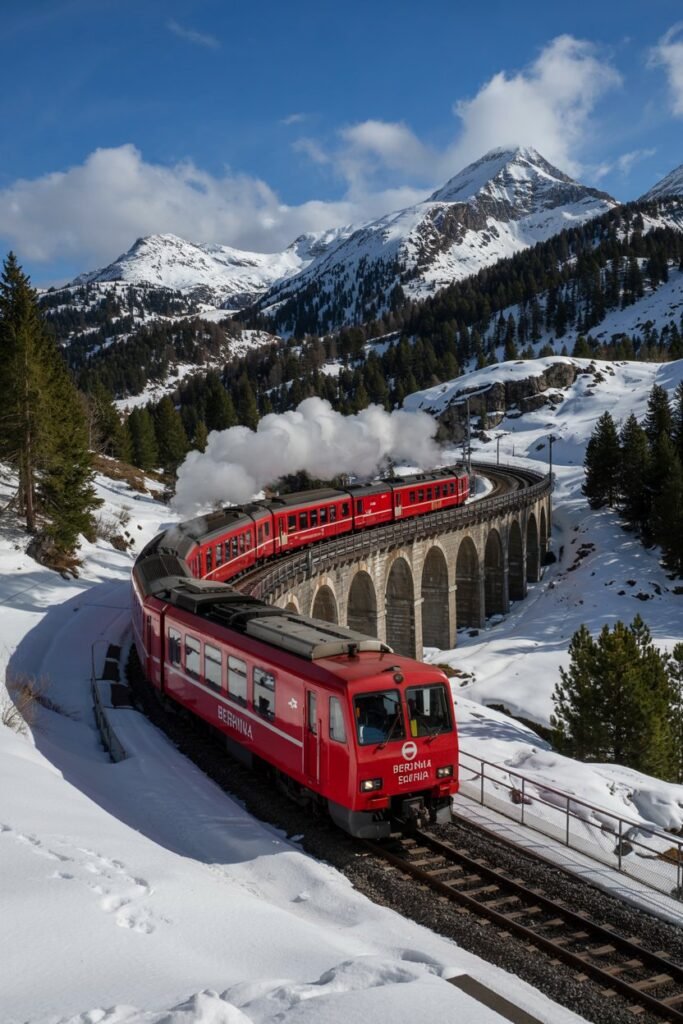
If there’s one experience in Switzerland that genuinely feels like a dream come to life, it’s riding the Bernina Express.
I still remember sitting by the panoramic window, coffee in hand, watching the landscape transform from glacial white to Italian gold from snow-covered peaks to vineyards and pastel-colored houses. It’s not just a train ride… it’s an emotional journey.
My husband and I couldn’t stop smiling every turn revealed another postcard-perfect view that looked too beautiful to be real. By the time we crossed into Tirano, Italy, it felt like we’d just traveled through four seasons in one day.
How to Get There:
The Bernina Express begins in Chur, Switzerland (around 1.5 hours from Zurich by train). You can also board at St. Moritz or Davos if those are closer to your base.
The route ends in Tirano, Italy, from where you can catch a connecting train to Milan perfect if you’re blending a Swiss and Italian itinerary.
You can easily book the Bernina Express ticket and seat reservations through Trip.com for a seamless travel experience (they often include bundle deals that cover both legs).
What to Expect on the Journey:
This UNESCO World Heritage rail line is often called “the most beautiful train ride in the world”, and honestly, it earns that title.
Here’s what you’ll see along the way:
- Landwasser Viaduct: The iconic curved bridge that seems to float above a gorge — one of Switzerland’s most photographed landmarks.
- Alp Grüm: The train stops briefly here, revealing sweeping views of glaciers and turquoise lakes.
- Ospizio Bernina: The route’s highest point at 2,253 meters (7,392 ft). You can see both the Swiss and Italian Alps in one breathtaking panorama.
- Brusio Spiral Viaduct: The train curves in a complete circle as it descends into the Italian valley — an engineering marvel that’s also incredibly scenic.
Pro tip: Sit on the right side of the train when heading south for the best mountain and lake views.
What to Pack for the Ride:
The train is climate-controlled, but you’ll want a few essentials to make your journey even more comfortable:
- Bose QuietComfort Ultra Earbuds – for soft background music while soaking in the views.
- Sony ZV-1 II Vlogging Camera – compact yet powerful for capturing high-contrast alpine light.
- Anker Prime 27,650mAh Power Bank – ensures your devices stay charged through every stop.
- Nomatic 40L Travel Backpack – roomy yet sleek enough for a scenic day trip.
- Light Wool Scarf or Shawl – it gets chilly when the train climbs to higher altitudes.
Ending in Italy – Tirano’s Sweet Surprise:
When you arrive in Tirano, you’ll instantly feel the warm shift from Swiss crispness to Italian charm.
My husband and I found a cozy café near the station called Trattoria Valtellinese, where we indulged in pizzoccheri (a buckwheat pasta local to the region) with a glass of red wine.
It was the perfect end to the most magical ride of our trip.
From Tirano, you can take a train to Milan (about 2.5 hours) or spend a night in town to enjoy the slower Italian rhythm.
My Experience:
Somewhere between the glaciers and the green valleys, I realized how powerful slow travel can be.
The Bernina Express gives you time to breathe, reflect, and truly appreciate the art of the journey not just the destination.
It’s one of those experiences that rekindles your sense of wonder, especially if you’re traveling with someone you love.
10. Explore the Capital City, Bern
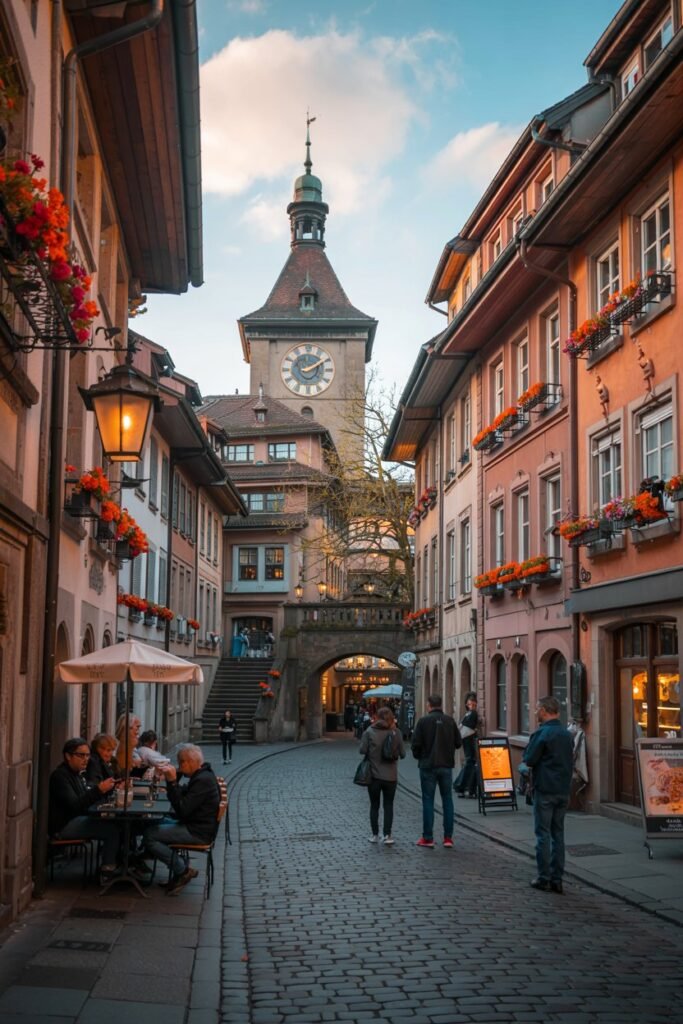
I’ll be honest — I didn’t expect to fall so hard for Bern. Everyone talks about Zurich’s cosmopolitan charm or Lucerne’s lake views, but Bern. Bern feels like stepping into a storybook you never want to end.
As the capital of Switzerland, it’s elegant but not rushed, historic yet effortlessly cool.
The cobblestoned streets, pastel-colored buildings, and gentle flow of the Aare River create this calm, dreamy energy that makes you slow down and just breathe.
I remember walking hand in hand with my husband under the arcaded Old Town, watching the golden sunlight hit the sandstone facades. A violinist played near the Zytglogge Clock Tower, and for a moment, it felt like time had truly stopped.
What Makes Bern So Special
Bern is a UNESCO World Heritage city, and once you wander through its medieval lanes, you’ll see why. There’s this perfect balance between history and livability think Renaissance-era fountains alongside trendy boutiques, local cheese shops beside art galleries.
It’s also one of the cleanest and most walkable cities I’ve ever visited. The entire Old Town sits gracefully on a river bend, offering views that will make your heart skip.
Must-Do Experiences in Bern
1. See the Zytglogge Clock Tower
This 13th-century astronomical clock doesn’t just tell time it performs it. Every hour, tiny mechanical figures dance to chimes in a display that’s pure medieval magic. Make sure to join a guided clock tower tour to see the intricate gears up close it’s absolutely fascinating.
2. Visit the Bear Park (BärenPark)
Bern’s symbol is the bear, and you’ll find them here in a spacious, riverside enclosure that’s a joy to visit. It’s especially sweet if you’re traveling as a couple there’s something heartwarming about watching the bears roam peacefully while sharing a quiet picnic nearby.
3. Explore the Kunstmuseum
This fine arts museum is a must for anyone who loves culture and creativity. From Picasso to Swiss masters like Paul Klee, it’s a reminder that Bern isn’t just beautiful it’s deeply artistic.
4. Stroll Across the Kirchenfeld Bridge
This bridge connects the Old Town with the newer part of Bern and offers one of the most photogenic views of the city, especially during sunset. Bring your camera the soft golden light reflecting off the Aare River is just unforgettable.
Where to Eat & Relax
- Kornhauskeller: An underground restaurant in a former grain cellar, featuring vaulted ceilings and local dishes an absolute must for a romantic dinner.
- Adriano’s Bar & Café: Perfect for an afternoon espresso and people-watching.
- Rosengarten (Rose Garden): This hilltop park gives the best panoramic view of Bern especially during golden hour.
Amazon-Ready Travel Essentials for Exploring Bern
When I think of my time in Bern, I remember long walks, cozy cafés, and that sweet sense of being prepared for anything. Here are a few must-haves I carried and absolutely loved:
- Canon PowerShot G7 X Mark III – compact, lightweight, and perfect for capturing Bern’s timeless architecture.
- Travelon Anti-Theft Classic Crossbody Bag – stylish yet secure for wandering the Old Town.
- Merrell Moab 3 Waterproof Hiking Shoes – ideal for exploring both the city and nearby river trails comfortably.
- JBL Go 4 Portable Mini Speaker – I used it for soft music while relaxing at the Rose Garden during sunset.
- Bose Sleepbuds II – if you’re staying near the city center and want uninterrupted rest.
Where to Stay in Bern
If you’re staying overnight, I recommend Hotel Bellevue Palace, a 5-star property right in the heart of the city, where classic charm meets modern comfort. The terrace views overlooking the Alps are pure romance.
11. Indulge in Swiss Chocolate and Cheese
If I’m being honest, my love affair with Switzerland began with a single piece of chocolate in Lucerne. I was standing by Lake Lucerne, snowflakes melting softly into my coffee cup, when I took my first bite of Läderach milk chocolate and oh my goodness… it was like the world slowed down for a second.
There’s something deeply magical about how the Swiss turn simple ingredients milk, cocoa, and precision into something so utterly divine. Whether it’s chocolate, cheese, or fondue, every bite here tells a story of care, craftsmanship, and love for tradition.
Switzerland is not just about scenery it’s about flavor. And once you’ve tasted your way through this country, you’ll understand why food here feels like a love letter written in cream and cocoa.
1. Visit the Gruyères Cheese Factory
Nestled in a fairytale-like village surrounded by rolling green hills, La Maison du Gruyère is where cheese dreams come true. You can actually watch master cheesemakers at work, stirring enormous copper vats as the scent of warm milk fills the air.
Take a self-guided tour with audio narration, and don’t miss the tasting room where you can sample cheeses aged at 6, 8, and 12 months the flavor difference is stunning.
Nearby Tip: Right across the cobblestoned square, visit the Gruyères Castle it feels like stepping into a medieval postcard. And if you’re a bit adventurous, pop into the HR Giger Museum (yes, the artist behind the Alien movie).
2. Take a Chocolate-Making Tour at Maison Cailler
In the small town of Broc, Maison Cailler offers one of the most interactive and enjoyable chocolate tours I’ve ever experienced.
You’ll wander through story-themed rooms filled with the smell of roasted cocoa, learn about chocolate’s history, and the best part make your own pralines at the end.
It’s a full sensory journey that makes you feel like a kid again, and honestly, I may or may not have left with three boxes “for friends” (they didn’t all make it home).
What to Pack:
If you plan to bring chocolates home, pack a Thermal Insulated Travel Pouch it keeps delicate sweets from melting on trains or flights. I also recommend a compact travel tote like the Longchamp Le Pliage Original, perfect for carrying your sweet souvenirs without losing style.
3. Enjoy a Traditional Swiss Fondue
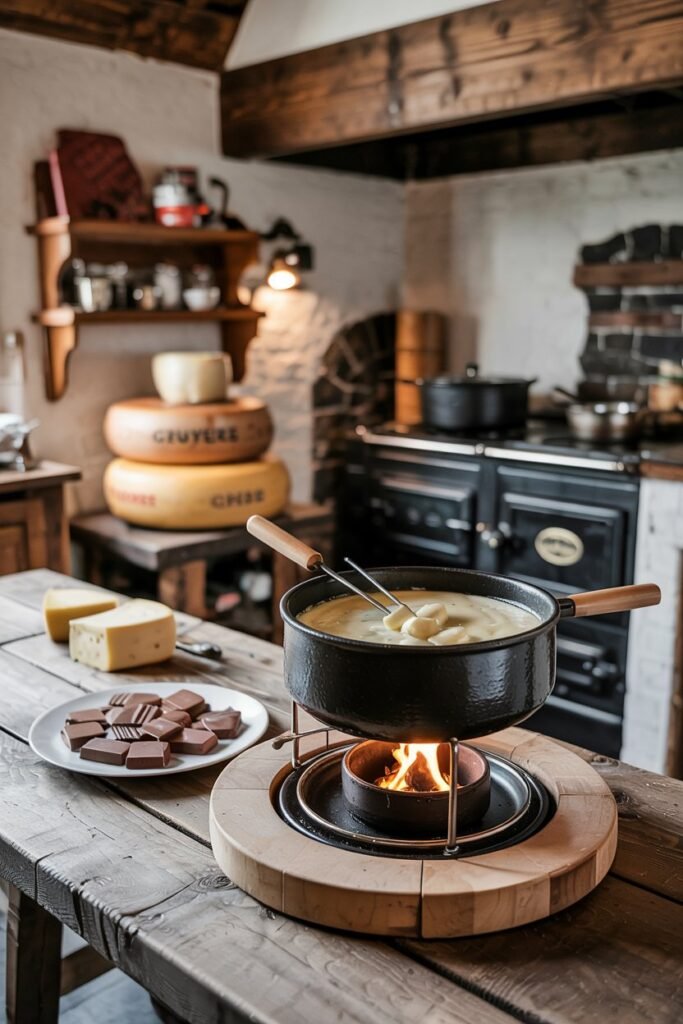
You can’t say you’ve truly been to Switzerland until you’ve shared a pot of gooey, bubbling cheese fondue in a cozy alpine restaurant. My favorite was at Restaurant Swiss Chuchi in Zurich’s Old Town warm wooden interiors, flickering candles, and the rich scent of melted cheese filling the air.
We dipped chunks of crusty bread and soft potatoes into a mix of Gruyère and Emmental — it was hearty, authentic, and honestly one of the most comforting meals of my life.
Traveler Tip:
Order a glass of dry white wine to cut through the richness the locals swear by it. And if you’re traveling solo, don’t hesitate to order fondue for one — they’ll gladly make it smaller, and it feels like such a cozy self-care meal.
Amazon-Ready Travel Essentials for Swiss Food Lovers
These are the real lifesavers I packed that made my foodie adventures smoother, especially with chocolates and cheeses that need care:
- Nomader Collapsible Water Bottle – great for staying hydrated during tastings and train rides.
- THERMOS Stainless King Food Jar – keeps leftover fondue or soup warm for hours.
- Anker Nano II 65W GaN Charger – essential for keeping phones and cameras powered during long day trips.
- TUMI Voyageur Just In Case Tote – folds flat but expands for all those chocolate boxes you “accidentally” buy.
- Sony ZV-1 II Compact Camera – perfect for capturing those irresistible dessert photos in low light.
Where to Stay Nearby
If you’re planning to explore the Gruyères–Broc area, I recommend staying in Montreux or Vevey both are stunning lakeside towns with easy connections to all major cheese and chocolate spots.
My stay at Hotel des Trois Couronnes in Vevey was pure indulgence spa views over Lake Geneva, a Michelin-starred restaurant, and morning walks through vineyards that felt straight out of a painting.
12. Hike in the Lauterbrunnen Valley
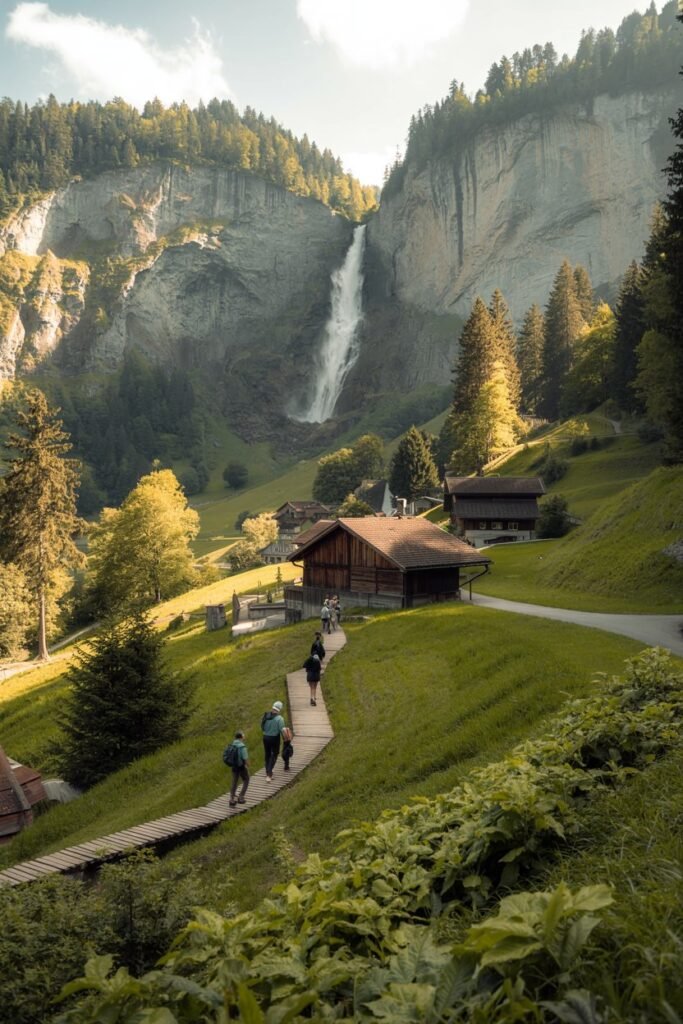
Lauterbrunnen Valley is often described as “the valley of 72 waterfalls” — and for good reason.
Nestled between towering cliffs and lush alpine meadows, this fairytale destination in the Bernese Oberland is one of the most scenic spots in all of Switzerland.
Hiking here is like walking through a living postcard, with snow-capped peaks, cow-dotted pastures, and charming wooden chalets around every corner.
Why You’ll Love It
Lauterbrunnen offers an unforgettable blend of natural beauty and tranquility.
The valley stretches for about 4 km, and the hike takes you past some of Switzerland’s most iconic landscapes including the breathtaking Staubbach Falls, which cascades nearly 300 meters from a sheer cliff face, and Trümmelbach Falls, a series of powerful glacier-fed waterfalls hidden inside a mountain.
Unlike many Alpine hikes, Lauterbrunnen’s main trail is gentle and accessible, making it perfect for all levels of hikers. It’s also incredibly photogenic every turn reveals another view that looks like it belongs on a postcard.
Recommended Hiking Route
Lauterbrunnen – Trümmelbach Falls – Stechelberg (and back)
- Distance: 6.2 miles / 10 km (round trip)
- Duration: 3 to 4 hours (easy pace)
- Trail Type: Mostly flat valley trail, well-marked and easy to follow
- Difficulty: Easy to moderate
Start your hike from Lauterbrunnen village. Follow the clearly marked path along the valley floor you’ll pass Staubbach Falls, visible almost immediately, before continuing toward Trümmelbach Falls.
Take a detour inside the mountain to witness the raw power of glacial meltwater roaring through ten cascading tunnels.
From there, continue to Stechelberg, a small mountain hamlet surrounded by meadows and alpine peaks. Stop for a snack or lunch before heading back or hopping on a local bus to return to Lauterbrunnen.
Alternative Routes
If you want more challenge and elevation, consider these routes:
- Lauterbrunnen to Wengen: A 3-hour uphill trek offering panoramic valley views.
- Lauterbrunnen to Mürren via Grütschalp: Take the cable car to Grütschalp, then hike along a scenic ridge trail with breathtaking vistas of the Eiger, Mönch, and Jungfrau mountains.
What to Pack
- Comfortable hiking shoes (the trail can be damp near waterfalls)
- A light rain jacket (weather in the Alps can change quickly)
- Refillable water bottle
- Snacks or a picnic lunch
- Camera or smartphone you’ll take dozens of photos!
Where to Eat
- Hotel Oberland Restaurant (Lauterbrunnen): Cozy spot serving Swiss classics like rösti and cheese fondue.
- Stechelberg Hotel Restaurant: Great stop at the end of the trail, perfect for enjoying apple strudel or beer with a mountain view.
- Base Café (Lauterbrunnen): A hiker favorite for coffee and fresh pastries before you start your day.
Where to Stay
- Hotel Silberhorn – Mid-range, scenic views, and right next to the train station.
- Camping Jungfrau – Budget-friendly, surrounded by waterfalls great for outdoor lovers.
- Hotel Staubbach – Simple yet charming, offering front-row views of the iconic Staubbach Falls.
Estimated Cost
| Expense | Estimated Price |
|---|---|
| Trümmelbach Falls Entry | CHF 14 |
| Meals (per day) | CHF 25–40 |
| Accommodation (mid-range) | CHF 120–180 per night |
| Bus back from Stechelberg | CHF 3–4 |
Best Time to Visit
The best hiking conditions are between May and October, when the trails are clear and waterfalls are at their fullest due to melting snow.
In early summer, wildflowers bloom across the meadows, creating a truly magical atmosphere.