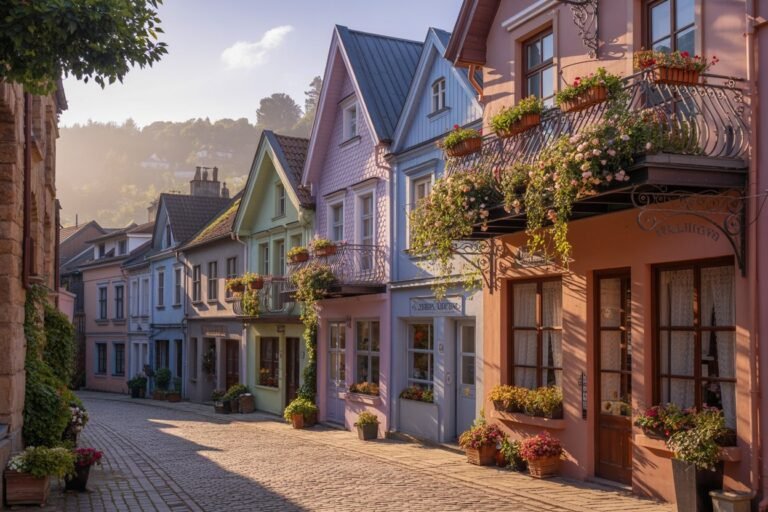


September is a magical month for leaf-peepers in the United States: high-elevation aspens and larches begin to flash gold, alpine meadows shift to warm tones, and early-season chill sharpens mountain light.
If you’re planning a September trip to chase color, this guide gives you a practical, deeply detailed playbook for 10 top places where September reliably delivers show-stopping fall foliage.
For each destination you’ll get:
- When to go (timing explained, with elevation details)
- Exact spots, drives, and hikes that deliver the best color
- Two sample itineraries (day trip + overnight)
- Where to stay (specific hotels/lodges with sample prices)
- Where to eat (recommended restaurants)
- Photography tips (composition, best light, gear)
- Practical logistics, accessibility, and safety notes
- Cost estimates and packing checklist
- Local events and conservation/respectful travel tips
I’ll start with a quick primer on why September is special, then dive into the ten destinations (each with full practical detail).
At the end: an overall planning checklist, routes to combine multiple spots, and a F.A.Q.
Why September? The science and strategy (short primer)
Leaf color is driven by species, elevation, latitude, soil moisture, and crucially seasonal temperatures (cool nights, sunny days).
In the western mountains and high latitudes, trees at elevation (aspens, subalpine larches, cottonwoods) often turn earlier than low-elevation hardwood forests in the East.
That’s why Colorado, the High Sierra, the Northern Rockies, and alpine zones of Alaska, Montana, and Washington produce brilliant September color long before much of New England reaches its peak.
Recent reporting also shows seasonal variability drought and warm nights can shift timing earlier or reduce vibrancy so plan with a small buffer window and follow local color reports.
1) Aspen & Maroon Bells, Colorado the classic September gold
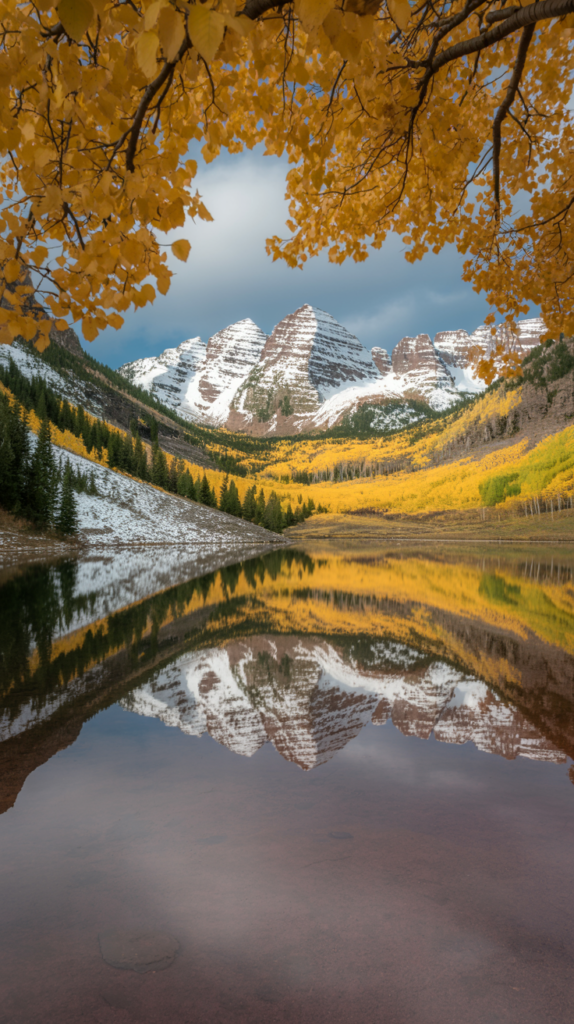
Why go in September: Aspen’s namesake tree the quaking aspen often peaks in the third and fourth weeks of September in the Aspen valley and surrounding higher elevations.
The turning is dramatic: entire mountainsides become solid gold.
Recent local guides identify late September as a consistent sweet spot for peak color at Maroon Bells and Aspen area groves.
Best spots & micro-locations
- Maroon Lake / Maroon Bells Scenic Area – classic reflection shots of the twin peaks framed by golden aspens. Arrive at sunrise to avoid crowds and capture glassy reflections.
- Independence Pass (Highway 82 east of Aspen) — a high-elevation drive with patches of aspens and open tundra.
- Ashcroft Ghost Town — quiet groves and dramatic mountain backdrops for quieter photos.
- Smuggler Mountain Road & Conundrum Creek Trail — more remote hikes with extensive aspen stands.
Hikes & drives (short)
- Maroon Lake Scenic Trail — easy 1-mile loop, outstanding at sunrise.
- Crater Lake Trail — moderate 3.6 miles roundtrip for lake reflections.
- Independence Pass viewpoints — drive and stop at pullouts.
2 sample itineraries
Day trip (from Aspen): Early shuttle to Maroon Bells (or arrive by reservation), sunrise at the lake, short hikes and photography, lunch in Aspen, afternoon drive up Independence Pass, dinner at a local tavern.
Overnight (2 nights): Night 1 in Aspen (see hotels below), day 2 early shuttle to Maroon Bells, afternoon Conundrum Hot Springs hike (overnight if you want a longer trek).
Day 3 optional scenic drive to Glenwood Springs or backcountry exploration.
Where to stay (examples & sample prices)
- The Little Nell, Aspen — luxury, steps from gondola; sample rates in September: $650–$1,200/night (varies by room and events).
- Limelight Hotel Aspen — modern mid-luxury; $250–$450/night.
- Aspen Meadows Resort — higher-end, $300–$600/night.
(Tip: book early—fall is busy, and many properties host festivals and events.)
Where to eat
- Matsuhisa Aspen — upscale sushi.
- Hickory House — classic Colorado comfort + local beers.
- Paradise Bakery or Poppycock’s for coffee and quick bites.
Photo tips
- Use a polarizer to reduce glare on water and deepen skies; shoot after sunrise or before sunset (golden hour). Composition: use the shoreline or foreground boulders to create reflection symmetry. A telephoto (70–200mm) compresses aspen groves into texture; wide-angle (16–35mm) captures the sweeping scale.
Practical logistics & cautions
- Maroon Bells access: check shuttle/reservation rules private vehicles may be restricted during peak leaf season. Crowds can be heavy; aim for weekday or early/late times. Altitude: Aspen sits ~8,000 ft expect cooler nights and possible snow at higher passes.
2) Million Dollar Highway / Ouray & San Juan Mountains, Colorado dramatic canyon color
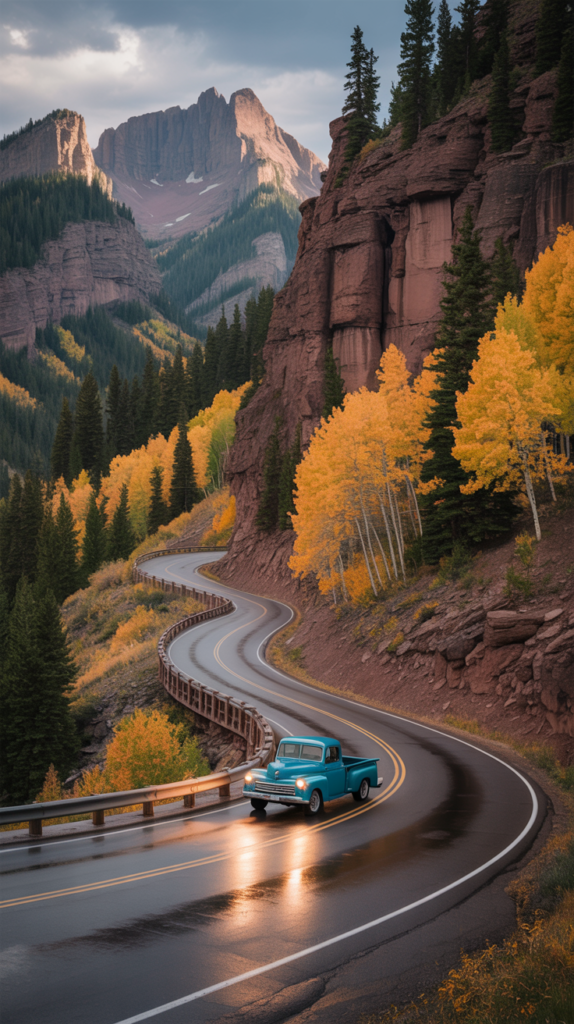
Why September: The San Juan Mountains and the Million Dollar Highway (US-550) showcase aspens cascading down steep slopes and vivid contrasts with red-brown cliffs.
Mid-to-late September is typically the high-color window for this area.
Best spots & viewpoints
- Ridgeline pullouts along Million Dollar Highway (Silverton ↔ Ouray) — panoramic overlooks with aspen-filled basins.
- Engineer Pass / Cinnamon Pass (off-road routes) — high-elevation aspens and alpine meadows (4×4 required).
- Box Canyon Falls Park (Ouray) — close, dramatic canyon setting with riparian color.
Hikes & drives
- San Juan Skyway loop — classic scenic loop (Silverton, Ouray, Telluride).
- Yankee Boy Basin — a short drive from Ouray offers wide aspen stands and waterfalls.
- Engineer/Mineral Belt Trails — local trails around Ouray with color lower in elevation.
Sample itinerary
2-day trip: Base in Ouray. Day 1 drive south on Million Dollar Highway to Silverton and back, stopping at pullouts and Yankee Boy Basin.
Day 2 explore Telluride (if weather permits), ride the gondola for views over aspens.
Lodging & food
- Ouray Alpine Lodge — mid-range ($150–$300/night).
- The Victorian Inn (Ouray) — historic charm.
- Tacos & beer stops in Silverton or Ouray for casual meals; Telluride for upscale options (Sundance, La Marmotte).
Photography & safety notes
- Bring layers — temperatures swing heavily at elevation. Drive carefully; Highway 550 is narrow with steep drop-offs. Plan fuel and cell coverage is spotty.
3) Rocky Mountain National Park & Trail Ridge Road, Colorado alpine contrast
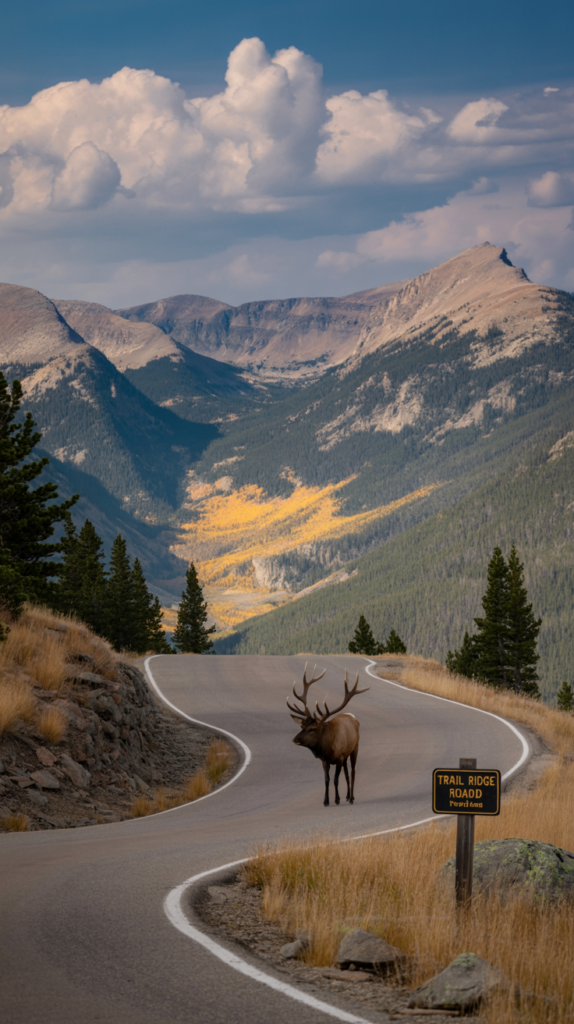
Why September: RMNP’s high elevations move early into fall.
Trail Ridge Road climbs above treeline and offers stark contrasts golden aspen patches against tundra and early snow.
Early-mid September often gives dramatic color with fewer crowds than mid-October.
Best stops
- Trail Ridge Road overlooks (Forest Canyon Overlook, Many Parks Curve) — wide panoramas of aspen pockets.
- Bear Lake corridor — accessible walks with color at moderate elevations.
- Guanella Pass (nearby) — excellent scenic drives and waterfall spots.
Hikes
- Bear Lake Loop — easy; beautiful morning light reflections.
- Alpine Ridge Trail / Ute Trail — higher views if you want more strenuous outings.
Itinerary (1–3 days)
- One day: Drive Trail Ridge Road with planned stops; photo sessions at sunrise at an overlook.
- Two days: Add an overnight in Estes Park, sunrise wildlife viewing (elk rut season begins in September), and a second day on backcountry trails.
Stay & dining
- The Stanley Hotel (Estes Park) — historic, sample rates $200–$350/night in shoulder season.
- Local inns and cabins for quieter experiences.
Practicalities
- Trail Ridge Road may close for snow at any time later in the season—check NPS alerts. Altitude: Trail Ridge Road exceeds 12,000 ft; hydration and acclimation matter.
4) Glacier National Park & Larch Valley, Montana golden subalpine larches
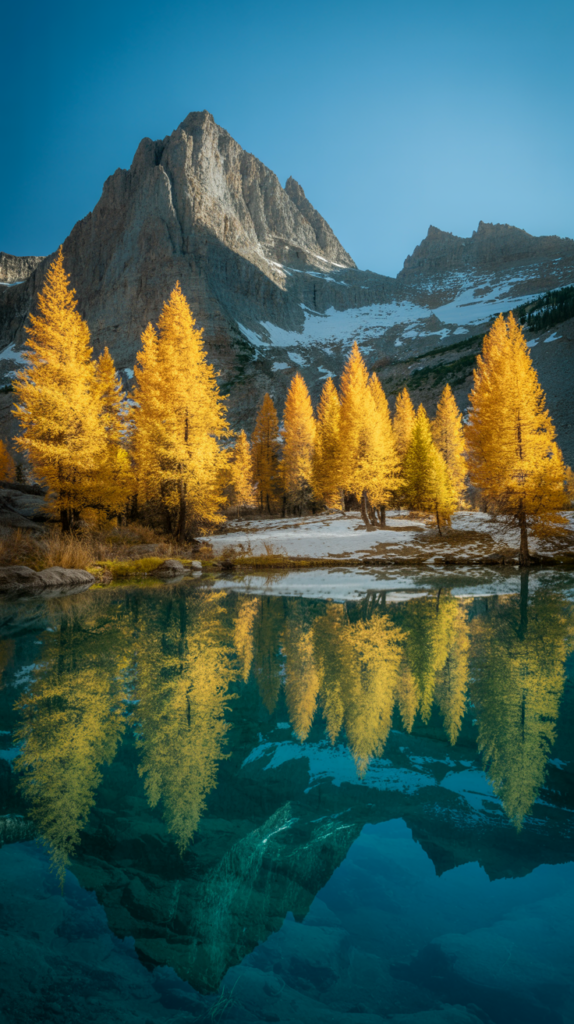
Why September: One of the most dramatic September spectacles: the subalpine larch (a conifer that turns brilliant gold) peaks in late September in many Glacier locations.
Larch season is short and incredibly photogenic gold needles against rugged peaks and early snow. Expect late-September to early-October peaks depending on year.
Best spots
- Larch Valley (Avenue from Moraine Lake in Canadian Rockies—if you cross the border) — (Note: many “Larch Valley” references are Canadian; in U.S. Glacier, look for larch stands along roads and high lakes on the west side.)
- High-elevation camps and lakes near Logan Pass and the Going-to-the-Sun Road — pockets of larch and golden shrubs.
Hikes & routes
- Highline Trail (partial) — alpine meadows and possible larch pockets as elevation changes.
- Exploring side trails off Going-to-the-Sun Road — check local ranger advice for best larch spots.
Itineraries
- 2–4 day Glacier trip: day of Going-to-the-Sun Road at slow pace, photography stops, then a hike to larch pockets and lakes. Add a boat shuttle (where available) to reach remote lakes.
Lodging & dining
- Many Glacier Hotel (historic) — sample rates vary $150–$400/night depending on room & season.
- Small lodges and cabins in West Glacier / East Glacier.
Photo tips & caution
- Larch season is brief—check park updates and local tracker sites. Expect sudden weather swings and early snow in late September. Pack crampons if venturing high.
5) North Cascades & Mount Baker region, Washington early alpine golds
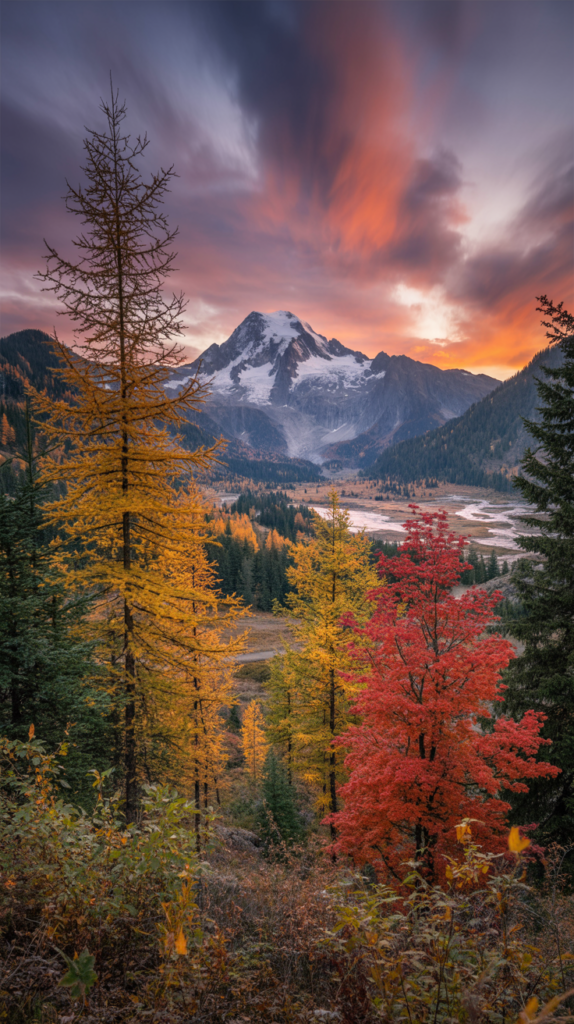
Why September: Western larch and subalpine larch in the North Cascades begin to turn in late September, offering golden needles against snow-dusted peaks.
Lower-elevation maples and cottonwoods also show color as days cool.
The Cascade Loop and Mount Baker region are classic and relatively crowd-free September options.
Best stops
- North Cascades Highway (SR 20) — multiple pullouts with views into valleys full of color.
- Artist Point & Mount Baker area — early-season larch in higher basins.
- Cascade Loop scenic byway — route with multiple stops (e.g., Diablo Lake viewpoints).
Hikes & drives
- Blue Lake Trail (near North Cascades) — moderate trail with alpine-color payoff.
- Hemlock Trail and Maple Glen (lower elevation) — easy walks.
Itinerary (2–3 days)
- Base in Winthrop or Marblemount. Drive SR-20 across the loop, stop for 2–3 moderate hikes, and photograph evening light over the valley.
Lodging & food
- Winthrop lodging (cabins and inns) — moderate pricing ($120–$220/night).
- Local pubs and bakeries for hearty meals.
Practicalities
- Rain is possible in early fall—pack waterproof layers. Trail conditions may become slick after early snow.
6) Denali National Park, Alaska tundra and birch golds in September
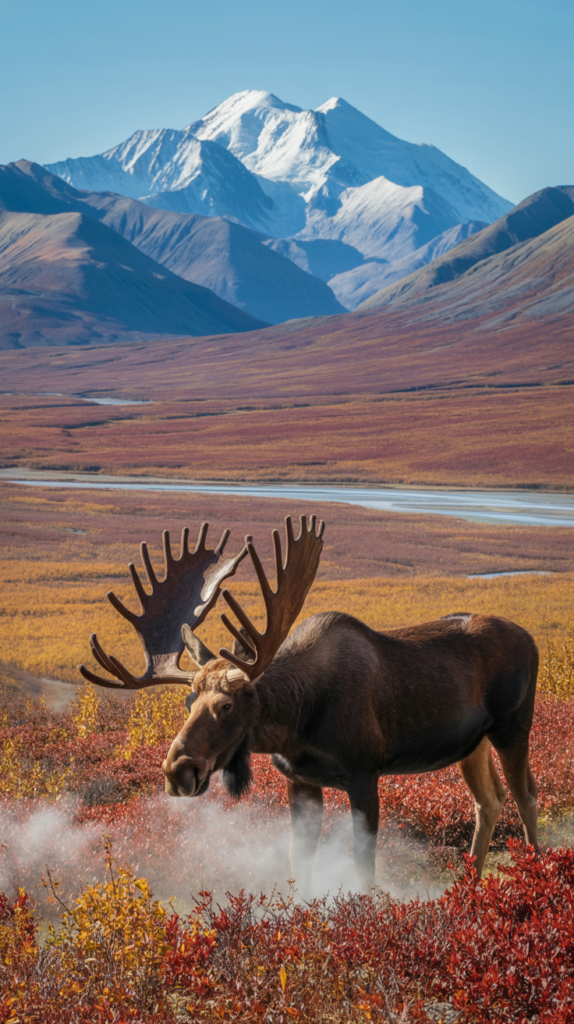
Why September: Denali’s fall is tundra-driven: low shrubs, dwarf birch, and cottongrass create a warm mosaic.
The park’s shoulder-season begins mid-September; this window frequently offers spectacular color before winter snow blocks access.
Alaska’s seasonal schedule means September can be wonderfully quiet and rich in color.
Check NPS season definitions Denali often defines fall as mid-September onward.
Best experiences
- Park Road bus or private tours to interior viewpoints; look for orange-gold tundra across broad plains with the mountain backdrop.
- Polychrome Pass and Toklat River corridor dramatic color zones.
Itinerary
- 3–5 day: Fairbanks or Anchorage arrival → Denali National Park (base in nearby lodges). Use park transit buses (if operating) or guided tours to reach prime color zones.
Lodging & food
- Denali Park Village, Camp Denali, and local lodges near entrance with mid-range pricing.
- Sample meals: local salmon dishes; hearty stews perfect for cool September evenings.
Cautions
- Wildlife safety (bears, moose) and early closure or limited bus services later in September—confirm schedules before planning.
7) Lake Tahoe & the High Sierra alpine aspens and lake reflections
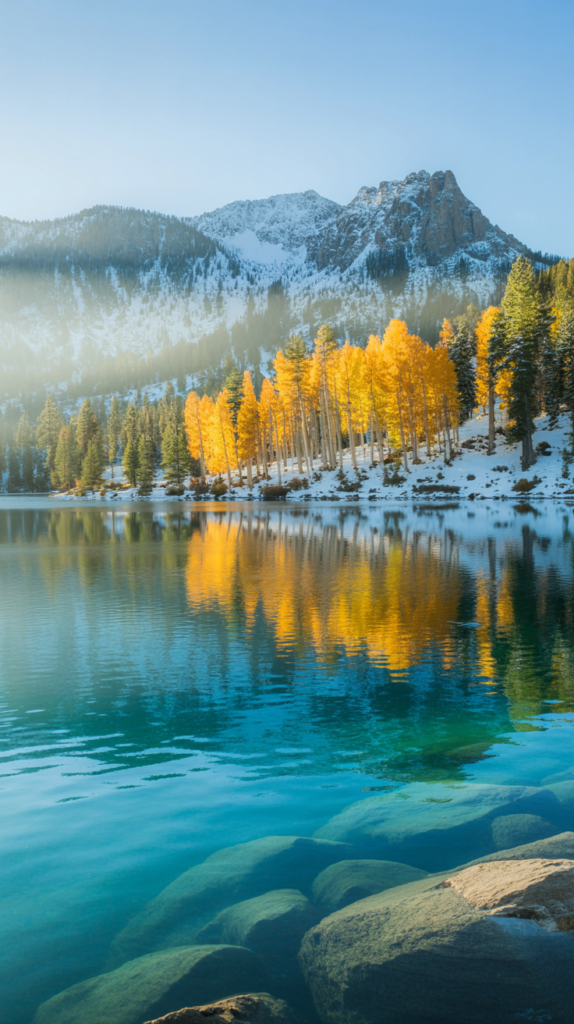
Why September: Higher-elevation aspens and cottonwoods around Lake Tahoe and the Sierra crest often begin to glow in mid-to-late September particularly after cooler nights.
The combination of golden trees and turquoise alpine lakes is striking.
Best spots
- Emerald Bay & Fallen Leaf Lake — reflections of aspens on still mornings.
- Desolation Wilderness trails (e.g., Aloha Lake) — remote alpine aspens and granite ridgelines.
- Sierra high-country roads (e.g., Sonora Pass) — elevation-driven early color.
Itinerary
- 3-day loop: Tahoe’s west shore at sunrise, scenic hikes in Desolation Wilderness, late-afternoon drive up to higher passes for sundown photography.
Lodging & food
- South Lake Tahoe hotels (range from $120–$400/night) or cabins for quiet options.
- Mountain bistros and lakeside cafes offer seasonal menus.
Practicalities
- Permits required for overnight in some wilderness zones (Desolation Wilderness quotas). Watch for early-season storms and sudden temperature drops.
8) Utah’s Wasatch & Cottonwood Canyons (Big Cottonwood, Albion Basin) mountain colors near Salt Lake City
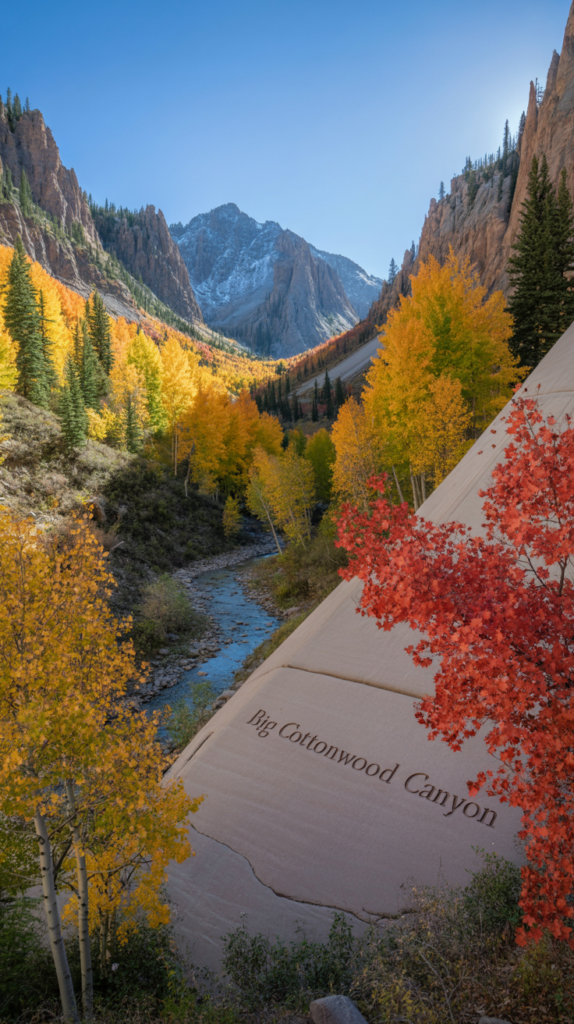
Why September: Utah’s ski canyons hit their flash earlier than lower valleys: higher-elevation aspens and maples often peak in late September into early October, making late September a reliable time to catch early color near Salt Lake City and Park City.
Visits are easy from Salt Lake City (short drive to canyon trailheads).
Top spots
- Albion Basin (Alta/Snowbird area) — extensive aspen groves with mountain backdrops.
- Big Cottonwood Canyon (Silver Lake, Guardsman Pass) — accessible boardwalks and scenic drives.
- American Fork Canyon & Alpine Loop — multi-canyon drives with varied color.
Hikes & drives
- Red Pine Lake Trail — a mid-distance hike with aspen groves (colors often mid-late September).
- Guardsman Pass — drive or bike for sweeping vistas and color.
Itinerary
- Day trip from Salt Lake City: drive Big Cottonwood at sunrise, short hikes, lunch in Solitude or Alta, afternoon on Guardsman Pass, dinner in Park City.
Lodging & food
- Alta lodges and Park City hotels (Park City rates often higher during events).
- Local brewpubs and mountain lodges with hearty fare.
9) Taos & the Enchanted Circle, New Mexico Southwest aspens in high country
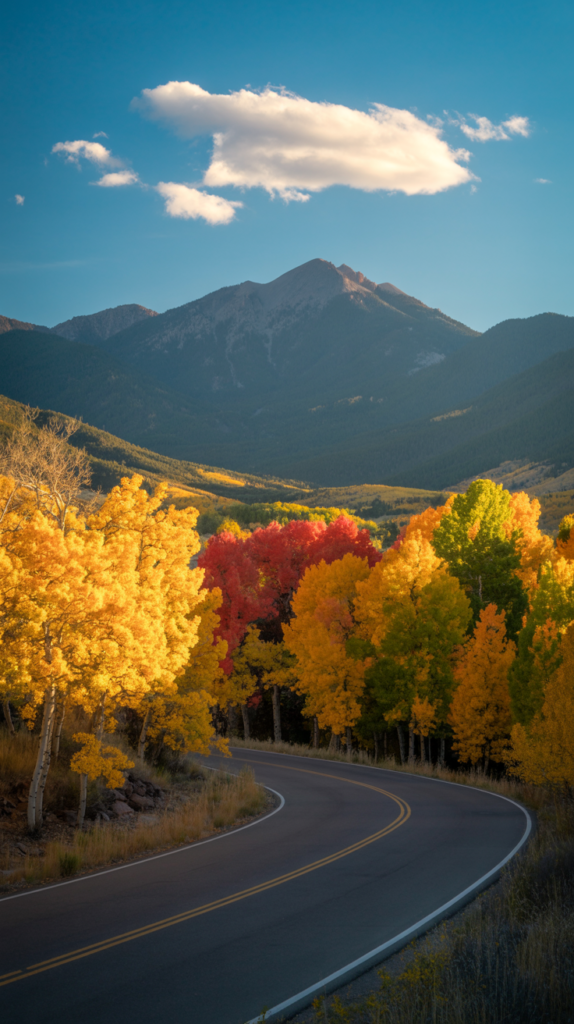
Why September: The Sangre de Cristo and Carson National Forests feature aspen groves that can turn as early as late September at higher elevations (Taos Ski Valley, Wheeler Peak).
The Southwest’s dry climate often makes peak color crisp and luminous.
Best routes
- Enchanted Circle Scenic Byway (Taos → Angel Fire → Red River → Questa) — loop with many aspen pockets.
- Taos Ski Valley trails (Williams Lake) for higher-elevation views.
Itineraries
- 2–3 day: base in Taos; one day around the Enchanted Circle, one day hiking Taos Ski Valley trails (sunrise at Williams Lake or Wheeler Peak). Sample lodging: Taos inns and boutique hotels.
Lodging & food
- El Monte Sagrado or smaller B&Bs in Taos town center ($120–$300/night). Try local New Mexican cuisine—enchiladas, green chile stews.
Practicalities
- Be prepared for rapid temp changes; some roads to alpine trailheads may require high-clearance vehicles.
10) Columbia River Gorge, Oregon — riparian reds & golds
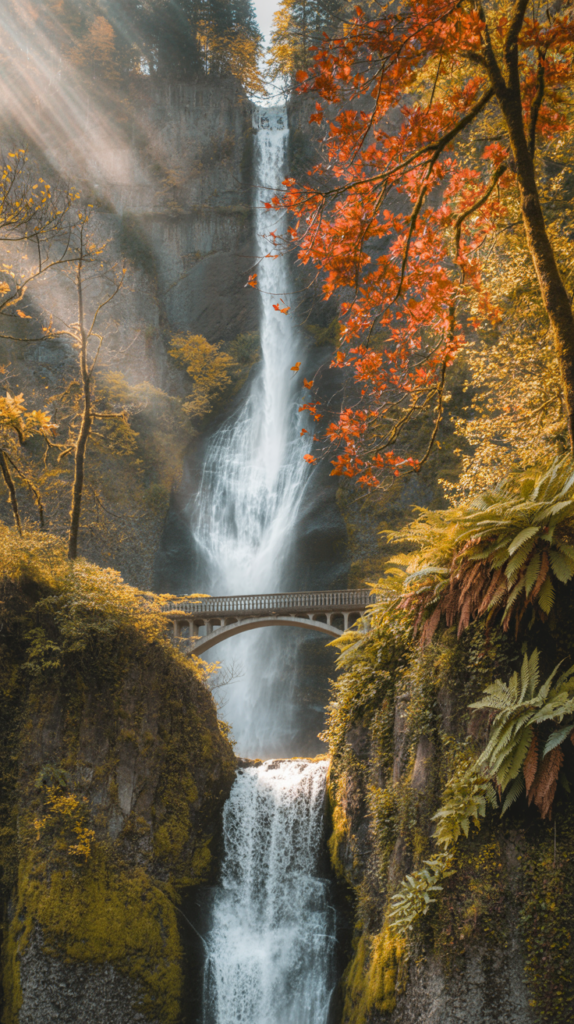
Why September: The Gorge’s elevation and riparian mix often start showing color in mid-late September, though peak for low-elevation maples and valley cottonwoods is often mid-October.
Still, September offers early golden tone and fewer crowds.
Spots
- Multnomah Falls corridor — classic waterfall + maples.
- Hood River / Rowena Crest — orchards and cottonwoods turn early and offer layered color.
- Eagle Creek and Indian Henry’s — hikes with riparian color.
Itinerary
- Day trip from Portland: Multnomah Falls at dawn, roadside stops along the Historic Columbia River Highway, lunch in Hood River with views of orchards and Mount Hood.
Lodging & food
- Hood River inns and B&Bs (rates vary). Gorge cideries and farm-to-table restaurants are highlights.
Practical planning: timing, travel logistics, and cost estimates
Timing tips (practical)
- Window planning: Aim for a 7–10 day window around the expected peak for each region (aspens and larches peak faster than mixed hardwood forests). Use local park websites and local tourism offices for real-time updates. For Colorado high alpine aspens, plan for mid-to-late September; for Glacier larches, late September; Denali mid-September onward.
Cost ballpark (per person, approximate)
- Road-trip (3–5 days regional, mid-range): $600–$1,200 (fuel, mid-range lodging, meals, park fees).
- Fly + lodge (3–5 days): $1,200–$2,500+ (airfare, rental car, high-end lodging such as Aspen or Denali lodges).
- Guided photography tours / off-road trips: $150–$600 per person per day.
Packing checklist for September leaf-peeping
- Layered clothing (base layer + insulating mid-layer + waterproof shell)
- Daypack, water, snacks, headlamp for early-morning starts
- Sturdy hiking shoes, trekking poles for steep trails
- Camera gear: tripod, polarizer, wide and tele lenses, extra batteries (cold reduces battery life)
- Bear spray where wildlife is present (Denali, Glacier, parts of Colorado/Montana)
- Tire chains (if traveling to very high passes where early snow is possible)
Photography masterclass (brief but actionable)
- Golden hour: dawn and dusk give the best color saturation and soft light. For reflections, shoot early when lakes are calm.
- Exposure: use exposure compensation +0.3 to +1 for snow or bright scenes; use -0.3 to -1 for very saturated skies to hold highlights. Bracket exposures for HDR if dynamic range is large.
- Composition: use leading lines (roads, rivers), include a foreground (rocks, logs), try vertical frames for tall aspens and lake reflections.
- Larches: concentrate on contrast—gold needles against a dark conifer backdrop or a blue sky. Mid-late September provides short windows; be flexible.
Responsible leaf-peeping — Leave No Trace & conservation
- Stay on trails and in designated pullouts; roadside viewing can cause damage to root zones and wildlife corridors.
- Don’t trample meadows for “that photo”.
- Pack out trash, avoid drone use in sensitive zones and near wildlife, and obey park rules about closures and shuttle systems (they exist to protect fragile areas from erosion and congestion).
- Support local economies: eat locally, use local guides, and respect private-property signage.
Combining spots into multi-region plans (suggested 7–12 day loops)
Rockies + San Juans (7–10 days): Denver → Guanella Pass/Peak-to-Peak → Rocky Mountain NP (Trail Ridge Road) → Aspen/Maroon Bells → Ouray/Silverton (Million Dollar Highway) → back via Durango or Telluride.
Northern Rockies + Glacier (7–9 days): Fly into Kalispell/Glacier → Going-to-the-Sun Road & Logan Pass → larch hikes → drive to Whitefish or up to North Cascades if you want to combine.
Pacific Northwest & Cascades (6–9 days): Seattle → North Cascades Highway (SR-20) → Mount Baker/Artist Point → Columbia River Gorge → Hood River.
Alaska (7–10 days): Anchorage/Fairbanks base → Denali National Park mid-September exploration → either Kenai Peninsula or interior scenic drives (note bus schedules).
Frequently Asked Questions (FAQ)
Q: What if I only have one weekend in September — where should I go?
A: Choose a high-elevation or high-latitude spot close to you. From Denver/SLC, head to nearby canyons (Guanella Pass, Big Cottonwood).
From Seattle, the North Cascades or Mt. Baker.
From Salt Lake City, drive a single canyon loop.
Q: How do altitude and early snow affect my plans?
A: High alpine roads can close with early snow; always check National Park Service or state DOT updates before going, and pack for freezing temperatures.
Q: Are these areas family-friendly?
A: Many are—Maroon Bells (shuttle) and Bear Lake (RMNP) are accessible for families. Glacier and Denali have remote areas where travel is more strenuous; plan accordingly.
Q: Can I see New England color in September?
A: Most low-elevation New England color peaks in October.
Some high peaks in northern New England may show early color in late September, but if September is your only option, western U.S. alpine and subalpine zones are more reliable.
Closing how to pick the right spot for your September trip
- Decide your tolerance for crowds: Colorado’s big names (Maroon Bells, Trail Ridge) get busy choose early mornings or weekday windows. Denali and Glacier in late September are quieter but more weather-dependent.
- Vehicle & altitude readiness: If you don’t want to drive narrow mountain roads, pick accessible spots with shuttle service (Maroon Bells, RMNP, Glacier shuttles where available).
- Photography priority: Larches (Glacier/North Cascades) are short but spectacular; plan exact dates and be flexible.
- Combine if you can: A Colorado loop can give multiple elevation bands (and color windows) across a single 7–10 day trip.
Key sources consulted (for timing and region-specific planning)
- Aspen Chamber — fall foliage timing and suggested spots for Aspen/Maroon Bells.
- Axios (Colorado) — reporting on Colorado fall timing variability and earlier-than-usual peaks.
- Glacier.org & park resources — guidance on larch timing and Going-to-the-Sun Road fall information.
- National Park Service (Denali) — season definitions and practical visitor info for fall travel.
- Visit Salt Lake / local Utah resources — Big Cottonwood & Wasatch fall itinerary and timing suggestions.